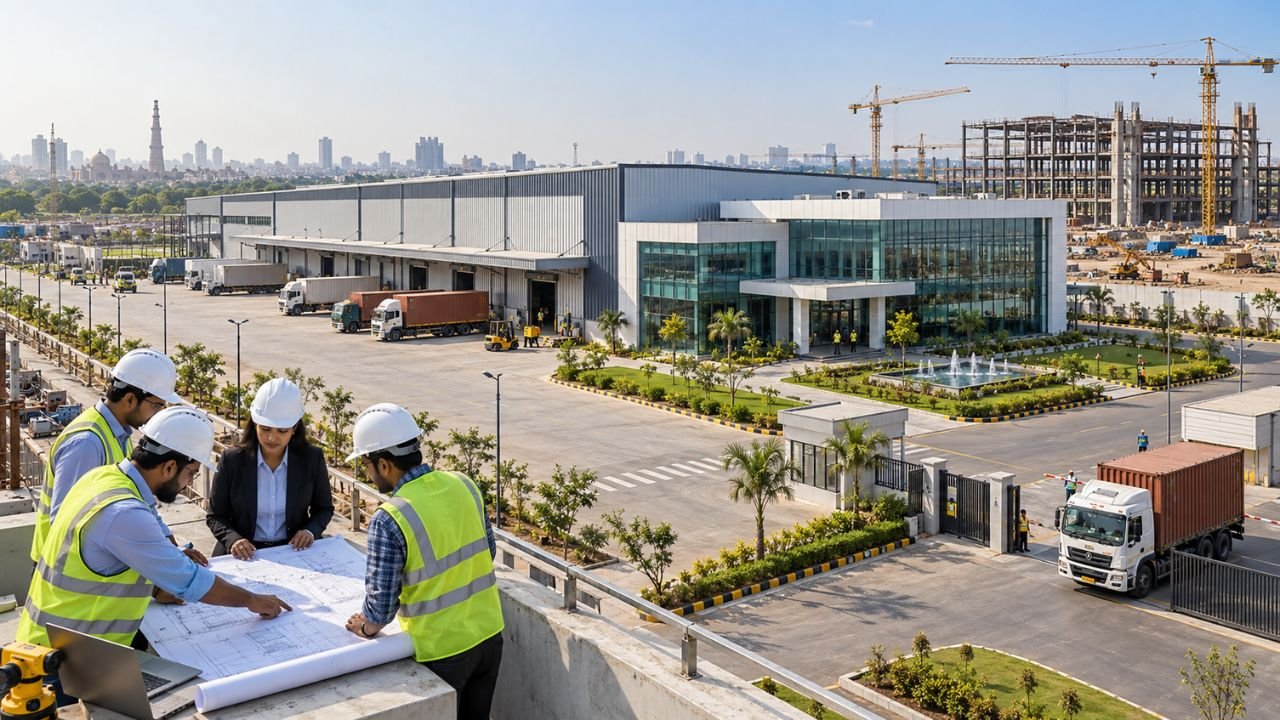
Imagine you have just completed your dream home in Meerut, Uttar Pradesh, after months of meticulous planning and a significant investment of ₹80 lakhs. Suddenly, a severe monsoon triggers unprecedented flooding in your colony, or an electrical short circuit leads to a localized fire that ravages the structural beams and walls. In such moments of crisis, the primary question that determines your financial survival is: what is covered by building insurance? For one homeowner in Western UP, having a robust policy meant the difference between a total financial collapse and a smooth reconstruction process funded entirely by the insurer.
As construction costs in India soar in 2026, understanding the nuances of building insurance coverage India is no longer optional—it is a financial necessity for homeowners, individual builders, and contractors alike. Whether you are dealing with the rising costs of cement and steel or the increasing frequency of natural calamities, knowing what is covered by building insurance allows you to protect your asset effectively. Building insurance, often referred to as home structure insurance, provides coverage for the physical shell of your property and its permanent fixtures against specified perils. It is fundamentally different from contents insurance, which covers your movable belongings. For construction estimators and developers, this knowledge is critical for preparing a precise Bill of Quantities (BOQ) and ensuring that project risks are mitigated from the ground up. In this guide, we will explore the mandatory IRDAI building insurance 2026 standards, common perils, and how to safeguard your most valuable physical asset.
What is Building Insurance?
Building insurance is a specialized policy designed to protect the “immovable” components of a property. Unlike general insurance that might cover a business or a vehicle, this policy focuses specifically on the physical integrity of the dwelling. At its core, it protects the foundation, walls, roof, floors, and the very skeleton of the building—beams and columns.
If you want a detailed breakdown of protections, read our guide on what is covered by building insurance in India. However, the definition of “building” extends beyond just bricks and mortar. It includes permanent fixtures that cannot be removed without damaging the structure. This encompasses your internal plumbing networks, electrical wiring, built-in kitchen cabinets, bathroom sanitary ware, and even permanent flooring like Italian marble or hardwood. In the Indian market, particularly under the Bharat Griha Raksha (BGR) framework mandated by IRDAI, building insurance also typically covers additional structures on the property, such as compound walls, garages, and gatehouses. It is often called building structure insurance coverage because its primary duty is to ensure that if the structure is leveled by a catastrophe, the funds are available to rebuild it to its original state.
Key Differences – Building Insurance vs Contents Insurance
One of the most common mistakes Indian homeowners make is assuming that a “home insurance” policy automatically covers everything. In reality, a policy can be split into two distinct parts. Understanding the building insurance vs contents insurance divide is vital for accurate risk assessment.
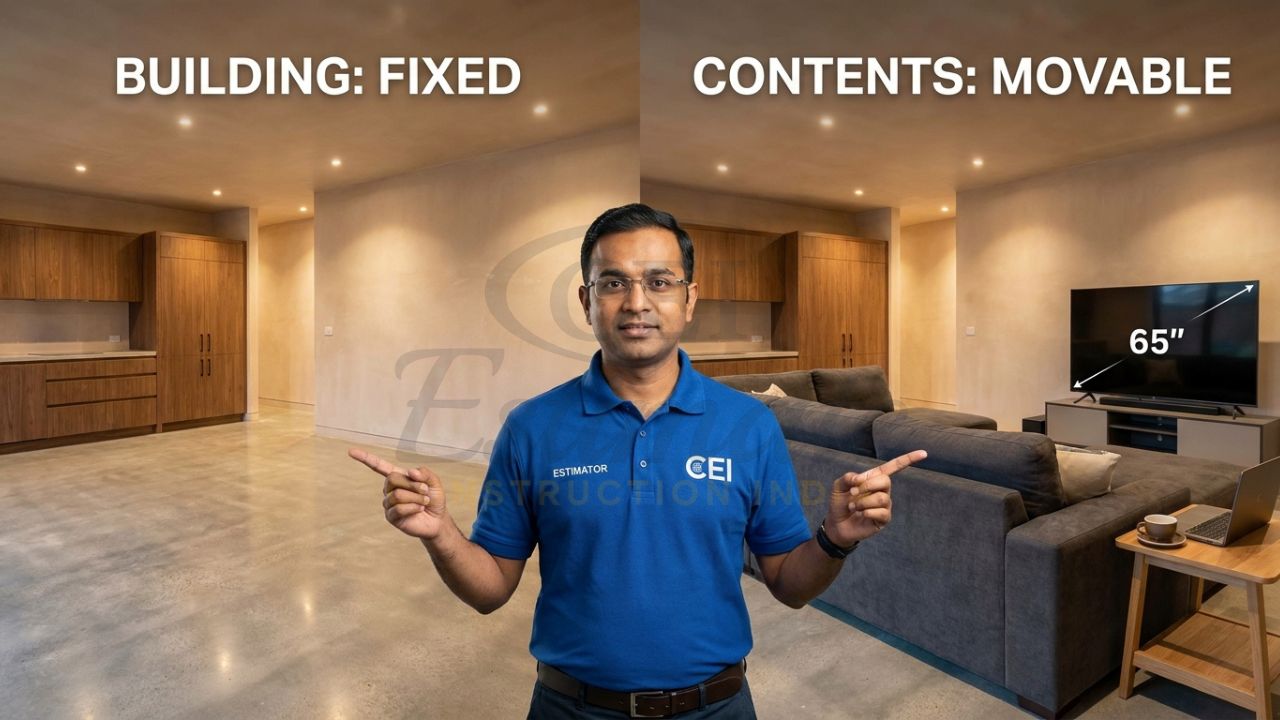
| Feature | Building Insurance (Structure) | Contents Insurance (Possessions) |
|---|---|---|
| What is Protected | Foundation, walls, roof, windows, and permanent fittings (wiring, pipes). | Movable items: furniture, electronics, jewelry, clothes, and appliances. |
| Sum Insured Basis | Reinstatement Value (Cost to rebuild in 2026). | Market Value or Agreed Value (Depreciated value). |
| Who Needs It | Property owners, landlords, and housing societies. | Tenants and homeowners alike. |
| Example Scenario | A wall cracks due to an earthquake in Delhi-NCR. | A laptop is damaged due to a roof leak. |
| Typical Add-ons | Escalation cover, debris removal. | Jewelry cover, breakdown of appliances. |
Many modern policies in India are “package policies” that combine both, but as a builder or estimator, you must focus on the structure to protect the capital investment of the construction.
Note that standard home structure insurance does not cover buildings while they are still under construction. For that specific phase, you need a dedicated under construction building insurance policy, also known as Builder’s Risk or Construction All Risk (CAR) insurance.
What is Covered by Building Insurance in India?
The core of any policy lies in its list of “Insured Perils.” Under the standardized Bharat Griha Raksha building cover, the scope is comprehensive, ensuring that homeowners in high-risk zones like the seismic regions of North India or flood-prone areas of Uttar Pradesh are protected. When asking what does building insurance cover, you should look for the following:
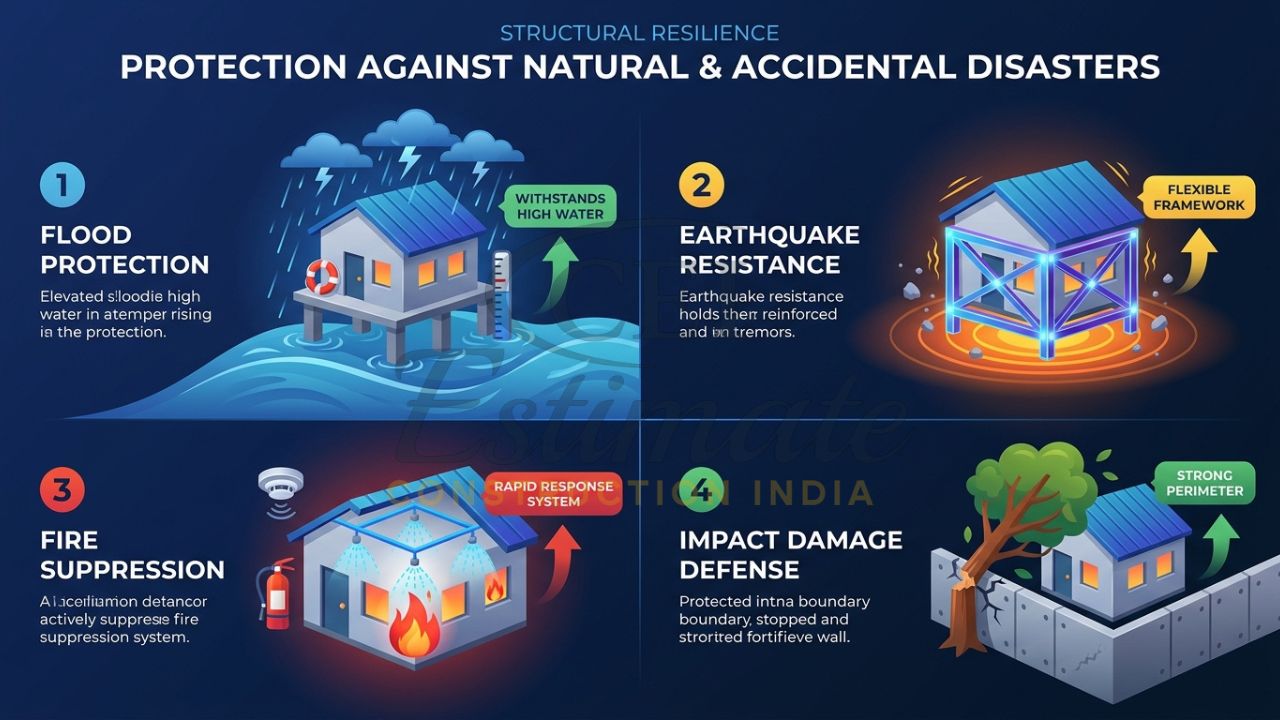
1. Natural Calamities and Acts of God
In 2026, climate volatility is a reality. Standard coverage includes:
- Flood and Inundation: Essential for low-lying areas in cities like Meerut or Noida during monsoon.
- Earthquake: Crucial for the Delhi-NCR region, which sits on active fault lines.
- Storm, Cyclone, and Tempest: Protection against high-velocity winds that can damage roofs and windows.
- Landslide and Rockslide: Relevant for builders working in hilly terrains or near embankments.
2. Fire and Explosion
This covers damage caused by accidental fire, lightning strikes, or gas cylinder explosions. Considering the high density of residential units in Indian tier-2 cities, fire is one of the most frequent causes of structural insurance claims.
3. Man-Made Perils
- Riots and Strikes: Coverage against physical damage to the building caused by external civil unrest.
- Malicious Damage: Damage intended to harm the property by third parties.
- Terrorism: Most standard BGR policies include terrorism cover as a fundamental component.
4. Impact Damage and Utilities
- Impact Damage: If a vehicle crashes into your compound wall or a falling tree damages your roof, the repair costs are covered.
- Bursting of Water Tanks/Pipes: Covers the structural damage caused by the sudden failure of plumbing systems, though not the repair of the pipe itself.
5. Automatic Additional Expenses
A significant benefit of modern building structure insurance coverage is the inclusion of “incidental” costs that occur during a claim:
- Architect and Surveyor Fees: Up to 5% of the claim amount is usually covered to pay for professional reconstruction plans.
- Debris Removal: The cost of clearing the site after a disaster (up to 2% of the claim).
- Loss of Rent/Alternative Accommodation: If the building becomes uninhabitable, the insurer pays for your temporary stay or compensates for the lost rental income for a specified period (e.g., up to 3 years).
Additional / Optional Covers in Building Insurance
While the standard perils are broad, 2026’s economic environment requires extra layers of protection. Common add-ons include:
- Escalation Cover: Since construction material costs (like TMT bars and cement) can rise by 10-15% annually, this add-on automatically increases your sum insured during the policy year.
- Personal Accident: Provides a payout if the homeowner suffers a disability or death due to an insured peril on the premises.
- Valuable Contents on Agreed Value: For high-end builders, this covers expensive fixed artworks or specialized interior installations that exceed standard limits.
Common Exclusions – What is NOT Covered by Building Insurance
To avoid heartbreak during the claims process, you must know what is left out. What is covered by building insurance does not include:
- Wear and Tear: Gradual deterioration, rust, or peeling paint due to age is your maintenance responsibility.
- Willful Negligence: If you leave a fire unattended or ignore a known structural crack, the claim may be rejected.
- War and Nuclear Risks: Standard across almost all insurance products globally.
- Illegal Constructions: Any part of the building constructed without approved maps from local authorities (like the Meerut Development Authority) will not be covered.
- Pre-existing Damage: You cannot buy insurance for a building that already has a sinking foundation to claim for repairs later.
How to Determine the Right Sum Insured for Building Insurance?
Calculating the “Sum Insured” is where most homeowners fail. You should never insure your home for its market value (which includes the land cost). Building insurance only covers the reinstatement/reconstruction cost.
The formula is simple:
Total Carpet Area (sq. ft.) × Current Construction Rate per sq. ft. = Sum Insured
For example, in 2026, if the average cost of high-quality RCC construction in Delhi-NCR is ₹2,500 per sq. ft. and your home is 2,000 sq. ft., your building should be insured for at least ₹50 lakhs. For developers, this calculation must be tied directly to the BOQ to ensure that the insurance premium is factored into the project’s overheads correctly. Under-insuring can lead to “pro-rata” settlements where the insurer only pays a fraction of the actual loss.
As a builder or estimator, it is equally important to be aware of types of construction insurance in India. From structure coverage to contractor-specific policies, understanding the full spectrum helps you offer comprehensive risk management solutions to your clients.
Claims Process – How to Get Your Building Insurance Claim Settled?
When disaster strikes, speed is essential. Follow these steps for a smooth settlement:
- Immediate Intimation: Call your insurer or agent within 24 hours.
- Documentation: Keep photos of the damage, the original construction BOQ, and repair estimates ready.
- The Surveyor’s Role: An IRDAI-licensed surveyor will visit the site. Do not start repairs (except for emergency mitigation) until they have inspected the damage.
- Avoid Misrepresentation: Be honest about the cause of damage. If a pipe burst because it was 40 years old and never maintained, don’t claim it as “impact damage.”
Why Every Home Builder and Estimator Should Know Building Insurance Coverage?
As a professional at Construction Estimator India, we see firsthand how insurance impacts project viability. For contractors, knowing the home building insurance perils allows you to advise clients on better material choices (e.g., fire-rated materials) that could lower their premiums. For estimators, including the insurance premium as a line item in the project cost estimation ensures that the client is protected from the moment the foundation is poured. It prevents “under-bidding” where a contractor ignores the risk of site damage during the final stages of a build, leaving them liable for massive out-of-pocket repair costs.
Beyond property protection, responsible contractors also secure insurance for construction workers in India. This covers injuries, accidents, and liabilities during the building phase, making your project safer and more professional. Contractors and developers can further strengthen their risk management by exploring types of insurance for contractors in India. These policies complement home structure insurance and help safeguard both the project and the business. For a clear picture of overall project costs, you can also refer to how much is insurance for construction in India.
Conclusion
Understanding what is covered by building insurance is the ultimate safeguard for your real estate investment in India. From the unpredictable monsoons of Uttar Pradesh to the seismic risks of the North, a well-structured policy ensures that your “dream home” isn’t a financial nightmare waiting to happen. By focusing on the physical structure, permanent fixtures, and the specific perils outlined in the Bharat Griha Raksha guidelines, you can build with confidence. If you run a larger setup, exploring types of insurance for construction companies in India will give you deeper insights into corporate-level protection.
At Construction Estimator India, we specialize in professional BOQ and construction cost estimation services that take these risks into account. Don’t leave your building’s safety to chance. Review your policy today, ensure your sum insured reflects 2026’s construction rates, and contact us for expert estimation services to protect your project’s future.
FAQ Section
What is covered by building insurance in India?
Building insurance covers the physical structure (walls, roof, foundation) and permanent fixtures (plumbing, wiring, kitchen fittings) against perils like fire, flood, earthquake, and riots.
Does building insurance cover flood and earthquake damage?
Yes, under the standard IRDAI Bharat Griha Raksha policy, natural calamities like floods, earthquakes, and landslides are core covered perils.
What is the difference between building insurance and contents insurance?
Building insurance covers the immovable structure, while contents insurance covers movable items like furniture, electronics, and jewelry.
Is theft covered under building insurance?
Standard building insurance covers damage to the structure during a break-in. However, the loss of stolen items is typically covered under a “Contents” or “Burglary” section of a home insurance policy.
How is sum insured calculated for building insurance?
It is calculated based on the cost of reconstruction (Carpet Area × Construction Rate per sq. ft.), not the market value of the property including land.
What is Bharat Griha Raksha and what does it cover?
It is a standard home insurance policy introduced by IRDAI that provides a wide range of covers including fire, natural disasters, and additional expenses like debris removal for residential properties.
Does building insurance cover permanent fixtures like kitchen fittings?
Yes, built-in kitchen cabinets, bathroom fittings, and electrical panels are considered part of the building structure and are covered.
What expenses are paid in addition to repair costs?
Policies often pay for architect/surveyor fees, debris removal costs, and the cost of alternative accommodation if the house is uninhabitable.
Can I buy building insurance only for the structure?
Yes, you can opt for a structure-only policy, which is often preferred by landlords or developers who do not have personal belongings in the property.
Is damage from a leaking pipe covered?
Damage to the walls or floor caused by a “bursting” pipe is usually covered, but the gradual “seepage” or the cost of replacing the old, rusted pipe itself is often excluded.
Suggestions:
- Learn more about: What is Structure on the Property Insurance?
- Read our guide on: Difference Between Building Insurance and Home Insurance