
Imagine you are a main contractor in Meerut, managing a high-stakes residential high-rise. You hire a local electrical subcontractor to handle the wiring. During the final testing phase, a surge occurs, leading to a small fire that damages the elevator panels and the neighboring property’s boundary wall. To your horror, you discover the subcontractor has no coverage, and as the principal employer, you are now personally liable for lakhs in damages. This nightmare scenario is why learning how to get insurance for subcontractors is not just a checkbox — it is a critical pillar of your project’s financial survival in the 2026 Indian infrastructure boom.
In India, subcontractors for plumbing, flooring, and electrical work perform the most hazardous tasks but often lack the capital or awareness to maintain robust policies. This leaves you, the main contractor, exposed to massive risks, legal battles under the BOCW Act, and potential debarment from future tenders. Whether you are operating in Noida, Meerut, or tier-2 cities across Uttar Pradesh, you must ensure every “sub” on your site is insured, either by including them under your master policy or requiring they provide a valid certificate of insurance for subcontractors. This guide provides a definitive roadmap for risk management, tender compliance, and smooth project execution through proper subcontractor insurance strategies.
Why Main Contractors Must Insure Subcontractors?
As a main contractor, you bear total site responsibility. Under the Employees’ Compensation Act 1923 and the Building and Other Construction Workers (BOCW) Act 1996, the law frequently identifies you as the “Principal Employer”. This means if a subcontractor’s laborer suffers an injury on your site, the legal liability for compensation often rests with you if the subcontractor is uninsured.
Beyond legal mandates, having subcontractor insurance requirements clearly defined is a prerequisite for winning government tenders and securing institutional financing from banks like SBI or HDFC. Lenders want to ensure their collateral is protected from groundbreaking to handover. Furthermore, a single uninsured claim can drain your project’s profit margins, leading to immediate insolvency. Protecting your reputation in competitive markets like Delhi-NCR requires a “zero-gap” insurance strategy where every entity on the payroll is covered against physical damage and third-party liability.
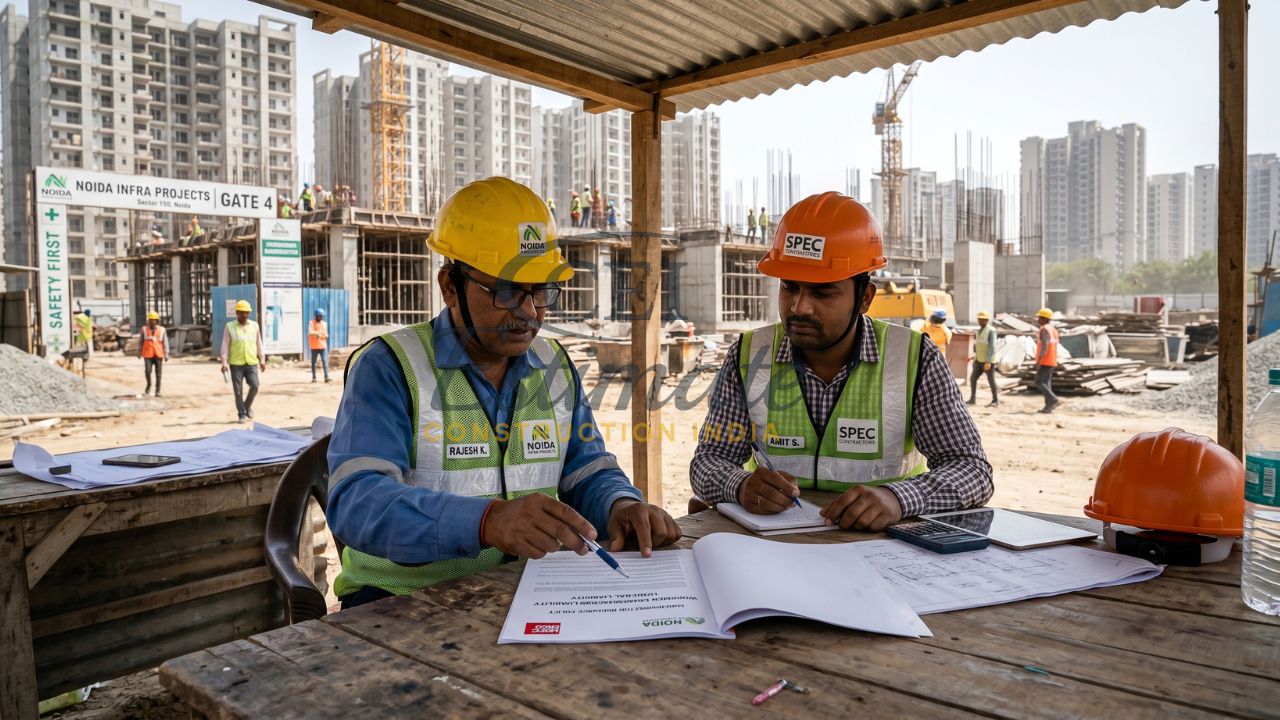
Two Main Ways to Provide Insurance for Subcontractors
There are two primary strategies for how to insure subcontractors in India, each with its own administrative and cost implications.
1. Inclusion Under Main Contractor’s Master Policy
The most secure method is to include all subcontractors under your master Contractors’ All Risk (CAR) and Workmen Compensation (WCI) policies. By listing subcontractors in “Joint Names,” you ensure that the insurer cannot subrogate against them, and you maintain full control over the coverage limits. This is often the preferred route for high-rise projects in seismic Zone IV areas like Meerut, where the risk of structural failure is high.
2. Independent Subcontractor Policies
Alternatively, you can mandate that each subcontractor arranges their own insurance. In this case, you must verify their certificate of insurance for subcontractors before they mobilize on-site. While this shifts the premium cost to the sub, it requires rigorous monitoring to ensure their policies don’t expire mid-project.
| Feature | Inclusion under Main Policy | Independent Subcontractor Policy |
|---|---|---|
| Control | High – Main contractor manages everything | Low – Dependent on subcontractor’s renewal |
| Cost | Built into main contractor’s overheads | Passed directly to the subcontractor |
| Admin Burden | Medium (one master policy) | High (multiple certificates to verify) |
| Claim Ease | Faster – single insurer for the whole site | Complex – involves multiple insurers |
| Recommended For | Large civil & residential high-rises | Specialized trade work (HVAC/Solar) |
Essential Insurance Types Subcontractors Need
When determining subcontractor insurance requirements, five core policies are essential for the 2026 Indian market:
- Workmen Compensation (WCI): This is a statutory requirement covering labor injury or death. If your tiling subcontractor has ten workers, they must be covered under a WCI policy for their total wage bill.
- Contractors’ All Risk (CAR) Extension: While your master policy covers the structure, a CAR insurance for subcontractors extension covers the specific materials they bring to the site, such as expensive copper wiring or imported marble.
- Public Liability (CGL): Vital for urban projects in congested areas. It covers property damage or bodily injury to third parties (neighbors or passersby) caused by subcontractor activities.
- Professional Indemnity (PI): Essential for “design-build” subcontractors handling MEP or structural steel. It protects against claims of professional negligence or design errors.
- Contractors Plant & Machinery (CPM): If the subcontractor uses high-value equipment like tower cranes or concrete mixers, CPM insurance protects these assets against breakdown and theft.
Step-by-Step Guide: How to Get Insurance for Subcontractors
Follow this practical process to ensure your subcontractors are fully compliant and your risk is mitigated.
1. Define Requirements in the Subcontract Agreement
Before the first brick is laid, clearly state the mandatory insurance limits in your contract. Specify the “Limit of Indemnity” for third-party liability and mandate that you be named as an “Additional Insured” on their policies.
2. Decide Between Inclusion vs. Separate Policy
Analyze the project scale. For a ₹50 crore plaza in Noida, including everyone under one CAR policy is usually safer. For minor plumbing fixes, a separate COI may suffice. This decision determines how to include subcontractor insurance in main contractor policy during the application stage.
3. Collect Subcontractor Details and Documents
Gather the subcontractor’s GST registration, labor license, and estimated wage bill. This data is essential for your insurer to calculate the additional premium for adding them to your master policy.
4. Coordinate with Your Insurer
Contact your provider (e.g., ICICI Lombard or New India Assurance) to add the subcontractor’s name to the master CAR policy. Ensure the “Maintenance Period” cover is extended to the subcontractor’s specific work.
5. Verify the Certificate of Insurance (COI)
If they are buying their own, verify the certificate of insurance for subcontractors. Check the effective date, the sum insured (must match the contract value), and ensure it includes a “Waiver of Subrogation” in your favor.
6. Monitor and Maintain Records
Keep digital copies of all policies on-site. Use an automated tracker to flag upcoming renewals. An expired policy mid-monsoon in Uttar Pradesh is a recipe for financial disaster.
Documents Required for Subcontractor Insurance
To streamline the process, maintain a checklist of these documents for every subcontractor:
- Firm Registration: PAN, GST, and MSME certificate (if applicable).
- Labor Records: List of workers and their average monthly wages for WCI.
- Technical Drawings: For EAR/PI policies to assess installation risks.
- Work Order Copy: To verify the total contract value and project duration.
- Previous Claims History: To help negotiate better premium rates from top-tier insurers.
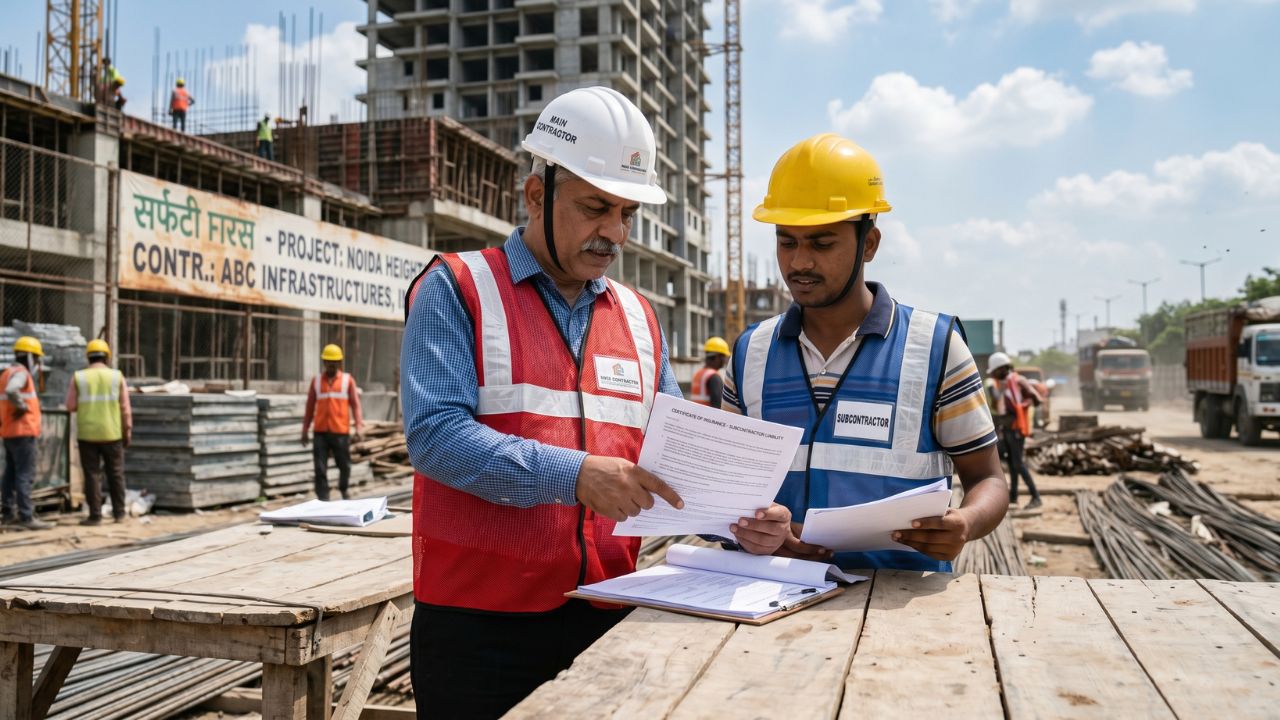
Cost Implications and How to Handle Them
Budgeting for subcontractor insurance is vital for maintaining your profit margins. In 2026, CAR premiums range from 0.5% to 1.5% of the contract value, while WCI costs 0.5% to 2% of the wage bill.
At Construction Estimator India, we recommend listing insurance as a distinct line item under “Preliminaries” in your Bill of Quantities (BOQ). For instance, if your electrical sub-contract is worth ₹20 lakhs, allocate approximately ₹20,000 to ₹30,000 for their insurance portion. By itemizing this, you ensure the project owner covers the cost of their own protection, and you avoid eating into your 10–15% profit margin.
Best Practices for Main Contractors
- Standardize Agreements: Use FIDIC or CPWD-based contract templates that have robust insurance clauses.
- Periodic Audits: Don’t just check insurance at the start; conduct monthly audits of muster rolls and site safety logs to ensure WCI compliance.
- Safety Training: Lower your premiums by enforcing strict PPE usage. Insurers in 2026 often offer discounts for sites with gated access and 24/7 security.
- Direct Payments: If the sub is buying their own policy, consider paying the insurer directly and deducting the amount from the sub’s first invoice to guarantee coverage.
Common Mistakes to Avoid
- Assuming Subcontractors are Covered: Never assume your master policy automatically covers every sub unless they are explicitly named or the policy has an “Unnamed Subcontractor” clause.
- Not Verifying the COI: A piece of paper isn’t enough; call the insurer to verify that the policy is active and the premium has been paid.
- Under-Insuring: Setting the sum insured based on 2022 prices instead of 2026 reinstatement values for steel and cement.
- Ignoring the BOCW Cess: Forgetting to pay the 1% labor welfare cess, which is a statutory requirement separate from private insurance.
Conclusion
Understanding how to get insurance for subcontractors is the hallmark of a professional builder in 2026. Whether you are managing an independent villa in Meerut or a massive commercial plaza in Noida, these policies form the invisible foundation of your project’s success. By implementing a layered approach of CAR, Workmen Compensation, and Public Liability, you transform your business from a vulnerable operation into a resilient enterprise capable of handling any monsoon storm or site accident.
Don’t let an unforeseen mishap derail your hard-earned reputation. Ensure every subcontractor is protected and your project costs are accurately calculated from the first brick. Contact Construction Estimator India today for professional BOQ and construction cost estimation services that correctly account for every subcontractor insurance and compliance cost. We help you build with total confidence and precision.
FAQ Section
How do I get insurance for my subcontractors in India?
You can either add them as “Joint Insured” on your master CAR policy or mandate that they purchase their own and provide you with a valid Certificate of Insurance (COI).
Should I include subcontractors in my CAR policy or ask them to buy their own?
For large projects, including them in your policy is better as it gives you total control. For smaller, specialized jobs, asking them to buy their own shifts the administrative and premium burden to them.
What insurance must subcontractors have?
At a minimum, they need Workmen Compensation Insurance (WCI) for their labor and Public Liability (CGL) for third-party risks.
Who pays for subcontractor insurance?
Usually, the main contractor pays the master policy premium, but the cost is factored into the subcontractor’s rates or listed as a BOQ line item for the project owner to reimburse.
How to add subcontractors to my existing CAR policy?
Contact your insurer with the subcontractor’s firm name, the scope of their work, and their estimated contract value. Most insurers will issue an endorsement to include them.
What is a Certificate of Insurance for subcontractors?
It is a formal document issued by an insurer that proves the subcontractor has an active policy, stating the coverage limits, effective dates, and insured parties.
Is it mandatory to insure subcontractors under Indian law?
Yes, under the Employees’ Compensation Act and BOCW Act, the principal employer is legally responsible for ensuring workers are covered against injuries.
How do I verify a subcontractor’s insurance?
Check the COI for the policy number, verify the expiry date, and confirm that your firm is named as an “Additional Insured” with a “Waiver of Subrogation”.
How to include subcontractor insurance cost in BOQ?
List it as a specific line item under “Statutory Compliance” or “Preliminaries” using actual quotes based on the subcontractor’s wage bill and contract value.
What happens if a subcontractor causes damage and is not insured?
The main contractor (Principal Employer) becomes legally and financially liable for all damages, medical costs, and potential lawsuits.