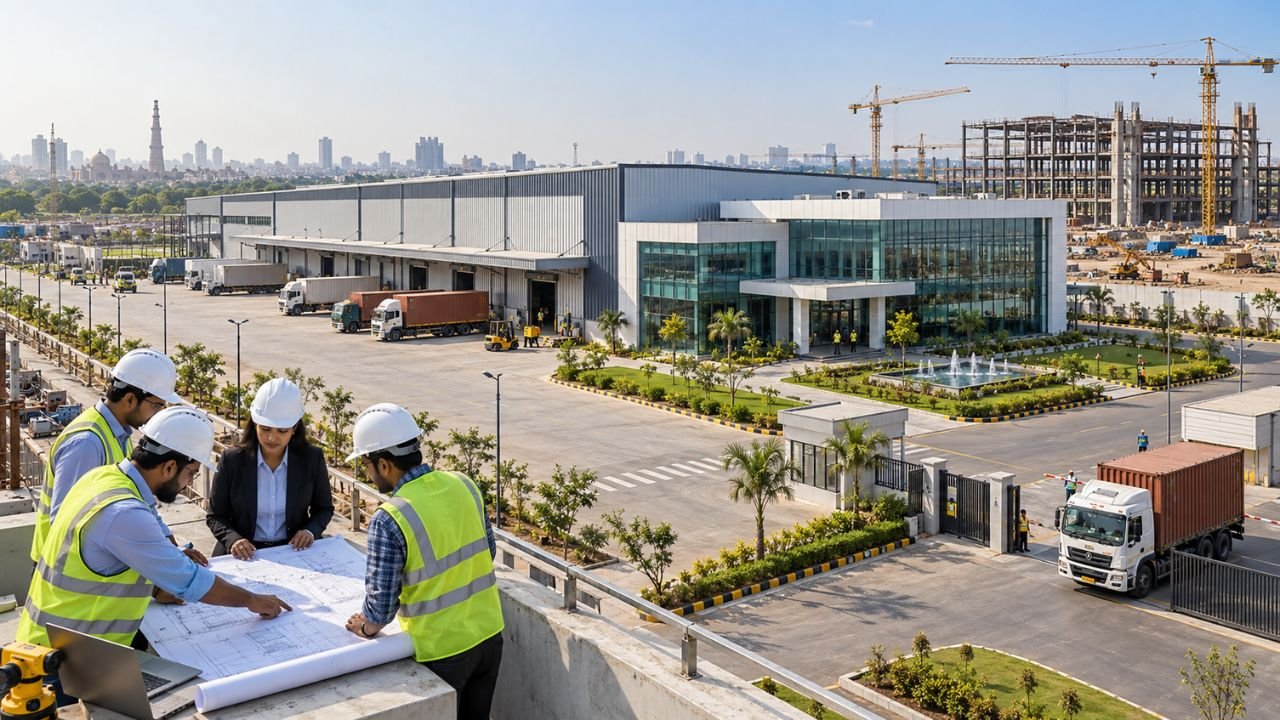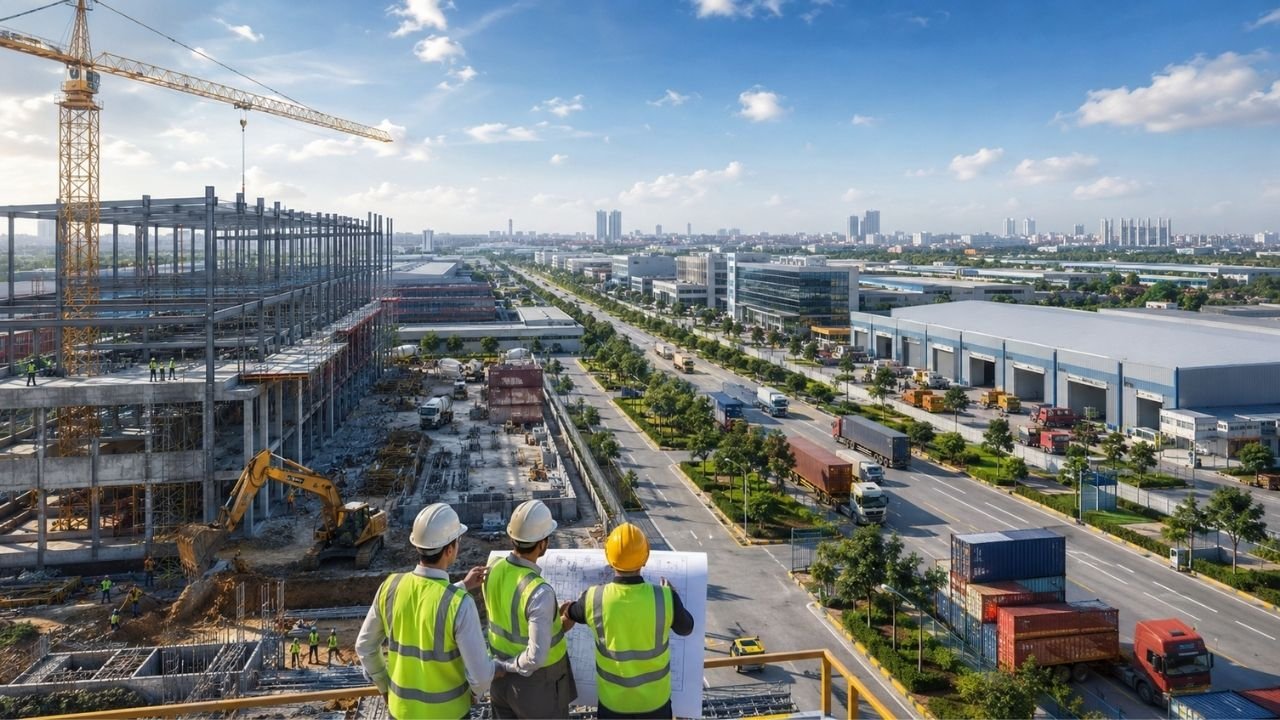
Imagine you are a general contractor in Meerut, Uttar Pradesh, managing a high-stakes multi-story residential project worth ₹12 crores. It is peak monsoon season in North India, and a series of unseasonably heavy storms hit the Delhi-NCR region. Overnight, the lack of proper drainage leads to a partial foundation collapse, while simultaneously, a high-voltage short circuit in the temporary site office destroys premium electrical components stored for installation. To make matters worse, a worker falls from a scaffolding, resulting in a serious injury claim, and expensive TMT bars are stolen under the cover of the storm. Without having arranged the correct types of insurance for general contractors, you are not just facing a massive repair bill; you are looking at potential bankruptcy and legal action that could halt your business indefinitely.
As a general contractor, you bear the weight of overall site responsibility. You coordinate diverse labor forces, manage expensive materials, operate heavy equipment, and oversee multiple subcontractors. This central role exposes you to a complex web of financial and legal risks that can derail even the most meticulously planned project. Understanding the various types of insurance for general contractors is no longer optional in 2026; it is a fundamental requirement for legal compliance, winning government tenders, securing bank financing, and protecting your hard-earned profit margins. This guide provides a comprehensive breakdown of the essential insurance policies—including CAR, Workmen Compensation, and CPM—along with expert advice on how to integrate these costs into your project estimates to ensure your business remains resilient against the unpredictable.
Why General Contractors Need Comprehensive Insurance Coverage?
In the 2026 Indian construction landscape, the general contractor is the pivot point of every project. Whether you are building in a bustling metro or a tier-2 city like Meerut, your liability is total. You are legally obligated under the BOCW Act (Building and Other Construction Workers Act) and the Employees’ Compensation Act to ensure the safety and financial protection of your workforce. Furthermore, if you are bidding for large-scale infrastructure or RERA-registered housing projects, having a robust general contractor insurance India portfolio is often a mandatory prerequisite for tender qualification.
Beyond legal mandates, the climate in North India has become increasingly volatile. From seismic risks in the Delhi-NCR (Zone IV) to flash floods and extreme heat waves, the physical structure and materials are constantly under threat. A single accident involving a third party—such as a falling brick damaging a neighbor’s car—can lead to lawsuits that exceed your project’s profit. Comprehensive insurance acts as your financial shield, allowing you to transfer these catastrophic risks to an insurer, ensuring that an unforeseen event remains a manageable incident rather than a project-ending disaster.
For a broader understanding of all project risks, read our complete guide on types of construction insurance in India.
Major Types of Insurance for General Contractors in India
Navigating the insurance market requires a clear understanding of what each policy covers. The following table provides an overview of the primary insurance solutions tailored for general contractors in the current Indian market.
| Insurance Policy | Primary Coverage Scope | Key Beneficiary |
|---|---|---|
| Contractors’ All Risk (CAR) | Physical damage to works, materials, and third-party liability. | General Contractor & Owner |
| Workmen Compensation (WCI) | Legal liability for worker injury, disability, or death. | Laborers & Site Staff |
| Plant & Machinery (CPM) | Protection for heavy equipment like JCBs and cranes. | Equipment Owners |
| Erection All Risk (EAR) | Installation and testing of mechanical/electrical systems. | MEP Contractors |
| CGL / Public Liability | Broad protection against third-party bodily injury/property damage. | General Public & Neighbors |
1. Contractors’ All Risk (CAR) Insurance
For any general contractor, the Contractors All Risk policy is the gold standard of protection. It is designed to be a comprehensive “all-risk” safety net for the work-in-progress. This policy covers the physical structure—such as walls, slabs, and foundations—as well as construction materials stored on-site like cement, steel, and premium tiles. It also extends to temporary works like scaffolding and site offices.
Crucially, CAR insurance for general contractors includes a critical “Third Party Liability” section. If your construction activities cause accidental damage to a neighboring property or bodily injury to a passerby, the policy covers the legal costs and compensation. In 2026, when material rates are volatile, it is essential to set the sum insured based on the total contract value plus a 10–20% “Escalation” add-on to account for rising costs of steel and cement during the construction period. Popular add-ons for Indian projects include debris removal, architect’s fees, and “Maintenance Period” cover, which protects the project against defects discovered after the handover.
For detailed protection during the active building phase, explore insurance for building under construction in India.
2. Workmen Compensation Insurance (WCI)
In India, workmen compensation insurance for general contractors is a statutory requirement under the Employees’ Compensation Act, 1923. As the principal employer on-site, you are legally liable to pay compensation if a worker suffers an injury, permanent disability, or death while on duty. This policy provides a structured payout for these unfortunate events, covering medical expenses and lost wages.
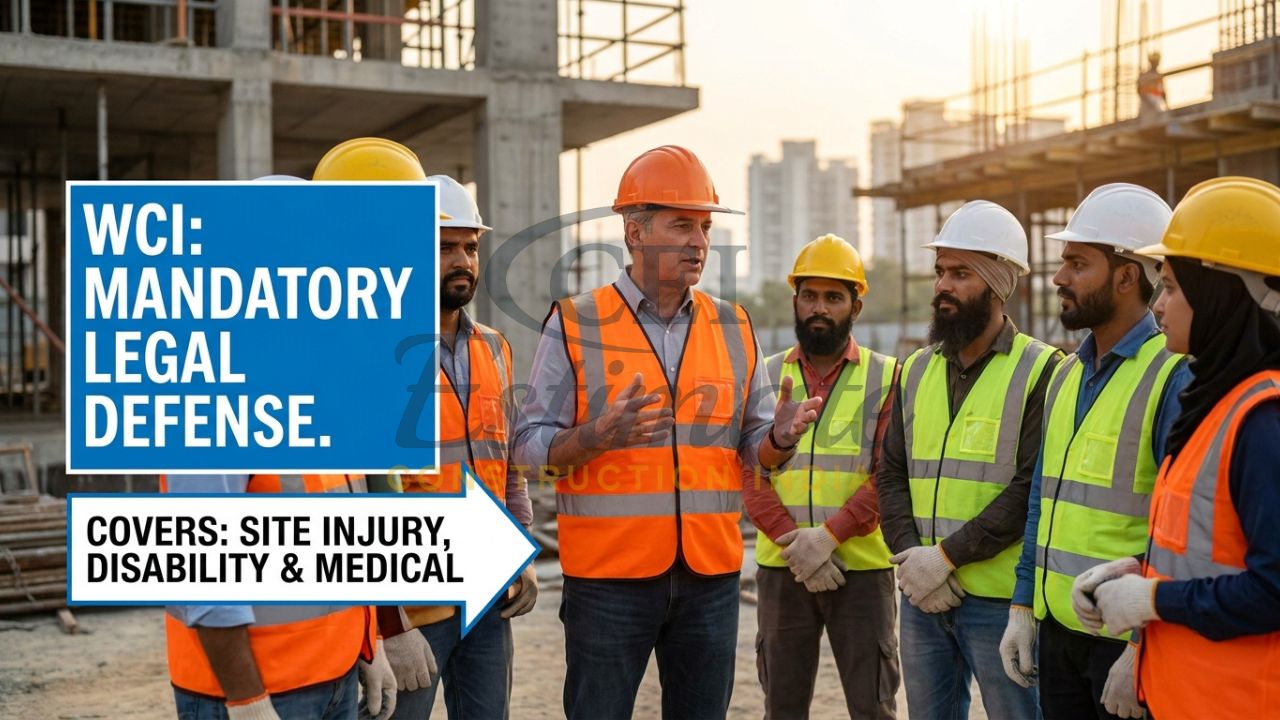
In the 2026 market, many contractors also facilitate workers’ enrollment in government schemes like the Pradhan Mantri Suraksha Bima Yojana (PMSBY) for additional accidental cover. However, the WCI policy remains your primary defense against massive legal liabilities. It is important to note that this cover often extends to subcontractors’ workers if they are under your direct supervision, ensuring that a lapse in a subcontractor’s paperwork doesn’t leave you financially exposed.
To understand worker-specific protections in depth, refer to our guide on insurance for construction workers in India.
3. Contractors Plant & Machinery (CPM) Insurance
General contractors rely heavily on expensive equipment like excavators, tower cranes, and concrete mixers. While a CAR policy might offer limited cover for small tools, a dedicated plant and machinery insurance for contractors (CPM) is vital for high-value assets. This policy protects your machinery against accidental damage, mechanical or electrical breakdown, and theft.
For a general contractor in the Delhi-NCR region, where equipment is frequently moved between sites, a “fleet policy” is often the most cost-effective choice. This allows you to cover all your owned or leased machinery under a single umbrella, providing protection during transit and operation regardless of the specific project site. Given that equipment financing companies in 2026 almost always mandate CPM insurance, having this in place is essential for maintaining your credit lines and operational capacity.
4. Erection All Risk (EAR) Insurance
While CAR is for civil works, erection all risk insurance is specifically tailored for projects that involve the installation and testing of machinery or heavy steel structures. You might need EAR if your contract includes setting up specialized industrial plants, large HVAC systems, or solar power installations.
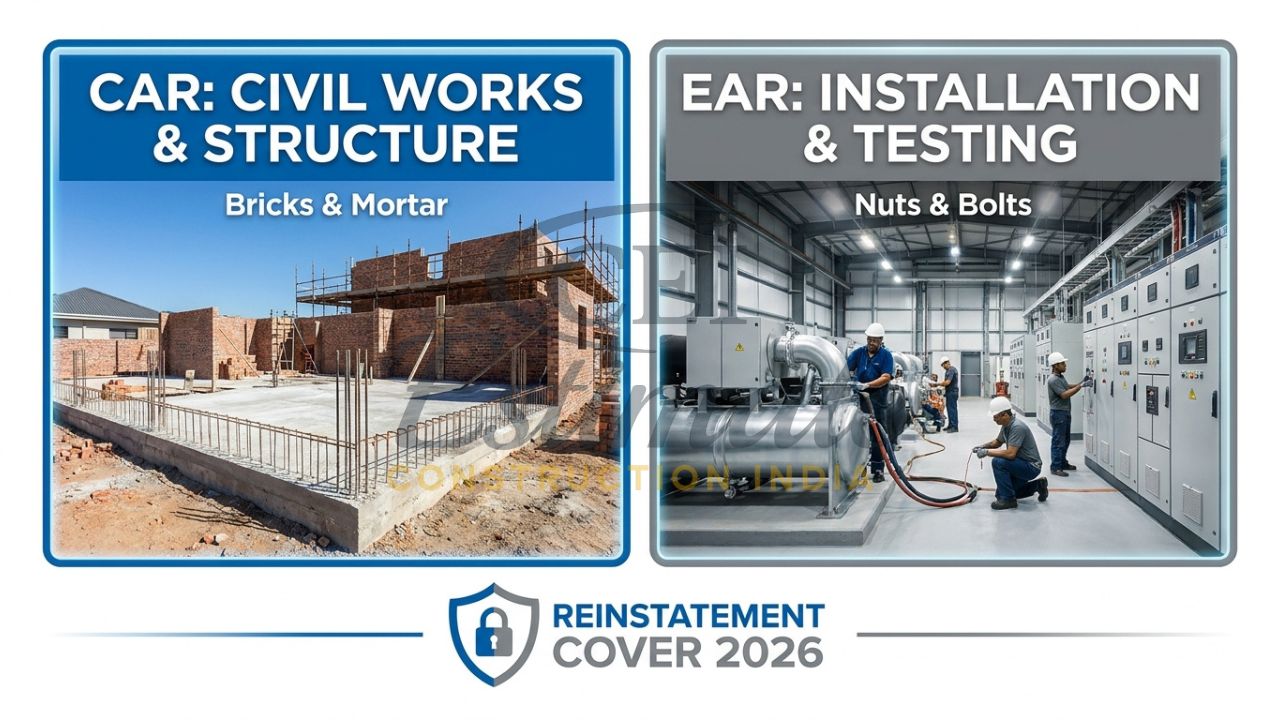
The key difference is that EAR focuses on the mechanical and electrical risks inherent in the “nuts and bolts” phase of construction. It covers the equipment from the moment it is unloaded at the site, through storage and assembly, until the final successful testing and commissioning. For a general contractor handling a “turnkey” project in Noida or Greater Noida, a combination of CAR and EAR is often required to ensure every phase—from the foundation to the final machinery trial—is protected.
5. Third Party Liability & Other Important Covers
Beyond the primary four, several other types of insurance for general contractors are becoming standard in 2026 to address modern project complexities:
- Commercial General Liability (CGL): This provides broader protection than the liability section of a CAR policy, covering a wider range of public liability risks, including advertising injury and medical payments for non-employees injured on-site.
- Professional Indemnity (PI): Essential if you provide design-build services. It protects you against claims of “professional negligence” or errors in your architectural or structural design.
- Marine / Inland Transit Insurance: Covers high-value materials (like imported marble or specialized glass) while they are in transit from the supplier to your site in Uttar Pradesh.
- Advance Loss of Profits (ALOP): Also known as Delay in Start-up (DSU), this covers your lost revenue or additional interest costs if a project is delayed due to an insured physical damage event like a fire or flood.
- Group Personal Accident: Provides 24/7 protection for your core management team and site engineers, covering accidents even outside of work hours.
For smaller operations or growing businesses, check our recommendations on best insurance for small construction business in India.
Comparison of Types of Insurance for General Contractors
Choosing the right mix of policies requires a direct comparison of their scope and cost. Below is a detailed breakdown for the 2026 Indian market.
| Policy Name | Primary Coverage | Protection For | Sum Insured Basis | 2026 Premium Range |
|---|---|---|---|---|
| CAR Insurance | Civil works & TPL | Project & Third Parties | Total Contract Value | 0.5% – 1.5% |
| WCI Insurance | Labor injury/death | Workers & Contractors | Total Wage Bill | 0.5% – 2.0% |
| CPM Insurance | Heavy Machinery | Equipment Owners | Current Market Value | 1.0% – 2.5% |
| EAR Insurance | Machine Installation | MEP Contractors | Value of Machinery | 0.6% – 2.0% |
| CGL Insurance | Public Liability | General Public | Limit of Liability | Case-by-case |
How General Contractors Should Select the Right Insurance?
Selecting the right coverage isn’t about buying every policy; it’s about matching your insurance to the specific risk profile of your project. For a general contractor building a residential villa in Meerut, a robust CAR policy with WCI for labor is usually the minimum baseline. However, for a medium-sized firm managing a commercial plaza in Noida, you must consider the “Insurable Interest” of all parties, including developers and banks.
You should carefully review your subcontractor agreements. Ensure that their workers are either covered under your policy or that the subcontractors provide proof of their own WCI. Always consider the location—projects in seismic zones or flood-prone areas of Uttar Pradesh require specific “Natural Peril” add-ons. For small and medium contractors, bundling policies with a single insurer like HDFC Ergo or New India Assurance can often lead to significant premium discounts and easier claim management.
When working with multiple parties on-site, proper arrangements are essential. Learn more in our guide on how to get insurance for subcontractors in India.
Cost of Insurance for General Contractors in India 2026
In 2026, insurance premiums are influenced by your safety track record, the project location, and the complexity of the work. On average, you should expect to allocate between 1% and 3% of your total project value to insurance costs. For a project estimator, it is critical to understand how to include insurance in BOQ for general contractors.
Insurance should never be treated as a hidden overhead; it must be a specific line item in your Bill of Quantities (BOQ). By itemizing the CAR and WCI premiums, you ensure that the client understands the cost of their own protection and you avoid under-bidding. Providing a detailed cost estimation that includes insurance demonstrates a high level of professionalism and protects your cash flow from being drained by unplanned “soft costs” during a project disaster.
For accurate budgeting across all policies, refer to our analysis on how much is insurance for construction in India.
Step-by-Step Guide to Buying Insurance for General Contractors
- Risk Assessment: Identify the primary threats to your project—theft, monsoon damage, or worker safety.
- Calculate Reinstatement Value: Use current 2026 rates for materials and labor to determine the total cost to rebuild from scratch.
- Compare Quotes: Use digital platforms to compare plans from insurers like ICICI Lombard, SBI General, or New India Assurance.
- Review the Fine Print: Check the “Claim Settlement Ratio” and look for specific exclusions like “Willful Negligence” or “Pre-existing Damage”.
- Finalize Add-ons: Ensure you have “Escalation” and “Debris Removal” coverages to handle the realities of modern site accidents.
Conclusion
Successfully navigating the various types of insurance for general contractors is the hallmark of a professional builder in 2026. From protecting your structural work with CAR insurance to fulfilling your legal duties via Workmen Compensation, these policies provide the foundation for a sustainable business. In an era of unpredictable monsoons and rising material costs, risk management is your best competitive advantage.
Don’t let a single accident erase years of hard work. Review your insurance program today and ensure your next project is protected from the first brick to the final handover. At Construction Estimator India, we specialize in providing professional BOQ and construction cost estimation services that accurately factor in all necessary insurance premiums.
FAQ Section
What are the main types of insurance for general contractors in India?
The main types are Contractors’ All Risk (CAR), Workmen Compensation Insurance (WCI), Contractors Plant and Machinery (CPM), and Erection All Risk (EAR) insurance.
What does Contractors All Risk (CAR) insurance cover for general contractors?
It covers physical damage to the permanent and temporary structures, construction materials on-site, and third-party liability for bodily injury or property damage.
Is Workmen Compensation Insurance mandatory for general contractors?
Yes, it is legally mandatory under the Employees’ Compensation Act 1923 for any employer hiring construction labor in India to cover work-related injuries or death.
What is the difference between CAR and CPM insurance?
CAR insurance covers the project structure and materials, while CPM insurance specifically protects heavy equipment like cranes and excavators from damage or breakdown.
How much does insurance cost for general contractors in 2026?
Premiums typically range from 0.5% to 2.5% of the value being insured, depending on the project type, location, and the specific policy chosen.
Does CAR insurance cover subcontractor workers?
While CAR primarily covers third-party liability and property, general contractors usually include subcontractors’ workers under their WCI policy if they are the principal employer on-site.
How to include different types of insurance in BOQ as a general contractor?
Include it as a “Fixed Soft Cost” line item. Use actual quotes from insurers based on the total contract value and labor wage bill to ensure accuracy.
What is Third Party Liability insurance for general contractors?
It is a section within a CAR or CGL policy that pays for legal costs and compensation if your site activities damage a neighbor’s property or injure a member of the public.
Can small general contractors afford comprehensive insurance?
Yes, policies for smaller residential projects are highly affordable in India and are essential to prevent a single accident from causing total financial ruin.
Which policies are usually required by banks for construction projects?
Banks almost always mandate a Contractors All Risk (CAR) policy for the full contract value to protect their financial interest in the property during construction.