
Imagine you are a small contractor in Meerut, Uttar Pradesh, specializing in independent residential floors. You have five skilled workers and a small warehouse of materials. One night, an unseasonable monsoon cloudburst causes a localized flash flood that ruins ₹8 lakhs worth of premium TMT bars and cement stored at your site. Simultaneously, a wall collapse injures a passerby’s vehicle and your lead mason. If you thought insurance was only for L&T or massive firms, this moment of crisis becomes a financial nightmare that could end your business. Finding the best insurance for small construction business owners isn’t just about corporate compliance; it is about ensuring that a single project mishap doesn’t wipe out your life savings.
In the competitive Indian market of 2026, small construction businesses—from sub-contractors in the Delhi-NCR to independent builders in tier-2 cities—face higher risks with lower capital buffers. There is no single “best” policy for everyone; the ideal coverage depends on whether you handle renovations, civil work, or specialized flooring. However, for most small players, a smart combination of structural, human, and liability protection is essential. This guide will walk you through clear recommendations, realistic 2026 costs, and how to include these premiums in your Bill of Quantities (BOQ) so you can bid with confidence and total security.
Why Small Construction Businesses Need Insurance More Than Ever?
Small construction businesses in India often operate on thin profit margins, meaning a single claim for material theft or worker injury can be catastrophic. In 2026, the risks have only intensified. North India, including the Delhi-NCR region, sits in a high seismic zone (Zone IV/V) and faces increasingly volatile weather patterns, such as sudden floods and extreme heat waves.
Furthermore, as a small builder, you often have high personal liability. If a client sues for structural defects or a third party is injured on your site, your personal assets—your home, car, and savings—could be at risk if your business entity is not properly protected. Additionally, modern clients, banks releasing home construction loans, and even RERA authorities now mandate proof of insurance before a shovel hits the ground. Having the right insurance for small builders in India is now a prerequisite for winning better contracts and securing your firm’s future.
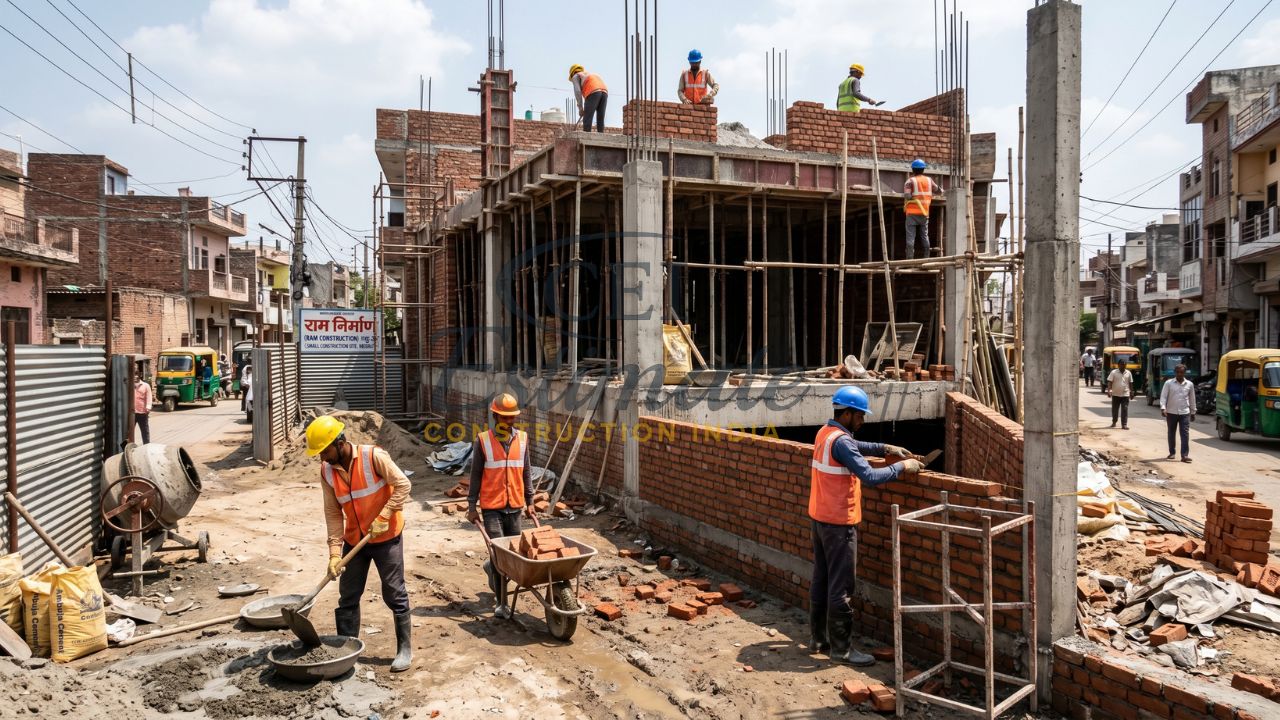
Must-Have Insurance for Small Construction Business
For small construction firms, building a safety net starts with four core policies that address property, people, and legal liabilities.
1. Contractors’ All Risk (CAR) Insurance
This is widely regarded as the best insurance for small construction business operations because it is an “all-risk” policy. Unlike standard home insurance (Bharat Griha Raksha), which only covers finished buildings, CAR insurance for small contractors protects the project from groundbreaking until final handover. It covers physical damage to the structure (walls, slabs), raw materials (cement, steel) stored on-site, and temporary works like scaffolding.
2. Workmen Compensation Insurance (WCI)
This is a non-negotiable legal requirement under the Employees’ Compensation Act 1923 and the BOCW Act. As a small contractor, you are legally liable for medical expenses and compensation if a worker suffers an injury, disability, or death on your site. Workmen compensation for small construction firms protects you from massive out-of-pocket settlements and potential criminal liability.
3. Public Liability Insurance
In crowded urban areas like Meerut or Noida, your site activities can easily impact neighbors. Public liability insurance for small construction business owners covers accidental bodily injury or property damage caused to third parties—such as a falling brick damaging a neighbor’s car or a visitor tripping over tools. This prevents project-halting lawsuits from draining your liquidity.
4. Tools & Equipment Insurance
Small businesses rely on a few high-value tools like concrete mixers, floor polishers, and power tools. This insurance (often part of a CPM policy) protects your assets against theft, fire, and accidental damage while on-site or in transit. It ensures you can replace critical equipment quickly without stalling the project.
Other Recommended Insurance for Small Construction Firms
As your business grows, you may need to layer your protection with these specialized policies:
- Professional Indemnity (PI): Essential if you provide design-build services or technical site supervision. It protects against claims of professional negligence or errors in architectural plans.
- Commercial Vehicle Insurance: If you own a pick-up truck or a small tempo for transporting materials, comprehensive vehicle insurance is mandatory to protect against accidents and theft.
- Personal Accident & Health Insurance: As a small business owner, you are the most important asset. Personal accident cover ensures that if you are injured, your family is financially protected, and the business has the funds to hire temporary management.
- Cyber Insurance: For modern businesses using digital project management software or online banking, this protects against data breaches and financial fraud.
Best Insurance Packages for Small Construction Businesses
To find the best insurance for small construction business needs, you should consider bundling policies for better rates.
| Package Level | Recommended Policies | Best For |
|---|---|---|
| Minimum Essential | WCI + Basic Public Liability | Independent subcontractors and labor contractors. |
| Balanced Protection | CAR Insurance + WCI | Small builders handling full residential projects. |
| Comprehensive | CAR + WCI + Tools + PI | Growing firms handling design-build and commercial work. |
Cost of Best Insurance for Small Construction Business in 2026
Budgeting for affordable insurance for construction business success is critical for your margins. In 2026, premiums are generally calculated as a percentage of your turnover or project value.
| Turnover / Project Value | Estimated Annual Premium Range | Percentage of Project Value |
|---|---|---|
| ₹50 Lakh (Small Residential) | ₹35,000 – ₹65,000 | 0.7% – 1.3% |
| ₹1 Crore (Villa / Row House) | ₹60,000 – ₹1,20,000 | 0.6% – 1.2% |
| ₹3 Crore (Mid-size Projects) | ₹1,80,000 – ₹3,50,000 | 0.6% – 1.1% |
| ₹5 Crore (Small Apartment) | ₹3,00,000 – ₹5,50,000 | 0.6% – 1.1% |
Note: Premiums for CAR insurance typically range from 0.5% to 1.5% of the total project value. WCI usually costs 0.5% to 2% of your labor wage bill.
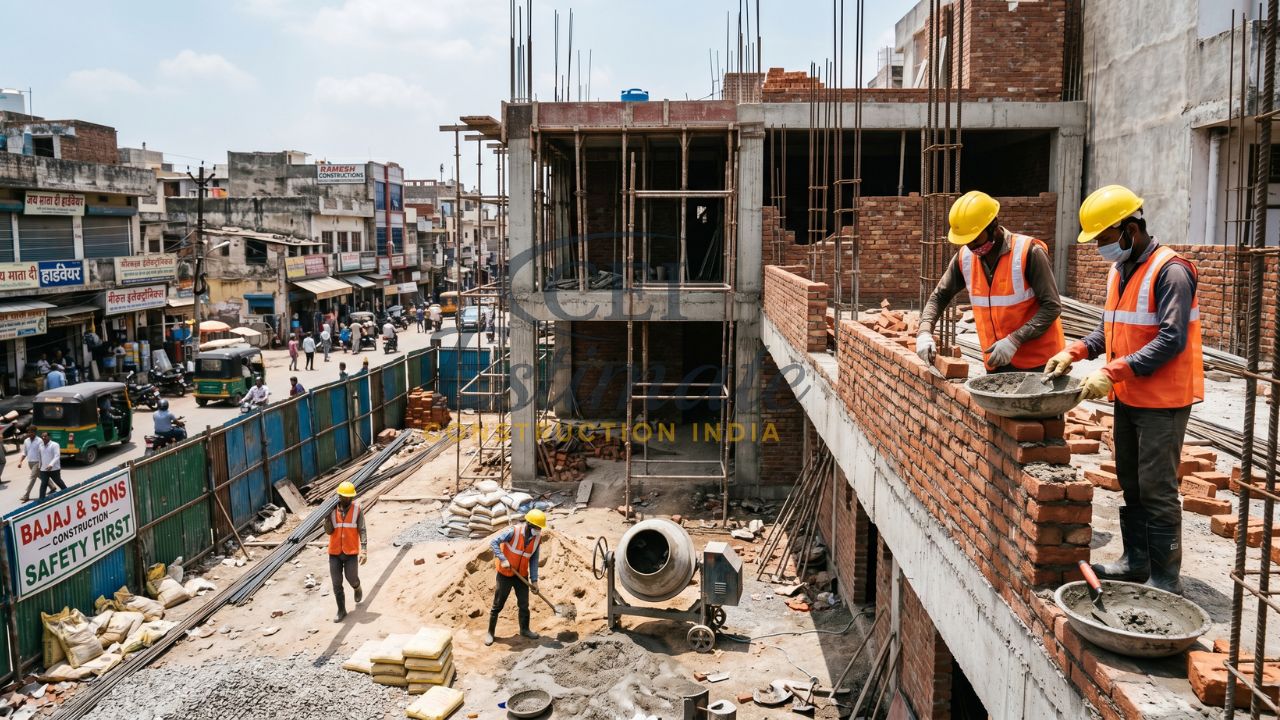
How to Choose the Best Insurance for Your Small Construction Business?
Selecting the right partner from the top insurers like New India Assurance, ICICI Lombard, or HDFC Ergo requires a methodical approach.
- Assess Your Specific Risks: Does your site in Meerut face flooding risks? Is your project in a high-seismic zone in Delhi-NCR? These factors determine which add-ons (like earthquake or flood cover) you need.
- Review Client Contracts: Check your tender documents. Many clients specify a “Limit of Indemnity” for third-party liability that you must meet.
- Check Claim Settlement Ratios: For small businesses, cash flow is king. Choose an insurer known for fast, digital-first claim settlements to avoid project delays.
- Don’t Under-Insure: Always set your sum insured based on the current 2026 reconstruction cost, including an “Escalation Clause” to account for rising material prices.
How to Include Insurance Costs in Your Quotations and BOQ?
As a construction estimator, you must never treat insurance as a hidden overhead. It should be a dedicated line item in your Bill of Quantities (BOQ).
- Categorize Correctly: List insurance under “General Requirements,” “Preliminaries,” or “Statutory Compliance”.
- Itemize Premiums: Show the client the CAR and WCI costs separately. This demonstrates professionalism and shows that you are protecting their investment as much as yours.
- Use Real Quotes: If a firm quote isn’t available, use a placeholder of 1% to 1.5% of the total project value to ensure you don’t lose money later.
Step-by-Step Guide to Buying Insurance for Your Small Construction Business
- Define Your Needs: List your project value, labor count, and machinery list.
- Gather Site Documents: Have your site address, blueprints, and project timeline ready for the insurer.
- Get Multiple Quotes: Compare at least three different quotes from reputable providers.
- Review Exclusions: Pay close attention to what isn’t covered (e.g., inventory shortage or faulty design) to avoid surprises during a claim.
- Maintain Records: Keep site logs, safety briefings, and material invoices; these are vital for a smooth claim payout.
Conclusion
Determining the best insurance for small construction business success means moving beyond the “only for big firms” mindset. In the competitive landscape of Uttar Pradesh and the Delhi-NCR, being insured and assured is your greatest competitive advantage. Whether you choose a basic CAR policy for structural safety or a comprehensive package that protects your workers and tools, you are building a foundation of financial security.
Don’t let one monsoon storm or a single site accident erase years of your hard work. Review your current coverage today and ensure your next bid is as safe as it is profitable. At Construction Estimator India, we specialize in providing professional BOQ and cost estimation services that accurately factor in all insurance premiums tailored for small construction businesses.
FAQ Section
What is the best insurance for a small construction business in India?
The “best” insurance is usually a combination of Contractors’ All Risk (CAR) for structural damage and Workmen Compensation Insurance (WCI) for worker safety, as these cover the most critical risks.
How much does insurance cost for a small construction company?
On average, total insurance costs range from 0.7% to 1.5% of the total project value. For a ₹1 Crore project, expect an annual premium between ₹60,000 and ₹1,20,000.
Is CAR insurance necessary for small contractors?
Yes. CAR insurance is essential because it covers structural damage, material theft, and third-party liability—risks that standard home insurance does not cover during construction.
Can a small business afford proper insurance?
Absolutely. For a small renovation project worth ₹10 Lakh, a basic CAR policy can cost as little as ₹5,000 to ₹12,000, which is far cheaper than the cost of a single accident.
What is the minimum insurance a small builder should have?
The absolute minimum is Workmen Compensation (WCI), as it is a legal requirement, followed by a basic Contractors’ All Risk (CAR) policy.
How do I include insurance costs in my client quotations?
List insurance as a specific line item under “Preliminaries” or “Project Overheads” in your BOQ, typically as a fixed percentage of the project value.
Is public liability insurance mandatory for small construction businesses?
While not always legally mandatory for private builds, it is almost always required for commercial projects, government tenders, and work in RERA-registered buildings.
Which insurer is good for small construction firms?
ICICI Lombard and Go Digit are popular for their fast digital processing, while New India Assurance and SBI General offer high trust and wide reach in tier-2 cities like Meerut.
How does insurance help small construction businesses win more projects?
It builds trust with clients, satisfies bank requirements for construction loans, and is often a mandatory prerequisite for government and private tenders.
What mistakes do small contractors make with insurance?
Common mistakes include under-insuring to save on premiums, ignoring maintenance period cover, and relying on standard home insurance instead of CAR.