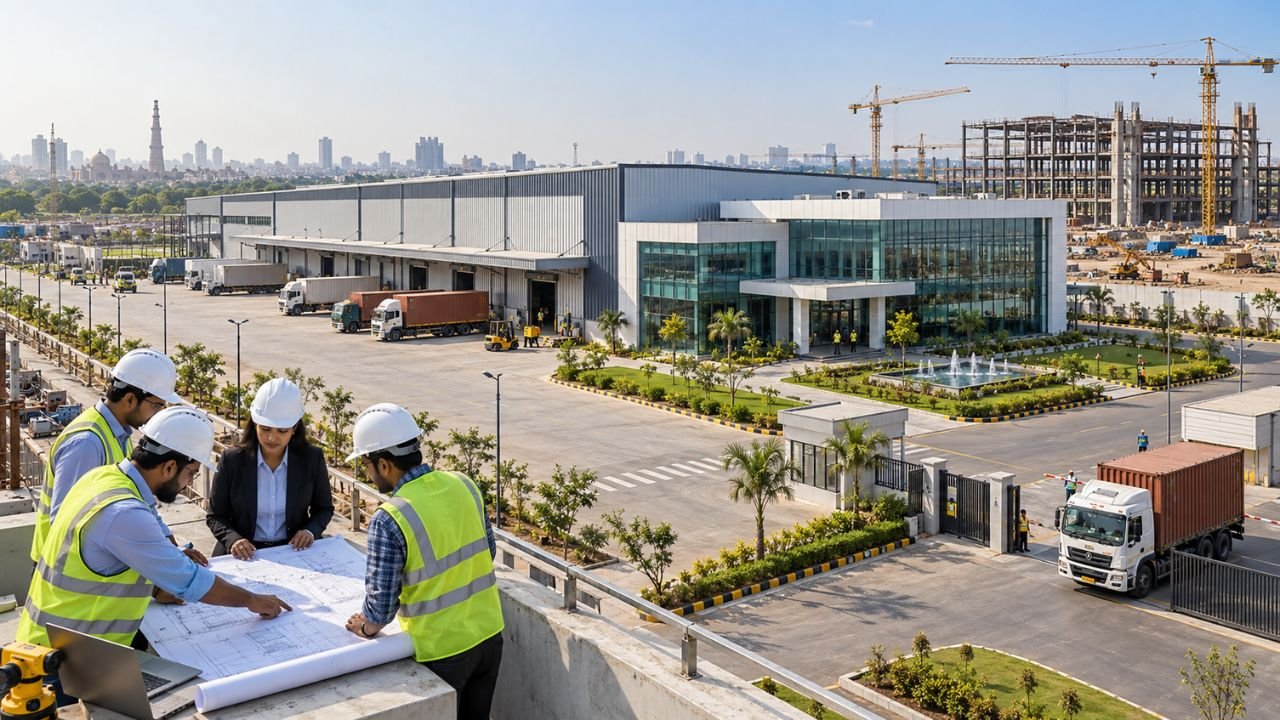
Imagine you are a contractor in Meerut, overseeing a multi-story residential project worth ₹5 crores. Suddenly, an unseasonably heavy monsoon hits West Uttar Pradesh, causing a partial collapse of the scaffolding and significant water damage to the fresh premium electrical wiring, which usually accounts for 10–18% of your total construction cost. Without the right types of construction insurance, you are not just looking at a massive repair bill; you are facing potential third-party liability claims from neighbors and legal penalties for worker injuries. In the current Indian construction boom, where infrastructure and private housing are skyrocketing, failing to understand these specialized financial safeguards can lead to catastrophic business losses.
As an expert for Construction Estimator India, I’ve seen how risk management is often the deciding factor between a profitable project and a financial disaster. Whether you are building in the bustling Delhi-NCR or a growing tier-2 city like Meerut, knowing the specific types of construction insurance is essential for accurate project costing and peace of mind. These policies protect your works in progress, expensive materials, heavy machinery, and most importantly, your human capital and legal liabilities. This guide will walk you through the primary types of insurance—from CAR and EAR to WCI and CPM—explaining their coverage, costs, and exactly how you should include them in your Bill of Quantities (BOQ).
Why Construction Insurance is Essential in India?
In 2026, construction insurance is no longer just a “good to have” option; it is a fundamental requirement. First, legal frameworks like the BOCW Act (Building and Other Construction Workers Act) and the Employees’ Compensation Act mandate protection for your labor force. Furthermore, if you are seeking funding, banks like SBI or HDFC almost always mandate a contractors all risk policy to protect their collateral during the construction phase.
Beyond legalities, the climate in North India has become increasingly unpredictable. From seismic tremors in the Delhi-NCR (Zone IV/V) to localized flooding in Uttar Pradesh, your project is constantly at risk from natural calamities. Theft of high-value materials like steel and cement is another rising concern that can derail a project budget if not insured. For construction estimators, accurately predicting these risks and selecting the right types of construction insurance in India 2026 ensures that your tenders are both competitive and secure against unforeseen events.
For detailed guidance on protecting projects during the building phase, read our guide on insurance for building under construction in India.
Main Types of Construction Insurance in India
Understanding the variety of available policies is the first step toward building a robust risk management strategy. Below is an overview of the most critical insurance types you will encounter in the Indian market.
| Insurance Type | Primary Purpose | Who Needs It? |
|---|---|---|
| CAR Insurance | Comprehensive cover for physical damage to works and liability. | Civil Contractors & Project Owners |
| EAR Insurance | Covers risks during installation and testing of machinery. | Industrial & Power Project Builders |
| Workmen Compensation | Mandatory cover for worker injuries, disability, or death. | All Employers of Construction Labor |
| CPM Insurance | Protects heavy equipment (cranes, excavators) on-site. | Equipment Owners & Contractors |
| CGL Insurance | Covers damage to third-party property or bodily injury. | Large Commercial Developers |
1. Contractors’ All Risk (CAR) Insurance
The CAR insurance India market recognizes this as the “gold standard” for civil engineering projects. It is a comprehensive policy that provides coverage for two main areas: physical damage to the construction work (including materials on-site) and third-party liability. If you are a builder in Meerut constructing a villa, this policy covers you if a fire, earthquake, or flood damages the structure during the build.
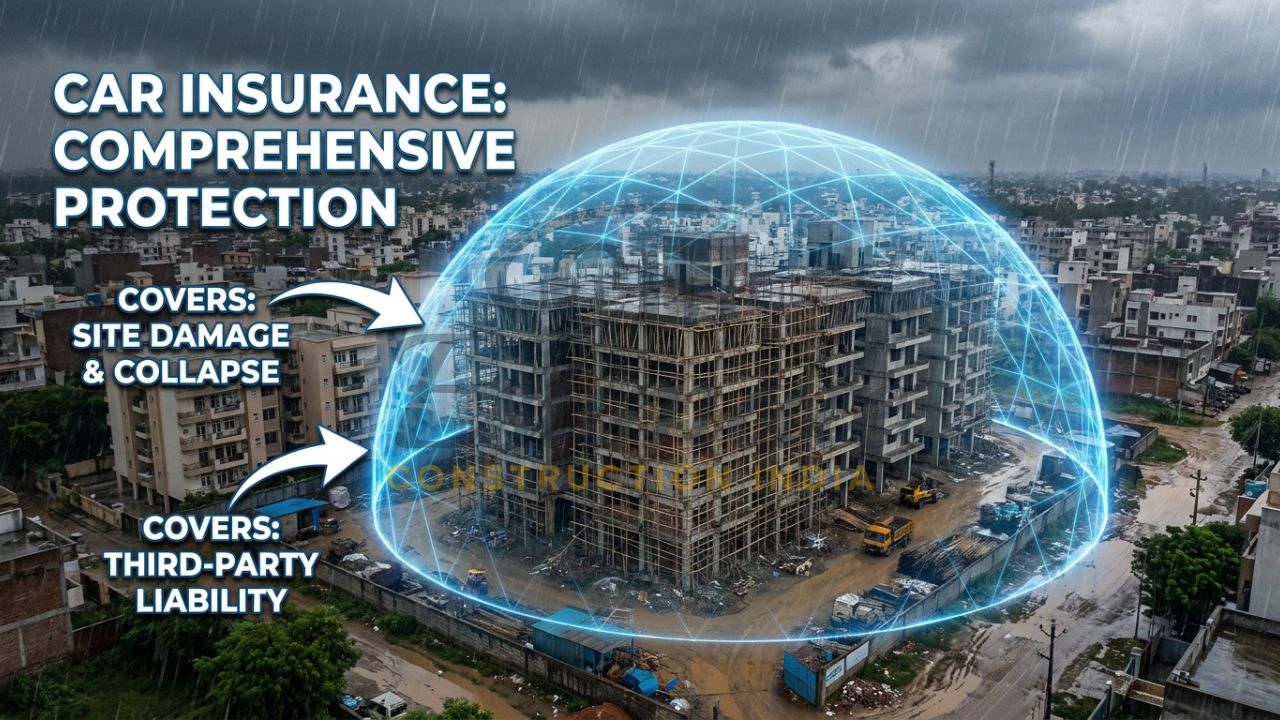
Crucially, the coverage period typically spans from the commencement of work until the project is handed over, often including a “maintenance period” to cover defects that might arise shortly after completion. When calculating the sum insured, you must use the total contract value plus a percentage for price escalation—essential in 2026 as material rates for cement and steel continue to fluctuate. Popular add-ons in India include debris removal, architect’s fees, and cross-liability, which protects different parties involved in the same contract.
For a comprehensive overview, explore construction all risk insurance in India.
2. Erection All Risk (EAR) Insurance
While CAR is for “bricks and mortar,” erection all risk insurance is for “nuts and bolts.” You need this specifically for projects involving the installation, testing, and commissioning of heavy machinery, industrial plants, or electrical systems. For example, if you are setting up a new manufacturing unit in Noida or a solar farm in Uttar Pradesh, EAR is your primary shield.
The key difference from CAR is that EAR focuses on the mechanical and electrical risks inherent in the installation process. It covers the machinery from the moment it is unloaded at the site, through the storage and assembly phases, until the final testing is complete. This is vital because a simple calibration error during a trial run can lead to millions in damage, which standard building insurance vs construction insurance packages might not cover.
3. Workmen Compensation Insurance (WCI) / Employers Liability
In India, workmen compensation insurance construction is not optional. It is a statutory requirement under the Employees’ Compensation Act 1923 and the BOCW Act. As a contractor, you are legally liable to pay compensation if a worker suffers an injury, permanent disability, or death while on your site.
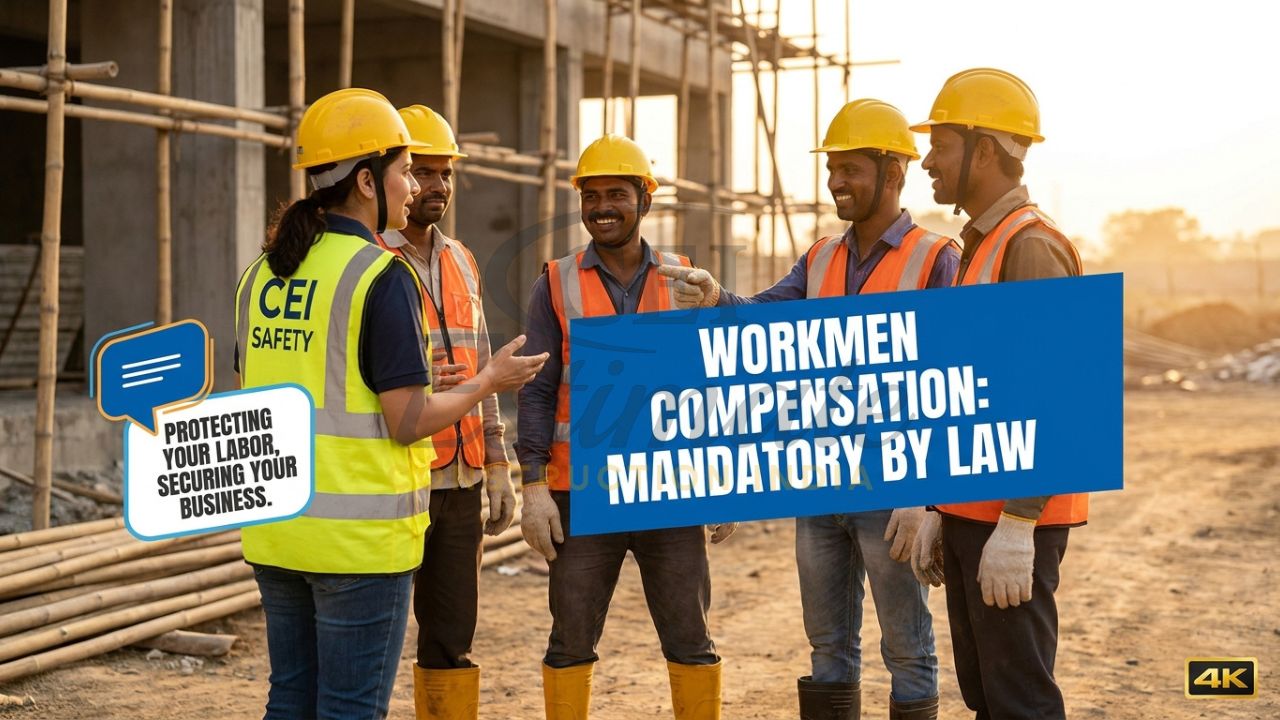
A WCI policy covers these legal liabilities, including medical expenses for the injured worker and legal costs if the matter goes to court. In 2026, the IRDAI construction insurance guidelines have streamlined these policies to ensure faster claim settlements for laborers. Failing to maintain this insurance can lead to heavy fines, project shutdowns by authorities, and even imprisonment for the principal employer or contractor.
Beyond property protection, every responsible contractor must secure insurance for construction workers in India.
4. Contractors Plant & Machinery (CPM) Insurance
Heavy equipment like tower cranes, JCBs, and excavators are the lifeblood of modern sites, but they are also incredibly expensive. Contractors plant and machinery insurance provides specific protection for these assets. While some CAR policies allow you to add machinery as an “add-on,” a standalone CPM policy is often better for contractors who move their equipment across multiple project sites.
This policy covers physical damage due to accidents, mechanical breakdown, and even theft or transit risks. For a contractor in the Delhi-NCR region, where equipment is often leased or financed, having a CPM policy is usually a requirement from the financing company to ensure that the asset’s value is protected regardless of which site it is currently serving.
5. Other Important Types of Construction Insurance
Beyond the big four, several other types of construction insurance are gaining traction in 2026 to address modern project complexities:
- Commercial General Liability (CGL): This is broader than the liability section of a CAR policy. It covers “Public Liability,” protecting you if a visitor is injured on-site or if your construction activities damage a neighbor’s property.
- Professional Indemnity (PI): Essential for architects and structural engineers to protect against claims of “professional negligence” or design errors.
- Marine Cargo / Inland Transit: If you are sourcing premium tiles from Gujarat or marble from Rajasthan for a project in Meerut, this covers the materials while they are in transit to your site.
- Advance Loss of Profits (ALOP): Also known as Delay in Start-up (DSU) insurance, this covers the loss of anticipated revenue if a project is delayed due to an insured physical damage event (like a fire).
- Cyber Insurance: As “smart building” projects in cities like Noida use more IoT and automated systems, protection against data breaches and system hacking is becoming a new necessity.
Comparison of Major Types of Construction Insurance
To help you decide which coverage suits your specific project, review this detailed comparison based on the 2026 Indian market standards.
| Feature | CAR Insurance | EAR Insurance | WCI Insurance | CPM Insurance |
|---|---|---|---|---|
| What it Covers | Civil works & third-party liability. | Machinery installation & testing. | Labor injury & legal liability. | Heavy equipment & machinery. |
| Who Buys it? | Civil Contractors / Owners. | Mechanical/Electrical Contractors. | All Labor Employers. | Equipment Owners. |
| Sum Insured | Total Contract Value. | Value of machinery + Erection cost. | Based on total wage bill. | Market Value of equipment. |
| Premium (2026) | 0.50% – 1.5% of Contract Value. | 0.60% – 2.0% of Machine Value. | Based on risk category of work. | 1.0% – 2.5% of Asset Value. |
| Key Exclusion | Normal wear and tear. | Faulty design/workmanship. | Willful negligence of worker. | Breakdown due to overloading. |
How to Choose the Right Types of Construction Insurance?
Choosing the right policy depends on your role and the project’s nature. If you are an individual home builder in Meerut, a comprehensive building insurance vs construction insurance analysis is vital. For a standard home build, a CAR policy is usually sufficient. However, for a developer building a commercial plaza in Noida, a combination of CAR, CGL, and PI is often necessary to satisfy international investors and local regulations.
Always consider the “Insurable Interest.” For example, a tenant doesn’t need to insure the building structure, only their contents. Similarly, as a contractor, you must ensure the sum insured reflects the reinstatement value—the actual cost to rebuild in 2026—rather than just the historical cost.
As a contractor or developer, it is highly recommended to explore types of insurance for contractors in India to build a complete protection strategy.
Cost of Construction Insurance in India & Impact on Project Estimates
In 2026, construction insurance cost India remains highly affordable, yet its impact on your bottom line is significant. CAR insurance premiums typically range from 0.5% to 1.5% of the total project value, depending on the location’s risk profile (like flood-prone areas in UP) and the contractor’s track record.
For a construction estimator, insurance should never be an “afterthought” or a “lump sum” guess. It must be a specific line item in your BOQ. By using the Suggested Profit % and Risk Factor % from professional calculators, you can ensure your bid covers these “soft costs” without eating into your profit margin. Including the first year’s premium in your initial project estimate demonstrates professionalism and protects your client from day one. For accurate budgeting, refer to our detailed analysis on how much is insurance for construction in India.
Step-by-Step Guide to Buying Construction Insurance
- Define the Scope: Determine if your project is primarily civil (CAR) or mechanical (EAR).
- Calculate Values: Use current 2026 material and labor rates to find the total reinstatement value.
- Compare Quotes: Use platforms like Policybazaar or contact direct insurers like ICICI Lombard, HDFC Ergo, or New India Assurance.
- Review the Fine Print: Check for the claim settlement ratio—the percentage of claims the company actually pays—to ensure you are with a reliable partner.
- Finalize Add-ons: Ensure you have “Escalation” coverage to account for rising costs of steel and cement during the project duration.
Many contractors prefer policies from established players. You can compare options like the Contractors All Risk Policy from ICICI Lombard.
Conclusion
Understanding the various types of construction insurance is the difference between a project built on a solid financial foundation and one vulnerable to every passing storm. From protecting your structural work in Meerut with CAR insurance to ensuring your workers are safe with WCI, these policies are non-negotiable for the modern Indian builder. In 2026, as infrastructure demands grow more complex, precise risk management is your greatest competitive advantage.
Don’t let an unforeseen accident derail your hard work. At Construction Estimator India, we specialize in providing professional BOQs and cost estimation services that accurately factor in all necessary insurance costs. Build with confidence by ensuring your project is fully protected from the foundation to the roof.
Ready to secure your project?
- Contact us for a Professional BOQ: Person
- WhatsApp for Estimation Help: +91 8630676890
- Internal Link: Read our guide on What is Under Construction Building Insurance? to learn more about site-specific risks.
FAQ Section
What are the main types of construction insurance in India?
The main types include Contractors’ All Risk (CAR), Erection All Risk (EAR), Workmen Compensation Insurance (WCI), and Contractors Plant and Machinery (CPM) insurance.
What is the difference between CAR and EAR insurance?
CAR insurance is for civil works like houses and bridges, while EAR insurance covers the installation and testing of machinery and industrial plants.
Is Workmen Compensation Insurance mandatory for construction sites?
Yes, it is legally mandatory under the Employees’ Compensation Act 1923 and the BOCW Act for any employer hiring construction labor in India.
What does Contractors All Risk (CAR) insurance cover?
It covers physical damage to the works (fire, flood, earthquake) and third-party liability for bodily injury or property damage during the construction period.
How much does construction insurance cost in India?
In 2026, premiums for a CAR policy generally range from 0.5% to 1.5% of the total project value, depending on risk factors like location and project type.
Can I include plant and machinery under a CAR policy?
Yes, most insurers allow you to add machinery as an “add-on” to a CAR policy, though large equipment owners often prefer a separate CPM policy for better coverage.
What is the difference between construction insurance and home insurance?
Construction insurance protects a project while it is being built, whereas home insurance is for completed homes and includes coverage for furniture and personal belongings.
Which types of construction insurance are required for bank loans?
Banks typically require a Contractors All Risk (CAR) policy for the full contract value to protect their interest in the property during construction.
How do I include insurance costs in my BOQ?
Include it as a “Fixed Soft Cost” line item. Calculate it as a percentage of the total project value based on quotes from insurers like ICICI Lombard or HDFC Ergo.
What add-ons are available in a CAR policy?
Common add-ons include Debris Removal, Architect/Engineer fees, Escalation (to cover rising material costs), and Surrounding Property cover.