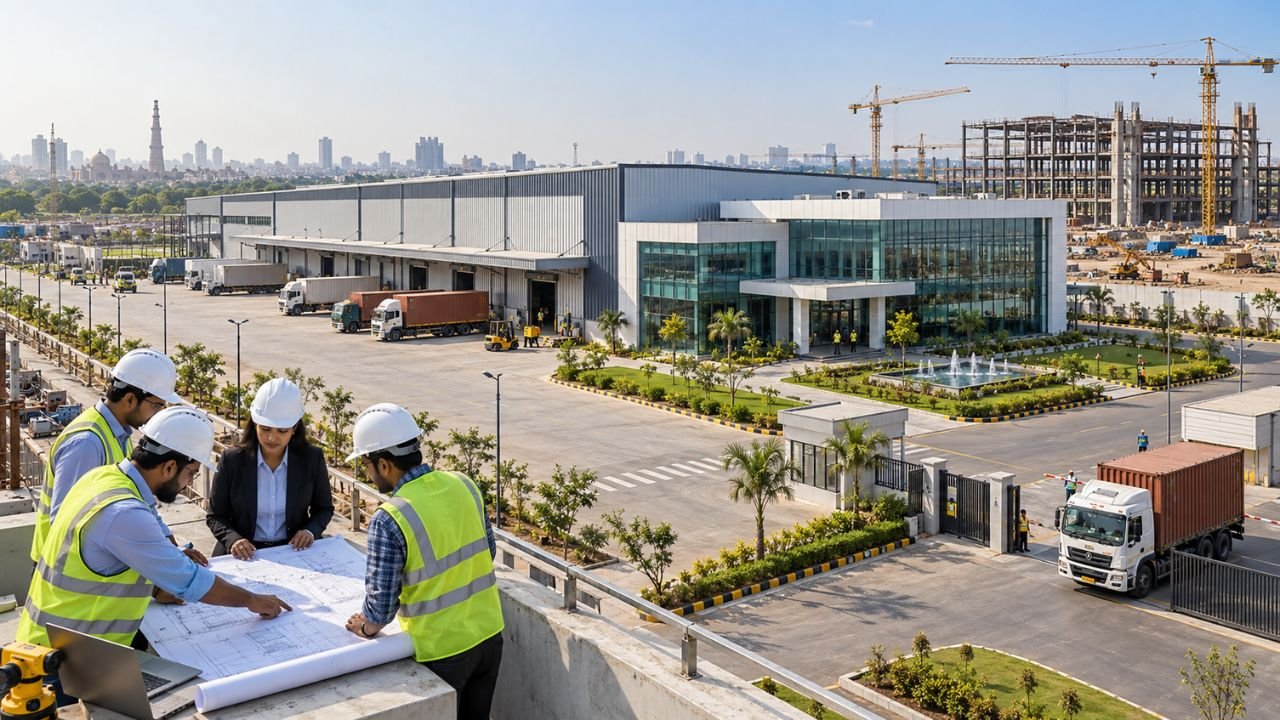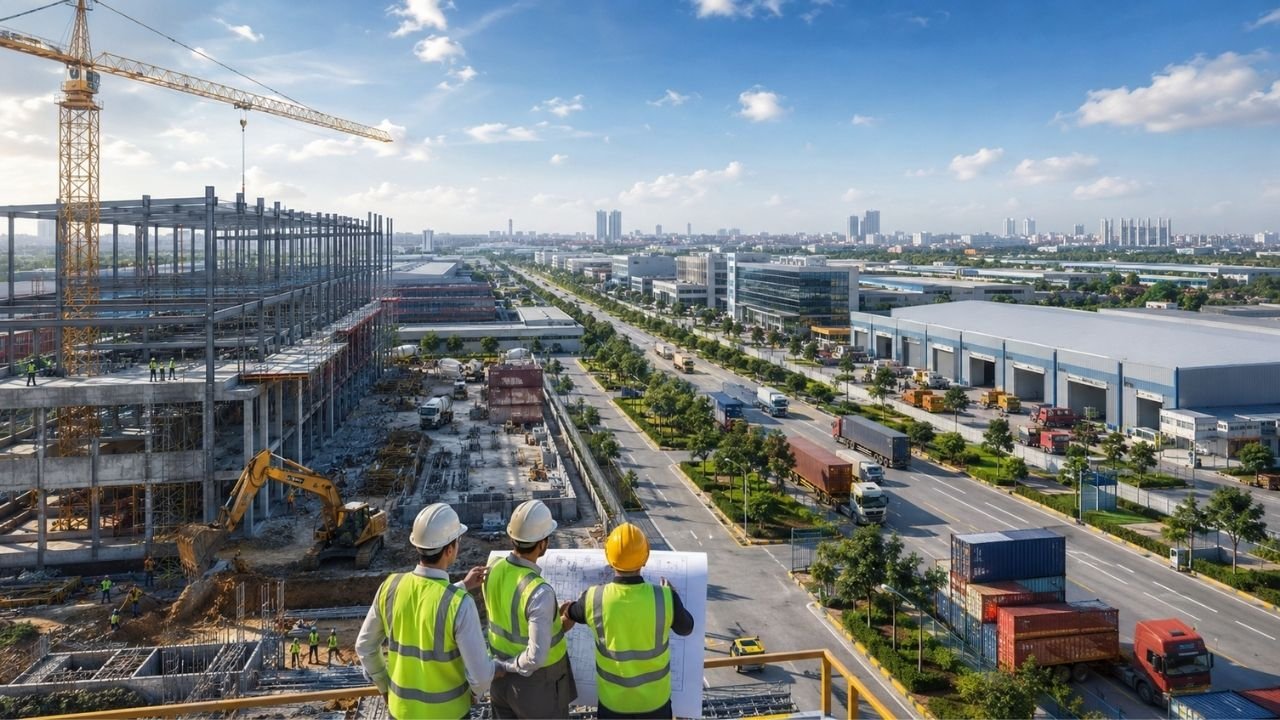
Imagine you are a homeowner in Meerut, Uttar Pradesh, finally realizing your dream of building a three-story residence. By the monsoon of 2026, your project is 60% complete; premium Teak wood frames are fitted, and expensive electrical conduits lace the walls. Suddenly, an unprecedented week of downpours triggers a localized flash flood. Your unfinished boundary wall collapses, the ground floor is submerged, and thousands of bags of cement stored on-site are instantly ruined.
Many builders and homeowners in this situation mistakenly believe their future home insurance will cover the loss. However, without specific under construction building insurance in India, you are left holding a bill for lakhs of rupees, potentially setting your project back by years. This specialized protection is not just a “good-to-have”; it is the most vital financial ally for anyone managing an active construction site. In this guide, we will break down everything you need to know about securing your project from groundbreaking to handover.
What is Under Construction Building Insurance in India?
At its core, under construction building insurance in India is a specialized financial product designed to protect a “work-in-progress”. Unlike standard home insurance policies, such as the Bharat Griha Raksha (which only covers completed and occupied dwellings), this policy treats the construction site as a dynamic, high-risk environment.
It covers the physical structure, raw materials like steel and cement, temporary works such as scaffolding, and even third-party liabilities while the house is being built. In the Indian market, this is most commonly obtained as a what is under construction building insurance component within a Contractors’ All Risk (CAR) policy or Builders Risk Insurance.
Because an active site lacks the security of finished doors and windows and is exposed to the elements, it is highly susceptible to theft and weather damage. This policy provides coverage from the moment of groundbreaking until the final handover or the issuance of a completion certificate from local authorities. Whether you are a self-building owner or a contractor, this insurance ensures that a single accident doesn’t lead to total project insolvency.
Key Differences: Construction vs. Completed Home Insurance
| Feature | Under Construction Building Insurance | Completed Home Insurance |
|---|---|---|
| Primary Focus | Works in progress, raw materials, scaffolding. | Finished structure and permanent contents. |
| Typical Hazards | Site theft, structural collapse, monsoonal floods. | Burglary, fire, earthquake (post-possession). |
| Eligibility | Groundbreaking to Completion/OC. | Post-completion / Possession. |
| Sum Insured | Total Estimated Contract Value. | Reinstatement Value (current rebuild cost). |
Types of Construction Insurance in India
Navigating the landscape of construction insurance in India requires understanding that different projects carry different risks. A high-rise in Delhi-NCR faces different challenges than a rural industrial plant. According to the General Insurance Council, selecting the right policy depends on the nature of the work being performed.
The primary types of construction insurance in India include:
- Contractors’ All Risk (CAR) Insurance: The “gold standard” for civil engineering projects, covering physical damage to works and third-party liabilities.
- Erection All Risk (EAR) Insurance: Specifically for projects involving the installation and testing of machinery or industrial plants.
- Contractors Plant and Machinery (CPM) Insurance: Protects heavy equipment like cranes, excavators, and mixers across various sites.
- Workmen Compensation Insurance (WCI): A statutory mandate in India to protect the labor force from site-related injuries or fatalities.
Summary of Major Construction Policies
| Policy Type | Best Suited For | Key Coverage |
|---|---|---|
| CAR Insurance | Residential & Commercial Buildings | Fire, Theft, Natural Perils, Liability |
| EAR Insurance | Factories & Power Plants | Machinery Assembly & Testing Risks |
| CPM Insurance | Heavy Equipment Owners | Damage to Cranes, Excavators, Tools |
| WCI | All Employers/Contractors | Medical Expenses & Disability Payouts |
What Does Under Construction Building Insurance Typically Cover?
The value of under construction building insurance in India lies in its “All Risk” framework, which covers sudden and unforeseen physical loss or damage. For residential builds in 2026, where weather patterns are increasingly volatile, these covers are indispensable.
1. Physical Damage from Fire and Natural Perils
Construction sites often contain flammable materials like timber, chemicals, and plastic conduits. This policy covers damage from fire, lightning, and explosions. Furthermore, it provides a shield against “Special Perils,” including monsoonal floods, inundation, storms, cyclones, and landslides—risks that are particularly high in North India.
2. Theft and Burglary
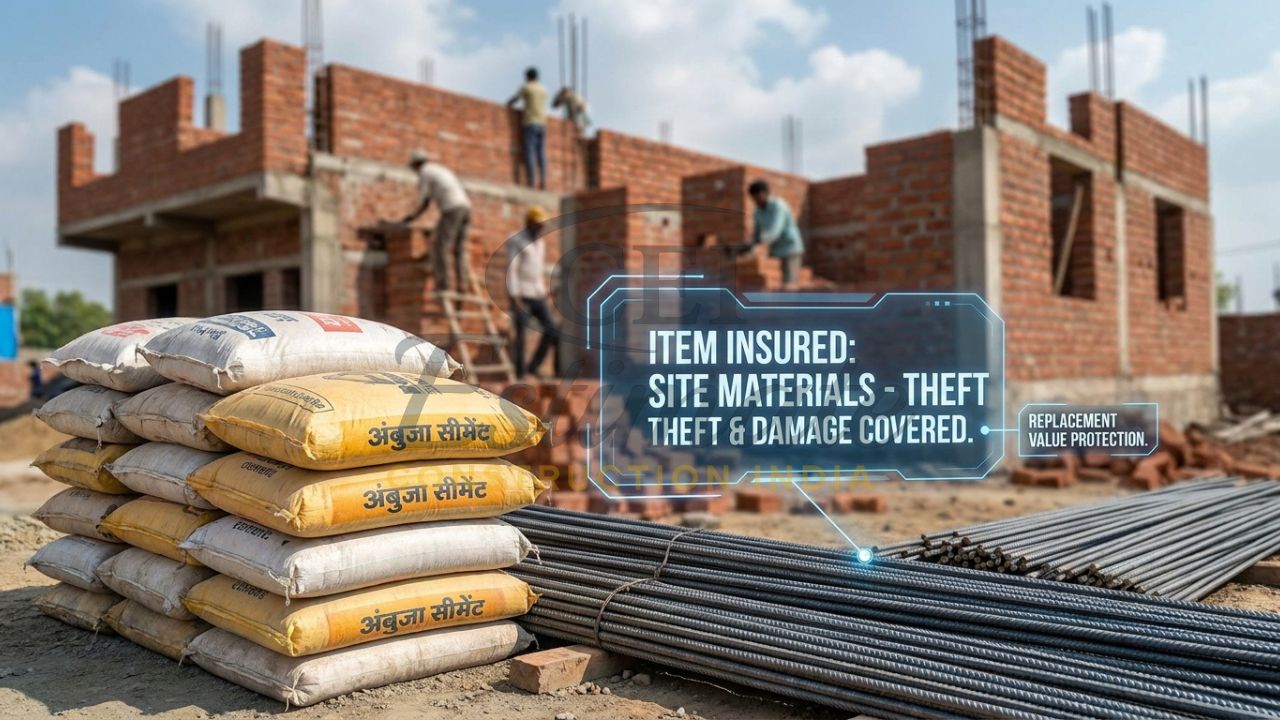
One of the most common issues on Indian sites is the theft of TMT bars, copper wiring, or high-end bathroom fittings before they are secured. This policy covers the burglary of materials and equipment on-site, provided there is evidence of housebreaking or forceful entry.
3. Structural Collapse
During construction, a building’s structural integrity is not yet fully achieved. A failure in shuttering or an unexpected soil shift can lead to a collapsed slab. The insurance covers the cost of clearing debris and rebuilding the affected portion, which can otherwise cost lakhs.
4. Third-Party Liability
If a piece of scaffolding falls and damages a neighbor’s property or injures a passerby, the “Third-Party Liability” section covers the legal and compensatory costs. This prevents your project from being derailed by expensive litigation in a crowded urban colony.
5. Maintenance and Testing Period
Many policies offer an add-on for a “maintenance period” (typically 12 months), covering structural defects or damage that appear immediately after the project is completed but before final handover.
Insurance for Construction Workers and Contractors
The human element is the most critical part of any construction project. In India, providing insurance for construction workers in India is not just a moral duty but a legal requirement under the Building and Other Construction Workers (BOCW) Act and the Employees’ Compensation Act.
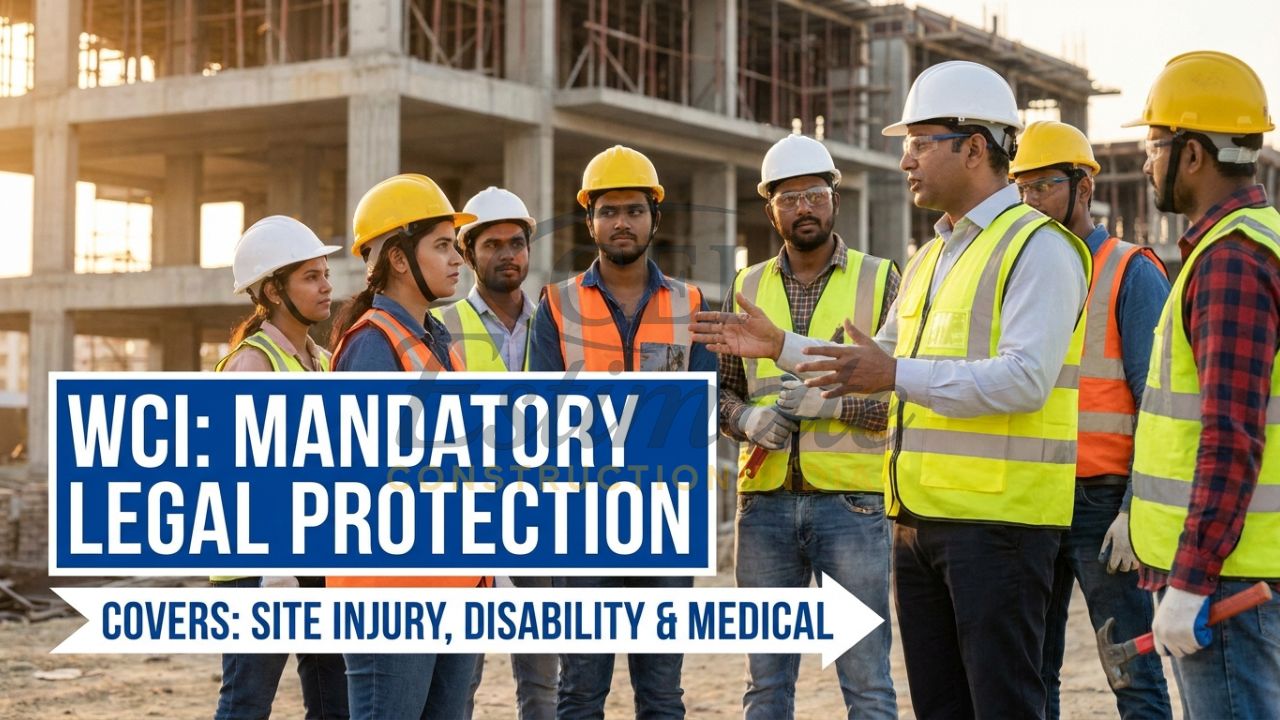
Workmen Compensation Insurance covers the employer’s liability for site-related injuries, permanent disabilities, or fatalities. In an industry where scaffolding collapses and electrical accidents are daily hazards, this policy ensures that a worker’s family is not pushed into poverty while protecting the contractor from crippling legal fines.
For the professionals managing the site, there are specific types of insurance for contractors in India. Beyond CAR policies, contractors often opt for Professional Indemnity Insurance to protect against claims arising from design errors or professional negligence. In the competitive 2026 market, having robust insurance coverage is often a prerequisite for securing bank financing and winning government tenders.
Types of Insurance for Construction Companies
Large-scale firms operating in the 2026 infrastructure landscape require a more comprehensive portfolio. The various types of insurance for construction companies in India go beyond simple site protection.
For instance, Commercial General Liability (CGL) insurance offers a broader shield against business-wide risks, including advertising injury and personal injury claims. To protect the personal assets of the leadership team, firms are increasingly turning to Directors and Officers (D&O) Liability Insurance, which shields management from legal claims related to their corporate decisions. Furthermore, for modern “smart building” projects, Cyber Insurance is becoming essential to protect against data breaches and digital disruptions.
Companies like New India Assurance and ICICI Lombard provide customized packages that bundle these covers, allowing construction firms to manage escalating risks while ensuring long-term business continuity.
How to Buy Under Construction Building Insurance – Step-by-Step?
Purchasing under construction building insurance in India has become largely digital, but it requires careful attention to detail to ensure you are fully protected.
- Define the Sum Insured: Calculate the “Total Contract Value,” which includes the cost of raw materials, labor, and professional fees. Crucial: Never include the land value, as land cannot be “destroyed” by typical perils.
- Gather Necessary Documentation: You will need the exact site address, building plans, estimated construction schedule, and details of the contractor or primary builder.
- Identify Critical Riders: In 2026, ensure you include an Escalation Clause to account for rising material costs like steel and cement during long builds.
- Compare Quotes: Obtain at least three quotes from reputable insurers like HDFC Ergo or New India Assurance. Look specifically at the “Special Perils” and “Burglary” sub-limits.
- Review Exclusions: Be aware that “All Risk” does not cover faulty workmanship (e.g., a wall built crookedly) or willful negligence.
- Finalize in Joint Names: It is best practice to issue the policy in the joint names of the owner, the contractor, and the lending bank (if applicable).
Frequently Asked Questions (FAQs)
What is the cost of under construction building insurance in India?
Typically, the premium ranges from 0.5% to 1.5% of the total construction cost. For a residential project worth ₹80 Lakhs, the annual premium might range between ₹40,000 and ₹1,20,000 depending on location and risk factors.
Can I use my standard home insurance for a building under construction?
No. Standard policies like Bharat Griha Raksha explicitly exclude properties that are under development and do not have a completion certificate.
Is construction insurance mandatory by law for private individuals?
While not strictly mandatory for a private self-build, it is almost always mandated by Indian banks and NBFCs for construction-linked home loans.
Does CAR insurance cover the theft of cement and steel?
Yes, most policies cover the theft of raw materials, provided there is evidence of housebreaking or forceful entry into the site.
What happens if the project is delayed?
You must inform your insurer and extend the policy duration. Most insurers allow extensions for a pro-rata premium to ensure coverage remains continuous.
Does it cover injuries to neighbors or damage to their property?
Yes, this is covered under the Third-Party Liability section of a Contractors’ All Risk policy.
When is the best time to buy this insurance?
You should purchase the policy before groundbreaking or as soon as the first materials arrive at the site.
What is an “Escalation Clause”?
This is a rider that automatically increases the sum insured (usually by 5–10%) to account for the rising cost of materials like steel and cement during the construction period.
What is not covered by under construction insurance?
Common exclusions include faulty workmanship, design errors, willful negligence, normal wear and tear, and losses due to war or nuclear risks.
Can I transfer this policy to the new homeowner if I sell the project mid-way?
Yes, the policy can generally be endorsed to a new owner, provided the insurer is notified and approves the transfer.
Conclusion
The journey of building a home or commercial project in India is a massive emotional and financial investment. From the humid plains of Uttar Pradesh to the bustling urban centers of Delhi-NCR, the risks—ranging from monsoonal floods to site theft—are real and ever-present.
Under construction building insurance in India is not just an added expense; it is the invisible foundation of your project’s financial security. By selecting the right CAR insurance and accurately factoring these costs into your initial Bill of Quantities (BOQ), you ensure that your dream survives the construction phase to become a reality.
At Construction Estimator India, we advocate for total financial transparency. Don’t leave your project’s future to chance. Arrange the right coverage early, and build with the confidence that your investment is protected from the ground up. For professional BOQ services that accurately include insurance costs based on 2026 market rates, contact our expert team today