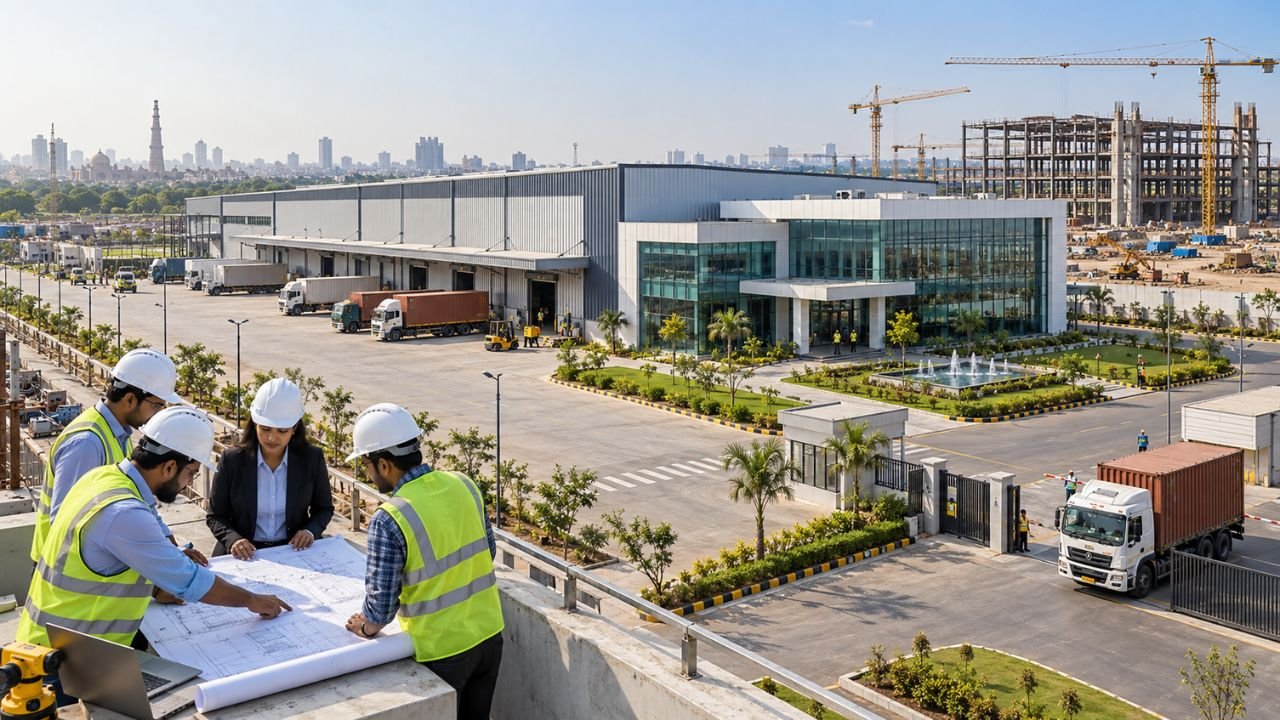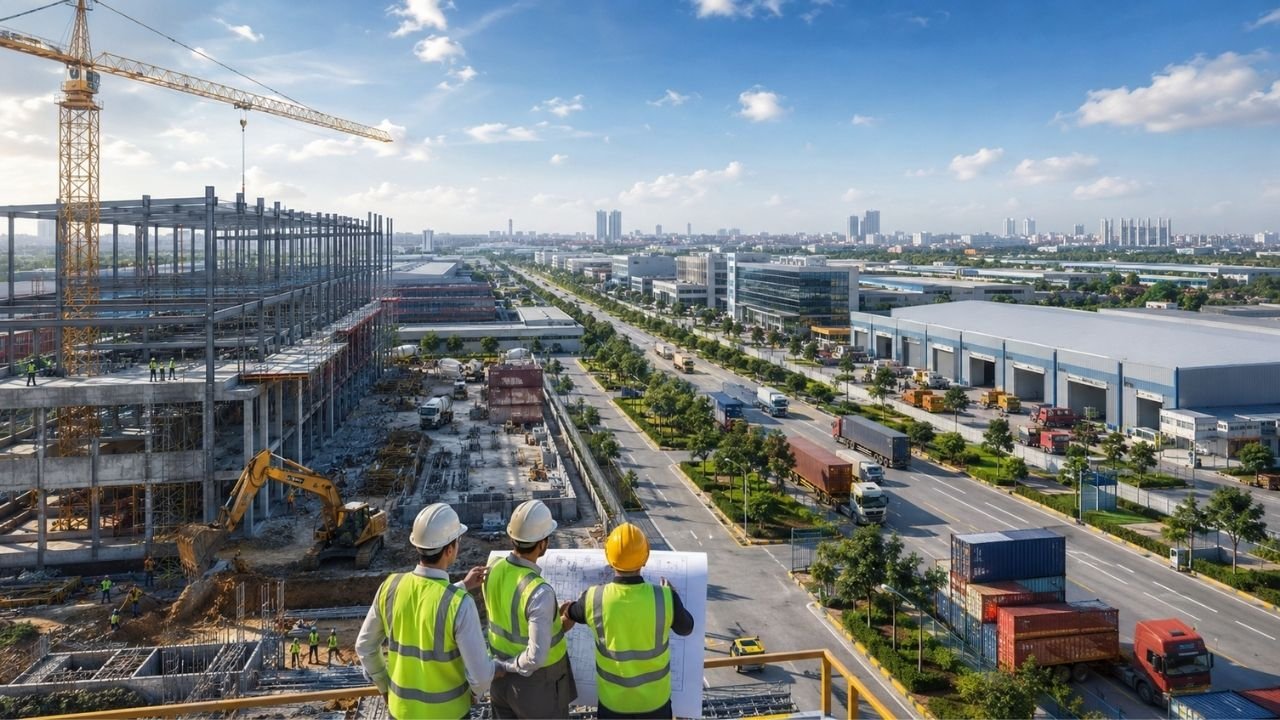
Imagine you are overseeing a high-stakes residential project in the heart of Delhi-NCR during the peak of the 2026 monsoon. Suddenly, an unseasonal cloudburst triggers a flash flood, causing a partial collapse of the scaffolding and ruining thousands of bags of premium cement stored on-site. In another scenario, a manufacturing plant in Pune faces a sudden electrical short circuit that halts production for weeks. These are not just “what-if” scenarios; they are daily realities for Indian builders, contractors, and factory owners. In 2026, the Indian construction and manufacturing landscape has reached a point where financial risk management is no longer a luxury—it is the bedrock of business continuity.
With the skyrocketing costs of raw materials and the tightening grip of regulatory bodies like RERA and the IRDAI, failing to secure the right types of insurance for contractors in India can lead to total insolvency. Whether you are managing a massive flyover project or a solo home renovation, understanding your insurance portfolio is critical for tender success and personal asset protection. This guide serves as your senior advisor, walking you through the essential safeguards required to build and produce with total peace of mind in the current year.
Types of Insurance for General Contractors in India
For a general contractor managing large-scale civil or commercial projects, the risk profile is multi-layered. You aren’t just responsible for the bricks and mortar; you are liable for the safety of hundreds of workers, the integrity of high-value machinery, and the protection of third-party properties. The “gold standard” in this sector is the Contractors’ All Risk (CAR) Insurance, which provides a dual shield by covering both physical damage to the works and third-party liability.
General contractors must prioritize types of insurance for general contractors in India to satisfy bank financing requirements from institutions like SBI or HDFC. These lenders view insurance as essential collateral protection. Beyond CAR, general contractors frequently require Erection All Risk (EAR) insurance for projects involving the installation and testing of heavy mechanical systems. In the 2026 market, many general contractors are also adopting Commercial General Liability (CGL) to provide a broader umbrella for public liability claims that might arise years after a project is completed.
| Insurance Type | Best For | Primary Coverage |
|---|---|---|
| Contractors All Risk (CAR) | Major Civil Projects | Physical damage, fire, flood, and third-party liability. |
| Erection All Risk (EAR) | Industrial/MEP Projects | Mechanical installation, testing, and commissioning. |
| Commercial General Liability | Large Firms | Public liability across all business operations. |
| Professional Indemnity (PI) | Design-Build Firms | Professional negligence or design errors. |
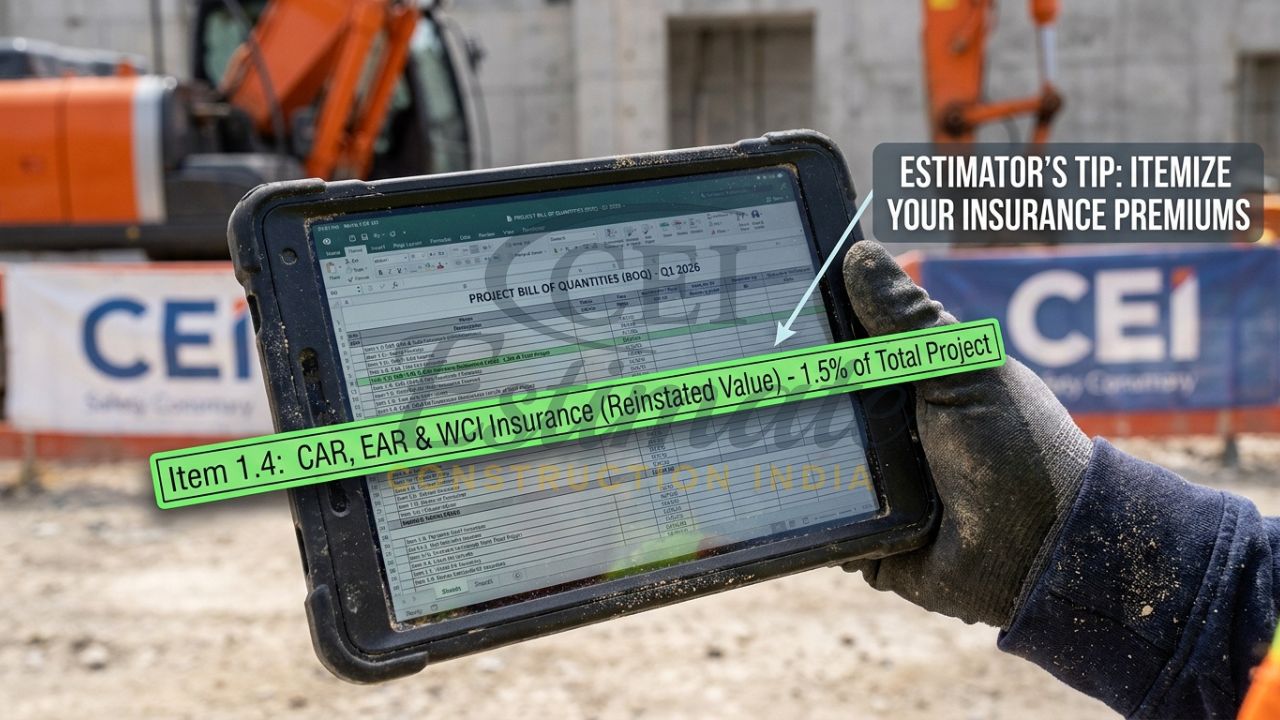
Integrating these policies into your Bill of Quantities (BOQ) as a distinct “Fixed Soft Cost” ensures your profit margins remain protected against unforeseen site disasters. Top-tier insurers such as ICICI Lombard and New India Assurance offer specialized packages tailored for these complex requirements.
Types of Insurance for Independent Contractors in India
If you are a solo operator or a small-scale builder in a tier-2 city like Meerut, your personal liability is significantly higher because there is often no corporate safety net to catch you. Many independent contractors mistakenly assume that the client’s home insurance will cover site accidents, only to realize that standard policies like Bharat Griha Raksha explicitly exclude properties under construction.
For a solo site supervisor or a sub-contractor, types of insurance for independent contractors in India focus on protecting one’s livelihood. A single project mishap—such as a worker’s back injury or the theft of high-end Italian marble—can wipe out a year’s worth of savings. Independent operators should look for “Single Project” CAR policies that offer flexible coverage for the project duration. Additionally, having a Personal Accident (PA) policy for yourself is vital, as it provides a “Loss of Income” benefit if you are injured on-site and cannot supervise work.
In 2026, climate volatility in North India has made “Work-in-Progress” more vulnerable than finished structures. Whether you are digging a basement in a congested urban lane or installing solar panels, ensuring you have Third-Party Liability (TPL) protection prevents project-halting lawsuits from neighbors.
Insurance for Construction Workers in India – Why It’s Critical
The humanitarian and legal weight of construction management rests on how well you protect your human capital. In India, the construction sector reports some of the highest fatal accident rates, making worker protection a non-negotiable ethical and legal duty. You might ask, why do we need insurance for construction workers in India? The answer lies in statutory compliance with the Employees’ Compensation Act 1923 and the Building and Other Construction Workers (BOCW) Act 1996.
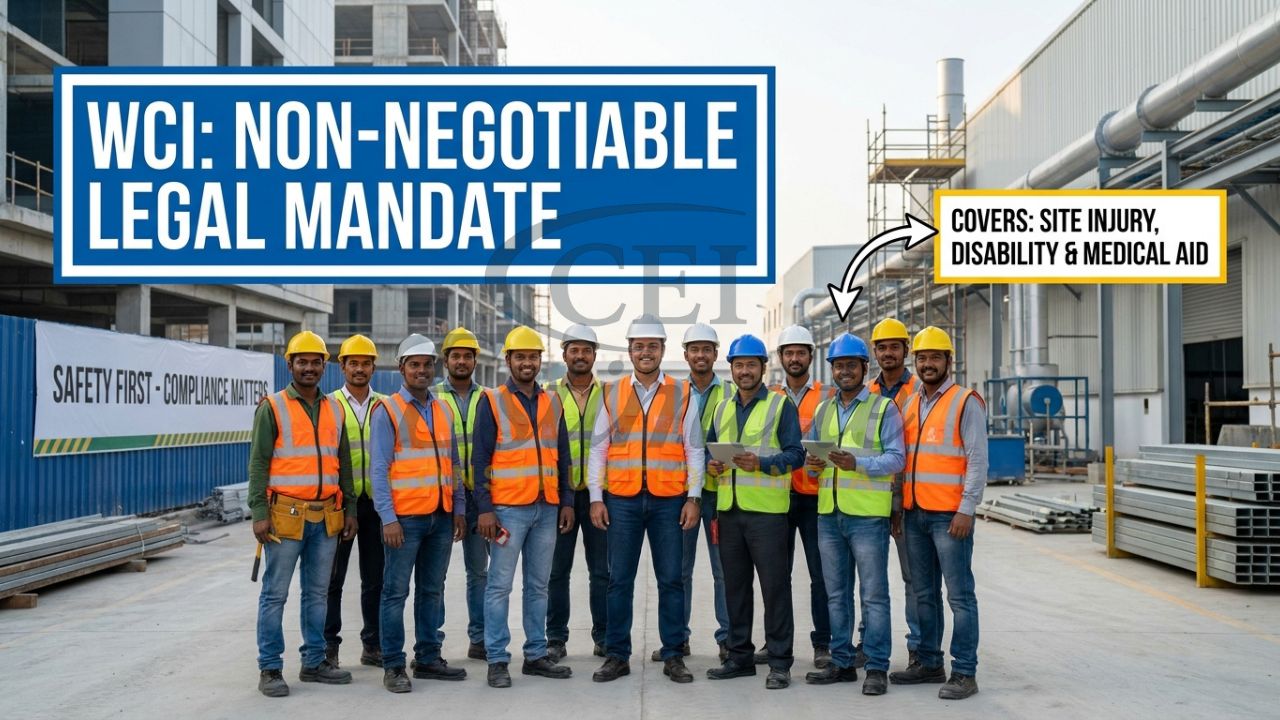
Workmen Compensation Insurance (WCI) is a mandatory requirement for any employer hiring labor in India. It covers the legal liability for worker death, permanent disability, and medical expenses arising “out of and in the course of employment”. Failure to maintain this insurance can lead to criminal charges, heavy fines from labor commissioners, and immediate project shutdowns.
Professional builders in 2026 often combine mandatory WCI with affordable government schemes like the Pradhan Mantri Suraksha Bima Yojana (PMSBY) to provide a robust safety net. This not only ensures compliance but also builds immense trust with the unorganized migrant workforce that forms the backbone of the industry.
Types of Insurance for Manufacturing Companies in India
Manufacturing companies face multi-dimensional risks that differ from the typical construction site. You are managing automated machinery worth crores, complex supply chain dependencies, and the constant threat of fire or explosion. Foundational coverage for this sector starts with Fire and Property Insurance, which protects buildings and stocks from external perils and natural catastrophes.
To build a resilient enterprise, owners must explore types of insurance for manufacturing companies in India. Key policies include:
- Machinery Breakdown (MBD) Insurance: Covers sudden mechanical or electrical failures that a standard fire policy excludes.
- Business Interruption (BI) Insurance: Critical for replacing lost income and covering fixed costs when operations halt due to a fire or machinery failure.
- Product Liability: Shields the business against legal claims from consumers regarding defective goods.
- Cyber Insurance: A new necessity in 2026 to protect against digital threats that can halt automated production lines.
Manufacturing companies are generally advised to allocate roughly 1.5% to 3% of their total operational budget toward a robust insurance portfolio to ensure long-term sustainability.
How Much Does Construction Insurance Cost in India?
One of the most common questions contractors ask is, how much is insurance for construction in India? In 2026, premiums remain highly affordable relative to the peace of mind they offer. Generally, total insurance costs for a project range from 0.5% to over 2% of the total project value.
The cost is influenced by factors such as the project’s geographic risk (e.g., seismic Zone IV vs. Zone II) and the contractor’s safety track record. For example, a CAR policy for a ₹5 crore residential project might attract an annual premium between ₹35,000 and ₹75,000.
| Insurance Policy Type | Estimated Premium Range (2026) | Basis for Calculation |
|---|---|---|
| Contractors All Risk (CAR) | 0.5% – 1.5% | Total Project/Contract Value |
| Workmen Compensation (WCI) | 0.5% – 2.0% | Total Labor Wage Bill |
| Plant & Machinery (CPM) | 1.0% – 2.5% | Market Value of Asset |
| General Liability (CGL) | 0.1% – 0.5% | Limit of Indemnity per Accident |
As an estimator, always include these premiums as a dedicated line item in your BOQ. This ensures transparency with your client and prevents these “soft costs” from eroding your hard-earned profit margins.
How to Choose the Right Insurance Package for Your Business?
Selecting the ideal insurance package requires a methodical approach. Start with a thorough Risk Assessment of your specific site or plant. Does your site in Uttar Pradesh face monsoon flooding risks? Is your manufacturing unit in a high-density urban area? These factors determine which “Add-ons” you need, such as Debris Removal, Escalation Clauses, or Surrounding Property cover.
Common Mistakes to Avoid:
- Under-Insuring: Never base your sum insured on the historical cost of a project. Always use 2026 Reinstatement Values to ensure you have enough funds to rebuild at current material rates.
- Neglecting Maintenance Period: Ensure your CAR policy includes a maintenance period cover (usually 12 months post-handover) to protect against structural defects discovered later.
- Ignoring Subcontractors: Verify that your main WCI policy extends to sub-labor, or mandate that every subcontractor provides their own certificate of insurance.
Always check the Claim Settlement Ratio of an insurer before signing. In a high-liquidity market like India, you need an insurance partner known for fast, digital-first claim settlements.
Frequently Asked Questions (FAQs)
- Is construction insurance mandatory in India?
Yes, certain types are. Workmen Compensation Insurance is a statutory requirement under the Employees’ Compensation Act. CAR insurance is often mandatory for bank-financed or government tender projects. - Can I use my standard home insurance for a building under construction?
No. Standard home insurance (like Bharat Griha Raksha) is designed for completed, ready-to-live-in dwellings. It explicitly excludes buildings currently being built. - What is the difference between CAR and EAR insurance?
CAR is for civil works like houses and bridges, while EAR is specifically for the installation, testing, and commissioning of machinery and industrial plants. - Does insurance cover the theft of construction materials?
Yes, most CAR and independent contractor policies cover the theft of raw materials like steel and cement on-site, provided there is evidence of forceful entry. - How do I calculate the sum insured for building insurance?
Use the Reconstruction Cost formula: (Total Carpet Area × Current Construction Rate per sq. ft.). Do not include the value of the land. - Who is responsible for buying insurance: the contractor or the owner?
Usually, the contract (like FIDIC or CPWD) specifies this. Often, the contractor buys it and includes the cost as a line item in the BOQ for reimbursement by the owner. - Does WCI cover subcontractors’ workers?
While subcontractors should have their own, the “Principal Employer” (main contractor) is often held legally liable for all workers on-site. It is best to cover everyone under a master policy. - What happens if I don’t have insurance and an accident occurs?
You face total personal financial liability for all damages, medical costs, and potential criminal charges for non-compliance with labor laws.
Conclusion
Mastering the various types of insurance for contractors in India is the hallmark of a professional builder in 2026. From the massive financial protection of a CAR policy to the legal safety of Workmen Compensation, insurance serves as the invisible foundation of your company’s growth. It transforms unpredictable site hazards into manageable business risks, allowing you to bid with confidence and build with total peace of mind.
Don’t let a single unforeseen monsoon storm or a machinery breakdown derail years of hard work. Secure your business today by investing in a robust, 2026-compliant insurance portfolio. For expert assistance in preparing professional BOQs that accurately factor in all insurance and compliance costs, contact the specialists at Construction Estimator India. Let’s build a more resilient and profitable future together.