
The Indian construction landscape in 2026 is defined by two things: unprecedented scale and intensified liability. With the full implementation of the New Labour Codes and the surge in high-value infrastructure and luxury residential projects in hubs like Delhi-NCR and Bangalore, the “old way” of managing risk—relying on luck and loose handshakes—is a recipe for bankruptcy.
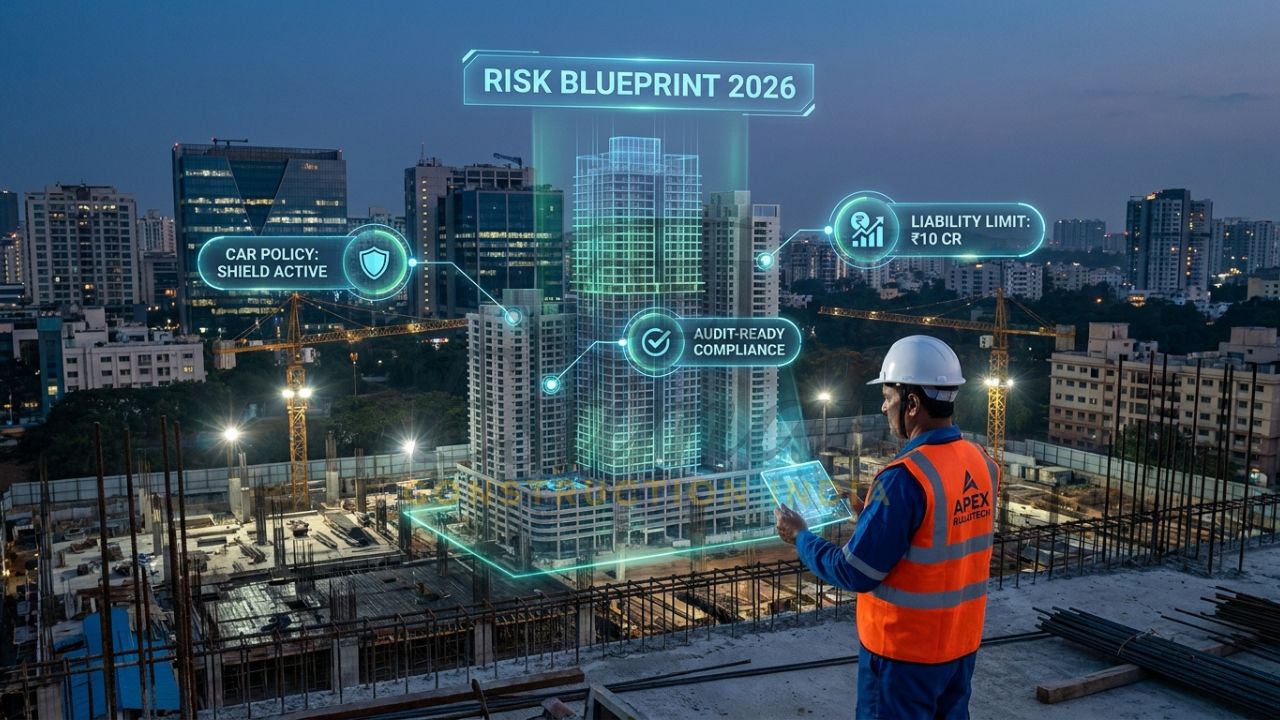
For the modern contractor, insurance is no longer just a “preliminary cost” in a Bill of Quantities (BOQ); it is a strategic shield that protects project margins from the unpredictable. This guide outlines the blueprint for a bulletproof risk management strategy.
1. The Foundation: Selecting the Right Business Coverage
Every project begins with a foundation, and for a construction firm, that foundation is its primary insurance portfolio. In the 2026 market, “one-size-fits-all” policies are obsolete. Small to mid-sized firms must balance the cost of premiums against the high-stakes risks of site accidents, material theft, and structural collapse.
The most successful contractors prioritize a Contractors’ All Risk (CAR) policy combined with Public Liability. This ensures that whether a monsoon flood ruins your foundation in Meerut or a crane accident damages a neighboring property, your company’s cash flow remains untouched.
Expert Insight: When bidding for private villas or commercial blocks, having a robust policy isn’t just about safety—it’s a competitive advantage. Clients are increasingly vetting the financial resilience of their builders.
To find the right fit for your specific business size, refer to our detailed analysis of the best insurance for small construction business in India.
2. The Credibility Barrier: Mastering the COI
In 2026, you cannot set foot on a Tier-1 construction site without a Certificate of Insurance (COI). A COI is a condensed document issued by your insurer that proves your coverage limits and policy dates to a third party.

For Indian contractors, the COI has become the “gatekeeper” of the industry. Large developers and government bodies now mandate specific endorsements, such as “Waiver of Subrogation” and “Additional Insured” status, before a tender is finalized.
| Feature | Importance in 2026 |
| Proof of Limits | Ensures you can cover a “Total Loss” scenario. |
| Lien Holder Info | Protects the interests of the funding bank (SBI, HDFC, etc.). |
| Instant Verification | Digital COIs are now verified via QR codes by site safety officers. |
Understanding how to quickly secure and present this document is vital for maintaining project momentum. Learn the exact steps in our guide on how to get a certificate of insurance for contractors in India.
3. The Subcontractor Liability Trap: Managing Indirect Risk
A common mistake made by General Contractors (GCs) is assuming their policy covers everyone on site. In reality, the “Principal Employer” rule in India often makes the GC vicariously liable for the actions of uninsured subcontractors.
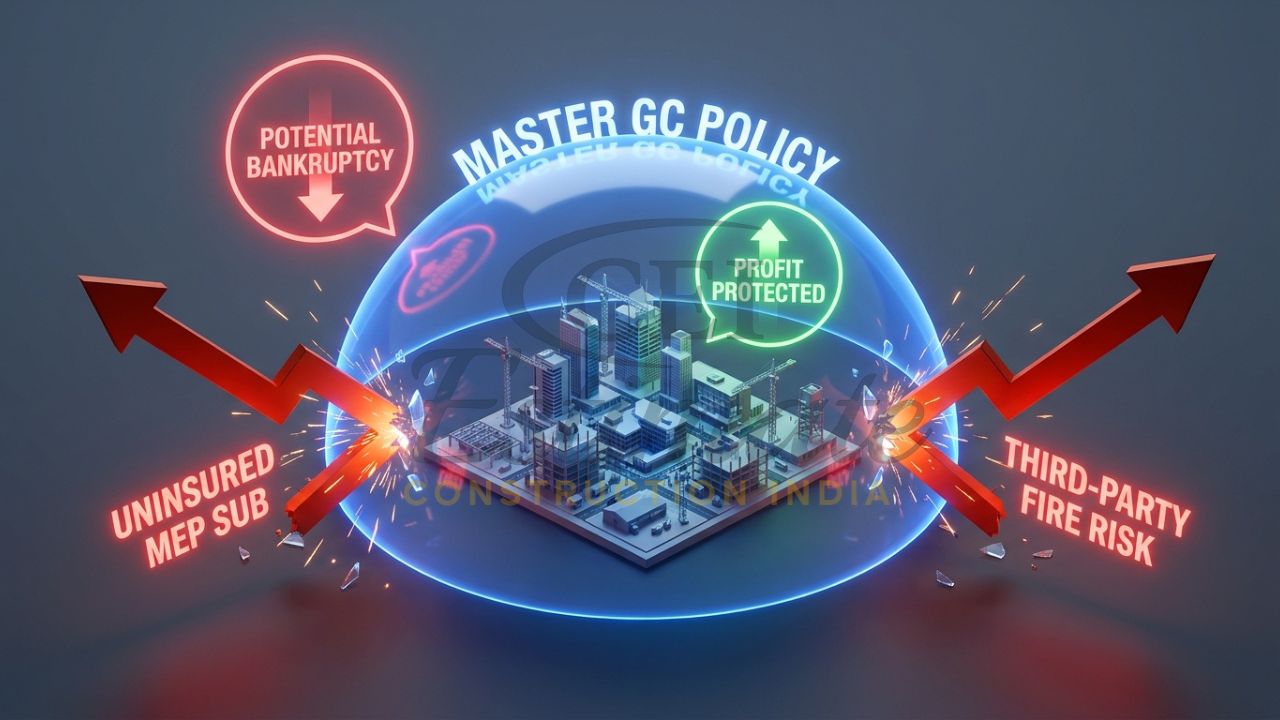
If a specialized MEP (Mechanical, Electrical, Plumbing) sub causes a fire due to faulty wiring, and they don’t have their own liability cover, the financial burden falls directly on you.
To protect your margins, you must implement a strict “No Insurance, No Work” policy for all vendors. This involves verifying their independent coverage or “back-charging” them to be included under your master policy. For a deep dive into managing these third-party risks, see our manual on how to get insurance for subcontractors in India.
4. Human Capital Protection: Compliance with the 2026 Labour Codes
The most significant shift in 2026 is the full enforcement of the Code on Social Security 2020. This new regime has replaced the old Workmen’s Compensation Act of 1923, introducing much higher wage ceilings for compensation and stricter penalties for non-compliance.
Today’s “Inspector-cum-Facilitator” has the power to shut down sites instantly if workers—including migrant and contract laborers—are not covered by a valid Workers’ Compensation Insurance (WCI) policy.
Key Changes in 2026 Workers’ Comp:
- Expanded Definition of ‘Employee’: Now includes gig workers and platform workers often found in specialized construction trades.
- Higher Death/Disability Benefits: Payouts are now tied to updated 2026 inflation-indexed wage scales.
- BOCW Cess Integration: Insurance compliance is now digitally linked to your Building and Other Construction Workers (BOCW) contributions.
Failure to meet these statutory requirements doesn’t just result in fines; it leads to criminal liability for the business owners. Ensure your firm is compliant by reviewing the latest workers’ comp requirements for construction businesses in India.
Conclusion: Building a Resilient Future
Project risk management is not a one-time task; it is a continuous process that begins at the estimation phase and ends only after the defects liability period. By securing the best business insurance, mastering your COI documentation, vetting your subcontractors, and adhering to the new 2026 labor laws, you build more than just structures—you build a resilient, bankable, and respected construction brand.
Is your next BOQ ready for 2026? Don’t leave your profits to chance. Include these insurance line items as “Fixed Preliminaries” to ensure your project stays protected from day one.
2026 Compliance Checklist for Contractors
- [ ] Primary CAR Policy active and updated for 2026 material costs.
- [ ] Digital COI ready for client verification.
- [ ] Subcontractor insurance certificates vetted and filed.
- [ ] Workers’ Compensation aligned with the New Social Security Code.
- [ ] Public Liability limits adjusted for urban site density.
Related Resources: