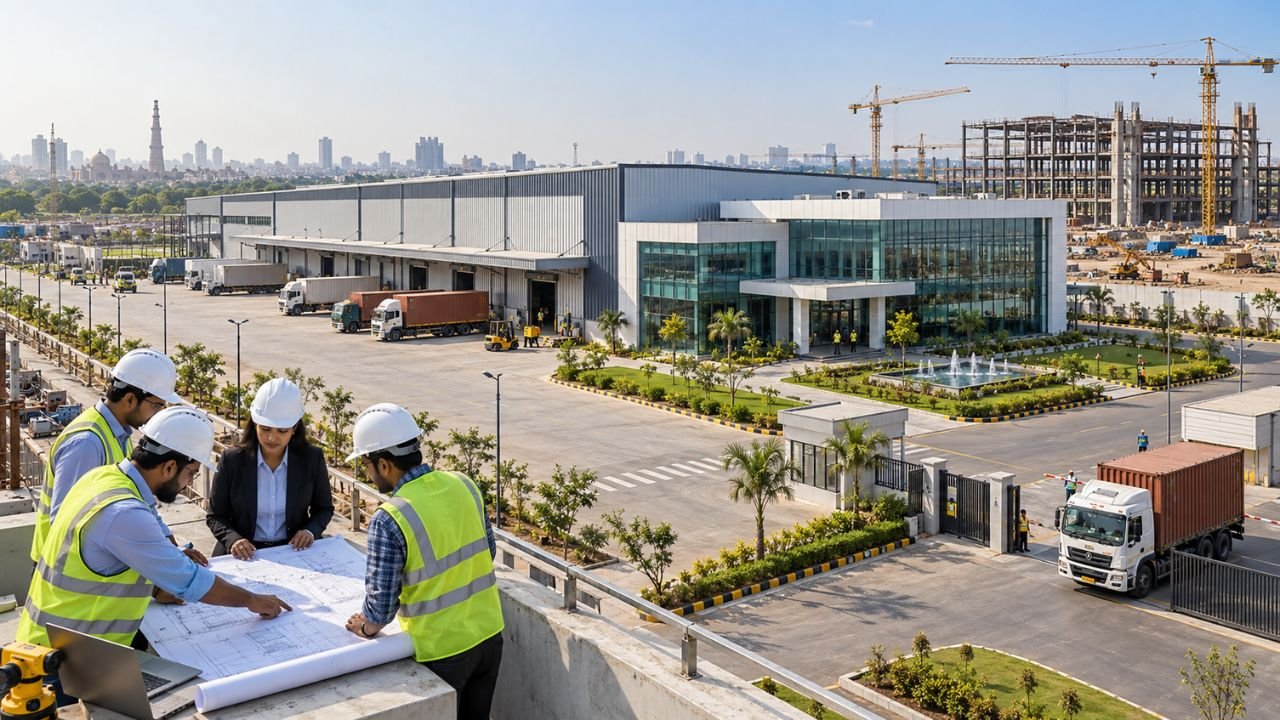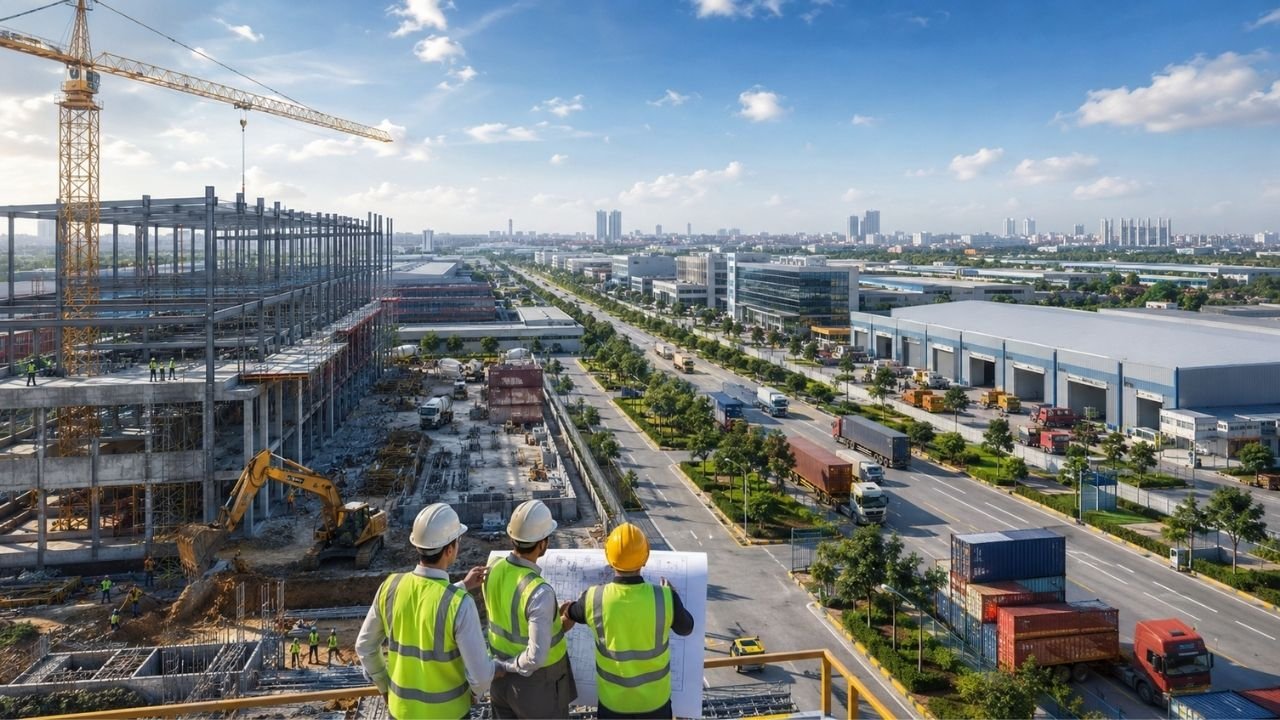
The construction landscape in India is entering a transformative era in 2026. As infrastructure projects scale to unprecedented heights and residential developments reshape our skylines, the risks associated with building have never been more complex. From the high-stakes high-rises in Delhi-NCR to the sprawling industrial corridors in Maharashtra, every project faces a gauntlet of uncertainties including seismic activity, monsoon-related flooding, and the ever-present threat of site accidents.
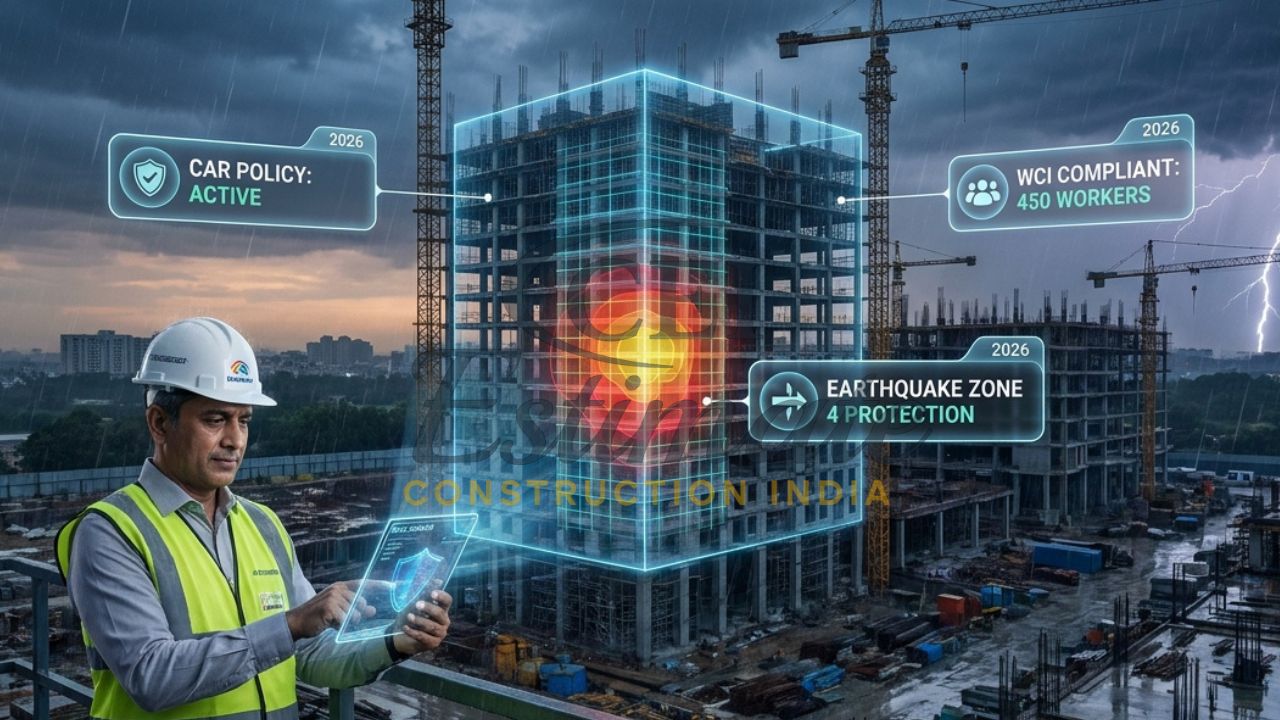
For a contractor or property owner, one single mishap—be it a scaffolding collapse, material theft, or a third-party liability claim—can derail a project’s timeline and devastate its financial viability. In 2026, finding the best construction insurance in India is no longer just a checkbox for compliance; it is a strategic pillar for business survival and long-term asset protection. Whether you are a small-scale builder or a major developer, understanding the nuances of modern insurance policies is critical to ensuring that an unforeseen accident remains a manageable incident rather than a bankruptcy-level event.
What Insurance Do Construction Companies Need in India?
Operating a construction firm in India requires navigating a delicate balance of legal mandates and elective protections. The inherent risks of the sector—ranging from worker injuries to equipment failure—demand a multi-layered insurance approach. If you are currently evaluating your firm’s risk profile, you might be asking yourself, what insurance do I need for my construction company in India?

Mandatory and Foundation Covers
The legal bedrock of construction insurance in India is the Workmen Compensation Insurance (WCI). Under the Employees’ Compensation Act, 1923, employers are legally liable to provide compensation to workers who suffer injuries, disability, or death during the course of their employment. As labor laws become more stringently enforced in 2026, WCI is non-negotiable for any firm employing site laborers.
Beyond labor protection, the Contractors’ All Risk (CAR) Insurance serves as the primary shield for the project itself. CAR insurance provides “all-risk” coverage for the physical works, materials on-site, and even temporary structures against perils like fire, theft, and natural disasters. Most financial institutions and government agencies now mandate a CAR policy before releasing project funds or awarding tenders.
Specialized Protection
For firms utilizing heavy machinery—such as cranes, excavators, and earthmovers—the Contractors Plant & Machinery (CPM) policy is essential. Standard CAR policies often have limitations regarding mobile equipment once they are operational; a CPM policy ensures that these high-value assets are protected against internal breakdowns and external damage. Additionally, Commercial General Liability (CGL) insurance is gaining prominence in 2026, protecting companies against third-party claims involving property damage or bodily injury to neighbors and the general public.
| Policy Category | Primary Purpose | Mandatory Level |
|---|---|---|
| Workmen Compensation | Protects against legal liabilities for worker injuries. | Legally Mandatory |
| Contractors All Risk | Covers physical project damage and materials. | Contractually Required |
| Plant & Machinery | Protects heavy equipment and earthmovers. | Recommended for Heavy Assets |
| Professional Indemnity | Covers errors in design or consultancy services. | Recommended for Architects/Engineers |
Best Insurance for Contractors in India
For individual contractors and sub-contractors, the insurance needs are often focused on protecting thin profit margins. When looking for the best insurance for contractors in India, one must look for policies that offer flexibility and rapid claim settlement.
The Role of Contractors’ All Risk (CAR)
In 2026, the CAR policy remains the “gold standard” for contractors. It is unique because it combines coverage for physical damage to the contract works with Third-Party Liability (TPL). For instance, if a monsoon-induced flood damages the foundation of a villa you are building, the CAR policy covers the cost of repair. Simultaneously, if a falling brick damages a neighbor’s car, the TPL component handles the legal and repair costs.
Managing Human Capital Risk
Contractors often face the highest exposure regarding labor safety. Modern Workmen Compensation policies for 2026 now include faster payout mechanisms and broader medical expense coverages. It is highly recommended that contractors include these insurance premiums as a specific line item in their Bill of Quantities (BOQ) under “Preliminaries”. This ensures that the insurance cost is recovered from the client and does not eat into the contractor’s profit margin.
Add-on Covers for 2026
To truly secure the best construction insurance in India, contractors should consider several critical add-ons:
- Escalation Clause: Given the volatility of material prices, this add-on ensures that the sum insured increases automatically to match rising replacement costs.
- Debris Removal: Covers the significant cost of clearing a site after a major accident or disaster.
- Surrounding Property Cover: Protects existing structures on the site that are not part of the new contract works.
Top 10 Construction Insurance Companies in India
Choosing the right partner is as important as choosing the right policy. In 2026, the top 10 construction insurance companies in India are ranked based on their Claim Settlement Ratio (CSR), digital claim processing speed, and engineering expertise.
- New India Assurance: A public sector giant often considered the “gold standard” for massive infrastructure projects and government tenders due to its high solvency and vast network.
- ICICI Lombard: Renowned for its digital-first approach and swift processing of CAR and WCI claims for private developers.
- HDFC ERGO: A leader in providing bespoke engineering insurance solutions with a strong emphasis on risk assessment and site surveys.
- Tata AIG: Highly favored for industrial construction and complex mechanical erection projects.
- Go Digit: An innovative player providing simplified, easy-to-understand policies specifically designed for small-to-medium contractors.
- SBI General Insurance: Leverages a massive banking network to offer accessible insurance for suburban and rural construction projects.
- Bajaj Allianz: Known for competitive pricing and a strong suite of add-on covers for plant and machinery.
- Chola MS: Specializes in heavy equipment and engineering-led insurance solutions.
- Universal Sompo: Offers budget-friendly, simplified worker compensation plans for labor-intensive projects.
- Reliance General: Provides broad coverage options for residential real estate developments.
When selecting an insurer, consult the General Insurance Council of India to review the latest annual performance statistics of these providers.
Building Insurance for Rental Properties & New Builds
Once the construction phase concludes, the insurance needs of a property owner shift significantly. The protection of the completed asset requires a different framework than the one used during active construction.
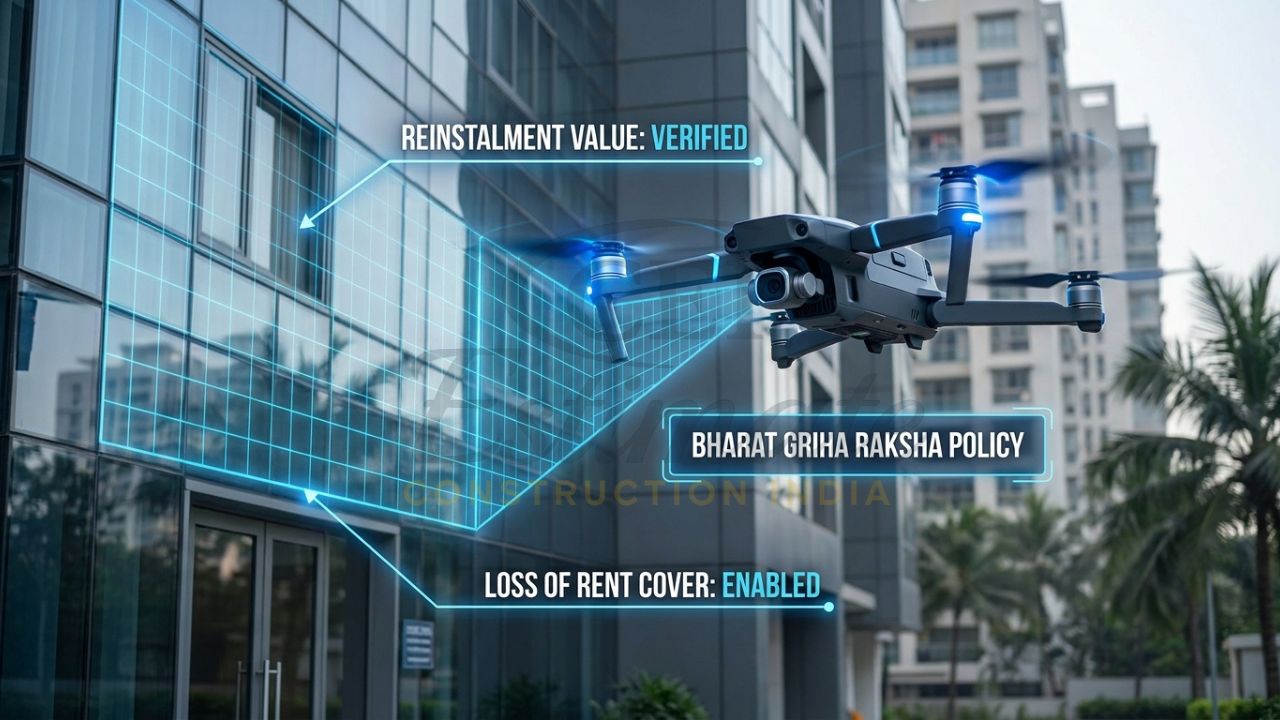
Post-Completion: Bharat Griha Raksha
Upon receiving an Occupancy or Completion Certificate, homeowners and landlords should transition to the Bharat Griha Raksha policy. This standard framework, introduced by the Insurance Regulatory and Development Authority of India (IRDAI), is designed to protect the “bones” of the structure—foundations, walls, and permanent fixtures—against fire, earthquake, and flood.
Protecting New Assets
For those seeking building insurance for a new build in India, the timing is critical. You should secure coverage immediately after the CAR policy expires to avoid dangerous gaps in protection. The premium is typically based on the Reinstatement Value, which is the actual cost of rebuilding the structure from scratch at current material and labor rates.
Landlord-Specific Protections
Landlords face unique risks, such as tenant negligence or loss of income. If you are exploring building insurance for a rental property in India, ensure your policy includes a Loss of Rent add-on. This clause compensates the landlord if the property becomes uninhabitable due to a covered peril (like a fire), ensuring the rental income stream remains uninterrupted while repairs are underway.
Comparison Table: Different Types of Construction Insurance
Understanding the differences between these policies is vital for accurate budgeting and risk management.
| Feature | Contractors’ All Risk (CAR) | Workmen Compensation (WCI) | Bharat Griha Raksha |
|---|---|---|---|
| Phase | During Construction | During Construction | Post-Completion |
| Primary Beneficiary | Contractor/Owner | Site Workers | Property Owner/Landlord |
| Key Risk Covered | Physical damage to site | Accidental injury/Death | Fire, Earthquake, Flood |
| Valuation Basis | Contract Value | Wage Bill | Reinstatement Value |
| Mandatory? | Contractual | Legal Mandate | Bank Requirement (for loans) |
| Typical Cost | 0.5% – 1.5% of project value | Based on risk & head-count | 0.15% – 0.50% of structure cost |
How to Choose the Right Insurance Policy?
Navigating the market for the best construction insurance in India requires more than just picking the lowest premium. Follow these professional steps to ensure you are truly protected:
- Conduct a Site-Specific Risk Assessment: Every project is different. A project in a high-seismic zone like Delhi requires different earthquake limits than one in a low-risk zone. Consider geographical threats like monsoons and floods when setting your limits.
- Calculate the Reinstatement Value Accurately: For new builds and rental properties, never insure for the “Market Value” (which includes land price). Insure for the Reinstatement Value—the cost to rebuild the structure—to ensure you are not overpaying premiums or under-insured.
- Include Insurance in the BOQ: Professional estimators should always list insurance as a separate item in the Bill of Quantities. This ensures the client understands that safety and compliance are part of the project’s overhead.
- Review the “Condition of Average”: Be wary of under-insuring your project. If you insure a ₹10 Crore project for only ₹5 Crore, and a partial loss of ₹1 Crore occurs, the insurer may only pay out ₹50 Lakhs under the “Condition of Average”.
- Check the Claim Settlement Process: Research the insurer’s network of licensed surveyors. In the event of a claim, you want a surveyor who can reach your site quickly and understands construction engineering.
Conclusion
Securing the best construction insurance in India in 2026 is an investment in your project’s future. The construction industry is a high-reward sector, but it is equally high-risk. Whether you are safeguarding a major infrastructure project through a CAR policy or protecting a rental property with Bharat Griha Raksha, the key is to be proactive rather than reactive.
By understanding the legal requirements, selecting top-tier insurers, and accurately estimating reinstatement values, you can build with confidence. Don’t let an unforeseen disaster crumble your hard work. Consult with a professional advisor today to tailor an insurance package that provides the “insured and assured” advantage your project deserves.
Frequently Asked Questions (FAQs)
- Is construction insurance mandatory in India?
While Contractors’ All Risk (CAR) is often contractually mandatory for bank loans or tenders, Workmen Compensation Insurance is a legal mandate for all employers with site labor under the Employees’ Compensation Act. - How much does construction insurance cost in 2026?
Typically, comprehensive coverage for a construction project (CAR + WCI) ranges from 1% to 2.5% of the total project value, depending on the risk factors and location. Post-construction building insurance is much cheaper, often between 0.15% to 0.50% of the reconstruction cost. - Does CAR insurance cover my expensive machinery like excavators?
Only to a limited extent. For high-value, mobile heavy equipment, a specialized Contractors Plant & Machinery (CPM) policy is recommended to cover internal breakdowns and damage during operation. - What is ‘Loss of Rent’ coverage?
This is an add-on for landlords. If a fire or flood makes your rental property uninhabitable, the insurer pays the equivalent of the rent you lose while the building is being repaired. - When should I buy building insurance for a new home?
The ideal time is immediately after the Occupancy Certificate (OC) is issued and the contractor’s CAR policy expires. - Does construction insurance cover theft of materials?
Yes, most CAR policies include coverage for burglary and theft of materials stored on-site, provided adequate security measures were in place. - Can I transfer my construction insurance if I sell the project?
Yes, insurance policies can typically be transferred to a new owner or contractor, subject to the insurer’s approval and administrative fees. - What is the ‘Condition of Average’?
It is a clause where the insurer reduces the claim payout proportionally if the property was insured for less than its actual value at the time of the loss.