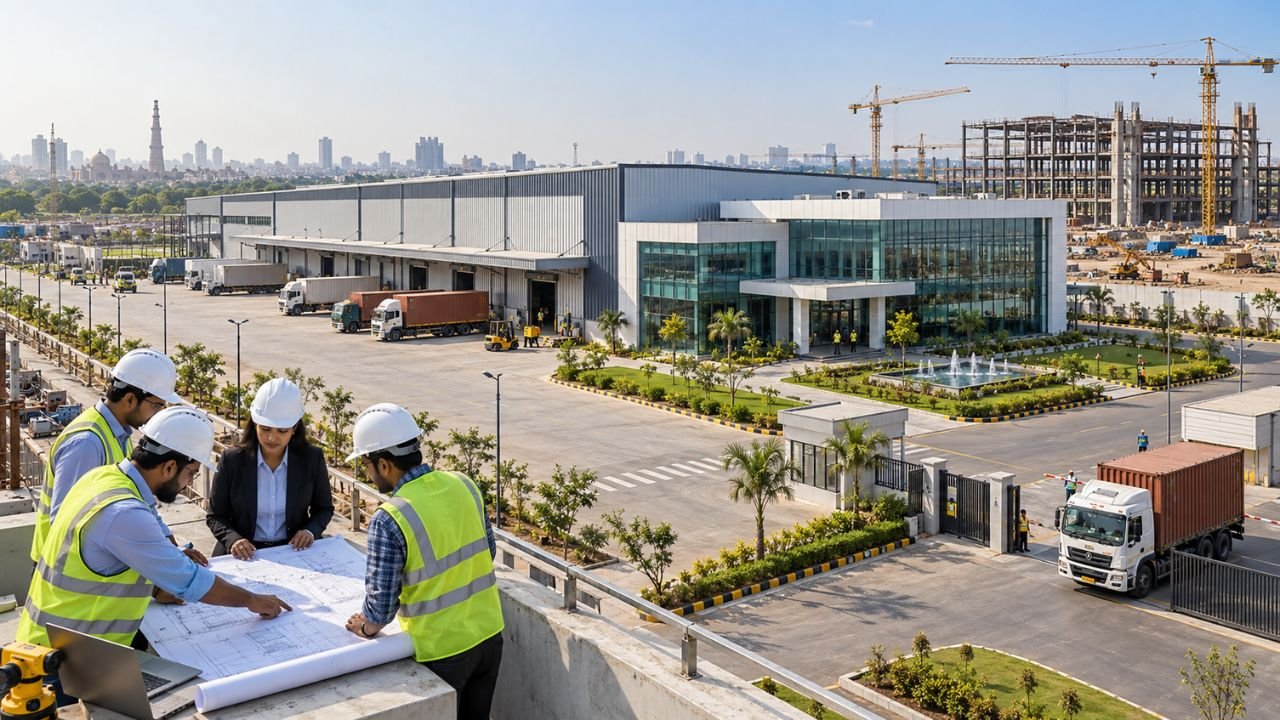
Imagine you own a bustling retail showroom in the heart of Meerut, Uttar Pradesh. Your investment is thriving until a massive electrical short circuit in an adjacent unit triggers a flash fire that ravages your entire structural wing. Within hours, the premium glass facade, reinforced structural beams, and specialized flooring are reduced to charred remains. It is only during the restoration phase that you realize the critical gap: you lacked comprehensive building insurance for a commercial property, assuming your generic “business policy” would cover the heavy structural reinstatement costs. In the 2026 industrial landscape, where construction material prices for steel and high-end finishes have surged, a single structural loss can lead to total business collapse if not backed by a robust insurance safety net.
Commercial properties face unique and significantly higher risks compared to residential units. They manage heavier daily footfall, house complex electrical and HVAC systems, and carry a much higher fire load from concentrated stocks and industrial processes. Whether you are a factory owner in Kanpur or a developer in the Delhi-NCR region, protecting your physical asset is non-negotiable. Building insurance for a commercial property, often structured as a Fire and Special Perils policy, specifically safeguards the immovable shell—the walls, roof, foundation, and permanent fixtures. Unlike standard home insurance (Bharat Griha Raksha), which is designed for dwellings, commercial structures require specialized frameworks like the Bharat Laghu Udyam Suraksha or Standard Fire & Special Perils (SFSP) policies. This guide will explore the essential pillars of commercial building protection, 2026 cost estimations, and why every estimator must include these premiums in their project BOQ.
What is Building Insurance for a Commercial Property?
Building insurance for a commercial property is a dedicated financial instrument designed to protect the “immovable” skeleton of a business premises. While generic commercial insurance might bundle stock and liability, this specific cover focuses exclusively on the physical shell and permanent built-in fixtures of the building. It ensures that if the structure is leveled by an explosion, earthquake, or flood, the funds are available to rebuild it to its original 2026 state.
In the Indian context, the definition of the “building” extends beyond just bricks and mortar. It encompasses the foundation, load-bearing walls, roof, floors, and windows. Crucially, it includes permanent fixtures that cannot be removed without damaging the structure, such as internal plumbing networks, electrical switchboards, built-in HVAC ducting, and even permanent exterior signage. It does not cover movable business contents, such as office laptops, loose furniture, or raw material stocks, which require separate contents insurance. For owners of shopping malls, standalone office blocks, or warehouses in Uttar Pradesh, this policy provides the fundamental layer of capital protection required to satisfy both personal risk management and lender mandates.
Why Commercial Property Owners Need Dedicated Building Insurance?
Relying on a residential policy or no policy at all is a dangerous gamble in 2026. Commercial buildings operate under a vastly different risk profile. Higher footfall increases the risk of accidental damage and third-party liability claims, while the density of high-voltage machinery in factories or extensive lighting in retail shops leads to a significantly higher fire hazard. Furthermore, reconstruction costs in India have escalated; if a disaster strikes, the cost of cement, steel, and skilled labor for a commercial-grade build will be far higher than historical rates.
Beyond physical protection, building insurance for a commercial property is a strategic financial tool. Most Indian lenders, including SBI and HDFC, mandate a comprehensive building policy before releasing capital for plant expansion or office purchasing. Additionally, local building bylaws and acts like the RERA (Real Estate Regulation and Development Act) often require developers to maintain insurance for the structure until it is formally handed over to the owners’ association. Without dedicated insurance, a landlord faces the double blow of losing their physical asset and the ongoing rental income, potentially leading to a total insolvency scenario.
What Does Building Insurance for a Commercial Property Cover?
Under the 2026 IRDAI guidelines, commercial building policies provide a “fortress” of protection against a wide array of perils. For property owners in seismic Zone IV/V regions like Delhi-NCR or flood-prone industrial zones in Uttar Pradesh, these covers are essential for survival.
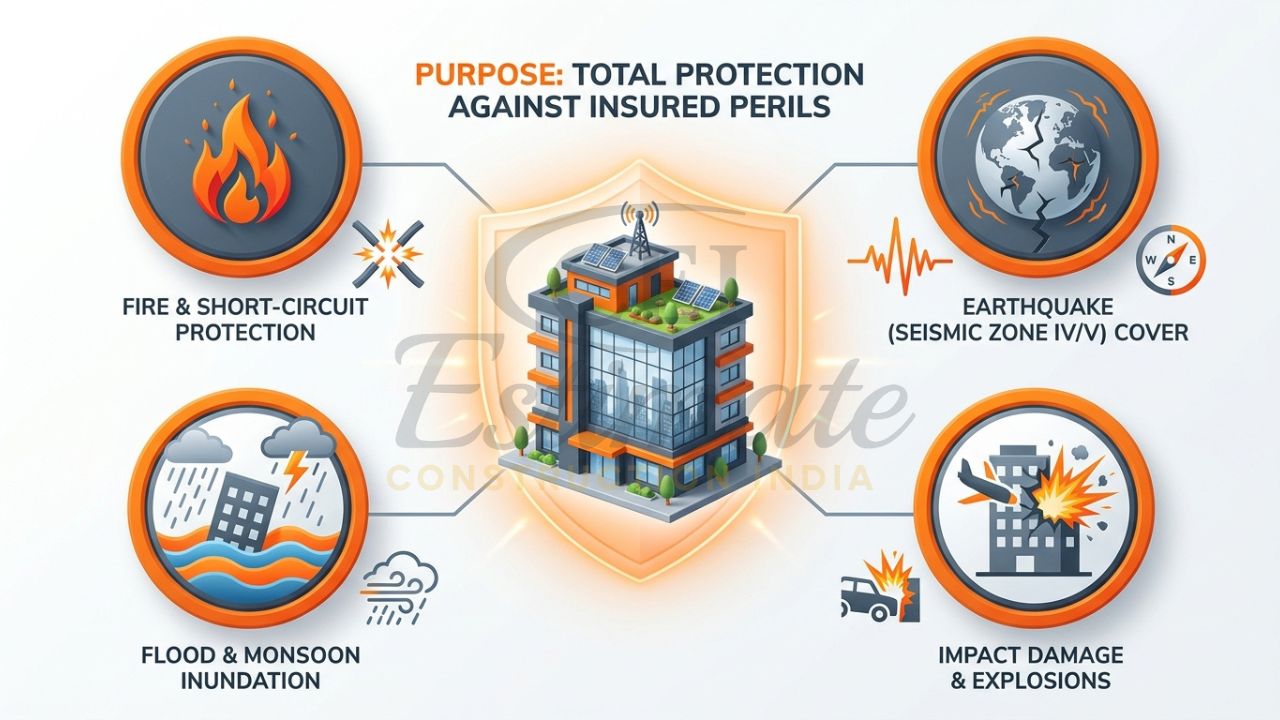
- Natural Calamities and Acts of God: Coverage includes damage from floods, inundation during monsoons, earthquakes, storms, cyclones, and landslides.
- Fire and Explosions: Protects against accidental fires, lightning strikes, and gas cylinder or boiler explosions.
- Man-Made Perils: Includes protection against riots, strikes, and malicious damage caused by external parties.
- Impact and Utilities Damage: Covers structural repair costs if a vehicle crashes into your boundary wall or if a water tank or pipe bursts, causing internal structural erosion.
- Automatic Additional Expenses: Most 2026 policies under the Bharat Laghu Udyam Suraksha framework include “incidental” costs such as:
- Architect and Surveyor Fees: Typically up to 5% of the claim amount to plan reconstruction.
- Debris Removal: Covers the cost of clearing the site after a disaster, usually up to 2% of the claim.
- Loss of Rent: If the building becomes uninhabitable due to an insured peril, the insurer compensates the landlord for lost rental income.
- Public Liability: Protects the owner if a structural failure causes injury to a visitor or a neighboring property.
Building Insurance vs Contents Insurance for Commercial Properties
One of the most frequent errors made by Indian shop and office owners is assuming a single policy covers everything. In reality, the “structure” and the “contents” are often treated as distinct insurable interests.

| Feature | Building Insurance (Structure) | Contents Insurance (Possessions) |
|---|---|---|
| Primary Protection | Walls, foundation, roof, plumbing, and built-in HVAC. | Stock, machinery, laptops, furniture, and office equipment. |
| Sum Insured Basis | Reinstatement Value (2026 reconstruction cost). | Market Value (Depreciated value) or Agreed Value. |
| Who Buys It? | Property Owner or Landlord. | Tenant or Business Operator. |
| Typical Add-ons | Escalation cover, Debris removal. | Burglary, Breakdown of appliances. |
| Example Scenario | A wall cracks due to a seismic tremor in Noida. | A professional laptop is stolen from the office. |
Best Policies Available for Commercial Building Insurance in India
Navigating the 2026 insurance market requires understanding the specific policy frameworks mandated by the IRDAI. For Indian businesses, the choice usually depends on the total insurable value of the property.
- Bharat Laghu Udyam Suraksha: This is the standardized policy for MSME commercial properties where the total value of the building and contents does not exceed ₹50 crores. It offers uniform, transparent coverage across all insurers like HDFC Ergo and ICICI Lombard.
- Standard Fire & Special Perils (SFSP) Policy: For large-scale commercial plazas, malls, or industrial plants exceeding ₹50 crores, the SFSP policy provides the foundational structure protection with the ability to add highly customized riders.
- Commercial Package Policies: Many private insurers offer “Shopkeeper’s Insurance” or “Office Package” policies that combine building structure cover with burglary and public liability in a single premium.
How Much Does Building Insurance for a Commercial Property Cost in India?
The cost of building insurance for commercial property in 2026 is influenced by the “fire load”—the type of business conducted inside—and the reconstruction value. Generally, premiums range from 0.20% to 0.80% of the sum insured.
For a small retail shop in Meerut with a reconstruction value of ₹50 lakhs, the annual premium might range from ₹10,000 to ₹25,000. However, a large commercial office block in Delhi with a sum insured of ₹5 crores could attract a premium of ₹1,00,000 to ₹3,00,000, depending on location risks like flood zones. Factors such as the age of the building, presence of firefighting equipment, and the “Escalation Clause” (which accounts for the 10-15% annual rise in material costs) will further refine these rates. For estimators, including a 1.2% “Preliminaries” line item for insurance in a new commercial BOQ ensures that the owner’s capital is protected from the day the foundation is poured.
Step-by-Step Guide to Buying Building Insurance for Commercial Property
- Determine Reinstatement Value: Do not use the market price (which includes land). Calculate: Total Carpet Area (sq. ft.) × 2026 Construction Rate per sq. ft..
- Risk Assessment: Identify specific threats (e.g., proximity to a chemical unit increases fire load; being near the Hindon river increases flood risk).
- Compare and Customize: Obtain quotes from major providers like New India Assurance or HDFC Ergo, ensuring the “Bharat Laghu Udyam Suraksha” framework is used for MSMEs.
- Documentation: Keep your approved building plans, completion certificates, and current site photos ready for the insurer.
Claims Process for Commercial Building Insurance
When disaster strikes a commercial site, time is revenue.
- Immediate Intimation: Inform your insurer within 24 hours via their digital app or toll-free number.
- Evidence Preservation: Take high-quality photos and videos of the structural damage before starting any emergency repairs.
- Surveyor Inspection: An IRDAI-licensed surveyor will assess the loss. Provide them with a line-itemized BOQ of repair costs based on current market rates for cement and steel.
- Documentation: Submit the claim form along with fire brigade reports (if applicable), repair estimates, and original construction invoices to avoid “under-insurance” penalties.
Why Estimators and Developers Must Factor It In?
At Construction Estimator India, we view insurance as a non-negotiable component of professional project management. For developers and estimators, including building insurance for a commercial property as a distinct line item in the Bill of Quantities (BOQ) demonstrates foresight and protects the project’s profit margins. It prevents “under-bidding” where a contractor ignores the risk of site damage during the final stages of a build, leaving the client vulnerable to out-of-pocket restoration costs. In the volatile 2026 market, accurate insurance-inclusive costing is your greatest competitive advantage.
Conclusion
Securing building insurance for a commercial property is the ultimate safeguard for your real estate investment in India. From the earthquake zones of Delhi-NCR to the monsoon-prone industrial belts of Uttar Pradesh, a well-structured policy ensures that a single structural disaster does not become a financial nightmare. By focusing on the reinstatement value and choosing the right IRDAI-mandated covers like Bharat Laghu Udyam Suraksha, you can protect your assets, your income, and your future growth.
Don’t leave your commercial project’s safety to chance. Whether you are building a new office complex or renovating a retail shop, make insurance a priority. For professional BOQ services and construction cost estimation that include accurate 2026 insurance projections, contact Person at Construction Estimator India today.
FAQ Section
What is building insurance for a commercial property?
It is a specialized insurance policy that covers the physical structure (foundation, walls, roof) and permanent fixtures of a business premises against perils like fire, flood, and earthquake.
Is building insurance mandatory for commercial properties in India?
While not legally mandatory for all, it is almost always mandated by banks for commercial loans and by RERA for developers during the construction and maintenance phases.
What is the difference between building insurance and contents insurance for shops?
Building insurance covers the immovable structure, whereas contents insurance covers movable items like stock, machinery, and furniture.
How much does commercial building insurance cost in 2026?
Annual premiums typically range from 0.20% to 0.80% of the reconstruction cost, depending on the fire load and location.
Which policy is best: Bharat Laghu Udyam Suraksha or SFSP?
For properties with a total value up to ₹50 crores, Bharat Laghu Udyam Suraksha is the standard choice. SFSP is generally used for larger industrial or commercial complexes.
Does building insurance cover loss of rent for commercial landlords?
Yes, most modern policies include an add-on or built-in cover for loss of rent if the building becomes uninhabitable due to an insured peril.
Can tenants buy building insurance for a commercial property?
Usually, the landlord buys building insurance. However, if a lease agreement mandates it, a tenant can purchase it, but the claim benefit typically remains with the owner.
How is sum insured calculated for commercial buildings?
It should be based on the “Reinstatement Value”—the current cost to rebuild the structure (Area × Cost of construction per sq. ft.)—excluding the land cost.
What add-ons are recommended for commercial property insurance?
Key add-ons include Escalation Cover (for rising material costs), Debris Removal, and Public Liability.
How to include building insurance cost in a commercial project BOQ?
Estimators should include it as a separate line item under “Insurance and Compliance,” typically estimated at 1% to 1.5% of the total project value to cover both CAR and permanent structures.
Related Suggestions:
- Learn more about: Building Insurance for a Rental Property
- Read our guide on: How Much is Insurance for Construction in India?
- Expert Tips: What is Covered by Building Insurance?
- Check out: Building Insurance for a New Build in India