
Paying contractors in India is one of the most critical parts of construction management. Improper payment practices can lead to delays, poor quality work, disputes, legal complications, and significant financial loss. Understanding the right payment structure, milestone-based payments, advance payments, retention money, documentation, tax compliance (GST, TDS), and dispute prevention is essential for a smooth construction process. Whether you are building a house, renovating a property, or undertaking a commercial project, knowing How to Pay Contractors in India safely and transparently protects your investment and ensures the contractor remains motivated to deliver quality work.
👉 Need Help Managing Contractor Payments Safely? – 📲 Contact Our Experts Today
This comprehensive guide is designed for homeowners, property owners, builders, contractors, and anyone planning house construction or renovation in India. It covers payment structures, milestone-based payments, advance payments, retention money, documentation, tax compliance, dispute prevention, and how to protect yourself financially when paying contractors.
Why Paying Contractors Correctly Matters?
Proper payment practices are the backbone of successful construction projects in India. They prevent delays and work stoppages that often occur when contractors feel underpaid or uncertain about future payments. Timely and fair payments motivate contractors to maintain quality and adhere to timelines, reducing the risk of substandard work or abandonment of the project midway.
👉 Plan Contractor Payments with Confidence & Transparency – 📲 WhatsApp Now
Maintaining trust between owner and contractor is equally important. Transparent payment processes build strong working relationships, making it easier to resolve issues amicably. They also ensure financial transparency and accountability, helping owners track expenses and avoid budget overruns. Compliance with tax laws (GST and TDS) protects both parties from penalties and legal complications. In India, where construction disputes are common, correct payment practices significantly reduce the risk of litigation and help maintain a positive working environment throughout the project.
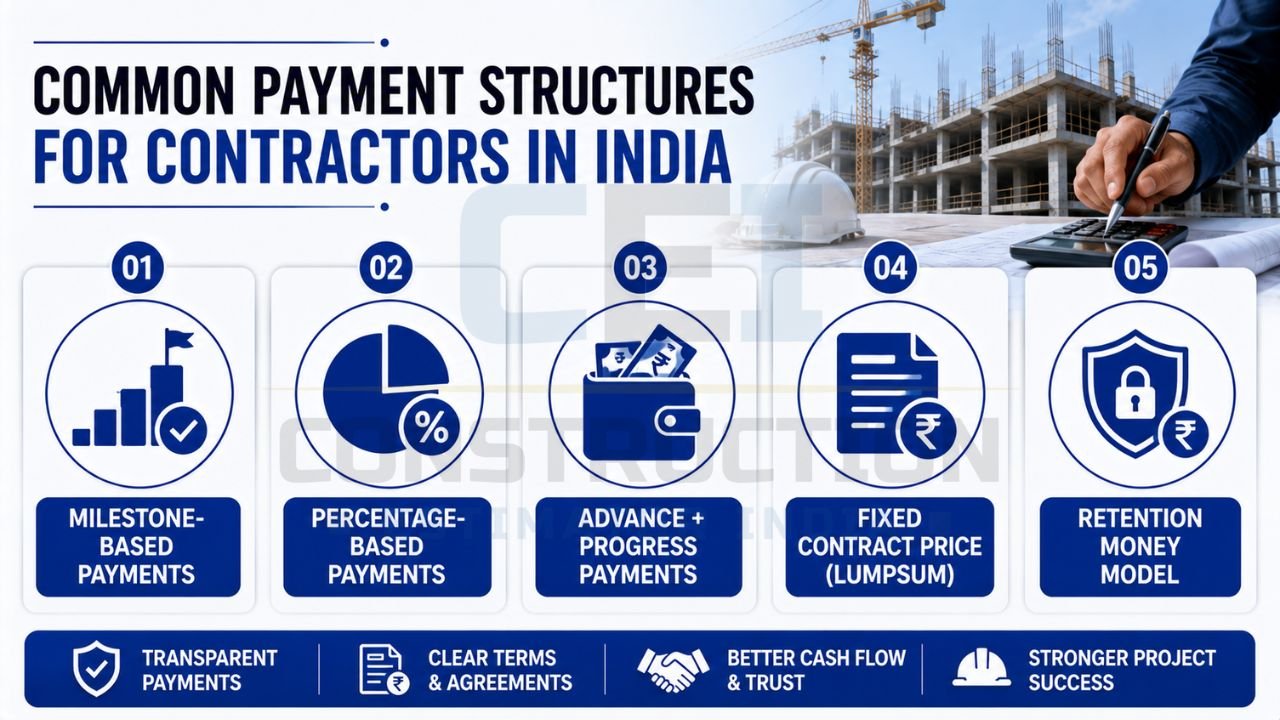
Common Payment Structures for Contractors in India
Several payment models are commonly used in Indian construction projects. Choosing the right structure depends on project size, duration, and your comfort level with the contractor.
👉 Need a Construction Payment Schedule & BOQ? – 📲 Start Chat Today
Milestone-Based Payments
This is the most popular and recommended structure. Payments are released after completion of specific stages — foundation, plinth, RCC slab, roofing, brickwork, plastering, finishing, and final handover. Each milestone is clearly defined in the agreement with measurable deliverables, ensuring the contractor is paid only for verified work.
Percentage-Based Payments
In this model, a fixed percentage of the total contract value is paid at predefined milestones. For example, 10% advance, 20% after foundation, 25% after RCC, and so on. This method is simple and easy to track, but it requires clear definition of what constitutes each milestone to avoid disputes.
Advance + Progress Payments
A reasonable advance (usually 10–30%) is given for mobilization — purchasing materials, arranging labor, and setting up site. Subsequent payments are made against progress reports and verified work. This helps contractors start work smoothly while protecting the owner’s interest through milestone verification.
Fixed Contract Price (Lumpsum)
The contractor quotes a fixed total amount for the entire project. Payments are scheduled against milestones. This model works well for clearly defined projects but requires a very detailed agreement to prevent disputes over scope changes.
Retention Money Model
A small percentage (usually 5–10%) of each payment is retained until project completion, defect liability period, and final quality checks. This retention money acts as security for the owner against any defects or incomplete work.
👉 Avoid Payment Disputes with Professional Construction Guidance – 📲 Message Us Now
How to Pay Contractors in India: Step-by-Step Guide?
Following a structured payment process protects your interests and ensures smooth project execution.
Step 1: Choose a Reliable Contractor
The foundation of safe payments is selecting the right contractor. Verify experience, past projects, references, and credentials before signing any agreement. A reliable contractor reduces the risk of payment disputes.

👉 Building a House, Villa or Commercial Project? – 📲 Talk to Our Team Today
For detailed guidance: How to Choose a Contractor for House Construction in India.
Step 2: Verify Contractor Credentials
Before making any payment, check licenses, GST registration, PAN, experience, past work, and client references. This step prevents fraud and ensures you are dealing with a legitimate professional.
For a complete checklist: What to Check Before Hiring a Contractor in India.
Step 3: Sign a Detailed Construction Agreement
A well-drafted agreement is your strongest protection. It should clearly define scope of work, payment schedule, milestones, timelines, penalties for delays, quality standards, and dispute resolution mechanism. Never start work or make payments without a signed agreement.
Step 4: Plan Your Budget
Accurate budgeting helps you set realistic payment schedules. Factor in all costs — materials, labor, finishing, and contingencies. Proper budgeting prevents cash flow issues during construction.
For detailed budgeting guidance: How Much Money Needed to Build a House in India.
Step 5: Set Up a Payment Schedule
Create a milestone-based payment schedule aligned with construction progress. Define clear, measurable milestones and tie payments to verified completion of each stage. This keeps the contractor motivated and protects your cash flow.
For timeline expectations: How Long Does It Take to Build a House in India.
Step 6: Make Payments Based on Progress
Always verify work completion before releasing payment. Visit the site, check quality, take photos, and get written acknowledgment from the contractor. Use bank transfers for all payments to maintain a clear trail.
👉 Smart Payment Planning Protects Your Investment – 📲 Contact Us Now
Step 7: Handle Tax Compliance (GST & TDS)
Construction services attract 18% GST. As per Section 194C, TDS at 1% is applicable on payments exceeding ₹30,000 to contractors. Keep proper GST invoices and issue TDS certificates. Maintain records for income tax audits.
Step 8: Final Payment & Completion Certificate
Release the final payment (including retention money) only after full completion, quality checks, defect rectification, and obtaining the completion certificate. This ensures the contractor fulfills all obligations.
For completion certificate guidance: Completion Certificate Guide India.
Advance Payments: How Much Is Safe?
Advance payment is common for mobilization but should be limited. Typical advance in India is 10–30% for material purchase, labor arrangement, and equipment setup. Always cap the advance, tie it to specific deliverables, and secure it with a written agreement. Never pay more than 30% as advance unless the contractor has an excellent track record and provides bank guarantee or collateral.

👉 Get Expert Support for Contractor Agreements, GST & TDS – 📲 WhatsApp Today
Documentation for Contractor Payments
Maintain proper documentation for every payment to protect yourself legally and financially.
- Signed payment invoices with detailed description of work done.
- Progress reports and site photographs.
- Bank transaction receipts or UPI confirmations.
- GST invoices from the contractor.
- Contractor acknowledgment of receipt.
- Agreement copies and all addendums.
- TDS deduction certificates where applicable.
These documents are crucial in case of disputes or income tax scrutiny.
Negotiating Payment Terms with Contractors
Fair payment terms are negotiable. Discuss milestone definitions clearly, set reasonable payment timelines, avoid excessive advance requests, include penalty clauses for delays, and negotiate retention money (5–10%). A balanced agreement protects both parties and maintains a positive working relationship.
For negotiation tips: How to Negotiate with Contractor in India.
👉 From Budget Planning to Final Payment, We Guide You Every Step – 📲 Chat With Us Now
Handling Payments for Under-Construction Properties
When buying under-construction properties, payments are usually linked to construction stages as per RERA guidelines. Banks disburse home loans in stages after verification of progress. Always verify work before each tranche release and keep proper documentation for the bank.
For home loan guidance on under-construction properties: Home Loan for Under-Construction Property India.
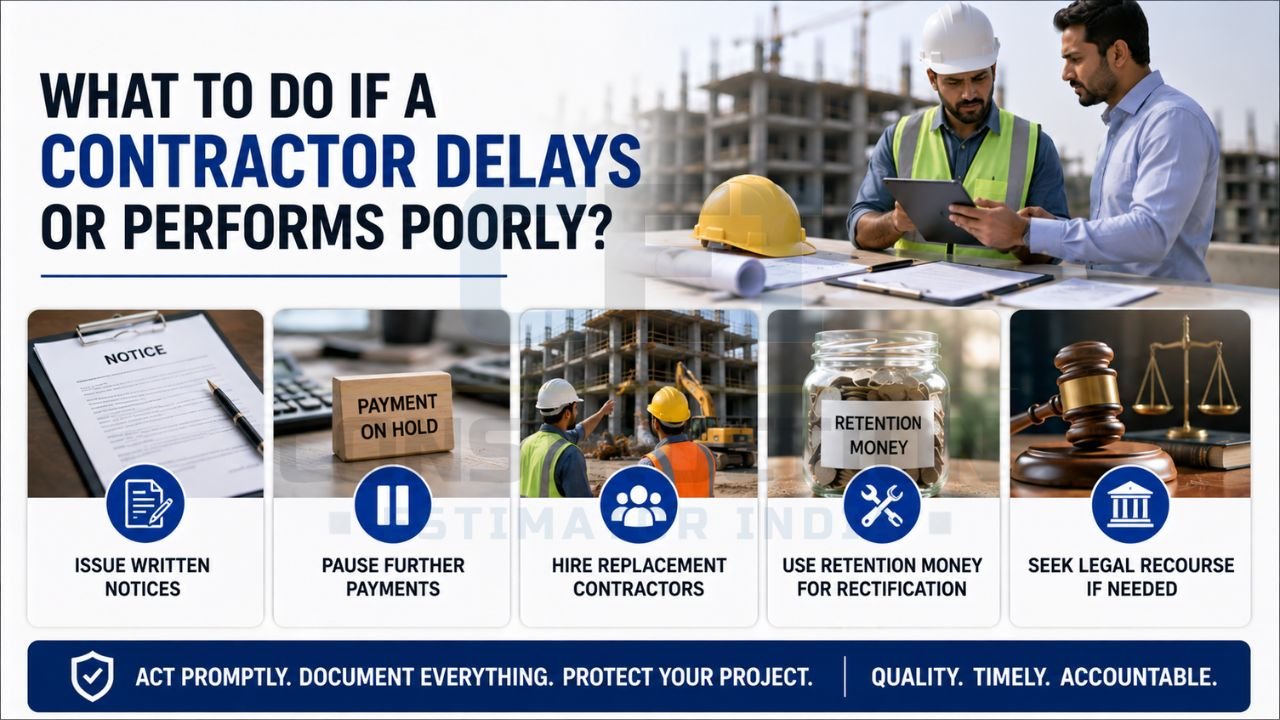
What to Do If a Contractor Delays or Performs Poorly?
If a contractor delays work or quality is poor, take immediate action.
👉 Ensure Fair Payments, Quality Work & On-Time Project Completion – 📲 Get Started Today
- Issue written notices documenting the issues.
- Pause further payments until issues are resolved.
- Hire replacement contractors if necessary.
- Use retention money for rectification work.
- Seek legal recourse through consumer forums or civil courts if needed.
For handling bad contractors: How to Deal with Bad Contractor in India.
Common Payment Mistakes to Avoid
Homeowners often make these mistakes when paying contractors:
- Paying too much advance without security.
- Releasing payments without verifying work progress.
- Skipping written agreements.
- Ignoring tax compliance (GST and TDS).
- No proper documentation of payments.
- Paying without clear milestone clarity.
Avoiding these mistakes saves significant money and stress during construction.
Tax Compliance: GST and TDS on Contractor Payments
Construction services attract 18% GST. As per Section 194C of the Income Tax Act, TDS at 1% is applicable on payments to contractors exceeding ₹30,000 per transaction or ₹1,00,000 per year. Keep proper GST invoices and issue TDS certificates. Maintain records for audits. Non-compliance can lead to penalties and interest.
Why Construction Estimator India?
Construction Estimator India is a trusted partner for construction cost planning and contractor payment guidance. We help homeowners and builders manage contractor payments with clarity, fairness, and full legal compliance. From budgeting and milestone planning to GST/TDS guidance and contract support, we provide end-to-end solutions to protect your investment and ensure smooth project execution.
Conclusion
Knowing How to Pay Contractors in India safely and transparently helps prevent delays, disputes, and financial loss. Proper payment structure, documentation, tax compliance, and contractor selection are key to successful construction projects. With the right approach, you can maintain trust, ensure quality work, and complete your project smoothly while protecting your hard-earned money.
Are you planning house construction, renovation, or a commercial project in India and unsure how to pay contractors safely and transparently? As a trusted construction cost planning partner, Construction Estimator India helps homeowners and builders manage contractor payments with clarity, fairness, and full legal compliance. From budgeting and milestone planning to GST/TDS guidance and contract support, we provide end-to-end solutions to protect your investment.
Contact us today for a free consultation and detailed construction cost & payment plan!
📞 Call / WhatsApp: +91 8630676890
🌐 Visit Us: Construction Estimator India
FAQ Section
How much advance payment is safe for contractors in India?
10–30% is typical for mobilization. Always tie it to specific deliverables and secure it with a written agreement.
What is the best payment structure for house construction?
Milestone-based payments linked to verifiable construction stages (foundation, plinth, RCC, roofing, finishing) are the safest and most recommended.
Do I need GST and TDS on contractor payments?
Yes. GST at 18% on construction services and TDS at 1% under Section 194C for payments above ₹30,000.
What documents should I keep for contractor payments?
Signed invoices, progress reports, bank receipts, GST invoices, contractor acknowledgments, and agreement copies.
How can I avoid disputes with contractors over payments?
Use a detailed written agreement, milestone-based payments, proper documentation, and regular site verification before releasing funds.
What is retention money and why is it important?
Retention money (5–10%) is held back until project completion and defect liability period. It acts as security against poor quality or incomplete work.
How do home loans work for under-construction property payments?
Banks disburse loans in stages after verification of construction progress. Always coordinate with the bank and verify work before each disbursement.