
Formwork is one of the most important aspects of home building. The quality, speed, and final finish of your RCC slabs, beams, and columns depend heavily on the formwork in home building. Poor formwork can lead to honeycombs, bulging, cracks, or even structural failure, while good formwork ensures strong, beautiful, and durable concrete structures.
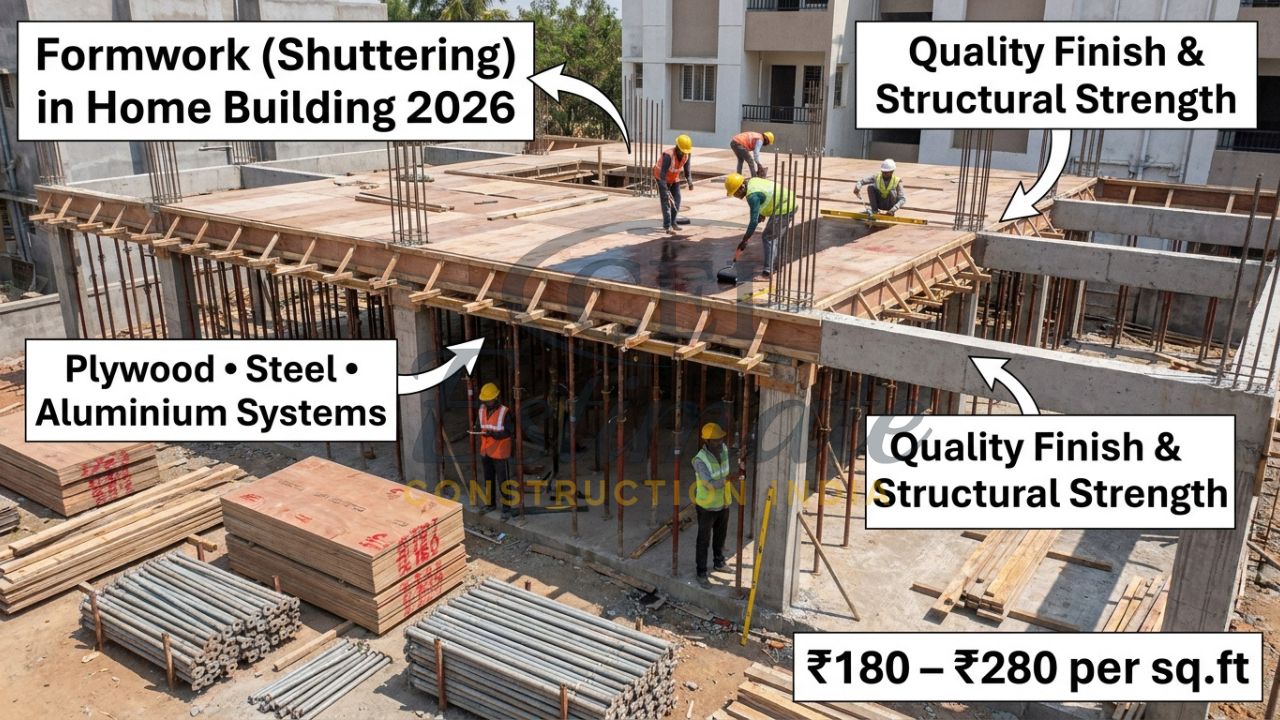
This complete guide explains formwork in construction for residential projects in India, covering types, materials, step-by-step process, latest costs in 2026, and best practices used by professional contractors.
What is Formwork in Home Building?
Formwork (also called shuttering) is the temporary or permanent mould into which fresh concrete is poured to form desired shapes like slabs, beams, columns, and foundations. It holds the concrete in position until it gains enough strength to support itself.
In home building, formwork is used mainly for the RCC framework of the house.
Why Formwork is Critical in Residential Construction?
- Directly affects concrete quality and surface finish
- Impacts construction speed and labour cost
- Influences overall safety of the structure
- Affects project timeline and budget significantly
- Determines the final look of exposed concrete elements
Good formwork can save 10–15% in labour and material wastage.
Types of Formwork Used in Home Building
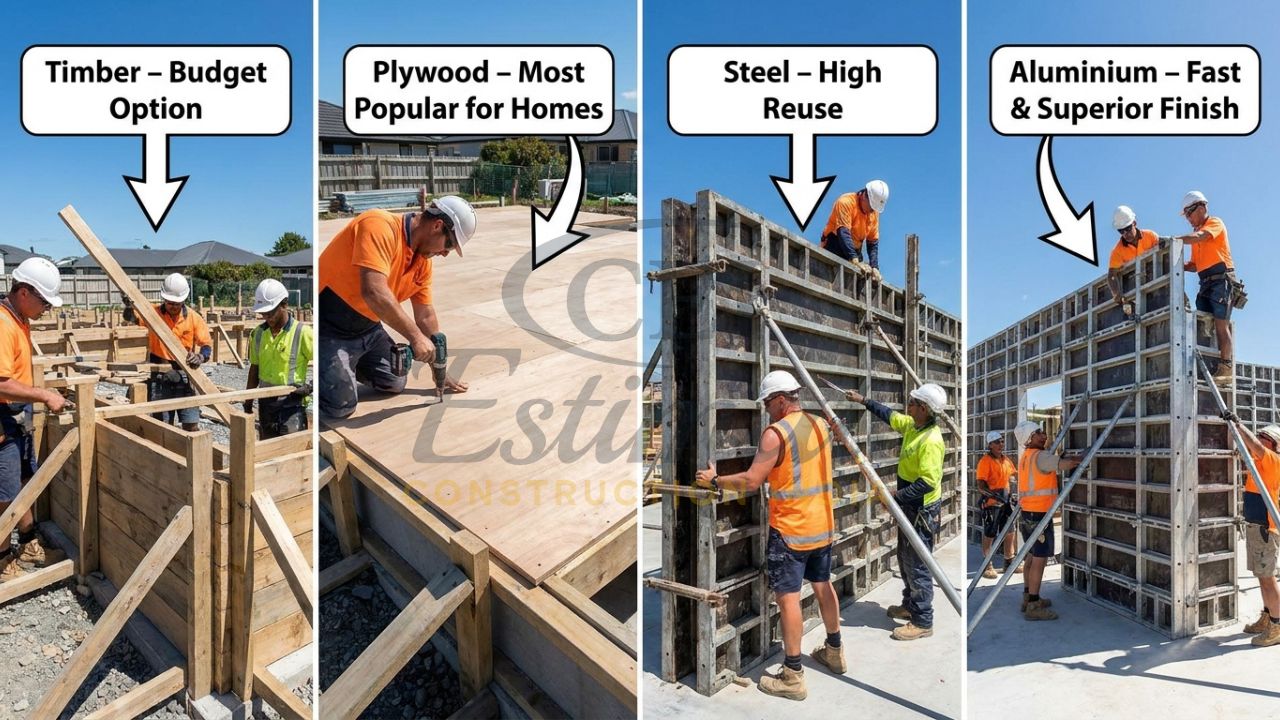
- Traditional Timber Formwork — Economical but labour-intensive
- Plywood Formwork — Most popular for residential projects
- Steel Formwork — Durable and reusable
- Aluminium Formwork — Fast and gives excellent finish
- Plastic/Modular Formwork — Lightweight and easy to handle
- Tunnel Formwork — Used in mass housing projects
Common Materials for Formwork in 2026
| Material | Reuses | Cost per Sq.ft (2026) | Best For | Finish Quality |
| Marine Plywood | 8–12 times | ₹45–65 | Slabs, Beams, Columns | Very Good |
| Steel Plates | 100+ times | ₹90–130 | High-rise & repetitive work | Excellent |
| Aluminium Panels | 150+ times | ₹120–180 | Fast track residential | Superior |
| Plastic Formwork | 30–50 times | ₹35–55 | Small homes & low budget | Good |
| Timber | 3–6 times | ₹30–45 | Budget projects | Average |
Formwork Systems for Different RCC Elements
1. Column Formwork
- Box-type with plywood or steel
- Must be strong enough to handle concrete pressure
2. Beam Formwork
- Bottom + side shutters with props and clamps
3. Slab Formwork
- Centering with props, planks, and plywood sheets
4. Foundation & Plinth Formwork
- Simple timber or brick edging
Step-by-Step Process: How to Erect and Remove Formwork
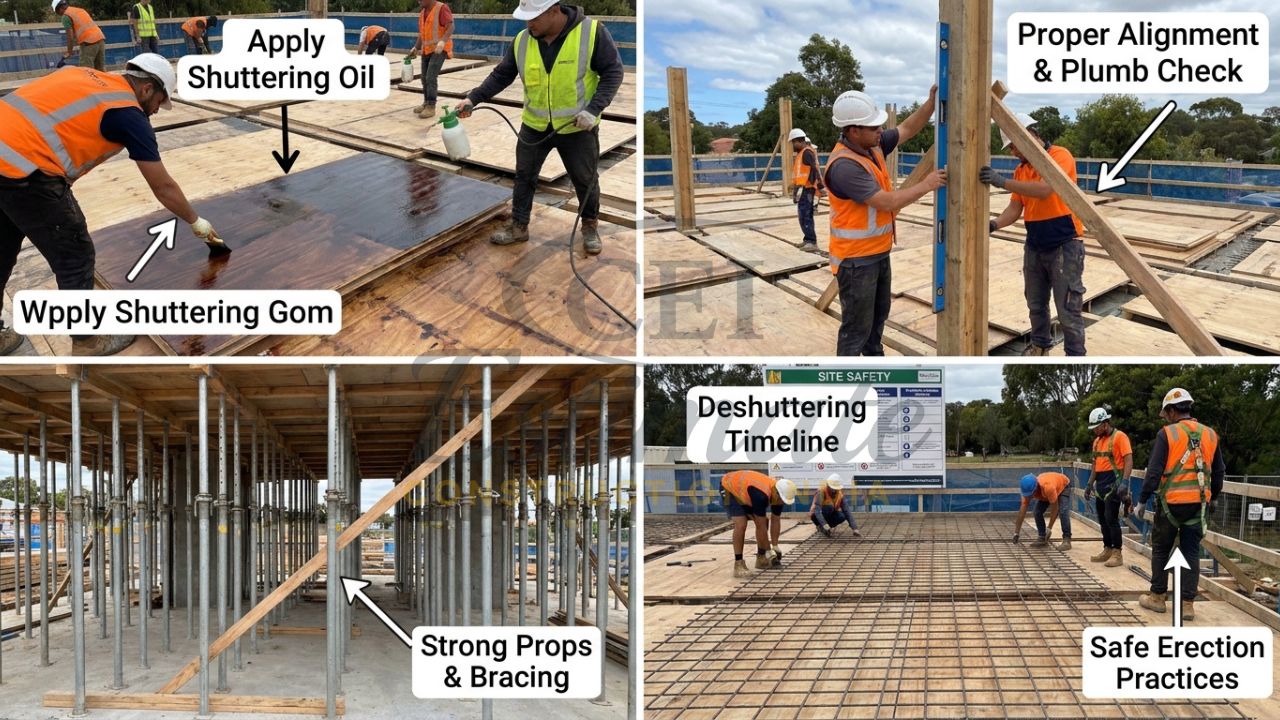
Erection Process:
- Check and clean all formwork materials
- Apply shuttering oil/release agent
- Fix bottom and side shutters with proper supports
- Check alignment, level, and plumb
- Place reinforcement and insert cover blocks
- Get approval from engineer before concreting
Deshuttering (Removal) Time:
- Sides of columns & beams: 16–24 hours
- Slab soffit (props): 7–14 days (depending on span)
- Full props removal: 21–28 days
Formwork Cost in India 2026 – Detailed Estimation
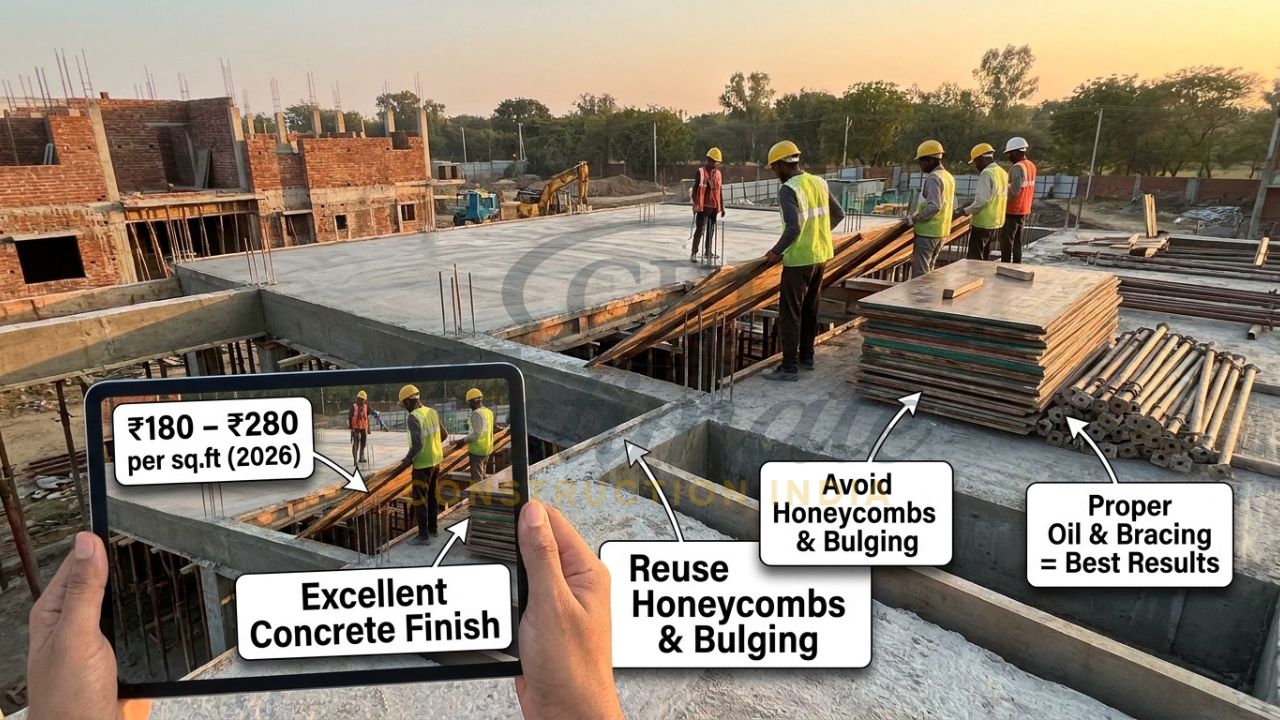
For a typical 1,200 sq.ft G+1 house:
- Total formwork cost: ₹1.8 lakh – ₹3.2 lakh
- Per sq.ft of slab area: ₹180 – ₹280
- Labour for formwork & centering: ₹55 – ₹85 per sq.ft
Proper estimation is crucial. Always use detailed estimate vs abstract estimate in construction while preparing your BOQ.
Safety Practices and Common Mistakes in Formwork
Common Mistakes:
- Insufficient props and bracing
- Poor joints leading to grout leakage
- Using damaged plywood
- Early removal of formwork
- No oiling of shutters
Safety Tips:
- Check load-bearing capacity of props
- Use safety props under slabs
- Ensure proper bracing against wind
- Train labour on safe erection practices
Modern Formwork Trends and Innovations for Home Builders
- Modular aluminium systems for faster cycle time
- Lightweight plastic formwork for small builders
- Self-climbing systems for taller homes
- Digital monitoring of concrete strength before deshuttering
For finishing and interior works, refer to best BOQ templates for interior works in India.
Conclusion
Choosing the right formwork in home building directly affects the quality, speed, and cost of your residential project. Proper planning, material selection, and execution ensure strong, durable, and beautiful RCC structures that last for generations.
The best construction management app is the one that fits your workflow, your project scale, and your business goals. In 2026, Indian contractors and builders need tools that improve site tracking, labour attendance, material management, billing accuracy, and documentation while keeping operations simple and efficient.
If you want expert help choosing the right software and connecting it with accurate estimation and BOQ services, contact Construction Estimator India today on WhatsApp +91 8630676890. A better digital workflow can help you reduce delays, improve cost control, and build a more profitable construction business.
FAQs
- What is the difference between formwork and shuttering?
Formwork is the complete system; shuttering usually refers to the panels in contact with concrete.
- How many times can plywood formwork be reused?
Marine plywood can be reused 8–12 times with proper care.
- When can I remove slab formwork?
Minimum 7–14 days depending on span and concrete grade.
- Which formwork is best for home building?
Plywood formwork is most practical and economical for individual houses.
- How much does formwork cost per sq.ft in 2026?
₹180 – ₹280 per sq.ft of slab area including labour.
- Is steel formwork better than plywood?
Steel is more durable and reusable but costlier for small residential projects.
- What oil is used in formwork?
Special shuttering oil or waste engine oil (mixed).
- Can formwork be rented?
Yes, many companies offer formwork on rent in major cities.
- Does good formwork reduce concrete wastage?
Yes, it can reduce wastage by 8–12%.
- Is aluminium formwork suitable for small homes?
Better for G+3 and above or repetitive floors.