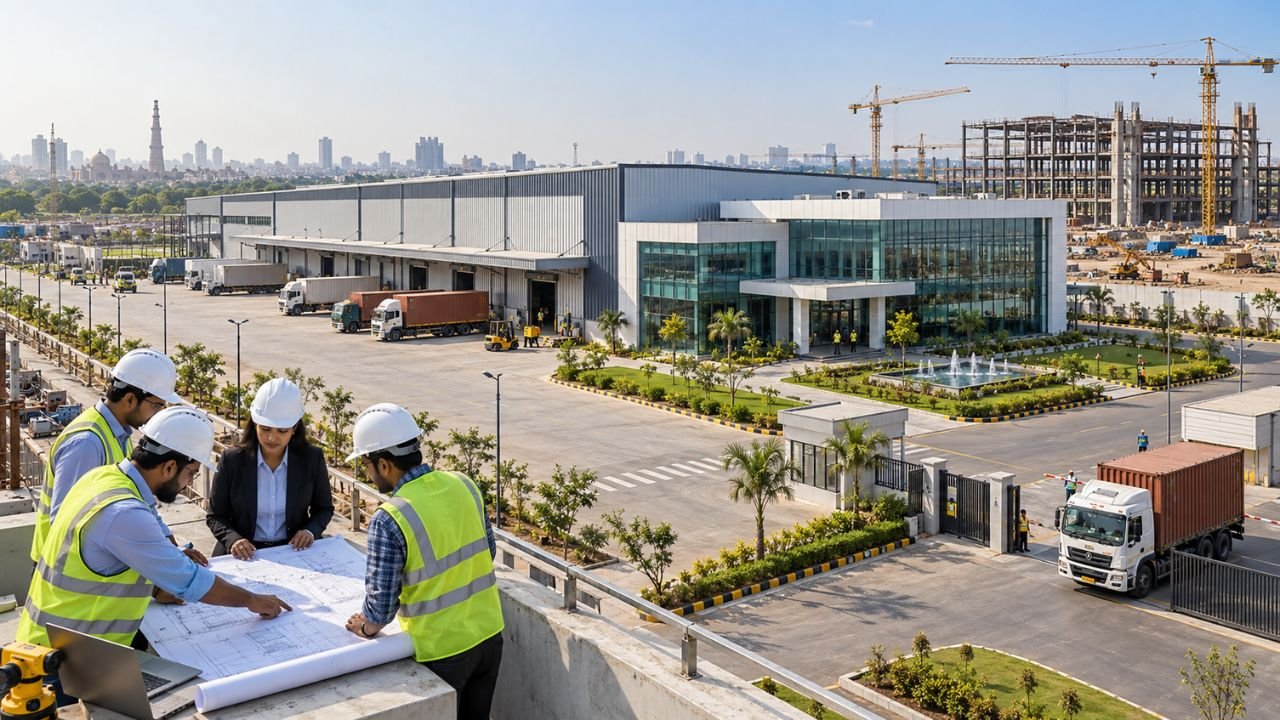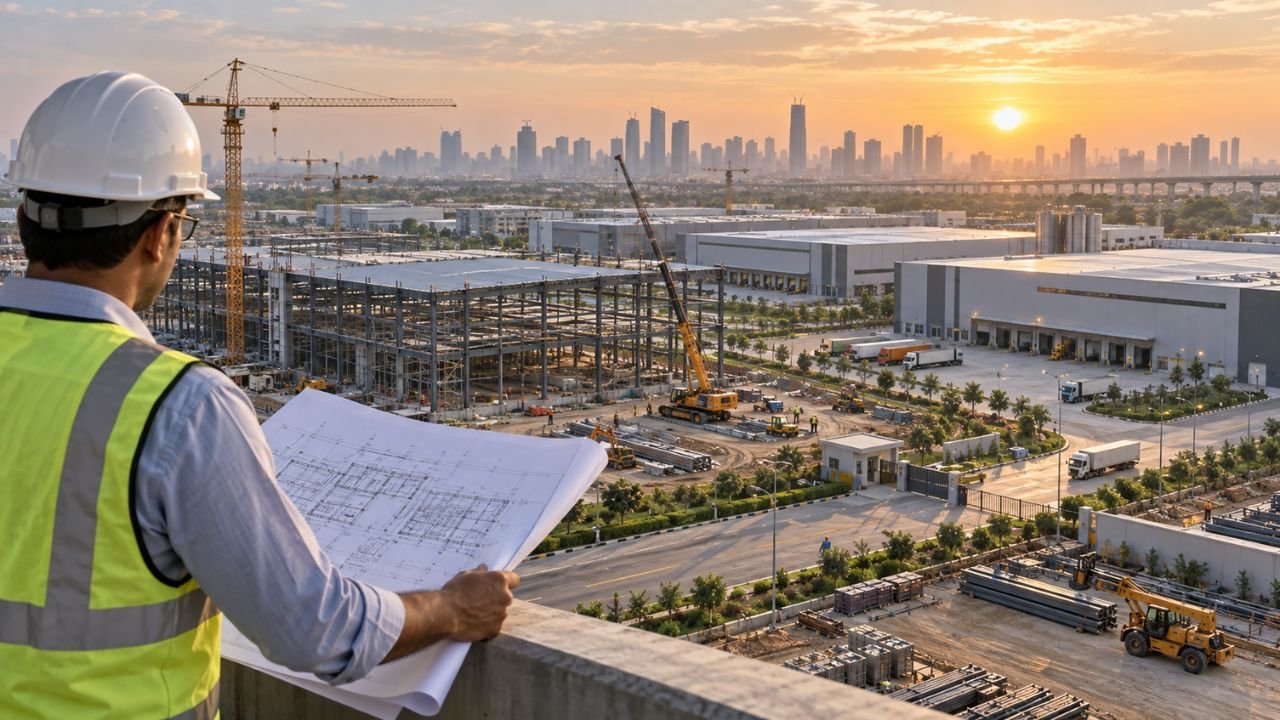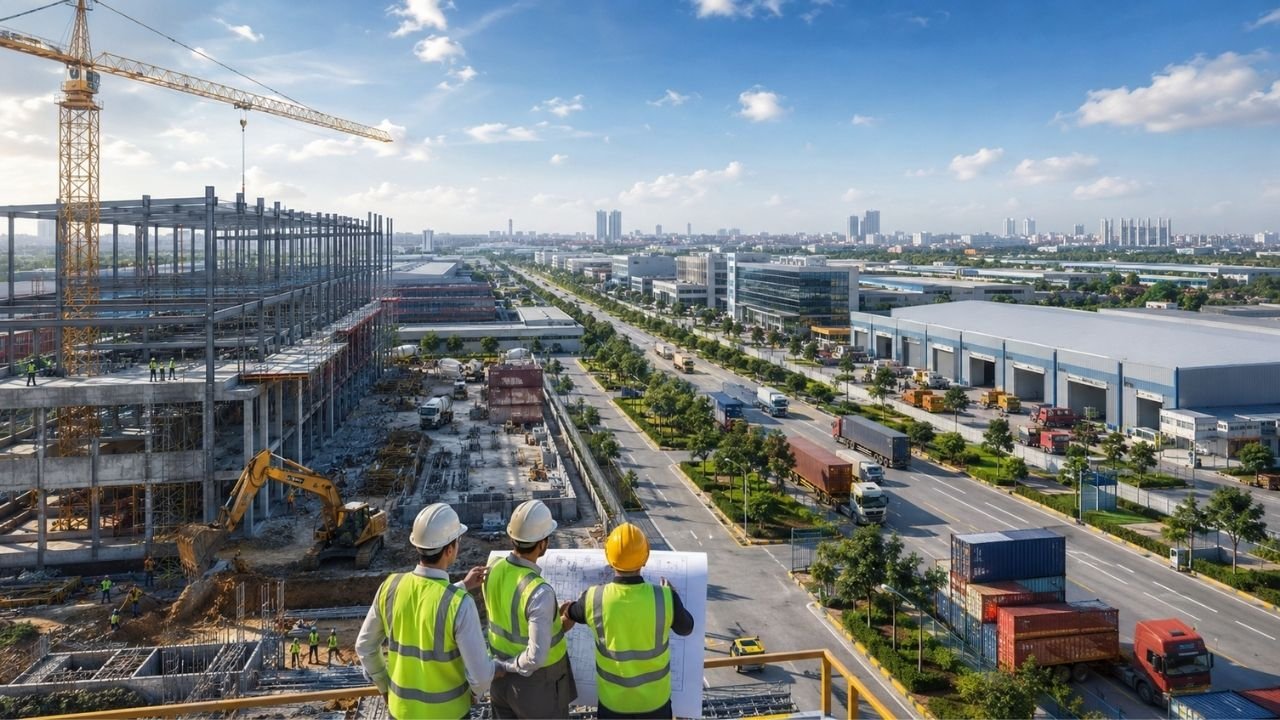
In 2026, India’s construction industry faces massive pressure: urgent demand for affordable housing under PMAY-U 2.0, labour shortages in urban centres, rising material costs, and the need for climate-resilient buildings in seismic zones and extreme weather conditions. Traditional on-site construction, while familiar, often leads to delays of months or years due to monsoons, skilled labour scarcity, and supply chain issues.
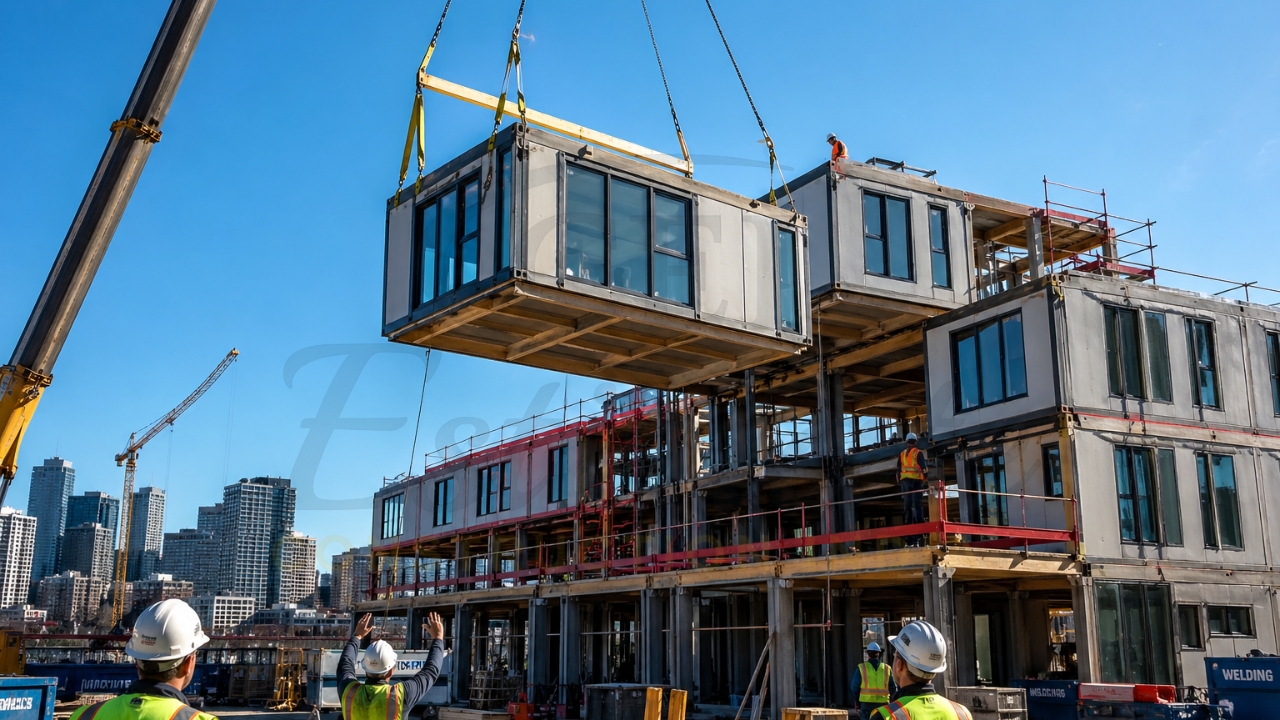
Modular construction is emerging as a practical, scalable solution. Also known as offsite or prefabricated construction, it involves building major components—like rooms, walls, floors, and even entire modules—in a controlled factory environment before transporting and assembling them quickly on-site.
For forward-thinking homeowners, real estate developers, small builders, industrialists, and government project planners, the modular construction benefits in India are compelling: up to 50% faster completion, better quality control, reduced waste, and improved sustainability. Yet many remain skeptical about durability, actual costs in Indian conditions, and design flexibility.
This guide delivers honest, data-driven 2026 insights tailored to Indian realities—climate challenges, regulations, transportation logistics, and more. We’ll compare modular vs traditional construction India, break down realistic costs (including modular homes cost India), explore best applications, and address limitations transparently.
At Construction Estimator India, we provide independent, accurate cost estimations, quantity takeoffs, and detailed BOQ for both modular and conventional projects. Send your project details (type, size, location) via WhatsApp at +91 8630676890 for a free preliminary modular vs traditional cost comparison.
What is Modular Construction and Why It Matters in India 2026?
Modular construction is a method where 3D volumetric modules or 2D panels (walls, floors, roofs) are manufactured off-site in factories using materials like steel frames, precast concrete, or light-gauge steel with insulated panels. These are then transported and assembled on-site like giant Lego blocks, often with mechanical, electrical, and plumbing (MEP) systems pre-installed.
In India 2026, this approach matters more than ever. The prefabricated construction market continues strong growth, driven by PMAY schemes targeting millions of urban and rural homes, infrastructure push, and labour shortages. Government Light House Projects (LHPs) using precast and modular technologies have demonstrated success, with some delivering over 1,000 homes faster than conventional methods.
Why now?
- Urbanization and housing deficit demand speed.
- Rising labour costs and skill gaps in traditional masonry and RCC work.
- Sustainability goals and net-zero targets favour lower-waste methods.
- Policy support through GHTC (Global Housing Technology Challenge) and incentives for modern construction technologies.
Types popular in India include:
- Steel modular — lightweight, fast, good for seismic zones.
- Precast concrete — durable, used in mass housing.
- Hybrid systems — combining prefab panels with on-site elements for flexibility.
Unlike temporary “porta cabins,” modern modular buildings in 2026 meet or exceed Indian standards for durability, fire safety, and seismic performance (up to Zone V in many designs).
Key Benefits of Modular Construction in India
The benefits of modular building in India go beyond marketing hype. Here are the main advantages grounded in 2026 project realities:
- Significant Time Savings: Factory production runs parallel to site preparation (foundation work). Overall project timelines can reduce by 30-60%. A project that takes 18-24 months traditionally might complete in 8-12 months with modular methods. This means faster occupancy, earlier revenue for developers, and reduced interest burden on construction loans.
- Better Cost Control and Potential Savings: While initial factory setup or module costs can appear higher, modular vs traditional construction India often shows 10-20% overall savings through reduced labour (up to 50% less on-site workforce), minimal material wastage (up to 90% less in some cases), and fewer delays. Bulk procurement and factory efficiency help. However, savings depend heavily on scale, standardization, and location—transport costs matter in remote areas.
- Superior Quality and Consistency: Controlled factory conditions eliminate weather damage, ensure precise tolerances, and allow rigorous quality checks. This addresses common skepticism about durability—modern Indian modular projects use certified materials and engineering that often result in stronger, more airtight structures with better thermal and acoustic performance.
- Sustainability and Less Waste: Prefabricated construction advantages India include lower carbon footprint from reduced material use, less site disturbance, and easier recycling of factory offcuts. Many systems support green building certifications.
- Reduced Labour Dependency and Improved Safety: With India’s skilled labour crunch, modular shifts much work to factories (often with better training and conditions). On-site assembly requires fewer workers, lowering accident risks and dependency on daily-wage labour.
- Less Weather Dependency: Critical in monsoon-prone regions—most work happens indoors in the factory.
- Scalability for Mass Projects: Ideal for PMAY-style affordable housing or repetitive designs in schools and hospitals.
Numbered list of additional benefits:
- Predictable budgets with fewer change orders.
- Potential for better energy efficiency (insulated panels reduce cooling costs in hot Indian summers).
- Easier disassembly and relocation for certain applications (e.g., temporary industrial camps that become permanent).
Modular vs Traditional Construction – Head-to-Head Comparison 2026
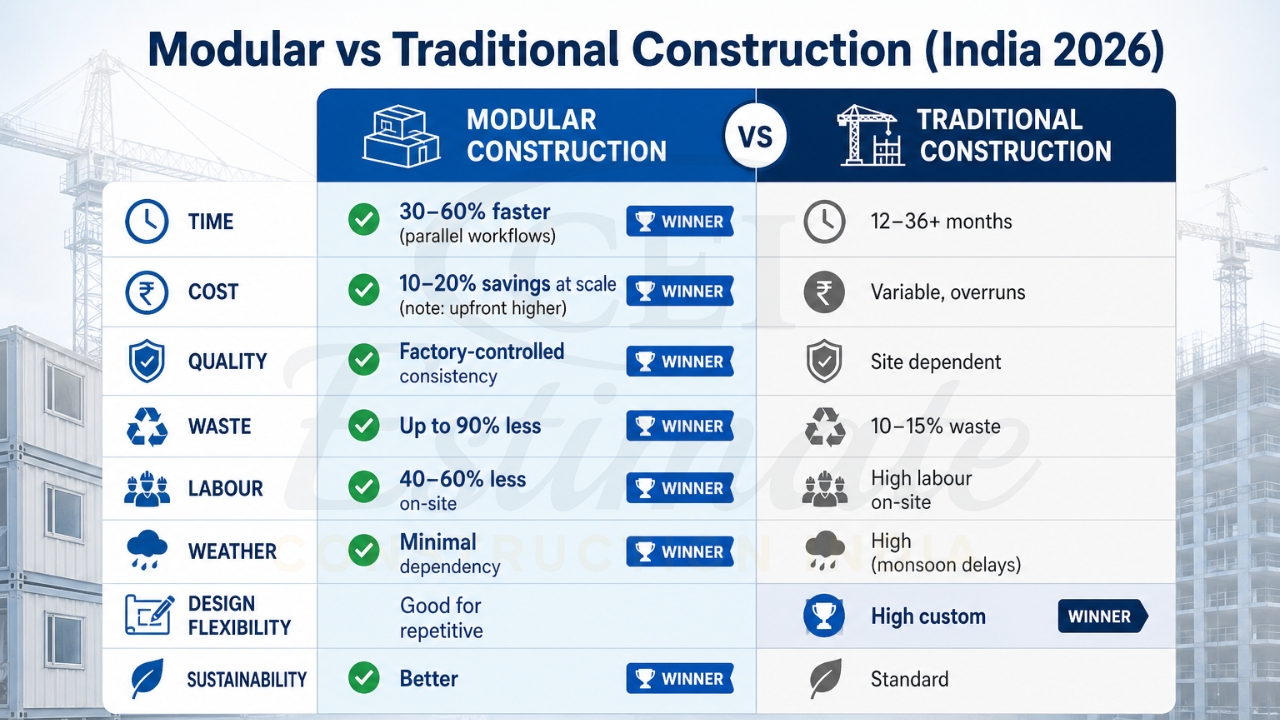
To address the core question of modular vs traditional construction India, here’s a realistic 2026 comparison based on industry trends and project outcomes:
| Aspect | Modular Construction | Traditional Construction | Winner/Notes |
| Time | 30-60% faster (parallel workflows) | 12-36+ months typical | Modular – major advantage for cash flow |
| Cost (per sq ft) | Often 10-20% savings at scale; upfront higher in some cases | Variable, prone to overruns | Modular (with proper planning) |
| Quality | High consistency, factory-controlled | Depends on site supervision | Modular |
| Waste | Up to 90% less | High (10-15% material waste common) | Modular |
| Labour | 40-60% less on-site | High dependency on skilled/unskilled labour | Modular |
| Weather Dependency | Minimal | High (monsoon delays common) | Modular |
| Design Flexibility | Good for standardized/repetitive; improving | High for custom designs | Traditional (but modular catching up) |
| Sustainability | Better (less waste, energy-efficient) | Standard unless green measures added | Modular |
Note: Actual numbers vary by project scale, location, and system (steel vs concrete). For a 2,000 sq ft home, traditional might range widely due to delays, while modular offers tighter estimates.
This table highlights why many developers are shifting for mid-to-large projects.
Cost of Modular Construction in India 2026 (Realistic Breakdown)
Modular homes cost India in 2026 depends on factors like location (transport distance), material (steel frame vs precast), finishes, and scale. Rough indicative ranges (excluding land, approvals, and site-specific foundation):
- Basic affordable modular housing: ₹1,800 – ₹2,800 per sq ft
- Mid-range residential (good finishes, insulation): ₹2,500 – ₹3,800 per sq ft
- Premium or commercial/industrial: ₹3,500 – ₹5,500+ per sq ft
Breakdown (approximate for a typical project):
- Modules fabrication: 50-60% of cost
- Transportation & logistics: 8-15% (higher for remote sites or large modules)
- On-site assembly & foundation: 15-25%
- Finishes, MEP, interiors: 10-20%
Compared to traditional (often ₹2,200 – ₹4,500+ per sq ft with overruns), modular shines in predictability. Early involvement in design for standardization maximizes savings. Financing costs drop due to shorter timelines.
We strongly recommend a professional estimation—many “savings” claims fail without accurate BOQ comparison accounting for Indian transportation, crane hire, and local regulations.
Best Applications for Modular Construction in India
Modular construction excels where speed, repetition, or controlled quality is key:
- Affordable Housing: PMAY-U and state schemes—mass production of identical or semi-custom units.
- Schools and Educational Buildings: Quick rollout for expanding rural/urban education infrastructure.
- Hospitals and Healthcare: Rapid addition of wards or modular OT units (proven in pandemic responses).
- Industrial Buildings and Warehouses: Steel modular for factories, data centres, or logistics hubs.
- Disaster Relief and Temporary-to-Permanent Housing: Fast deployment in flood or earthquake-prone areas.
- Luxury or Custom Villas: Hybrid modular for high-end projects seeking sustainability and speed (growing segment in 2026).
- Hostels, Offices, and Hotels: Repetitive room modules.
For small individual homes, hybrid approaches (prefab panels + traditional elements) often work best.
Challenges and Limitations of Modular Construction in India
Honest assessment is crucial—no technology is perfect.
- Transportation Logistics: Large modules face road width, height, and bridge load restrictions, especially in tier-2/3 cities or hilly areas. This increases costs.
- Initial Perception and Skepticism: Many still doubt long-term durability or resale value compared to “brick-and-mortar.”
- Design Flexibility: Highly standardized designs are most cost-effective; complex custom architecture may cost more or suit hybrid only.
- Skill Gap and Regulatory Hurdles: Limited experienced fabricators in some regions; approvals can be slower if local bodies are unfamiliar with modular codes.
- Upfront Capital: Factory production requires payment earlier than staggered traditional payments.
- Climate and Seismic Adaptation: Well-engineered systems handle Indian conditions (insulation for heat, flexible joints for earthquakes), but poor execution fails.
These are addressable with experienced partners and proper planning—hence the value of independent cost estimation.
How Construction Estimator India Helps You Evaluate Modular Construction?
Deciding between modular and traditional shouldn’t rely on guesswork or vendor quotes alone.
At Construction Estimator India, we specialize in accurate construction estimation, quantity takeoff, and BOQ preparation for both modular/prefabricated and conventional methods.
Our simple process:
- Send your project details (type, size, location, basic requirements) via WhatsApp at +91 8630676890.
- Receive a free preliminary modular vs traditional cost comparison with key assumptions.
- Get detailed stage-wise BOQ, quantity takeoffs, and realistic 2026 pricing tailored to your site conditions.
- We help evaluate real ROI, including time-value of money, maintenance, and lifecycle costs.
Whether you’re a homeowner building a modular home, a developer scaling affordable housing, or a planner for industrial projects, our independent analysis removes bias and builds confidence.
WhatsApp Now for Free Modular Construction Cost Comparison?
Ready to explore if modular construction is right for your 2026 project?
WhatsApp +91 8630676890 today with your project specs for a no-obligation preliminary comparison and BOQ insights.
Don’t let uncertainty delay your project—get data-driven clarity on modular construction benefits in India specific to your needs.
FAQ – Modular Construction in India 2026
Q1: What are the main benefits of modular construction in India?
Faster timelines (30-60% reduction), better quality control, less waste, reduced labour needs, and improved sustainability.
Q2: How much faster is modular construction compared to traditional in India?
Typically 30-60% faster, depending on project scale and logistics. Parallel factory and site work is the key.
Q3: Is modular construction cheaper in India 2026?
It can be 10-20% more cost-effective overall at scale due to efficiency, though upfront module costs may vary. Accurate BOQ comparison is essential.
Q4: What is the modular homes cost in India?
Indicative range ₹1,800 – ₹5,500+ per sq ft in 2026, varying by design, location, and specifications. Contact us for project-specific estimates.
Q5: Is modular construction good for Indian climate and seismic zones?
Yes, when properly engineered. Insulated panels handle heat, and flexible steel or designed concrete systems suit seismic zones III-V.
Q6: What are the limitations of modular construction in India?
Transportation challenges, perception issues, potential limits on extreme customization, and need for experienced suppliers.
Q7: How does prefabricated construction reduce waste?
Factory precision and bulk processes cut material waste dramatically compared to on-site cutting and weather exposure.
Q8: Can modular buildings be customized?
Yes—modern systems offer good flexibility, especially hybrid approaches, though maximum savings come with some standardization.
Q9: Which is better for affordable housing – modular or traditional?
Modular often wins for speed and consistency in large-scale PMAY-style projects.
Q10: Does modular construction meet Indian building codes and seismic standards?
Reputable systems do, often exceeding minimum requirements with certified engineering.
Q11: How long do modular buildings last in India?
50+ years with proper design and maintenance, comparable to traditional when using quality materials.
Q12: How can I get an accurate cost comparison for my project?
WhatsApp +91 8630676890 to Construction Estimator India for a free preliminary modular vs traditional analysis.
Conclusion
Modular construction benefits in India in 2026 are real: faster delivery, controlled quality, sustainability gains, and potential cost predictability that traditional methods struggle to match amid labour and weather challenges. While not a one-size-fits-all solution—especially considering logistics and customization needs—it represents the future for many project types, from affordable housing to industrial facilities.
The key to success is informed decision-making with accurate data. Avoid vendor-biased quotes. Get an independent evaluation of modular vs traditional construction India tailored to your site, scale, and goals.
Take the next step today: WhatsApp your project details to +91 8630676890 at Construction Estimator India. Receive your free preliminary cost comparison and detailed BOQ insights to build smarter, faster, and greener in 2026.
Your project deserves clarity—let’s calculate the real benefits together.