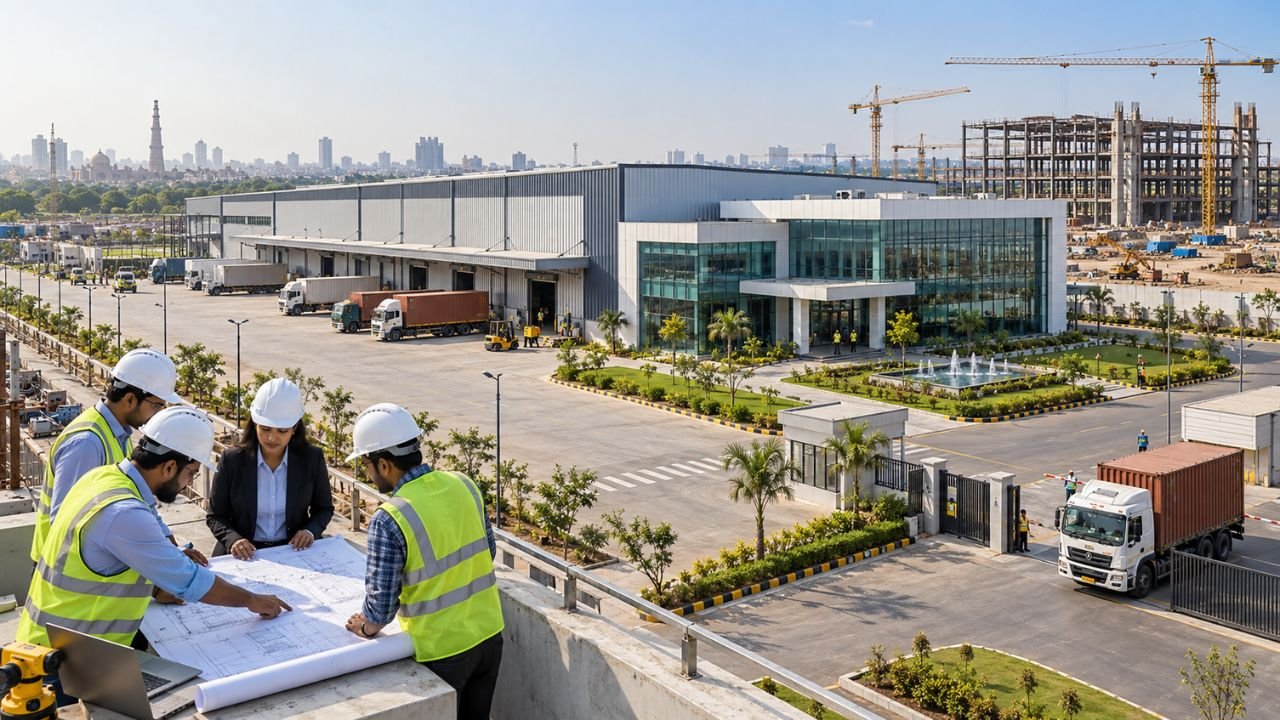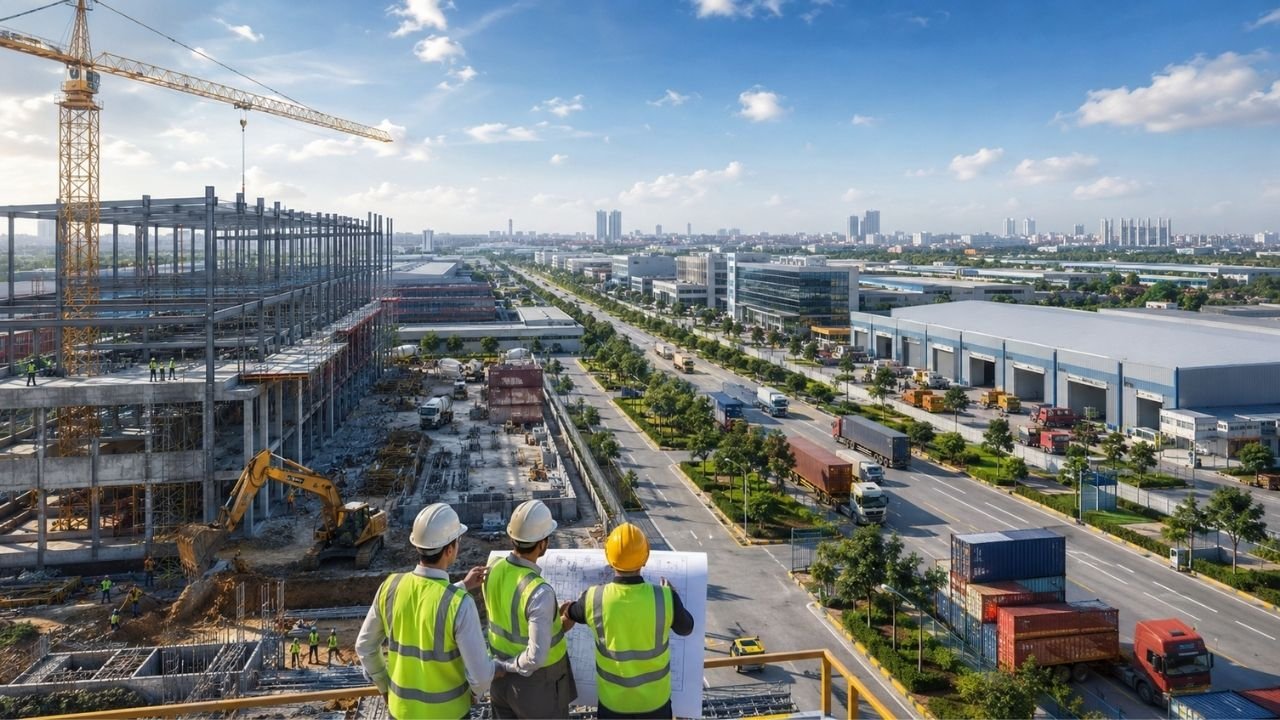
India’s construction sector faces massive pressure in 2026. Rapid urbanization, labor shortages, rising material costs, and ambitious government targets under PMAY and infrastructure programs demand faster, smarter, and more sustainable building methods. Traditional cast-in-situ construction, while familiar, often leads to delays, inconsistent quality, high waste, and safety risks on congested sites.
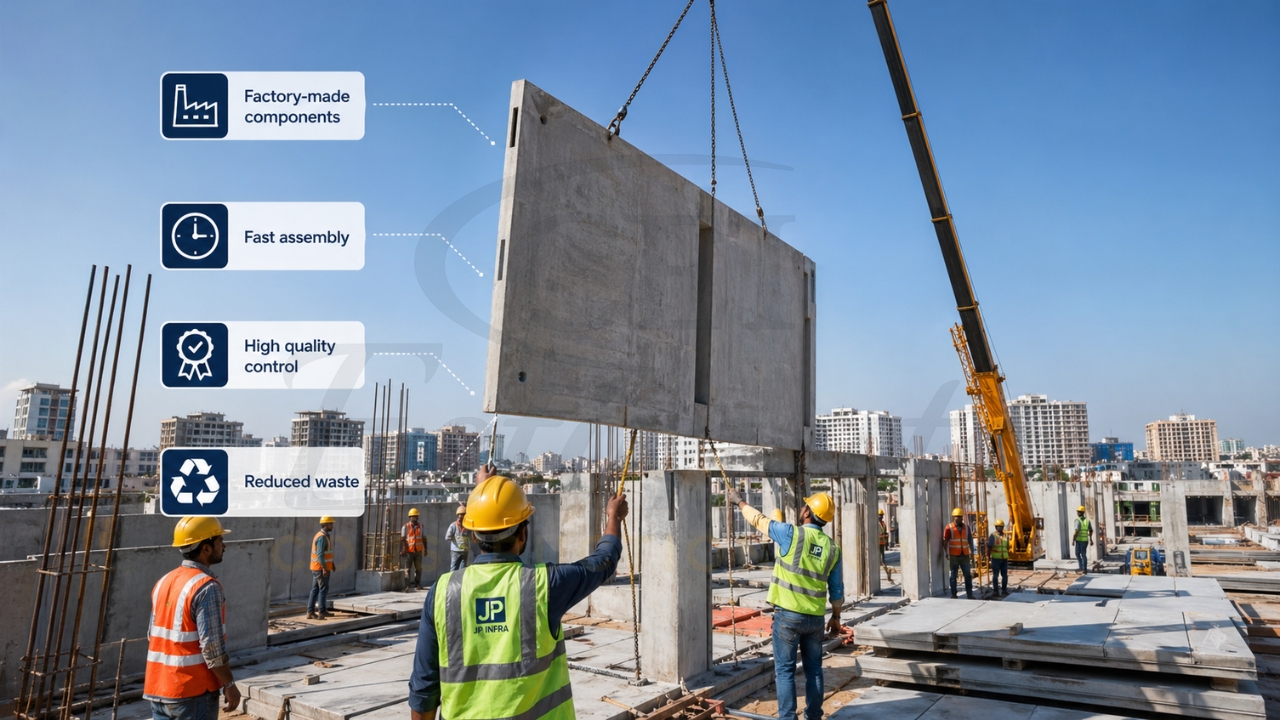
Precast construction in India offers a proven modern alternative. Components like beams, slabs, columns, wall panels, and even volumetric modules are manufactured in controlled factory conditions, then transported and assembled on-site like a giant LEGO set. This approach can slash project timelines by 20-50%, reduce waste significantly, deliver superior quality, and help meet India’s housing and infrastructure goals.
In this comprehensive guide, we explain precast construction in India in clear terms—what it is, how it works, its real benefits and limitations in Indian conditions, a detailed precast vs cast in situ construction India comparison, realistic precast concrete construction cost India insights for 2026, best applications, challenges, and the promising future ahead. Whether you’re a homeowner, real estate developer, civil contractor, or government planner, you’ll get balanced, actionable information.
At Construction Estimator India, we provide independent, accurate cost estimations and BOQ for both precast and traditional systems. Send your project details (type, size, location) via WhatsApp at +91 8630676890 for a free preliminary precast vs traditional cost comparison.
What is Precast Construction? (Simple Explanation)
Precast construction involves casting concrete elements—such as walls, floors, beams, columns, staircases, or entire room modules—in a factory or precast yard under strict quality control. These elements are cured to full strength off-site, transported to the construction location, and then erected and joined using specialized connections (wet joints with grout or dry joints with mechanical fasteners).
It differs from prefab or modular construction in nuance:
- Precast typically refers to concrete elements (most common in India).
- Prefab is a broader term including steel, wood, or composite systems.
- Modular often means complete volumetric units (like 3D room pods) that are fully finished off-site.
In India, precast building system India is gaining traction for its ability to deliver consistent M40-M50 grade concrete, smooth finishes on both sides, and reduced dependency on on-site skilled labor. It aligns with Indian Standards like IS 15916 (Building Design and Erection Using Prefabricated Concrete) and IS 456.
Unlike cast-in-situ, where concrete is mixed and poured on-site with variable weather, labor, and curing conditions, precast ensures precision and repeatability—critical for large-scale or repetitive projects.
How Precast Construction Works in India – Step-by-Step Process?
The precast construction process in India follows these key stages:
- Design & Engineering: Detailed 3D modeling (often with BIM) considering transport limits, erection sequence, seismic requirements (IS 1893), and connections for monolithic behavior.
- Mould Preparation & Casting: High-precision steel or timber moulds in a controlled factory. Concrete is poured with vibration for dense compaction. Admixtures and high-strength mixes are used.
- Curing: Elements cure in controlled temperature and humidity for optimal strength—far superior to site curing.
- Quality Checks: Dimensional tolerances (±3mm typical), strength tests, and surface finish verification.
- Transportation: Oversized trucks or trailers move elements to site. Economic radius is usually 200-300 km to control logistics costs.
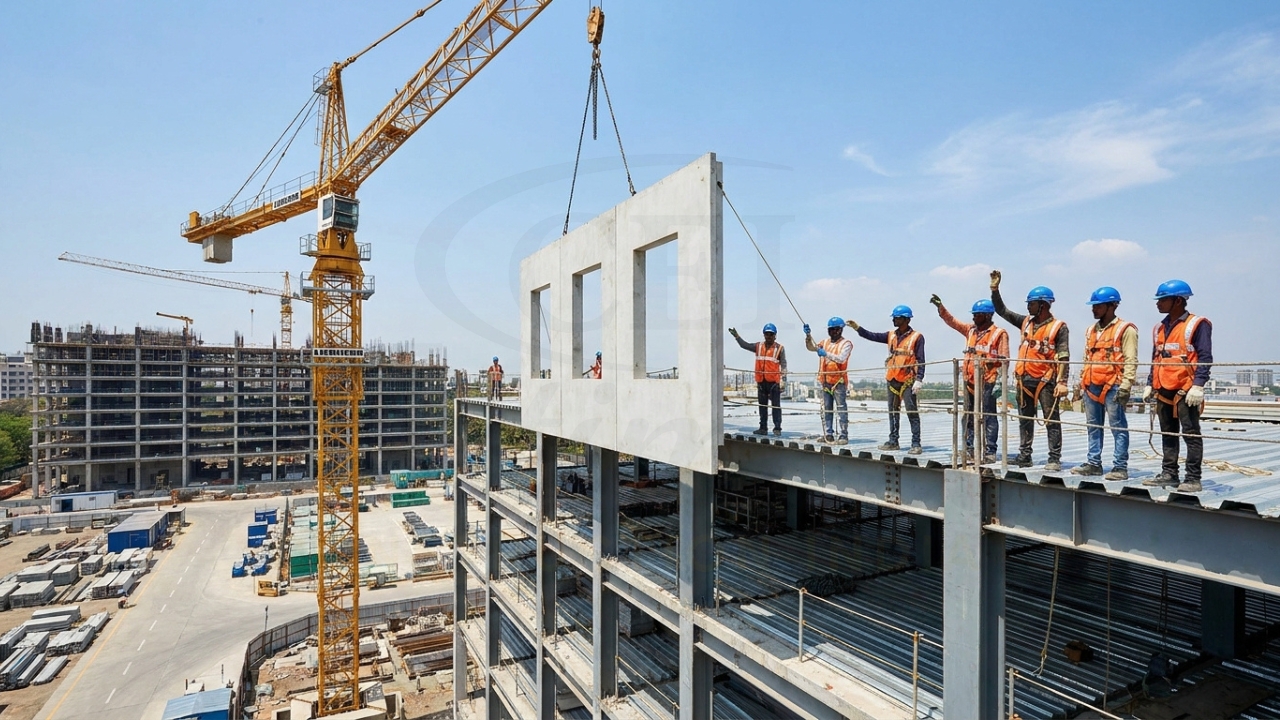
- Site Erection: Tower cranes or mobile cranes lift and position elements. Temporary bracing ensures stability during assembly.
- Jointing & Finishing: Wet or dry joints connect elements. Grouting, post-tensioning, or shear keys create structural integrity. Minimal plastering needed due to factory finish.
- Services Integration: MEP rough-ins can be pre-embedded in panels.
This parallel workflow (factory production + site preparation) is the biggest time-saver. Successful Indian examples include Light House Projects (LHP) under GHTC, such as Chennai’s precast housing and CIDCO Mumbai projects.
Major Benefits of Precast Construction in India 2026?
Precast construction in India delivers tangible advantages, especially amid 2026’s labor and sustainability pressures:
- Speed: 20-50% faster completion. Floor cycles can drop from 21+ days to 7-12 days. Parallel manufacturing and site work accelerate handover and reduce Interest During Construction (IDC).
- Superior Quality & Durability: Factory-controlled environment ensures consistent strength, better compaction, and smooth finishes (no honeycombing). Reduced rework and lower long-term maintenance.
- Cost Efficiency at Scale: Material waste drops to <3% vs 15-20% in traditional methods. Labor requirement can fall by 50-60%. For large projects (200-300+ units), overall project costs can be 8-15% lower despite higher initial element costs.
- Waste Reduction & Sustainability: Less material waste, lower water use, and reduced site pollution. Supports green building goals.
- Improved Safety: Fewer workers on-site, less scaffolding and formwork-related accidents. Safer in urban or constrained sites.
- Scalability: Ideal for repetitive designs in mass housing. Better thermal and acoustic performance possible with sandwich panels.
- Reduced Site Disruption: Minimal noise and dust—important in cities.
In 2026, with India’s precast concrete market projected to grow strongly (from ~USD 6.7B in 2024 toward USD 17B by 2033 at ~11% CAGR), these benefits are driving adoption in Southern and Western states first.
Precast vs Traditional Cast-in-Situ Construction – Detailed Comparison 2026
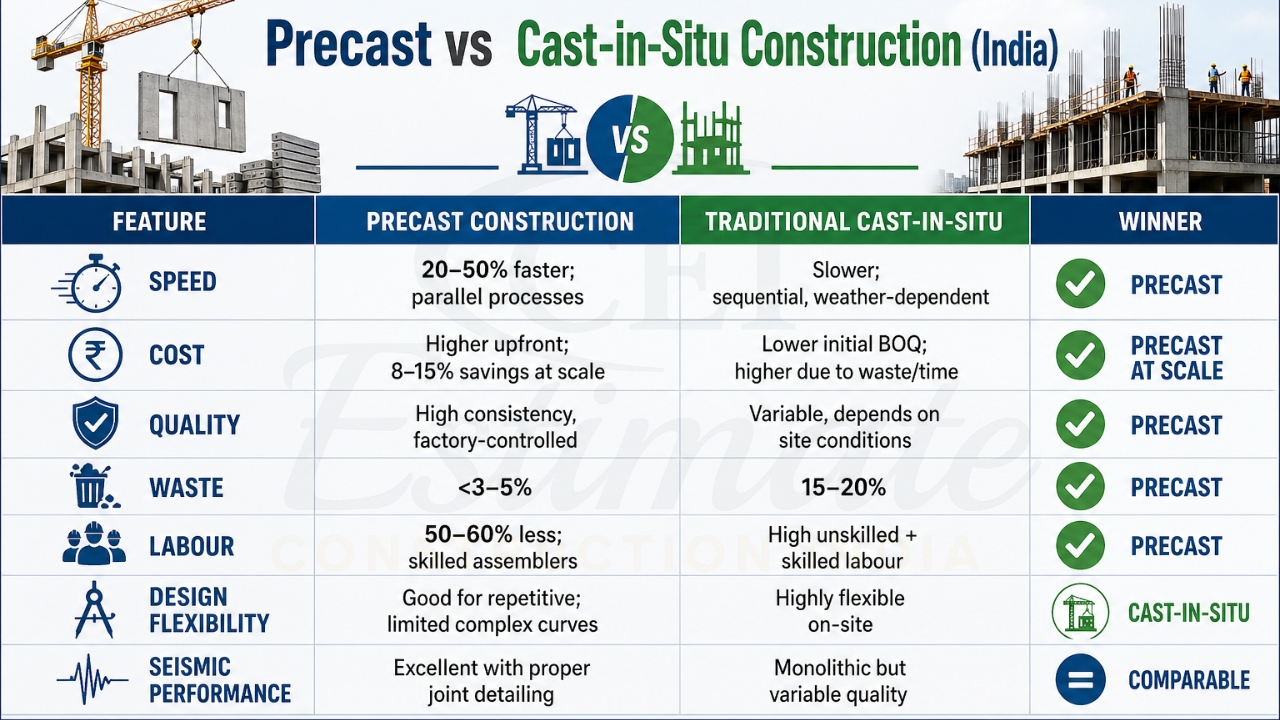
Here’s a realistic precast vs cast in situ India comparison based on 2025-2026 project data:
| Feature | Precast Construction | Traditional Cast-in-Situ | Winner (for most mid-large projects) |
| Speed | 20-50% faster; parallel processes | Slower; sequential, weather-dependent | Precast |
| Cost (Overall Project) | Higher upfront; 8-15% savings at scale | Lower initial BOQ; higher due to waste/time | Precast (at scale) |
| Quality | High consistency, factory-controlled | Variable, depends on site conditions | Precast |
| Waste | <3-5% | 15-20% | Precast |
| Labour Requirement | 50-60% less; needs skilled assemblers | High unskilled + skilled labour | Precast |
| Design Flexibility | Good for repetitive/standard; limited for complex curves | Highly flexible on-site | Cast-in-Situ (small/custom) |
| Seismic Performance | Excellent if joints detailed per code | Monolithic but variable quality | Comparable (with proper design) |
Precast shines in speed, quality, and predictability. Traditional methods still suit very small or highly irregular projects. Lifecycle costs often favor precast due to durability and lower maintenance.
Cost of Precast Construction in India 2026 (Realistic Breakdown)
Precast concrete construction cost India varies by project scale, location, and design. In 2026:
- Initial Element Cost: Often 10-25% higher than equivalent cast-in-situ due to factory overheads, transport, and cranes.
- Overall Project Cost: For affordable housing or repetitive mid-large projects, total cost can be neutral to 8-15% lower thanks to massive savings in time (IDC), labor (30-50%), waste, formwork, and finishing. Small projects (<200 units) may see higher costs.
Typical Breakdown (indicative, ₹ per sq ft, G+3 to G+10 residential, 2026 prices):
- Structural Elements (precast): ₹1800-2800/sq ft (varies)
- Transport + Erection: Adds 8-15%
- Jointing & Finishing: Lower than traditional plastering
- Total Building Cost Savings: Primarily from 40%+ faster completion and reduced labor.
Factors influencing cost: Proximity to precast plant, volume (economy of scale), seismic zone (stronger connections), and use of 3D volumetric modules.
Pro Tip: Never rely on generic rates. Accurate stage-wise BOQ is essential.
At Construction Estimator India, we deliver precise precast vs traditional cost comparison and detailed BOQ tailored to your project location and specs. WhatsApp +91 8630676890 with your details for a free preliminary analysis.
Best Applications for Precast Construction in India
Precast building system India works best where repetition, speed, and quality matter:
- Affordable & Mass Housing: PMAY projects, Light House Projects—delivering thousands of units quickly.
- Educational & Healthcare Buildings: Schools, hostels, hospitals needing fast, clean construction.
- Industrial & Warehouses: Factories, logistics parks with long spans and repetitive bays.
- High-Rise Residential & Commercial: Towers in metros where site constraints and labor issues are acute.
- Infrastructure: Bridges, flyovers, tunnels, railway stations, bus shelters (MORTH push).
- Toilets, Boundary Walls, Compound Elements: Smaller standardized items.
It is less ideal for highly bespoke luxury villas with unique curves or very remote sites with poor road access.
Challenges and Limitations of Precast Construction in India
Honest assessment is crucial. Key challenges of precast construction in India:
- Transportation Logistics: Heavy elements require good roads; oversized loads face permits and damage risks. Economic haul distance limited.
- Initial Capital & Setup: Setting up a plant costs ₹2-15 crore+. Third-party vendors help but add margins.
- Jointing & Connections: Critical for seismic performance. Poor detailing can lead to leakage or reduced ductility. Codes like IS 15916 provide guidance but awareness varies.
- Skilled Manpower Gap: Erection needs trained crane operators, riggers, and supervisors—still scarce in many regions.
- Design Lock-in: Changes mid-project are costlier; best for standardized designs.
- Higher Upfront Cost for Small Projects: Not always economical below certain scale.
- Perception Issues: Past experiences (e.g., older Bhuj earthquake lessons) create skepticism, though modern ductile detailing addresses this.
Southern and Western India lead adoption; Northern and Eastern regions are catching up with government mandates and new plants.
Future of Precast Construction in India 2026 and Beyond
In precast construction India 2026, the outlook is strongly positive. The market is expanding with Industry 4.0 (automation, robotics), BIM integration, sustainable mixes, and hybrid systems. Government initiatives like PMAY, Smart Cities, and infrastructure pushes (including mandates in certain sectors) are accelerating adoption.
Expect more 3D volumetric modules, better seismic solutions, and integration with green building. By 2030+, precast could become mainstream for mid-to-large projects as plants proliferate in Uttar Pradesh, Maharashtra, Telangana, and beyond. Labor shortages and ESG pressures will further tilt the balance.
Modular precast housing India will play a key role in meeting the millions of units still needed.
How Construction Estimator India Helps You Evaluate Precast Construction?
Deciding between precast and traditional shouldn’t be guesswork. At Construction Estimator India, we specialize in accurate construction estimation, quantity takeoff, and BOQ for both systems.
Our Simple Process:
- WhatsApp your project details (type, size, location, drawings if available) to +91 8630676890.
- Receive a free preliminary precast vs traditional cost comparison.
- Get detailed stage-wise BOQ, material quantities, and ROI evaluation tailored to your site.
- Make an informed, data-driven decision with independent analysis.
We help developers, contractors, and planners quantify real savings, risks, and suitability—no bias toward one system.
WhatsApp Now for Free Precast Construction Cost Comparison?
Ready to explore if precast construction in India suits your next project?
Send project details via WhatsApp to +91 8630676890 today and get a free preliminary precast vs cast in situ cost comparison and BOQ insights.
Don’t leave money or time on the table—get accurate numbers first.
FAQ – Precast Construction in India
Q1: What is the main difference between precast and cast in situ construction in India?
Precast elements are cast and cured in a factory, then assembled on-site. Cast-in-situ is poured and cured entirely at the site. Precast offers better speed and consistency; cast-in-situ offers more on-site flexibility.
Q2: Is precast construction cheaper than traditional methods in 2026?
For small projects, often not. For medium-to-large repetitive projects, overall costs can be 8-15% lower due to time, labor, and waste savings, even if element costs are higher.
Q3: Is precast construction good for seismic zones in India?
Yes, when designed and detailed properly per IS 1893 and IS 15916 with ductile connections and shear keys. Modern precast performs well; joints are engineered for monolithic-like behavior.
Q4: How much time can precast save on a housing project?
Typically 20-50% overall, with floor cycles significantly faster (7-12 days vs 21+ days).
Q5: What are the biggest challenges for precast in India?
Transportation logistics, initial setup costs, need for skilled erection teams, and ensuring high-quality jointing.
Q6: Which projects suit precast construction best in India?
Affordable housing (PMAY), schools, hospitals, industrial buildings, high-rises, and infrastructure elements with repetition.
Q7: Does precast reduce construction waste?
Yes, significantly—often to under 5% vs 15-20% in traditional methods.
Q8: How do I get an accurate cost for my precast project?
Contact us via WhatsApp at +91 8630676890 for independent estimation and BOQ.
Q9: Is precast the same as modular construction?
Precast is a key part of modular/prefab systems. Modular often refers to larger 3D volumetric units.
Q10: What government schemes support precast in India?
PMAY (including Light House Projects), Smart Cities, GHTC, and various state infrastructure mandates.
Q11: Can precast be used for custom or luxury homes?
Possible but less economical; best for standardized or repetitive designs.
Q12: How important is plant proximity for precast viability?
Very important—transport costs rise sharply beyond 200-300 km.
Conclusion
Precast construction in India is no longer a niche technology—it is a practical, high-performance solution for faster, higher-quality, and more sustainable building in 2026 and beyond. With clear benefits in speed, consistency, waste reduction, and scalability, it addresses many pain points of traditional cast-in-situ methods, especially for medium-to-large projects.
However, success depends on proper planning, scale, logistics, and expert evaluation of joints and seismic detailing. Challenges like transportation and upfront costs remain real but are manageable with the right approach.
Make the smart choice for your project. Let Construction Estimator India provide accurate, unbiased insights so you can compare precast vs traditional with confidence and prepare a reliable BOQ.
WhatsApp your project details now to +91 8630676890 for a free preliminary precast construction cost comparison. Our team will help you evaluate real ROI and suitability—quickly and transparently.
Build better. Build faster. Build smarter with data-driven decisions.