
If you are planning to build a new home or renovate an existing one in 2026, the wood vs UPVC windows India debate is likely at the top of your list. As a homeowner, you want a solution that looks elegant but doesn’t become a maintenance burden. For most modern Indian homes, UPVC windows are better than wood because they offer outstanding water resistance, superior soundproofing, and zero termite issues. While wood provides a nostalgic, classic look, it frequently suffers from warping and swelling in India’s harsh monsoons. For expert guidance on window quantity estimation and material procurement, reach out to Construction Estimator India at +91 8630676890.
Wood vs UPVC Windows India (Quick Answer)
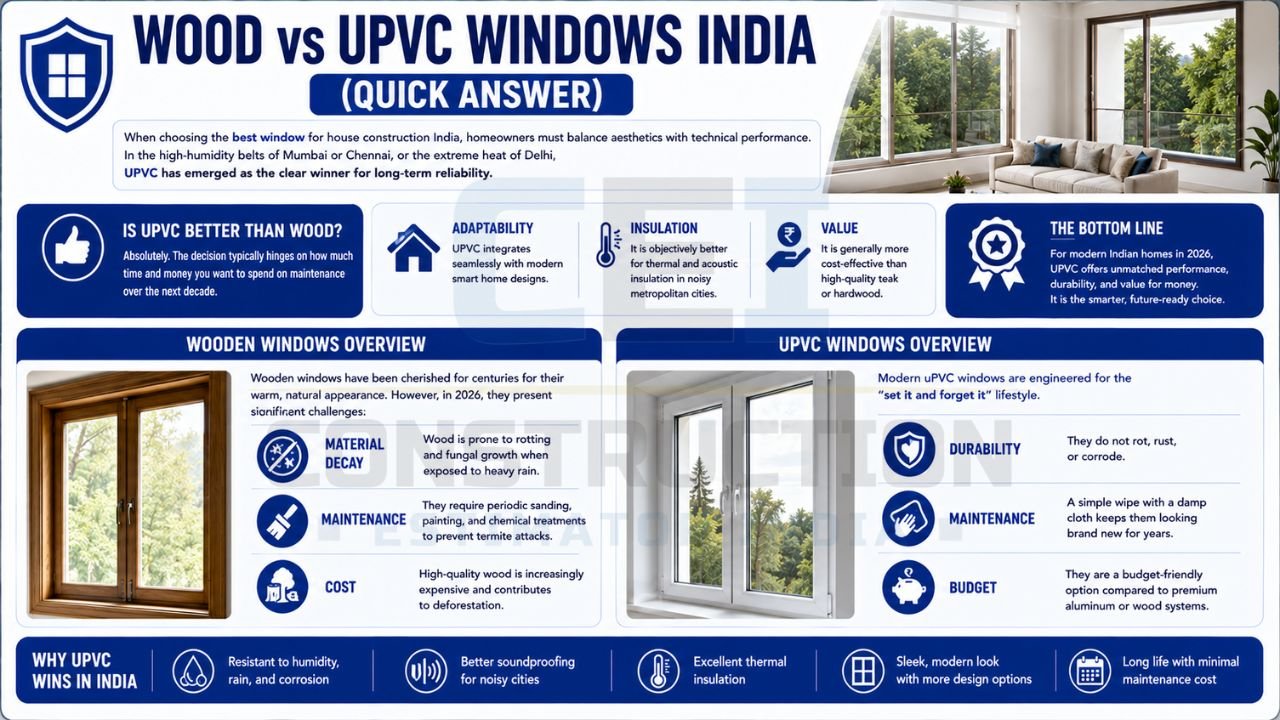
When choosing the best window for house construction India, homeowners must balance aesthetics with technical performance. In the high-humidity belts of Mumbai or Chennai, or the extreme heat of Delhi, UPVC has emerged as the clear winner for long-term reliability.
Is UPVC Better Than Wood?
Absolutely. The decision typically hinges on how much time and money you want to spend on maintenance over the next decade. what is UPVC window technology has advanced to the point where these frames provide much better sealing than traditional timber.
- Adaptability: UPVC integrates seamlessly with modern smart home designs.
- Insulation: It is objectively better for thermal and acoustic insulation in noisy metropolitan cities.
- Value: It is generally more cost-effective than high-quality teak or hardwood.
Wooden Windows Overview
Wooden windows have been cherished for centuries for their warm, natural appearance. However, in 2026, they present significant challenges:
- Material Decay: Wood is prone to rotting and fungal growth when exposed to heavy rain.
- Maintenance: They require periodic sanding, painting, and chemical treatments to prevent termite attacks.
- Cost: High-quality wood is increasingly expensive and contributes to deforestation.
UPVC Windows Overview
Modern uPVC windows are engineered for the “set it and forget it” lifestyle.
- Durability: They do not rot, rust, or corrode.
- Maintenance: A simple wipe with a damp cloth keeps them looking brand new for years.
- Budget: They are a budget-friendly option compared to premium aluminum or wood systems.
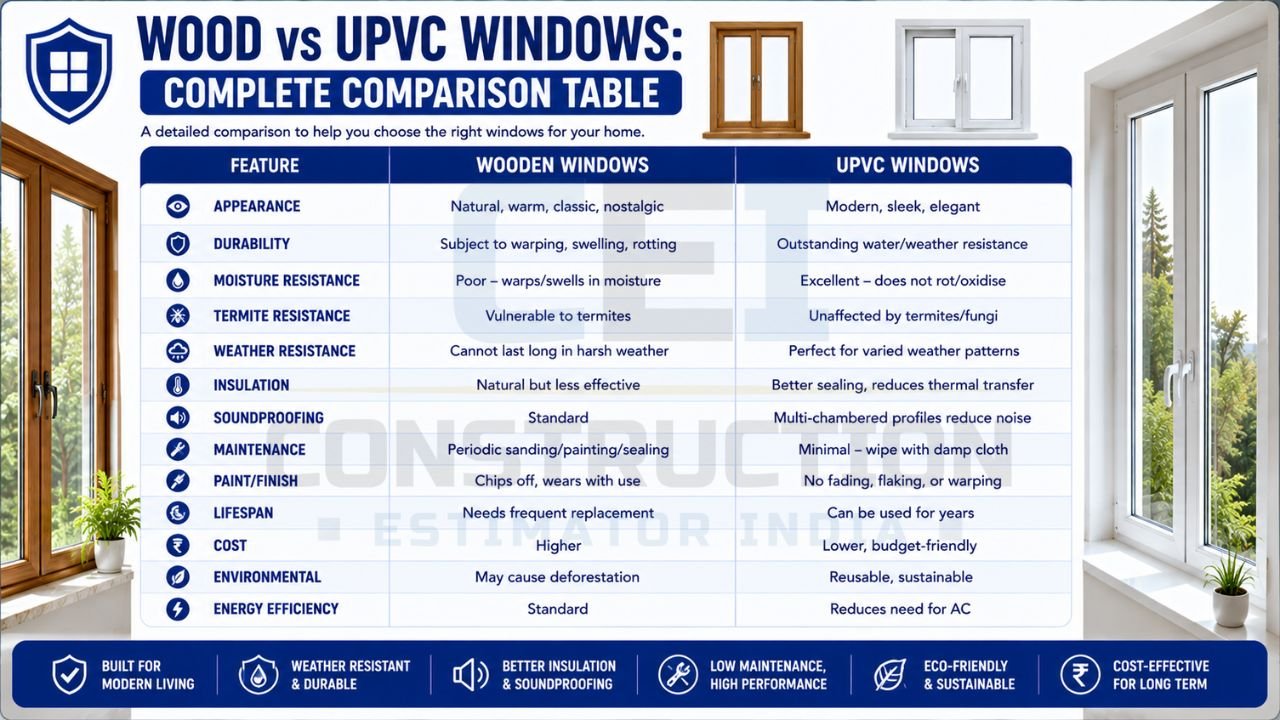
Wood vs UPVC Windows: Complete Comparison Table
| Feature | Wooden Windows | UPVC Windows |
|---|---|---|
| Appearance | Natural, warm, classic, nostalgic | Modern, sleek, elegant |
| Durability | Subject to warping, swelling, rotting | Outstanding water/weather resistance |
| Moisture Resistance | Poor – warps/swells in moisture | Excellent – does not rot/oxidise |
| Termite Resistance | Vulnerable to termites | Unaffected by termites/fungi |
| Weather Resistance | Cannot last long in harsh weather | Perfect for varied weather patterns |
| Insulation | Natural but less effective | Better sealing, reduces thermal transfer |
| Soundproofing | Standard | Multi-chambered profiles reduce noise |
| Maintenance | Periodic sanding/painting/sealing | Minimal – wipe with damp cloth |
| Paint/Finish | Chips off, wears with use | No fading, flaking, or warping |
| Lifespan | Needs frequent replacement | Can be used for years |
| Cost | Higher | Lower, budget-friendly |
| Environmental | May cause deforestation | Reusable, sustainable |
| Energy Efficiency | Standard | Reduces need for AC |
1. Durability and Weather Resistance Comparison
The Indian climate is one of the toughest tests for building materials. From the 45°C summers in North India to the relentless monsoons of the West Coast, your windows must endure extreme stress.
Wooden Windows: Weaknesses
Traditional wood, despite its beauty, is a biological material. This makes it highly susceptible to environmental changes:
- Warping and Swelling: When wood absorbs moisture during the monsoon, it expands, often making the windows difficult to open or close.
- Structural Decay: Constant exposure to the sun and rain causes the paint to chip and the underlying wood to rot.
- Coastal Failure: In cities like Mumbai or Chennai, salt-laden air accelerates the degradation of timber frames.
UPVC Windows: Strengths
UPVC is a synthetic polymer that is chemically inert to moisture and air:
- Waterproof: It possesses outstanding water resistance and weather resistance.
- Non-Corrosive: It does not rot, oxidise, or react with salt air, making it perfect for coastal regions.
- Consistent Performance: Even after a decade of extreme weather, the profiles remain structurally sound without any discolouration or peeling.
Verdict: UPVC is far more durable for the Indian climate.
2. Insulation and Energy Efficiency Comparison
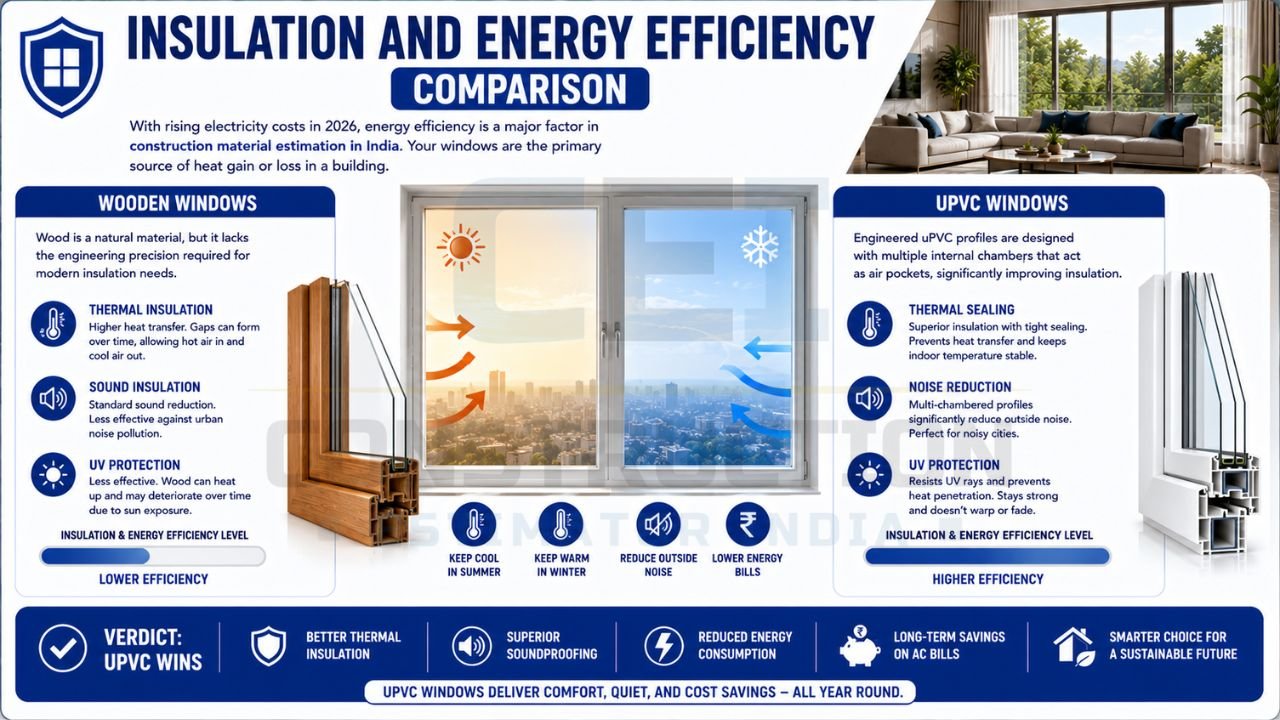
With rising electricity costs in 2026, energy efficiency is a major factor in construction material estimation in India. Your windows are the primary source of heat gain or loss in a building.
UPVC Windows: Superior Insulation
Engineered uPVC profiles are designed with multiple internal chambers that act as air pockets, significantly improving insulation:
- Thermal Sealing: They provide a tighter seal compared to wood, preventing cool AC air from escaping in the summer.
- Noise Reduction: These multi-chambered profiles are excellent for UPVC windows for soundproofing, enabling peace and quiet in noisy cities like Delhi.
- UV Protection: High-quality UPVC is treated to resist UV rays, preventing heat from penetrating the glass area as intensely as traditional frames might allow.
Verdict: UPVC provides better thermal and sound insulation, leading to significant savings on air conditioning bills.
3. Maintenance Requirements Comparison
Homeowners today prefer low maintenance windows India can offer. Time spent on home repairs is time away from family and work.
Wooden Windows: High Maintenance
To keep them looking functional, wooden windows require a rigorous schedule:
- Refinishing: They call for periodic sanding, painting, or polishing every 2–3 years.
- Chemical Treatments: Regular application of anti-termite chemicals is necessary to prevent infestations.
- Replacement Cycles: Because they wear down under harsh weather, they often need to be replaced much sooner than expected.
UPVC Windows: Minimal Maintenance
The maintenance for UPVC is almost zero:
- Easy Cleaning: A simple wipe with a soft, damp cloth is all it takes to keep them looking new.
- No Chemicals: There is no need for painting, polishing, or toxic chemical treatments.
- Longevity: Their appearance does not change with time; they don’t fade, flake, or warp over decades of use.
Verdict: UPVC requires minimal maintenance, saving thousands in labor and material costs over time.
4. Price Comparison: UPVC vs Wood Windows
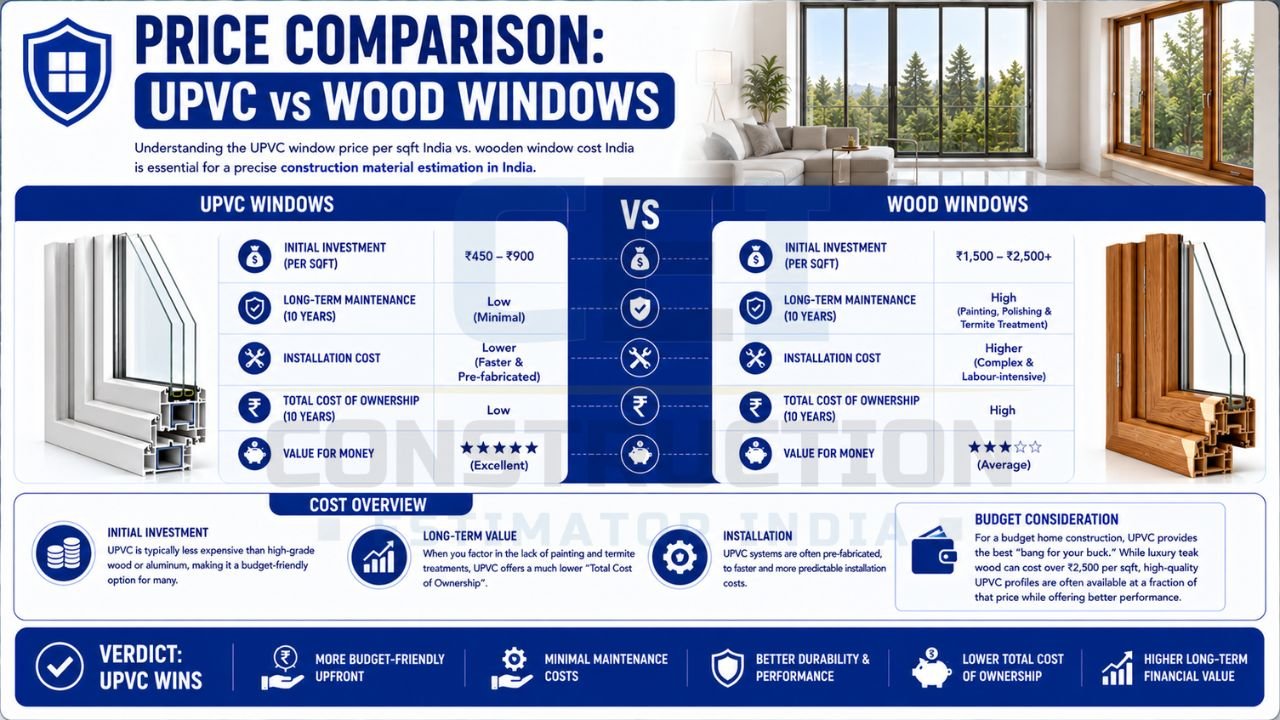
Understanding the UPVC window price per sqft India vs. wooden window cost India is essential for a precise construction material estimation in India.
Cost Overview
- Initial Investment: UPVC is typically less expensive than high-grade wood or aluminum, making it a budget-friendly option for many.
- Long-term Value: When you factor in the lack of painting and termite treatments, UPVC offers a much lower “Total Cost of Ownership”.
- Installation: UPVC systems are often pre-fabricated, leading to faster and more predictable installation costs.
Budget Consideration
For a budget home construction, UPVC provides the best “bang for your buck.” While luxury teak wood can cost over ₹2,500 per sqft, high-quality UPVC profiles are often available at a fraction of that price while offering better performance.
Verdict: UPVC is more budget-friendly and offers better long-term financial value.
5. Environmental Impact Comparison
Sustainability is no longer a buzzword; it’s a necessity in 2026 construction.
Wooden Windows: Negative Impact
- Deforestation: The demand for high-quality timber contributes to the loss of forest cover.
- Chemical Pollution: The paints and varnishes used for maintenance often contain high levels of VOCs (Volatile Organic Compounds).
UPVC Windows: Sustainable
- Recyclability: Modern uPVC can be reused and recycled, making it a sustainable alternative to wood.
- Energy Savings: By reducing the need for heavy air conditioning, these windows lower the overall carbon footprint of your home.
Verdict: UPVC is more environmentally friendly and supports green building initiatives.
Long-Term Advantages of UPVC Windows
Choosing the right window is part of the house construction step by step process in India. If you are building for the next 30 years, UPVC is the future-forward choice.
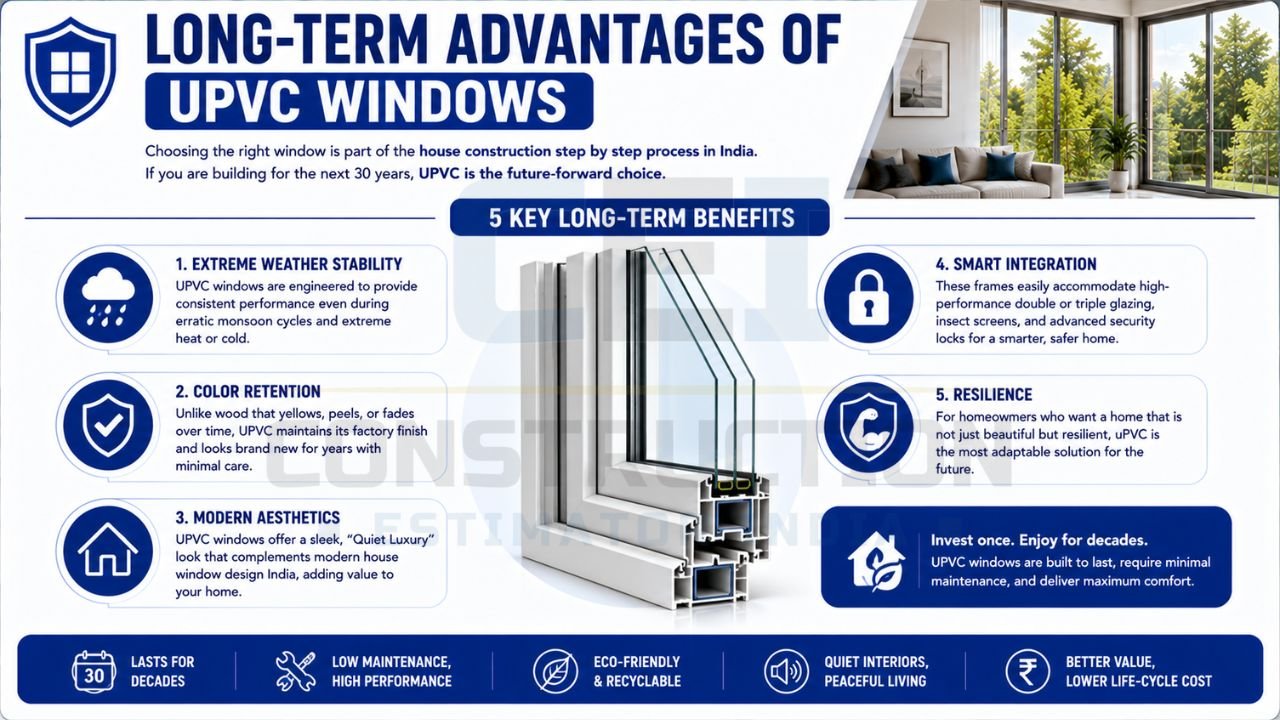
5 Key Long-Term Benefits
- Extreme Weather Stability: They provide consistent performance even during erratic monsoon cycles.
- Color Retention: Unlike wood that yellows or peels, UPVC maintains its factory finish for years.
- Modern Aesthetics: They offer a sleek, “Quiet Luxury” look that complements modern house window design India.
- Smart Integration: These frames easily accommodate high-performance double or triple glazing and advanced security locks.
- Resilience: For homeowners who want a home that is not just beautiful but resilient, uPVC is the most adaptable solution.
When to Choose Wooden Windows vs UPVC Windows?
| Situation | Recommended Window | Reason |
|---|---|---|
| Monsoon-prone areas | UPVC | Outstanding water resistance |
| Coastal regions (Mumbai/Chennai) | UPVC | No warping/swelling in high humidity |
| Hot climates (Delhi) | UPVC | Reduces thermal transfer, keeps cooler |
| High noise areas | UPVC | Multi-chambered profiles reduce noise |
| Low maintenance preference | UPVC | Minimal effort – wipe with cloth |
| Budget-conscious | UPVC | Less expensive, budget-friendly |
| Classic/Heritage look | Wood | Natural appearance, nostalgic |
| Energy efficiency | UPVC | Reduces need for AC |
| Termite-prone areas | UPVC | Unaffected by termites/fungi |
Common Window Selection Mistakes to Avoid
In our years of experience at Construction Estimator India, we see homeowners making the same errors repeatedly. To avoid these, read our guide on 7 common expensive mistakes in house construction in India.
- Ignoring Local Humidity: Choosing wood for a beach-facing apartment in Chennai will lead to jammed windows within two years.
- Neglecting Maintenance Costs: Many forget that wooden windows call for periodic sanding and painting, which adds to the long-term bill.
- Overlooking Insulation: In cities with high traffic noise, standard wooden frames often fail to provide the quiet indoor environment that multi-chambered UPVC profiles offer.
- Skipping the BOQ: Building without a what is BOQ in construction leads to material wastage and budget overruns.
Conclusion
If you’re planning to build or renovate your home and need expert guidance on window selection, quantity estimation, and material procurement, contact Construction Estimator India. We provide detailed what is BOQ in construction reports that ensure your project stays on budget.
We help with:
- Window selection consultation for Indian climates
- Window quantity estimation and takeoff
- Complete construction material estimation
- BOQ (Bill of Quantities) and DPR (Detailed Project Report)
- Construction planning and site management
WhatsApp / Call: +91 8630676890
FAQ — Wood vs UPVC Windows India
- Wood vs UPVC windows India: which is better?
UPVC is better for most Indian homes due to its durability, weather resistance, and low maintenance. - Is UPVC better than wood for windows?
Yes, especially for insulation, soundproofing, and resisting termites. - What is the price of UPVC window per sqft in India?
Prices vary by brand and quality but generally range from ₹400 to ₹1,200 per sqft depending on the glass and profile used. - What is the cost of wooden window in India?
Hardwood or Teak windows can cost anywhere from ₹1,500 to ₹3,500 per sqft including frames and labor. - Which window is best for house construction in India?
UPVC is highly recommended for its energy efficiency and ability to withstand varied Indian weather patterns. - Are UPVC windows good for soundproofing?
Yes, their multi-chambered designs significantly reduce external noise levels. - How do I contact Construction Estimator India for window selection?
You can reach our expert team via WhatsApp or Call at +91 8630676890.