
Imagine investing your life savings into your dream home, only to see hairline cracks appearing on your ceilings or dampness creeping into your pillars within just a few years. As a civil engineer with years of experience on Indian construction sites, I can tell you that “bad luck” is rarely the culprit. More often than not, the root cause is a fundamental misunderstanding of cement grades.
In the Indian construction market of 2026, we are building faster and taller than ever. However, speed should never come at the cost of structural integrity. Whether you are a homeowner in a Tier-2 city like Lucknow or a contractor handling multi-storey projects in Delhi NCR, choosing the right grade—33, 43, or 53—is the single most important decision for the longevity of your building. Using the wrong grade is like using a weak adhesive to hold together a heavy load; eventually, something will give way. This guide is designed to help you navigate the complexities of cement selection so your structure remains rock-solid for generations.
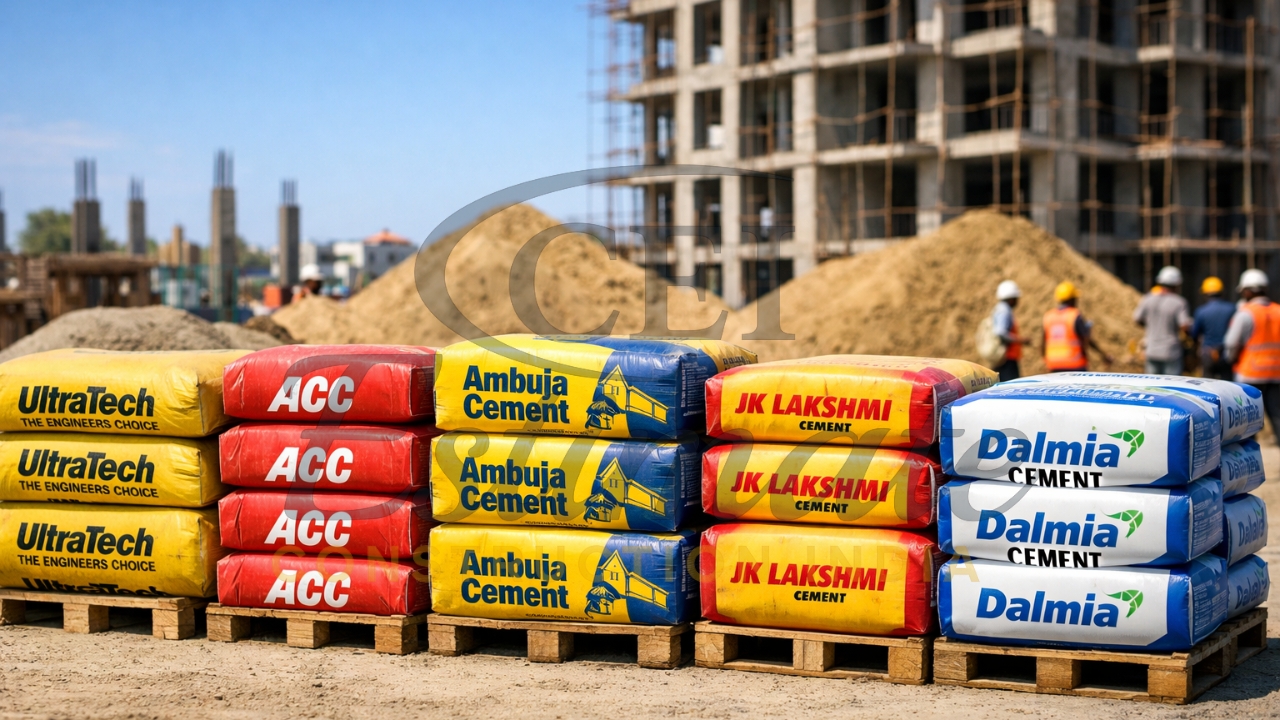
Understanding Cement Grades in India
When you walk into a cement dealer’s shop in India, you’ll hear numbers like 33, 43, and 53 tossed around. These numbers aren’t just random codes; they represent the minimum compressive strength of the cement (measured in Megapascals or MPa) that it must achieve after 28 days of proper curing. This testing is done by mixing cement, sand, and water in a specific ratio and crushing a cube of it in a laboratory.
- 33 Grade: Reaches 33 MPa strength after 28 days.
- 43 Grade: Reaches 43 MPa strength after 28 days.
- 53 Grade: Reaches 53 MPa strength after 28 days.
In 2026, Ordinary Portland Cement (OPC) remains the benchmark for these grades. While blended cements like PPC (Portland Pozzolana Cement) and PSC (Portland Slag Cement) are incredibly popular for their durability and eco-friendly nature, the numerical “grade” is technically tied to the OPC standard. Understanding these differences allows you to match the material’s strength to the specific load requirements of your building.
33 vs 43 vs 53 Grade Cement – Detailed Comparison
Choosing between these three grades isn’t just about picking the highest number. Each grade has a specific chemical profile and physical behavior. For instance, 53 Grade cement is ground much finer than 33 or 43, which allows it to react with water much faster. This results in “high early strength,” which is a fancy way of saying the concrete gets hard and strong very quickly.
However, this speed comes with a trade-off: Heat of Hydration. When cement reacts with water, it generates heat. High-grade cements like 53 Grade generate significantly more heat, which can cause “thermal cracks” if the concrete is very thick or if the weather is extremely hot.
Grade Comparison Table 2026
| Feature | 33 Grade | 43 Grade | 53 Grade |
|---|---|---|---|
| Strength (28 Days) | 33 MPa | 43 MPa | 53 MPa |
| Initial Setting Time | Slowest | Moderate | Fastest |
| Heat of Hydration | Very Low | Moderate | Very High |
| Best Used For | Plaster, non-structural work | Low-rise RCC, brickwork | Multi-storey RCC, bridges |
| Cracking Risk | Minimal | Low to Moderate | High (if not cured well) |
| Availability | Nearly Obsolete | Nationwide | Nationwide |
While 33 Grade dominated the Indian market from the 1950s to the 90s, it has seen a plummeting market share of nearly 80-90% by 2026. Today, 43 and 53 grades are the standard workhorses of Indian construction.
Best Cement Grade for Different Construction Works
To ensure your home is balanced between strength and durability, you need a site-specific approach. You don’t need the “strongest” cement for every part of the house; you need the right cement.
Best Cement Grade for Pillars / Columns
Pillars (or columns) are the structural “legs” of your house. They carry the entire vertical load from the roof and beams down to the foundation. For these critical elements, high compressive strength is non-negotiable.
In 2026, the expert recommendation for pillars in multi-storey residential buildings (G+2 and above) is OPC 53 Grade. This grade provides the high load-carrying capacity required to support multiple floors. Furthermore, it allows for faster deshuttering (removal of formwork), which speeds up construction cycles. However, it is vital to ensure proper vibration and a minimum concrete grade of M25 to avoid honeycombing around the steel bars. If you are building a simple ground-floor home, 43 Grade may suffice, but for total peace of mind, check our detailed guide on which cement is best for pillars to see brand-specific recommendations like UltraTech and ACC.
Best Cement Grade for RCC Slab
The RCC (Reinforced Cement Concrete) slab is the most vulnerable part of your house when it comes to leakage and cracks. Because slabs have a large surface area, they are highly susceptible to “shrinkage cracks” caused by the sun and wind.
For most G+1 to G+3 residential slabs, many engineers now prefer PPC (Portland Pozzolana Cement) or a high-quality OPC 43 Grade. Why? Because these cements generate less heat during setting compared to 53 Grade, significantly reducing the risk of hairline cracks. While 53 Grade is used for fast-track projects, it requires aggressive curing (watering) for at least 21 days to prevent thermal cracking. To understand the technical nuances of mix designs for roofs, you should read more about which grade cement is best for RCC slab in India.
Best Cement Grade for Beams
Beams work in tandem with columns to transfer loads. They are subjected to “flexural” or bending forces. Therefore, the cement used must have excellent bonding strength with the steel reinforcement.
In current Indian practices, OPC 53 Grade is widely trusted for structural beams because it hits its target strength early, allowing the structure to become self-supporting faster. When using this grade, builders often use “superplasticizers” to improve workability without adding extra water, which keeps the concrete dense and impermeable. For a deep dive into the chemical properties that make this grade suitable for structural frames, check out the various 53 grade cement uses in India.
Best Cement Grade for Brickwork and Plastering
This is where most people make a expensive mistake: using 53 Grade cement for plastering. Because 53 Grade is very fine and sets fast, it shrinks rapidly as it dries. On a thin wall layer like plaster, this results in “map cracking” (cracks that look like a spider web).
For brickwork and plaster, OPC 43 Grade or PPC is the ideal choice. They provide a “creamy” and workable mix that masons love, resulting in a smooth finish with far fewer cracks. While some rural areas still look for it, the limited 33 grade cement uses in India are now restricted strictly to non-structural rural plastering or floor screeding.
Best Cement Grade for Foundation and Other Works
The foundation is in constant contact with soil and groundwater, which may contain harmful sulfates and chlorides that can corrode your steel bars. For foundations in aggressive soils (like the black cotton soil of MP or coastal regions), PSC (Portland Slag Cement) or PPC is often superior to plain OPC because they are chemically more resistant.
Understanding the fundamental 33 43 53 grade cement difference in India helps you realize that foundation work requires durability over just pure “28-day strength.” A foundation that is strong but permeable will fail much faster than one that is moderately strong but waterproof.
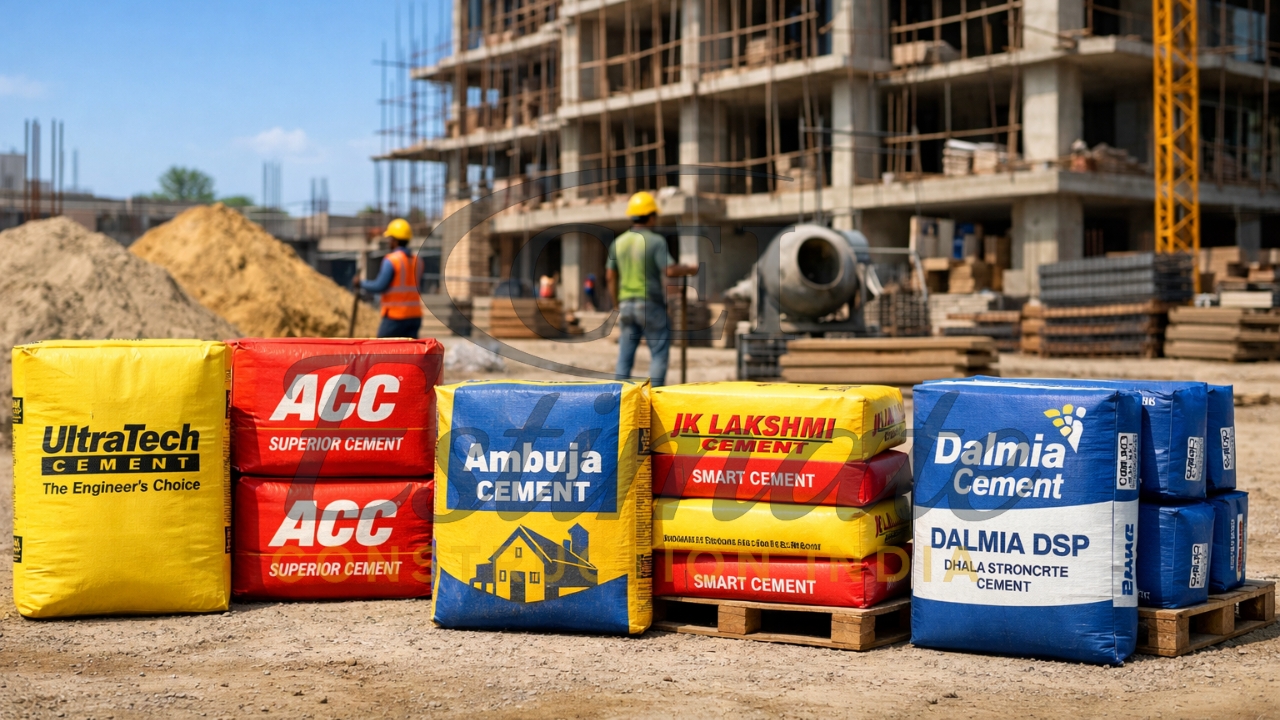
Practical Guidelines for Cement Grade Selection in 2026
When making your final purchase, consider these four factors:
- Structural Load: For G+3 and above, stick to 53 Grade for RCC. For single-storey houses, 43 Grade or PPC is more than enough and often safer against cracks.
- Climate: In the scorching heat of an Indian summer, 53 Grade concrete can reach very high internal temperatures. If you cannot ensure 24/7 curing, opt for 43 Grade or PPC.
- Seismic Zone: If you are in Zone IV or V (like parts of Delhi, Bihar, or the Northeast), higher-strength concrete (M25+) using 53 Grade is often specified by structural engineers for better earthquake resistance.
- BIS Standards: Always check for the ISI Mark on the bag.
- OPC 53: IS 12269
- OPC 43: IS 8112
- PPC: IS 1489
Common Mistakes People Make with Cement Grades
- The “Stronger is Always Better” Myth: People use 53 Grade for everything, including plaster, leading to cracked walls and unnecessary costs.
- Mixing Brands: Never mix two different brands or grades in a single RCC pour. This can lead to “differential setting,” where one part of the slab hardens faster than the other, causing structural stress.
- Using Expired Cement: Cement loses 20-30% of its strength if it’s more than 3 months old. Always check the manufacturing date.
- Ignoring Curing: Even the best 53 Grade cement will fail if it isn’t kept wet. Curing is the “food” for cement’s chemical reaction.
Frequently Asked Questions (FAQs)
- Can I use 43 Grade cement for my roof slab?
Yes, 43 Grade (especially PPC) is excellent for slabs in residential houses as it offers better crack resistance and durability than 53 Grade. - Which cement grade is best for pillars in a G+2 house?
OPC 53 Grade is recommended for pillars in G+2 houses to handle the vertical load and allow for faster construction. - Why is 33 Grade cement becoming obsolete?
Modern construction requires higher safety margins and faster speeds. 33 Grade takes too long to gain strength and doesn’t meet the requirements of modern high-strength concrete mixes. - Is PPC better than OPC 53?
It depends on the use. For slabs and foundations, PPC is often better for durability. For high-load columns and bridges, OPC 53 is preferred for its strength. - How long should I cure a 53 Grade RCC slab?
Ideally, 14 to 21 days. Because 53 Grade generates more heat, it needs constant moisture to prevent thermal cracking. - Can I use 53 Grade cement for plastering?
No. It is highly prone to shrinkage cracks. Stick to 43 Grade or PPC for smooth, crack-free walls. - Does a higher grade cement cost more?
Yes, typically 53 Grade is ₹10-₹30 more expensive per bag than 43 Grade or PPC. - What is the minimum concrete grade for residential columns?
In India, the minimum recommended grade is M20 (1:1.5:3 ratio), though M25 is becoming the standard in 2026 for better safety. - How do I check cement quality on-site?
Look for the ISI mark, ensure there are no hard lumps in the bag, and check that the manufacturing date is within the last 90 days. - Which cement is best for coastal construction?
PSC (Portland Slag Cement) is the gold standard for coastal areas due to its extreme resistance to salt and chemical attacks.
Conclusion
Choosing the right cement grade is the foundation of a safe and beautiful home. In 2026, the trend is moving away from just “high strength” toward “high durability.” For your pillars and structural frames, trust the power of 53 Grade cement to carry the load. For your RCC slabs and plaster, prioritize the stability and crack resistance of 43 Grade or blended PPC.
Don’t let your construction project be a victim of guesswork. Always consult with a qualified structural engineer and use the guidelines provided here to select the best materials. Remember, a house is built with bricks and cement, but a home is built on the peace of mind that comes from knowing your structure is safe. Choose the right grade today for a crack-free tomorrow.