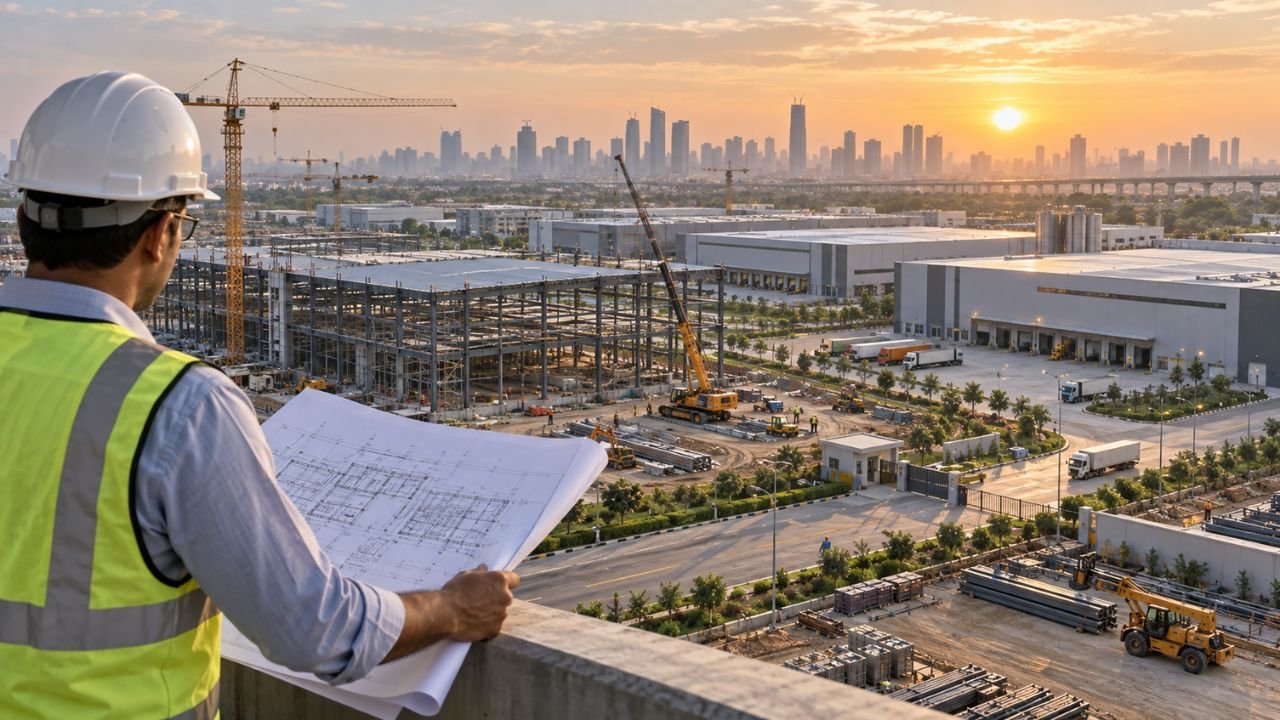
Building a home in India is a milestone of deep emotional and financial significance. In our culture, a house is not just a structure of bricks and mortar; it is a sanctuary for the family, a legacy for our children, and a place where multiple generations find comfort and security. When we transition this traditional dream into the modern era, the concept of a “Smart Home” often arises. However, for most people, a smart home means adding more gadgets, more apps, and more automation. In reality, the best smart homes are the ones that quietly make daily life easier.
The wisdom of “Seerat”—thoughtful, intentional decision-making—is paramount when planning a smart home. It is about focusing on things that actually matter rather than chasing flashy trends. Knowing how to plan home construction in India from day one ensures that technology serves the family, not the other way around. At Construction Estimator India, we believe lighting, AC control, and security—like cameras and video doorbells—are the features most people actually use. If a feature does not enhance the daily happiness and comfort of your parents, your children, or yourself, it is merely an expensive distraction. Forget “just for show” RGB lights; instead, focus on things that make a daily difference.
👉 Planning a Smart Home? Get Expert Guidance on the Right Features for Your New House.
The Indian home presents unique challenges: frequent power cuts, the management of domestic staff, multi-generational living requirements, and high security concerns. A wise smart home addresses these head-on. Smart homes meet this demand by providing residents with enhanced control, security, and energy efficiency. The journey begins by evaluating which aspects of your home life you want to enhance with smart technology. Do you want to save on skyrocketing electricity tariffs? Do you want to ensure your elderly parents can control their lights without getting out of bed? Or do you want to know exactly who is at your gate while you are at work?
Thoughtful planning during the new house construction roorkee (or in your city) stage—specifically the pre-wiring and infrastructure phase—is the only way to avoid the clutter of visible wires and the unreliability of purely wireless systems. Construction Estimator India offers a free smart home consultation and free home automation planning to ensure your foundation is solid. You can reach us for free project planning assistance at WhatsApp/Call: +91 8630676890. By choosing the path of wisdom, you build a home that is future-ready, secure, and truly enhances the “Seerat” of your family life.
Smart Lighting: The Foundation of a Living Home
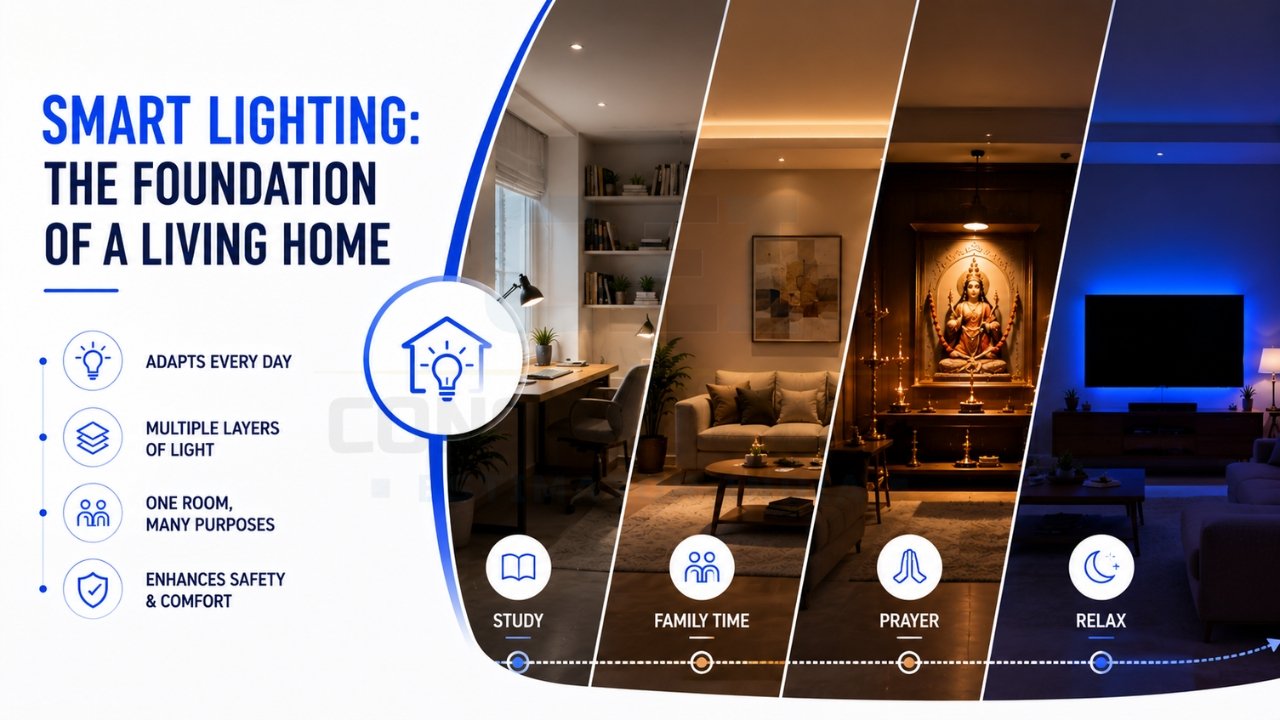
Smart lighting systems are a fundamental aspect of a smart home. Lighting is not just about visibility; it is about mood, safety, and the rhythm of your home. In an Indian context, where a single room often serves multiple purposes—from a study area for kids to a space for family prayers—fixed lighting is often inadequate. The best smart lighting setups feature multiple layers of customizable light, allowing the environment to evolve throughout the day.
Scene-Based Lighting Control
Why It’s Important for Family Life:
In a busy Indian household, manually adjusting six different switches to get the “right” lighting for dinner or a movie is a chore. Scene-based control brings the wisdom of one-tap ambiance. Whether it’s a “Morning” scene that gently wakes the family, a “Pooja” scene that focuses light on the deity, or a “Movie” scene that dims everything but the path to the kitchen, it simplifies life. It enhances the mood for different activities, making the home feel alive and responsive.
What to Consider:
You should define scenes based on your family’s actual routines. Consider a “Goodnight” scene that ensures all non-essential lights are off while keeping a dim path for children or the elderly.
How to Implement:
Use smart touch panels at the entrance of main rooms combined with app control. Working closely with expert architects and architecture firms in roorkee (or your region) ensures these systems integrate seamlessly into the primary electrical Bill of Quantities (BOQ) during the design phase.
Cost:
₹15,000–₹50,000 for a whole-home basic setup, making up a small portion of the 10-18% electrical budget.
👉 Build a Future-Ready Home with Smart Technology and Professional Planning.
App & Voice Control
Why It’s Important for Family Life:
The convenience of voice control is a boon for multi-generational homes. For elderly parents with limited mobility, being able to say “Alexa, turn off the fan” or using a simple app on their phone is a major comfort. It removes the physical strain of reaching for far-off switches in a large 3BHK or duplex villa.
What to Consider:
Ensure the voice assistant understands the common accents and languages used in your home. Privacy is also a key consideration; choose systems with hardware mute buttons.
How to Implement:
Integrate smart switches or modules behind your regular switchboards. This allows for normal physical switch operation alongside app and voice commands.
Cost:
₹5,000–₹20,000 for integration modules across key living areas.
Works Offline (Internet-Free)
Why It’s Important for Family Life:
The convenience of voice control is a boon for multi-generational homes. For elderly parents with limited mobility, being able to say “Alexa, turn off the fan” using Amazon Alexa or utilizing a simple app on their phone is a major comfort. It removes the physical strain of reaching for far-off switches in a large 3BHK or duplex villa.
What to Consider:
Look for systems that use local hubs (Zigbee or Matter) rather than relying purely on cloud-based WiFi switches. This ensures that the local network keeps the home functional regardless of external connectivity.
How to Implement:
Select a central hub that processes commands locally. Construction Estimator India can assist with this selection during our free wiring consultation at +91 8630676890.
Cost:
Included in the central hub cost (₹10,000–₹40,000).
Motion Sensors & Automation
Why It’s Important for Family Life:
Safety in corridors, bathrooms, and stairs is vital, especially at night. Motion-sensor activation ensures that a child or an elderly person walking to the bathroom at 2 AM is never in the dark, preventing trips and falls. It also prevents energy waste in areas like walk-in wardrobes or laundry rooms where lights are often forgotten.
What to Consider:
Sensor placement is critical to avoid “false positives” from pets or passing traffic. Use sensors with adjustable sensitivity and “lux” settings so they only trigger when it is actually dark.
How to Implement:
Install recessed ceiling sensors or integrated smart switches with built-in PIR (Passive Infrared) sensors in transition zones.
Cost:
₹10,000–₹30,000 for sensors in all corridors and bathrooms.
Dimmers & Brightness Control
Why It’s Important for Family Life:
The ability to adjust brightness allows your home to breathe with you. In the evening, dimming the lights helps the body prepare for sleep by reducing blue light exposure. It also saves energy; running a light at 50% brightness consumes significantly less power, contributing to long-term energy efficiency.
What to Consider:
Not all LED bulbs are dimmable. When purchasing lights for your new home, ensure they are “Triac” or “0-10V” dimmable compatible to avoid flickering.
How to Implement:
Use smart dimming modules behind switch plates for your primary chandeliers and downlights. Factoring this into your baseline house construction per sq ft rate roorkee (or local rates) guarantees the cost is managed effectively.
Cost:
₹8,000–₹25,000 depending on the number of dimmable circuits.
Gate, Door & Access: Smart Security for Indian Families
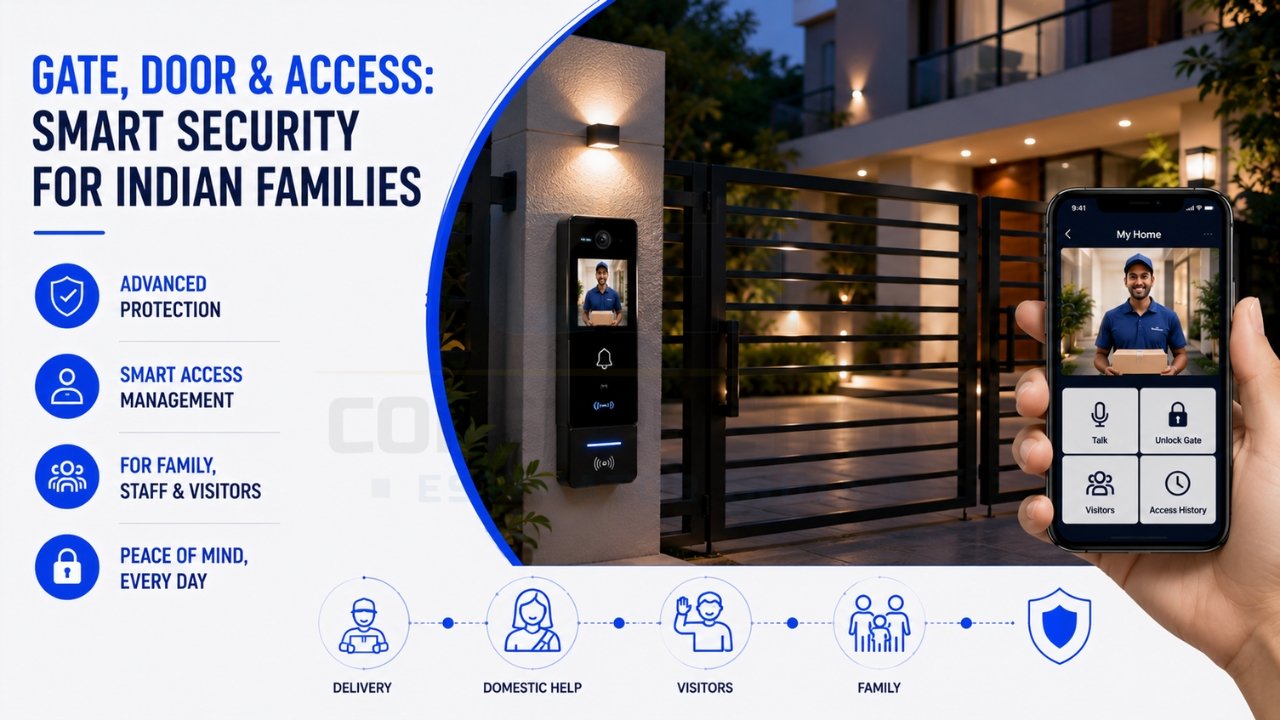
Security is a top priority for homeowners, and smart security systems offer advanced protection. In India, managing access is not just about keeping intruders out; it is about the daily management of delivery personnel, domestic help, and visitors. A thoughtful access system provides peace of mind and accountability without making the home feel like a fortress.
Motorized Gate System
Why It’s Important for Family Life:
A motorized sliding or swing gate is a significant convenience in Indian cities. It allows you to enter your property without getting out of your car—a major benefit during the monsoon or late at night. It also allows you to grant access to staff or visitors via your phone while you are upstairs or even away from home, effectively managing staff without physical presence.
What to Consider:
The motor must be rated for the weight of your gate. Ensure there is a manual override in case of a total power failure and that the system has obstacle detection to protect children and pets.
How to Implement:
Install a heavy-duty Italian or high-quality Indian motor system. Connect it to your smart home hub for app-based control and status alerts.
Cost:
₹50,000–₹150,000 depending on gate weight and motor type.
👉 Transform Your New House with Intelligent, Convenient, and Secure Smart Home Solutions.
Video Door Phone & Smart Lock
Why It’s Important for Family Life:
The combination of a video door phone and a smart lock is the first line of defense. It allows family members to see and speak with visitors before opening the door. Smart locks eliminate the “lost key” panic and allow you to provide temporary digital keys to relatives or workers, adding immense security and convenience.
What to Consider:
Choose a smart lock that offers multiple entry methods: fingerprint, PIN, RFID card, and a physical emergency key. For the video door phone, ensure it has night vision and a recording feature.
How to Implement:
Install the video unit at the main gate or door and the smart lock on the primary entrance. Construction Estimator India recommends high-quality copper wiring for these units to ensure clear video.
Cost:
₹15,000–₹50,000 for the combined system.
One-Tap Integration
Why It’s Important for Family Life:
Imagine arriving home and, with one tap on your phone or a geofence trigger, the gate opens, the porch lights turn on, and the front door unlocks. This seamless welcome reduces the friction of daily life and makes the home feel truly intelligent. It provides a complete home entry automation experience for the entire family.
What to Consider:
Integration requires all devices to be on the same ecosystem (like Apple Home, Google Home, or a custom hub). This should be planned during the architectural design phase.
How to Implement:
Create an “I’m Home” automation routine in your smart home app that links the gate motor, smart lock, and lighting circuits.
Cost:
Usually no additional hardware cost if the individual components are already smart-compatible.
Staff & Visitor Logging
Why It’s Important for Family Life:
For homes with regular domestic staff, logging provides a layer of accountability and safety. You can receive a notification when the maid arrives or when the driver leaves. It provides a digital “attendance” that ensures the household runs smoothly even when you are at the office, fostering peace of mind through accountability.
What to Consider:
Use a smart lock or video doorbell that can recognize individual fingerprints or face IDs. Ensure you respect the privacy of your staff while maintaining home security.
How to Implement:
Assign unique PINs or register fingerprints for each staff member in the smart lock database.
Cost:
₹10,000–₹30,000 (often included in mid-to-high-end smart lock systems).
Door & Window Sensors
Why It’s Important for Family Life:
Door and window sensors on key points provide an invisible layer of protection. They can alert you if a window is left open when you leave the house or if someone attempts to enter an unauthorized area like a home office or a locker room. This detection of unauthorized entry is crucial for long-term family security.
What to Consider:
Focus on ground-floor windows and balcony doors which are more vulnerable. These sensors can also be used to turn off the AC automatically if a door is left open, saving energy.
How to Implement:
Install magnetic contact sensors on all external entry points. These are small, battery-operated, and blend into the woodwork.
Cost:
₹20,000–₹60,000 for a comprehensive set covering a standard 3BHK or duplex.
Climate & Energy: Efficient Comfort for Indian Homes
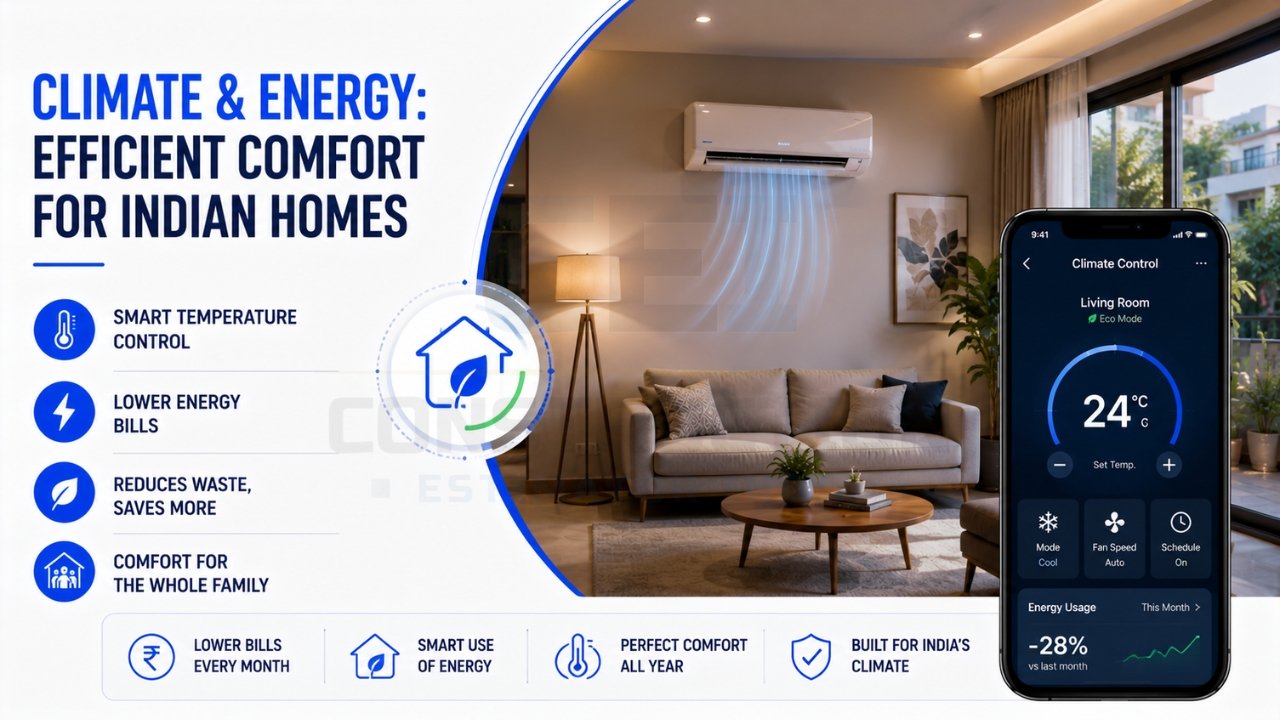
Managing home temperature efficiently is key to comfort and energy savings. In India’s varied climate, cooling often accounts for the majority of a household’s electricity bill. A wise smart home uses technology to minimize waste while ensuring the family is always comfortable.
AC Automation with Door Sensors
Why It’s Important for Family Life:
We have all experienced the frustration of an AC running in a room with an open balcony door. This wastes massive amounts of electricity and puts a strain on the compressor. Automating the AC to turn off (or pause) when a door is left open for more than 2 minutes is a practical “Seerat” decision that saves money and the environment.
What to Consider:
The integration must be smooth so the AC doesn’t constantly cycle on and off. A delay timer (e.g., 5 minutes) is usually recommended.
How to Implement:
Use smart IR blasters or integrated AC controllers linked to the door sensors.
Cost:
₹25,000–₹70,000 for all bedrooms and living areas, often yielding a 20-30% reduction in cooling costs.
👉 Make Your Dream Home Smarter with Expert Recommendations and Planning Support.
Smart Geyser Schedule
Why It’s Important for Family Life:
In an Indian winter, having hot water ready for the morning rush without leaving the geyser on all day is a major convenience. Smart scheduling ensures the water is hot exactly when the kids need to bathe for school, and then automatically turns off to prevent energy waste. It balances convenience with sustainability.
What to Consider:
The smart switch must be rated for the high wattage (15A/20A) of a geyser. Ensure it has a manual override for those unexpected shower times.
How to Implement:
Install high-power smart switches at the geyser points during the electrical stage.
Cost:
₹8,000–₹20,000 for 3-4 bathrooms.
Energy Monitoring System
Why It’s Important for Family Life:
You cannot manage what you do not measure. An energy monitoring system allows you to track heavy loads like ACs, heaters, and water motors in real-time. This awareness helps the family identify “energy vampires” and adjust habits, leading to a more sustainable lifestyle and a potential 15–25% reduction in energy usage. Monitoring ensures adherence to the guidelines promoted by the Bureau of Energy Efficiency (BEE).
What to Consider:
Smart electrical panels provide the most accurate data. You can see your daily, weekly, and monthly consumption trends directly on your phone.
How to Implement:
Install a smart energy monitor in the main distribution board (DB) during the electrical construction phase.
Cost:
₹30,000–₹100,000 for a comprehensive whole-home monitoring system.
Solar Integration
Why It’s Important for Family Life:
With the government promoting schemes like PM Surya Ghar Muft Bijli Yojana, solar is the future of Indian homes. Integrating your solar system with your smart home allows you to use heavy appliances (like the washing machine or dishwasher) during peak solar production hours, maximizing your ROI. It’s a commitment to long-term savings and sustainability.
What to Consider:
Ensure your solar inverter has a data port (RS485 or WiFi) that can talk to your smart home hub. This allows for “smart load shifting.”
How to Implement:
Plan your rooftop solar setup (min 3kW) alongside your smart home system. Consulting seasoned civil engineers general contractors in rishikesh or in your local area ensures perfect integration with your home’s infrastructure. Construction Estimator India provides free solar ROI analysis at +91 8630676890.
Cost:
₹1,50,000–₹5,00,000 (for the solar system itself).
Smart Thermostats
Why It’s Important for Family Life:
Smart thermostats learn user preferences and adjust heating and cooling accordingly. In a multi-zone home, they ensure that the living room is cool when the family gathers, but the bedrooms are only cooled when they are about to be occupied. This level of precision provides perfect comfort without manual adjustment.
What to Consider:
While common in the West, dedicated thermostats for Indian split ACs often require specific IR-based controllers. For VRV/VRF systems, integration is more direct.
How to Implement:
Work with your HVAC contractor and Construction Estimator India to ensure compatibility between your AC units and the smart control system.
Cost:
₹20,000–₹60,000 for a multi-zone setup.
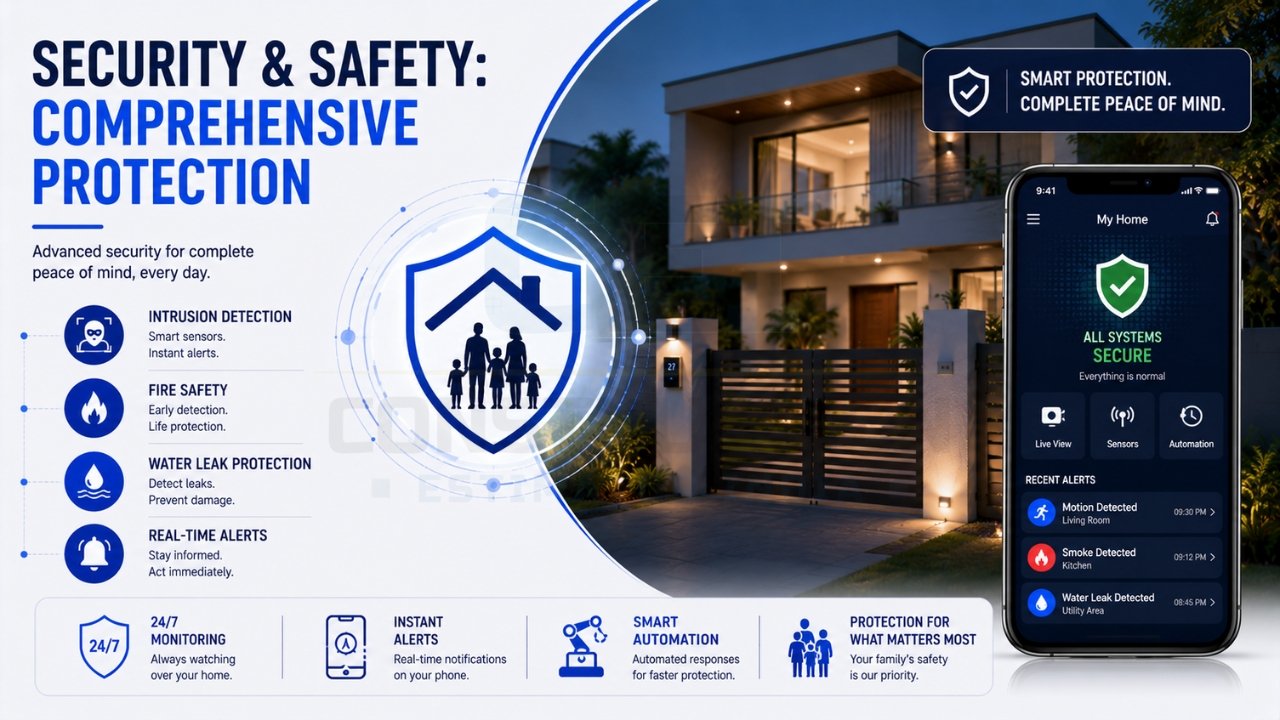
Security & Safety: Comprehensive Protection
Protecting your family from both intruders and internal hazards like fire or water leaks is the ultimate expression of care. Smart security systems offer advanced protection through proactive alerts and automated responses.
Smart Siren & Alerts
Why It’s Important for Family Life:
A standard alarm is easily ignored, but a smart siren that triggers and simultaneously sends instant alerts to every family member’s phone cannot be missed. Whether it’s an intruder alert or a fire sensor trigger, immediate notification is critical for a rapid response, ensuring family safety.
What to Consider:
Ensure the siren is loud enough to be heard by neighbors but also has “silent” notification modes for less critical alerts.
How to Implement:
Connect a Zigbee or WiFi-enabled siren to your security sensors and hub.
Cost:
₹10,000–₹30,000.
👉 Build Smarter Today for a More Comfortable Tomorrow.
Auto Arming Modes
Why It’s Important for Family Life:
A security system is only useful if it is armed. Auto-arming modes—Home, Away, and Night—simplify this. At night, “Night” mode can arm all external doors and ground floor sensors while allowing movement inside. “Away” mode arms everything, providing flexible protection based on your routine.
What to Consider:
The transition between modes should be easy, perhaps triggered by the last person locking the door or a scheduled time.
How to Implement:
Program these modes into your central smart home hub.
Cost:
Included in the base security system software.
Motion Sensors in Key Zones
Why It’s Important for Family Life:
Beyond lighting, motion sensors in key zones act as a second layer of security. If movement is detected in the living room at 3 AM when “Night” mode is on, the system can trigger the siren and turn on all lights to scare off an intruder, protecting the family and automation alike.
What to Consider:
Use “pet-immune” sensors if you have cats or dogs to avoid false alarms.
How to Implement:
Strategic placement in corridors, the foyer, and the master bedroom entrance.
Cost:
₹15,000–₹40,000 for comprehensive coverage.
Water Leak Detectors & Auto Shut-off
Why It’s Important for Family Life:
Water damage from a burst pipe or a leaking geyser can cause thousands in damages to your expensive flooring and woodwork. Smart water leak detectors placed under sinks and near geysers can alert you instantly. More advanced systems can even trigger an automatic shut-off valve, preventing disasters. Securing these installations through reliable building contractors in roorkee (or in your vicinity) provides peace of mind.
What to Consider:
Place sensors in high-risk areas: the kitchen, bathrooms, and near the washing machine.
How to Implement:
Install battery-powered water sensors and a motorized valve on your main inlet pipe.
Cost:
₹20,000–₹60,000.
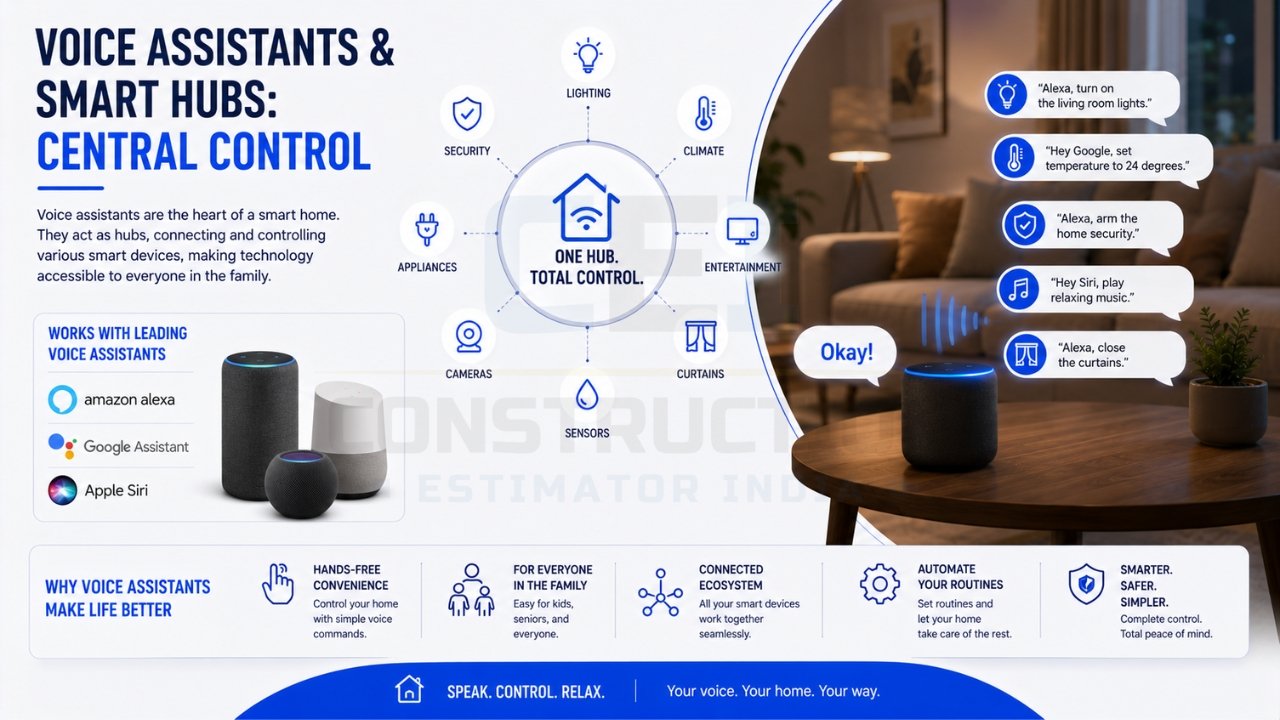
Voice Assistants & Smart Hubs: Central Control
Voice assistants like Amazon Alexa, Google Assistant, and Apple Siri are central to a smart home ecosystem. These devices act as hubs, connecting and controlling various smart devices, making technology accessible to everyone in the family.
Feature 20: Voice Assistant Integration
Why It’s Important for Family Life:
Voice control is the most natural way to interact with a home. Whether it’s “set a timer for 10 minutes” while cooking in the kitchen or “play bhajan” in the morning, it adds a layer of convenience that benefits all age groups. It simplifies complex tasks into simple verbal commands.
What to Consider:
Choose the ecosystem that best fits your smartphone usage (e.g., Apple HomeKit for iPhone users).
How to Implement:
Place smart speakers or displays in the living room, kitchen, and each bedroom.
Cost:
₹3,000–₹15,000 per device.
👉 Need Help Choosing Smart Home Features? Consult Our Construction Experts.
Smart Hub for Unified Control
Why It’s Important for Family Life:
Nothing is more frustrating than having ten different apps for ten different devices. A smart hub provides “one app to rule them all.” It unifies your lighting, security, and climate control into a single, easy-to-use interface for the whole family, reducing complexity.
What to Consider:
Look for “Matter-compatible” hubs. Matter is the new industry standard that ensures devices from different brands work together seamlessly.
How to Implement:
Install a central hub (like Hubitat, Aeotec, or a high-end system like Control4/Savant) at the heart of your home network.
Cost:
₹10,000–₹40,000 for mid-range hubs.
Smart Entertainment: Family Comfort & Leisure
Entertainment is a cornerstone of Indian family life, often involving the whole extended family. Smart TVs, streaming devices, and sound systems that integrate with voice assistants offer seamless control and a superior experience.

Smart TV Integration
Why It’s Important for Family Life:
Integrating your TV with your smart home allows for “Movie Night” scenes where the lights dim, the curtains close, and the TV turns on the correct app with a single command. It turns a standard living room into a private cinema, enhancing family bonding and leisure.
What to Consider:
Ensure your TV supports HDMI-CEC and has a smart home integration module.
How to Implement:
Connect your smart TV to the same network and hub as your lighting and blinds.
Cost:
₹30,000–₹2,00,000 (for the TV itself).
👉 Ready to Build a Smart Home? Talk to Our Experts.
Automated Window Treatments
Why It’s Important for Family Life:
Smart window treatments are a coveted feature that provides both luxury and energy efficiency. They can automatically close during the hottest part of the day to keep the home cool, or open in the morning to let in natural light. They are also essential for privacy in densely populated Indian neighborhoods.
What to Consider:
Motors can be noisy; choose high-quality, quiet motors for bedrooms.
How to Implement:
Install motorized curtain tracks or roller blinds during the interior stage. Ensure power points are provided near window headers. If upgrading later, consult with house renovation roorkee experts to seamlessly install the tracks.
Cost:
₹50,000–₹1,50,000 for primary rooms.
Network & Infrastructure: The Foundation
A reliable Wi-Fi network is crucial for a smart home. Without a rock-solid infrastructure, even the most expensive smart features will be frustratingly unreliable. This is the part of the smart home that you must plan during the construction phase.
Cat6 Wiring to Every Room
Why It’s Important for Family Life:
WiFi is great, but wires are better. Cat6 wiring provides a stable, high-speed connection for devices that shouldn’t fail—like your smart TVs, gaming consoles, and desktop computers. It also powers PoE (Power over Ethernet) cameras, which are far more secure than WiFi cameras. It ensures long-term reliability and future-proofing.
What to Consider:
Run Cat6 cables to every room and key outdoor points during the wall-chasing stage of construction.
How to Implement:
Instruct your electrical contractor to run conduits for Cat6 alongside regular electrical wires (maintaining proper separation).
Cost:
₹50,000–₹1,50,000 during construction.
Robust Router & Mesh WiFi
Why It’s Important for Family Life:
Large Indian homes with thick concrete walls are notorious for WiFi dead zones. A robust router and a mesh WiFi system ensure that you have high-speed internet in every corner, from the basement to the terrace. It maintains connectivity and performance for all family members simultaneously.
What to Consider:
Invest in a “tri-band” mesh system for the best performance.
How to Implement:
Place mesh nodes strategically across floors. Construction Estimator India can provide a coverage map during our free wiring consultation.
Cost:
₹15,000–₹60,000.
Power Outlets Near Windows
Why It’s Important for Family Life:
As mentioned in Feature 23, motorized blinds require power. Planning these outlets now avoids the need for ugly surface wiring later. These outlets can also power window-mounted sensors or festive lighting, making the home future-ready for any automation.
What to Consider:
Place them high up, near the curtain rod position, and ensure they are on a controlled circuit if needed.
How to Implement:
Include these in your final electrical layout before the plastering begins.
Cost:
Negligible if planned during the initial electrical work.
When to Contact Construction Estimator India for Smart Home Planning
Planning a smart home is a technical challenge that requires expertise beyond a standard electrical contractor’s scope. Regulatory adherence under bodies like the Real Estate Regulatory Authority (RERA) may also come into play for larger, automated developments. You should reach out to Construction Estimator India if:
- You are in the Pre-Construction Stage and need a smart home wiring plan to avoid future rework.
- You want a Home Automation Consultation to understand which features fit your family’s lifestyle and budget.
- You need a Comprehensive Smart Home Design that integrates lighting, security, and climate control into a single system.
- You want an Energy Audit to see how smart features can reduce your monthly bills by 30-50%.
Construction Estimator India offers:
- Free Smart Home Consultation.
- Free Home Automation Planning.
- Free Wiring Consultation.
- Contact: WhatsApp/Call +91 8630676890.
FAQs
Q1: What smart home features are most important for Indian families?
The most important features are smart lighting, AC automation, and robust security (video door phone and cameras). These provide the highest daily utility and address common concerns like electricity bills and safety.
Q2: How much does a complete smart home cost in India?
A basic setup starts at ₹1.5–₹3 Lakhs, while a comprehensive premium system for a villa can range from ₹5 Lakhs to ₹15 Lakhs. Generally, expect to spend 2-5% of your total construction cost on smart technology.
Q3: Should I plan smart home during construction or add later?
Always plan during construction. Retrofitting often leads to visible wiring, limited device options, and higher labor costs. Pre-wiring for Cat6 and motorized blinds is essential.
Q4: What is the best voice assistant for Indian homes?
Amazon Alexa and Google Assistant are the leaders in India due to their excellent support for Indian accents and integration with a wide variety of affordable smart devices.
Q5: How do I handle power cuts with smart home?
Use a high-quality UPS for your network hub and router. For lighting and security, choose systems that remember their last state after power restoration and have battery backups for sirens and sensors.
Q6: What smart lighting features should I include?
Focus on scene-based control for main areas, motion sensors for corridors/bathrooms, and dimmers for bedrooms to improve sleep quality and save energy.
Q7: How important is energy monitoring for smart homes?
Very important. With rising tariffs, knowing exactly how much your AC or geyser consumes allows you to make informed decisions that can save ₹2,000–₹5,000 per month.
Q8: What security features are essential for new houses?
A video door phone, smart lock, motion sensors on the ground floor, and external CCTV cameras are the four pillars of a secure modern Indian home.
Q9: Should I install Cat6 wiring in new construction?
Yes, absolutely. WiFi alone is not sufficient for a truly reliable smart home. Cat6 provides the backbone for high-speed streaming, security cameras, and stable automation.
Q10: How do smart homes save energy in India?
Through automatic AC turn-off, geyser scheduling, light dimming, and solar integration, a smart home can reduce total energy consumption by 20–40%.
Q11: What is the best smart home hub for India?
Matter-compatible hubs are the best choice for 2026 as they ensure long-term compatibility and allow you to mix and match different brands of devices.
Q12: How do I contact Construction Estimator India for smart home planning?
You can call or WhatsApp us at +91 8630676890 for a free consultation and project planning assistance.
Contact Construction Estimator India for Smart Home Services
Ready to build the home of your dreams? Don’t leave your smart home to chance. Construction Estimator India is your partner in building a future-ready, wise, and secure home.
- Company: Construction Estimator India
- WhatsApp/Call: +91 8630676890
- Services: Free smart home consultation, Free home automation planning, Free wiring consultation.
Conclusion: Build a Wise, Thoughtful Smart Home for Family Happiness
In reality, the best smart homes are the ones that quietly make daily life easier. A wise smart home is not a collection of gadgets; it is a thoughtful environment that anticipates your needs, protects your loved ones, and respects your resources. By focusing on things that actually matter—like lighting that adjusts to your mood, ACs that don’t waste energy, and security that provides true peace of mind—you build a house that is a joy to live in.
The “Seerat” of your home is defined by these careful choices. Forget “just for show” RGB lights and focus on things that make a daily difference. Smart homes meet the modern demand for enhanced control and security while saving you money in the long run. Construction Estimator India is here to help you navigate this journey with expert advice and precise planning. Call us today at +91 8630676890 and let’s build your wise, future-ready dream home together.