Dampness is one of the most common and destructive problems in Indian buildings. It causes peeling plaster, efflorescence, mould growth, weakened structures, and health issues. The most effective permanent solution against rising dampness is a properly installed Damp Proof Course (DPC). In 2026, with increasing focus on durable and low-maintenance construction, correct DPC installation has become a basic requirement for every new building.
This comprehensive guide explains Damp Proof Course (DPC) in construction, its types, materials, installation methods, specifications, and practical tips used by successful contractors across India.
What is Damp Proof Course (DPC) in Construction?
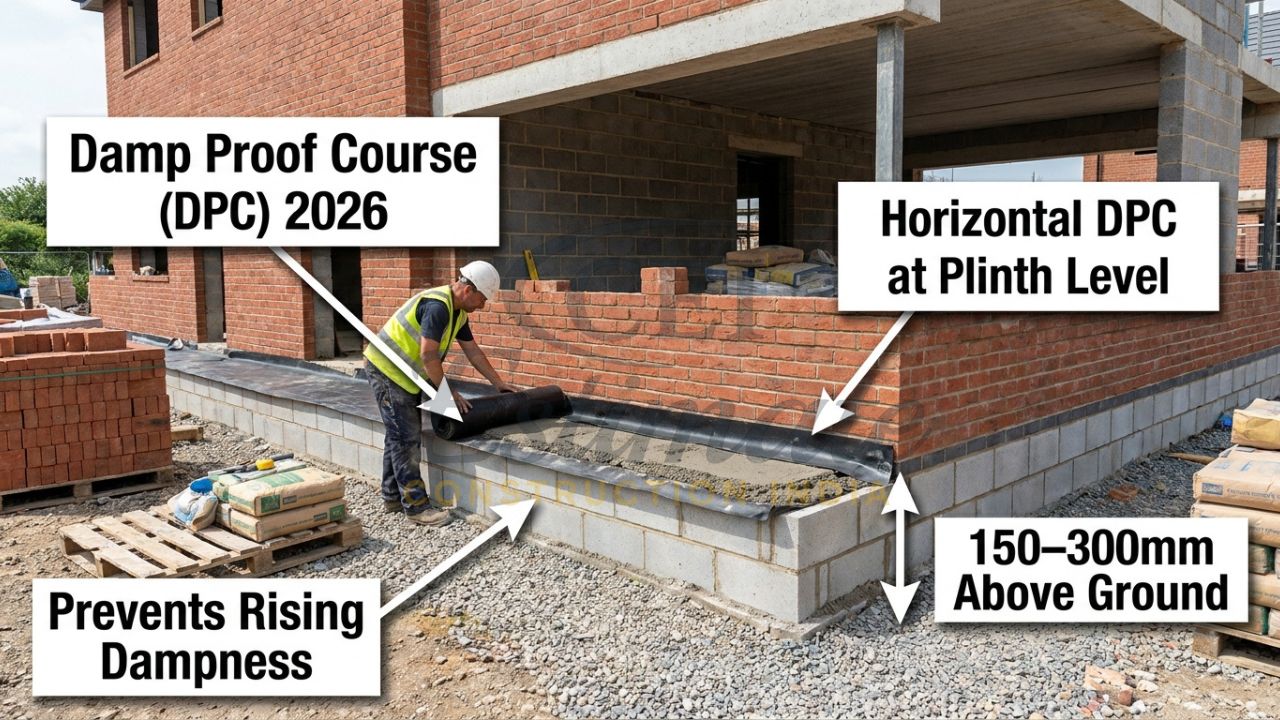
Damp Proof Course (DPC) is a continuous impermeable layer provided in walls and floors to prevent moisture (water) from rising from the ground into the building structure through capillary action. It acts as a barrier between the ground and the superstructure.
DPC is usually installed at the plinth level (horizontal DPC) and sometimes vertically on external walls (vertical DPC).
Why is DPC Important in Indian Buildings?
- Prevents rising dampness in walls and floors
- Protects structural integrity and increases building life
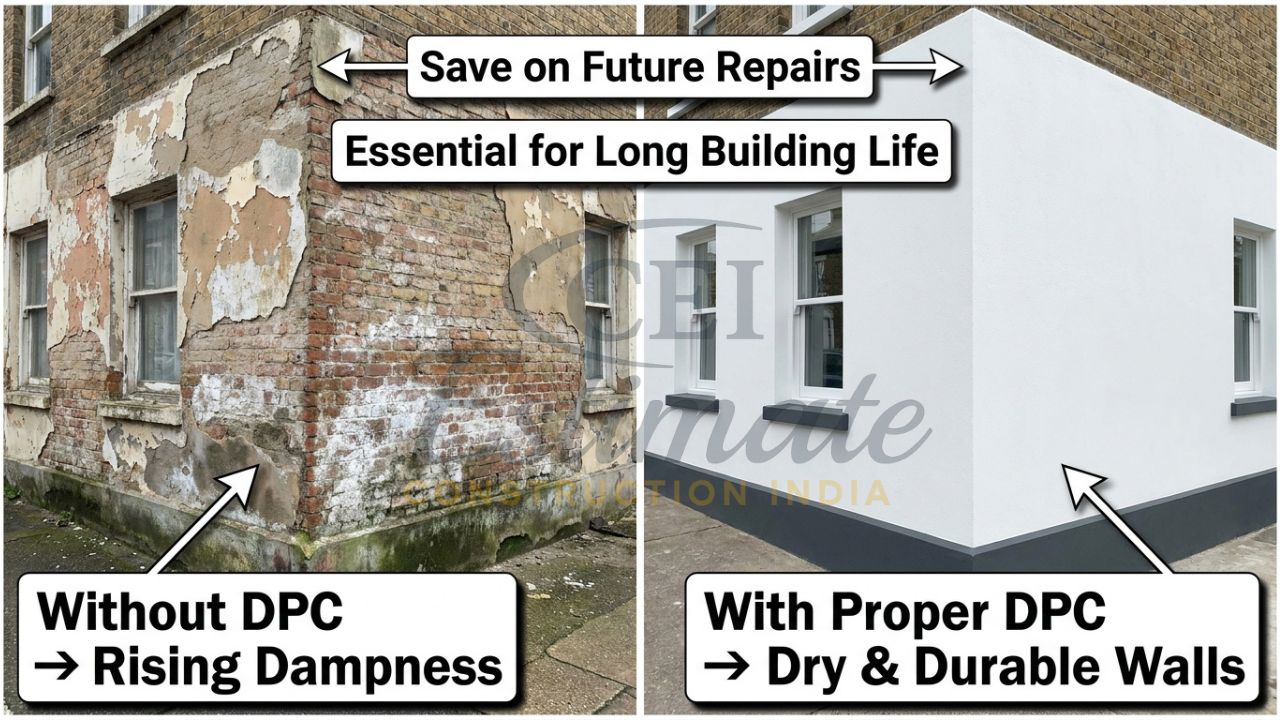
- Reduces maintenance and repair costs significantly
- Improves indoor air quality by preventing mould
- Required as per National Building Code and most local building bylaws
Without proper DPC, even the best construction can develop serious dampness issues within a few years.
Types of Damp Proof Course (DPC)
- Horizontal DPC — Provided at plinth level (most common)
- Vertical DPC — Applied on external walls below ground level
- Cavity Wall DPC — Used in cavity walls
- Floor DPC — Laid below floor slabs in basements
Materials Used for DPC in 2026
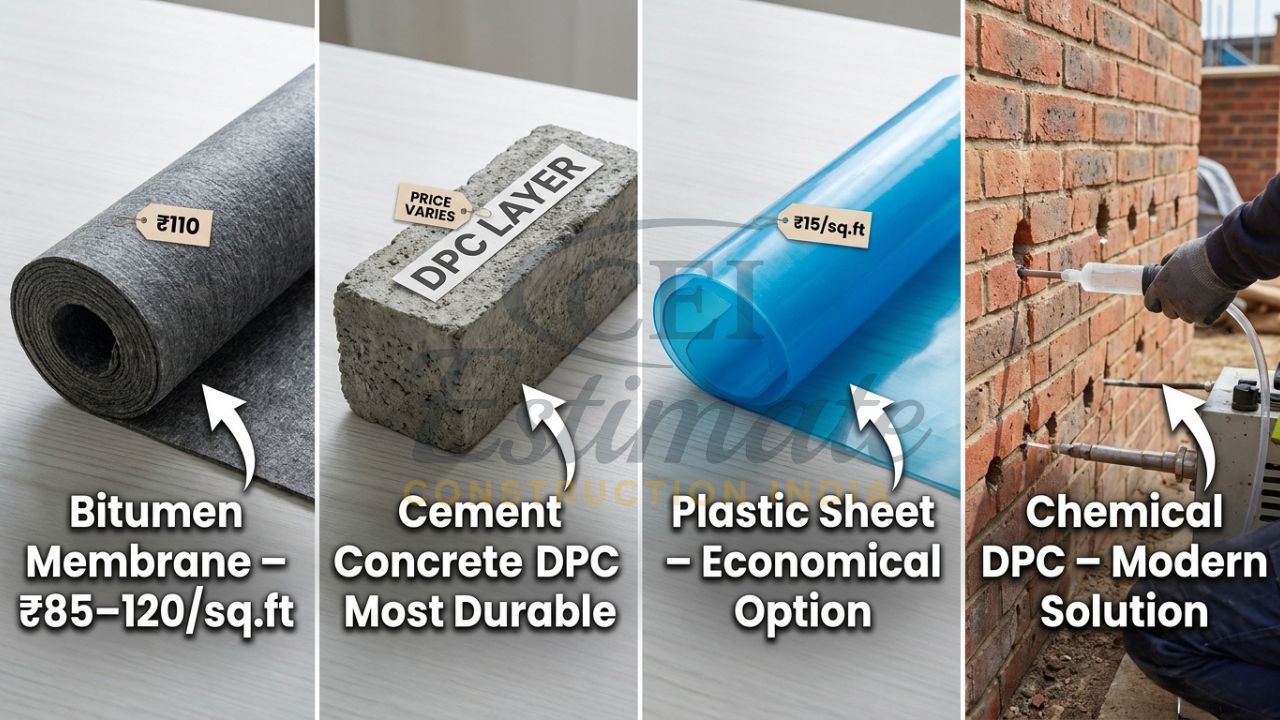
| Material | Thickness | Advantages | Disadvantages | Approx. Cost (2026) |
| Bitumen Felt / Membrane | 1–2 layers | Flexible, good waterproofing | Can deteriorate over time | ₹85–120/sq.ft |
| Cement Concrete (1:2:4) | 25–50mm | Strong, durable | Rigid, needs proper mixing | ₹65–90/sq.ft |
| Plastic Sheet (Polythene) | 500–1000 micron | Cheap, easy to install | Less durable | ₹35–55/sq.ft |
| Chemical DPC (Silane/Siloxane) | Liquid | No joint, deep penetration | Requires skilled application | ₹120–180/sq.ft |
| Copper Sheet | 0.5–1mm | Excellent & long lasting | Very expensive | ₹450–650/sq.ft |
Standard Methods to Provide DPC
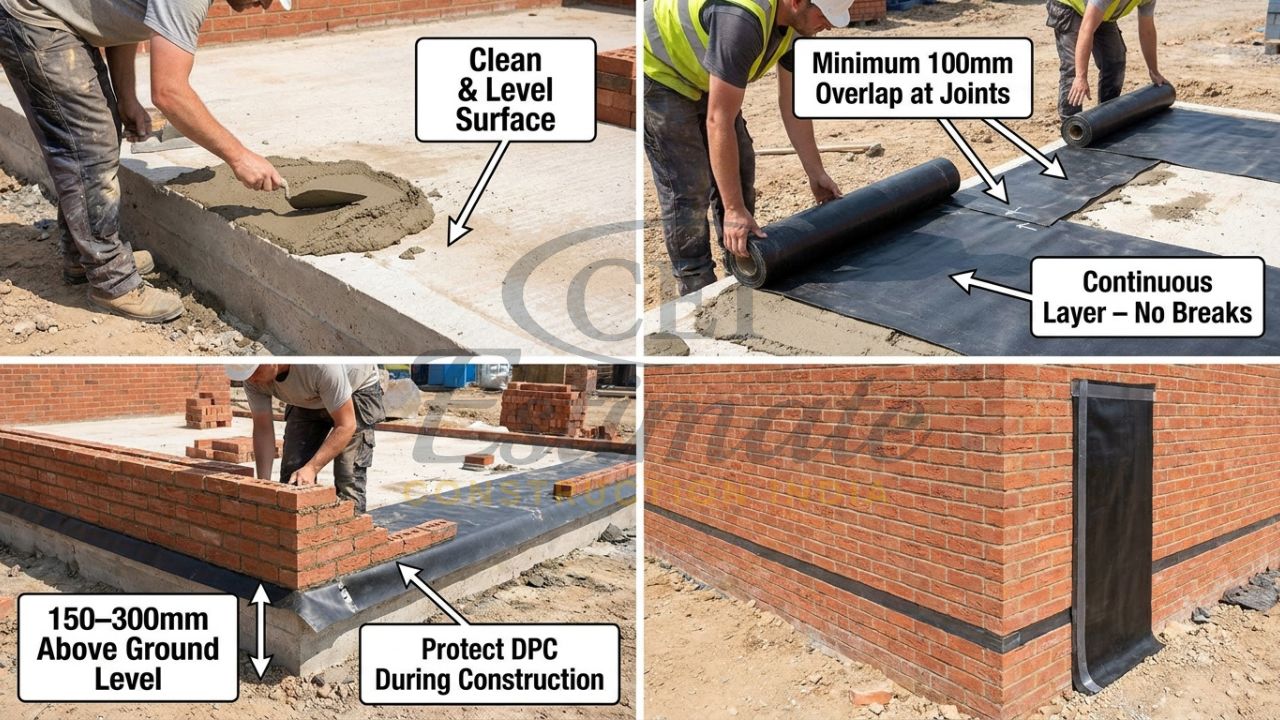
Horizontal DPC at Plinth Level:
- Usually provided 150–300mm above ground level
- Continues across all walls including internal walls
- Must be continuous without any break
Vertical DPC:
- Applied on the inner face of external walls below ground
- Essential in high water table areas
DPC Thickness, Height & Specifications as per IS Codes
- Minimum thickness for cement concrete DPC: 25mm
- Standard height above ground: 150mm to 300mm (as per NBC)
- Overlap at joints: Minimum 100mm
- Reference: IS 1905, IS 1200, National Building Code 2016 (updated provisions in 2026)
Step-by-Step Guide: How to Provide DPC in New Construction
- Complete foundation and plinth work up to DPC level
- Clean and level the surface
- Apply cement mortar bedding
- Lay DPC material (bitumen, plastic sheet, or concrete)
- Ensure proper overlap and sealing at joints
- Continue masonry work above DPC
- Protect DPC layer during further construction
Common Mistakes in DPC Installation and Their Solutions
- Discontinuous DPC layer → Always maintain continuity
- Insufficient overlap at joints → Minimum 100mm overlap with sealing
- DPC at ground level → Keep minimum 150mm above ground
- Poor quality material → Use ISI-marked materials only
- No vertical DPC in basements → Mandatory in high water table areas
Cost of DPC in India 2026 & Estimation Tips
- Average cost: ₹55–180 per sq.ft (depending on material)
- For a 30×40 ft plot (approx. 140 rft wall): ₹35,000 – 85,000
Always include DPC cost properly in your detailed estimate vs abstract estimate in construction.
Modern Alternatives and Chemical DPC
In 2026, chemical DPC (injection method) is becoming popular for both new and old buildings because it is fast, effective, and requires no major demolition.
Conclusion
Understanding and correctly installing Damp Proof Course (DPC) is one of the most important steps in ensuring the long life and durability of any building in India. Proper DPC prevents dampness-related issues, reduces maintenance costs, and increases the overall value of the property.
The best construction management app is the one that fits your workflow, your project scale, and your business goals. In 2026, Indian contractors and builders need tools that improve site tracking, labour attendance, material management, billing accuracy, and documentation while keeping operations simple and efficient.
If you want expert help choosing the right software and connecting it with accurate estimation and BOQ services, contact Construction Estimator India today on WhatsApp +91 8630676890. A better digital workflow can help you reduce delays, improve cost control, and build a more profitable construction business.
FAQs
- What is the full form of DPC?
Damp Proof Course.
- At what height should DPC be provided?
150mm to 300mm above ground level.
- Can plastic sheet be used as DPC?
Yes, 500–1000 micron polythene sheet is commonly used for economical construction.
- Is DPC required in every building?
Yes, as per building bylaws in most states.
- What is the difference between DPC and waterproofing?
DPC stops rising dampness from ground; waterproofing protects against rainwater and leakage.
- How long does DPC last?
Bitumen and concrete DPC can last 20–40+ years if installed properly.
- Can DPC be done after construction?
Yes, through chemical injection method.
- Is DPC needed in RCC framed structures?
Yes, especially at plinth level and in external walls.
- What is the best material for DPC?
Bitumen membrane or chemical DPC for most residential projects.
- Does DPC reduce termite attack?
Indirectly yes, because it reduces moisture that attracts termites.