Building your dream home is a monumental journey, but in the volatile market of 2026, even small oversights can lead to financial disaster. What are the common construction mistakes in India? The most frequent errors include starting without a clear plan, skipping soil testing, choosing the wrong contractor based on the lowest quote, ignoring legal approvals, and using low-quality materials. Additionally, failing to design for ventilation, ignoring future expansion needs, and a lack of site supervision can compromise your home’s integrity. These mistakes can increase construction costs by 30% and lead to severe structural issues like cracks and dampness.
Common Construction Mistakes in India (Quick Answer)
Homeowners in 2026 are navigating rising material costs and stricter regulations. Common construction mistakes in India: These 8 errors cost homeowners 30% more.
Top Mistakes That Increase Cost by 30%
The most critical mistakes to avoid when building a house in India involve skipping the pre-construction phase. Poor house planning, budgeting errors, and hiring unskilled labor under the guise of “cost-saving” are the primary drivers of budget overruns.
8 Common Mistakes Summary
- Starting Construction without a Clear Plan: Rushing in with only a rough sketch.
- Ignoring Soil Testing: Failing to assess site conditions before designing the foundation.
- Choosing Lowest Quote Contractors: Falling for the “cheap contractor” trap.
- Overlooking Legal Clearances: Ignoring municipal permits or FAR regulations.
- Skimping on Material Quality: Using substandard cement or steel to save money.
- Poor Ventilation and Lighting: Ignoring the Indian climate in architectural design.
- Ignoring Future Needs: Designing for today without considering expansion or parents moving in.
- Lack of Site Supervision: Assuming the contractor will handle everything without oversight.
Mistake vs. Smart Decision
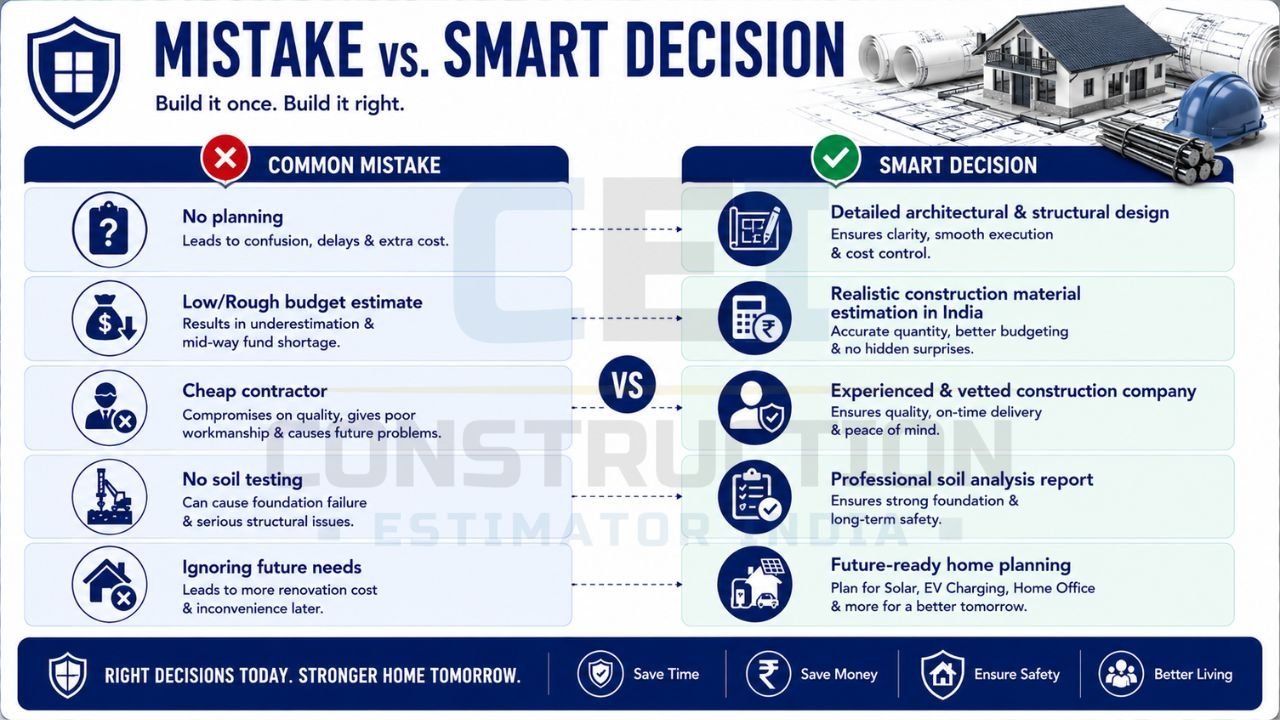
| ❌ Common Mistake | ✔️ Smart Decision |
|---|---|
| No planning | Detailed architectural & structural design |
| Low/Rough budget estimate | Realistic construction material estimation in India |
| Cheap contractor | Experienced & vetted construction company |
| No soil testing | Professional soil analysis report |
| Ignoring future needs | Future-ready home planning (Solar, EV, Office) |
Avoid these 8 mistakes to save 30% on construction costs. For expert guidance, contact Construction Estimator India at +91 8630676890.
Starting Construction Without a Clear Plan
One of the most expensive home construction mistakes India 2026 is the “premature start.” Rushing into construction without a comprehensive roadmap is a recipe for chaos.
The Problem
Many homeowners begin work with only a rough sketch, assuming they will “decide on the go”. This approach almost always leads to confusion between the owner and the contractor, significant material wastage, and unexpected delays. Rushing in underprepared means you are essentially giving your contractor a blank check.
The Solution
Before a single shovel hits the ground, ensure you have a detailed floor plan, a vetted structural design, a realistic budget estimate, and a construction timeline. A well-laid plan keeps everyone—from the plumber to the electrician—aligned.
What You Need Before Starting?
- Detailed architectural floor plans and 3D elevations.
- Structural drawings (Columns, beams, and slabs).
- A professional house construction step by step process in India guide.
- A finalized budget estimate and timeline.
Skipping Soil Testing
Skipping soil testing is a high-risk error that directly impacts the structural integrity of your home.
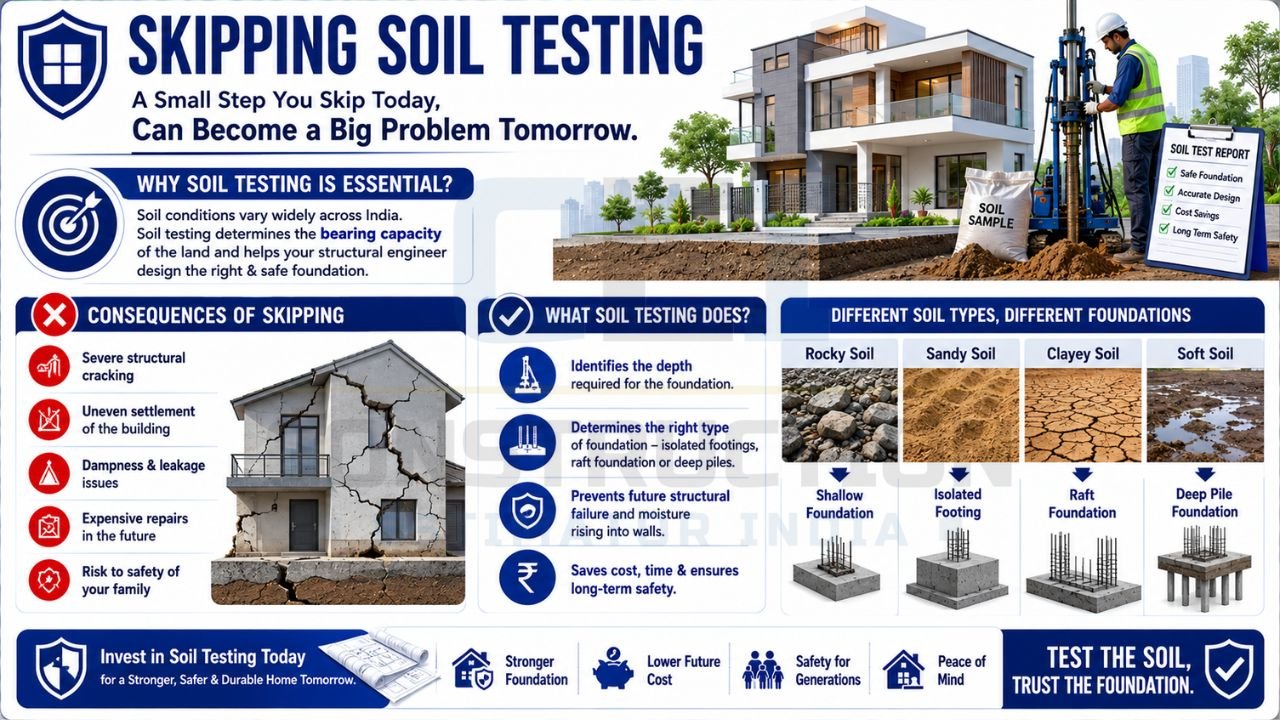
Why Soil Testing is Essential?
Site conditions vary wildly across India. In Bengaluru, for instance, you can find red soil, clayey soil, and rocky layers within just a few kilometers. Soil testing determines the “bearing capacity” of the land, which informs your structural engineer on what type of foundation is required.
Consequences of Skipping Soil Testing
Skipping this step can lead to severe structural cracking, uneven settlement, or dampness issues that are extremely expensive to fix later. If the site has clayey soil, it expands when wet and contracts when dry; without a proper foundation, the house will shift.
What Soil Testing Does?
- Identifies the depth required for the foundation.
- Determines if you need isolated footings, a raft foundation, or deep piles.
- Prevents future structural failure and moisture rising into walls.
Choosing Wrong Contractor (Lowest Quote Trap)
Everyone wants to save money, but going with the cheapest contractor is one of the most common mistakes to avoid when building a house in India.
The Problem
Low quotes often indicate compromises on material quality, the use of unskilled labor, or a complete lack of on-site supervision—all of which jeopardize your home’s durability. A flawed contractor selection process, combined with a weak or verbal contract, leads to financial disputes and project stalling.
The Solution
Instead of chasing the lowest price, evaluate experience. Visit previous construction sites, talk to past clients, and review the terms of the contract carefully. Ensure the contractor understands 7 common expensive mistakes in house construction in India to avoid repeat errors on your site.
Ignoring Legal Approvals
Many homeowners get caught up in the excitement and forget that legal clearances are non-negotiable.
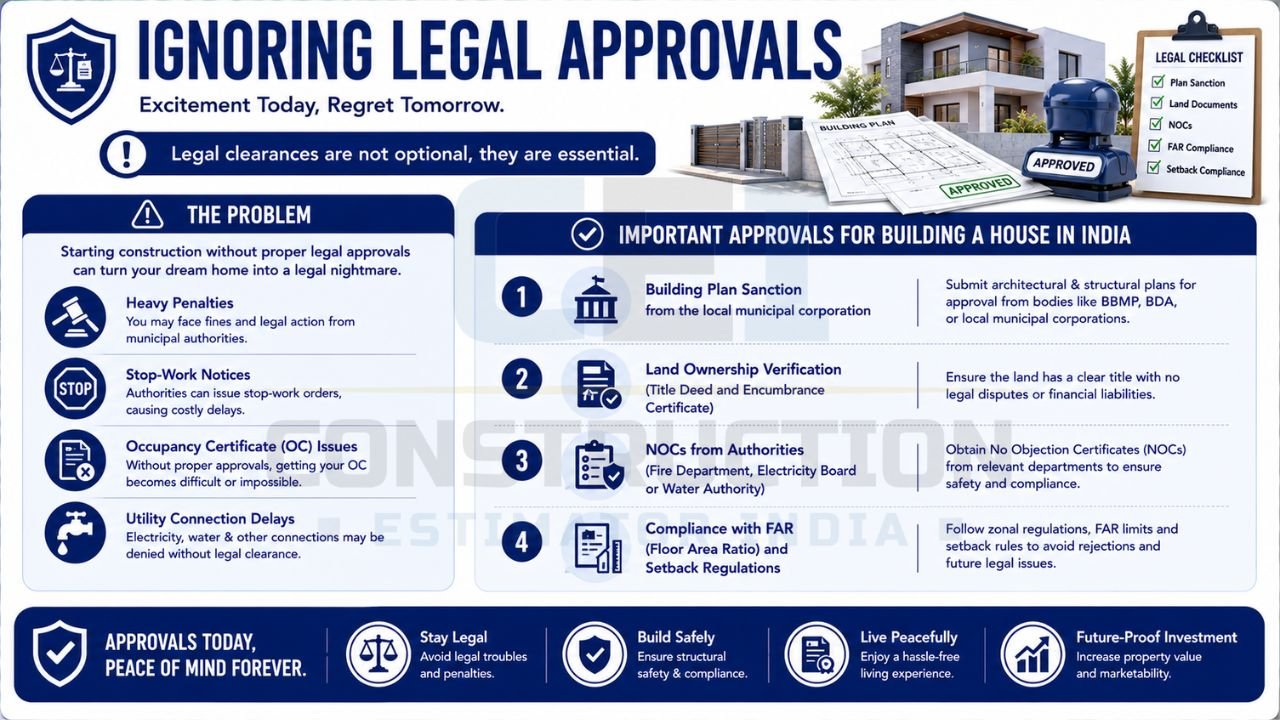
The Problem
Starting without proper municipal permissions from bodies like BBMP, BDA, or local panchayats can lead to heavy penalties or stop-work notices. You might also face major hurdles when trying to obtain an Occupancy Certificate (OC) or utility connections later.
Important Approvals for Building a House in India
- Building Plan Sanction from the local municipal corporation.
- Land ownership verification (Title Deed and Encumbrance Certificate).
- NOCs from the fire department, electricity board, or water authority.
- Compliance with FAR (Floor Area Ratio) and setback regulations.
Using Low-Quality Materials
Skimping on material quality is a “penny-wise, pound-foolish” mistake that leads to long-term failure.
The Problem
Using substandard or counterfeit cement and steel might save a few thousand rupees initially, but it compromises safety. Low-grade steel often lacks the required tensile strength to support heavy loads, leading to sagging beams or cracks. Poor-quality waterproofing materials lead to damp walls and black mold within the first two monsoons.
The Solution
Always opt for trusted brands. When selecting reinforcement, understand what is TMT bar in construction and choose Fe500D or Fe550D grades for earthquake resistance. Ensure your contractor follows proper curing and waterproofing protocols, especially in humid regions like Chennai or Mumbai.
Poor Ventilation and Natural Light Design
A home’s comfort depends on more than just aesthetics; it depends on the environment it creates.
The Problem
In South India and tropical regions, poor design often leads to “heat traps.” Placing all rooms facing west results in extreme heat, while small or non-existent windows in kitchens and bathrooms cause stagnant air and odors.
The Solution
Plan for cross-ventilation, skylights, and large windows to handle the warm climate and reduce electricity bills. Well-ventilated houses feel fresher and save significant costs on artificial cooling over time.
Not Planning for Future Needs
Designing for “today” while forgetting “tomorrow” is a common house design mistake.
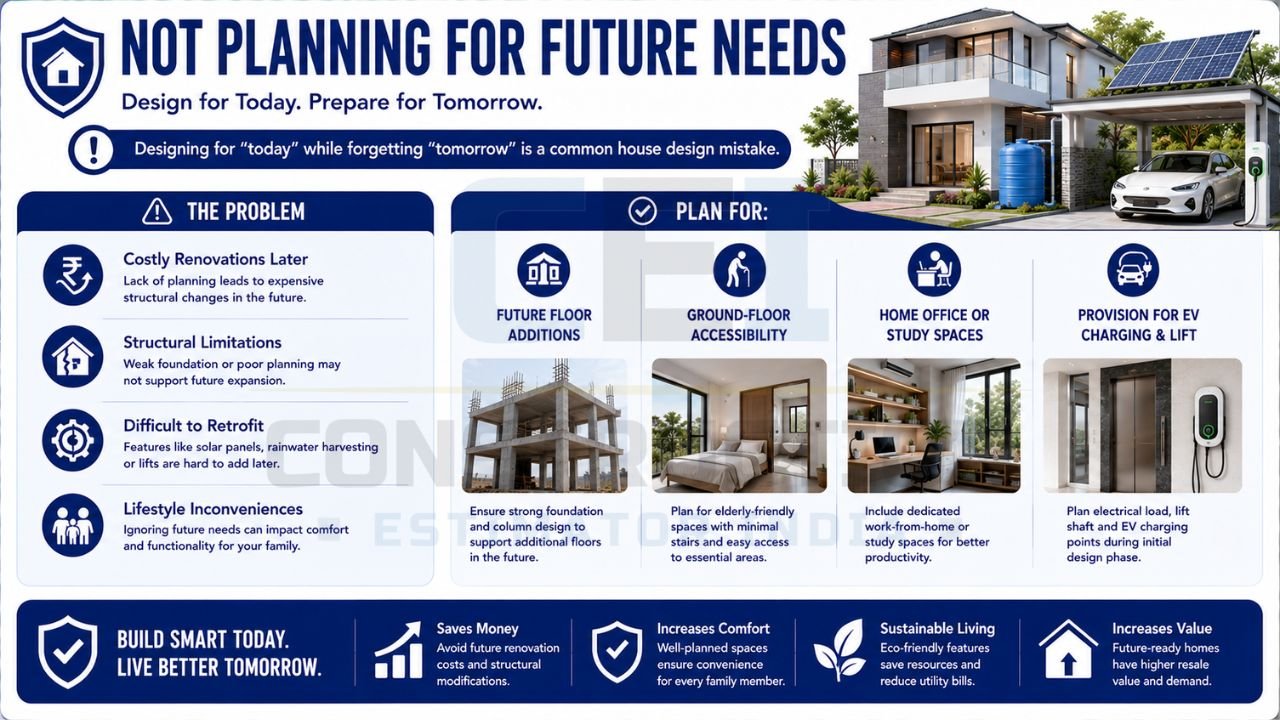
The Problem
Failing to account for future expansion, aging parents, or a dedicated home office can lead to expensive structural renovations later. Ignoring sustainability features like rainwater harvesting or solar panel wiring from day one makes them difficult to retrofit later.
Plan For:
- Future floor additions (ensure foundation strength).
- Ground-floor accessibility for elderly family members.
- Home office or study spaces.
- Provision for EV charging and lift installation.
Lack of Regular Site Supervision
Even the best plan can fail if there is no oversight on the ground.
The Problem
Many issues, such as wrong measurements, poor plastering finish, or leakage-prone plumbing joints, happen simply because no one is checking the work. A lack of skilled staff and oversight leads to “corner-cutting” by laborers trying to finish quickly.
What Can Go Wrong?
- Incorrect placement of reinforcement steel.
- Using the wrong concrete mix ratio.
- Poorly finished joints that lead to seepage later.
- Tile alignment and slope issues in bathrooms.
Common Hidden Costs in Home Construction India
Your initial quote is rarely the final cost. Hidden costs in home construction India typically account for 15-20% of the total budget.
Hidden Costs to Budget For:
- Electrical & Plumbing: Extra points for ACs or premium piping.
- Approvals & Permits: Liaison fees and municipal charges.
- Compound Walls & Landscaping: Often not included in the main contract.
- Water & Electricity Connections: Borewell drilling and temporary site power.
- Material Price Volatility: Steel and cement prices can spike mid-project.
Construction Project Delays: Causes
Most construction project delays India are avoidable with better management.
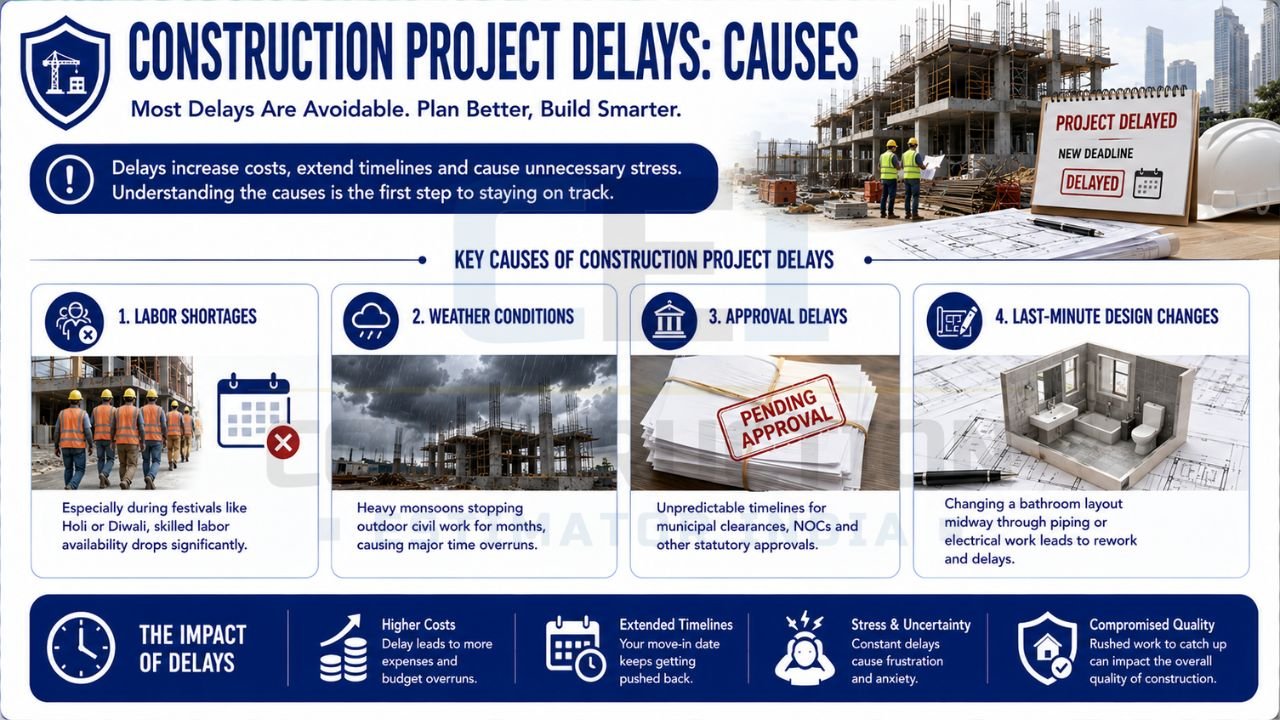
- Labor Shortages: Especially during festivals like Holi or Diwali.
- Weather Conditions: Heavy monsoons stopping outdoor civil work for months.
- Approval Delays: Unpredictable timelines for municipal clearances.
- Last-Minute Design Changes: Changing a bathroom layout midway through piping.
Curing Mistakes to Avoid
Curing is the most vital yet most ignored step for concrete strength.
Instead of merely sprinkling water once a day, use proper hydration methods like ponding on slabs or using wet gunny bags on columns. Concrete must be kept wet for at least 7 to 10 days to reach its full load-bearing capacity.
Load Calculation Mistakes
Failing to conduct accurate load calculations is a dangerous structural error. It can result in overloaded beams, sagging slabs, and even sudden structural failure. Always ensure a qualified structural engineer designs the “skeleton” of your home based on the actual load requirements.
How to Avoid Common Construction Mistakes?
Prevention Checklist
| Potential Mistake | Prevention Strategy |
|---|---|
| No Plan/Rushing | Detailed architectural & structural design |
| Budget Overruns | Get a professional what is BOQ in construction |
| Poor Quality | Use trusted brands and verified grades |
| Legal Fines | Secure BBMP/BDA/Panchayat clearances first |
| Structural Cracks | Perform soil testing & proper load calculations |
| Seepage/Dampness | Never skip terrace and bathroom waterproofing |
Conclusion
Building a home shouldn’t be a gamble. If you are planning to build your dream house and want to ensure a stress-free experience, contact Construction Estimator India. We specialize in helping homeowners avoid these 8 costly errors through:
- Professional Construction Planning Consultation
- Accurate Cost Estimation & Material Takeoffs
- Soil Testing Coordination & Foundation Design
- Contractor Selection Advice & Vetting
- Detailed BOQ (Bill of Quantities) & DPR Preparation
Don’t let common construction mistakes in India ruin your investment. Let our experts guide you from the first brick to the final coat of paint.
WhatsApp / Call us today at +91 8630676890 to start your project the right way.
FAQ — Common Construction Mistakes in India
What are the common construction mistakes in India?
The most common mistakes include starting without a plan, skipping soil testing, hiring the cheapest contractor, ignoring legal permits, and using poor-quality materials.
What mistakes increase construction cost by 30%?
Budgeting errors, poor planning, and hiring unskilled labor are the primary factors that balloon costs mid-way through a project.
Why is soil testing important before construction?
It determines the type and depth of foundation needed, preventing future structural cracks and foundation settlement.
How to choose the right contractor for house construction?
Don’t just look at the price. Visit their ongoing sites, check their safety record, and talk to their previous clients.
What legal approvals are needed for building a house in India?
You need a Building Plan Sanction, ownership documents (Sale/Title Deed), and NOCs from fire and electricity boards.
What happens if you skip soil testing?
The building may experience uneven settlement, leading to dangerous cracks in walls and beams, or chronic dampness in the foundation.
How to avoid construction project delays?
Maintain a strict timeline, order materials in advance, and avoid making major design changes once construction has started.