
I’ve spent over 15 years on construction sites from the sweltering heat of Rajasthan to the humid coasts of Odisha, and if there’s one thing I’ve seen break a homeowner’s heart (and budget), it’s the “one-size-fits-all” approach to cement. Many people assume that if they buy the most expensive bag of cement, they can use it for everything from the foundation to the terrace. That is a costly mistake.
In 2026, construction technology has evolved, but the fundamental physics of building remains the same: a roof has different enemies than a column. While a column needs to withstand massive vertical pressure, a roof must fight direct solar radiation and heavy monsoons. Using the wrong cement can lead to hairline cracks in your plaster, dampness on your ceilings, or even structural settlement in your foundation. Choosing the best cement for different construction works in India is about matching the chemical properties of the material to the physical demands of the structure. In this guide, I will break down exactly which cement you need for every part of your dream home to ensure it stands strong for the next 50 years.
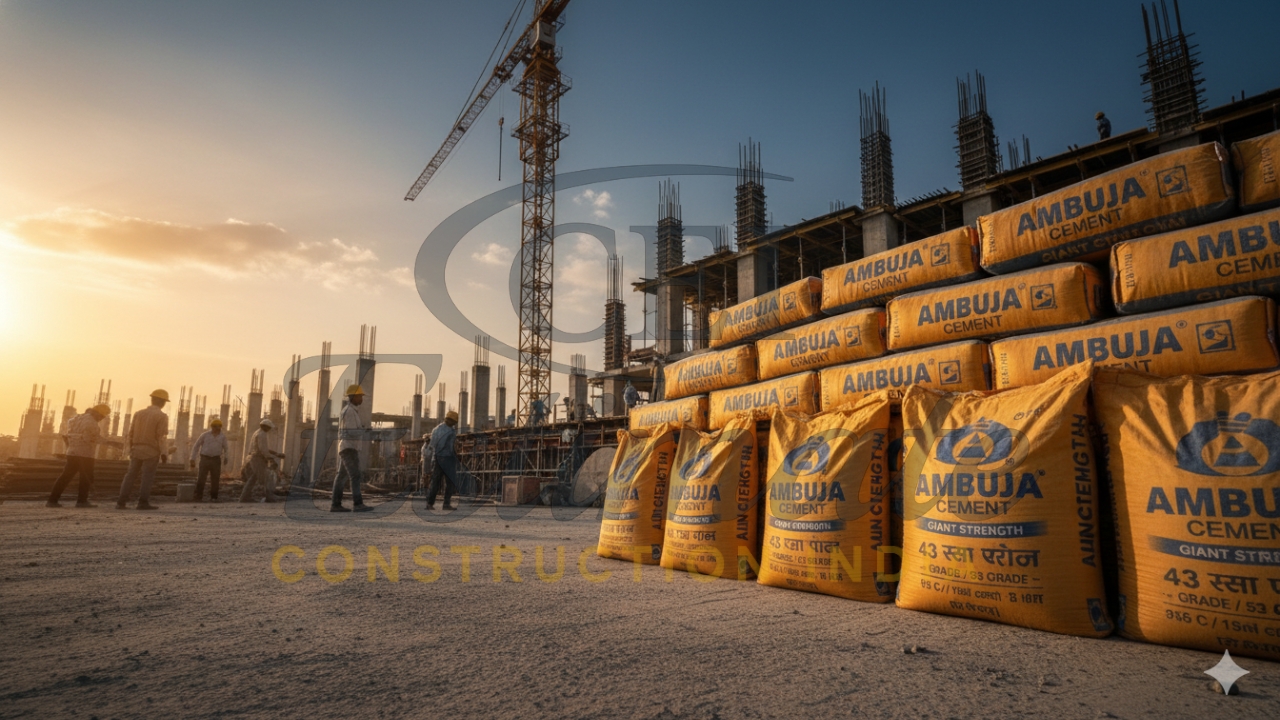
Why Different Construction Works Need Different Cement Types?
As a civil engineer, I look at cement as more than just a binding agent; it is a chemical engine. Different parts of a building face unique stresses, and the cement selection must reflect that.
- Load-Bearing Requirements: Elements like columns and beams are the “spine” of your home. They need cement that achieves high compressive strength quickly so the construction can move upward without delay.
- Environmental Exposure: A roof is constantly expanding and contracting due to heat and cold. It needs “cool” cement with low heat of hydration to prevent thermal cracks.
- Corrosion Resistance: If you are building near the sea, the salty air is your biggest enemy. You need a dense cement matrix that blocks chloride and sulfate penetration to protect your steel reinforcement.
- Workability and Bonding: For brickwork and plastering, you don’t need raw strength as much as you need a “creamy” mix that sticks to the surface and doesn’t shrink as it dries.
By understanding these nuances, you can optimize your cement selection guide for RCC works 2026 to save money on maintenance and ensure structural integrity.
Best Cement Recommendations for Each Construction Element
Best Cement for Roof Grading in India
The roof slab is arguably the most vulnerable part of any house because it bears the brunt of the weather. For roof grading and slab casting, I almost always recommend Portland Pozzolana Cement (PPC). The reason is simple: PPC contains fly ash, which reacts slowly and generates much less heat during the setting process.
High heat of hydration (common in OPC 53) in a thin roof slab often leads to hairline cracks, which eventually turn into leakages during the monsoon. PPC creates a denser concrete matrix that acts as a natural waterproofing shield. For the best results, look for premium variants like UltraTech Weather Plus or ACC Gold Water Shield, which are engineered specifically to be the best cement for roof grading in India.
- Recommended Grade: PPC (Portland Pozzolana Cement).
- Pros: High crack resistance, superior waterproofing, better long-term durability.
- Engineer’s Tip: Always use a mechanical vibrator during slab casting to remove air pockets and ensure a dense finish.
Best Cement for Brick Work in India
Brickwork doesn’t require the extreme compressive strength of a column; instead, it requires excellent bonding and workability. Using a high-grade OPC 53 for masonry is actually counterproductive because it sets too fast and is prone to shrinkage, which can cause the mortar to pull away from the bricks.
For the best cement for brick work in India, PPC is again the winner. It provides a “creamy” mortar that masons find easy to spread, ensuring every gap between the bricks is perfectly filled. This reduces the risk of hollow walls and water seepage.
- Recommended Grade: PPC or OPC 43.
- Pros: Excellent bond strength, low shrinkage, easier to work with.
- Engineer’s Tip: Ensure you soak your bricks in water before laying them. If the bricks are dry, they will suck the water out of your mortar, leading to a weak bond.
Best Cement for Beam in India
Beams are horizontal members that transfer the load from the slab to the columns. They are under constant tension and compression. For beams, you need a balance of early strength and long-term durability. While PPC is excellent for residential projects, many engineers prefer OPC 53 Grade for beams in multi-story buildings to allow for faster removal of shuttering.
If you are looking for the best cement for beam in India, brands like UltraTech or JK Super offer high-grade OPC that ensures the beam bonds tightly with the steel reinforcement.
- Recommended Grade: OPC 53 (for speed) or PPC (for durability).
- Pros: High tensile bond with steel, handles heavy loads efficiently.
- Engineer’s Tip: Maintain a minimum concrete cover of 25mm to 40mm for beams to protect the steel from rusting.
Best Cement for Column Casting in India
Columns are the “legs” of your building. They carry the entire vertical load to the foundation. Any failure here is catastrophic. Because columns are usually the first members cast on a new floor, contractors often prefer OPC 53 Grade to achieve “high early strength.” This allows them to remove the column boxes within 24–48 hours and move to the next stage.
However, in 2026, we are seeing a shift toward premium PSC (Portland Slag Cement) for columns in areas with aggressive soil. For most residential homes, using the best cement for column casting in India means choosing a brand that offers consistency, such as ACC or Ambuja.
- Recommended Grade: OPC 53 Grade.
- Pros: Maximum load-bearing capacity, fastest strength gain.
- Engineer’s Tip: Watch out for “honeycombing” (air gaps) in columns. Use a needle vibrator properly to ensure the concrete reaches every corner of the steel cage.
Best Cement for Bridge Construction in India
Bridge construction is a different beast altogether. These structures face massive dynamic loads from traffic and are often exposed to water and chemicals. Indian Roads Council (IRC) standards are very strict about the materials used.
For the best cement for bridge construction in India, engineers typically use a mix of OPC 53 for superstructures (the deck) and PSC or PPC for the substructure (piers and foundations) to prevent chemical attacks from river water or groundwater. Brands like Dalmia and UltraTech are industry leaders in this specialized sector.
- Recommended Grade: OPC 53 (Superstructure) and PSC (Substructure).
- Pros: Resists sulfate attacks, handles high vibration and dynamic loads.
- Engineer’s Tip: For mass concrete work like bridge piers, temperature control is vital to prevent thermal cracking.
Best Cement for Coastal Areas in India
If your site is within 10–15 km of the sea, your building is at high risk of “Concrete Cancer”—where salt air penetrates the concrete and rusts the steel rebar from the inside. Standard OPC is too porous for these environments.
The best cement for coastal areas in India is undoubtedly Portland Slag Cement (PSC). PSC has a very dense microstructure that significantly reduces the penetration of chlorides and sulfates. Brands like Dalmia, JSW, and ACC offer high-quality PSC that is specifically designed for marine environments.
- Recommended Grade: PSC (Portland Slag Cement).
- Pros: Best-in-class resistance to salt-water corrosion, lowest permeability.
- Engineer’s Tip: In coastal zones, always use M25 or M30 grade concrete and increase the “clear cover” over your steel bars to at least 50mm.
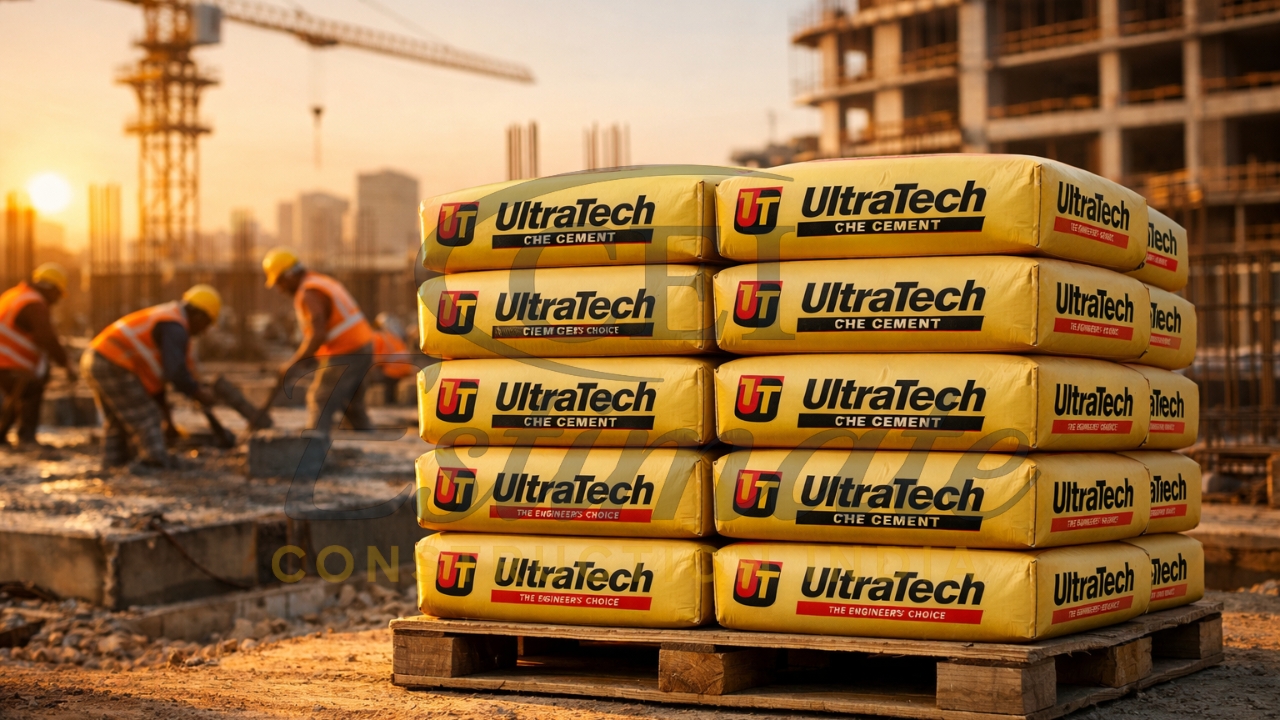
OPC vs PPC vs PSC Cement – Quick Comparison for Different Works
Understanding the OPC vs PPC for different construction elements debate is easier when you see the data side-by-side.
| Construction Work | Recommended Cement | Why? | 28-Day Strength |
|---|---|---|---|
| Roof & Terrace | PPC | Low heat, prevents cracks, waterproof. | 45-50 MPa |
| Columns & Beams | OPC 53 | High early strength, faster construction. | 53+ MPa |
| Foundation | PSC / PPC | Resists chemicals in soil & groundwater. | 48-52 MPa |
| Brickwork | PPC | Excellent bond and creamy workability. | 33-43 MPa |
| Bridges | OPC 53 / PSC | High durability and dynamic load capacity. | 53-60 MPa |
| Coastal Sites | PSC | Prevents chloride-induced steel corrosion. | 50-55 MPa |
Key Factors to Consider When Choosing Cement in 2026
Choosing the best cement for different construction works in India isn’t just about the brand; it’s about the context of your project.
- Climate and Weather: In hot regions like Uttar Pradesh or Rajasthan, avoid high-heat cements (OPC 53) for large slabs during peak summer, as they crack quickly.
- Soil Conditions: If your soil test shows high sulfate content (common in “Black Cotton” soil), you must prioritize PSC or Sulfate-Resistant Cement (SRPC) for your foundation.
- BIS Standards: Always check for the ISI mark and the license number. In 2026, ensure the cement is fresh—ideally manufactured within the last 3 months.
- Structural Load: For a simple G+1 house, PPC is sufficient for almost everything. For a G+4 or higher building, you will need the high early strength of OPC 53 for structural members.
- Budget: While PPC is generally 5–10% cheaper than OPC 53, the long-term saving comes from reduced repair costs, not the initial purchase price.
Pro Tips for Smart Cement Selection and Usage
- The “Freshness” Rule: Cement starts losing its strength after 90 days. Never buy cement in bulk if you cannot use it within 2–3 months.
- Storage Best Practices: Store cement bags on a raised wooden platform at least 6 inches off the ground. Keep them away from walls to prevent moisture absorption.
- The Water-Cement Ratio: Most site supervisors add too much water to make the concrete “flow” easily. This is a disaster. Keep the water-cement ratio between 0.40 and 0.45 for a rock-solid structure.
- Curing is Non-Negotiable: No matter which cement you choose, it will fail if you don’t cure it. RCC members need at least 14–21 days of continuous water curing to reach their full strength.
- Avoid Mixing Brands: Do not mix two different brands of cement in the same structural pour (like a single slab). Different brands have different setting times and chemical compositions.
Frequently Asked Questions (FAQs)
- Which cement is best for a residential roof slab in 2026?
PPC (Portland Pozzolana Cement) is best for residential roofs because it is crack-resistant and provides better waterproofing than OPC. - Can I use OPC 53 for plastering?
It is not recommended. OPC 53 is too “hot” and sets too fast, which often leads to hairline cracks in the plaster. PPC or OPC 43 is better for a smooth finish. - What is the difference between PPC and PSC?
PPC uses fly ash and is great for crack resistance and general use. PSC uses slag and offers the best protection against chemicals and salts, making it ideal for foundations and coastal areas. - How many bags of cement are needed for a 1000 sq ft roof slab?
Typically, for a 5-inch thick slab using an M20 mix, you will need approximately 35 to 40 bags of cement. - Is “waterproof cement” a real product?
Yes, brands like ACC Gold Water Shield or UltraTech Weather Plus contain hydrophobic additives that repel water more effectively than standard cement. - Which cement should I use for my house foundation?
PSC (Portland Slag Cement) is highly recommended for foundations as it protects the structure from groundwater sulfates and moisture. - Is it safe to use 3-month-old cement?
Yes, provided it hasn’t developed hard lumps. However, cement older than 3 months can lose 20-30% of its strength. - Why is my concrete cracking even after using premium cement?
The most common causes are a high water-cement ratio, lack of proper curing, or casting in extreme heat without protection. - Which cement brand is #1 in India for 2026?
UltraTech Cement remains the leader in terms of capacity and consistency, though ACC, Ambuja, and Dalmia are top-tier competitors. - Can I use PPC for columns in a G+2 house?
Yes, PPC is perfectly safe for G+2 residential columns as long as you follow the correct mix design and curing schedule.
Conclusion
Choosing the best cement for different construction works in India is the most important technical decision you will make for your home. While it might be tempting to simplify your purchase by buying only one type of cement, the long-term health of your building depends on using the right tool for the right job.
Use OPC 53 where you need speed and strength for columns and beams, but switch to PPC for your slabs, brickwork, and plaster to ensure a leak-proof and crack-free finish. If you are building in a coastal zone or have aggressive soil, don’t compromise—insist on PSC for your foundation and structural work.
Building a home is a once-in-a-lifetime journey. Don’t let a few hundred rupees of initial saving lead to a lifetime of repairs. Choose your cement wisely, insist on proper curing, and build a legacy that lasts for generations. For more technical guides and material estimations, stay tuned to constructionestimatorindia.com.