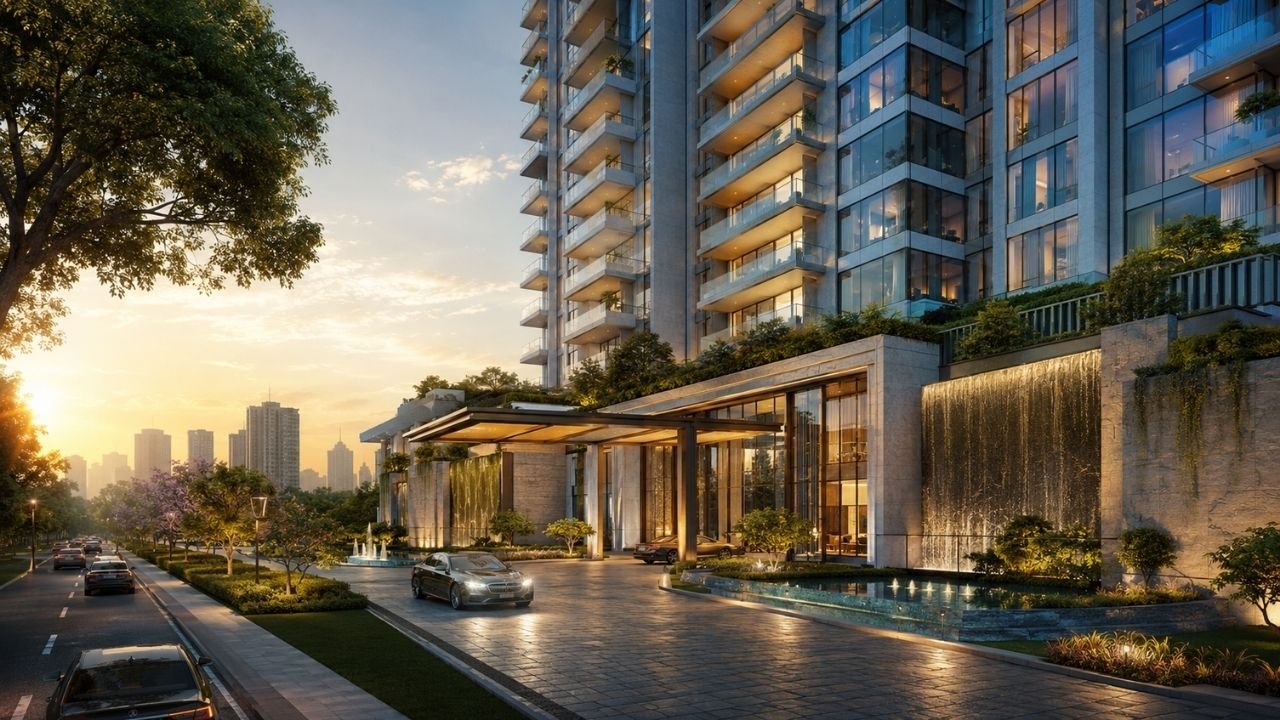
Selecting the right balcony railing design is one of the most critical decisions in residential architecture, particularly in the diverse Indian context. Beyond serving as a simple perimeter, the railing defines the safety of your family, the privacy of your outdoor spaces, and the visual character of your home’s front elevation. In India, where balconies are essential for ventilation and social connection, homeowners often choose designs based solely on social media photographs. This frequently leads to long-term issues such as premature rusting, difficult cleaning access, or unsafe gaps that endanger children.
👉 Design a Stylish Balcony Railing That Enhances Safety and Elegance.
This guide explores the intersection of aesthetics and engineering, helping you navigate materials, safety standards, and climate-specific requirements. Whether you are building a new independent villa or renovating an apartment, understanding the logic behind a balcony railing design ensures your investment adds lasting value. To assist in this journey, Construction Estimator India provides expert consultancy to help you estimate realistic costs and quantities for different balcony railing design options. If you want to understand the budget impact before finalising your balcony railing, contact Construction Estimator India on WhatsApp / Call +91 8630676890.
What Balcony Railings Really Do for Your Home?
Safety, Comfort, and Appearance
The primary function of any balcony railing is to provide a robust physical barrier that prevents falls. In a multi-storey Indian home, the railing must withstand significant horizontal pressure and wind loads. Beyond basic safety, the design creates a psychological sense of enclosure. A well-designed railing makes a narrow balcony feel more spacious and secure, encouraging residents to spend more time outdoors. Furthermore, the railing acts as a filter for light and wind; a very dense design might provide privacy but can block the refreshing evening breeze that is so vital in tropical climates.
Aesthetics also play a dominant role. The railing is a major component of the building’s façade. It acts as a repetitive geometric element that can either enhance the architectural lines of the house or create visual clutter. For instance, a minimalist glass railing can make a small modern house look sleeker, whereas a heavy masonry parapet might make it look grounded and solid. The choice of railing is the “jewelry” of the house front, providing the final touch that defines whether the home looks contemporary, traditional, or transitional.
Relationship Between Balcony Railing and Elevation Style
For a home to look professionally designed, the railing must speak the same architectural language as the rest of the building. A common mistake in Indian home construction is pairing a traditional, ornate wrought iron railing with a modern, flat-roof box-style elevation. This creates a visual disconnect that lowers the perceived value of the property. Conversely, matching a sleek, stainless steel railing with a heritage-style sloping roof home can feel cold and out of place. The railing should reinforce the chosen style through its material, color, and pattern.
The table below provides a clear comparison of the most common balcony railing types used in the Indian market to help you identify which category aligns with your project goals.
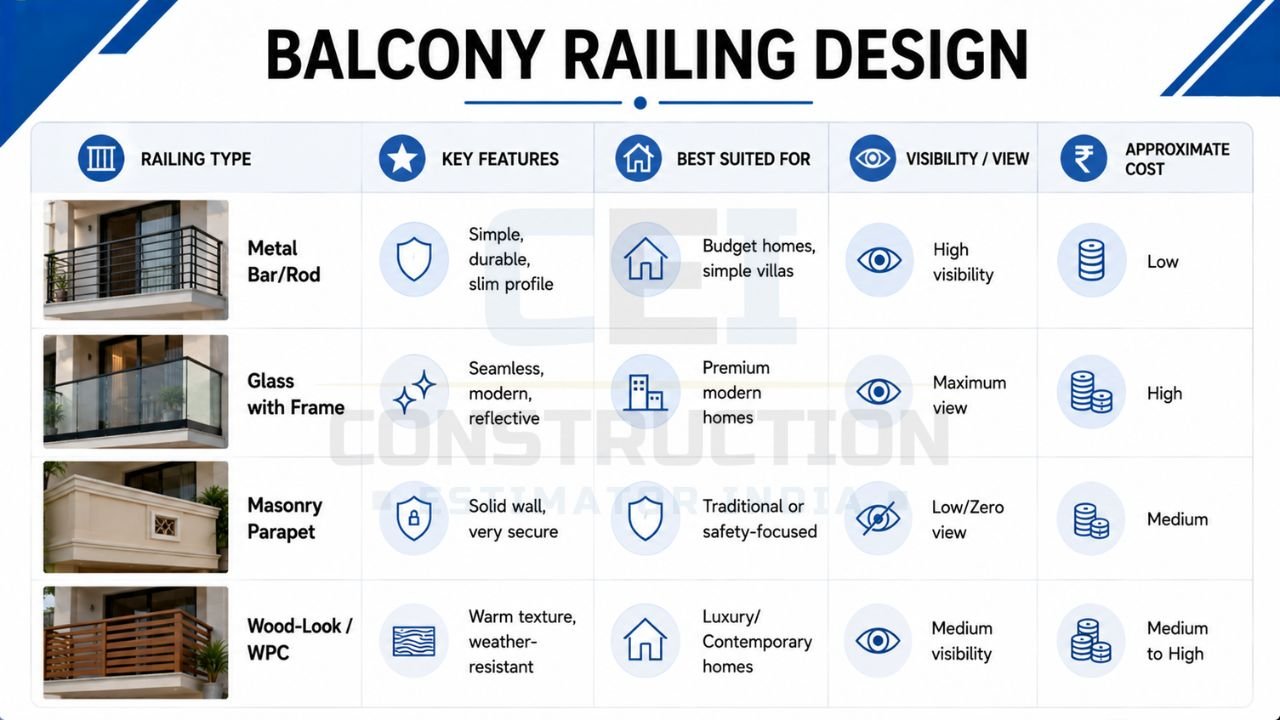
| Railing Type | Key Features | Best Suited For | Visibility/View | Approximate Cost |
|---|---|---|---|---|
| Metal Bar/Rod | Simple, durable, slim profile | Budget homes, simple villas | High visibility | Low |
| Glass with Frame | Seamless, modern, reflective | Premium modern homes | Maximum view | High |
| Masonry Parapet | Solid wall, very secure | Traditional or safety-focused | Low/Zero view | Medium |
| Wood-Look / WPC | Warm texture, weather-resistant | Luxury/Contemporary homes | Medium visibility | Medium to High |
To make a final decision using this table, consider your primary goal. If you have a beautiful park view, the glass option is superior, but if you live on a busy street and want to block the view of neighbors, a masonry or dense wood-look design is more practical. Construction Estimator India can help you estimate construction and fabrication cost for different balcony railing design options listed here.
👉 Get Customized Balcony Railing Designs to Match Your Home’s Style.
Height, Gaps, and Basic Safety Rules
Railing Height and Comfortable Use
In India, the standard height for a residential balcony railing usually ranges between 36 inches (3 feet) and 42 inches (3.5 feet). While 3 feet is the legal minimum in many municipalities, increasing the height to 40 or 42 inches provides a much greater sense of security for taller adults and reduces the risk of accidental overbalancing. However, a railing that is too high—above 48 inches—can make the balcony feel like a cage and obstruct the view when you are seated. Finding the “sweet spot” involves considering the floor level; higher balconies on the third or fourth floor often feel safer with a slightly taller railing compared to a first-floor porch.
Gap Size, Horizontal vs Vertical Members
Safety for children is the most critical technical aspect of a balcony railing design. The international safety standard, often followed by professional architects in India, is the “4-inch rule.” This means that no gap in the railing should be large enough for a 4-inch diameter sphere to pass through, ensuring that a small child cannot slip their head through the bars.
Another often overlooked factor is the “ladder effect.” Horizontal railings, while looking very modern and sleek, act as a ladder that children can easily climb. In homes with active toddlers, vertical members or solid panels are much safer choices. If you prefer the look of horizontal bars, ensure they are spaced or designed in a way that discourages climbing, perhaps by using a glass inner layer or keeping the horizontal bars very close together near the base.
Edge Conditions and Corner Treatment
The points where the railing meets the house walls or turns at a corner are where most structural failures and safety hazards occur. Corners should be rounded or perfectly mitered to avoid sharp edges that could cause injury. Furthermore, the “end-post” of the railing must be deeply anchored into the structural slab or the side walls using high-quality expansion bolts or chemical anchors. In many Indian homes, the railing is simply “pasted” onto the tiles, which is a major safety risk. Professional installation ensures that the railing can handle the weight of multiple people leaning against it simultaneously during a gathering.
Materials and Finishes for Balcony Railing Design
Common Balcony Railing Materials in India
Material selection is the primary driver of both look and longevity. Mild Steel (MS) is the most common choice due to its affordability and ease of fabrication into various patterns. Stainless Steel (SS), particularly the 304 or 316 grades, is favored for its rust resistance and polished look. Aluminium railings are gaining popularity as they are lightweight and never rust, making them ideal for coastal cities like Mumbai or Chennai.
For a high-end modern balcony railing design, tempered or laminated glass is the gold standard. It provides an unobstructed view and a sophisticated aesthetic. For those who want the warmth of timber without the maintenance issues of real wood in the Indian sun, Wood Plastic Composite (WPC) or HPL (High-Pressure Laminate) panels are excellent alternatives. These materials offer the organic look of wood but are designed to withstand heavy rain and intense UV radiation.
Paint, Powder Coating, and Surface Finishes
The finish of a railing is its first line of defense against the environment. For MS railings, a simple oil paint is the most budget-friendly but requires repainting every 2-3 years. Powder coating is a superior alternative where the color is baked onto the metal, providing a much harder and more durable surface that resists scratching and fading. For stainless steel, the choice between a “mirror finish” (shiny) and a “satin/brushed finish” (matte) depends on the house style; matte finishes are generally better at hiding fingerprints and water spots.
Durability, Rust, and Cleaning Considerations
In the dusty and humid climate of India, maintenance is a major factor. Intricate wrought iron designs with many curls and crevices look beautiful but are a nightmare to clean and repaint. Dust accumulates in the corners, leading to moisture retention and eventual rust. Simple, clean lines are not just a style choice—they are a practical decision for easier upkeep. Construction Estimator India can help you estimate repainting or re-coating costs for different railing choices so you can factor in the long-term maintenance budget.
The following table compares the most popular materials to help you balance initial investment with long-term durability.
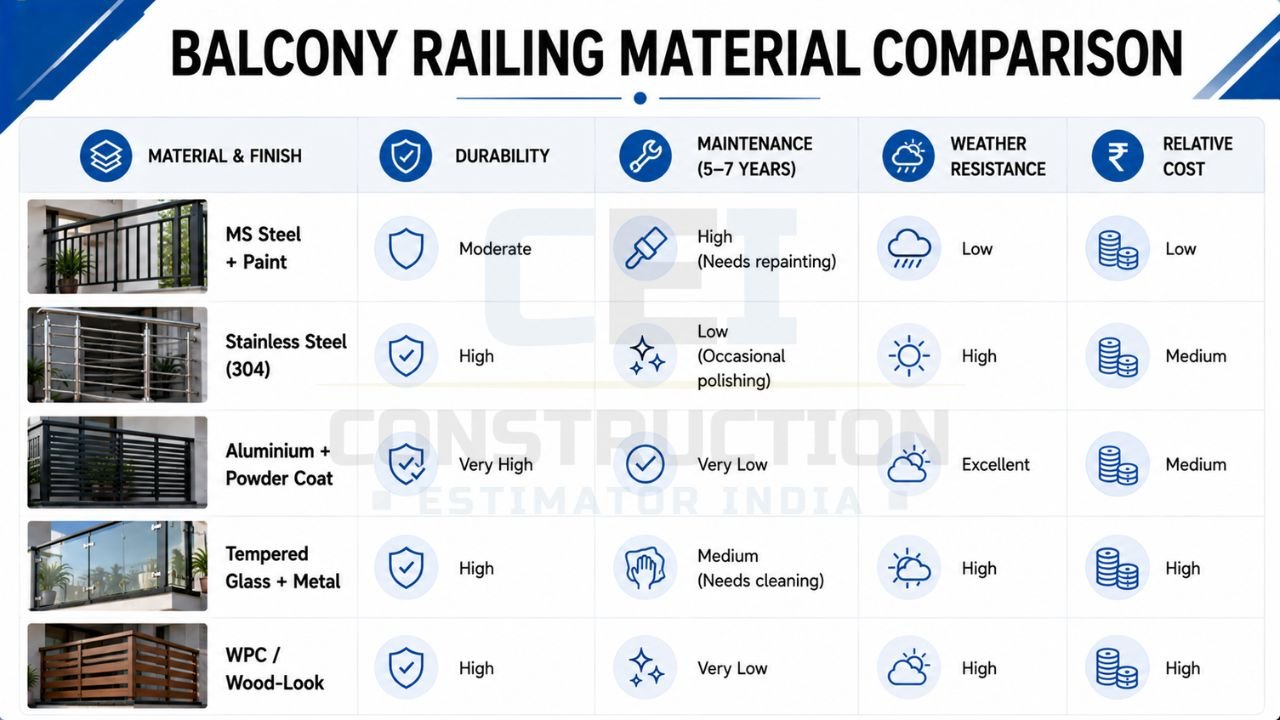
| Material & Finish | Durability | Maintenance (5–7 Years) | Weather Resistance | Relative Cost |
|---|---|---|---|---|
| MS Steel + Paint | Moderate | High (Needs repainting) | Low | Low |
| Stainless Steel (304) | High | Low (Occasional polishing) | High | Medium |
| Aluminium + Powder Coat | Very High | Very Low | Excellent | Medium |
| Tempered Glass + Metal | High | Medium (Needs cleaning) | High | High |
| WPC / Wood-Look | High | Very Low | High | High |
When interpreting this table, remember that while MS steel has the lowest entry cost, the cost of labor and paint every few years often makes it more expensive over a decade compared to aluminium or stainless steel. Construction Estimator India helps homeowners understand the cost difference between basic metal railings vs glass, wood-look, or more decorative designs through detailed comparative reports.
👉 Choose a Balcony Railing That Combines Beauty, Safety, and Durability.
Design Priorities: View, Privacy, and Wind
Railings for Maximum View and Light
If your home faces a park, a mountain, or a well-landscaped garden, your balcony railing design should be as “invisible” as possible. Frameless glass railings are the best choice here, as they remove all vertical obstructions. If glass is out of your budget, thin vertical stainless steel cables or slim MS rods can provide a similar open feel. These designs also allow maximum natural light into the adjoining rooms, making your interior spaces feel brighter and more ventilated.
Railings for More Privacy and Shade
In many urban Indian neighborhoods, houses are built very close to each other, and balconies often face the neighbor’s windows or a busy street. In such cases, privacy becomes the priority. A solid masonry parapet wall up to 2 feet, topped with a 1.5-foot decorative screen or louvers, can provide the necessary shield. Perforated metal sheets (CNC cut) are a trendy way to achieve this; they allow light and air to pass through but block a direct line of sight from the street.
Windy and Rainy Climate Considerations
Climate plays a huge role in how a balcony feels. In high-wind areas or during the heavy Indian monsoon, a very open railing can allow rain to lash into the balcony and even into the living room. Partially solid designs or railings with integrated glass panels act as a windbreak, making the balcony usable even during light rain. Conversely, in very hot and humid cities, a solid wall might block the much-needed cross-ventilation. A balanced design—perhaps a mix of solid sections and open grills—is often the best solution for the Indian climate.
The table below links common homeowner priorities with the most effective design approaches to help you narrow down your choices.
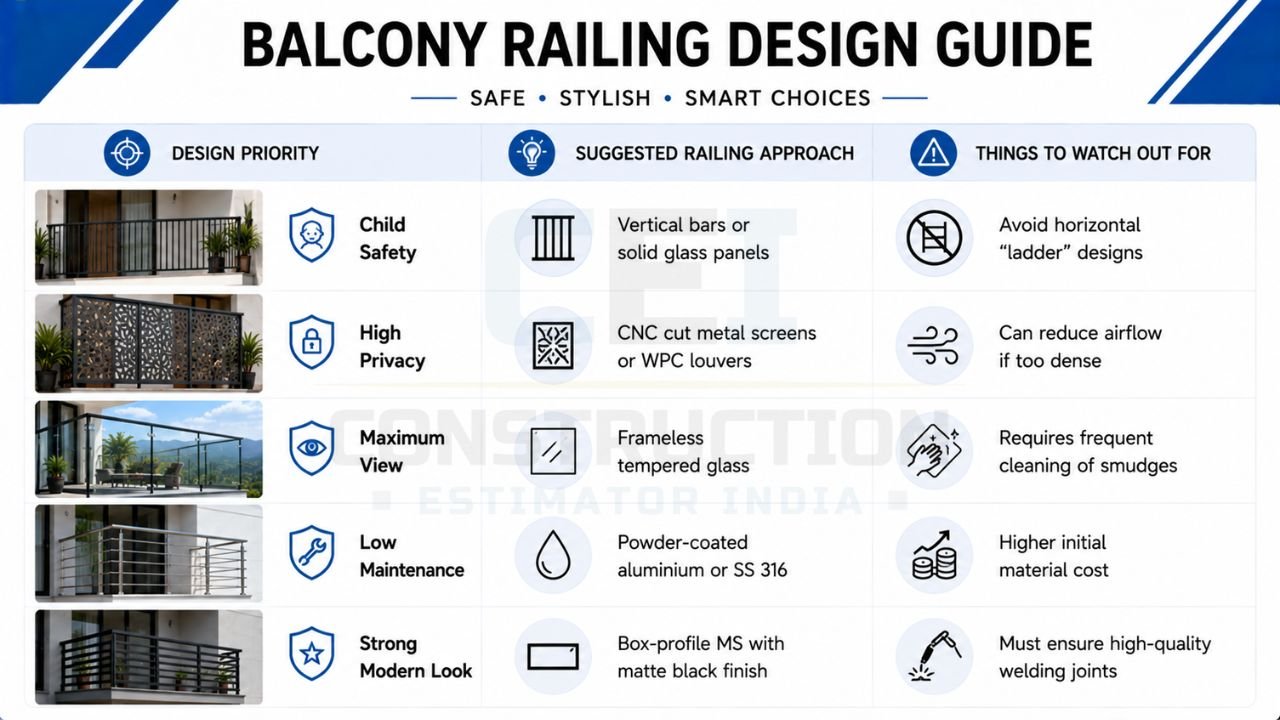
| Design Priority | Suggested Railing Approach | Things to Watch Out For |
|---|---|---|
| Child Safety | Vertical bars or solid glass panels | Avoid horizontal “ladder” designs |
| High Privacy | CNC cut metal screens or WPC louvers | Can reduce airflow if too dense |
| Maximum View | Frameless tempered glass | Requires frequent cleaning of smudges |
| Low Maintenance | Powder-coated aluminium or SS 316 | Higher initial material cost |
| Strong Modern Look | Box-profile MS with matte black finish | Must ensure high-quality welding joints |
Use this table as a checklist during your discussions with your designer. For instance, if you prioritize child safety but also want a modern look, you can opt for vertical box-section MS bars with a very narrow gap. If you want to check the quantity and cost of steel, glass, paint, and fittings for balcony railings that meet these specific priorities, Construction Estimator India is available for professional support.
👉 Transform Your Balcony with Modern and Functional Railing Designs.
Balcony Railing Design for Different House Types
Independent House Front Balconies
For an independent villa or a double-floor home, the front balcony is a statement piece. Since this balcony is viewed from the road, the railing design must be scaled correctly. A very thin railing on a large, grand house can look weak. Architects often use “double-height” elements or thicker handrails to give the railing more visual weight. Using a combination of materials—such as a stone-clad base with a glass top—can add layers of sophistication to the front elevation.
Side/Utility Balconies
Utility balconies, often located near the kitchen or used for laundry, do not require the same level of aesthetic investment as the front balcony. Here, the focus should be on durability and functional privacy. Simple MS grills with a mesh backing are common to prevent birds from entering or to hide drying clothes from the street view. However, even these should be finished neatly to ensure they don’t look like an afterthought that ruins the side view of the building.
Apartment Balconies and Juliet/French Balconies
In apartment living, you often have to follow a standard design set by the developer. However, if you are allowed to customize, focus on making the space feel larger. Juliet balconies (very narrow balconies that you cannot walk onto) require railings that are highly decorative since their only purpose is aesthetic. For standard apartment balconies, adding a top-mounted wooden handrail to a standard metal railing can instantly make the space feel more premium and comfortable to lean on.
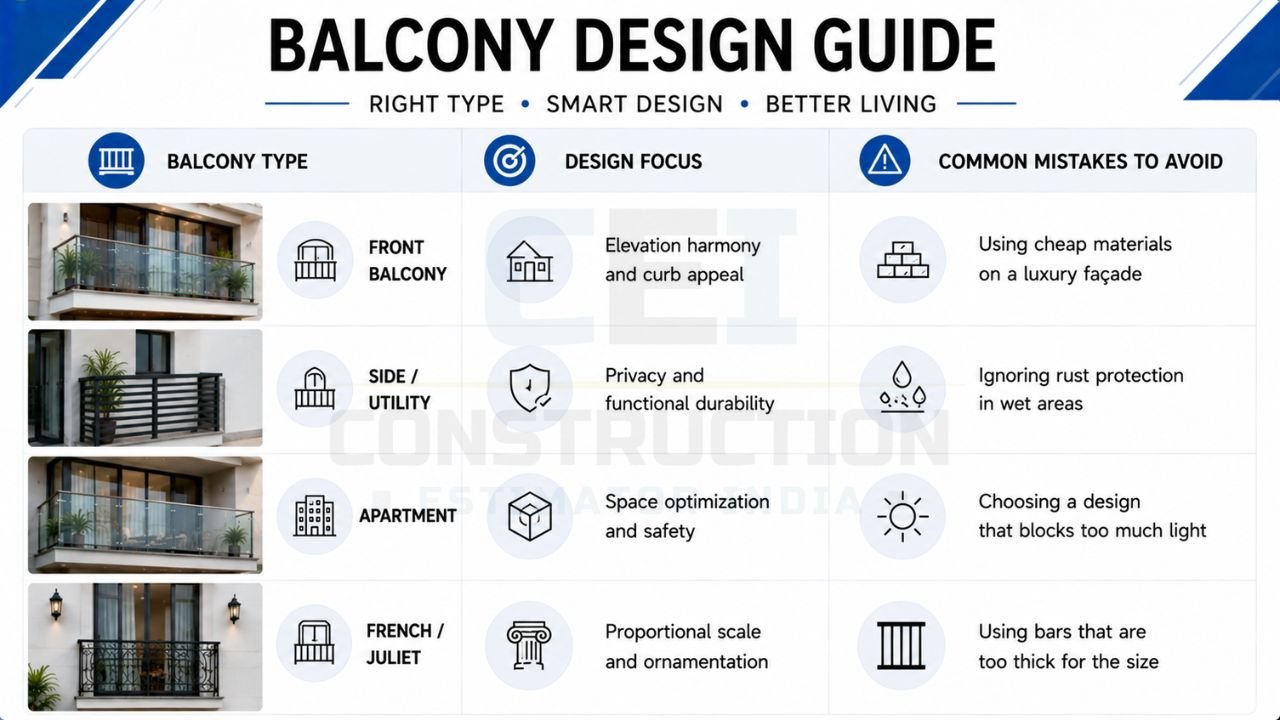
| Balcony Type | Design Focus | Common Mistakes to Avoid |
|---|---|---|
| Front Balcony | Elevation harmony and curb appeal | Using cheap materials on a luxury façade |
| Side/Utility | Privacy and functional durability | Ignoring rust protection in wet areas |
| Apartment | Space optimization and safety | Choosing a design that blocks too much light |
| French/Juliet | Proportional scale and ornamentation | Using bars that are too thick for the size |
This table helps you allocate your budget efficiently. You might choose to splurge on expensive glass for the front balcony while keeping the side utility balcony simple and cost-effective.
👉 Turn Your Balcony Design Ideas into Reality with Expert Guidance.
Cost Planning for Balcony Railing Design
What Drives Balcony Railing Cost
Homeowners are often surprised by the wide range of quotes they receive for balcony railings. The primary cost driver is the material—glass and high-grade stainless steel are significantly more expensive than mild steel. However, the complexity of the design also plays a huge role. A simple vertical bar design is easy to weld and finish, while a complex CNC-cut pattern or a curved railing requires specialized machinery and more labor hours.
The “hidden” costs often include the thickness of the material (gauge), the quality of the glass (tempered vs. laminated), and the type of finish. For example, a “hidden fix” glass railing where the base channel is buried inside the floor slab is much more expensive to install than a simple “bracket-mounted” glass railing.
Getting Good Balcony Railings Within a Normal Budget
You don’t need a massive budget to have a stunning balcony. One smart strategy is to use expensive materials sparingly. For instance, you can use a simple painted MS frame for the majority of the railing and only use a small section of glass or WPC panels in the center to create a focal point. Another tip is to choose standard section sizes (like 1-inch or 2-inch square pipes) which are mass-produced and cheaper than custom-ordered profiles. Neatness of construction—clean welds and smooth paint—can make a basic railing look far more expensive than it actually is.
How Construction Estimator India Helps with Railing Costing?
Construction Estimator India provides a bridge between your design dreams and your bank account. We prepare detailed quantity and cost estimates for different railing options, comparing the total “landed cost” (material + labor + finishing). This allows you to see, for example, exactly how much more you would spend by switching from MS to Stainless Steel. Our goal is to help you align your balcony railing design decisions with your overall construction budget. By providing precise material estimation, we ensure you don’t over-order materials and help you have a more focused discussion with your fabricator or contractor.
Common Mistakes in Balcony Railing Design
Choosing Railings Only from Photos Without Checking Safety
A railing might look “Instagram-worthy” in a photograph from a European villa, but it might not be suitable for an Indian home. Many trendy designs feature very large gaps or low heights that do not meet Indian safety needs or climate constraints. Always verify the physical dimensions—height and gap width—before approving a design based on a picture.
Overdecorating Railings with Complex Patterns
While traditional wrought iron can be beautiful, overdoing the patterns can make the façade look “busy” and dated. In modern architecture, the railing should be a supporting element, not one that competes with the rest of the house. Furthermore, highly complex patterns are notoriously difficult to clean. In India, where road dust is a constant presence, a design that is hard to wipe down will quickly lose its charm.
Ignoring Future Changes and Maintenance Access
Some railing designs are installed in a way that makes it impossible to reach the outer side for cleaning or repainting without expensive scaffolding. For example, if you install a glass railing on a high floor, how will you clean the outside of the glass? Thinking about maintenance access during the design phase will save you significant frustration and money in the years to come.
👉 Build a Balcony That Reflects Your Style and Complements Your Home.
FAQs: Balcony Railing Design for Indian Homes
Which balcony railing material is best for coastal or high-rain areas?
In coastal regions like Mumbai or Kerala, salt-laden air and heavy rain cause standard MS steel to rust very quickly. The best choices are Aluminium (with powder coating) or Grade 316 Stainless Steel. Aluminium is naturally rust-proof, while 316-grade SS contains molybdenum, which protects it against chloride-induced corrosion. Construction Estimator India can help you compare the cost of these premium materials against the long-term cost of replacing rusted railings.
How to choose between glass and metal railings for modern homes?
The choice depends on your priority for view versus maintenance. Glass railings offer a seamless, high-end look and an unobstructed view, but they require regular cleaning to remove dust and smudges. Metal railings (especially in matte black or charcoal grey) provide a more structural, industrial-modern look and are generally easier to maintain. If you want a compromise, a metal frame with glass infill panels is a very popular and sturdy option.
How much do balcony railings typically cost in relation to total elevation spending?
Typically, the “extra” cost of a designer balcony railing (over a basic parapet) accounts for 1% to 3% of the total construction cost. However, in luxury homes with extensive glass and specialized hardware, this can go higher. It is a small percentage but has a huge impact on the final look. Getting a clear quote from your fabricator early is essential.
What railing designs are safest for homes with small children?
The safest designs are vertical bar railings with gaps no wider than 4 inches, or solid tempered glass panels. You must avoid horizontal bars that can be climbed like a ladder. Additionally, ensure the height is at least 42 inches to prevent accidental falls.
When to involve Construction Estimator India for railing cost and quantity checks?
The best time to involve us is after you have a basic 3D elevation or a drawing of the railing but before you hire a fabricator. This allows us to give you an independent estimate of the material quantities (kg of steel, sq. ft of glass) and labor costs, so you can negotiate fairly with contractors and avoid being overcharged.
Conclusion: Choose a Balcony Railing Design That Is Safe, Stylish, and Budget-Friendly
A successful balcony railing design is one that satisfies the eye while protecting the family. In the Indian context, where the balcony is a vital living space, the railing must withstand heat, dust, and rain without losing its structural integrity. By choosing the right materials, adhering to height and gap safety rules, and ensuring the design complements your home’s elevation, you create an outdoor space that is both beautiful and functional.
Avoid the trap of choosing a design based only on looks; consider the maintenance and safety implications of every bar, panel, and bolt. Whether you are aiming for a minimalist modern look or a sturdy traditional feel, planning is the key to success. Contact Construction Estimator India on WhatsApp / Call +91 8630676890 before you finalise your balcony railing design. We can help you understand the exact cost, quantities, and practical options tailored to your specific plot and budget, ensuring your self-construction project is a stress-free success.