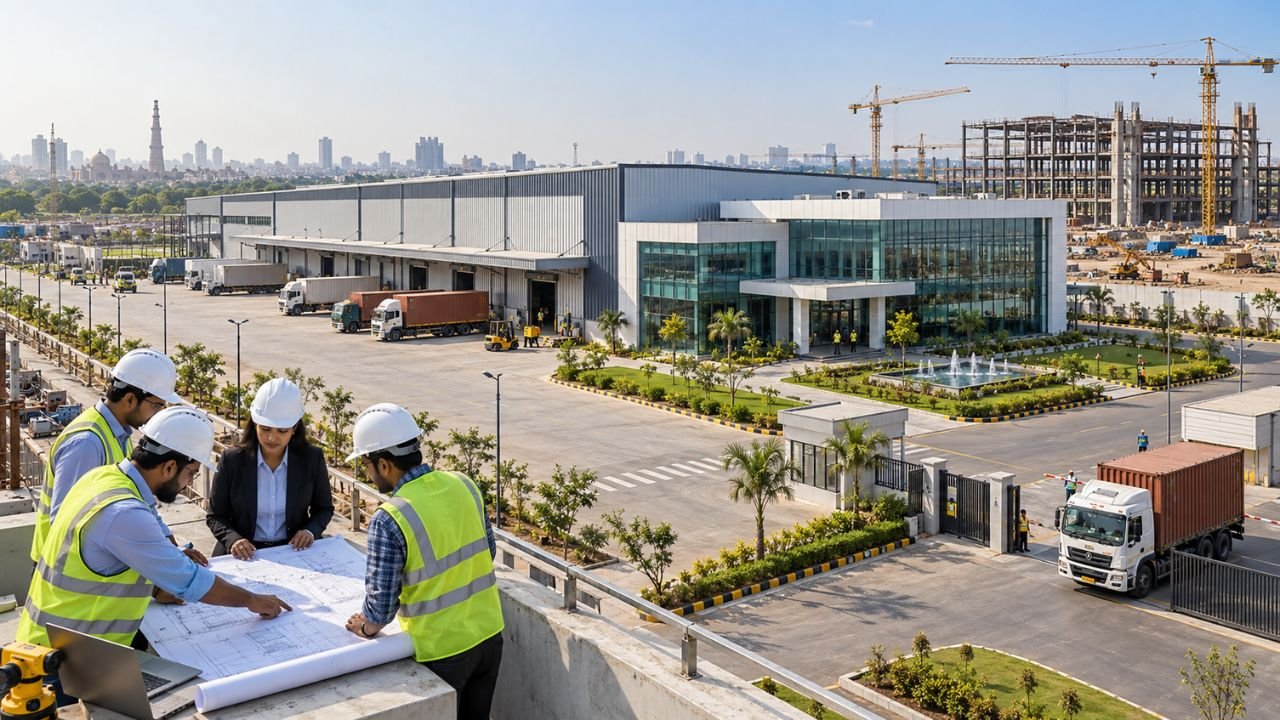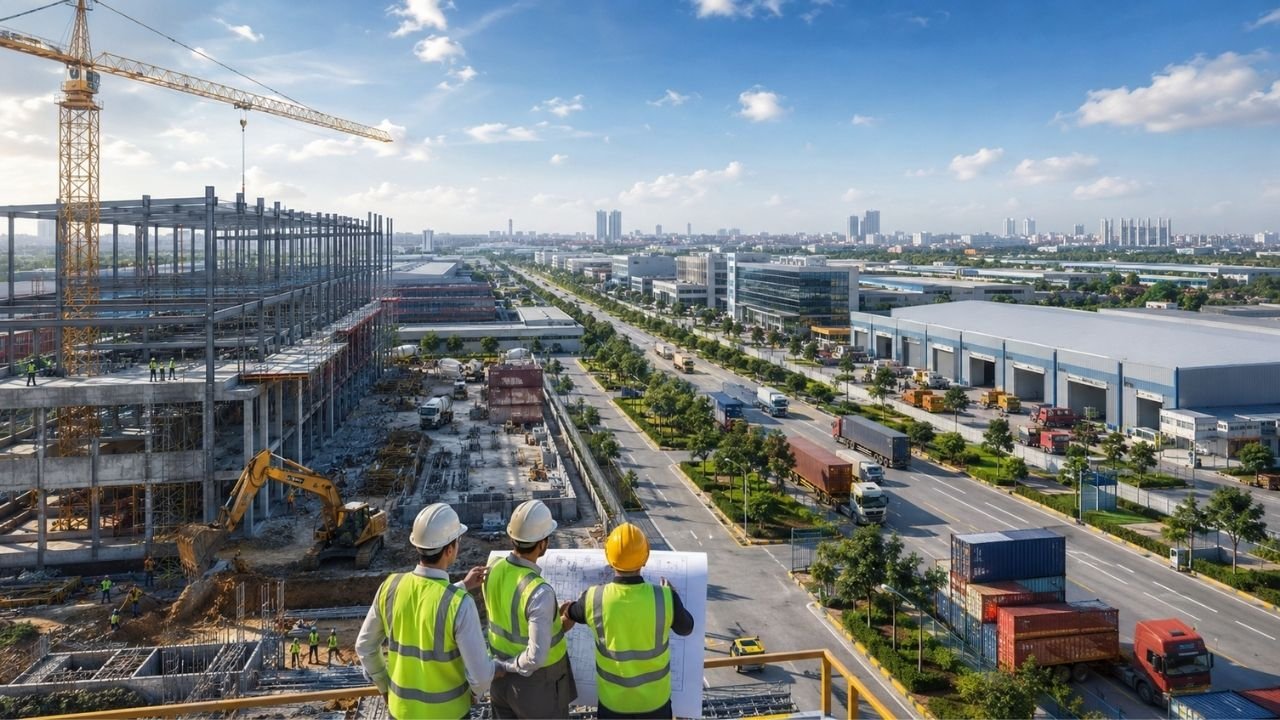
Setting up a factory is an enormous capital investment, and the layout design is arguably one of the most critical foundational decisions you will make. In densely industrialized regions like Delhi, Noida, Gurgaon, and Faridabad, where land costs are exceptionally high, maximizing every square foot of your facility is not just an operational goal—it is a financial necessity. A poor layout can lead to inefficient workflows, massive material handling bottlenecks, safety hazards, and incredibly costly structural modifications later on. Conversely, a well-engineered factory layout boosts labor productivity, drastically reduces waste, and makes future capacity expansions straightforward and cost-effective.
Many manufacturers and investors across the National Capital Region (NCR) prefer to work with specialized factory layout design consultants to handle everything from conceptual flow diagrams to detailed engineering. These professionals ensure that the plant is compliant with strict local norms while operating at peak efficiency.
In my years of consulting on industrial projects, I’ve seen clients make costly mistakes by choosing consultants based only on price or flashy 3D presentations, ignoring constructability and cost impact. At Construction Estimator India, we regularly work alongside layout consultants, industrial architects, and EPC contractors to prepare accurate Bills of Quantities (BOQs) and cost estimates for factory projects across India.
As highlighted by leading industry bodies like the Confederation of Indian Industry (CII), engaging experienced engineering consultants early in a greenfield or brownfield project can significantly reduce execution risks and improve overall operational efficiency. By the end of this comprehensive guide, you will understand exactly what factory layout consultants do, how to find and rigorously evaluate them in Delhi NCR, what to expect in terms of fees, and how to avoid the most common, expensive pitfalls.
What Do Factory Layout Design Consultants Do?
Factory layout design consultants specialize in planning and meticulously designing the physical arrangement of machines, heavy equipment, manual workstations, raw and finished goods storage areas, utility blocks, and personnel welfare spaces within a manufacturing facility.
Their goal is to translate your business objectives—such as target production capacity, product mix, and capital budget—into a highly practical, buildable layout. Typical services provided by these consultants include:
1. Conceptual Layout Design
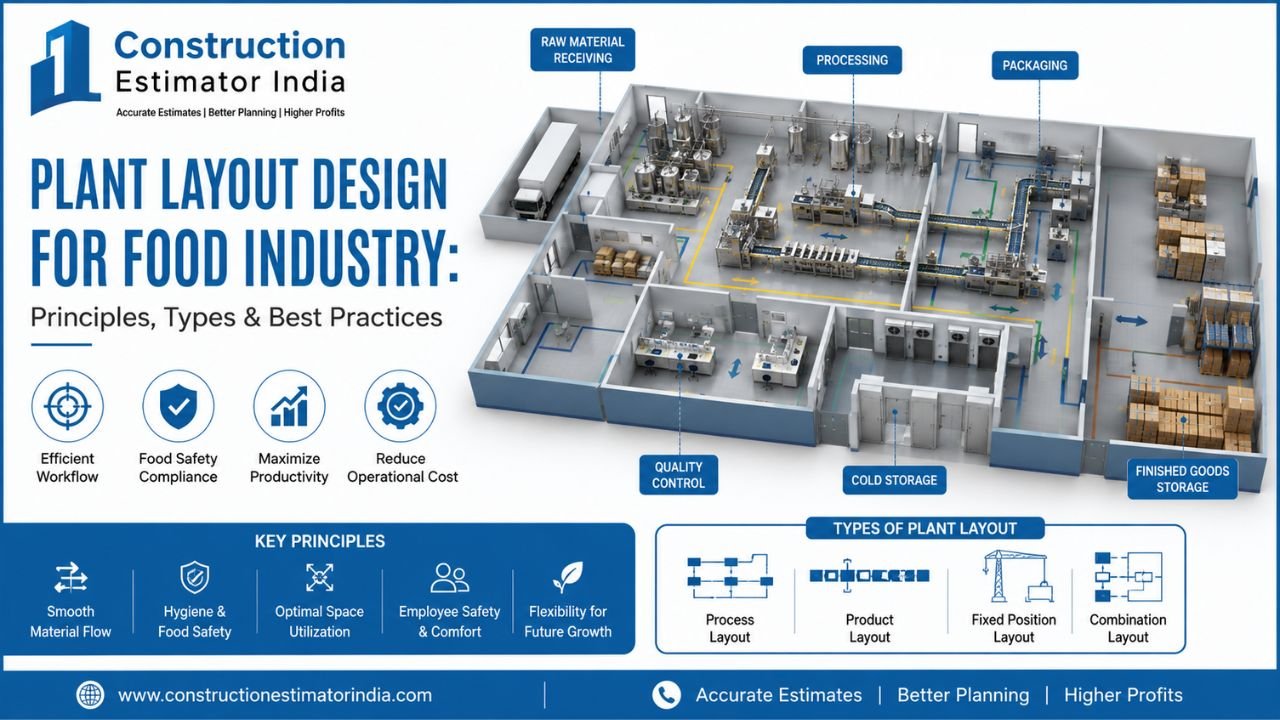
Before finalizing any structural walls, consultants create high-level spatial options showcasing different manufacturing strategies. This involves deciding between a product layout (assembly line), process layout (functional grouping), or a cellular manufacturing setup, depending on what best suits your production volume and variety.
2. Process Flow Analysis
A core responsibility of a layout consultant is mapping the intricate flows of materials, personnel, and utilities. They conduct detailed spatial analyses to minimize unnecessary forklift movement, reduce material handling times, and, in industries like food and pharma, completely eliminate the risk of cross-contamination between raw and finished zones.
3. Detailed Layout Engineering
Once the conceptual flow is approved, the consultant develops granular engineering drawings. This includes exact equipment footprints, operational and maintenance clearances, trench drain locations, and complex utility routing (steam, chilled water, compressed air).
4. 3D Modeling and Clash Detection
For complex plants, modern consultants utilize advanced 3D modeling software (like Revit or Plant 3D) to create virtual walkthroughs. This allows for spatial clash detection—ensuring, for example, that an HVAC duct does not physically intersect with an overhead crane or material conveyor.
5. Compliance and Safety Integration
In the NCR region, compliance is strict. The consultant ensures that the layout inherently meets all statutory norms, including the Factories Act, state fire safety regulations, local pollution control board mandates, and industry-specific guidelines (such as FSSAI for food processing plants).
6. Capacity and Expansion Planning
A great consultant doesn’t just design for today. They incorporate “soft spaces” and modular expansion zones, designing layouts that can smoothly accommodate future capacity increases or entirely new product lines without requiring a complete factory shutdown.
In addition to these core services, many specialized firms also offer lean production system design, material handling automation planning (including AGVs and racking systems), and end-to-end project implementation support.
Types of Factory Layout Consultants Available in Delhi NCR
The consulting ecosystem in Delhi NCR is vast. Depending on the scale and complexity of your project—whether you are building a multi-acre plant in Greater Noida or optimizing a tight shed in Okhla—you will encounter different types of consultants.
| Type of Consultant | Core Focus | Best Suited For |
| Specialized Industrial Engineering Consultants | Plant layout optimization, lean manufacturing, process flow analysis, and productivity improvement. | Highly process-driven industries (food, FMCG, pharma, automotive) where workflow efficiency is paramount. |
| Architectural & Engineering (A&E) Firms | Integrated building design, aesthetic architecture, structural engineering, and MEP planning. | Greenfield projects where the physical factory building and internal layout must be designed simultaneously. |
| EPC & Turnkey Project Consultants | End-to-end responsibility, from layout and civil works to equipment procurement and commissioning. | Large-scale, high-budget, complex industrial projects requiring a single-point responsibility. |
| Freelance / Boutique Consultants | Personalized, niche layout drafting and design optimization. | Small to medium enterprises (SMEs) looking for cost-effective, flexible layout solutions. |
Specialized Industrial Engineering Consultants
Firms operating in this space focus primarily on the mathematics and logic of manufacturing. They excel at time-and-motion studies, line balancing, and material flow. If you are setting up a highly technical assembly line in Faridabad, these consultants are invaluable.
Architectural & Engineering (A&E) Firms with Industrial Practices
Many large architectural firms in Delhi have dedicated industrial wings. They handle everything from the building facade to the internal machine layout and HVAC design. This integrated approach ensures the building shell perfectly matches the process requirements.
EPC and Turnkey Project Consultants
For massive projects, EPC (Engineering, Procurement, and Construction) consultants handle the entire lifecycle. Firms in this category take your initial brief, design the layout, construct the building, buy the machines, and hand you the keys to an operating factory.
Freelance and Boutique Consultants
Delhi NCR is home to many independent consultants—often retired factory heads or freelance industrial engineers. They are highly cost-effective and offer tremendous flexibility, making them a great fit for smaller factory upgrades or brownfield expansions.
How to Find Factory Layout Design Consultants in Delhi
Sourcing the right talent requires a strategic approach. Here is how you can find reliable plant layout consultants in Delhi NCR:
1. Online Search and B2B Directories
A targeted digital search is a good starting point. Search for “plant layout consultants Noida Gurgaon” or “industrial layout designers Delhi NCR.” Beyond Google, platforms like IndiaMART and Justdial can yield local results. More importantly, check the membership directories of professional bodies like the Indian Institution of Industrial Engineering (IIIE) to find accredited professionals.
2. Referrals from Industry Peers
In my experience, nothing beats a warm referral. Speak to fellow manufacturers in your local industry clusters. Reach out to local MSME groups or chapters of FICCI. Referrals provide unvarnished, honest feedback regarding a consultant’s responsiveness, hidden costs, and true ability to deliver a project on time.
3. Industry Events and Expos
The NCR region frequently hosts massive industrial exhibitions. Events at the India Expo Centre in Greater Noida or Pragati Maidan in Delhi (like IMTEX, PackEx, or specialized food tech expos) are excellent places to meet consultants face-to-face. Many design firms exhibit their capabilities or speak at these events, allowing you to gauge their expertise firsthand.
4. Government and MSME Support Agencies
State governments actively support industrialization. You can contact your local District Industries Centre (DIC) or Ministry of Micro, Small & Medium Enterprises (MSME) development institutes. Additionally, state bodies like HSIIDC (Haryana) or UPSIDC (Uttar Pradesh) often maintain lists of empanelled technical consultants for factory setup.
How to Evaluate and Select the Right Consultant
Finding a list of names is easy; selecting the correct partner for a multi-crore investment is the hard part. Use this structured evaluation framework to vet your shortlisted candidates.
1. Check Specific Industry Experience
A consultant who has spent ten years designing heavy forging plants may be entirely out of their depth designing a sterile pharmaceutical facility. Look for consultants who have a proven track record in your specific industry. Ask for detailed case studies, before-and-after layout examples, and most importantly, request client contacts you can speak to directly.
2. Review Their Approach and Methodology
During the pitch, analyze how they approach the problem. Do they immediately start drawing walls, or do they begin with a rigorous process flow analysis? Do they incorporate lean manufacturing principles? A high-quality consultant will ask you exhaustive questions about your product mix, shift timings, batch sizes, and future business goals before they ever open a CAD program. They should present multiple layout options, not just a single “take it or leave it” floor plan.
(If you are curious about the foundational steps these experts take, refer to our comprehensive guide on how to design a factory layout.)
3. Evaluate Technical Capabilities
Ensure the consultant utilizes modern engineering tools. While 2D AutoCAD is standard, complex modern factories require 3D modeling (using Revit, SolidWorks, or similar) to manage the massive web of MEP utilities overhead. For highly automated plants, ask if they use dynamic simulation tools to test material flow and capacity constraints virtually before construction begins.
4. Assess Understanding of Local Regulations
A layout that works beautifully on paper is useless if it fails the local fire inspection. Ensure the consultant is intimately familiar with the Factories Act regarding mandatory workspace dimensions, ventilation, and emergency exits. They must understand the specific effluent routing requirements demanded by the Delhi or Haryana Pollution Control Boards.
5. Check Communication and Responsiveness
Factory design is an iterative, highly collaborative process. During your initial meetings, note how well they listen and whether they explain complex engineering concepts clearly or hide behind jargon. You need a long-term partner, not just a transactional service provider.
6. Compare Proposals, Deliverables, and Fees
Invite your top 2–3 choices to submit formal proposals. Do not just look at the final price tag. Compare the exact Scope of Work: How many revisions are included? Will they provide 3D walkthroughs? Will they conduct site visits during execution?
Typical Fees and Engagement Models
Understanding how consultants structure their fees will help you budget accurately. In Delhi NCR, fees vary wildly based on the consultant’s reputation and the project’s scale.
1. Fixed-Fee Projects
This is the most common model for well-defined scopes. If you are building a specific 50,000 sq. ft. facility and need a complete layout design, the consultant will quote a lump sum. In some cases, this is calculated on a per-square-foot basis (e.g., ₹X per sq. ft. of built-up area for layout engineering).
2. Time-Based (Man-Day) Fees
When a project is highly complex, involves a lot of R&D, or the scope is fluid, consultants may charge a man-day or hourly rate for their engineering team’s time. This is common when consultants are brought in to optimize an existing, highly inefficient brownfield plant where the full extent of the problems isn’t known upfront.
3. Percentage of Project Cost
Turnkey consultants and EPC firms often charge a flat percentage of the total project capital expenditure (CAPEX). For design, engineering, and project management, this fee typically ranges between 2% to 5% of the total cost of civil works and equipment.
4. Hybrid Models
Many firms offer a hybrid approach: a fixed fee for the core layout design and statutory drawing submissions, combined with a time-based fee for additional ongoing site visits, lean consulting, or future expansion planning.
Common Mistakes When Hiring Factory Layout Consultants (and How to Avoid Them)
I have audited countless factory projects where the budget spiraled out of control simply because of poor consultant selection. Avoid these common pitfalls:
-
Choosing based strictly on price: The cheapest consultant often lacks the experience to foresee operational bottlenecks. Saving ₹2 Lakhs on consulting fees can easily result in a ₹50 Lakh structural rework during the construction phase.
-
Vague scope and deliverables: Failing to clearly define what is included leads to massive disputes. Ensure the contract specifies the number of layout iterations, the inclusion of utility flow diagrams, and site supervision visits.
-
Over-customization: Allowing a consultant to design an overly complex, hyper-customized layout around a single specific machine. If that machine is replaced in five years, the entire building layout becomes obsolete. Standardized, modular bays are vastly superior.
-
Ignoring future expansion: Designing a layout that is far too tight. If you don’t leave room for a new packaging line or additional raw material storage, your business growth will be physically capped by your building.
-
Not involving cost consultants early: This is critical. A layout consultant can design a beautiful facility, but those decisions dictate your civil and MEP costs. Failing to validate the layout with a cost estimator early on regularly leads to abandoned projects due to budget overruns.
(To understand what these finished plans look like in practice, review our resources on typical manufacturing factory floor plan layouts.)
Red Flags to Watch Out For
When interviewing consultants, keep an eye out for these warning signs:
-
Unwillingness to share past work: If they claim vast experience but cannot show you a sanitized case study or connect you with a past client, walk away.
-
“One-size-fits-all” solutions: Every factory plot, product mix, and business model is unique. If a consultant tries to shoehorn your operations into a generic, pre-made template, they are not doing actual engineering work.
-
Over-reliance on pretty 3D pictures: 3D renders are helpful for visualization, but they are not engineering. If a consultant focuses entirely on glossy walkthroughs but cannot explain the math behind their material flow or capacity assumptions, be highly cautious.
-
Ignorance of local NCR compliance: If a consultant is vague about UP fire norms or FSSAI drainage requirements, they will likely design a plant that fails inspection.
How Construction Estimator India Complements Layout Consultants
While a factory layout consultant focuses heavily on spatial design, process engineering, and workflow optimization, Construction Estimator India focuses on financial viability, constructability, and budget control. The two disciplines must work hand-in-hand.
Our typical engagement looks like this:
-
Design Phase: You engage a specialized layout consultant to design the preliminary layout.
-
Estimation Phase: Once the preliminary layout is drafted, we step in to prepare highly detailed Bills of Quantities (BOQs) based on those drawings. We estimate the exact civil construction, MEP integration, and equipment installation costs.
-
Validation: You use our estimates to validate if the consultant’s layout fits within your capital budget. If the intricate drainage design they proposed pushes you 20% over budget, we identify that before construction starts, allowing the consultant to value-engineer the layout.
-
Tendering: We help you use the finalized BOQ to invite accurate, comparable bids from civil and MEP contractors across Delhi NCR.
This powerful combination of expert layout design and rigorous cost expertise ensures your factory is not only highly efficient but also financially viable to build.
FAQs
1. What exactly do factory layout design consultants do?
They systematically plan the physical arrangement of industrial machinery, storage, utilities, and personnel areas to optimize material flow, ensure worker safety, and guarantee regulatory compliance.
2. How much do factory layout consultants charge in Delhi NCR?
Fees vary widely based on scope. For small-to-medium factories, fees can range from a few lakhs for basic layout drafting, up to significant percentage-based fees for massive turnkey EPC projects involving detailed 3D engineering and implementation support.
3. How do I find reliable plant layout consultants in Delhi NCR?
Start by seeking referrals from industry peers or associations like CII and FICCI. Attend regional industrial expos (like those in Greater Noida), check directories like IIIE, and consult your local MSME or DIC office for empanelled experts.
4. Should I hire a consultant for a small factory or shed?
Yes. In small facilities where space is tight (like Okhla or Mayapuri industrial areas), an optimized layout is even more critical to ensure you can fit your machinery safely and comply with local fire codes without creating a cramped, hazardous workspace.
5. What questions should I ask before hiring a layout consultant?
Ask about their direct experience in your specific industry, request to see past case studies, inquire about their methodology for process flow analysis, and ask how they integrate local statutory compliance into their spatial designs.
6. Can a layout consultant help with FSSAI or fire compliance?
A competent industrial layout consultant will design the facility to inherently meet these standards—such as proper aisle widths for fire safety, or hygienic zoning for FSSAI. However, you may still need specialized liaison agents to physically process the government paperwork.
7. How long does a typical factory layout design project take?
For a medium-sized facility, conceptual design to detailed engineering drawings can take anywhere from 4 to 12 weeks, heavily depending on how quickly the client provides data (like machine specs) and approves the iterative design changes.
Conclusion
Choosing the right factory layout design consultant is one of the highest-leverage decisions you will make during your plant setup journey. These professionals play a critical role in translating your broad business goals into a highly efficient, legally compliant, and operationally cost-effective physical reality.
The Delhi NCR region offers a diverse array of talent, ranging from highly specialized industrial engineers to massive turnkey EPC firms. The key to a successful partnership is evaluating them not just on their fee, but on their specific industry experience, rigorous methodology, and collaborative approach. Remember, a great consultant will easily save you multiples of their fee by helping you avoid catastrophic construction rework and long-term operational inefficiencies.
However, great design must always be balanced with financial reality. Involve both your design consultants and your cost estimation experts early in the planning phase.
If you have a factory project coming up in Delhi, Noida, Gurgaon, or anywhere in India, contact Construction Estimator India. We can review your preliminary layouts for constructability, prepare rock-solid BOQs, and deliver precise cost estimates that keep your ambitious manufacturing goals strictly on budget.