In India’s booming construction industry, securing a contractor license has become essential for growth and credibility. Whether you’re a civil engineer starting your own firm or an established builder aiming for larger government projects, understanding the contractor license process in India is the first step toward unlocking profitable opportunities. With the sector projected to grow significantly in 2026, thanks to infrastructure pushes like smart cities, highways, and housing schemes, having valid PWD contractor registration or CPWD contractor enlistment can set you apart from competitors.
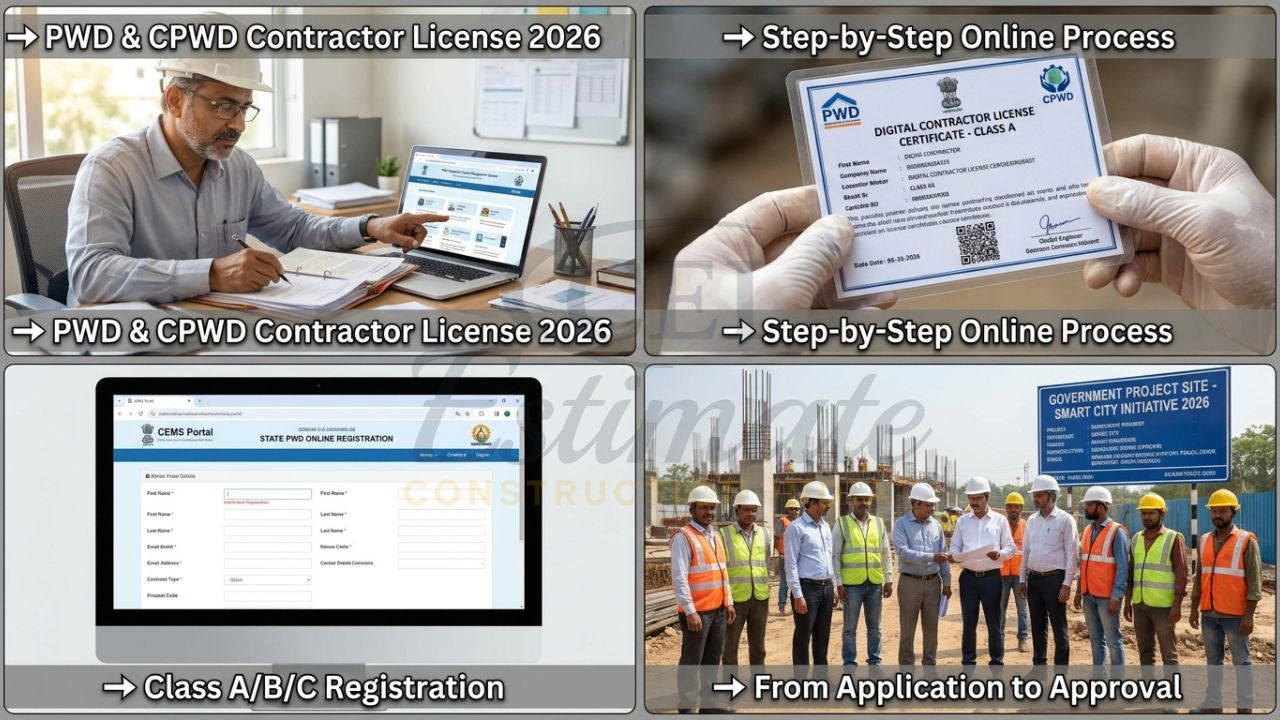
This comprehensive guide walks you through everything you need to know about how to get contractor license in India. From eligibility and documents required for contractor license to the latest online processes for PWD state-wise registration and CPWD enlistment through the CEMS portal, we cover it all. You’ll also learn about different license types (including class A B C contractor licence), building contractor license India requirements, electrical contractor license, and labour contractor license procedures. By the end, you’ll have a clear, actionable roadmap to become a government contractor in India—saving you time, avoiding common pitfalls, and positioning your business for success in 2026.
Why Do You Need a Contractor License in India?
A contractor license isn’t just another piece of paperwork—it’s your gateway to legal, compliant, and high-value work. Without it, you cannot bid on most government tenders. In 2026, with digital tendering platforms dominating, unregistered contractors miss out on thousands of crores in projects.
Key reasons include:
- Legal Compliance: Operating without registration can lead to penalties, blacklisting, or project cancellation.
- Credibility and Trust: Licensed contractors signal financial stability, technical competence, and reliability to clients and authorities.
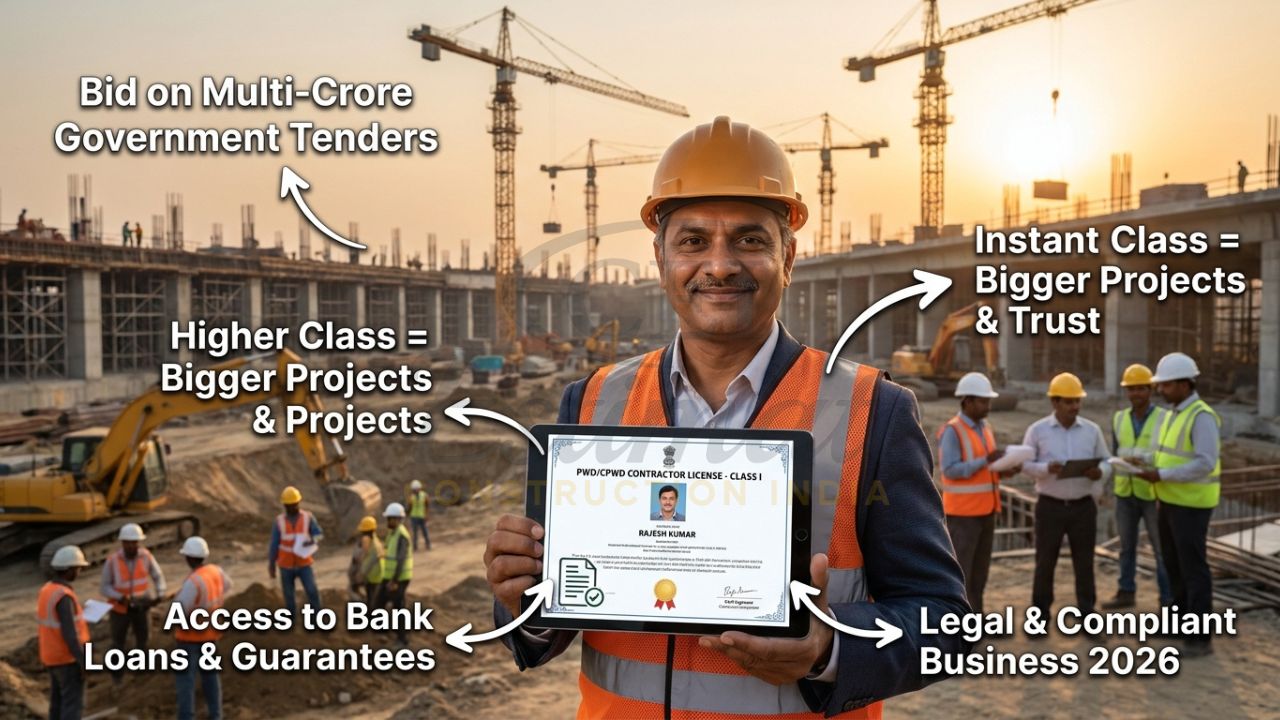
- Access to Bigger Projects: Higher classes (A, B, etc.) allow bidding on multi-crore works.
- Financial Benefits: Easier access to bank loans, performance guarantees, and insurance for government works.
- Market Edge: In a competitive field, PWD contractor registration or CPWD enlistment differentiates you and opens doors to private developers who prefer licensed partners.
Once licensed, you can confidently participate in tenders. Learn what a tender in construction actually means and how it works.
Types of Contractor Licenses in India
India offers multiple license categories tailored to project scale, nature of work, and executing agency.
PWD Contractor Registration Classes (State-level):
- Special Class / Class A: Works above ₹5–10 crore+.
- Class B: Works up to ₹2–5 crore.
- Class C: Medium projects up to ₹1–2 crore.
- Class D/E: Smaller works (₹25 lakh to ₹1 crore).
CPWD Enlistment: Central government level via CEMS portal.
Other Specialized Licenses:
- Building Contractor License India: Covered under PWD/CPWD for civil works.
- Electrical Contractor License: Issued by State CEIG.
- Labour Contractor License: Required under Contract Labour Act when engaging 20+ workers.
Practical tip: Start with the class matching your current turnover and upgrade later.
Eligibility Criteria for Contractor Registration
Eligibility generally includes:
- Indian citizenship or registered company.
- Technical qualification or proven experience.
- Minimum financial turnover and solvency.
- No blacklisting history.
- Required machinery/tools and technical staff.
Documents Required for Contractor License
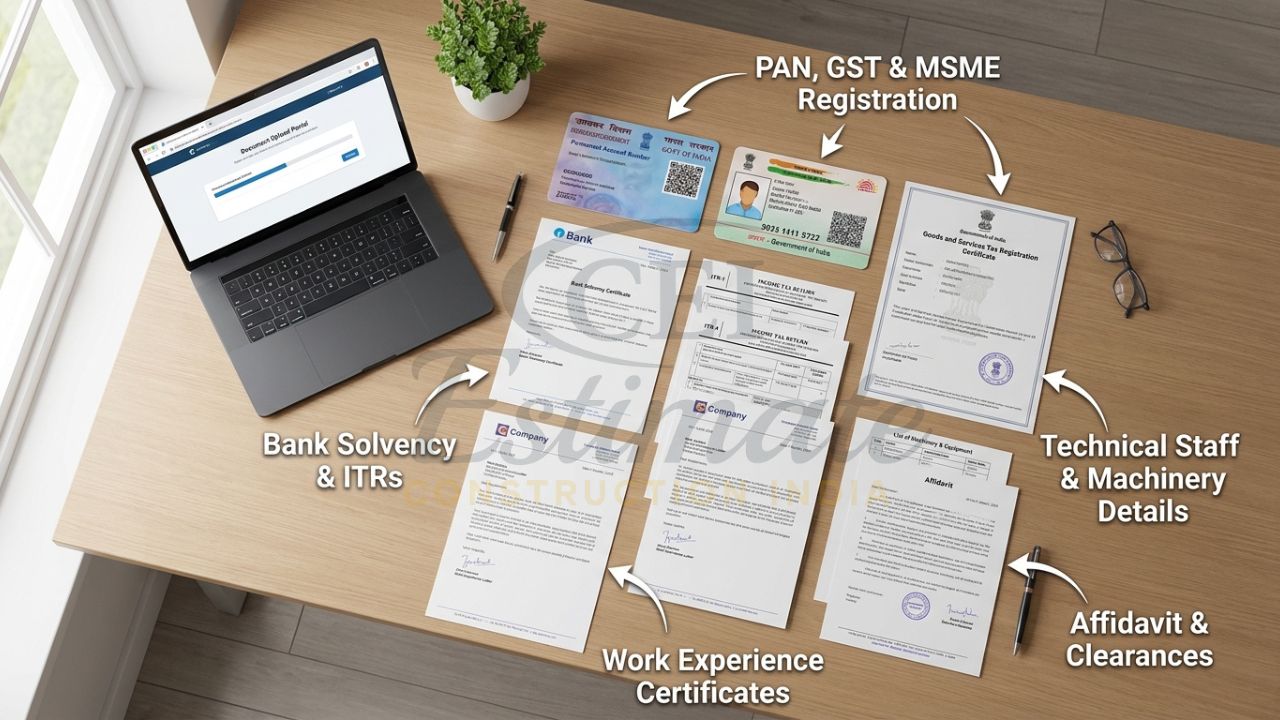
Prepare these scanned, self-attested documents:
- PAN, Aadhaar, photographs.
- GST, MSME/Udyam registration.
- Bank solvency certificate, last 3 years ITRs and balance sheets.
- Work experience certificates.
- Technical staff details and machinery list.
- Affidavit and clearance certificates.
Pro Tip: Keep everything digitally organized for smooth upload.
Step-by-Step Process to Get Contractor License in India
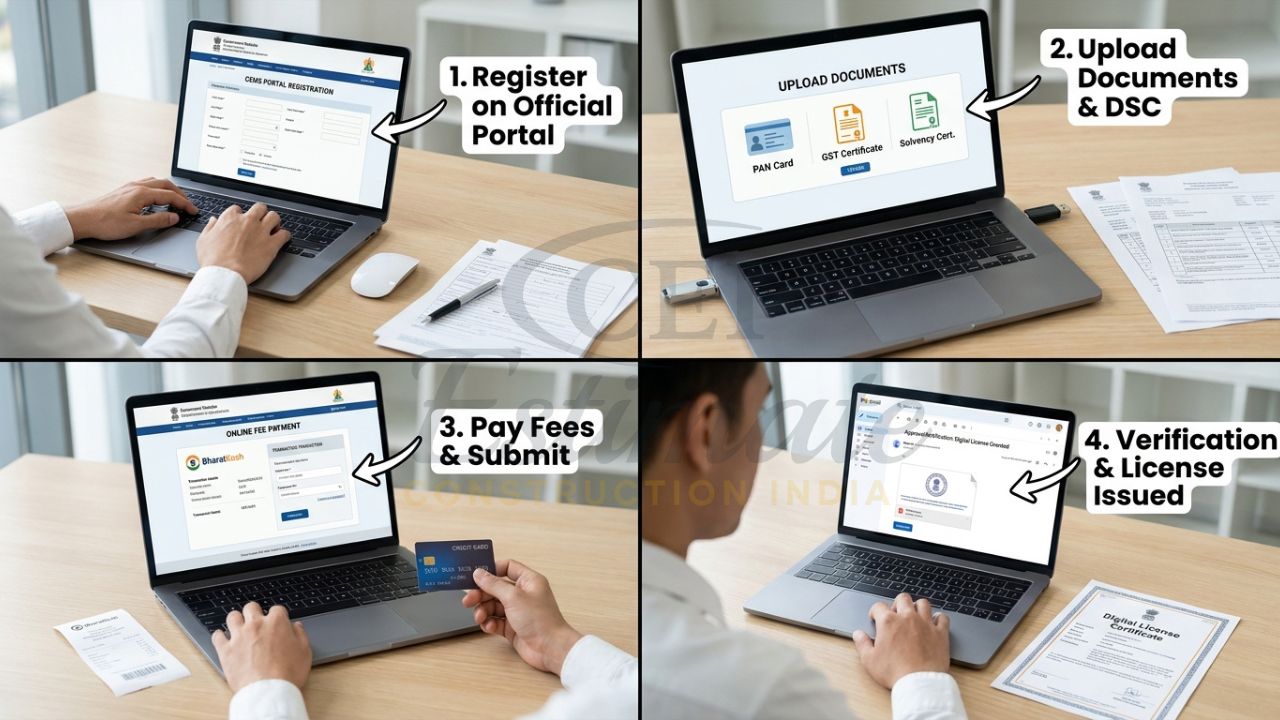
General Online Process:
- Choose the right license type and class.
- Register on the respective portal.
- Fill the application form.
- Upload documents and pay fees.
- Submit and track status.
- Respond to queries and complete verification.
- Receive your digitally signed license.
PWD State-wise Registration: Use state-specific portals with DSC.
CPWD Enlistment through CEMS Portal:
- Visit cems.cpwd.gov.in.
- Register with PAN.
- Fill details and upload documents.
- Pay fee via BharatKosh.
- Submit for approval (2026 rules emphasize performance).
State-wise Variations
- Uttar Pradesh: uppwd.gov.in portal.
- Maharashtra: Strict solvency checks.
- Karnataka: Emphasis on equipment ownership.
- Tamil Nadu, Rajasthan, Delhi: Vary in processing time and documentation.
Always verify the latest 2026 notification on the official website.
Fees, Validity Period & Renewal Process
Fees range from ₹5,000 to ₹1 lakh+ depending on class. Validity is usually 1–3 years. Renew timely with updated documents.
Common Mistakes to Avoid When Applying
- Incomplete documents.
- Applying for higher class without eligibility.
- Ignoring portal-specific formats.
- Delayed responses to queries.
Benefits of Having a Valid Contractor License
A valid license allows you to bid on high-value tenders, improves credibility, and eases access to finance. You can efficiently handle tender documents and prepare strong bids.
It also helps you understand various construction contract agreement formats in India and manage project documentation professionally.
Additional Tips for Success After Registration
Once you have your license, focus on winning and executing projects profitably. Knowing the difference between detailed estimate vs abstract estimate in construction will strengthen your BOQ preparation and cost control.
Many contractors also benefit from using ready-made resources. Explore free vs premium templates to streamline your documentation and estimation process.
Conclusion
The process of obtaining a contractor license in India can be complex and time-consuming, but it is an essential step for any serious construction business looking to grow and take on bigger projects. With proper planning and the right guidance, you can successfully complete the registration and start bidding on profitable government and private tenders.
The best construction management app is the one that fits your workflow, your project scale, and your business goals. In 2026, Indian contractors and builders need tools that improve site tracking, labour attendance, material management, billing accuracy, and documentation while keeping operations simple and efficient.
If you want expert help choosing the right software and connecting it with accurate estimation and BOQ services, contact Construction Estimator India today on WhatsApp +91 8630676890. A better digital workflow can help you reduce delays, improve cost control, and build a more profitable construction business.
FAQs
- How long does the contractor license process in India take?
15–60 days for PWD and up to 90 days for CPWD.
- Can I apply for PWD contractor registration online in 2026?
Yes, most states have fully online portals.
- What is the difference between PWD and CPWD?
PWD is state-specific; CPWD works across India.
- Is experience mandatory for Class D/E?
Basic experience is required.
- How to get electrical or labour contractor license?
Apply separately through respective portals.
- What is CEMS portal?
Centralised system for CPWD enlistment.
- Do I need GST registration?
Yes, in most cases.
- How to prepare for tender bidding after license?
Learn how to fill tender documents step by step in India for better success rate.