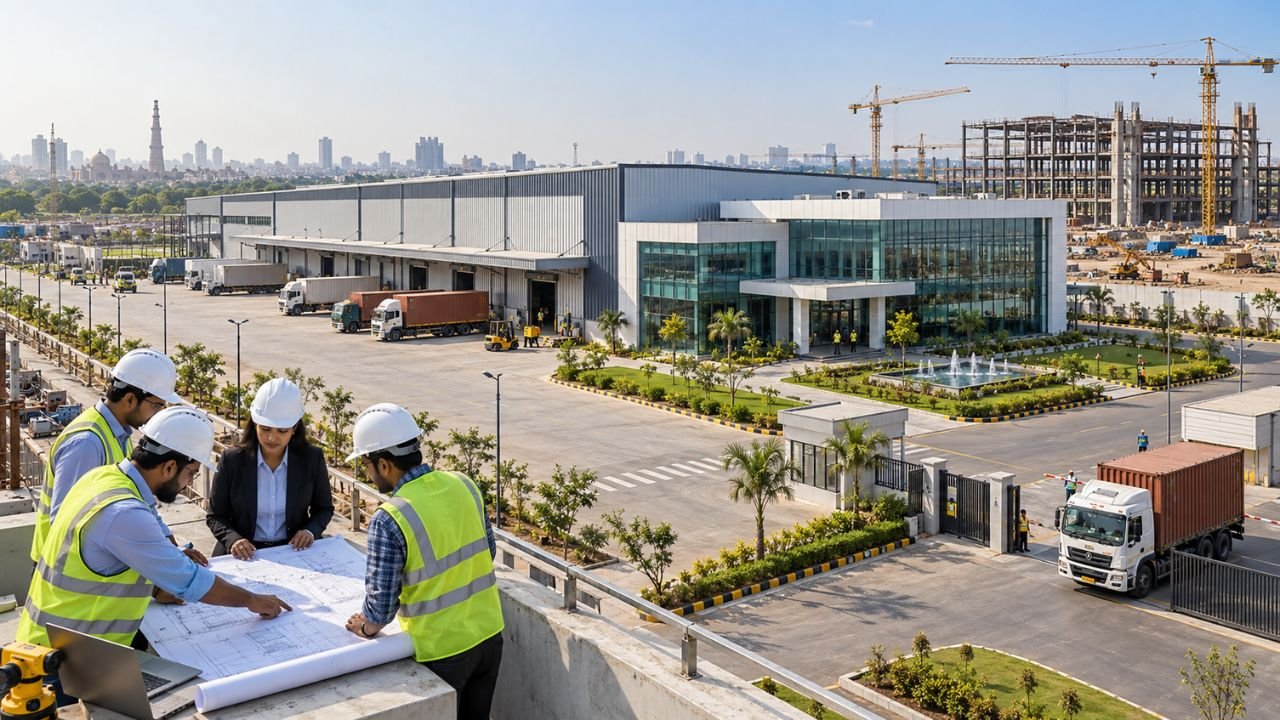
Construction sites in India remain among the most hazardous workplaces. Despite technological progress, fatal accidents continue to occur due to falls, electrocution, scaffold collapses, and excavation failures. In 2026, construction safety rules in India have become stricter with stronger enforcement of the Building and Other Construction Workers (BOCW) Act and updated labour codes. For contractors, builders, and site engineers, compliance is no longer optional — it is essential for legal protection, project continuity, and reputation.
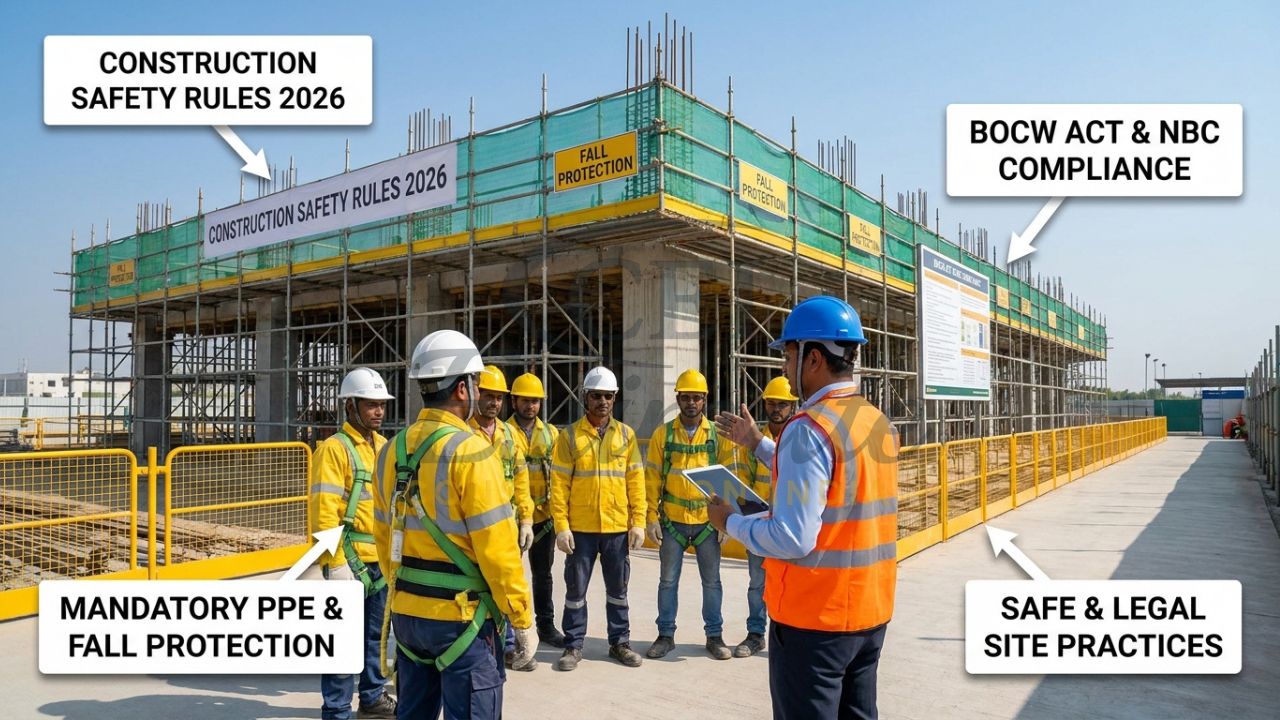
This complete guide explains construction safety norms India, key legal requirements, practical checklists, PPE standards, and high-risk activity protocols. Whether you are a small civil contractor or managing large infrastructure projects, you will find actionable steps to build a safer site and meet 2026 compliance standards.
Why Construction Safety is Critical in India 2026?
India’s construction sector employs over 70 million workers, yet it accounts for a disproportionately high number of workplace fatalities. Poor safety practices lead to:
- Loss of life and permanent disabilities
- Heavy financial penalties and project stoppages
- Blacklisting from government tenders
- Higher insurance premiums and compensation claims
- Damage to company reputation
Strong safety management improves worker morale, reduces delays, and strengthens your position in prequalification in construction tender in India. In 2026, clients and government agencies increasingly demand proven safety records before awarding contracts.
Major Laws and Regulations Governing Construction Safety
The primary laws in 2026 are:
- Building and Other Construction Workers (Regulation of Employment and Conditions of Service) Act, 1996 (BOCW Act) and its Rules
- Occupational Safety, Health and Working Conditions Code, 2020 (implemented with state amendments)
- Factories Act, 1948 (applicable to certain premises)
- Indian Electricity Act & Rules for electrical safety
- DGMS (Directorate General of Mines Safety) guidelines for mining-related construction
- National Building Code (NBC) 2016 (with 2026 updates on fire and structural safety)
RERA authorities also enforce safety compliance for real estate projects.
Key Construction Safety Rules and Standards
Core Mandatory Rules:
- All workers must receive safety induction before starting work.
- Site must display safety signage and emergency contact numbers.
- Daily toolbox talks are compulsory.
- No work at height without proper fall protection.
- Excavation must follow shoring and benching norms.
- Electrical installations require qualified supervision.
Contractors must maintain a Safety Management Plan approved by the client or authority.
Contractor Safety Obligations and Responsibilities
Every contractor has clear legal duties:
- Register under BOCW and contribute to the welfare fund (1–2% of project cost).
- Appoint a qualified Safety Officer for projects above ₹100 crore or 500+ workers.
- Provide safe working conditions, training, and necessary PPE free of cost.
- Report every accident to authorities within prescribed timelines.
- Ensure regular health check-ups for workers.
Understanding the difference between a builder and a contractor is important because safety liability often falls primarily on the executing contractor.
Personal Protective Equipment (PPE) Requirements
Mandatory PPE in 2026 includes:
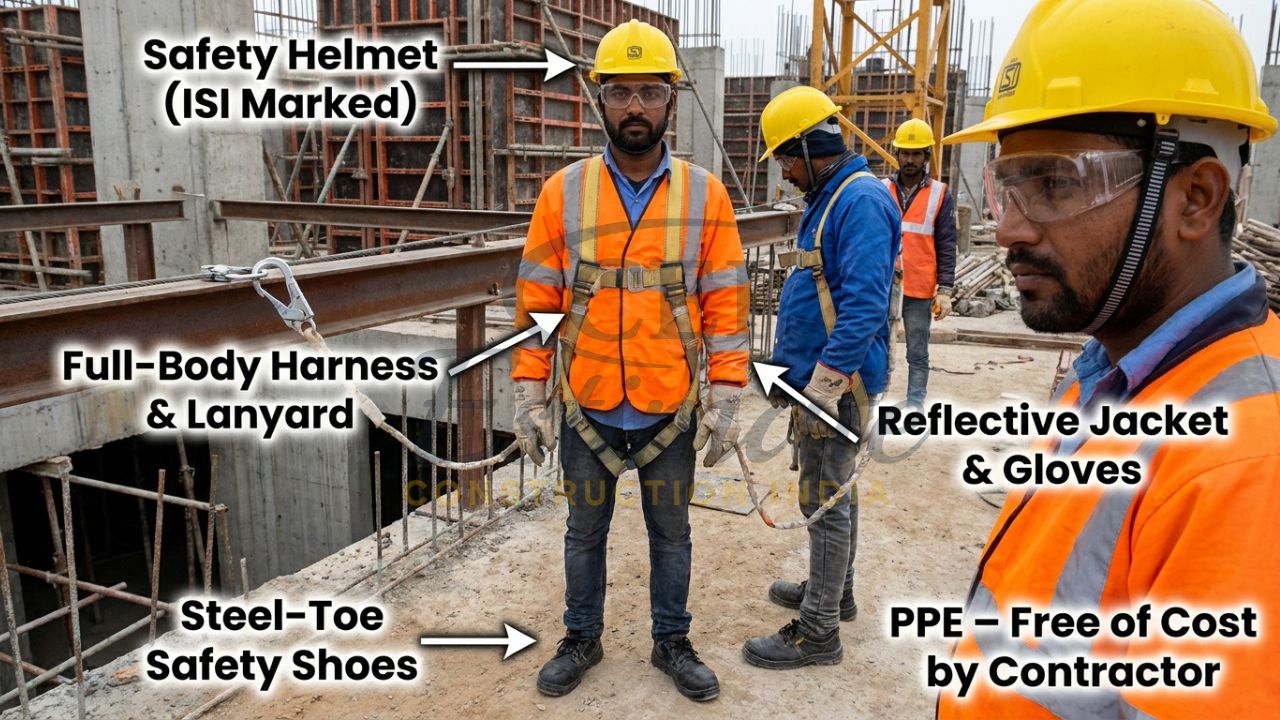
- Head Protection: ISI-marked safety helmets
- Foot Protection: Steel-toe safety shoes with anti-slip soles
- Eye & Face Protection: Safety goggles and welding shields
- Fall Protection: Full-body safety harness with double lanyard
- Hand Protection: Gloves suitable for the task (cut-resistant, electrical, etc.)
- Respiratory Protection: Masks for dust, silica, and chemical work
- High-Visibility Clothing: Reflective jackets for night and highway work
All PPE must be ISI-certified and replaced when damaged.
Site Safety Checklist for Daily Use
Use this practical daily checklist:
| Activity Area | Key Checks |
| Excavation | Shoring, barricading, safe access, no water accumulation |
| Scaffolding | Tag system, stable base, guard rails, tie-ins |
| Working at Height | Harness usage, edge protection, lifeline |
| Electrical | ELCB, proper earthing, no naked wires |
| Material Storage | Proper stacking, no blocking access routes |
| Welfare Facilities | Clean drinking water, toilets, rest sheds |
| Fire Safety | Extinguishers, no smoking zones, clear exits |
| PPE Compliance | All workers wearing required gear |
Site supervisors should mark “Compliant / Non-Compliant” and record corrective action.
Safety Measures for High-Risk Activities
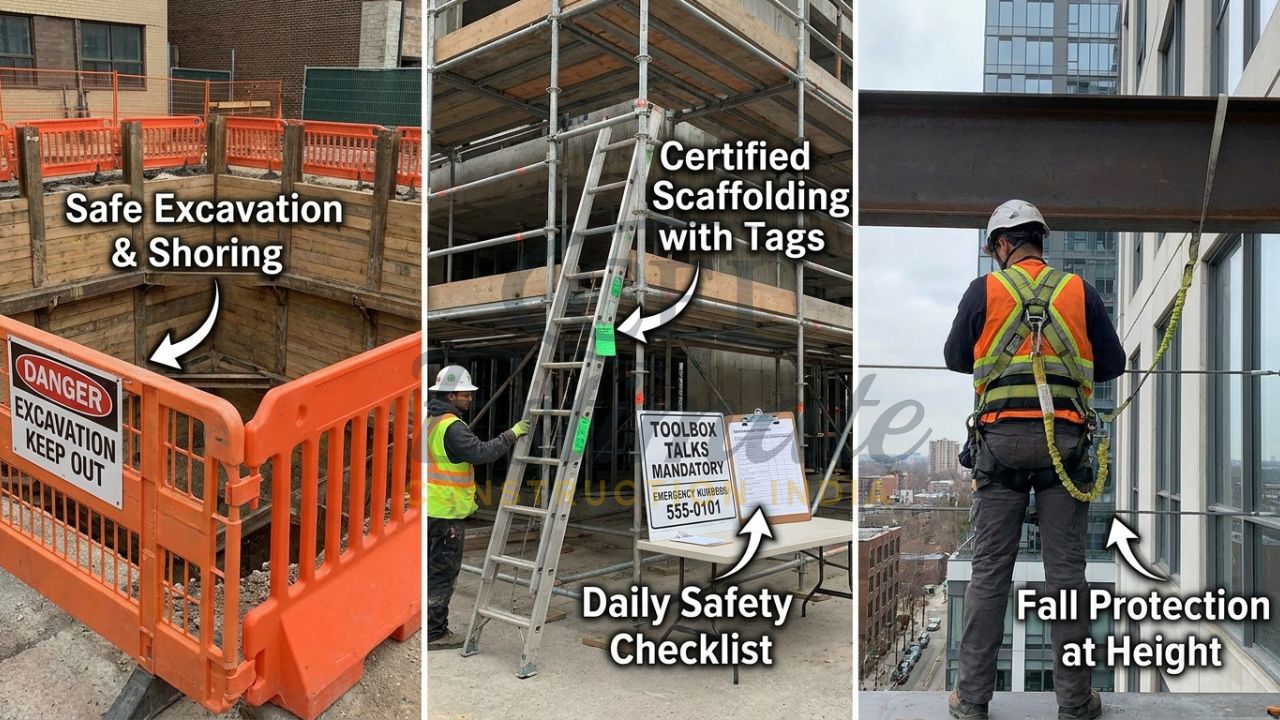
Working at Height
- Use certified scaffolding or mobile elevated work platforms.
- Mandatory fall arrest systems above 2 metres.
Excavation & Trenching
- Maximum depth without shoring as per soil type.
- Daily inspection before work begins.
Electrical Works
- Permit-to-work system.
- Lockout-Tagout (LOTO) procedure.
Hot Works (Welding, Cutting)
- Fire watch for minimum 30 minutes after work.
- Proper ventilation and gas cylinder storage.
Heavy Machinery
- Only licensed operators.
- Reverse alarms and signalmen mandatory.
Training, Records & Emergency Preparedness
- Conduct induction, skill-specific, and refresher training.
- Maintain training records, accident registers, and inspection logs.
- Prepare and display emergency response plan with nearest hospital details.
- Conduct mock drills every three months.
Common Safety Violations, Penalties & Legal Consequences
Common violations in 2026:
- Working without PPE
- Unsafe scaffolding and lack of fall protection
- No safety officer or inadequate welfare facilities
- Failure to report accidents
Penalties range from ₹2 lakh to ₹25 lakh per violation. Repeated offences can lead to imprisonment and debarment from tenders. Understanding bid documents in construction explained and tender notice meaning in construction helps contractors identify safety clauses early.
Latest Technology and Best Practices for Safety Management in 2026
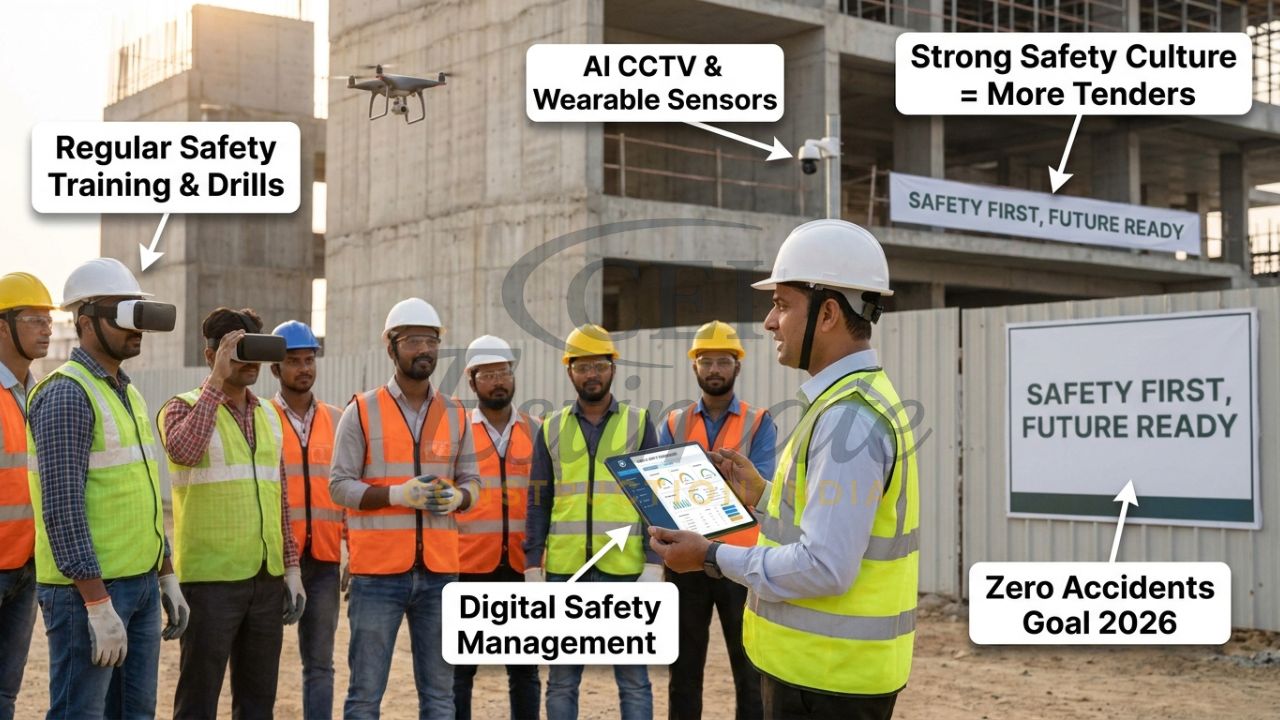
- Wearable sensors for real-time fall detection and fatigue monitoring
- AI-powered CCTV with hazard recognition
- Drone surveillance for large sites
- Digital safety management apps for reporting and audits
- VR-based safety training modules
These tools help reduce human error and improve documentation.
How to Implement a Strong Safety Culture?
- Lead by example from top management.
- Reward safe behaviour.
- Integrate safety into detailed estimate vs abstract estimate in construction for proper budgeting.
- Conduct regular audits and management reviews.
- Use quality best BOQ templates for interior works in India that include safety provisions.
Conclusion
Following construction safety rules in India is not just a legal requirement — it is a moral and business necessity in 2026. Contractors who prioritize safety reduce accidents, avoid heavy penalties, improve project efficiency, and win more tenders.
The best construction management app is the one that fits your workflow, your project scale, and your business goals. In 2026, Indian contractors and builders need tools that improve site tracking, labour attendance, material management, billing accuracy, and documentation while keeping operations simple and efficient.
If you want expert help choosing the right software and connecting it with accurate estimation and BOQ services, contact Construction Estimator India today on WhatsApp +91 8630676890. A better digital workflow can help you reduce delays, improve cost control, and build a more profitable construction business.
FAQs
- What are the main construction safety rules in India?
Key rules come under BOCW Act, OSHA Code 2020, and NBC, focusing on PPE, training, and site safety.
- Is it mandatory to appoint a Safety Officer?
Yes, for larger projects (usually above ₹100 Cr or 500 workers).
- Who is responsible for site safety — builder or contractor?
The executing contractor holds primary responsibility, though the client has oversight duty.
- What PPE is mandatory for all workers?
Helmet, safety shoes, and reflective jacket are minimum requirements.
- How often should safety training be conducted?
Induction at joining + monthly toolbox talks + refresher every 6 months.
- What is the penalty for safety violations?
Fines from ₹2 lakh upwards plus possible imprisonment and blacklisting.
- Are safety rules different for government and private projects?
Government projects usually have stricter monitoring and documentation requirements.
- How can small contractors manage safety compliance?
Start with basic PPE, daily checklists, and gradual implementation of digital tools.
- Is BOCW registration mandatory?
Yes, for all construction establishments employing 10 or more workers.
- Does good safety record help in winning tenders?
Yes, many tenders now give weightage to safety performance and ISO 45001 certification.