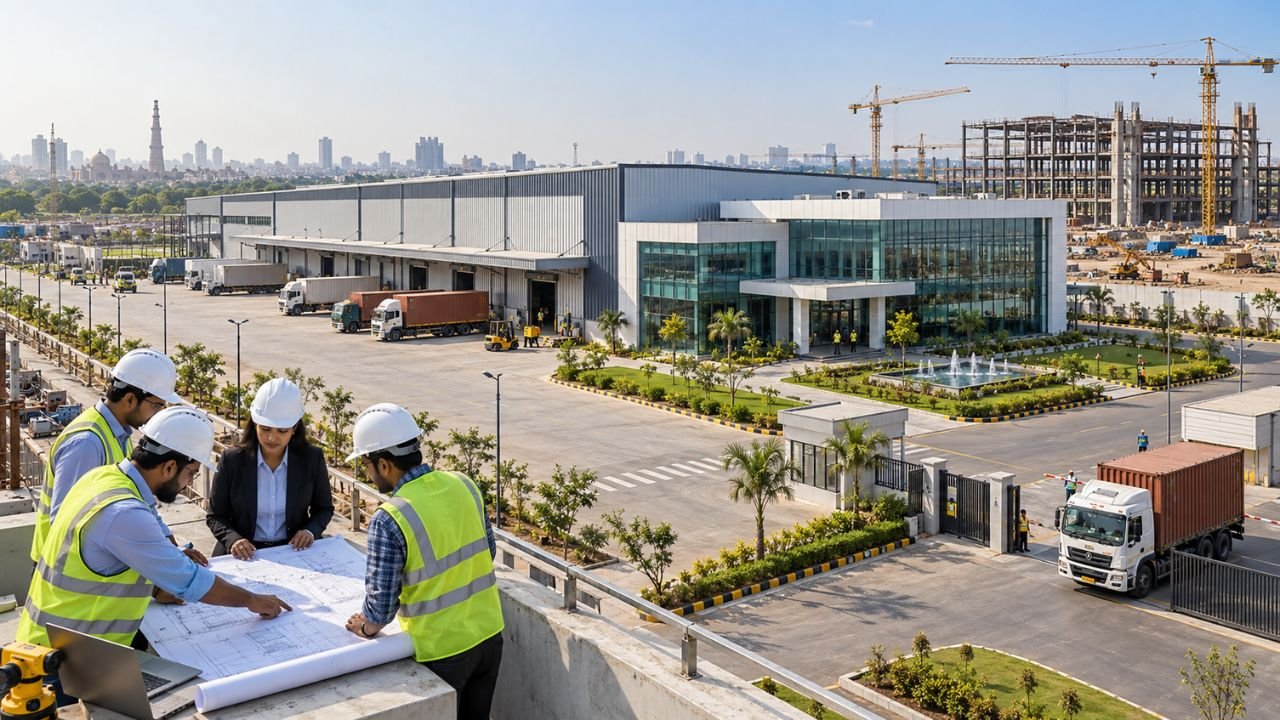
A few months ago, I met a homeowner in Gurgaon named Ramesh who was building his dream 3BHK villa. He had planned his budget meticulously, or so he thought. When it came to the electrical work, he set aside ₹1.5 Lakh based on a “rough guess” from a neighbor’s project built three years ago. By the time the conduits were laid and the first batch of FR (Flame Retardant) copper cables arrived at the site, Ramesh had already crossed his budget, and he hadn’t even purchased the modular switches or the distribution boards yet.
This is a story I see repeated across India, from Noida to Bangalore. In 2026, electrical cost estimation for house and commercial projects in India is no longer a matter of guesswork. With copper prices fluctuating globally and labor rates seeing an annual hike of 8% to 12%, an inaccurate estimate can lead to a 25% budget overrun or, worse, compromised safety. Whether you are a builder handling a multi-story commercial complex or a homeowner planning a small renovation, understanding the “how” and “why” of electrical pricing is critical to project success.
Understanding Electrical Cost Components in Indian Projects
Before we dive into the per-square-foot numbers, we must understand what exactly makes up an electrical bill. In the Indian context, electrical work typically accounts for 10% to 18% of the total construction cost. If you are seeing a quote significantly lower than this, it is a red flag that quality or safety is being sacrificed.
The costs are generally divided into two major buckets: Materials (approx. 60%) and Labor (approx. 40%). Here is a breakdown of the major components you will encounter:
- Conduits and Pipes: Often the first step, where PVC pipes are laid inside slabs and walls.
- Wires and Cables: The most volatile cost component. Using ISI-marked, FR copper cables is non-negotiable for safety.
- Modular Switches and Sockets: This is where aesthetics meet cost. Brands like Havells, Schneider, or Legrand offer ranges from basic to ultra-premium.
- Distribution Boards (DB) and Protection: Includes the main panel, MCBs (Miniature Circuit Breakers), and RCCBs (Residual Current Circuit Breakers) to prevent shocks and fires.
- Earthing and Lightning Protection: Critical for protecting expensive electronics and the building structure.
- Labor Charges: Usually billed per “point” (e.g., one light switch and one bulb holder equals one point) or per square foot for large projects.
- Government Taxes: Don’t forget the 18% GST on both materials and labor, which many local contractors fail to mention in their initial quotes.
Electrical Cost Estimation for New House Construction
When planning a residential project, the scale and luxury level of the build dictate the final price. For a standard 1,000-square-foot home in 2026, the total expenditure generally falls between ₹1.2 Lakh and ₹2.8 Lakh. If you are looking for a more comprehensive breakdown, learning how to estimate electrical cost for new construction in India is the first step toward a realistic budget.
Residential Budget Breakdown by House Size
| House Type | Approx. Area (Sq Ft) | Estimated Cost (2026) | Typical Load Requirements |
|---|---|---|---|
| 1 BHK Flat | 500 – 700 | ₹65,000 – ₹95,000 | 3kW – 5kW |
| 2 BHK Apartment | 900 – 1,200 | ₹1,10,000 – ₹1,85,000 | 5kW – 7kW |
| 3 BHK House | 1,500 – 1,800 | ₹2,10,000 – ₹3,50,000 | 7kW – 10kW |
| Luxury Villa | 3,000+ | ₹5,50,000 – ₹12,00,000+ | 15kW+ (Includes Automation) |
For luxury villas, costs escalate because of the density of points. A modern kitchen alone might have 10-12 points for various appliances (chimney, microwave, RO, mixer, fridge, etc.), each requiring heavy-duty wiring. Furthermore, premium residential projects often include specialized sub-DBs for high-load appliances like air conditioners to ensure the main circuit isn’t overloaded.
Electrical Cost Estimation for Commercial Buildings
Estimating for a commercial space is a different beast entirely. Unlike a home, where the load is relatively predictable, a commercial building’s requirements depend on its function. An office space with 100 computers and a server room has vastly different needs than a warehouse or a retail showroom.
For commercial projects, electrical work often represents 12% to 22% of the total construction cost. Developers frequently underestimate this, leading to project delays. If you are a contractor or developer, you should refer to our detailed guide on how to estimate electrical cost for commercial building in India to avoid these pitfalls.
Commercial Sector Cost Benchmarks
- Mid-range Offices: Costs range from ₹260 to ₹380 per square foot. This includes LAN cabling, workstations, and lighting.
- Hospitals and Healthcare: These are the most expensive, often reaching ₹750 per square foot due to the need for redundant power systems, specialized earthing, and heavy medical equipment loads.
- Retail/Malls: Typically focus heavily on aesthetics and HVAC integration, ranging from ₹300 to ₹500 per square foot.
Key factors like HVAC loads, fire alarm systems, and emergency lighting must be factored into the Bill of Quantities (BOQ). We also recommend including a 10% to 15% contingency for scope changes, which are common in commercial fit-outs.
Electrical Wiring Cost Per Square Foot in India 2026
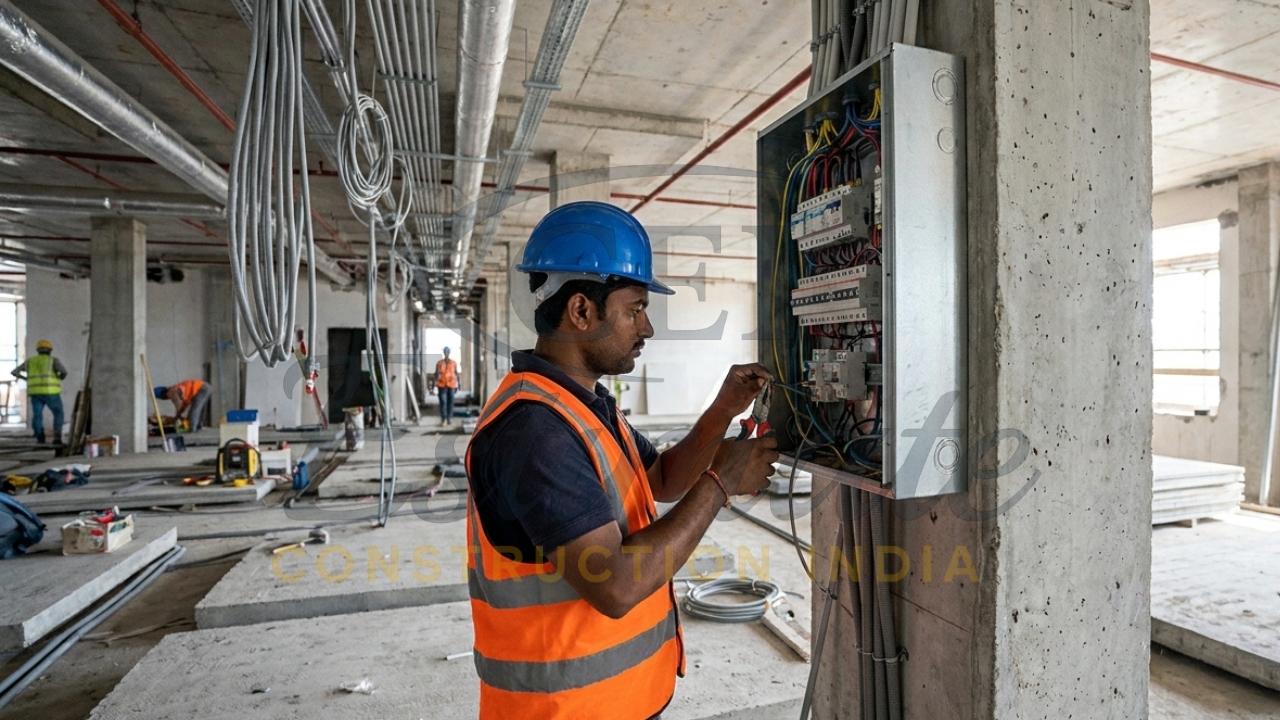
The most common question I get asked is: “What is the per square foot rate?” While point-based pricing is popular for labor, square foot rates are better for overall budgeting. In 2026, realistic rates for mid-range setups are between ₹110 and ₹180 per square foot.
To get the most accurate local data, check our latest update on the electrical wiring cost per square foot in India.
Why are rates increasing in 2026?
- Copper Prices: The shift toward electric vehicles and renewable energy has kept copper demand high, causing wire prices to rise by 8% to 12% annually.
- Labor Scarcity: Skilled electricians who can handle complex smart home integrations or high-voltage commercial panels are in high demand, leading to labor rate hikes.
- Safety Mandates: Newer building codes often mandate the use of zero-halogen wires and high-sensitivity RCCBs, which carry a premium over basic materials.
Pro-Tip: Always choose concealed wiring over surface-mounted wiring for new builds. While surface wiring is cheaper, concealed wiring is safer, more durable, and provides a much cleaner aesthetic for modern Indian interiors.
Electrical Panel and DB Cost Estimation
The electrical panel is the “heart” of your building’s wiring system. It is responsible for safely distributing power from the utility supply to various circuits while protecting against overloads.
For a typical 1000–1500 sq ft house, the total cost for all necessary panels and distribution boards (DBs) generally ranges between ₹45,000 and ₹75,000. However, this can vary wildly based on the components inside. For a detailed breakdown of components and brands, visit our page on electrical panel cost estimation in India.
Factors Influencing Panel Costs:
- Phase Type: Three-phase power panels are more expensive than single-phase but are necessary for houses with multiple ACs or heavy machinery.
- Brand Selection: Choosing premium brands like Schneider or ABB can increase costs by 30-50% compared to value-oriented options like Havells.
- Circuit Protection: Including specialized components like surge protection devices (SPDs) for lightning-prone areas or Arc Fault Detection Devices (AFDDs) will add to the initial cost but save your electronics in the long run.
How to Make Accurate Electrical Estimates – Step-by-Step Guide?
If you want to avoid Ramesh’s mistake and stay on budget, follow this professional 2026 estimation workflow:
- Obtain Scaled Drawings: You cannot estimate accurately without architectural and MEP (Mechanical, Electrical, and Plumbing) drawings.
- Categorize Your Load: List every appliance. Don’t forget future-proofing—add provisions for EV charging stations and solar-ready panels.
- Perform a Material Takeoff: Count every meter of wire, every conduit, and every switch box.
- Check Local Labor Rates: In 2026, labor for concealed wiring in areas like Delhi NCR is approximately ₹40-50 per point.
- Use Professional Tools: For contractors managing multiple sites, manual spreadsheets are a recipe for disaster. Using specialized ERP software for electrical contractors in Delhi NCR can help you handle complex takeoffs, track material waste, and speed up your quoting process by 2X.
- Add GST and Contingency: Always add 18% GST and a 10-15% buffer for price spikes or design changes.
Average Electrical Work Cost Estimates in India
To summarize the current market trends, here is a quick-reference table for electrical work average cost estimates in India for the year 2026.
| Component / Project Type | Estimated Rate (2026) | Notes |
|---|---|---|
| Residential (Basic) | ₹75 – ₹100 per sq ft | Standard materials, basic switches. |
| Residential (Mid-range) | ₹110 – ₹180 per sq ft | Brand name wires, modular switches. |
| Residential (Premium) | ₹250 – ₹320+ per sq ft | Home automation, luxury fixtures. |
| Commercial (Office) | ₹260 – ₹380 per sq ft | Includes LAN and server room power. |
| Commercial (Hospital) | ₹550 – ₹750 per sq ft | Redundant systems, medical-grade DBs. |
| Labor Only | ₹40 – ₹60 per point | Varies by city and complexity. |
Frequently Asked Questions (FAQs)
- Is it safe to use aluminum wiring to save costs?
No. We strongly advise against aluminum wiring for internal house circuits due to fire risks. Copper is much more durable and conductive, making it the industry standard for safety. - Does the 18% GST apply to both labor and materials?
Yes, in the organized sector, GST is applicable to both. Always ensure your contractor’s quote specifies whether it is inclusive or exclusive of tax. - How much extra should I budget for a renovation project?
Renovations are often more expensive than new construction because of the need to chase old walls and integrate with existing systems. Expect a 15% to 30% premium over standard rates. - What are the best brands for electrical wires in India?
Polycab, Finolex, and Havells are widely considered the top choices for residential and commercial projects due to their ISI certifications and reliable FR (Flame Retardant) properties. - How many points should I have in a standard bedroom?
A typical 2026 standard bedroom includes: 2 lights, 1 fan, 1 AC point, 2 bedside 5A sockets, 1 TV point, and 1 charging point near the study table. - Is home automation included in the per-square-foot rates?
Generally, no. Standard estimates cover traditional wiring. Smart home features like automated lighting, motorized curtains, and smart locks are usually quoted separately as an add-on. - Can ERP software really help a small contractor?
Absolutely. Even for small firms, ERP tools help reduce material waste by up to 20% and ensure that every change order is billed to the client, protecting your profit margins. - Why is earthing so important in Indian homes?
India experiences frequent voltage fluctuations and lightning during monsoons. Proper earthing protects your expensive appliances (like OLED TVs and Inverter ACs) from being fried by surges.
Conclusion
Accurate electrical cost estimation for house and commercial projects in India is the foundation of a stress-free construction experience. In 2026, the combination of rising material costs and technological advancements like EV charging and smart homes means that “rough guesses” simply won’t cut it.
Whether you are building your family home or a commercial complex, remember that safety is the best investment you can make. Always insist on ISI-marked FR copper cables, never skip on proper earthing, and demand an itemized Bill of Quantities (BOQ) from your contractor. For professionals, adopting digital tools like ERP software is no longer optional—it is a necessity to stay competitive in the fast-growing Indian construction market.
Ready to get a precise estimate for your next project? Use our professional estimation services at Construction Estimator India to ensure your project stays on track and within budget.