
Imagine moving into your dream home after years of planning and a significant financial investment. For the first few months, the walls look pristine—a smooth, buttery canvas for your interior decor. But as the first summer hits or a year passes, you notice thin, spider-web-like lines appearing across your living room wall. Within weeks, these hairline fractures grow into unsightly cracks that even the most expensive premium paint cannot hide. This is the heartbreaking reality for many homeowners in India, like Mr. Sharma from Noida, who realized too late that his contractor used high-strength OPC 53 grade cement for plastering just because it was “stronger” for the foundation.
In the world of construction, “stronger” does not always mean “better.” Plastering is a protective and decorative layer, not a load-bearing one. Therefore, the physics and chemistry required for a stable wall finish are entirely different from those needed for a bridge or a column. Understanding why choosing the right cement for plaster work is critical for crack-free walls is the single most important step you can take to ensure the longevity and aesthetic beauty of your home. As an experienced civil engineer, I have seen thousands of square feet of plaster ruined simply because the wrong material was chosen at the start.
What Happens When You Choose the Wrong Cement for Plastering?
Choosing the incorrect cement for your walls is like wearing a stiff, non-breathable fabric in the middle of an Indian summer; eventually, something has to give. When the wrong cement grade or type is applied to your walls, the structural integrity of the finish is compromised almost immediately, though the visual evidence may take weeks to surface.
The most common issue is hairline cracks, also known as crazing. This occurs when the cement generates too much heat during its setting process (hydration), causing the surface to shrink faster than the underlying layer. If you use a cement that is too “hot,” such as OPC 53, the rapid evaporation of moisture leads to shrinkage cracks. These cracks are not just an eyesore; they are entry points for moisture.
Furthermore, you might experience surface peeling or delamination. If the cement lacks proper adhesion properties or is too coarse, it won’t bond effectively with the brickwork or the concrete surface. Over time, patches of plaster may sound hollow when tapped and eventually fall off. Another significant problem is a poor, sandy finish. Wrongly chosen cement often requires more water for workability, which weakens the final structure and results in a surface that sheds sand particles when touched. In the long run, these issues lead to dampness, efflorescence (white powdery deposits), and the total failure of the paint system, necessitating expensive and messy re-plastering work.
Why Cement Quality Matters So Much in Plaster Work
Cement is the “glue” that holds your plaster together. While sand provides the bulk and volume, cement provides the bonding strength and the protective barrier against the environment. The quality of cement for plaster work determines three critical factors: Adhesion, Shrinkage Control, and Durability.
- Bonding and Adhesion: A high-quality cement ensures that the mortar sticks to the masonry or concrete surface without sagging. It creates a monolithic bond that resists the stresses caused by temperature fluctuations.
- Workability: Good cement creates a “fatty” or “plastic” mortar. This allows the mason to spread the plaster smoothly and evenly. If the cement is of poor quality or has begun to set in the bag (lumpy cement), the workability drops, leading to an uneven thickness which is a primary cause of future cracks.
- Heat of Hydration: This is a technical term for the heat released when cement reacts with water. For plaster, we need a cement that releases heat slowly. High-heat cement causes the water to evaporate too quickly, leading to the dreaded shrinkage cracks.
- Density and Water Resistance: Plaster is your home’s first line of defense against rain. A high-quality, fine-particled cement creates a dense matrix that prevents water from seeping into the bricks and causing dampness inside your rooms.
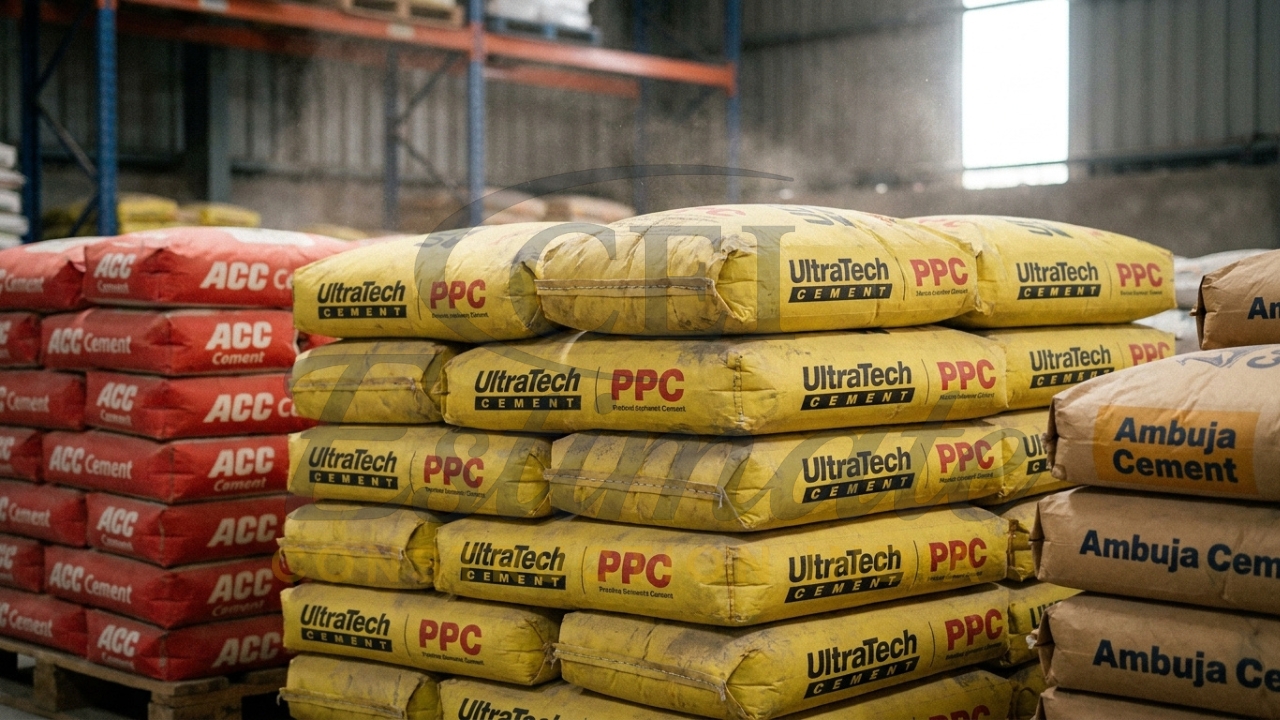
Main Causes of Plaster Cracks Related to Cement Choice
Understanding the specific reasons why cracks appear can help you prevent them during the construction phase. Most plastering failures in India are directly linked to the following five factors.
1. Using OPC 53 Grade for Plastering
This is the most common mistake in Indian construction. Ordinary Portland Cement (OPC) Grade 53 is designed for high-strength requirements like slabs, columns, and beams. Because it is ground very fine and has a high tricalcium silicate content, it sets very quickly and generates immense heat. When used in a thin layer (like 12mm or 15mm plaster), it dries out too fast, resulting in extensive map cracking.
2. Wrong Cement-to-Sand Ratio
Homeowners often think that adding more cement makes the plaster “stronger.” In reality, a “rich mix” (too much cement) is highly prone to cracking because the cement undergoes more shrinkage. Conversely, a “lean mix” (too little cement) results in a weak, crumbly wall that lacks adhesion. Finding the balance is key to crack-free plaster walls.
3. Poor Quality or Adulterated Cement
Using “local” or unbranded cement to save a few thousand rupees is a recipe for disaster. Such cements often contain excessive silt or unburnt lime, which expands over time, causing “blows” or “pops” on the finished wall surface. Always ensure the cement is fresh and free from lumps.
4. Ignoring Environmental Conditions
The requirements for interior vs exterior plaster cement differ. Exterior walls face the brunt of the sun and rain. Using a cement that lacks water-repellent properties for the exterior can lead to deep structural cracks over time.
5. Fast Drying and Poor Curing
If the cement’s chemistry doesn’t allow for a controlled drying time, the water needed for chemical bonding (hydration) is lost. This is often exacerbated by not curing the walls (watering them) properly.
Table 1: Common Causes of Cracks and Their Solutions
| Cause of Cracking | Impact on Wall | Professional Mitigation Strategy |
|---|---|---|
| High Heat Grade (OPC 53) | Extensive map cracks | Switch to PPC or PSC for lower heat release. |
| Rich Mix (e.g., 1:2 ratio) | High shrinkage cracks | Use 1:4 for interiors and 1:6 for exteriors. |
| Quick Drying | Hairline surface cracks | Ensure 7-10 days of continuous curing. |
| Smooth Concrete Surfaces | Delamination/Peeling | Use “hacking” (making dents) or bonding agents. |
| Temperature Swings | Expansion cracks | Use fiber-reinforced cement or PPC. |
PPC vs OPC Cement for Plastering – Which One is Better?
One of the most debated topics among builders is PPC vs OPC for plastering. While both are types of cement, their chemical composition makes them suitable for different tasks.
Ordinary Portland Cement (OPC) is the traditional choice. It gains strength quickly but has a high risk of shrinkage. In 2026, experts generally recommend avoiding OPC for plastering unless you are working on a project with an extremely tight deadline where strength must be achieved in 2-3 days. Even then, only OPC 43 should be considered.
Portland Pozzolana Cement (PPC), on the other hand, is the gold standard for best cement for wall plastering. PPC contains pozzolanic materials like fly ash. This fly ash makes the cement particles finer, filling the microscopic voids in the plaster. PPC has a lower heat of hydration, which means it sets slowly and coolly, drastically reducing the risk of cracks. It also offers better workability, giving the mason more time to achieve a smooth finish.
Table 2: Technical Comparison – PPC vs. OPC for Plaster Work
| Feature | Portland Pozzolana Cement (PPC) | Ordinary Portland Cement (OPC) |
|---|---|---|
| Heat of Hydration | Low (Minimal Cracks) | High (Prone to Cracks) |
| Workability | Excellent (Smooth Finish) | Moderate |
| Curing Period | 10 – 14 Days | 7 – 10 Days |
| Long-term Strength | Higher (Increases over time) | Stabilizes early |
| Eco-Friendliness | High (Uses fly ash) | Low |
| Best For | Residential Plastering | Heavy RCC Structures |
Best Practices for Crack-Free Plaster Work in 2026
Achieving a flawless finish requires more than just buying the right bag; it requires a disciplined application process.
- Surface Preparation: Before applying the mortar, ensure the brickwork is wet. If the bricks are dry, they will suck the moisture out of the cement mortar, leading to immediate cracking.
- The Right Mix: For internal walls, a ratio of 1:4 (one part cement to four parts sand) is ideal. For external walls, a 1:6 ratio is often sufficient as it allows for better flexibility during thermal expansion.
- Sand Selection: Use clean, silt-free river sand or high-quality crushed sand (M-Sand). Excessive silt in sand interferes with the cement’s bonding.
- Layer Thickness: Never apply more than 15mm of plaster in a single coat. If a thicker layer is needed (e.g., for leveling), apply it in two coats with a gap of at least 24 hours.
- Curing: This is the most neglected step. You must water your plastered walls at least twice a day for a minimum of 7 to 10 days. This ensures the cement achieves its full chemical potential.
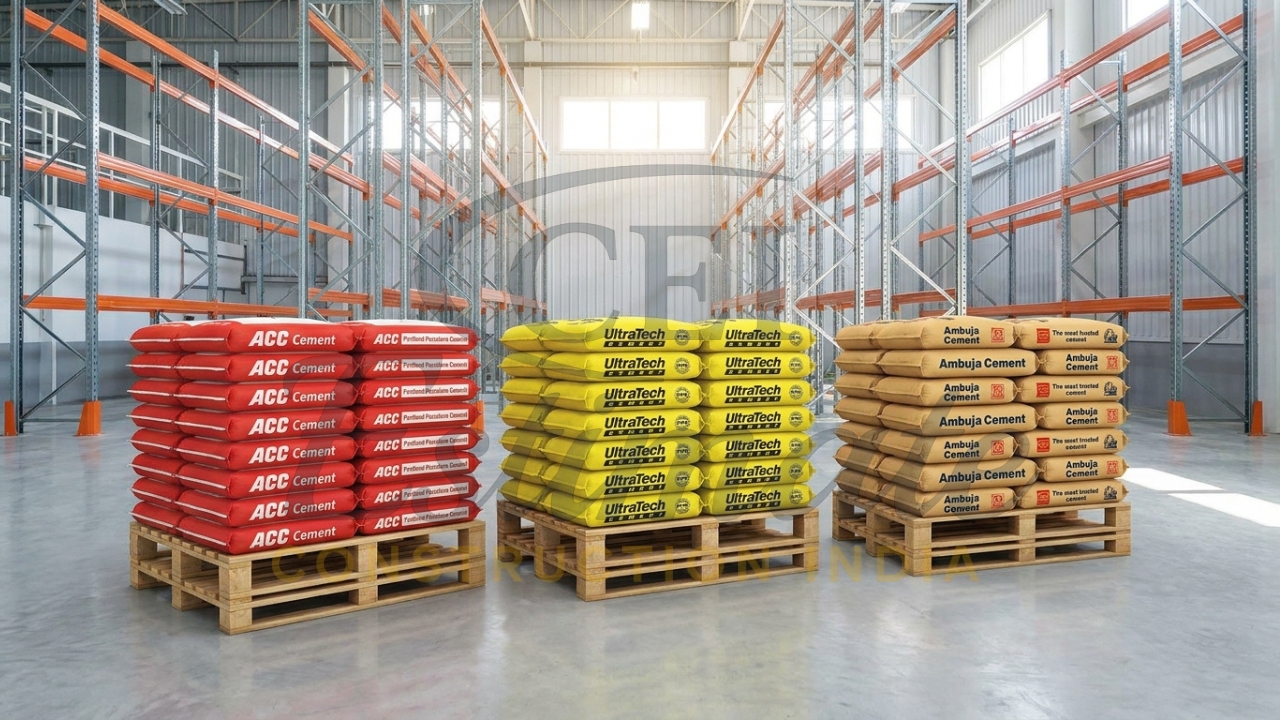
Top Cement Recommendations for Plastering in India
When looking for the best cement for plastering in India, you should look for brands that offer specialized products for masonry. Based on current market performance and structural feedback for 2026, here are the top choices.
To understand the nuances of selection, you can read our detailed guide on which cement is best for plaster work. Brands like UltraTech Super, ACC Gold (Water Shield), and Ambuja Kawach are leading the market because they incorporate water-repellent properties and finer particle sizes.
If you are looking for a comprehensive list of market leaders, check out our rankings for the top 10 cement for plastering in India. For most residential projects, PPC is the undisputed king. We have analyzed various grades and environmental factors to determine which cement is best for plastering in different climatic zones of the country.
Finally, for those building in regions with high humidity or heavy rainfall, choosing the right brand is even more vital. Learn more about which cement is best for plastering walls in India to ensure your exterior walls remain damp-proof and beautiful for decades.
Frequently Asked Questions (FAQs)
- Can I use OPC 53 for wall plastering?
It is highly recommended to avoid OPC 53 for plastering. Its high heat of hydration and rapid setting time almost always lead to hairline cracks on the surface. PPC is a much safer and more durable choice. - What is the ideal cement-to-sand ratio for interior walls?
The standard ratio for interior plastering is 1:4. This provides the perfect balance of strength and flexibility to prevent cracking. - Is PPC better than OPC for exterior plaster?
Yes, PPC is generally better for exterior plaster because it is more resistant to chemical attacks and has lower permeability, which protects the structure from rainwater seepage. - How many days should I cure the plaster?
You should cure the plaster for at least 7 to 10 days. In hot and dry climates, extending this to 14 days is beneficial to ensure the cement doesn’t dry out too quickly. - Why are there cracks in my plaster even after using good cement?
Cracks can also be caused by poor sand quality (high silt content), lack of curing, or applying too thick a layer at once. Ensure the mason follows all best practices. - Do I need to use chicken mesh for plastering?
Yes, chicken mesh should be used at the joints between RCC (columns/beams) and masonry (bricks). These materials expand and contract at different rates, and the mesh helps prevent cracks at these junctions. - Is “Waterproof Cement” necessary for plastering?
While not strictly necessary for interior walls, using a water-repellent cement like ACC Gold or Ambuja Kawach for exterior walls and bathrooms is a wise investment to prevent future dampness. - Can I mix two different brands of cement for plastering?
No, you should never mix different brands or types of cement. Each brand has a slightly different chemical composition, and mixing them can lead to unpredictable setting times and weakened bonding. - How do I know if the cement is fresh?
Check the manufacturing date on the bag. Cement should ideally be used within 3 months of the date of manufacture. Also, ensure there are no hard lumps inside the bag.
Conclusion
At the end of the day, your home is more than just bricks and mortar; it is a sanctuary. Small decisions made during the construction phase—like selecting the right grade of cement—determine whether that sanctuary remains a source of pride or a source of constant repair bills. Why choosing the right cement for plaster work is critical for crack-free walls boils down to the simple science of hydration and shrinkage. By opting for a high-quality PPC or PSC cement and ensuring proper application and curing, you can achieve walls that are as durable as they are beautiful.
Don’t let your investment crumble under the weight of poor material choices. Be proactive, consult with your engineer, and always insist on the best cement specifically formulated for plastering. For a long-lasting, crack-free finish, the right cement is not an expense—it is your home’s best insurance policy.