If you’ve ever seen hairline cracks within 6 months, hollow sound when tapping the wall, or paint peeling after 1–2 years — the problem usually isn’t the mason. It’s the cement selection.
In 2026, with rising material costs and tighter budgets, choosing the wrong cement for plastering walls can lead to repeated repairs, client dissatisfaction, and long-term structural issues. Whether you’re a contractor in Delhi NCR, a house builder in Uttar Pradesh, or a renovation team in Rajasthan, selecting the right cement is the foundation of smooth, durable, crack-free plaster.
Let’s break it down professionally — based on field performance, contractor feedback, and current 2026 market conditions.
Why the Right Cement Is the Most Important Factor for Perfect Wall Plaster?
Many people focus only on sand quality or mason skill. But in reality, cement is the #1 factor that determines plaster performance.
Here’s why:
Adhesion to Brick / Block / Concrete
- Good plaster must bond tightly to the substrate. Poor-quality or high-heat cement can cause debonding and hollow patches.
Shrinkage & Cracking Control
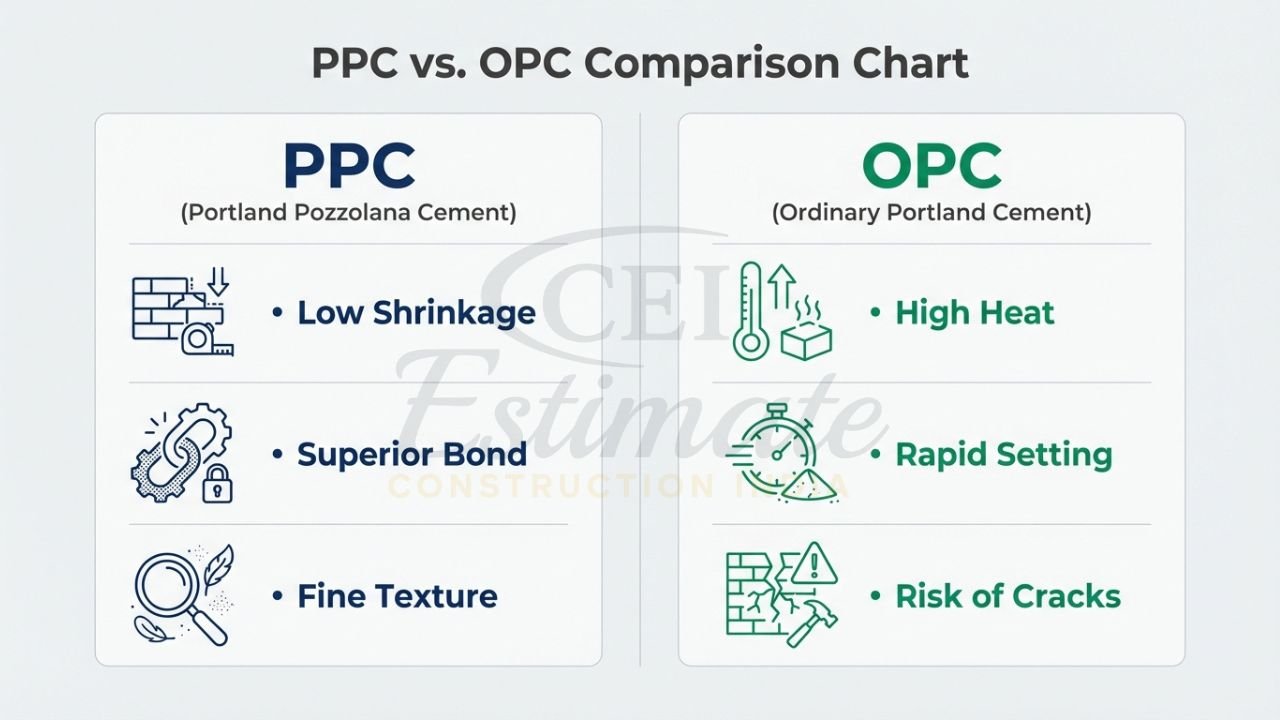
- Cement with high heat of hydration shrinks more during curing, causing hairline cracks. This is especially common with high-grade OPC.
Workability & Smooth Finish
- Finer cement particles improve spreadability and trowel finish. Better workability means:
- Faster application
- Lower labour fatigue
- More uniform surface
Water Retention
- Good cement retains water longer, allowing proper hydration and strength development.
Long-Term Strength & Paint Adhesion
- Plaster made with the right cement provides:
- Better paint bonding
- Reduced damp patches
- Longer service life
If your cement is wrong, even the best sand and curing practices won’t fully save the plaster.
Which Cement Grade Is Best for Plastering Walls in India?
In India 2026, the most suitable cement types for wall plastering are:
- PPC (Portland Pozzolana Cement) – Best Overall
- PSC (Portland Slag Cement) – Best for Coastal / Humid Areas
- Composite Cement (IS 16415) – Excellent All-Rounder
- OPC 43 Grade – Acceptable but not ideal
- OPC 53 Grade – Avoid for plastering walls
Cement Type Comparison for Plastering Walls
| Cement Type | Crack Resistance | Workability | Heat of Hydration | Best Use Case |
| PPC | Excellent | Excellent | Low | Most of India (Interior & Exterior Walls) |
| PSC | Very High | Very Good | Very Low | Coastal / High Humidity Areas |
| Composite Cement | Very Good | Very Good | Low | All-round performance |
| OPC 43 | Moderate | Moderate | Medium | Small repairs / urgent work |
| OPC 53 | Poor for plaster | Low | High | Avoid for plastering walls |
Why PPC Is the Clear #1 Choice
PPC contains fly ash, which reacts with calcium hydroxide and forms additional binding compounds.
Benefits:
- Finer particles → smoother finish
- Pozzolanic reaction → fills micro-pores
- Lower heat → reduced shrinkage cracks
- Better long-term durability
- More economical than OPC
For most parts of India — Delhi, UP, MP, Rajasthan, Bihar, Haryana, Punjab, Jharkhand, Chhattisgarh, Telangana — PPC is the safest and smartest choice for plastering walls.
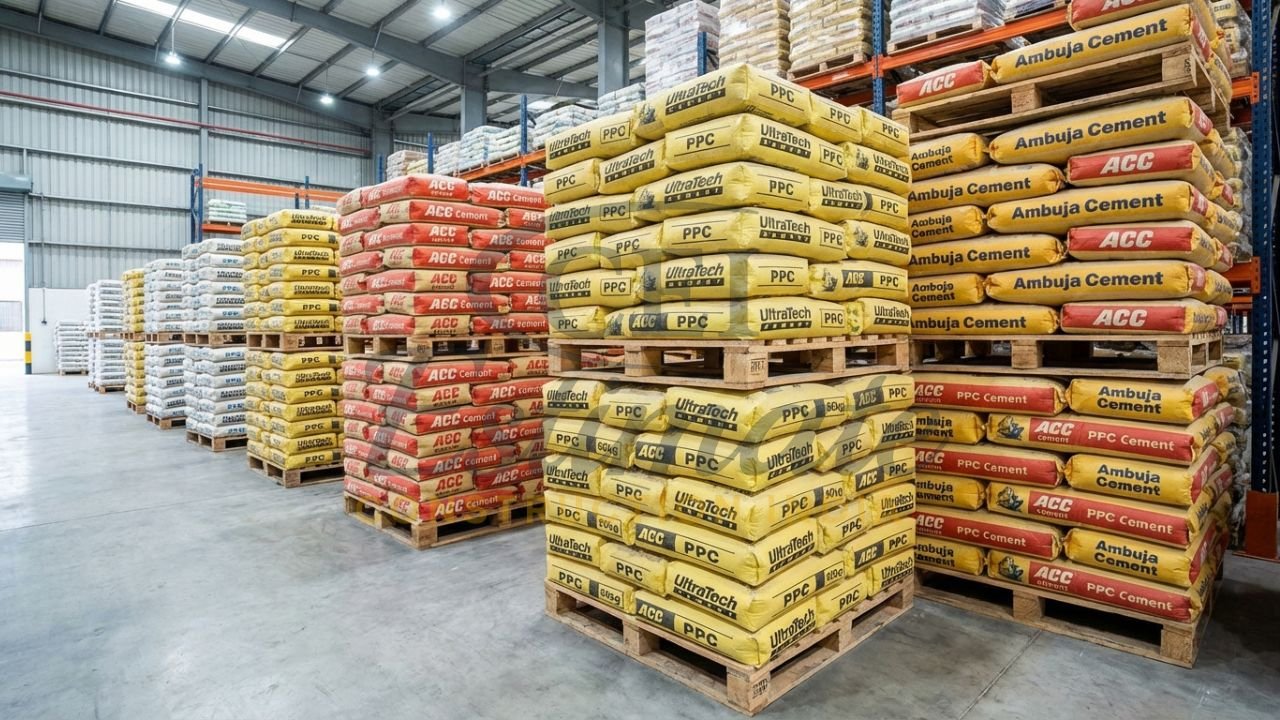
Top 10 Best Cement Brands for Plastering Walls in India 2026
Below are the most trusted cement brands widely used for plaster work.
- UltraTech PPC / UltraTech Premium
- Excellent smooth finish
- Strong bonding to brick and concrete
- Widely available across India
- Price (2026): ₹420–₹510 per 50 kg bag
- Contractor feedback: consistent quality, reliable for large projects
- ACC Gold Water Shield / ACC PPC
- Good water resistance
- Reduced hairline cracks
- Strong presence in North & West India
- Price: ₹430–₹500
- Ambuja Plus Roof Special / Ambuja PPC
- High workability
- Excellent crack resistance
- Popular in UP, Rajasthan, MP
- Price: ₹400–₹480
- JK Lakshmi PPC / JK Super Cement
- Smooth plaster finish
- Good early strength
- Strong distribution in North India
- Price: ₹390–₹470
- Dalmia DSP Cement / Dalmia PPC
- Dense microstructure
- Very low shrinkage
- Suitable for humid regions
- Price: ₹410–₹490
- Wonder PPC
- Cost-effective
- Good mason workability
- Popular in Rajasthan & MP
- Price: ₹380–₹450
- Shree / Bangur PPC
- Economical
- Reliable for residential projects
- Strong in Eastern & Northern India
- Price: ₹390–₹460
- HeidelbergCement (Mycem PPC, Penna PPC)
- Good bonding
- Consistent quality
- Strong in South & East India
- Price: ₹400–₹480
- India Cements / Coromandel King PPC
- Smooth finishing
- Reliable for interior plaster
- South India strong presence
- Price: ₹390–₹470
- Birla Corporation / MP Birla Perfect Plus
- Strong surface finish
- Good crack resistance
- Central & Eastern India presence
- Price: ₹410–₹500
How Much Cement Do You Need for Plastering Walls?
Average cement consumption for wall plaster (12–15 mm thickness):
Approximately 0.15–0.20 bags per square meter
Cement Consumption Table
| Wall Area (sq m) | Thickness | Approx Cement Bags Required |
| 50 sq m | 12 mm | 8–10 bags |
| 100 sq m | 12–15 mm | 15–20 bags |
| 200 sq m | 15 mm | 30–40 bags |
| 500 sq m | 15 mm | 75–100 bags |
Mix ratio:
- Interior walls: 1:4 (cement:sand)
- Exterior walls: 1:5 or 1:6
Water-cement ratio: 0.45–0.55
Practical Tips for Smooth, Crack-Free Plaster on Walls
- Use clean river sand (avoid sea sand).
- Roughen concrete surfaces before plastering.
- Use bonding agent on RCC columns/beams.
- Apply two-coat system:
- First coat: 12–15 mm
- Second coat: 8–10 mm
- Cure for minimum 7–10 days.
- Use waterproofing compound for exterior walls if required.
Most plaster failures in India happen due to:
- Using OPC 53
- Overwatering
- Poor curing
Avoid these mistakes.
Need Accurate Plaster Material Estimate & Full House Budget?
If you’re a contractor or house builder and want:
- Exact cement quantity calculation
- Complete plaster BOQ
- Sand requirement
- Full house construction budget estimate
Here’s the simple process:
- Send your built-up area on WhatsApp
- Share drawing (if available)
- Get detailed material estimate
- Receive BOQ + cost breakdown
WhatsApp now for FREE plaster quantity calculation:
+91 8630676890
Frequently Asked Questions
- Is PPC better than OPC for plastering walls? Yes. PPC provides lower shrinkage, better workability, and fewer cracks.
- Why should OPC 53 be avoided for plaster? It generates high heat and sets faster, causing hairline cracks.
- Which cement is best for coastal areas? PSC or high-quality PPC with sulfate resistance.
- How long should wall plaster be cured? Minimum 7–10 days for proper strength.
- What is the ideal mix ratio for wall plaster? 1:4 for interior walls and 1:5 or 1:6 for exterior walls.
- How many cement bags are required for 100 sq m plaster? Approximately 15–20 bags (12–15 mm thickness).
- Does brand really matter for plaster? Yes. Consistency, fineness, and quality control vary between brands.
- Can I use the cheapest cement for plaster? Cheap cement may increase cracking and long-term repair cost.
Final Recommendation
If you want smooth, durable, crack-free plaster in India 2026, choose PPC from a trusted brand. It offers the best balance of cost, workability, crack resistance, and long-term performance.
Avoid OPC 53 for plastering walls. Use proper mix ratio and curing. And most importantly — calculate materials correctly before starting work.
For a free plaster quantity calculation, BOQ, or full house construction budget estimate:
WhatsApp now: +91 8630676890
Get professional guidance and avoid costly mistakes before your next plaster job starts.