When building a house in India, plastering is the critical bridge between raw masonry and a beautiful finished wall. However, as we move through 2026, the budget for this phase is no longer what it used to be. With cement prices touching ₹350–₹450 per bag and high-quality M-Sand (Manufactured Sand) costing between ₹40–₹60 per cubic foot, homeowners and contractors must be extremely precise with their calculations.
Understanding the Plaster Cost Per Square Foot with Material in India 2026 is essential to avoid “budget creep.” While internal cement plaster ranges between ₹25 and ₹35 per sq. ft., external weather protection sits higher at ₹30 to ₹45 per sq. ft. To see how these finishing costs fit into your overall project, check our updated guide on the total construction cost per sq ft in India for 2026.
Types of Plaster Used in India 2026 & Their Costs
The “best” plaster isn’t always the cheapest; it’s the one that suits your climate and timeline. Here is how the most common types compare:
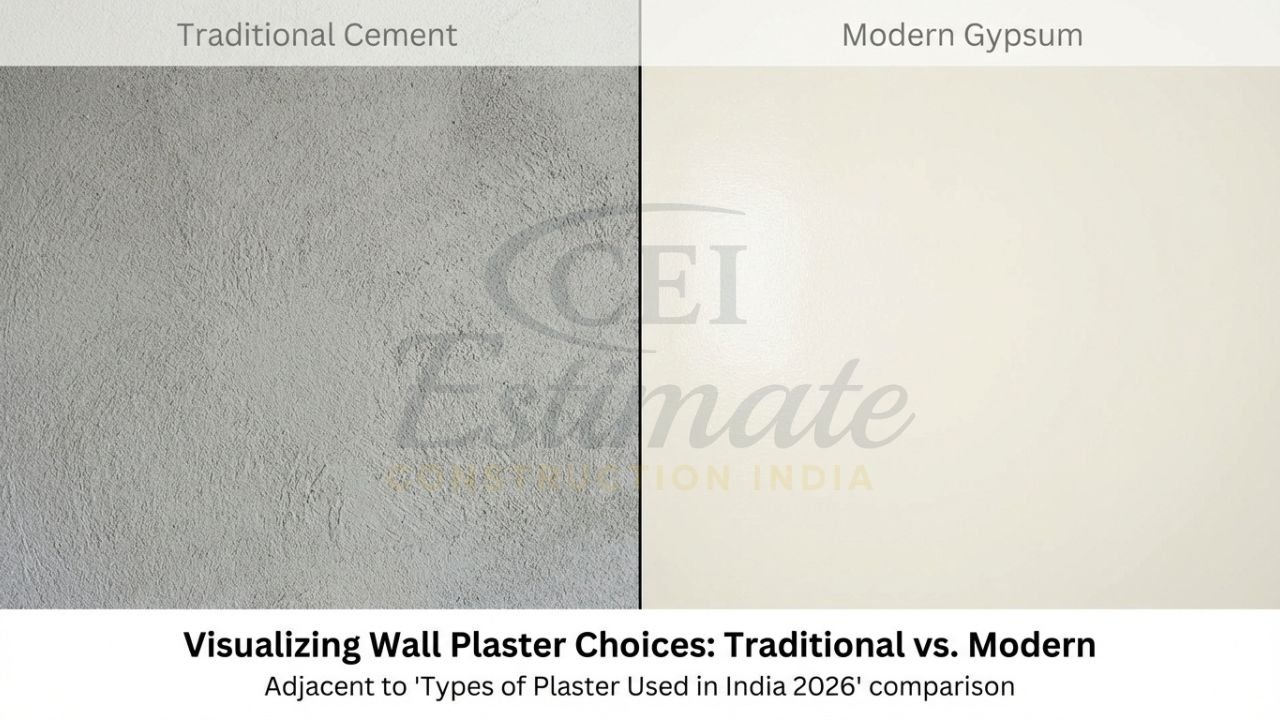
1. Cement Sand Plaster (Traditional)
- Ratio: Usually 1:4 (1 part cement, 4 parts sand) for external and 1:6 for internal walls.
- Pros: Highly durable, moisture-resistant, and relatively inexpensive.
- Cons: Requires 7–10 days of water curing; susceptible to shrinkage cracks.
- 2026 Cost: ₹25 – ₹45 per sq. ft.
2. Gypsum Plaster (The Modern Favorite)
- Pros: No water curing required, direct application on brick/block, provides a smooth “putty-like” finish.
- Cons: Not suitable for external walls or high-moisture areas like bathrooms.
- 2026 Cost: ₹32 – ₹55 per sq. ft.
3. Ready-Mix Plaster
- Pros: Factory-mixed for consistent quality; contains polymers to prevent cracks.
- Cons: High material cost.
- 2026 Cost: ₹40 – ₹60+ per sq. ft.
If you are working with a low budget house construction cost in India, traditional cement plaster remains the most economical choice, provided you manage material wastage effectively.
Choosing the Right Cement for Your Walls
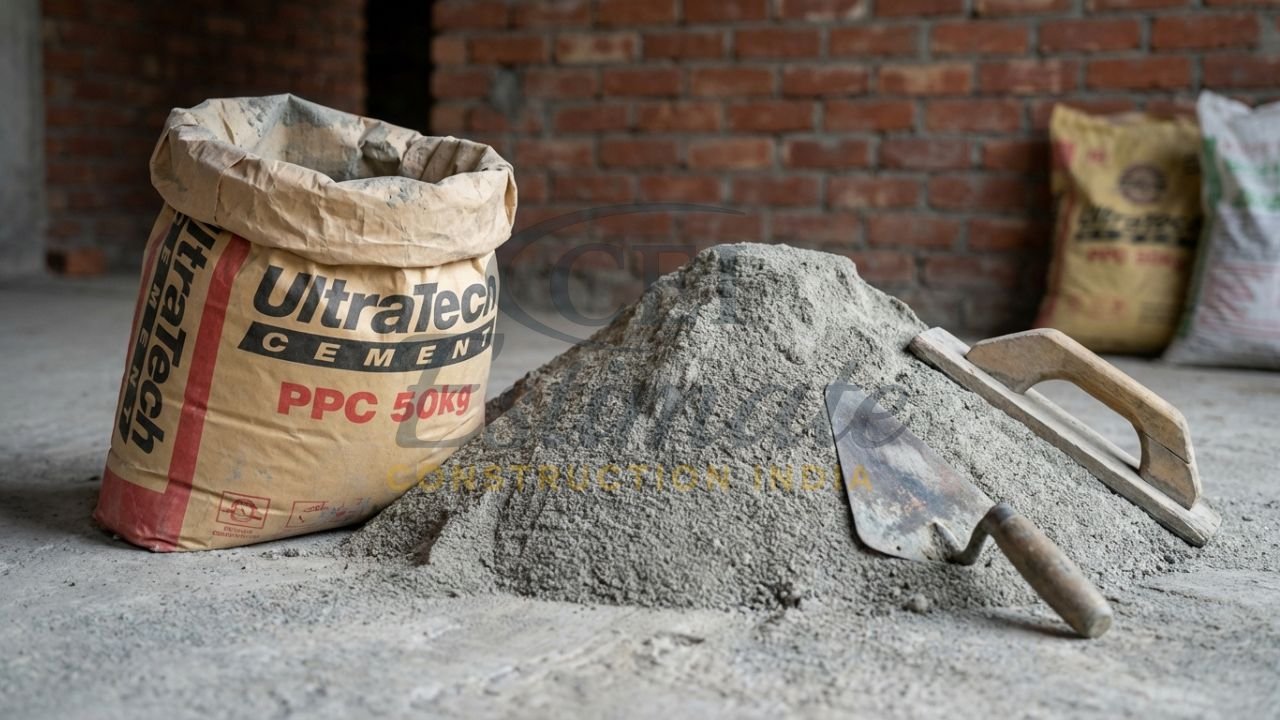
The quality of your plaster depends entirely on the bonding agent. In 2026, the market offers specialized grades for different surfaces.
- For Masonry & Finish: It is vital to research which cement is best for plaster work to ensure workability and minimize shrinkage cracks.
- Brand Comparisons: Builders often weigh UltraTech Cement vs ACC Cement for their superior finish. You can also explore our detailed head-to-head reviews of ACC Cement vs Ambuja Cement or ACC Cement vs JK Cement to find the best match for your local climate.
For high-end projects like a duplex house construction cost in India estimate, using top-rated cement for homes in India ensures that your premium paint or wallpaper sits on a perfectly level, moisture-resistant base.
Key Factors Affecting Plaster Cost Per Square Foot in 2026
Several variables determine whether you pay ₹25 or ₹60 for your plastering cost per sq ft India 2026:
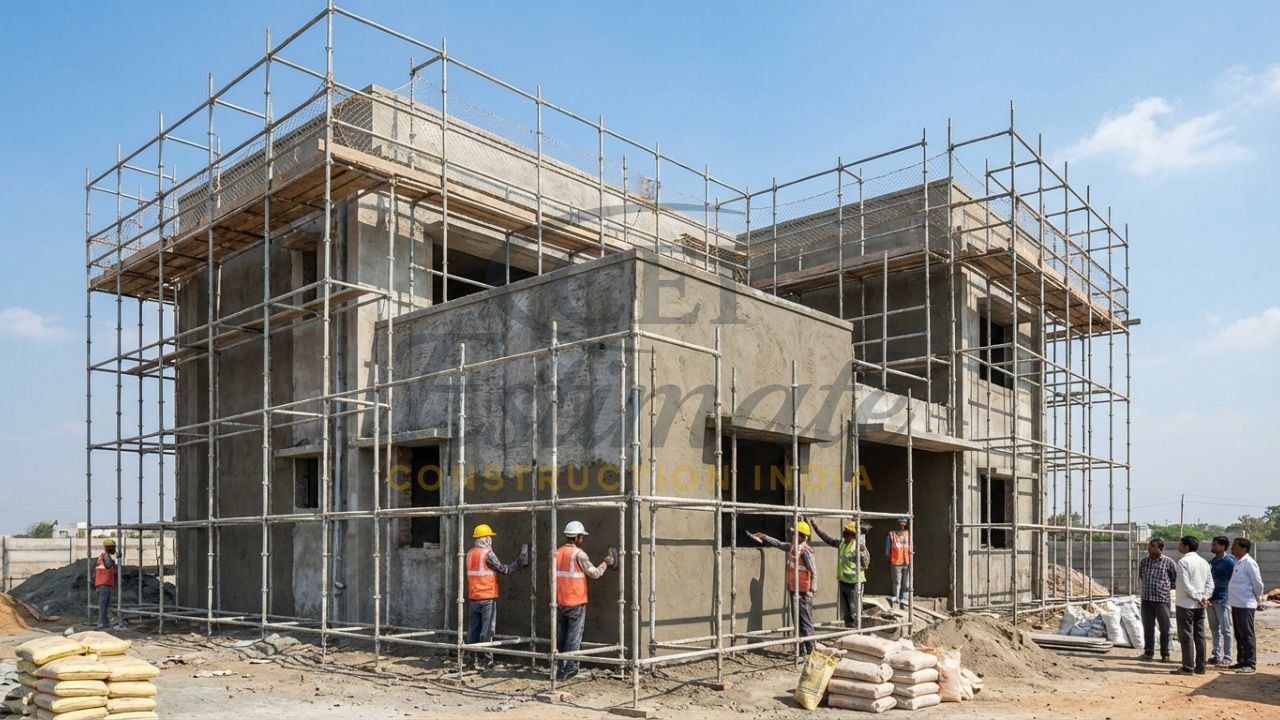
- Internal vs. External: External plaster requires scaffolding and is usually thicker (15–20mm) to withstand monsoon rain, making it more expensive.
- Thickness of Plaster: Standard internal plaster is 12mm. Every additional 3mm of thickness adds roughly 10–15% to material consumption.
- Geographic Location: Rates in metros like Mumbai or Bangalore are higher due to labor wages, while Tier-2 cities like Agra and Lucknow offer more competitive rates.
- Material Quality: Using premium PPC cement or high-grade M-Sand impacts the base rate.
- Wall Surface: AAC block walls require less plaster thickness than irregular red brick walls.
- Labor Specialization: Skilled masons who can deliver “line and level” finishes command a premium in 2026.
- Scaffolding Charges: For external walls or high ceilings, double-scaffolding can add ₹5–₹10 per sq. ft.
- Wastage: Poor site management can lead to 10% material wastage, directly hitting your pocket.
Average Plaster Cost Per Sq Ft with Material in India 2026
To help you budget, here is the comprehensive cement plaster rate per sq ft with material for various types:
2026 Plaster Rate Chart (Material + Labour)
| Plaster Type | Thickness | Rate Range (Per Sq. Ft.) |
| Internal Cement Plaster (1:6) | 12 mm | ₹25 – ₹35 |
| External Cement Plaster (1:4) | 15 – 20 mm | ₹30 – ₹45 |
| Ceiling Plaster (1:3) | 6 – 9 mm | ₹22 – ₹30 |
| Gypsum Plaster (Direct) | 12 – 15 mm | ₹32 – ₹55 |
| Ready-Mix Polymer Plaster | 12 mm | ₹40 – ₹60 |
Note: Rates vary based on the specific city and the total volume of work.
Detailed Cost Breakdown for Plaster
If you are managing the project yourself, you need to know the split between wall plaster labour rate 2026 and material expenses.
1. Material Components (Per 100 Sq. Ft. of 12mm Plaster)
| Item | Quantity | 2026 Price | Total Cost |
| Cement | 2.5 – 3 Bags | ₹400/bag | ₹1,000 – ₹1,200 |
| M-Sand | 12 – 15 Cft | ₹50/cft | ₹600 – ₹750 |
| Labour | 100 Sq. Ft. | ₹12/sq ft | ₹1,200 |
| Wastage/Misc | – | – | ₹200 |
| Total (per 100 sq ft) | ₹3,000 – ₹3,350 |
To ensure the best structural bond, especially for ceiling areas, check our guide on which cement is best for plastering walls in India to choose between OPC and PPC grades based on curing time and strength.
2. Total for Common House Sizes
Usually, the plaster area is 3.5 to 4 times the built-up area. For a 1,000 sq. ft. built-up house, the plaster area is roughly 3,500 sq. ft.
| Built-up Area | Plaster Area (Approx.) | Total Cost (at ₹35/sq ft) |
| 800 sq. ft. | 2,800 sq. ft. | ₹98,000 |
| 1,000 sq. ft. | 3,500 sq. ft. | ₹1,22,500 |
| 1,500 sq. ft. | 5,200 sq. ft. | ₹1,82,000 |
3. City-Wise Plaster Cost Comparison (2026)
| City | Tier | Rate Range (per sq. ft.) |
| Delhi NCR / Mumbai | Metro | ₹35 – ₹60 |
| Bangalore / Hyderabad | Metro | ₹32 – ₹55 |
| Agra / Lucknow / Jaipur | Tier-2 | ₹25 – ₹40 |
| Rural UP / Bihar | Rural | ₹22 – ₹35 |
Choose Your Construction Services
Connect with verified experts for your project. We provide professional
General Contractors, Sub-contractors, Builders, and Material Suppliers.
Our network also includes specialized 3D Rendering Developers and Interior Experts.
Current 2026 Material Rates for Plaster
Stay updated with the latest market prices to ensure your contractor is providing a fair quote:
- Cement: ₹350 – ₹450 per bag (depending on brand and grade).
- M-Sand (Plaster Sand): ₹3,500 – ₹5,000 per unit (approx. 100 cft).
- Labour (Daily Wage): ₹500 – ₹750 for a Head Mason; ₹350 – ₹450 for a Helper.
- Gypsum Bags (25kg): ₹300 – ₹450 per bag.
10 Tips to Reduce Plaster Cost in 2026
- Choose the Right Ratio: Use 1:6 for internal walls; using 1:4 everywhere wastes expensive cement.
- M-Sand over River Sand: M-Sand is cheaper, eco-friendly, and often results in fewer cracks.
- AAC Blocks: Build with AAC blocks to get smoother walls, reducing the plaster thickness required.
- Avoid Rework: Ensure electrical piping is 100% complete before plastering starts.
- Go for Gypsum: For internal dry areas, gypsum saves the cost of water curing and wall putty.
- Hire Local Labour: Avoid the transport and accommodation overheads of “imported” labor.
- Lump-sum Labour Contract: Negotiate a fixed rate for the entire house rather than daily wages.
- Minimize Wastage: Use a plastic sheet on the floor to collect fallen mortar for reuse immediately.
- External Plaster in One Go: Scaffolding is expensive; ensure all external work (including plumbing pipes) is ready before starting.
- Use Curing Compounds: If water is scarce or expensive, use chemical curing compounds to save labor.
Why Accurate Plaster Estimation is Important?
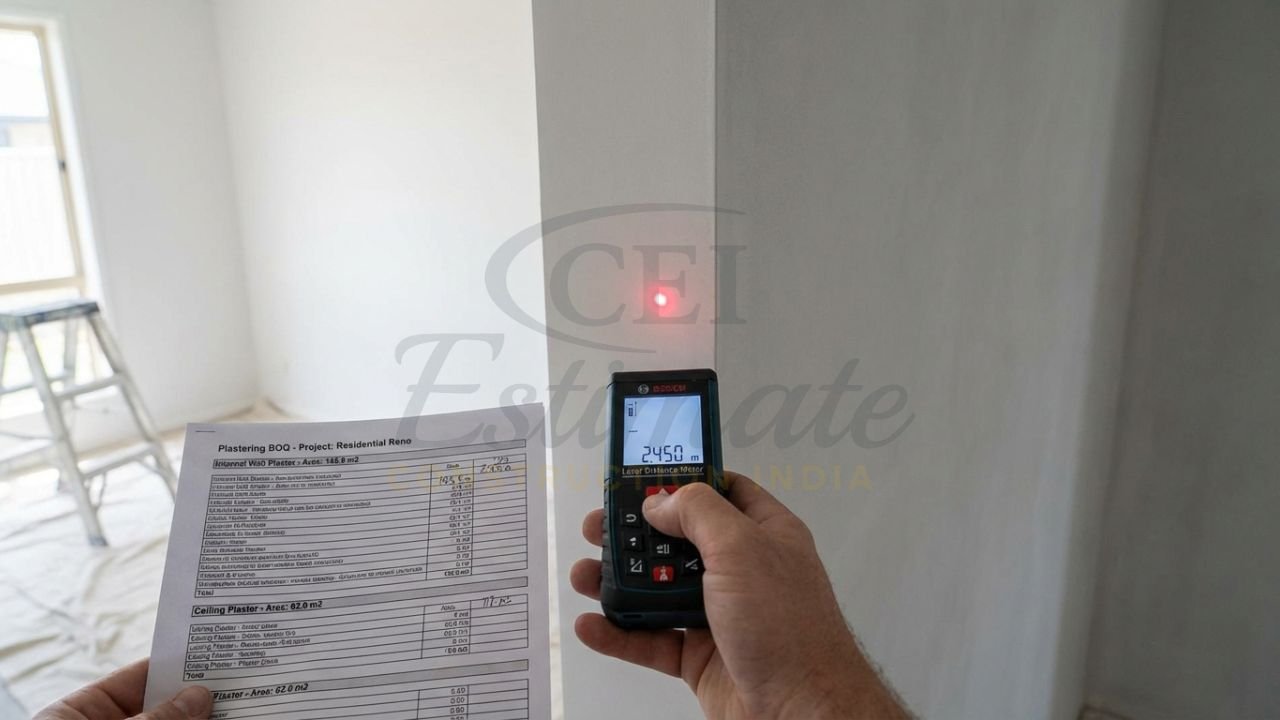
Plastering often looks like a small part of the budget, but because of the massive surface area involved, even a ₹2/sq ft error can lead to a ₹10,000–₹20,000 shortfall. In 2026, where material prices are volatile, having a professional internal external plaster cost 2026 breakdown is your best defense against project delays. It allows you to buy materials in bulk at better rates and ensures you only pay labor for the actual area covered.
Need precise plaster cost estimates for your walls in 2026 without surprises? Construction Estimator India offers detailed, accurate plastering takeoffs and full material + labour breakdowns starting just at ₹10,000 INR. Whether it’s internal/external cement plaster, gypsum, or ready-mix for your house project, our experts help you budget accurately and avoid cost overruns.
Contact us today:
Phone/WhatsApp: +91 86306 76890
Email: info@constructionestimatorindia.com
Get your customized plaster cost quote in just 24 hours and plan smarter!
Frequently Asked Questions (FAQs)
What is the plaster cost per square foot with material in India 2026 for internal walls?
For internal walls in 2026, the plaster cost per square foot with material in India typically ranges from ₹25 to ₹35. This includes the cost of cement (1:6 ratio), M-sand, and labor for a standard 12mm thickness. Rates in Tier-2 cities like Agra or Kanpur often hover around the lower end (₹25–₹28), while metros like Delhi may touch ₹35.
How much is external plaster cost per sq ft with material and labour in 2026?
External plaster is more expensive due to increased thickness (15–20mm) and the need for scaffolding. In 2026, expect to pay between ₹30 and ₹45 per sq. ft. for a double-coat external cement plaster. This ensures better weatherproofing and structural protection for your brickwork.
Is gypsum plaster cheaper than cement plaster per sq ft in India 2026?
The initial material cost of gypsum plaster cost India wide is higher (₹32–₹55/sq ft) compared to cement. However, gypsum saves you money on wall putty and 7 days of water curing labor. When you factor in the finish and speed, gypsum often ends up being more cost-effective for internal high-end residential projects.
What factors increase plaster cost per square foot in metro cities 2026?
In metros like Mumbai, Bangalore, and Gurgaon, the plaster cost per square foot with material in India 2026 is pushed up by high labor daily wages (up to ₹800 for masons), high transportation costs for sand, and strict municipal waste disposal fees. Additionally, high-rise buildings require complex scaffolding, which adds a premium to the base rate.
How can I get an accurate plaster estimation for my house in 2026?
To get an accurate estimate, you must calculate the total “plasterable area” (walls + ceiling minus large openings like doors/windows). Since prices for cement and sand fluctuate weekly in 2026, it is best to use a professional service that provides a detailed Bill of Quantities (BOQ) based on your specific city’s current market rates.