
Many plaster problems in Indian houses—wall cracks, hollow plaster, damp patches, and peeling paint—are often caused by one simple mistake: the wrong water-cement ratio.
On construction sites across Delhi NCR, Uttar Pradesh, Uttarakhand, Rajasthan, Bihar, Madhya Pradesh, Punjab, Haryana, Jharkhand and other states, masons frequently add water “by guess” instead of measuring it. This leads to weak plaster, poor bonding, and shrinkage cracks.
If you want smooth, crack-free and durable plaster, the water-cement ratio must be controlled carefully. Using the correct ratio improves strength, workability, and resistance to moisture.
In this guide from Construction Estimator India, we’ll explain the best water-cement ratios for plastering in 2026, practical mixing tips used by contractors, and common mistakes you should avoid.
📲 Need help calculating plaster materials for your house?
WhatsApp: +91 8630676890 for a plaster BOQ and material estimate.
Why Water-Cement Ratio Is the Key to Successful Plastering
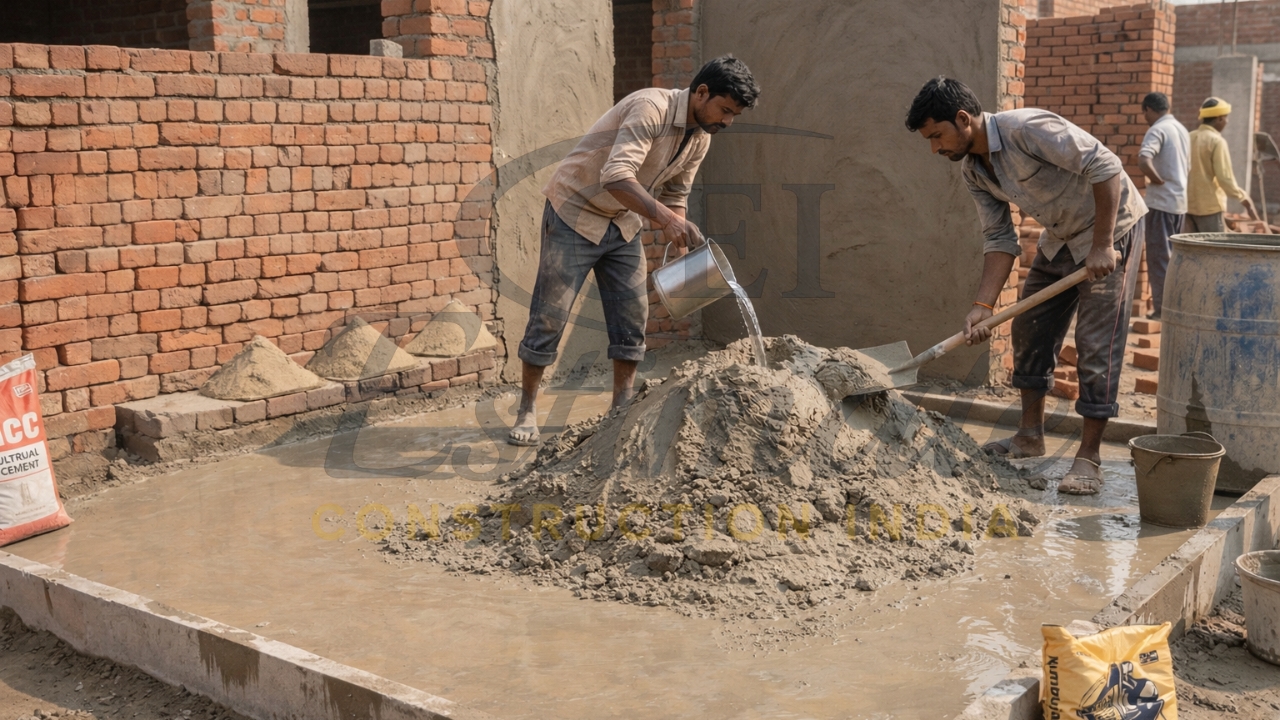
The water-cement ratio (w/c ratio) means the amount of water divided by the weight of cement used in the mix.
For example:
- 0.50 ratio = 500 ml water per 1 kg cement
This ratio directly affects plaster quality.
1. Strength of Plaster
Lower water content creates stronger cement bonds.
Too much water reduces strength and causes cracks and powdering.
2. Workability for Masons
Water helps the mortar spread easily on the wall.
But excess water makes the mix runny and weak.
3. Shrinkage and Cracking
High water content leads to shrinkage during drying, causing visible cracks in plaster.
4. Bonding with Brick or Concrete
Correct water-cement ratio improves adhesion to brick, block, and RCC surfaces.
5. Water Resistance
Lower ratios help create dense plaster that absorbs less moisture, reducing dampness and seepage.
📲 Want a plaster material calculation for your project?
Contact Construction Estimator India on WhatsApp: +91 8630676890
Recommended Water-Cement Ratios for Different Plaster Types in India
Different plaster works require slightly different ratios.
| Plaster Type | Cement:Sand Ratio | Water-Cement Ratio | Thickness | Best Use |
| Internal wall plaster | 1:6 | 0.45 – 0.50 | 12 mm | Bedrooms, living rooms |
| External wall plaster | 1:4 | 0.40 – 0.45 | 15–20 mm | Exterior walls |
| Bathroom waterproof plaster | 1:4 + additives | 0.35 – 0.40 | 12–15 mm | Bathrooms & wet areas |
| Ceiling plaster | 1:6 | 0.50 – 0.55 | 10–12 mm | RCC ceiling |
| General plaster work | 1:5 | 0.45 – 0.50 | 12–15 mm | Standard walls |
Practical Example
If you use 1 bag cement (50 kg):
- 0.45 ratio → about 22.5 liters water
- 0.50 ratio → about 25 liters water
Always measure water instead of adding randomly.
Top Tips for Achieving the Perfect Water-Cement Ratio in Plaster
Here are practical tips followed by experienced contractors.
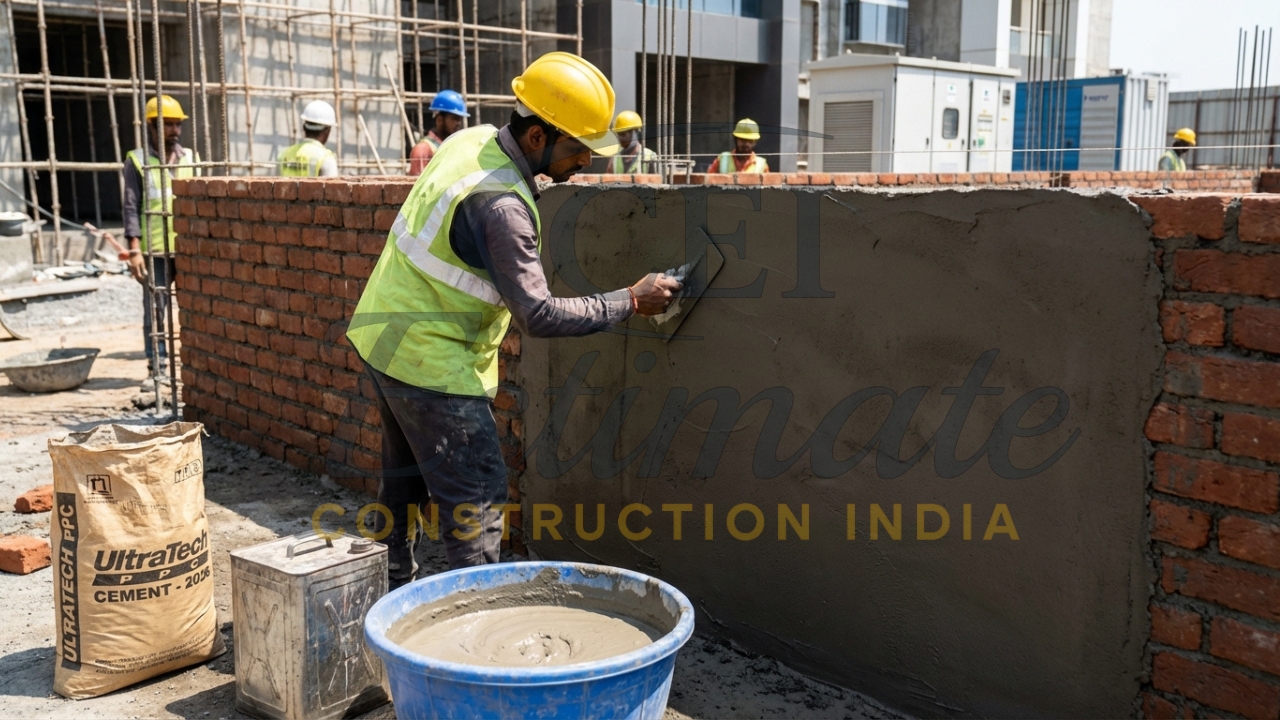
1. Measure Water Precisely
Always use bucket or container measurement instead of guessing.
2. Adjust for Sand Moisture
Wet sand already contains water, so reduce the mixing water slightly.
3. Use PPC Cement for Better Workability
PPC cement improves workability and reduces cracks in plaster.
4. Use Clean Water
Always use potable water free from salts or impurities.
5. Add Plasticizers if Ratio Is Below 0.40
Plasticizers improve workability without adding extra water.
6. Mix Mortar Properly
Mix cement, sand, and water until the mortar becomes uniform and lump-free.
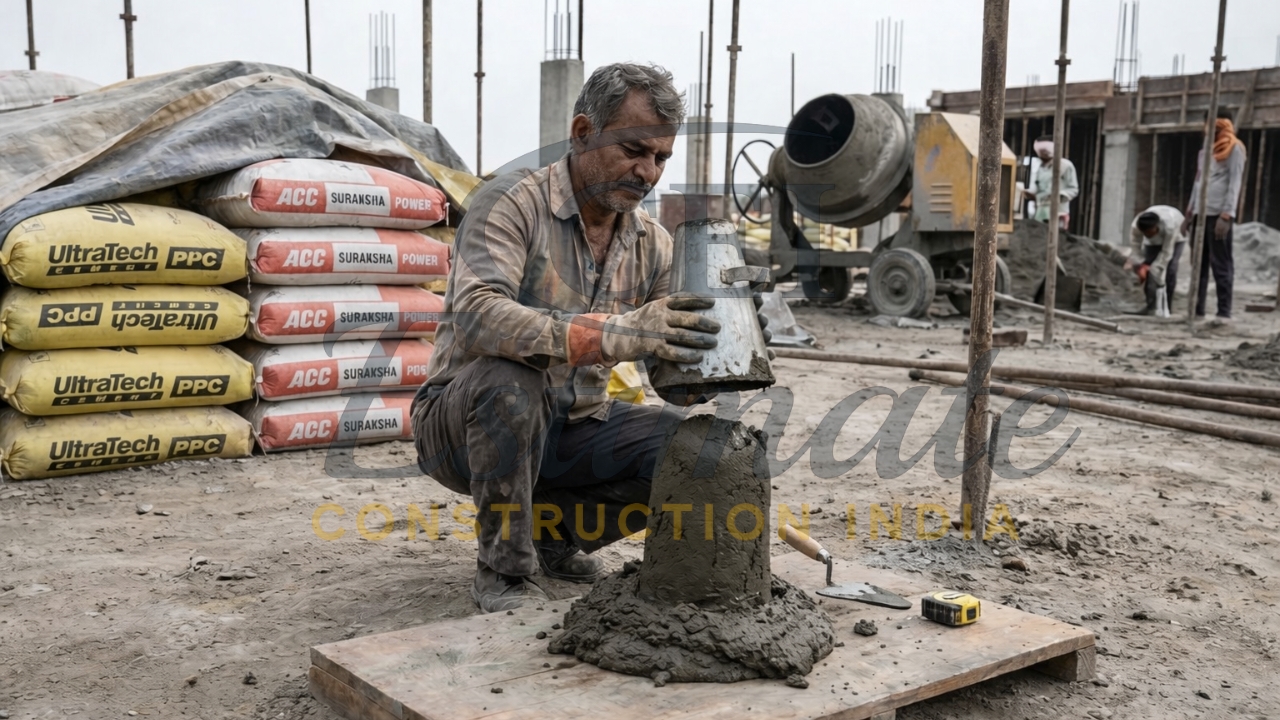
7. Check Workability (Slump Test)
For plaster mortar, ideal slump should be around 10–15 cm.
8. Apply Plaster Immediately
Mortar should be used within 30–45 minutes after mixing.
9. Maintain Proper Thickness
Typical plaster thickness:
- Internal walls: 12 mm
- External walls: 15–20 mm
10. Proper Curing Is Essential
Keep plaster moist for 7–10 days to prevent cracking.
Common Mistakes with Water-Cement Ratio & How to Avoid Them
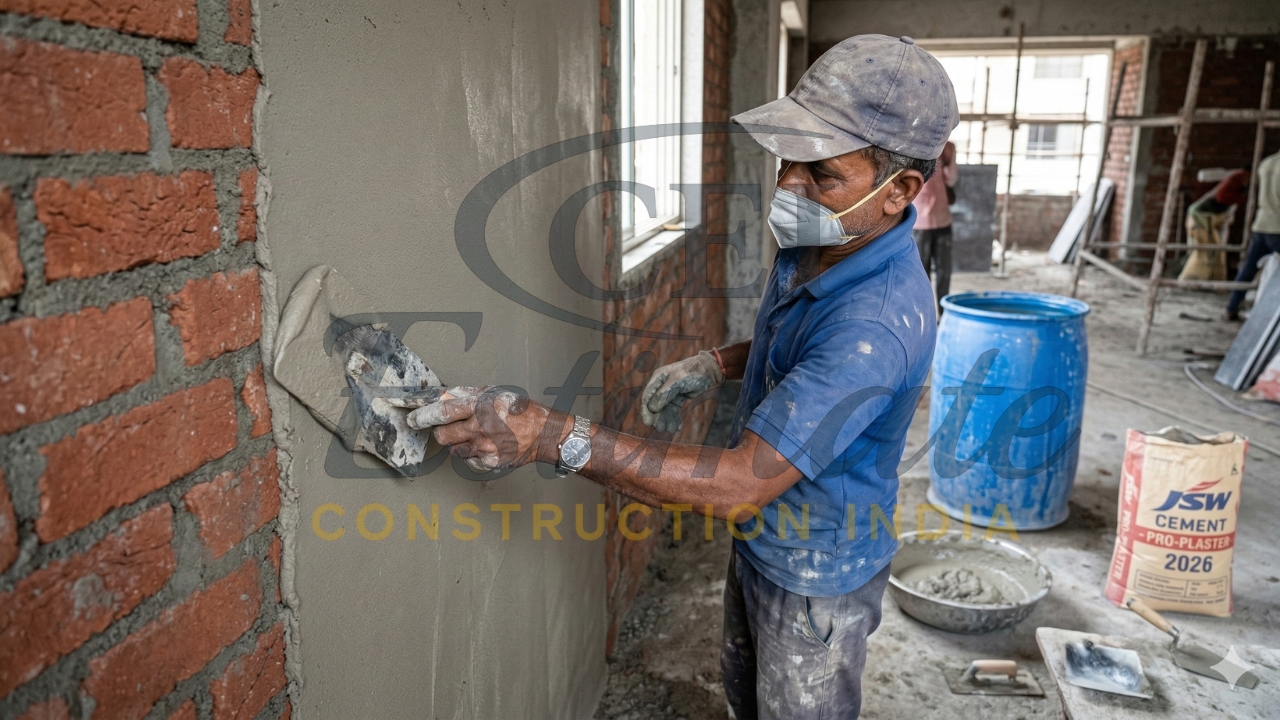
Many plaster failures happen due to simple mistakes.
Over-watering the Mix
Problem
- Weak plaster
- Shrinkage cracks
Solution
Always measure water accurately.
Under-watering the Mix
Problem
- Poor bonding with wall
- Hollow sound after drying
Solution
Maintain recommended ratio and mix properly.
Ignoring Sand Type
Coarse sand requires slightly more water.
Solution
Use clean fine river sand for plaster.
Poor Mixing
Uneven mortar causes weak plaster.
Solution
Mix mortar thoroughly before use.
Delayed Application
Old mortar loses strength.
Solution
Use mortar within 45 minutes.
No Curing
Lack of curing causes efflorescence and cracks.
Solution
Keep plaster wet for 7–10 days.
Cement Consumption & Cost for Plastering in 2026
Typical cement consumption for plaster:
- 0.15 – 0.20 bags per sq m for 12–15 mm thickness
Approximate plaster cost in India 2026.
| Area (sq m) | Cement Bags Needed | Approx Cost (₹) |
| 10 sq m | 1.5 – 2 bags | ₹700 – ₹1000 |
| 50 sq m | 8 – 10 bags | ₹3500 – ₹5000 |
| 100 sq m | 15 – 20 bags | ₹7000 – ₹10000 |
Typical cement price in 2026:
₹400 – ₹500 per bag
Total plastering cost including labour:
₹50 – ₹100 per sq m
📲 Want accurate plaster cost for your house?
Contact Construction Estimator India
WhatsApp +91 8630676890
Need Accurate Plaster BOQ & Full Building Budget?
At Construction Estimator India, we help homeowners and contractors calculate exact construction material quantities.
We provide:
✔ Cement quantity calculation
✔ Sand and plaster material estimate
✔ Labour cost planning
✔ Full house construction budget
How to Get Your Estimate?
1️⃣ Send your house drawing or dimensions
2️⃣ Share photos of the construction site
3️⃣ Our experts calculate your plaster BOQ
📲 WhatsApp Now: +91 8630676890
Get your plaster material estimate.
Plaster BOQ & Ratio Guide
📩 Message us on WhatsApp: +91 8630676890
Get:
✔ Water-cement ratio guide
✔ Plaster material list
✔ Construction budget planning
✔ Complete house estimation
FAQs – Water Cement Ratio for Plastering
What is the ideal water-cement ratio for plaster?
Generally 0.45 – 0.50 is ideal for most plaster work.
Why does plaster crack after drying?
Cracks usually occur due to too much water in the mix or poor curing.
What ratio is used for external plaster?
External plaster typically uses 1:4 cement:sand with 0.40–0.45 water-cement ratio.
Can we add more water for easier workability?
Too much water weakens plaster. Instead, use plasticizers.
Which cement is best for plastering?
PPC cement is widely preferred for plaster due to better workability.
How thick should plaster be?
Typical thickness:
Internal walls: 12 mm
External walls: 15–20 mm
How long should plaster be cured?
Curing should be done for 7–10 days.
What happens if water-cement ratio is too low?
The plaster becomes dry and difficult to apply, leading to poor bonding.
Conclusion
Achieving strong, smooth and crack-free plaster depends largely on maintaining the correct water-cement ratio. Too much water weakens plaster, while too little makes it difficult to apply properly.
By following the recommended ratios, using quality materials, and ensuring proper curing, you can significantly improve the durability and appearance of your plaster work.
At Construction Estimator India, we help homeowners and contractors plan their projects with accurate material calculations and cost estimates, ensuring construction quality and cost control.
Get Plaster Material Calculation & Construction Estimate
Planning plaster work for your house?
We will calculate:
✔ Cement quantity
✔ Sand requirement
✔ Water-cement ratio guide
✔ Full construction budget
📲 WhatsApp Now: +91 8630676890
Get your plaster BOQ, material quantity calculation, and complete house construction cost estimate from Construction Estimator India.