
Many homeowners and builders in cities like Agra, Lucknow, Delhi-NCR, and across Uttar Pradesh often ask a very common question during construction:
“Should I use 53 grade cement for my house pillars and slab, or is it unnecessary?”
Contractors frequently recommend OPC 53 grade cement because it is widely known for its high strength and fast setting properties. But here’s the reality many homeowners don’t realize: using 53 grade cement everywhere in house construction is not always the best choice.
In fact, as a civil engineer with more than two decades of experience working on residential RCC structures, commercial projects, and infrastructure developments across North India, I’ve seen many cases where improper use of OPC 53 grade cement led to:
- Shrinkage cracks in slabs
- Thermal cracks in beams
- Surface cracking in plastered walls
- Reduced long-term durability due to improper curing
So while 53 grade cement is extremely strong and useful, it must be used in the right places and with proper construction practices.
Let’s first understand what OPC 53 grade cement actually means.
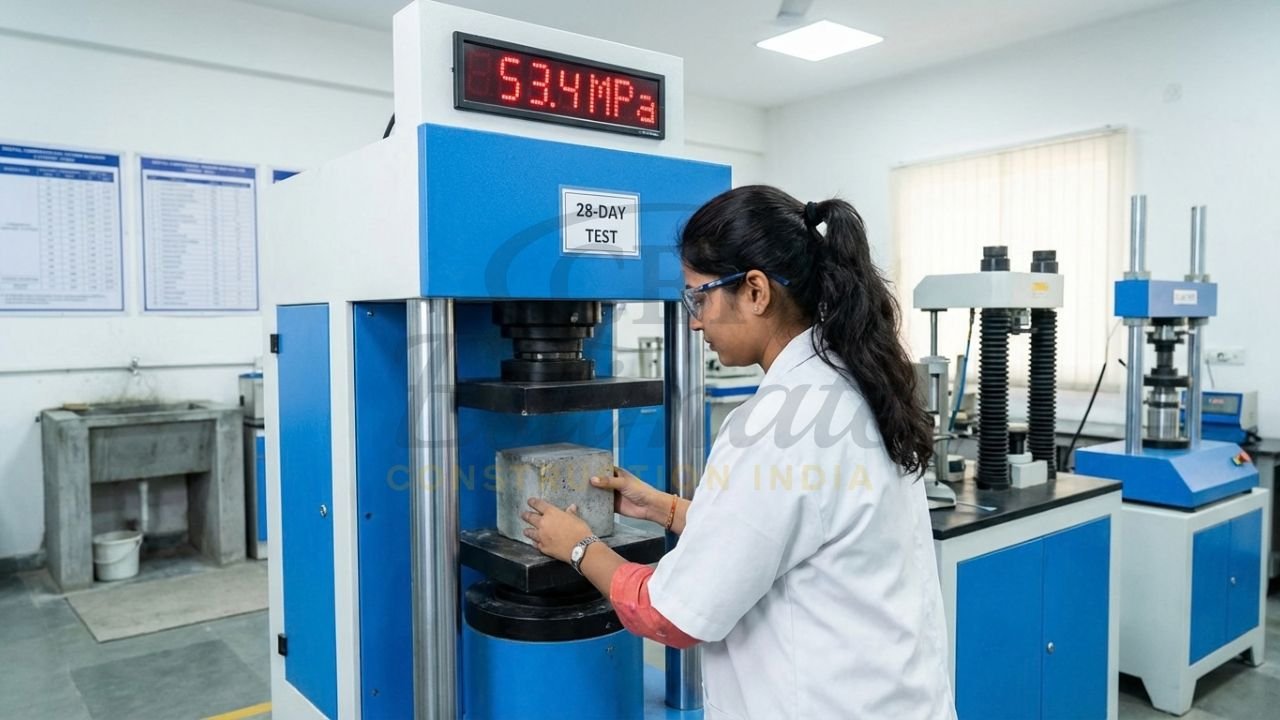
OPC stands for Ordinary Portland Cement, and 53 grade refers to the minimum compressive strength of 53 MPa after 28 days. It is manufactured as per IS 12269:2013, the Bureau of Indian Standards specification for high-strength cement.
Because of its fast strength development, OPC 53 grade cement is widely used in:
- High-rise buildings
- Bridges and flyovers
- Heavy industrial structures
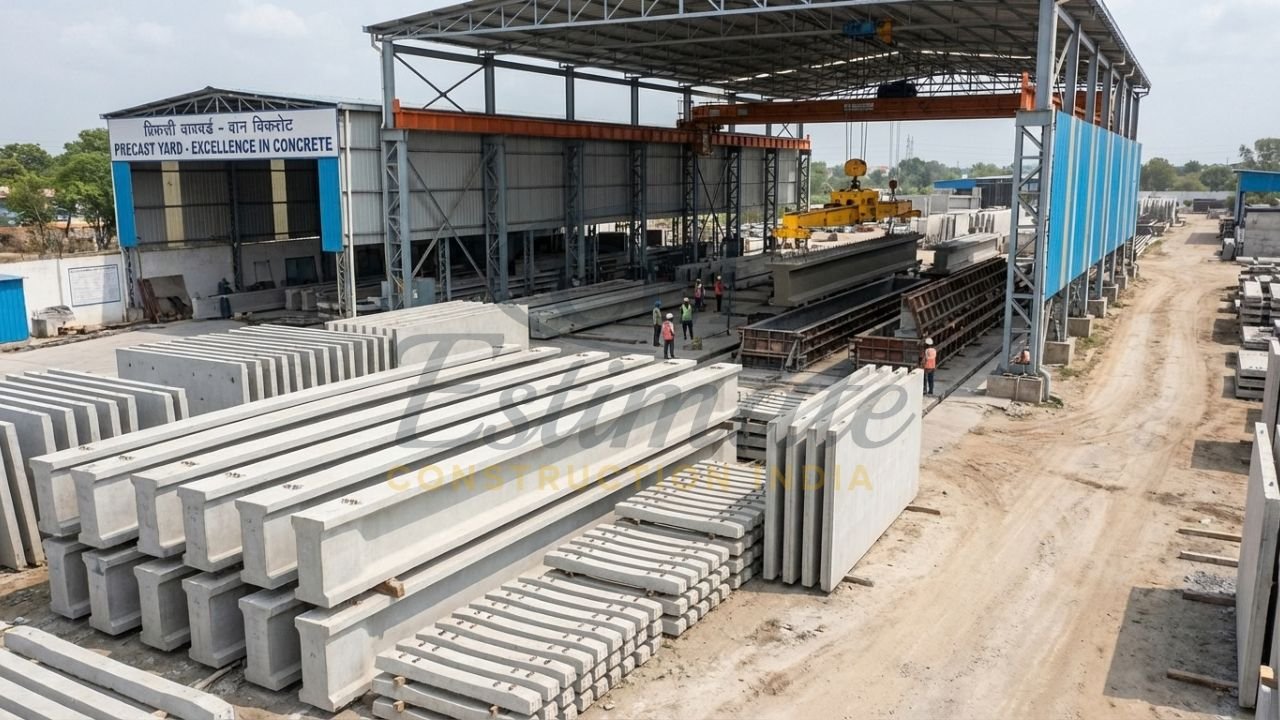
- Precast concrete elements
In 2026, the demand for OPC 53 grade cement continues to grow due to faster construction timelines and the need for high-performance concrete. However, modern civil engineers also emphasize using blended cements like PPC for normal residential structures because they reduce cracking and improve durability.
In this complete expert guide, we will clearly explain:
- What OPC 53 grade cement is and how it works
- The top real-world uses of 53 grade cement in India
- When you should use it for RCC columns, beams, and slabs
- When you should avoid using it
- Differences between 53 grade vs 43 grade vs PPC cement
- Best practices for using OPC 53 grade cement correctly
If you are planning to build a house, apartment, or commercial building in India in 2026, this guide will help you make the right decision about cement selection.
What is OPC 53 Grade Cement? Key Properties & Specifications?
OPC 53 grade cement is a high-strength Ordinary Portland Cement that develops strength faster than lower cement grades.
It is manufactured under IS 12269:2013 standards, which specify strict quality requirements for cement used in structural concrete.
Compressive Strength Requirements
The strength of OPC 53 grade cement is measured using standard mortar cube tests.
Typical strength values are:
| Age of Cement | Minimum Strength |
| 3 Days | 27 MPa |
| 7 Days | 37 MPa |
| 28 Days | 53 MPa |
Because of this high strength, OPC 53 grade cement is suitable for high-strength RCC structures.
Fineness of Cement
OPC 53 cement has higher fineness compared to lower grades. This improves:
- Early strength gain
- Hydration speed
- Bonding with aggregates
However, higher fineness also means higher heat generation, which must be controlled during curing.
Setting Time
As per BIS specifications:
- Initial Setting Time: Minimum 30 minutes
- Final Setting Time: Maximum 600 minutes
This ensures adequate working time for concrete placement.
Heat of Hydration
OPC 53 grade cement produces more heat during hydration compared to PPC or OPC 43.
This can cause thermal cracks in large concrete sections if curing is inadequate.
Low Alkali Options
Some manufacturers produce low-alkali OPC 53 cement to prevent alkali-silica reactions in concrete.
OPC 53 vs OPC 43 vs OPC 33
| Cement Grade | 28-Day Strength | Typical Use |
| OPC 33 | 33 MPa | Plaster, masonry |
| OPC 43 | 43 MPa | Residential RCC |
| OPC 53 | 53 MPa | High-strength structures |
OPC 53 gains strength faster because it contains:
- Higher clinker content
- Higher fineness
This accelerates the hydration process.
Top 10+ Real-World Uses of 53 Grade Cement in India 2026
High-Rise Residential and Commercial Buildings
OPC 53 cement is widely used in multi-storey structures (G+5 and above).
- Reasons:
- High compressive strength
- Faster construction cycles
- Better load-bearing capacity
- Concrete grades commonly used:
- M30
- M35
- M40
RCC Columns and Pillars in Multi-Storey Structures
Columns carry the entire structural load of buildings.
- For high-rise buildings, engineers often use OPC 53 grade cement because it:
- Provides high early strength
- Supports heavy loads
- Reduces column size in high-rise structures
- Typical mix grades:
- M30
- M35
- However, for normal G+1 houses, PPC or OPC 43 is often preferred.
RCC Beams in Heavy Load Structures
Beams transfer loads from slabs to columns.
- OPC 53 cement helps achieve high beam strength required in:
- Commercial buildings
- Industrial structures
- Large-span beams
Fast-Track Construction Projects
Developers often use OPC 53 grade cement for projects where speed is critical.
- Advantages:
- Early strength gain
- Faster formwork removal
- Reduced construction time
- This is useful in:
- Commercial complexes
- Apartment projects
- Infrastructure works
Precast Concrete Elements
Precast structures require early strength so that elements can be demoulded quickly.
- Examples include:
- Precast wall panels
- Concrete blocks
- Bridge girders
- Precast slabs
Prestressed Concrete Structures
Prestressed concrete requires high-strength concrete.
- OPC 53 cement is widely used in:
- Railway sleepers
- Bridge girders
- Large-span slabs
Industrial Foundations and Machine Bases
Heavy industrial equipment produces vibration loads.
Concrete foundations must have high strength and durability.
- OPC 53 cement ensures:
- High compressive strength
- Strong bonding with aggregates
Bridges and Flyovers
Infrastructure projects require high-strength concrete.
- OPC 53 cement is used in:
- Bridge decks
- Flyover columns
- Pier foundations
Post-Tensioned Slabs
Post-tensioned slabs require high-strength concrete to resist compression forces.
- OPC 53 grade cement is commonly used in:
- Commercial complexes
- Large-span slabs
Structural Repairs and Retrofitting
OPC 53 cement is also used in repair works where quick strength gain is needed.
- Examples:
- Structural jacketing
- Column strengthening
- Crack repairs
53 Grade vs 43 Grade vs PPC: When to Choose Which?
| Parameter | OPC 53 | OPC 43 | PPC |
| Early Strength | Very High | Moderate | Moderate |
| Heat of Hydration | High | Medium | Low |
| Crack Risk | Higher | Medium | Low |
| Cost | Higher | Moderate | Lower |
| Best Uses | High-rise, infrastructure | RCC homes | Residential construction |
| Durability | Moderate | Good | Excellent |
Pros of OPC 53
- High early strength
- Suitable for high-rise buildings
- Faster construction
Cons
- Higher heat generation
- Higher cracking risk
- Requires strict curing
- Higher cost compared to PPC
Many engineers in Uttar Pradesh now prefer PPC cement for normal house construction.
Advantages and Disadvantages of Using 53 Grade Cement
Advantages
- Faster strength development
- Higher ultimate strength
- Reduced construction time
- Suitable for cold weather concreting
Disadvantages
- Higher heat generation
- Shrinkage cracking risk
- Requires strict curing
- Higher cost compared to PPC
Best Practices: How to Use 53 Grade Cement Correctly
Mix Design
Typical concrete grades:
- M25
- M30
- M35
Water–cement ratio should be below 0.45.
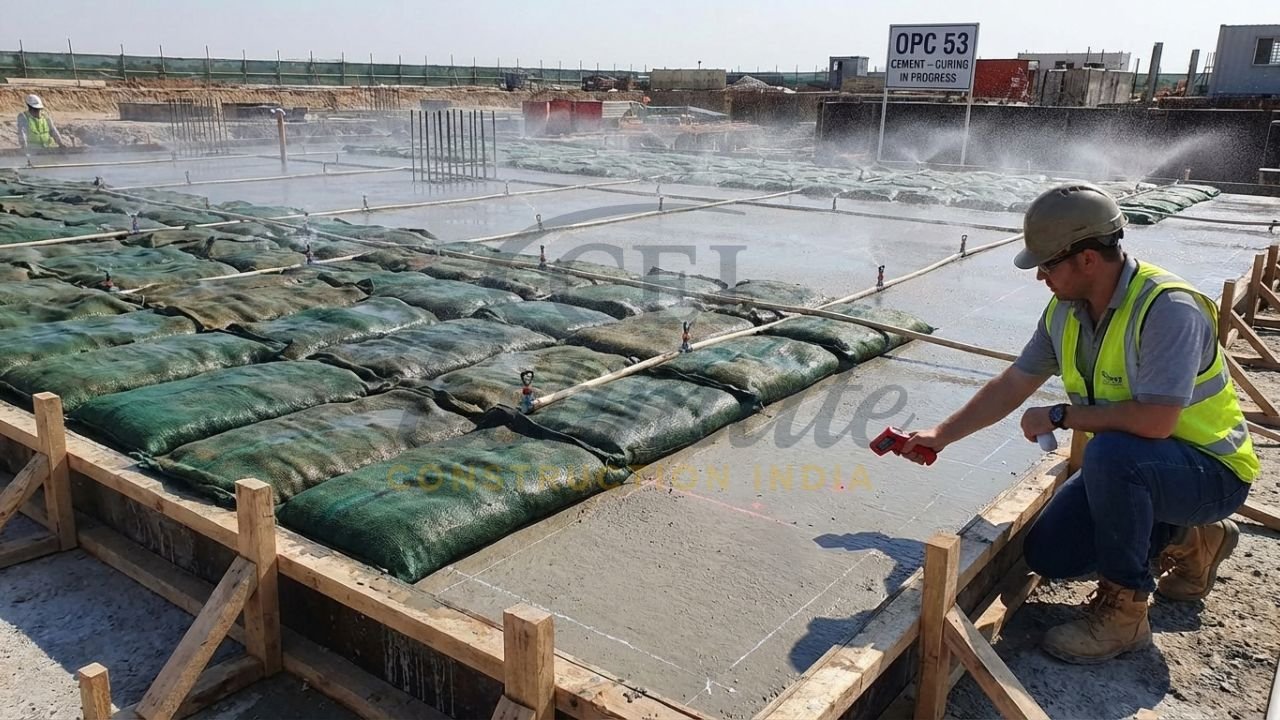
Proper Curing
Curing is extremely important for OPC 53.
Recommended curing period:
- Minimum 14 days
Methods include:
- Ponding
- Wet hessian cloth
- Continuous sprinkling
Storage
Store cement in:
- Dry environment
- Raised platform
- Away from moisture
Testing
Important tests include:
- Slump test
- Cube compressive test
Common Mistakes
Avoid these mistakes:
- Adding excess water
- Poor vibration
- Inadequate curing
- Using expired cement
Top OPC 53 Grade Cement Brands in India 2026
Some trusted brands include:
- UltraTech OPC 53 — Widely used for high-strength RCC structures.
- ACC OPC 53 — Reliable strength and durability.
- Ambuja OPC 53 — Known for consistent quality.
- JK Lakshmi OPC 53 — Popular in North India.
- Dalmia OPC 53 — Strong performance for infrastructure works.
- Shree Cement OPC 53 — Cost-effective with good quality.
- Bangur OPC 53 — Widely available across India.
Price range in 2026:
₹420 – ₹520 per 50kg bag
FAQs on 53 Grade Cement Uses
Can I use 53 grade cement for normal house construction?
Yes, but PPC or OPC 43 is often more practical for residential buildings.
Is OPC 53 better than PPC for RCC columns?
For high-load columns, yes. For normal houses, PPC is usually sufficient.
What is the price of 53 grade cement in Agra 2026?
Typically ₹420–₹520 per 50kg bag.
Does 53 grade cement cause cracks?
It can cause cracks if curing is poor.
When should I avoid using OPC 53?
Avoid in:
- Mass concrete
- Normal plaster work
- Low-rise residential masonry
Conclusion
OPC 53 grade cement is an excellent choice for high-strength, fast-track, and heavy-load construction projects.
It is commonly used in:
- High-rise buildings
- Infrastructure projects
- Industrial foundations
- Precast structures
However, for most G+1 or G+2 residential houses in India, many engineers prefer PPC or OPC 43 cement because they provide better crack resistance and long-term durability.
The key is to choose the right cement for the right application and follow proper curing and construction practices.
Need precise material estimates for OPC 53 grade cement quantities, RCC takeoff for columns/beams/slabs, or complete project cost estimation? Get professional, fast help from experts today!
WhatsApp: +91 8630676890