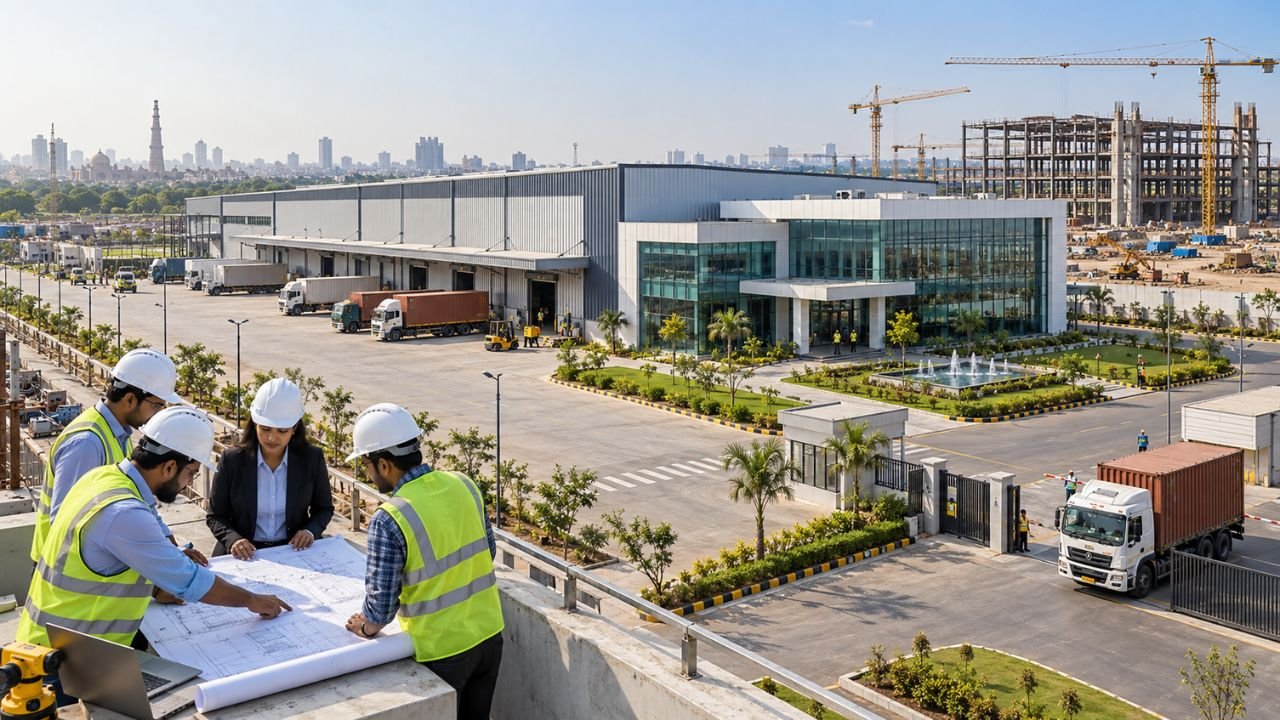
If you have spent any time on an Indian construction site, you know the drill. It’s 5 PM, the cement truck is late, three laborers haven’t shown up, and your site engineer is trying to find a receipt scribbled on a cigarette packet to justify a petty cash expense. By the time that data reaches your head office, your profit margins have already evaporated. In 2026, the “chalta hai” attitude is no longer just a bad habit—it is a financial death sentence.
The Indian construction landscape today is brutal. Builders are juggling sharp material price hikes, strict RERA timelines, and a complex GST environment that doesn’t forgive manual spreadsheet errors. Whether you are building a luxury villa in Goa or a highway in the Delhi NCR, the chaos of manual tracking leads to a 10–30% cost overrun that could have been prevented. This is where the right best construction project management software in India 2026 becomes your digital backbone, turning site-level chaos into real-time control.
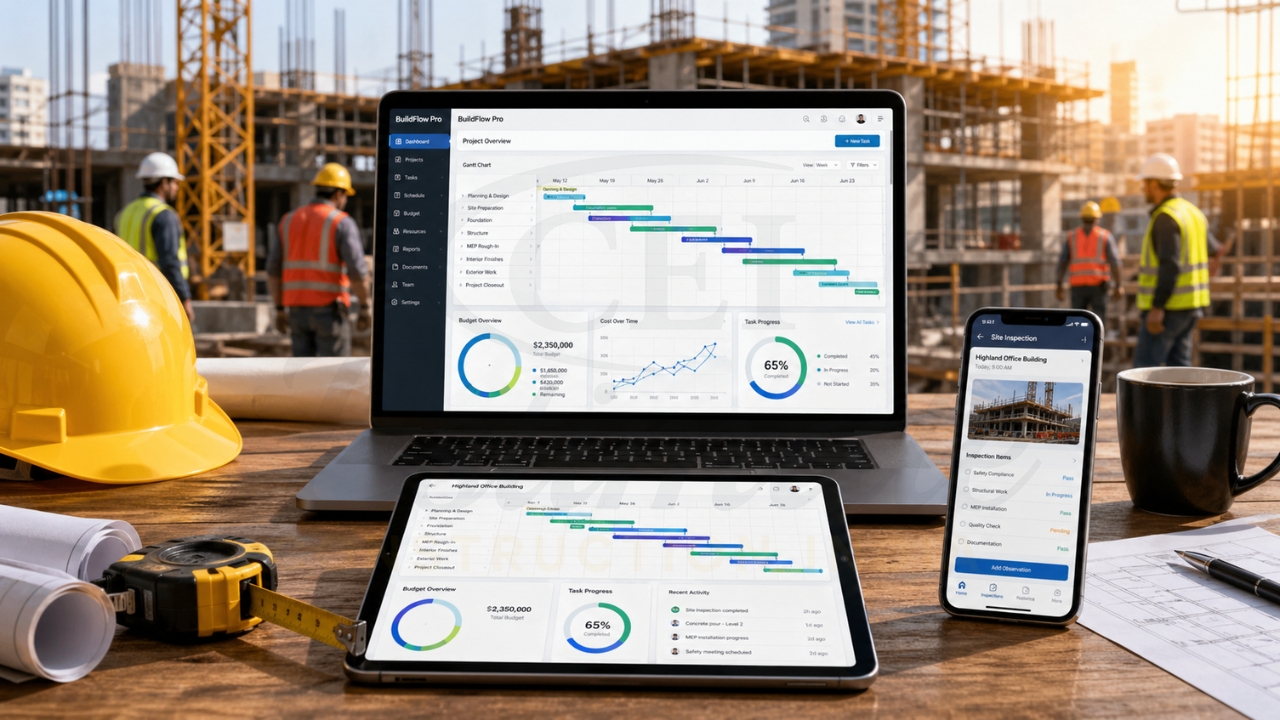
👉 Take the Next Step Toward Better Project Management – Choose the Right ERP Today.
Why Construction Project Management Software is Essential in 2026?
The complexity of modern Indian projects—fueled by the Pradhan Mantri Awas Yojana (PMAY) and a surge in high-speed infra corridors—has reached a breaking point. In 2026, digital adoption is no longer a luxury for enterprise EPC firms; it is a survival strategy for every contractor.
A dedicated project management software for construction industry in India offers three critical pillars of value:
- Real-Time Margin Protection: Seeing daily progress against your Bill of Quantities (BOQ) allows you to catch material theft or over-consumption before it ruins your monthly budget.
- Regulatory Compliance: Automated RA billing and GST-ready reporting ensure you stay on the right side of RERA while appearing professional to investors.
- Predictive Analytics: With monsoons and labor shortages becoming more unpredictable, AI-driven tools now forecast risks up to two weeks in advance.
Firms that transition from Excel to integrated tools report a 15–25% reduction in project delays and a return on investment within 6 to 18 months.
Top 10 Construction Management Software in India 2026
Choosing the right tool depends on your turnover, project count, and specific “daily headaches.” Based on my experience consulting for builders across the country, here is a detailed review of the top 10 construction management software in India.
1. BuildNext
BuildNext has emerged as a favorite for residential builders because it bridges the gap between design and site execution beautifully.
- Key Features: VR planning integration, mobile-first site tracking, and built-in material libraries.
- Best For: Mid-sized residential builders and villa developers.
- Pricing: Mid-range; approximately ₹2L – ₹5L+ depending on project count.
- Pros: Very user-friendly; excellent Hindi UI support for site teams.
- Cons: Can feel restrictive for heavy infrastructure projects.
2. biCanvas
For large-scale EPC firms, biCanvas is the gold standard for data-driven decision-making.
- Key Features: Advanced BI dashboards, multi-currency support, and complex BOQ integration.
- Best For: Large enterprise EPC firms and multi-state developers.
- Pricing: Enterprise-level; starting around ₹15 Lakh+.
- Pros: Incredible data visualization; handles massive data volumes without lag.
- Cons: High learning curve; requires a dedicated IT team to manage.
3. Ramco ERP Construction
Ramco is the heavy hitter for AI-driven risk prediction and is one of the few Indian-origin tools that competes globally.
- Key Features: Facial recognition for labor attendance and end-to-end supply chain automation.
- Best For: Large construction conglomerates looking for “smart” automation.
- Pricing: Enterprise-grade; starting at ₹5L+ setup.
- Pros: Best-in-class labor management; reduces “ghost labor” costs significantly.
- Cons: Implementation can be long and expensive.
4. CONWORX (Concord ERP)
A popular choice among civil contractors in the Delhi NCR region, CONWORX focuses on site-to-office synchronization.
- Key Features: Localized RA billing, material procurement with RFID tracking, and offline mobile access.
- Best For: Infrastructure and civil contractors in North India.
- Pricing: ₹3L – ₹8L.
- Pros: Excellent local support; understands Indian site conditions like low connectivity.
- Cons: Limited international reporting features.
5. In4Suite
In4Suite is specifically designed for real estate developers, covering everything from CRM to RERA dashboards.
- Key Features: Portfolio heatmaps, lead management, and automated RERA reporting.
- Best For: Real estate developers and commercial builders.
- Pricing: ₹10L – ₹30L setup.
- Pros: Native RERA compliance; modular “pay-as-you-grow” model.
- Cons: Less focus on heavy civil/EPC projects.
6. Xpedeon
Xpedeon is highly regarded for its comprehensive coverage of the project lifecycle, specifically designed for general contractors.
- Key Features: Tender management, sub-contractor portals, and detailed job costing.
- Best For: Infrastructure companies and large general contractors.
- Pricing: Custom; typically ₹10L – ₹25L.
- Pros: Deeply specialized for construction; handles complex sub-contractor billing.
- Cons: UI can feel slightly dated compared to newer SaaS players.
7. Odoo Construction
Odoo is the world’s most modular ERP and is frequently used by growing firms who want to start small.
- Key Features: Thousands of modules (Inventory, Accounting, CRM) and mobile-first design.
- Best For: Growing builders and small-to-mid contractors.
- Pricing: Very affordable; starting at ₹20k/year for basic modules.
- Pros: Gorgeous UI; very easy for site engineers to learn.
- Cons: Costs can add up quickly as you add more “apps”.
8. ERPNext
As an Indian-born open-source giant, ERPNext is ideal for firms that want total data control.
- Key Features: Native Indian GST support and robust project accounting.
- Best For: Tech-savvy contractors and firms with internal IT capabilities.
- Pricing: Free (Open Source) or up to ₹3L for managed services.
- Pros: Zero licensing fees; highly customizable for local material units.
- Cons: Requires technical knowledge to set up and maintain.
9. Procore
Procore is the global leader for document management and financials, now gaining massive traction in India.
- Key Features: Real-time progress dashboards and advanced document version control.
- Best For: Large developers with global standards and multi-city projects.
- Pricing: Volume-based; approximately ₹4L – ₹25L+/year.
- Pros: Exceptional mobile app; impeccable data security.
- Cons: Can be overkill for small local builders.
10. RDash
RDash is a “field-first” tool that focuses on simplicity and site-level task management.
- Key Features: AI-powered snag tracking and WhatsApp-like daily progress reports.
- Best For: Small contractors and interior designers.
- Pricing: Very affordable; approximately ₹2k/month.
- Pros: Very high adoption rate due to simplicity.
- Cons: Lacks deep financial ERP modules.
👉 Make Your Projects Faster & Profitable – Get Started with ERP Today!
Best Tools for Small Businesses & Contractors
For small builders handling 2–10 projects a year, you don’t need a multi-lakh system. You need something that replaces the endless WhatsApp groups and messy Excel sheets. The construction project management software for small business in India should focus on mobile usability and offline access.
I often recommend a “software stack” for small firms:
- Vyapar/myBillBook: For GST-compliant RA billing and petty cash.
- BuildNext Starter: For BOQ-linked planning and material tracking.
- RDash or Fieldwire: For daily progress photos and task tracking.
By moving away from manual tracking, small firms can reduce administrative work by 40% and boost profit margins by 15% simply by eliminating material wastage.
AI-Powered Construction Project Management Software
2026 marks the era of “Agentic AI” in the Indian construction sector. We are no longer just logging data; we are using construction project management software with AI in India to make better decisions.
Key AI features changing the game in India include:
- Predictive Risk Alerts: Tools like Ramco and BuildNext AI use historical data to flag potential weather delays or labor shortages 14 days in advance.
- Voice-to-Text Reporting: Site supervisors can now record site updates in Hindi, which the AI automatically converts into English reports for the head office.
- Computer Vision: AI scans site photos to detect safety violations (like missing helmets) or track material consumption automatically.
Using AI-driven takeoff tools can reduce bid preparation time by up to 65%, giving you a massive competitive edge in government tenders.
Best Free Construction Management Software in India
If you are just starting out and have a limited budget, you can still digitize your operations. The best free construction management software in India often involves using the community versions of open-source tools.
- ERPNext (Community Edition): Offers a full project management and accounting suite for free if you host it yourself.
- Odoo (Community Version): Provides a robust base for inventory and project tracking at no licensing cost.
- Zoho Books (Free Tier): Ideal for very small contractors (under ₹1.5 Cr turnover) to manage basic GST invoicing.
While free tools save on software costs, remember that they often require more time for setup and training.
Comparison Table: Top Construction Project Management Software 2026
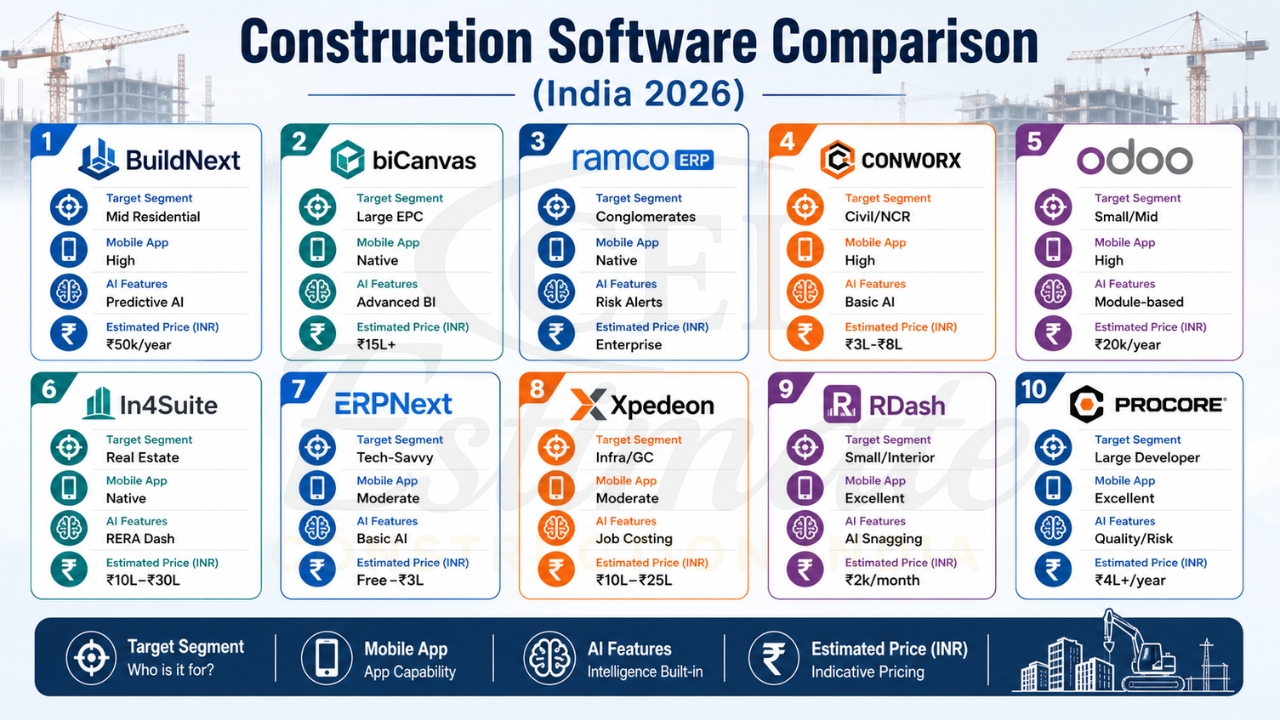
To help you visualize the market, here is a breakdown of how the top tools stack up against each other.
| Software | Target Segment | Mobile App | AI Features | Est. Price (INR) |
|---|---|---|---|---|
| BuildNext | Mid Residential | High | Yes (Predictive) | ₹50k/year |
| biCanvas | Large EPC | Native | Advanced BI | ₹15L+ |
| Ramco ERP | Conglomerates | Native | Risk Alerts | Enterprise |
| CONWORX | Civil / NCR | High | Basic | ₹3L – ₹8L |
| Odoo | Small/Mid | High | Module-based | ₹20k/year |
| In4Suite | Real Estate | Native | RERA Dash | ₹10L – ₹30L |
| ERPNext | Tech-Savvy | Moderate | Basic | Free – ₹3L |
| Xpedeon | Infra / GC | Moderate | Job Costing | ₹10L – ₹25L |
| RDash | Small / Interior | Excellent | AI Snagging | ₹2k/month |
| Procore | Large Developer | Excellent | Quality/Risk | ₹4L+ /year |
👉 Need Help? Get Expert Advice & Choose the Right ERP Easily!
How to Choose the Right Software for Your Business?
Buying software is like buying a crane—if you get one that is too small, it won’t do the job; if it is too big, you will waste a fortune on maintenance. Follow these three steps:
- Audit Your Pain Points: Are you losing money on material theft? Get a tool with strong inventory control like CONWORX. Are your bids too slow? Get an AI takeoff tool like BuildNext.
- Check Your Infrastructure: If your sites are in rural regions with poor internet, look for tools like PlanSwift or BuildNext that offer offline modes.
- Prioritize Team Adoption: Even the best software is useless if your site engineers find it too complex. Look for Hindi UI support and “WhatsApp-like” simplicity.
Frequently Asked Questions (FAQs)
- How much does construction software cost in India?
Prices range from ₹2,000/month for simple tools like RDash to ₹20 Lakh+ for enterprise systems like biCanvas. - Can these tools handle Indian GST and RERA?
Yes, most top Indian tools like BuildNext, In4Suite, and ERPNext have native modules for GST and RERA compliance. - Do site engineers need internet 24/7 to use these?
No. Tools like BuildNext and CONWORX offer offline modes where data can be entered on-site and synced later. - Will it help with material price hikes?
By tracking costs in real-time against your BOQ, you can detect wastage early and adjust your bidding strategy for future tenders. - How long does it take to implement?
A simple tool can be ready in 1 week, while a full enterprise ERP implementation usually takes 3 to 6 months. - Does the software support Hindi?
Yes, BuildNext and Vyapar offer Hindi UI support, which is critical for site teams in North India. - Is cloud-based software safe?
Reputable providers use AWS or Azure with high-level encryption, which is often safer than paper records in a dusty site office. - Can I integrate my existing Excel sheets?
Most modern systems allow for bulk Excel imports for BOQs and material lists to speed up the transition.
Conclusion
The construction industry in India is at a tipping point. As we move through 2026, the gap between “digital-first” contractors and those stuck in manual processes will only widen. Whether you are a small contractor looking for efficiency or a large developer seeking transparency, the goal is the same: control.
Don’t wait for a major project loss to trigger your digital transformation. Start by taking a few demos and perhaps beginning with a modular tool. If you are overwhelmed by the choices, reach out to us for a personalized consultation. At Construction Estimator India, we help you shortlist the right tools based on your scale and team size.
Ready to claim control of your projects? Contact Person at Construction Estimator India via WhatsApp at +91 8630676890 for a free software audit today.