
Arre bhai, let me tell you a story that happens on almost every other construction site in North India. There was this contractor, let’s call him Amit, working on a 1500 sq. ft. villa in Agra. Amit is a hardworking guy, solid in civil work, but when it came to electricals, he did what most of us do—he gave an “andaza” (estimate) of ₹1.8 lakh based on a quick look at the drawings. He thought, “Arre, isme kya hai? Wire lagega, switches lagenge, thoda labour charge… profit hi profit hai!”.
But real mein kya hua? By the time the final testing was done, Amit had already spent ₹2.6 lakh out of his own pocket. Why? Because copper prices shot up by 15% mid-project, the client added 12 extra power points for the kitchen without Amit charging extra, and 100 meters of conduit were wasted because the labour didn’t follow the route plan. Amit ka budget udd gaya, and instead of earning, he lost his hard-earned savings.
Bhai, why most Indian contractors lose money on electrical work isn’t a mystery; it’s a systematic failure in how we estimate, track, and manage electrical projects. In this guide, we’ll look at the common mistakes and, more importantly, how you can stop the bleeding and increase your profit margins by 15-25%.
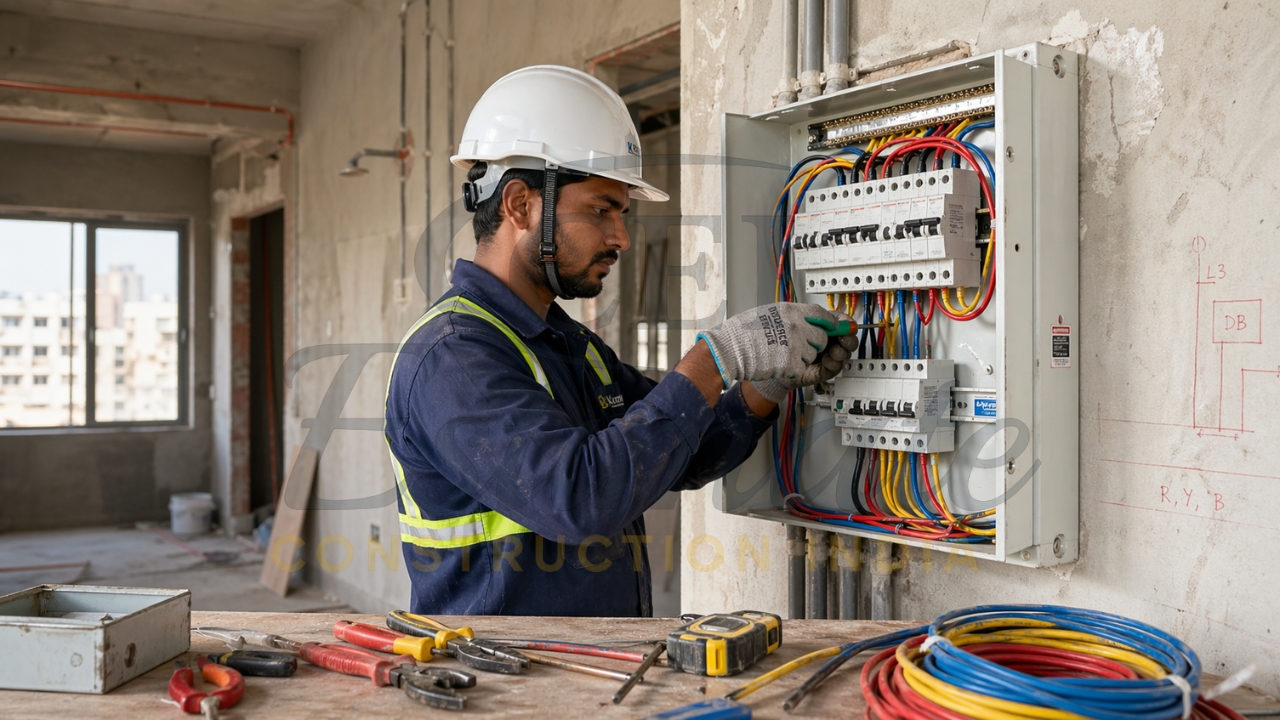
Top 10 Reasons for Electrical Work Cost Overrun in India
If you want to survive in the 2026 construction market, you have to stop guessing. Here are the real reasons why your electrical bill exceeds the estimate.
1. Poor or No Proper Electrical Estimation
Most contractors in India still use the “per point” or “lump sum” method without calculating the actual material requirement. Arre yaar, a point in a 10×10 bedroom is not the same as a point in a modular kitchen where you need 4sqmm wire for a heavy chimney or microwave. Without a professional electrical estimate template for Indian contractors, you are basically flying blind. If you don’t know exactly how many meters of wire are going into the slab versus the walls, you are inviting a common mistake in electrical estimation.
2. Using Outdated Material Rates
This is a silent killer. Copper is the “gold” of electrical work. In 2026, copper prices are fluctuating almost weekly. If you are quoting 2024 rates for a 2026 project, pakka loss ho jaata hai. Many contractors forget to check the current market price for brands like Polycab or Havells before signing the contract. Real estimation requires using a real electrical work estimate sample that reflects today’s reality, not last year’s memory.
3. Forgetting Hidden Costs (The “Invisible” Expenses)
Bhai, have you accounted for the transport of those heavy conduit bundles? What about the tea and snacks for the labour during overtime? Or the specialized tools like insulation testers and thermal cameras that need maintenance?. Hidden costs in electrical work also include wastage. On average, Indian sites see 10-20% wastage in cables and conduits due to poor cutting and planning. If you aren’t factoring in a 10% contingency, your profit is already gone before the first wire is pulled.
4. Incorrect Quantity Takeoff
This is where the big electrical estimation errors contractors make happen. Most of us just count the number of switchboards. But what about the meters of GI earthing strips? What about the number of junction boxes or the specific length of 25mm PVC conduits?. A small error in measuring the vertical run of a wire from the DB to the top floor can add up to hundreds of meters. This is why using an electrical takeoff sheet in Excel is non-negotiable for accuracy.
5. Not Using Professional Excel Formats
Still using a diary and a calculator? Arre bhai, it’s 2026! A manual calculation is 10 times more likely to have an error than a formula-driven sheet. An electrical estimate format in Excel for Indian contractors ensures that when you change the rate of one item, the entire BOQ updates automatically. This saves you days of manual work and prevents those “oops, I forgot the GST” moments.
6. Scope Creep and “Muft” (Free) Client Changes
“Bhaiya, ek extra socket yahan laga do na?” or “Arre, AC ka point thoda shift kar do.”. These sound like small requests, but each change involves extra labour time, more wire, and potentially re-chasing the wall. Most Indian contractors don’t document these changes and fail to charge for “Scope Creep.” Without a clear electrical BOQ, you can’t show the client that the work has exceeded the original agreement.
7. Wrong Material Selection
Sometimes we buy cheaper local brands to save money, only to have them fail during testing. Arre, then you have to redo the whole thing!. Redoing work is the fastest way to lose money. On the flip side, over-specifying (using 4sqmm where 1.5sqmm is enough) also kills your competitive edge. You need a balance, which you can only find in a best electrical house wiring estimate Excel template.
8. Ignoring GST, Insurance, and Statutory Costs
Many small builders forget that GST at 18% is a massive chunk of the bill. If your quote isn’t “GST Inclusive” or clearly mentioning it, you’re losing nearly one-fifth of your revenue. Also, in 2026, having Workmen Compensation Insurance (WCI) is mandatory. One small accident on site without insurance can lead to a legal nightmare that bankrupts your firm.
9. Inefficient Labour Management
Electrical work is 30-40% labour cost. If your team is sitting idle because the conduits didn’t arrive on time, or if they are doing rework because the drawings were misunderstood, you are paying for non-productive hours. In cities like Delhi NCR or Noida, skilled labour is expensive—you can’t afford to waste their time.
10. Lack of Proper Documentation and BOQ
If you don’t have a signed Bill of Quantities (BOQ), the client will always argue about the final bill. “Arre, itna paisa kyun?” they will ask. A professional BOQ following IS 1200 standards makes you look trustworthy and professional. It protects you from payment delays and disputes.
| Reason | Impact on Profit | How to Fix It |
|---|---|---|
| No Estimation | High (20-30% Loss) | Use a professional electrical estimate template. |
| Outdated Rates | Moderate (10-15% Loss) | Update rates monthly based on market. |
| Hidden Wastage | Moderate (10% Loss) | Use an electrical quantity takeoff sheet. |
| Scope Creep | High (Untracked Loss) | Document every change in the BOQ. |
| Manual Billing | High (Risk of Errors) | Use an electrical estimate format in Excel. |
Real-Life Case Studies from Indian Construction Sites
Case Study 1: The “Andaza” Disaster in Noida
A contractor quoted a lump sum of ₹4 lakh for a commercial office. He didn’t use a real electrical work estimate sample. Mid-way, the client requested smart-grid integration. The contractor, wanting to please the client, said “Ho jayega.” He didn’t realize that smart systems require different cabling and more labour hours. He ended up spending ₹5.5 lakh and had to take a loan to finish the project.
Case Study 2: The Copper Hike in Meerut
In early 2026, a house wiring contractor in Meerut signed a contract for three 2BHK flats. He didn’t include a “Price Escalation” clause in his estimate. Two weeks later, copper prices spiked. Because he hadn’t used a ready-to-use electrical estimate template that highlights material risks, he absorbed the cost and lost his entire 15% profit margin.
How Professional Electrical Estimation Can Save You Lakhs?
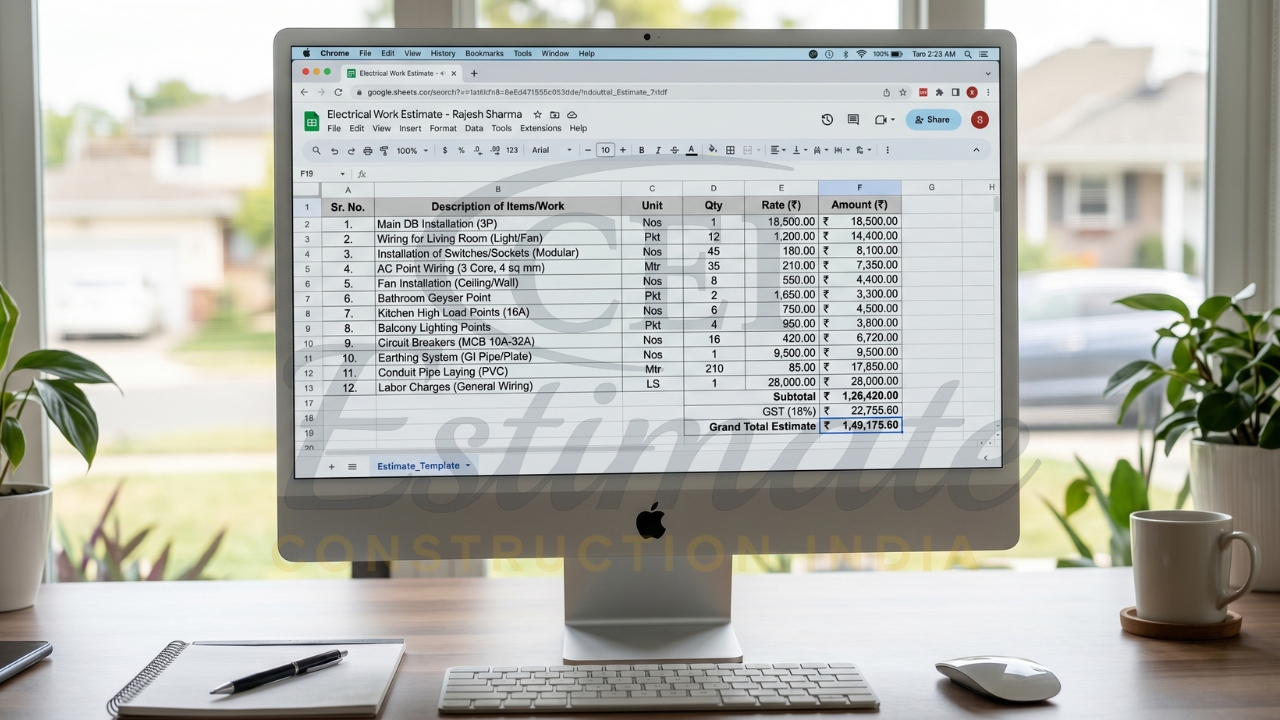
Bhai, the solution isn’t to work harder; it’s to work smarter. By using a professional electrical estimate template for Indian contractors, you can complete a detailed, error-free quote in under 45 minutes instead of 3 days.
Imagine having an electrical takeoff sheet in Excel that automatically calculates the exact number of switch modules and wire coils needed based on your measurements. You don’t just save time; you build trust. When a client sees a detailed electrical estimate sample with actual numbers, they know you aren’t overcharging them. They see you as a professional, not just another “thekedar” (contractor).
Using the best electrical house wiring estimate Excel template allows you to:
- Account for 18% GST accurately.
- Include labour rates per point or per sq. ft.
- Factor in city-wise rate adjustments for Delhi, Mumbai, or Lucknow.
- Calculate electrical loads to ensure safety and avoid rework.
Practical Tips to Stop Losing Money in 2026
- Digital First: Move all your estimations to an electrical estimate format in Excel for Indian contractors. Stop using paper.
- Bulk Buying: Once you have an accurate electrical quantity takeoff sheet, buy your materials in bulk. This can save you 10-15% compared to buying as you go.
- Insurance is an Investment: Don’t skip on Public Liability or Workmen Compensation. It protects your profit from “Black Swan” events.
- Clear Communication: Always provide a professional BOQ. If the client wants a change, update the BOQ and get it signed before starting the work.
- Track Wastage: Use ERP or simple tracking tools to see where your materials are going. Reducing waste from 15% to 5% can add thousands to your bottom line.
Comparison: Wrong Way vs. Right Way
| Feature | The “Old School” Way (Loss) | The “Professional” Way (Profit) |
|---|---|---|
| Method | Paper/Mental “Andaza” | Electrical estimate format in Excel |
| Quantity | Guessing Coils | Electrical takeoff sheet in Excel |
| Rates | Last Year’s Prices | Real-time Market Rates (2026) |
| Changes | “Bhai-chara” (Free work) | Documented Scope Revision |
| GST | Often Forgotten | Integrated 18% Calculation |
| Professionalism | Unreliable Image | High Trust / More Tenders Won |
Frequently Asked Questions (FAQs)
- Why is my electrical bill always higher than my estimate?
Most likely because you missed hidden costs like wastage, transport, or small fixtures. Using a detailed electrical takeoff sheet in Excel helps capture these minor items that add up fast. - Is a “per point” rate safe for contractors?
Not really, yaar. A point in a kitchen is more expensive than a point in a balcony. It’s better to estimate based on actual material and labour using a professional electrical estimate template. - How much wastage should I factor in?
In India, you should typically allow for 10% wastage on wires and conduits. If the site is complex, it could go up to 15%. - Should I include GST in my initial quote?
Yes, absolutely! Always mention 18% GST clearly to avoid surprises during final billing. It’s part of a standard electrical estimate format in Excel. - How often should I update my material rates?
For copper-based items like wires, you should check rates every month or even every two weeks if the market is volatile. - Do I really need insurance for a small house project?
Arre bhai, one short-circuit or one fall from a ladder can cost you lakhs in compensation. Insurance for electrical contractors is very affordable and a must-have in 2026. - How can I win more tenders against low-bidding competitors?
By showing a professional, transparent real electrical work estimate sample. Quality clients prefer a contractor who knows his numbers over someone who gives a random low price and then asks for more money later. - Can Excel templates really save me time?
Yes, contractors using our ready-to-use electrical estimate template report saving over 25 hours per month on paperwork.
Conclusion
Bhai, at the end of the day, your business runs on profit, not just hard work. Why most Indian contractors lose money on electrical work boils down to one thing: a lack of precision. Whether you are working in Lucknow, Agra, or Delhi NCR, the “andaza” method will eventually lead to a “budget udd gaya” situation.
Stop the guesswork today. Using a professional electrical estimate template and a proper electrical takeoff sheet in Excel can easily boost your profit margin by 15-25%. It makes you look like a pro, keeps your clients happy, and most importantly, keeps your money in your pocket.
Ready to stop losing money? Download our best electrical house wiring estimate Excel template and start bidding with confidence. Arre, professional bano, tabhi toh kaam badhega!.