
What is plinth in construction? For any homeowner or builder in India, understanding the plinth level is the first step toward a durable home. The plinth is the level where the substructure ends and the superstructure begins. It serves as the critical transition zone between the hidden foundation and the visible walls. Its primary purpose is to protect your building from moisture, distribute the structural load evenly, and prevent cracks during settlement. Without a properly designed plinth level construction, your home is at high risk for dampness, mold, and even structural instability during India’s heavy monsoon seasons.
What Is Plinth in Construction? (Quick Answer)
In architecture and civil engineering, the plinth is the base or platform upon which a column or structure rests. If you are building a house in India, you will encounter the term “plinth level” immediately after the foundation is completed.
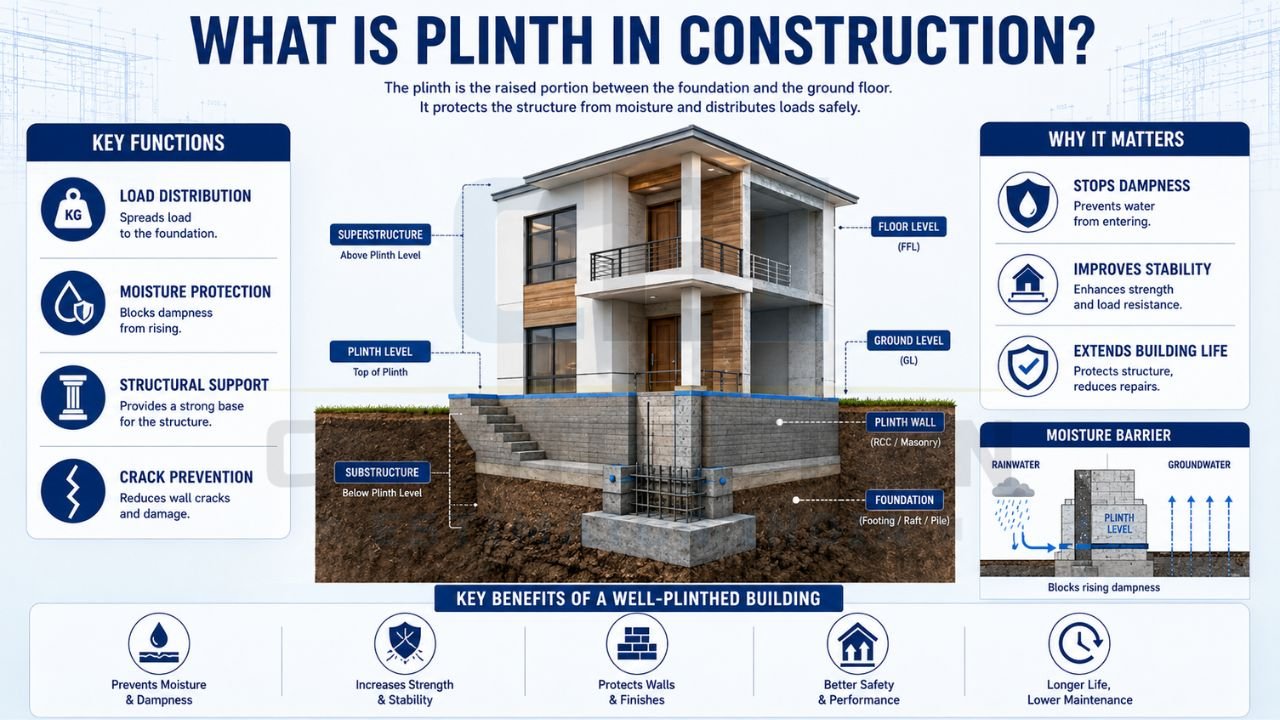
Plinth Definition
- The Junction Point: The level at which the Substructure (foundation) ends and the Superstructure (living area) starts is termed as the plinth level.
- The Divider: It is the line that differentiates the Substructure and Superstructure.
- Physical Location: It is the part of the Superstructure located between the top of the tie beam at finished ground level and the floor level of the building.
- Sequence: It is usually constructed directly on top of ground level and immediately after the what is foundation in construction is finished.
Plinth Functions
- Load Distribution: It distributes the weight and pressure of the building proportionally across a wider area.
- Structural Support: It enhances overall stability and supports the weight of the structure above it.
- Moisture Barrier: It does not permit dampness and moisture from the ground floor to reach the building’s prime structure.
- Crack Prevention: It prevents cracks within the walls if the foundation suffers from minor settlement.
Main Purpose
Plinth height is provided primarily to guard the superstructure against moisture which can seep in due to direct contact with the ground. In regions with high groundwater levels or heavy rains, like Delhi NCR or Agra, this stage is non-negotiable. It also limits the seepage of stormwater and rainwater into the building.
Plinth vs Substructure vs Superstructure
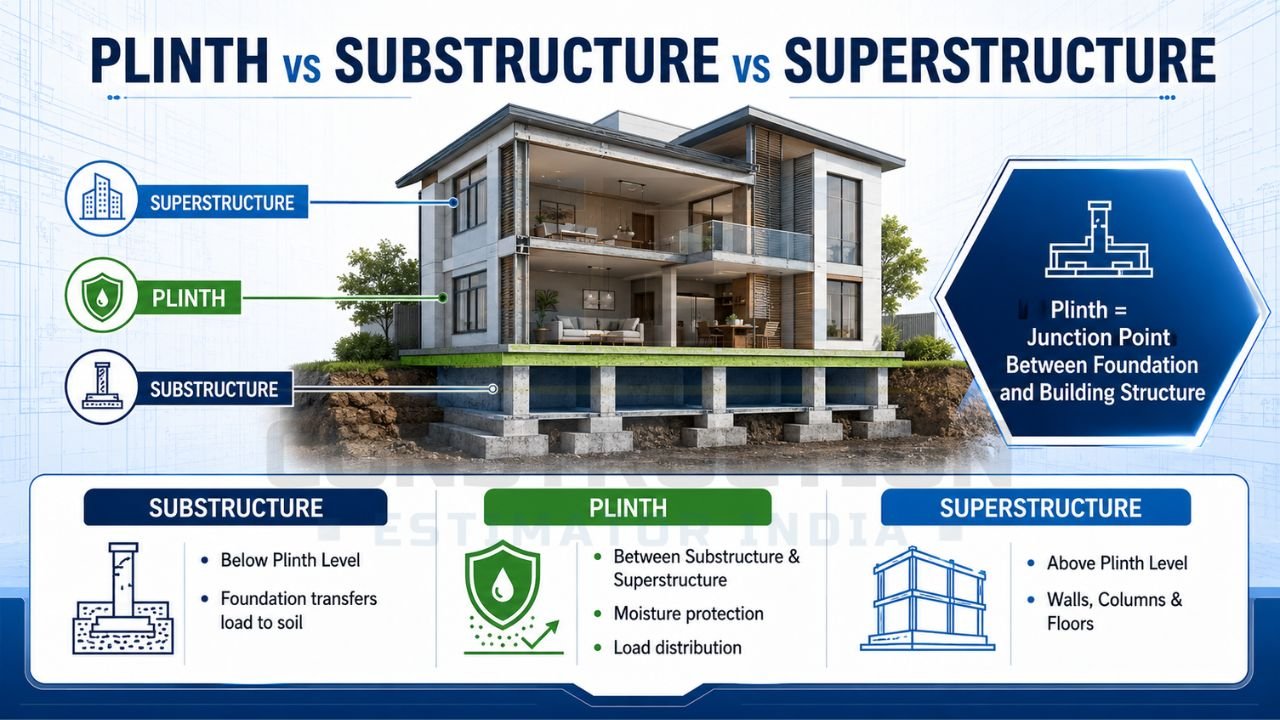
To understand how a building is organized, we use the plinth as the primary reference point.
| Component | Location | Purpose |
|---|---|---|
| Substructure | Below plinth level | The foundation that transfers the load to the soil |
| Plinth | Between substructure and superstructure | Transition zone for moisture protection and load distribution |
| Superstructure | Above plinth level | The main building including walls, columns, and floors |
The plinth is the junction point where the substructure concludes and the superstructure commences.
Plinth Beam: Purpose and Importance
A common question among new builders is, “what is plinth beam in construction?” A plinth beam is a reinforced concrete beam constructed between the wall and its foundation. It is a horizontal structural element that connects the columns of the building, providing a rigid frame.
Plinth Beam Purpose
- Prevents Crack Propagation: If the foundation settles slightly, the plinth beam prevents these cracks from extending upward into the masonry walls.
- Even Load Distribution: It ensures the load of the walls is distributed evenly over the entire foundation.
- Reduces Settlement Issues: By acting as a tie beam, it helps the building resist loading due to unequal soil pressure.
- Water Seepage Barrier: In framed structure homes, these beams act as a physical barrier to stop water from rising via capillary action.
- Dampness Protection: It protects the rest of the house from mold and mildew that often result from wet foundations.
For a deeper dive into structural specifications, read our guide on what is plinth beam in construction.
Plinth Construction Process: Step-by-Step
Following a standardized house construction step by step process in India ensures you don’t miss critical structural checks.
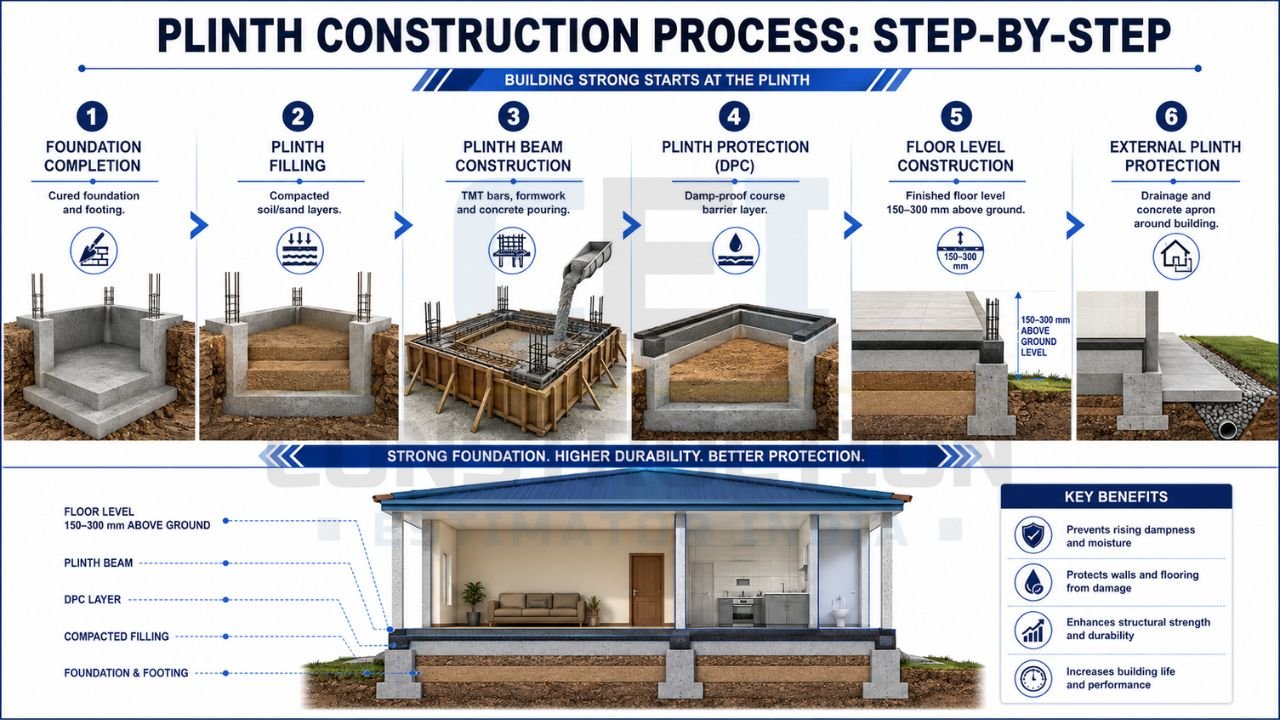
Step 1: Foundation Completion
Ensure the foundation work is fully completed and cured as per the architectural plan.
Step 2: Plinth Filling
The area between the foundation walls is filled with compacted soil or sand. Proper layering and compaction are essential to prevent future floor settlement.
Step 3: Plinth Beam Construction
Construct the plinth beam according to structural designs. This involves placing reinforcement bars (TMT bars), setting up the shuttering (formwork), and pouring high-quality concrete.
Step 4: Plinth Protection (DPC)
Once the beam is ready, apply a damp-proof course (DPC) at the top plinth level. This what is DPC in construction layer provides the final line of defense against dampness.
Step 5: Floor Level Construction
The internal flooring is constructed above the plinth level. Ensure the finished floor level (FFL) is at least 150mm to 300mm higher than the external ground level.
Step 6: External Plinth Protection
Provide proper drainage and a concrete apron (plinth protection) around the building perimeter to prevent water from clogging near the foundation.
Types of Plinth in Construction
Depending on your budget and building type, you may choose different materials for your plinth:
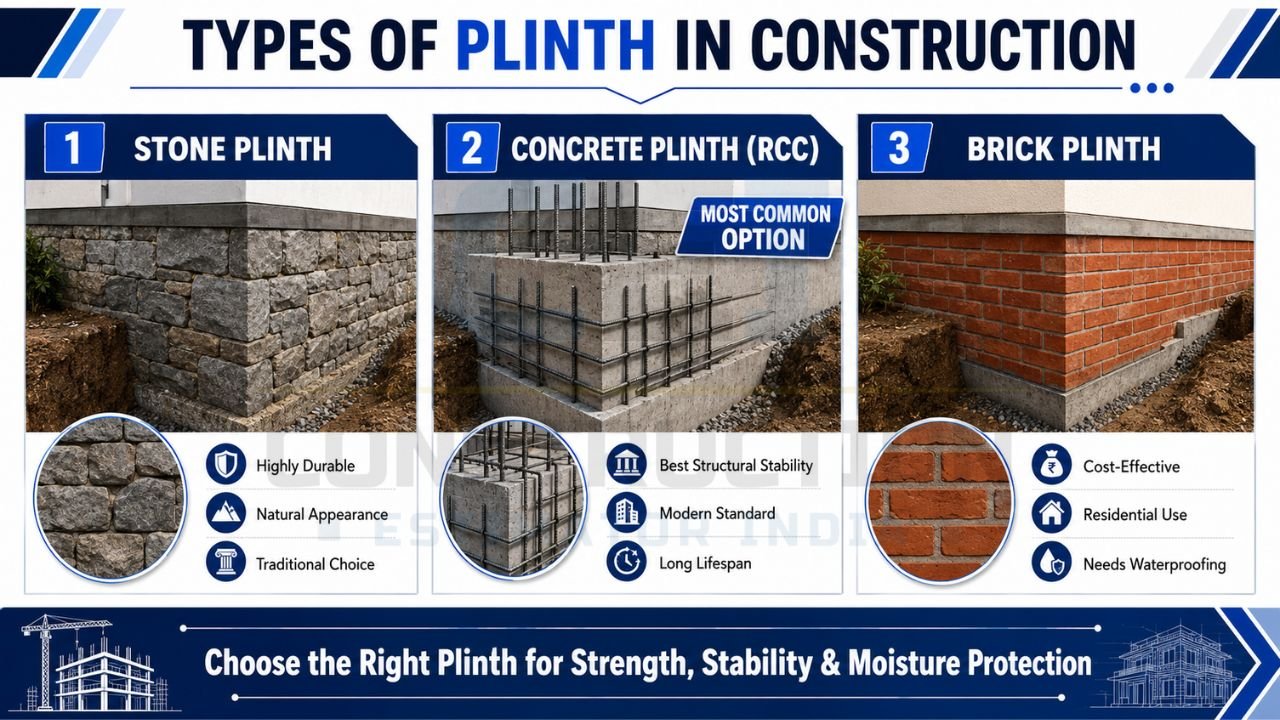
- Stone Plinth: Traditionally used in areas where stone is abundant. It is highly durable and aesthetically pleasing but can be labor-intensive.
- Concrete Plinth: The most common modern method using reinforced cement concrete (RCC). It offers the best structural stability.
- Brick Plinth: Often used in smaller residential units. While cost-effective, it requires meticulous waterproofing to prevent seepage.
Plinth Height: How Much Is Required in India?
Deciding the plinth height in building India depends on several local factors:
- Road Level: Your plinth should always be at least 1.5 to 2 feet (450mm to 600mm) above the crown of the nearest road to prevent rainwater from entering.
- Flood History: In flood-prone areas, a higher plinth (900mm to 1200mm) is mandatory.
- Drainage Systems: Consider the depth of the local municipal sewage lines to ensure your house drains properly.
Typical Standards
- Residential Buildings: 300–600 mm.
- Commercial Buildings: 450–900 mm.
Advantages of Proper Plinth Construction
Investing in a professional plinth level construction offers long-term benefits:
- Structural Longevity: By distributing column loads equally, the plinth prevents structural fatigue.
- Healthy Living Environment: It acts as a form of waterproofing that keeps your walls dry and free from mold.
- Enhanced Stability: It provides the sturdiness required for multi-story residential units.
- Architectural Appeal: A well-defined plinth makes the structure harmoniously blend with the surrounding landscape.
Common Plinth Construction Mistakes to Avoid
Many homeowners in India make expensive errors at this stage. To avoid these, read our guide on 7 common expensive mistakes in house construction in India.
- Insufficient Height: Setting the plinth level with the road allows dust and water to enter the home easily.
- Skipping the DPC: Failing to apply a damp-proof course allows moisture to rise through capillary action, damaging expensive paints and wall finishes.
- Inadequate Filling: Using uncompacted loose soil for plinth filling leads to floor cracks after the first monsoon.
- No Plinth Beam: In framed structures, skipping the plinth beam significantly increases the risk of wall cracks during soil settlement.
- Poor Materials: Using low-grade cement or rusted steel in the plinth beam compromises the entire building’s base.
Conclusion
If you are planning a house construction in India and want to ensure your foundation and plinth are built to the highest standards, contact Construction Estimator India. We provide professional:
- Plinth construction guidance and structural support.
- Accurate construction cost estimation.
- Professional BOQ (Bill of Quantities) and DPR (Detailed Project Report).
- Planning services for residential and commercial projects nationwide.
Don’t risk your dream home with structural failures. Get an expert estimate today!
WhatsApp / Call: +91 8630676890
Location: India-wide Service
FAQ — What Is Plinth in Construction?
What is plinth in construction?
Plinth is the level or base that separates the substructure (foundation) from the superstructure (living area).
What is the plinth level in a building?
It is the height of the floor above the surrounding ground level, typically provided to protect against dampness and floodwater.
What is the purpose of plinth in construction?
Its primary purpose is to safeguard the building from moisture, distribute weight to the foundation, and prevent crack propagation.
What is plinth beam and its purpose?
A plinth beam is an RCC beam that connects columns and distributes wall loads evenly to prevent cracks from foundation settlement.
How is plinth height determined?
It is determined based on road level, local flood history, and the depth of the local drainage system.
What is DPC at plinth level?
DPC (Damp Proof Course) is a layer of waterproofing material applied at the top of the plinth to stop moisture from rising up the walls.
What is the difference between substructure and superstructure?
Substructure is the part of the building below ground (foundation), while superstructure is the part above the plinth level.
Why is plinth protection important?
It prevents rainwater from stagnating near the foundation, which could otherwise weaken the soil and cause settlement.
What are the types of plinth?
The main types include Stone, Concrete (RCC), and Brick plinths.
How do I contact Construction Estimator India for support?
You can reach us at +91 8630676890 (WhatsApp / Call) for plinth construction support, BOQ preparation, and detailed estimation services.