Basic Definition – What Does “Civil Work” Mean?
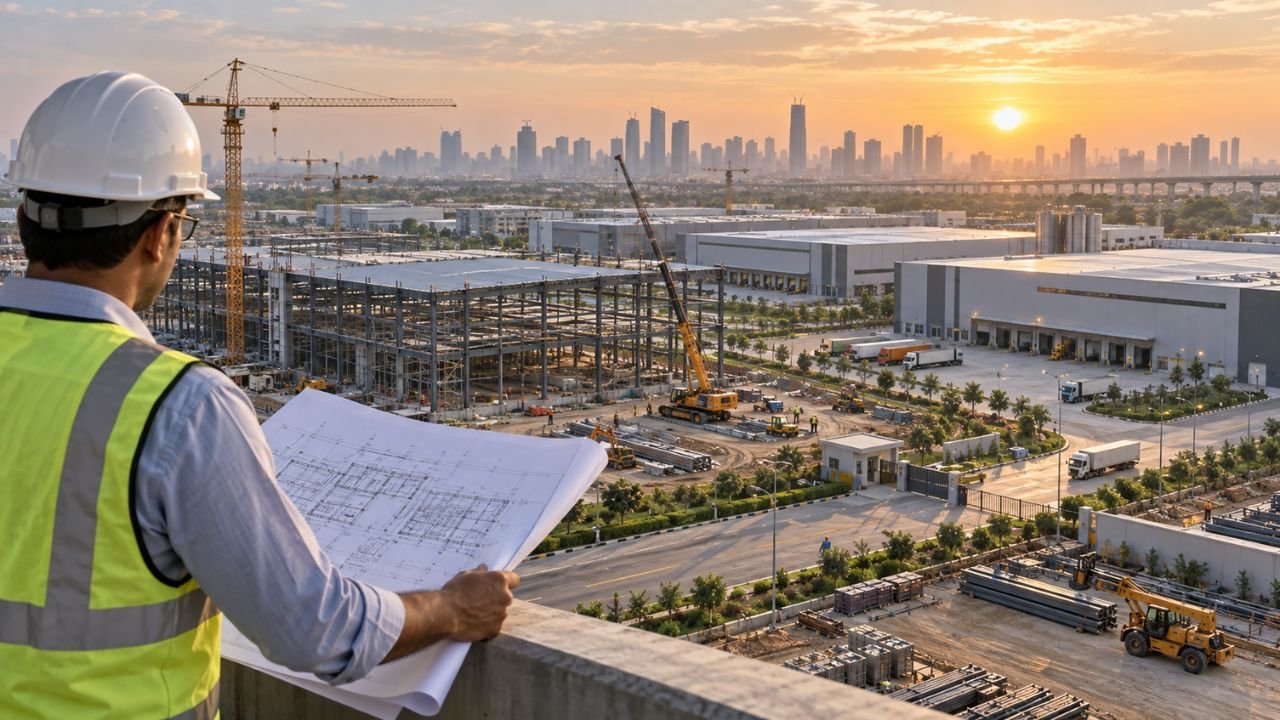
To understand the core civil work meaning, it helps to look at its roots in civil engineering. Civil engineering is the profession dedicated to designing, building, and maintaining our physical and naturally built environment. “Civil work” is the physical execution of those designs on the ground.
When a professional talks about civil construction work, they are referring to the actual site activities that build permanent, physical infrastructure. This includes roads, bridges, dams, retaining walls, underground utility lines, and the load-bearing structures of buildings. Civil work is mostly about the “heavy lifting”—the materials like concrete, steel, earth, and stone that ensure a structure stands tall and remains stable against wind, weather, and gravity. It rarely refers to temporary structures (like temporary scaffolding) or purely decorative elements.
Civil Work vs General Building & Finishing Work
One of the most common points of confusion for clients and junior engineers is where civil work ends and other construction work begins. Let’s break it down:
-
Civil Works: This is the heavy, foundational stuff. It includes earthworks (digging and leveling), building the foundation, erecting the reinforced cement concrete (RCC) structure (columns, beams, slabs), and laying external infrastructure like large drainage pipes or boundary walls.
-
Building Works: Sometimes used interchangeably with civil work, but often refers to enclosing the structure. This includes building the blockwork or brick walls, constructing the roof, and installing the outer shell of the building.
-
Finishing & Interior Works: This is what makes a building livable and beautiful. It includes plastering, painting, laying floor tiles, installing doors and windows, carpentry, modular furniture, and MEP (Mechanical, Electrical, and Plumbing) fixtures like lights and taps.
👉 Click Here to Purchase the Civil Work BOQ Template for ₹249
A Practical Example: Imagine you are building a new house. The contractor digging the soil, pouring the concrete footings, and tying the steel bars for the pillars is doing civil work. Once the bare brick walls and concrete ceilings are up, the civil work is mostly done. When the painter arrives to apply primer, or the carpenter comes to build your kitchen cabinets, that is finishing work. When a contract states it covers “civil work only,” it means you will get a bare, structural shell, not a finished, ready-to-move-in house.
Types of Civil Work in Construction Projects
The scope of civil works in building construction and infrastructure is vast. Here are the main categories you will encounter:
-
Earthworks and Site Preparation: This involves clearing the land of trees and debris, excavating (digging) for basements or foundations, backfilling soil, grading the land to the right slopes, and compacting the earth so it can hold weight.
-
Foundations and Sub-structure: Everything that happens below ground level to support the structure above. This includes pouring concrete footings, driving piles deep into the earth, building raft foundations, and constructing retaining walls to hold back soil.
-
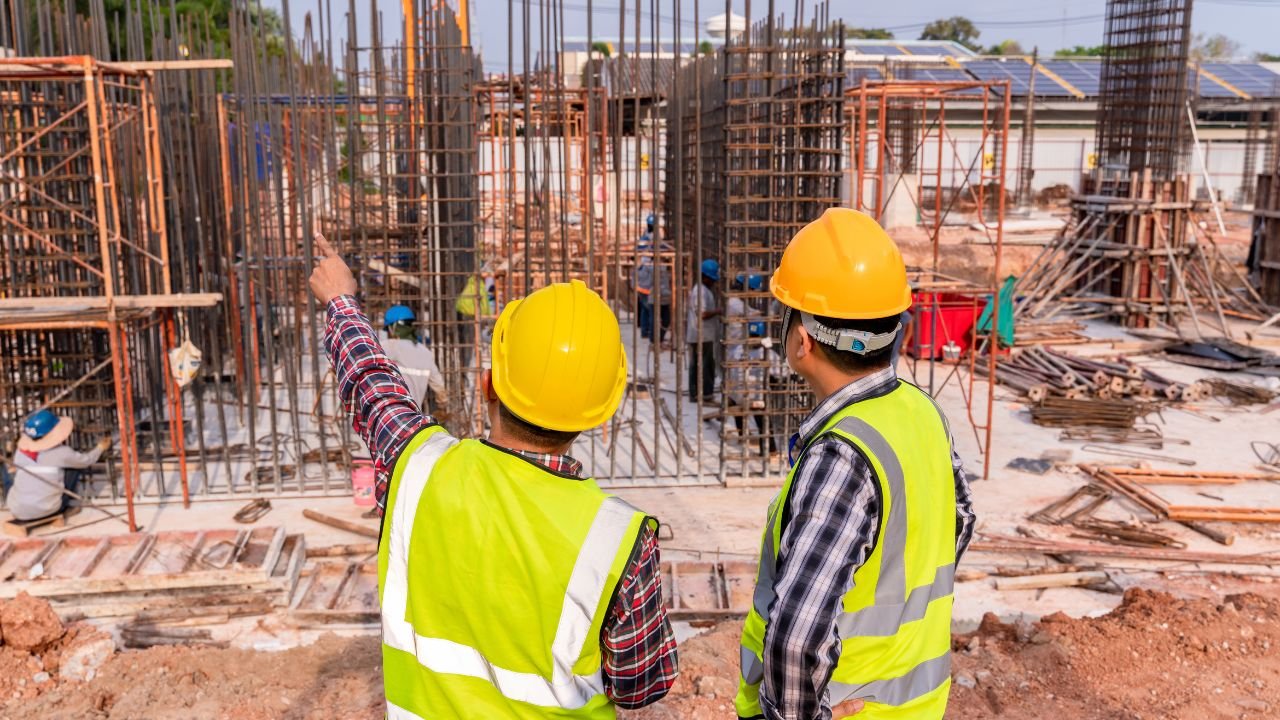
Concrete and Structural Work: The creation of the building’s main frame. This includes setting up formwork (molds), tying steel reinforcement bars (rebar), and pouring concrete to create RCC columns, beams, slabs, and shear walls.
-
Masonry and Blockwork: The process of building walls using bricks, concrete blocks, or stone, held together with cement mortar. This includes both load-bearing walls (which support the roof) and partition walls (which just divide rooms).
-
Roads and Pavements: Constructing pathways for vehicles and pedestrians. This ranges from internal society roads and parking lots to footpaths and massive national highways.
-
Drainage and Stormwater Management: Building the systems that carry water away from the site to prevent flooding. It includes underground drains, concrete culverts, and stormwater lines.
-
Utilities and Services Infrastructure: Laying the underground groundwork for city services. This includes installing main water supply pipes, sewer networks, and underground electrical or fiber-optic cable ducts.
-
External Works and Site Development: The civil work outside the main building footprint, such as erecting boundary walls, building entry gates, and doing the heavy earth-moving required for landscaping.
👉 Click Here to Purchase the Civil Work BOQ Template for ₹249
Examples of Civil Work in Different Project Types
Because civil work covers so much ground, its actual appearance changes depending on the type of project being built. Here are a few examples of civil work in different contexts:
-
In a Residential Building: The civil work starts with excavating trenches for the foundation. It moves on to pouring the concrete footings and erecting the RCC frame (the columns and slabs for each floor). It also includes building the brick walls, constructing the underground water sump, and installing the septic tank and external drainage pipes that connect the house to the city sewer.
-
In a Road Project: Here, civil work is the entire project. It includes massive earthworks to level the terrain, laying down and compacting the sub-base (crushed stone and gravel), applying the base course, and finally pouring the asphalt or concrete pavement layers. It also involves building culverts (tunnels under the road for water) and side drains.
-
In an Industrial or Infrastructure Project: If you are building a factory or a power plant, civil work involves pouring massive, heavily reinforced concrete foundations designed to hold vibrating heavy machinery. It includes building pipe racks, massive water storage tanks, underground utility trenches, and heavy-duty internal roads for trucks.
In all these examples, civil work serves the same purpose: it creates the solid, permanent base before architectural finishes and mechanical/electrical systems can be installed.

Typical Activities Included Under Civil Work
If you step onto a site and watch a civil crew, you will see a specific set of daily activities. The most common activities included under civil construction work are:
-
Surveying and Setting Out: Using instruments like total stations to mark the exact locations of columns, walls, and boundaries on the physical ground based on architectural drawings.
-
Excavation, Shoring, and Dewatering: Digging the earth to the required depth. If the hole is very deep, shoring (supporting the earth walls so they don’t collapse) and dewatering (pumping out groundwater) are required.
-
Sub-base and Base Preparation: Laying down layers of crushed stone, gravel, and sand, and compacting them tightly with heavy rollers to create a stable bed for foundations or roads.
-
Formwork, Reinforcement, and Concreting: The classic trio of structural civil work. Carpenters build wooden or steel molds (formwork), bar-benders cut and tie steel wires (reinforcement), and workers pour liquid cement mixtures into the molds (concreting).
-
Block and Brick Masonry: Laying bricks layer by layer to form walls, along with constructing lintels (beams over doors) and chajjas (sunshades over windows).
-
Backfilling and Compaction: Putting soil back into the gaps around completed foundations and compacting it so the ground doesn’t sink later.
-
Laying Underground Pipelines and Manholes: Trenching and installing heavy PVC or concrete pipes for water, sewer, and stormwater, along with building brick or concrete inspection chambers (manholes).
Roles and Responsibilities in Civil Work
Executing civil works requires a highly coordinated team. Here is a look at who does what on a typical site:
-
Civil Engineers and Site Engineers: These are the qualified professionals who manage the daily operations. They read the structural drawings, plan the daily work, order materials, ensure the work meets quality standards, and enforce safety protocols.
-
Supervisors, Foremen, and Trades: Supervisors and foremen are the experienced hands-on leaders who direct the labor force. The tradesmen include highly skilled workers like masons (who do brickwork and plastering), carpenters (who handle formwork), bar-benders (who tie the steel), and heavy equipment operators (who drive excavators and cranes).
-
Quantity Surveyors (QS) and Estimators: These professionals work in the background. They calculate exactly how much cement, steel, and sand will be needed, prepare the Bill of Quantities (BOQ), and handle the billing and financial aspects of the civil work.
Ultimately, the civil engineer acts as the captain of the ship on site, ensuring that the complex web of planning, labor coordination, material management, and quality control results in a structure that exactly matches the design drawings.
Why Civil Work Is Critical for Safety and Durability
There is no room for compromise in civil work. While a bad paint job is an eyesore that can be easily fixed, poor civil work is a direct threat to safety and longevity.
Good civil work ensures structural stability. It guarantees that a building can safely carry its own weight, the weight of the people inside it, and environmental forces like high winds, heavy rain, or earthquakes. If the foundation is excavated properly, the concrete mixed to the right ratio, and the steel tied correctly, the building will have a long service life.
Conversely, the impact of poor civil work is severe. Inadequate soil compaction can lead to foundation settlement, causing massive cracks in the walls. Poor concrete cover over steel reinforcement leads to rusting and structural failure. Incorrect slopes in drainage work lead to waterlogging and foundation damage. Because civil work interacts directly with harsh environmental factors like groundwater, soil chemicals, and heavy loads, it is strictly governed by local building codes and engineering standards to keep the public safe.
Civil Work in Contracts, BOQs, and Quotations
Understanding civil work terminology is crucial when dealing with construction paperwork and finances.
-
Bills of Quantities (BOQs) and Tenders: In large projects, tender documents include a BOQ, which is a massive spreadsheet listing every single task. Civil work items are described meticulously. For example, a BOQ won’t just say “build a foundation.” It will specify the description (e.g., “M25 grade reinforced concrete in footings”), the unit of measurement (Cubic Meters), the estimated quantity, the rate per unit, and the total amount.
-
Contractor Quotations: For homeowners or small developers, contractors usually submit quotes. You might see terms like “civil work only” or “civil + finishing work.”
-
What Clients Need to Know: If a contractor quotes a very low price and specifies “only civil work,” you must understand that this price does not include your floor tiles, your plumbing fixtures, your electrical wires, your paint, or your windows. You are only paying for the grey, bare-bones structure. Always ask your contractor for a detailed breakdown so you know exactly where the civil scope ends and the finishing scope begins.
👉 Click Here to Purchase the Civil Work BOQ Template for ₹249
Civil Work vs Civil Engineering vs Civil Construction
People often mix up these three terms. While they are closely related, they refer to different aspects of the industry:
-
Civil Engineering: This is the academic discipline and professional field. It involves the complex mathematics, design, structural analysis, project planning, and management required to conceptualize a project safely.
-
Civil Work: As we’ve discussed, these are the actual, tangible, on-site activities and scopes (excavation, concreting, masonry) that physicalize the engineer’s design.
-
Civil Construction: This refers to the broader industry or economic sector that builds infrastructure. When someone says they “work in civil construction,” they mean they work in the industry that executes civil projects, which includes everyone from the machinery manufacturers to the site engineers.
Conclusion – Understanding Civil Work Helps You Read Projects Correctly
So, what is civil work in construction? It is the essential, heavy, and structural backbone of any building or infrastructure project, encompassing everything from digging the foundation and pouring the concrete frame to laying the underground utilities and building the masonry walls. It is the vital process of turning blueprints into a safe, permanent, physical reality.
Understanding this term is incredibly useful. For engineers and contractors, it allows for clear communication and precise task delegation on site. For clients and homeowners, it demystifies complex quotations and BOQs, ensuring you know exactly what you are paying for when a contractor mentions their scope of work. And for students and freshers, grasping the practical realities of civil work is the crucial bridge between textbook theory and actual site execution. Civil work is the unseen hero of our modern world—long before a building looks beautiful, civil work ensures it stands strong.