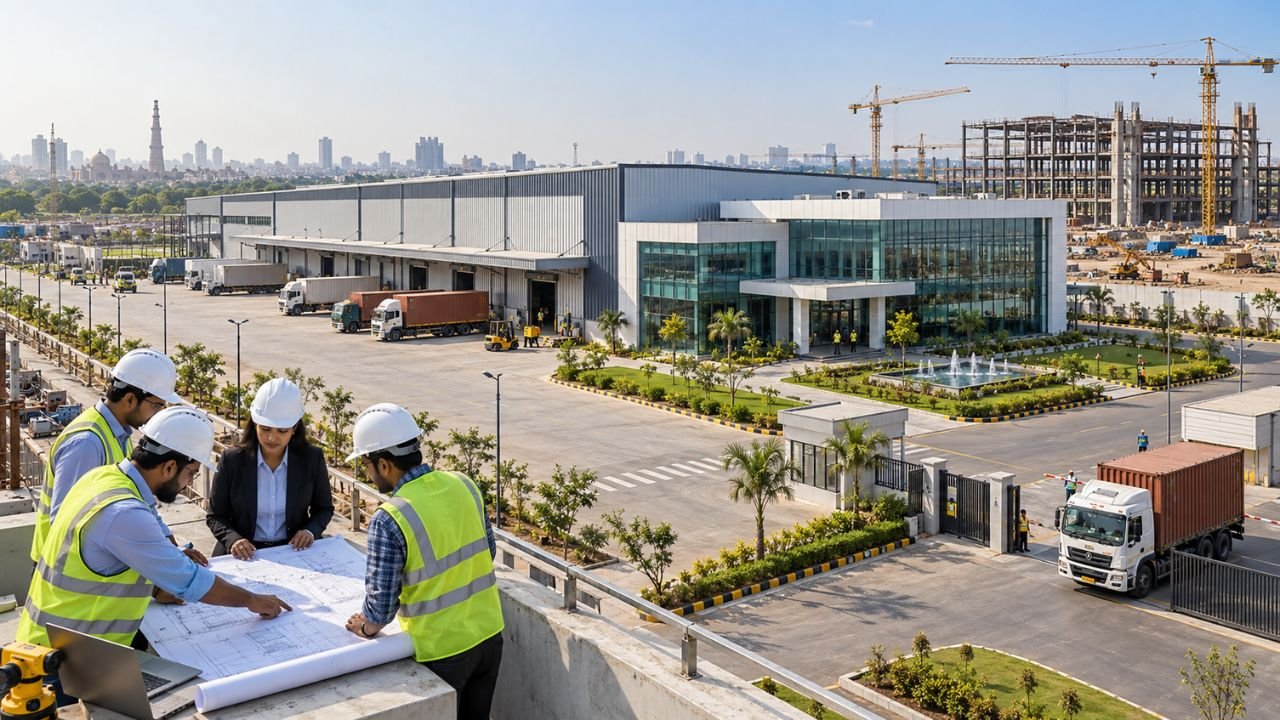
Imagine standing outside your newly constructed villa in Meerut or a luxury high-rise in Gurgaon, watching the sun set against a facade that doesn’t just reflect light, but tells a story of craftsmanship and resilience. In 2026, texture paint design for exterior walls is no longer just a “different look”; it is a strategic architectural statement designed to withstand the brutal 45°C North Indian heat, the relentless monsoon dust, and the high UV radiation that characterizes our subcontinent. At Construction Estimator India, we believe that choosing the right texture is a blend of “Quiet Luxury,” biophilic health, and precise financial engineering.
The direct answer to achieving a world-class exterior is balancing aesthetic depth—such as sand or stone finishes—with technical performance factors like crack-bridging and heat-reflective technology. As experts with our 10+ years of construction estimating expertise, we have seen how the right texture can mask masonry ripples and reduce long-term maintenance costs, while the wrong choice can inflate your Bill of Quantities (BOQ) by up to 25% due to improper surface preparation.
For accurate texture paint cost estimation or BOQ for your exterior walls project in India, WhatsApp or call us today at +91 8630676890.
2026 Exterior Texture Cheat Sheet
- Top 2026 Trends: “Sand Finish” for a grounded look, “Stone Texture” for luxury villas, and “Moonlit Silk” palettes.
- Climate Winner: Silicon-based textures like Asian Paints Apex Ultima Protek for superior monsoon protection and crack-bridging.
- Cost Impact: Texture paints generally increase material costs by 15–20% but can reduce labor by masking minor wall defects.
- Vastu Tip: Use “Burned Terracotta” in the South-East and light “Moonlit Silk” greys in the North-West for harmony.
- Expert Advice: Always test a 2ft x 2ft patch to see how the texture reacts to the Indian “Golden Hour” light.
What is Exterior Texture Paint? The 2026 Definition
In 2026, texture paint design for exterior walls is defined as a high-performance coating that uses specialized resins and aggregates (like quartz or sand) to create a three-dimensional surface. Unlike standard flat emulsions, texture paints are significantly thicker, providing a protective “skin” that can stretch over micro-cracks in masonry that expand during extreme Indian summers.
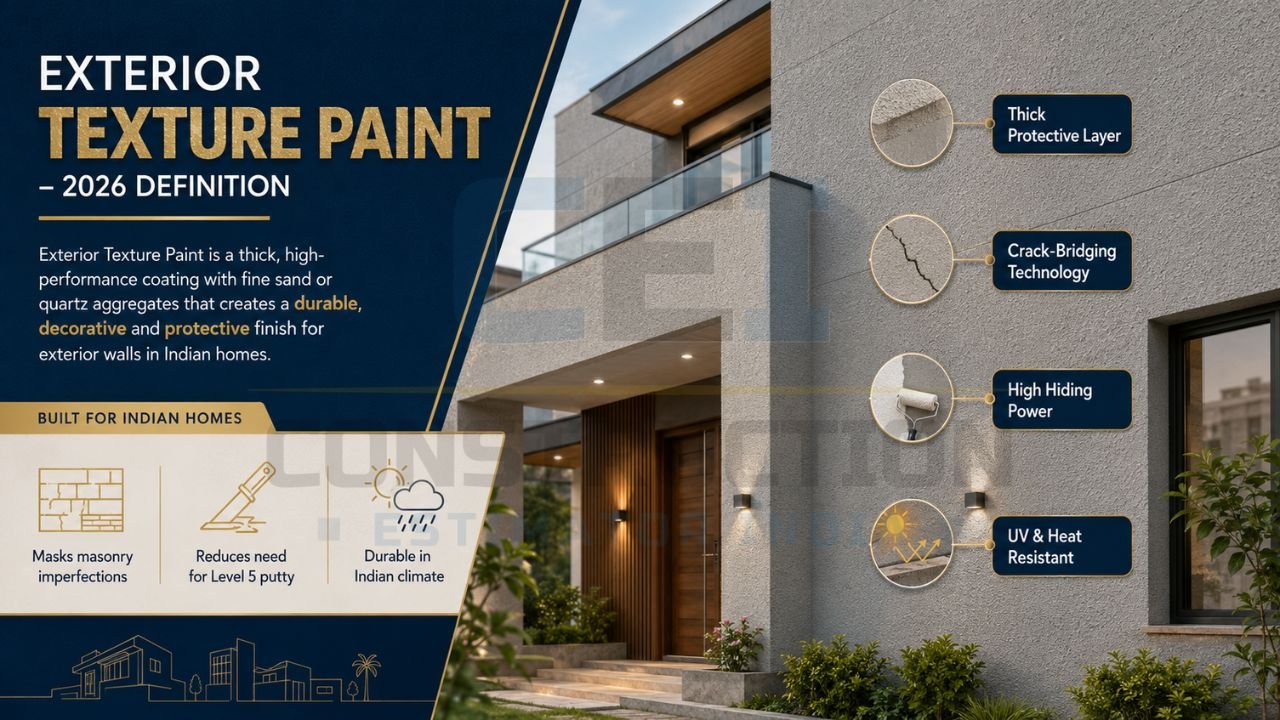
At Construction Estimator India, we categorize these finishes not just by how they look, but by their “Hiding Power”. A high-quality texture can mask ripples and “orange peel” textures often found in Indian masonry, saving you the high cost of “Level 5” wall putty preparation required for smooth gloss finishes.
Top 2026 Texture Paint Designs for Indian Facades
The Indian home improvement landscape in 2026 has shifted toward “Biophilic Design”—bringing the textures of nature to our urban facades.
1. The Sand Texture (The “Desert Terracotta” Vibe)
Inspired by the baked earth of Rajasthan, sand textures offer a granular, matte look that is incredibly durable. It is the top choice for modern apartments in Noida and Gurgaon because it hides road dust exceptionally well.
2. The Stone Finish (Luxury “Quiet Luxury” Standard)
This finish mimics the look of natural granite or sandstone. It uses multi-colored quartz chips to provide a premium, rugged aesthetic. We often include this in house construction cost estimation services for luxury villas in Dehradun and Jaipur.
3. Rough Texture (The Industrial Chic)
A bolder, more aggressive texture that provides high depth. This is frequently used for boundary walls or architectural highlights to create contrast against smooth glass or metal elements.
4. Pebble Dash (The Coastal Hero)
Popular in high-humidity zones like Mumbai or Chennai, pebble dash involves throwing small stones into a wet cement-based base. In 2026, modern versions use pre-mixed acrylic resins for better adhesion and algae resistance.
Refer to the latest 2026 exterior texture paint designs by Berger and Nerolac to see how these global aesthetics are being localized for the Indian subcontinent.
The Estimator’s Secret: How Texture Impacts Your BOQ
This is where professional exterior painting estimation services provide the most value. Texture paint is not a simple “Area x Rate” calculation.
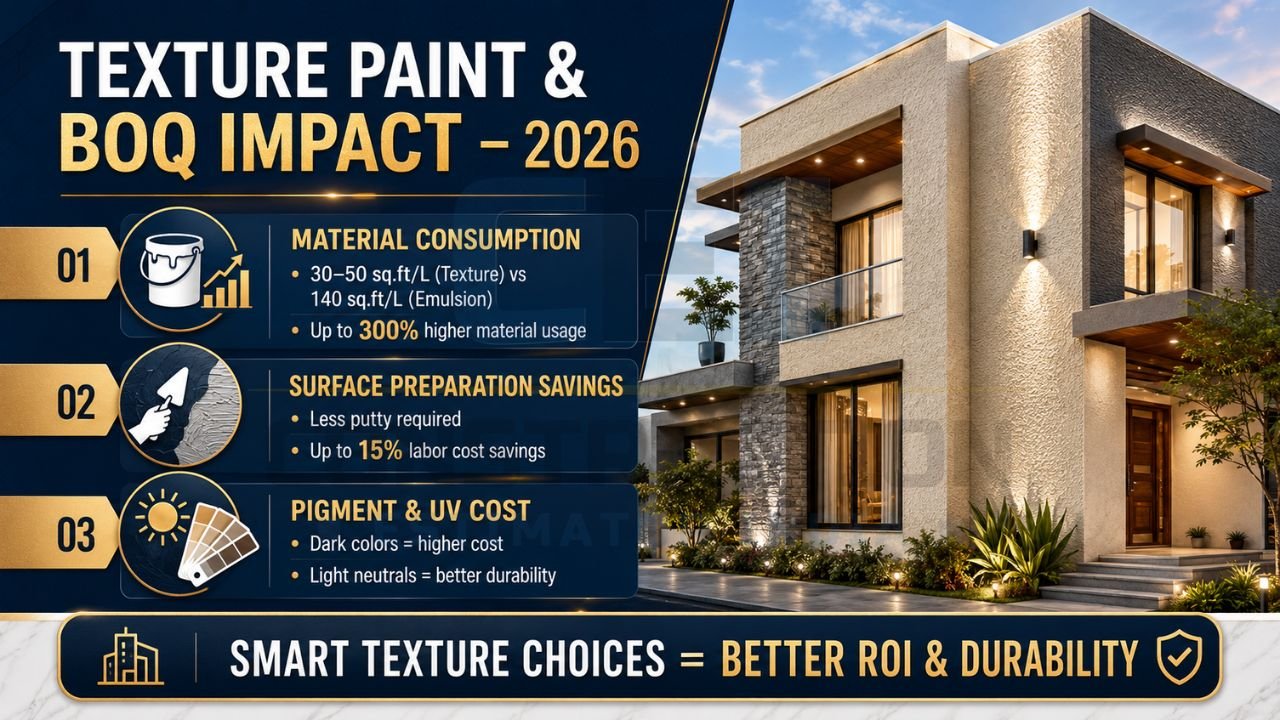
1. Material Volume and Consumption
Texture paints are applied at a much higher “dry film thickness” (DFT) than emulsions. While a standard emulsion might cover 140 sq.ft per liter, a heavy sand texture might only cover 30–50 sq.ft per liter. This increases the material line item in your BOQ by 300% compared to smooth paint, even if the per-liter cost is similar.
2. The Surface Preparation Trade-Off
A major benefit we highlight in our exterior painting cost per sq ft in India 2026 guides is that textures are forgiving. Because the paint itself provides the texture, you can often skip the expensive multiple layers of fine acrylic putty required for smooth finishes. This can save up to 15% on labor costs.
3. Pigment Cost and UV Fading
Deep, vibrant texture pigments (like Navy Blue or Deep Forest Green) use organic pigments that are more expensive. For large exterior facades, we recommend lighter, earthy neutrals like “Ochre Sand” or “Moonlit Silk” to reduce costs and minimize visible UV bleaching.
Climate-Responsive Textures: Defeating the Indian Monsoon and UV Rays
India’s climate is the ultimate test of any texture paint design for exterior walls.
- The Dust Belt (NCR/Noida/Meerut): High airborne dust clings to rough surfaces. We recommend a “Satin-Finish” texture with anti-dust polymers, which allows dirt to be washed away by a simple garden hose.
- The Monsoon Zones (Coastal India): We specify “Silicon-based” textures for homes in high-rainfall areas. These coatings are “breathable” but water-repellent, preventing internal dampness and algae growth.
- High-Heat Zones (Central India): Light-colored textures with “Heat-Reflective” technology can reduce surface temperatures by 3–5°C, providing long-term energy savings.
Check the CPWD guidelines for exterior textured wall finishes for the technical benchmarks used in high-end government and residential projects across India.
The Science of Finish: Rough vs. Stone vs. Sand Finish
| Feature | Sand Texture | Stone Finish | Rough Texture |
|---|---|---|---|
| Aesthetic | Subtle, granular | Natural, rugged | Bold, artistic |
| Durability | High (7-10 Years) | Ultra-High (10+ Years) | Moderate (5-7 Years) |
| Cleanability | Good (Wipeable) | Moderate (Needs hosing) | Difficult (Traps dust) |
| BOQ Impact | Moderate | High (Material cost) | Low (Less prep) |
| Best For | Main Facade | Pillars/Accents | Boundary Walls |
Vastu Shastra for Exterior Walls: Harmonizing Your Home’s Energy
Vastu is a non-negotiable for many of our 500+ happy clients. The texture and color of your exterior walls affect the flow of “Prana” or positive energy.
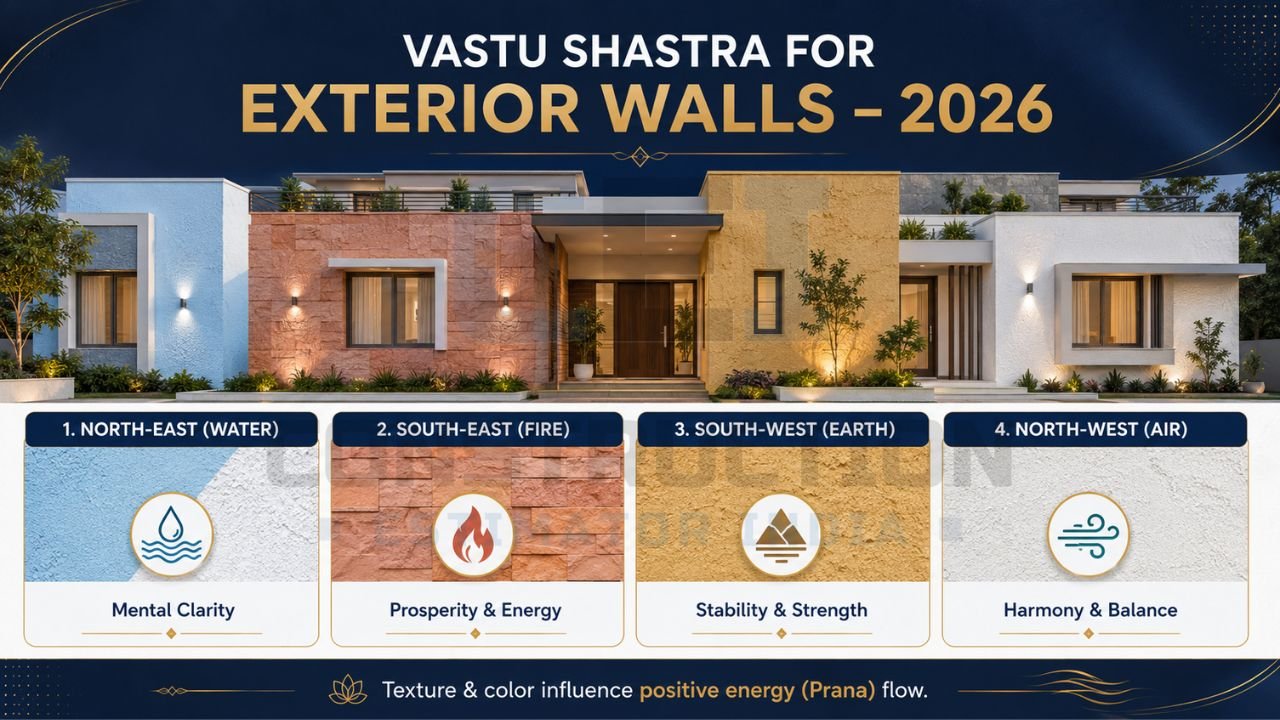
- North-East (Water): Light blue or white textures to promote mental clarity.
- South-East (Fire): Pink, orange, or silver-toned stone finishes to ignite prosperity.
- South-West (Earth): Yellow or light brown sand textures to provide family stability.
- North-West (Air): White, light grey, or “Moonlit Silk” cream textures for social harmony.
Refer to the official 2026 exterior texture paint trends in India for more direction-specific application tips.
Step-by-Step Selection Guide: From Sampling to Sign-Off
To ensure professional results and budget accuracy, we use this framework at Construction Estimator India:
- Define the Focal Point: Choose the wall that first greets the eye. In 2026, the trend is using texture on 20% of the facade as an accent and smooth paint on the remaining 80%.
- The 24-Hour Rule: Paint a 2ft x 2ft patch. Observe it at 10 AM, 4 PM (Golden Hour), and 8 PM under exterior LED lights. Textures cast deep shadows that can drastically change the color’s appearance.
- Hose Test: Throw a bucket of muddy water at the sample. See how easily it cleans. This is critical for North Indian dust resilience.
- Verify the BOQ: Ensure your contractor accounts for the specific consumption rate of the texture. Texture jobs often require a specialized primer coat followed by a single heavy texture coat.
Conclusion & Final Expert Advice
Mastering texture paint design for exterior walls is a journey of balancing your personal aesthetic with the technical realities of the Indian climate and your specific budget. Whether you are opting for the grounded “Ochre Sand” or a luxury stone finish, the success of your project rests on professional estimation and preparation.
Remember, the most expensive paint job is the one you have to redo because of poor finish selection or an inaccurate estimate. Avoid the guesswork and ensure your home transformation starts with a solid financial foundation.
For accurate texture paint cost estimation or BOQ for your exterior walls project in India, WhatsApp or call us today at +91 8630676890.
Frequently Asked Questions (FAQ)
- Is texture paint better than normal paint for exterior walls?
In 2026, texture paint is superior for durability and hiding wall defects, though it has a higher initial material cost. - What is the average exterior texture painting cost per sq ft in India 2026?
Depending on the finish (Sand vs. Stone), it typically ranges from ₹45 to ₹120 per sq ft, including labor and materials in major Indian hubs. - Does texture paint trap dust in North India?
Rough textures can trap dust. We recommend a “Satin-Finish” or silicon-based texture like Asian Paints Apex Texture 2026 exterior designs to make cleaning easier. - How many coats of texture paint are required?
Standard practice is one coat of specialized primer followed by one heavy coat of texture. Some stone finishes may require a secondary clear protective sealer. - Can I use texture paint for my balcony?
Yes. Balconies are high-impact zones. Using a durable texture prevents the peeling often seen with standard interior paints exposed to the monsoon. - Does the brand matter for exterior textures?
Absolutely. In our humid and hot climate, premium brands like Asian Paints, Berger, and Nerolac provide UV-resistant additives that local unbranded textures lack.