
Planning electrical work planning in house in India 2026 early can save you lakhs in rework and future upgrades. With EV adoption surging (over 2 million new registrations expected), rooftop solar becoming common even in Agra and Tier-2 cities, smart home devices multiplying, and frequent grid fluctuations in Uttar Pradesh, proper planning is no longer optional.
Most homeowners and builders make the mistake of thinking about wiring only after plastering — leading to surface conduits, voltage drops, or expensive modifications later. In 2026, average electrical costs range ₹20–50 per sq ft (₹2–5 lakh for a 1,000 sq ft home), but poor planning can double this. A well-designed residential electrical layout India ensures safety, energy efficiency, future-proofing for EVs and solar, and compliance with National Building Code and IS standards.
Whether you are building a 2BHK in Lucknow, a villa in Delhi NCR, or renovating in Agra, this guide covers everything step-by-step — from load calculation to EV charger integration and smart automation.
Why Electrical Planning Matters in 2026 Indian House Construction?
The year 2026 marks a turning point for residential electrical systems. Key trends driving electrical planning for home construction India 2026:
- EV boom — Many new societies now mandate home charging points; Level-2 chargers need dedicated high-amp circuits.
- Solar + battery storage — Net metering and PM Surya Ghar subsidies make rooftop solar attractive; improper wiring wastes generated power.
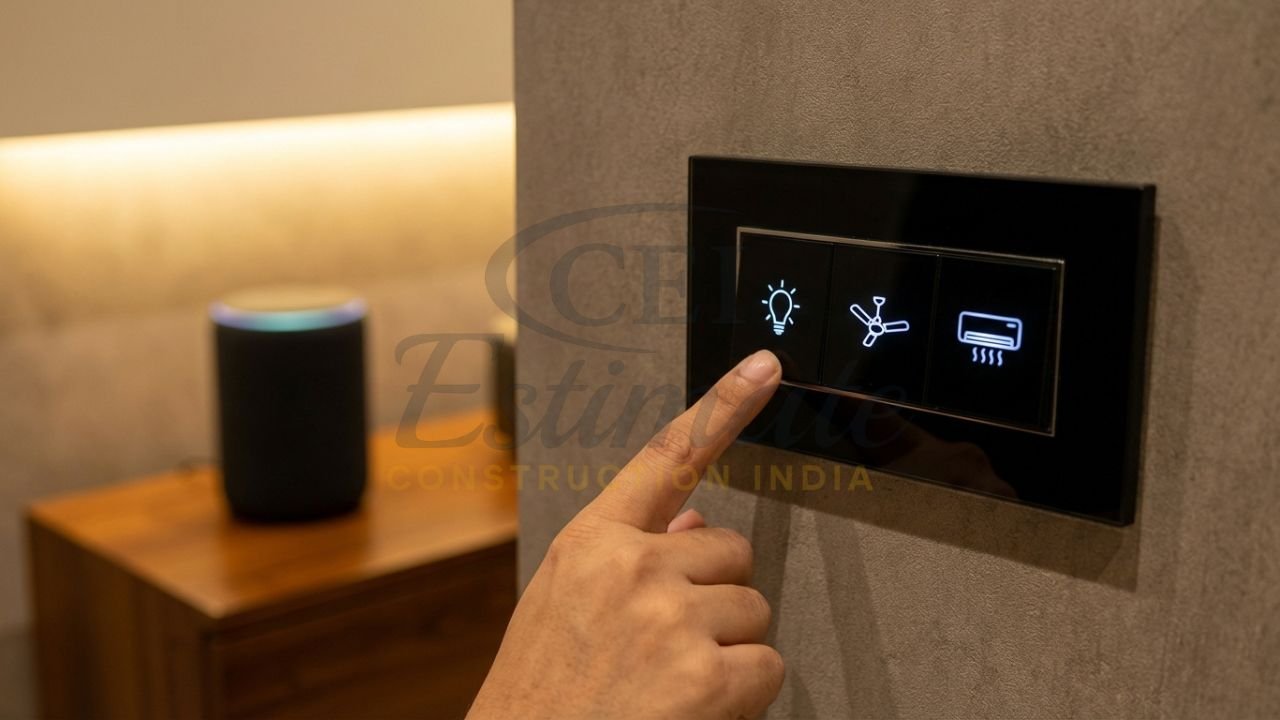
- Smart home explosion — Voice-controlled lights, Wi-Fi switches, and automation require separate low-voltage cabling and stable internet points.
- Higher loads — 1.5–2 ton ACs, induction cooktops, geysers, and multiple gadgets push sanctioned loads to 7–12 kW.
- Safety & regulations — Rising fire incidents have made RCCB/MCB mandatory; ISI-marked materials and proper earthing are non-negotiable.
- Energy efficiency incentives — LED/smart lighting and solar-ready wiring qualify for rebates.
Early planning during brickwork stage prevents 30–40% extra cost later and ensures your home stays safe, efficient, and future-ready.
Step-by-Step Electrical Work Planning Process for Your House
Follow these 7 practical steps before starting civil work:
- List your needs — Family size, appliances, future EV/solar plans, smart devices, and AC locations.
- Decide single-phase vs 3-phase — Single-phase up to 5–6 kW; 3-phase for higher loads or EV chargers (common in premium homes).
- Calculate total load — Add 20–25% safety margin (detailed table below).
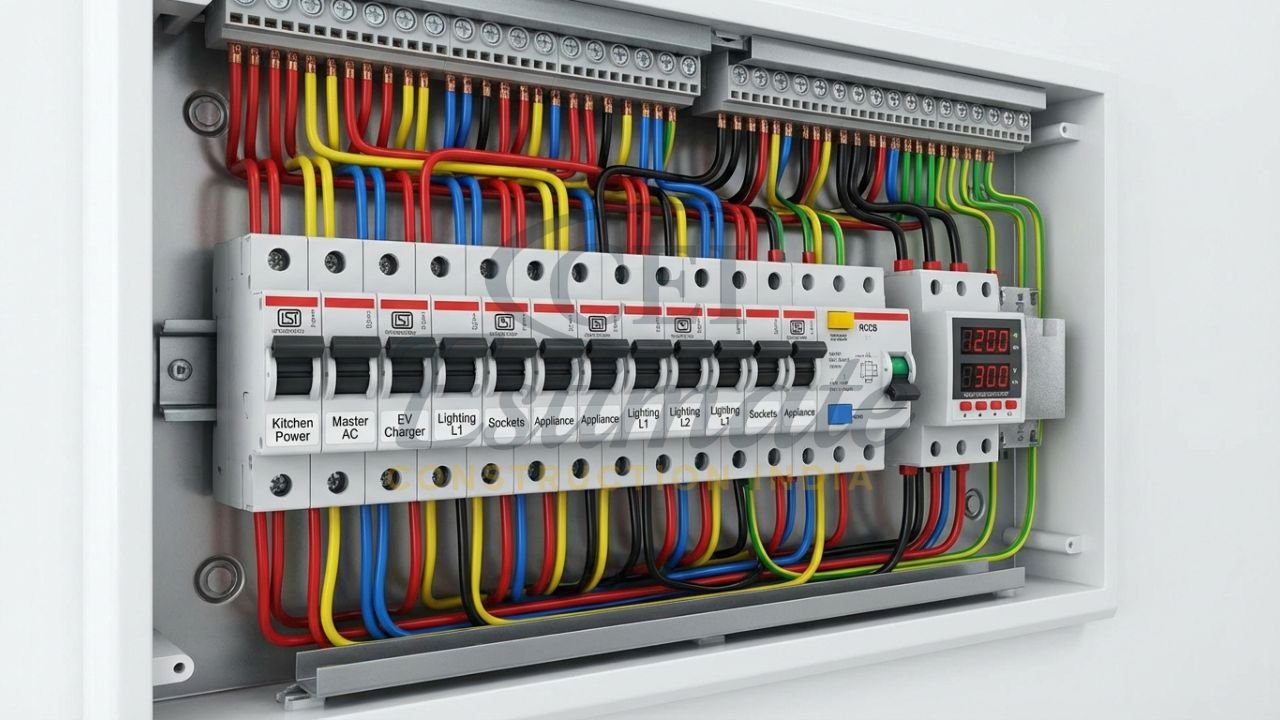
- Plan circuit distribution — Separate lighting, power, AC/EV, and kitchen circuits.
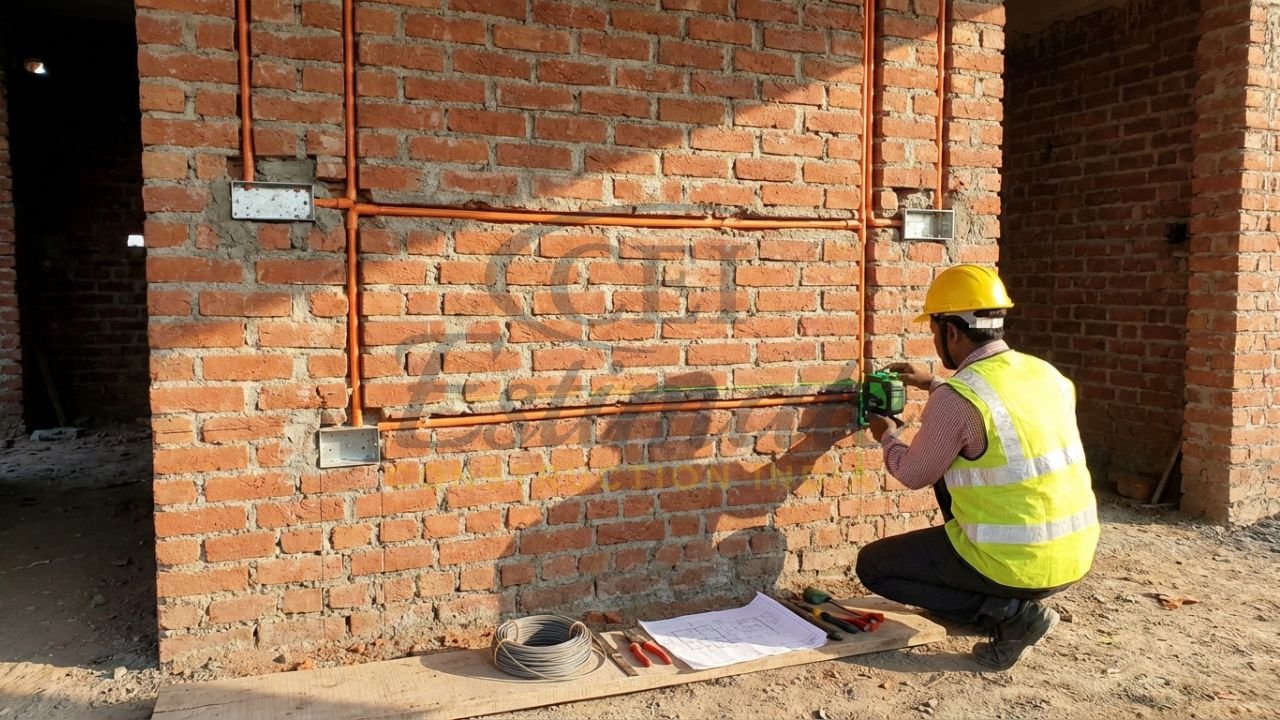
- Design conduit layout — Mark all points on brick walls before plastering (concealed wiring).
- Choose distribution board (DB) location — Central, accessible, with space for future expansion.
- Hire licensed electrician — Verify experience with modern systems and get written estimate.
Key Components of Modern Home Electrical Layout in 2026
Lighting Circuits
Use LED/smart bulbs only. Plan 2–3 lights + 1 fan per room on one circuit (max 800W). Include dimmers and motion sensors in corridors.
Power Circuits
Dedicated circuits for heavy appliances:
- ACs and geysers (15–20A)
- Kitchen (induction + microwave)
- Washing machine/refrigerator
Dedicated Lines for 2026 Needs
- EV charger (separate 32A or 63A line)
- Solar inverter backup
- Home office/gaming setup
Earthing & Grounding
One earthing pit per house + plate earthing for DB. Chemical earthing is preferred in sandy UP soil.
Distribution Board Planning
Main DB on ground floor + sub-DBs on each floor. Use modular DBs with space for 12–24 ways.
Choose Your Construction Services
Connect with verified experts for your project. We provide professional
General Contractors, Sub-contractors, Builders, and Material Suppliers.
Our network also includes specialized 3D Rendering Developers and Interior Experts.
Load Calculation & Circuit Planning Tips for Indian Homes
Accurate electrical load calculation house India prevents tripping and overheating.
Typical Appliance Loads (2026)
| Appliance | Wattage | Quantity | Total Load (W) |
| 1.5 Ton AC | 1,800–2,200 | 2–3 | 4,000–6,000 |
| Geyser (15L) | 2,000–3,000 | 1–2 | 2,000–6,000 |
| EV Charger (Level-2) | 7,000 | 1 | 7,000 |
| Induction Cooktop | 1,800–2,000 | 1 | 2,000 |
| Refrigerator | 150–250 | 1 | 250 |
| Lights + Fans | 60–100 | 20–25 | 1,500–2,000 |
| Other (TV, PC, etc.) | — | — | 1,500 |
Total for 3BHK (1,200 sq ft): 10–15 kW connected load → Sanctioned load 8–12 kW (apply 20–25% margin).
Circuit Tips:
- Max 800W per lighting circuit
- Max 2,000–3,000W per power circuit
- Separate MCB for each heavy appliance
- Use 2.5 mm² for lights, 4 mm² for power, 6–10 mm² for AC/EV
Integrating 2026 Trends: EV Charging, Solar, Smart Home & Backup
EV Charging Home India 2026
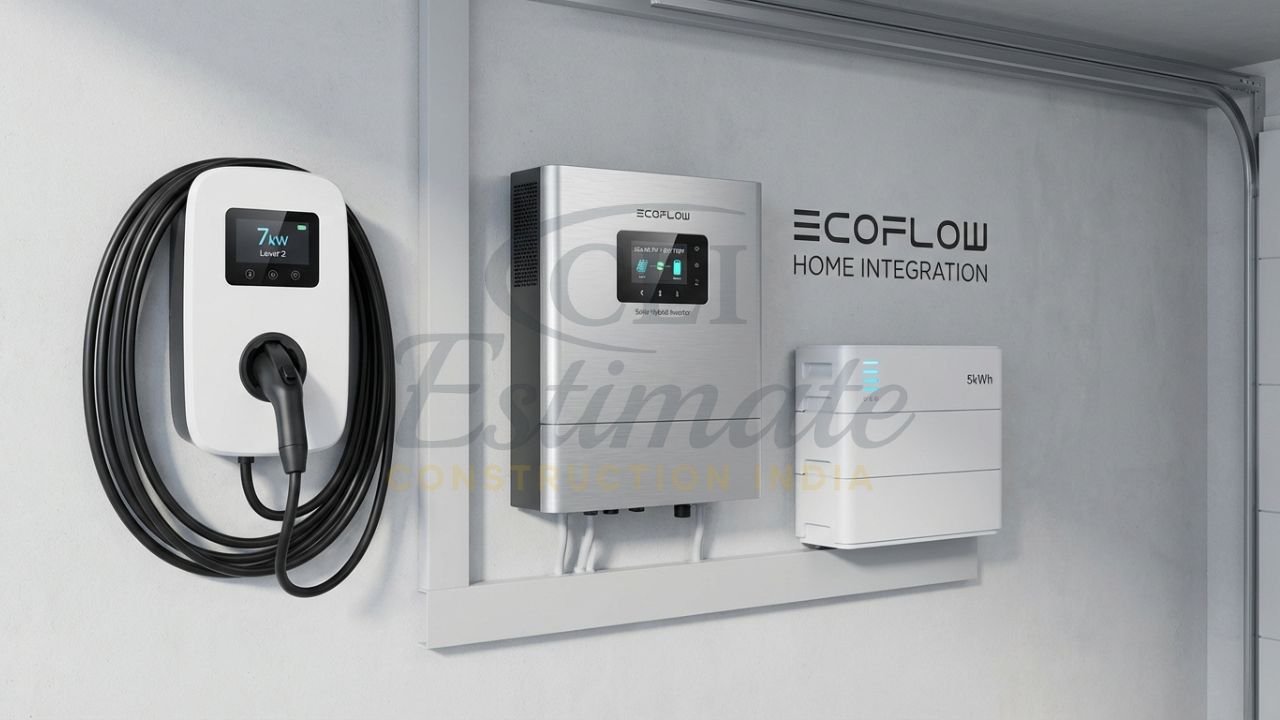
Plan a dedicated 7 kW Level-2 charger circuit (32A, 3-phase preferred). Run 6–10 mm² copper cable from DB to parking. Solar priority switching saves ₹8–12 per unit.
Solar Integration
Pre-wire for rooftop solar: separate DB for inverter, net-metering ready panel, and battery storage space. A 5 kW system needs proper earthing and surge protection.
Smart Home Electrical Wiring
Run CAT6 cables + extra conduits for Wi-Fi points, smart switches (use neutral wire), and voice assistants. Plan low-voltage cabling separately.
Backup Systems
Inverter + tubular battery or lithium storage (5–10 kWh). Automatic changeover switch for seamless power during Agra/UP cuts.
Safety Standards & Materials to Use in 2026
Never compromise on safety:
- Wires — ISI-marked FR-LSH copper (Havells, Polycab, Finolex) — 1.0/1.5/2.5/4/6 mm² sizes.
- Protection — MCB (C-curve), RCCB (30mA sensitivity), surge protectors on main DB.
- Earthing — Chemical earthing pit with copper plate.
- Standards — Follow IS 732 (wiring), National Building Code 2016 (updated 2026 amendments), and local DISCOM rules.
Use fire-retardant conduits and modular switches for long life.
Common Mistakes to Avoid in Electrical Planning
- Under-sizing wires or sanctioned load
- Placing conduits after plastering (surface wiring looks ugly)
- Skipping dedicated circuits for AC/EV
- Using non-ISI local wires to save ₹5,000
- Poor earthing in high-water-table areas
- No space for future solar/EV in DB
- Ignoring surge protection in lightning-prone zones
- Mixing lighting & power in one circuit
- No documentation or as-built drawings
- Hiring unlicensed electricians
Estimated Costs & Budgeting for Electrical Work in 2026
Home Electrical Cost Per Sq Ft 2026 (concealed copper wiring, modular switches):
- Basic (single-phase, no EV/solar prep): ₹20–30 per sq ft
- Mid-range (smart-ready + EV provision): ₹35–45 per sq ft
- Premium (3-phase, solar-ready, full automation): ₹45–60 per sq ft
Break-up for 1,000 sq ft 3BHK:
- Wiring + conduits: ₹1.2–2.0 lakh
- Switches + boards: ₹40,000–70,000
- DB + protection devices: ₹25,000–40,000
- EV charger prep: ₹15,000–25,000 extra
- Solar-ready wiring: ₹10,000–15,000 extra
Savings Tips:
- Buy materials in bulk during off-season
- Plan 3-phase only if needed
- Use energy-efficient LED from day one
- Combine with Construction Cost Per Sq Ft in India 2026 for overall budgeting
Conclusion
Electrical work planning in house in India 2026 is no longer just about lights and fans — it’s about building a safe, efficient, future-ready home that supports EVs, solar, smart automation, and reliable power. By following the step-by-step process, calculating loads correctly, choosing ISI-marked materials, and integrating modern trends early, you avoid expensive rework and enjoy lower electricity bills for decades.
Start planning today with your architect and a licensed electrician. A small investment in proper house wiring planning 2026 and residential electrical layout India pays huge dividends in comfort, safety, and resale value.
Ready to get an accurate, customised construction estimate for your electrical project in 2026?
At Construction Estimator India our professional estimating team delivers detailed BOQ and cost reports in just 48 hours.
Construction cost estimation services start at just ₹10,000 INR only.
Contact us today:
📞 Phone / WhatsApp: +91 86306 76890
✉️ Email: info@constructionestimatorindia.com
Don’t overpay or underbid — get your precise 2026 construction cost per sq ft estimate now and win more projects with confidence!
Frequently Asked Questions (FAQs) on Electrical Work Planning in House in India 2026
What is the average cost of electrical work per sq ft for a new house in India 2026?
The average home electrical cost per sq ft 2026 ranges between ₹20–50 depending on quality and features. For a standard 1,000 sq ft 3BHK with concealed copper wiring and modular switches, expect ₹35–45 per sq ft (₹3.5–4.5 lakh total). Add ₹15,000–25,000 for EV charger preparation and ₹10,000–15,000 for solar-ready wiring. Premium smart homes with 3-phase supply and full automation can reach ₹50–60 per sq ft.
Should I plan for EV charging station during house construction in 2026?
Yes — absolutely. With EV sales growing rapidly, planning an EV charging home India 2026 setup during construction saves ₹30,000–50,000 later. Run a dedicated 6–10 mm² copper line from the main DB to parking with 32A MCB and RCCB. Choose 7 kW Level-2 charger (works on 3-phase). Solar integration further reduces charging cost to ₹2–4 per unit.
How to calculate electrical load for a 3BHK house in India?
Add wattage of all appliances (ACs 2,000W each, geyser 3,000W, EV charger 7,000W, lights/fans 1,500W, etc.) and multiply by usage factor. For a typical 1,200 sq ft 3BHK, connected load comes to 10–15 kW. Apply 20–25% safety margin and apply for 8–12 kW sanctioned load. Use separate circuits for heavy loads and consult an electrician for precise electrical load calculation house India.
What are the must-have safety devices in home electrical planning 2026?
Every modern home needs: (1) RCCB (30mA) on main DB for shock protection, (2) MCBs on each circuit, (3) Surge protectors on main incoming line, (4) Proper earthing pit, and (5) Fire-retardant ISI-marked wires. These devices are mandatory as per updated National Building Code and prevent 90% of electrical accidents.
How to integrate solar panels with home electrical system in India 2026?
During electrical work planning in house in India 2026, run separate cables from roof to inverter location and install a solar-ready sub-DB with changeover switch. Choose hybrid inverter for battery backup. Apply for net metering with your DISCOM. A 5 kW system typically costs ₹2.8–3.7 lakh but pays back in 4–6 years through savings and subsidies.