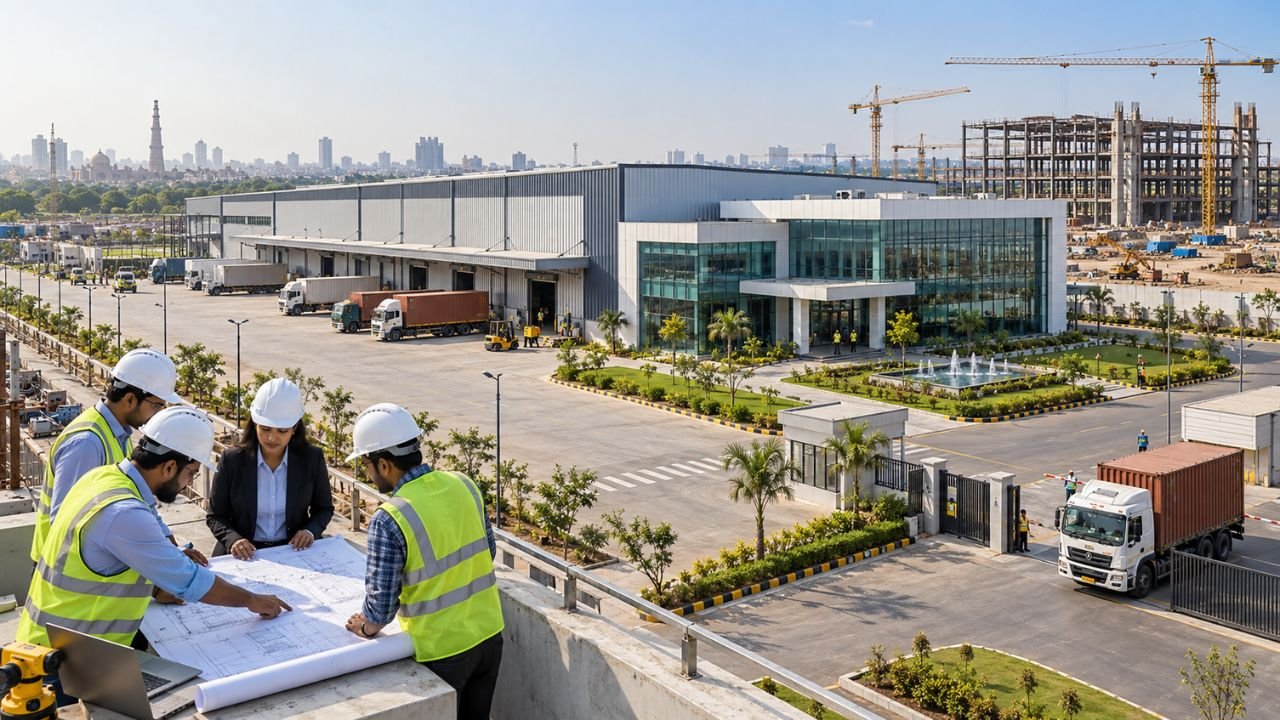
Building a home in India is not just a financial investment; it is the creation of a sanctuary for your family. However, given India’s unique geological positioning, this sanctuary must be built to withstand the silent but immense power of the earth. At Construction Estimator India, we specialize in merging technical engineering excellence with practical construction solutions. This guide serves as a comprehensive roadmap for any homeowner learning how to plan home construction in India to ensure their build adheres to the highest national safety standards. For personalized assistance, contact us at WhatsApp/Call: +91 8630676890.
👉 Build a Safer Home with Earthquake-Resistant Construction Expertise.
Why Earthquake-Resistant Construction Is Critical in India?
India is a country characterized by significant seismic activity, primarily because the Indian Plate is continuously colliding with the Eurasian Plate. This tectonic pressure has created the Himalayas and leaves approximately 59% of India’s landmass vulnerable to earthquakes of varying intensities. According to seismological data from the National Disaster Management Authority (NDMA), roughly 11% of our land falls into the very high-risk Zone V, 18% in the high-risk Zone IV, and 30% in the moderate-risk Zone III.
The history of earthquakes in India serves as a somber reminder of the stakes involved. The 2001 Gujarat earthquake claimed nearly 20,000 lives, and the 2005 Kashmir earthquake resulted in over 10,000 deaths. In most of these tragedies, the primary cause of death was not the ground shaking itself, but the collapse of poorly designed and inadequately reinforced structures. Without proper seismic design, a building faces total structural failure, leading to catastrophic financial loss and, more importantly, life-threatening injury to occupants.
Conversely, a seismic-resistant design ensures that while a structure might experience minor cracking or swaying, it remains standing, providing “Life Safety” to everyone inside. One of the biggest misconceptions in the Indian construction industry is that earthquake-proofing is prohibitively expensive. In reality, implementing these critical safety measures typically adds only 3–4% to the total construction cost of a residential building. This minimal investment—perhaps ₹1 Lakh to ₹2 Lakh for a standard home—provides 100% protection for your multi-crore property and your family’s lives. Construction Estimator India offers a Free seismic design consultation to help you understand these risks. Call us at +91 8630676890 to secure your future.
Understanding India’s Seismic Zones: Which Zone Is Your Area In?
Before a single brick is laid, you must identify the seismic risk of your specific location. In India, seismic zones are classified based on historical earthquake data, tectonic movements, and local soil conditions.
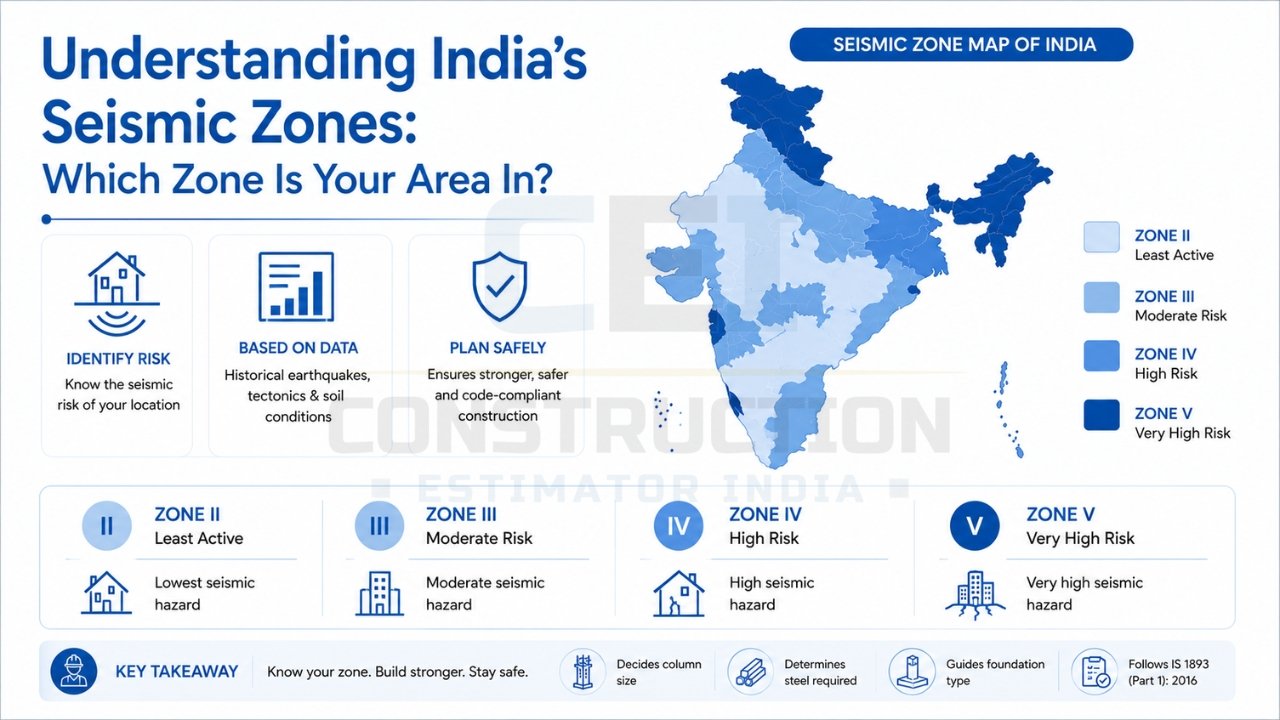
What Are Seismic Zones?
Seismic zones are geographic classifications that indicate the likely intensity of ground shaking during an earthquake. India is divided into four zones (II, III, IV, and V), where Zone II is the most stable and Zone V is the most active. Understanding your zone is the fundamental first step because it dictates the minimum thickness of your columns, the amount of steel required, and the appropriate foundation types for house construction in India.
👉 Protect Your Family and Investment with Earthquake-Resistant Building Solutions.
Seismic Zone V: Very High Risk (11% of India)
This is the most dangerous category, where earthquakes can exceed a magnitude of 8.0 on the Richter scale.
- Major Areas: The entire Northeast, parts of the Himalayan belt (Jammu & Kashmir, Himachal Pradesh, Uttarakhand), the Rann of Kutch in Gujarat, and the Andaman & Nicobar Islands.
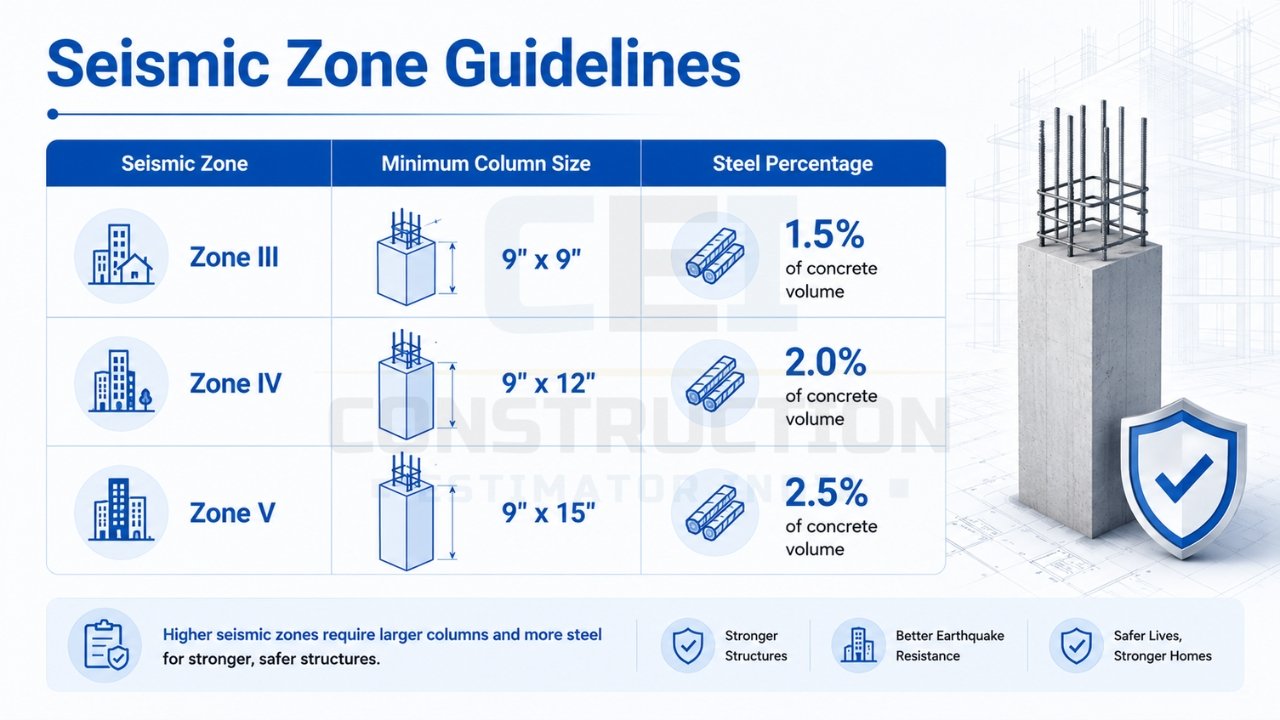
- Design Requirements: Minimum column size should be 9″ x 15″ with a steel percentage of 2.5% to ensure extreme ground acceleration does not snap the structure.
Seismic Zone IV: High Risk (18% of India)
Zone IV is classified as a high-risk area, capable of experiencing earthquakes up to magnitude 7.5.
- Major Areas: The National Capital Territory (NCT) of Delhi, parts of Jammu & Kashmir, Rajasthan, Punjab, Haryana, and Bihar.
- Design Requirements: Minimum column size should be 9″ x 12″ with a steel percentage of 2.0% of the concrete volume.
Seismic Zone III: Moderate Risk (30% of India)
Though labeled “moderate,” Zone III can experience magnitude 7.0 quakes, which are powerful enough to destroy conventional unreinforced masonry.
- Major Areas: Metropolitan cities like Mumbai, Pune, Bangalore, Chennai, and the entire state of Kerala.
- Design Requirements: Minimum column size of 9″ x 9″ with 1.5% steel reinforcement is necessary for basic safety.
Seismic Zone II: Low Risk (20% of India)
This zone covers the relatively stable parts of Central and Southern India. While the risk of a major quake is lower (magnitude 6.0), Construction Estimator India still recommends following basic IS code reinforcement to prevent damage from unexpected tremors.
How to Check Your Seismic Zone
Homeowners can verify their zone by consulting the IS 1893 (Part 1): 2002 seismic map published by the India Meteorological Department (IMD) or contacting their local municipal authority. For a definitive assessment, we recommend a site-specific consultation. Construction Estimator India provides a Free structural engineer verification of your plot. Contact us at +91 8630676890.
Indian Standards (IS Codes) for Earthquake-Resistant Construction
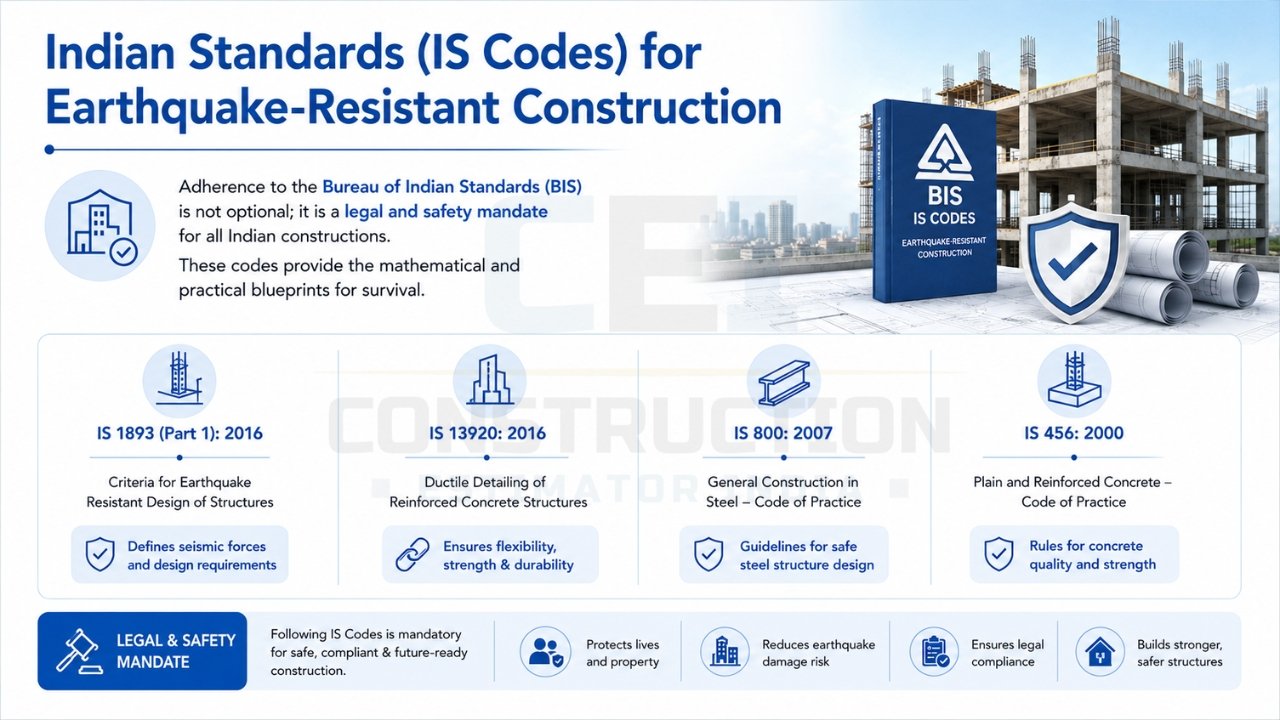
Adherence to the Bureau of Indian Standards (BIS) is not optional; it is a legal and safety mandate for all Indian constructions. These codes provide the mathematical and practical blueprints for survival.
IS 1893 (Part 1): 2002 – Primary Earthquake Design Code
Known as the “Criteria for Earthquake Resistant Design of Structures,” this is the primary regulatory document. It provides the framework for calculating seismic forces (Base Shear) based on the zone and soil type. Every structural drawing produced by leading architects and architecture firms in roorkee (and elsewhere) is rooted in this standard.
👉 Planning a New Home? Ensure It Is Designed to Withstand Seismic Forces.
IS 4326:1993 – Earthquake Resistant Construction Practice
The “Earthquake Resistant Design and Construction of Buildings – Code of Practice” focuses on practical field methods. It is particularly vital for masonry (brick) buildings, specifying the exact placement of horizontal “bands” (lintel and plinth) to ensure the house acts as a single cohesive unit during shaking.
IS 13920:1993 – Ductile Detailing of RC Structures
This code, “Ductile Detailing of Reinforced Concrete Structures Subjected to Seismic Forces,” is a life-saver for modern concrete homes. It mandates “ductility”—the ability of a building to bend without breaking. It dictates specific spacing for stirrups and ensure that concrete is “confined” at the joints to prevent sudden collapse in Zones IV and V.
IS 13827:1993 – Earthen Building Guidelines
Specifically designed for rural areas using traditional materials, these guidelines ensure that mud-walled houses can also provide basic earthquake resistance through ductile detailing and the use of natural reinforcement like bamboo or timber.
IS 13935:2009 – Retrofitting Guidelines
The “Repair and Seismic Strengthening of Buildings – Guidelines” is the blueprint for strengthening existing old structures. If your home was built before modern seismic codes were enforced, this code provides the methodology for adding strength without rebuilding.
Key Elements of Earthquake-Resistant House Design
A safe home is designed as a system where every element works together to dissipate energy.
Element 1: Column Size & Reinforcement by Zone
Columns are the “bones” of your house. They must be sized correctly to carry both vertical loads and horizontal seismic forces.
| Seismic Zone | Minimum Column Size | Steel Percentage |
|---|---|---|
| Zone III | 9″ x 9″ | 1.5% of concrete volume |
| Zone IV | 9″ x 12″ | 2.0% of concrete volume |
| Zone V | 9″ x 15″ | 2.5% of concrete volume |
- Steel Requirement: Use a minimum of 4 longitudinal bars per column.
- Stirrups: Horizontal steel ties must be spaced at 150mm maximum to prevent the main bars from buckling.
Element 2: Beam Design & Ductile Detailing
Beams transfer floor loads to columns. For seismic safety, residential beams should have a minimum size of 9″ x 12″.
- Steel: Use at least 4 bars of 12mm diameter.
- Critical Detail: The beam-column joint must have extra “confinement” stirrups (6mm bars at 150mm spacing) to prevent the joint from exploding during a magnitude 7+ event.
👉 Build with Confidence Using Proven Earthquake-Resistant Construction Techniques.
Element 3: Slab Thickness & Reinforcement
The roof/floor slab acts as a rigid diaphragm. Construction Estimator India recommends a minimum thickness of 125mm (5 inches).
- Reinforcement: Use 8mm bars at 150mm spacing in both directions.
- Cover: Maintain a 25mm concrete cover to prevent steel corrosion.
Element 4: Foundation Depth & Type
A building is only as safe as the ground it stands on.
- Depth: Minimum 1.2m (4 feet) below ground level. In high-risk Zones IV and V, we recommend 1.5m (5 feet).
- Plinth Beam: An RCC beam of 9″ x 12″ must run around the entire perimeter to prevent the foundation from spreading apart.
Element 5: Masonry Wall Reinforcement
Bricks themselves are brittle. Understanding the difference between RCC and brick construction highlights the necessity to make walls safe:
- Vertical Bars: Place 8mm steel bars in wall corners.
- Horizontal Bands: Install RCC bands at the plinth, lintel, and roof levels.
- Mortar: Use a strict 1:6 cement-sand ratio.
Element 6: Roof Type Selection
While RCC flat roofs are standard and strong, they are heavy. In very high-risk Zone V, lightweight truss roofs (steel/timber) are often safer as they reduce the “top-heavy” mass of the building. Avoid heavy decorative clay tiles in Zone IV and V.
Essential Earthquake-Resistant Construction Techniques
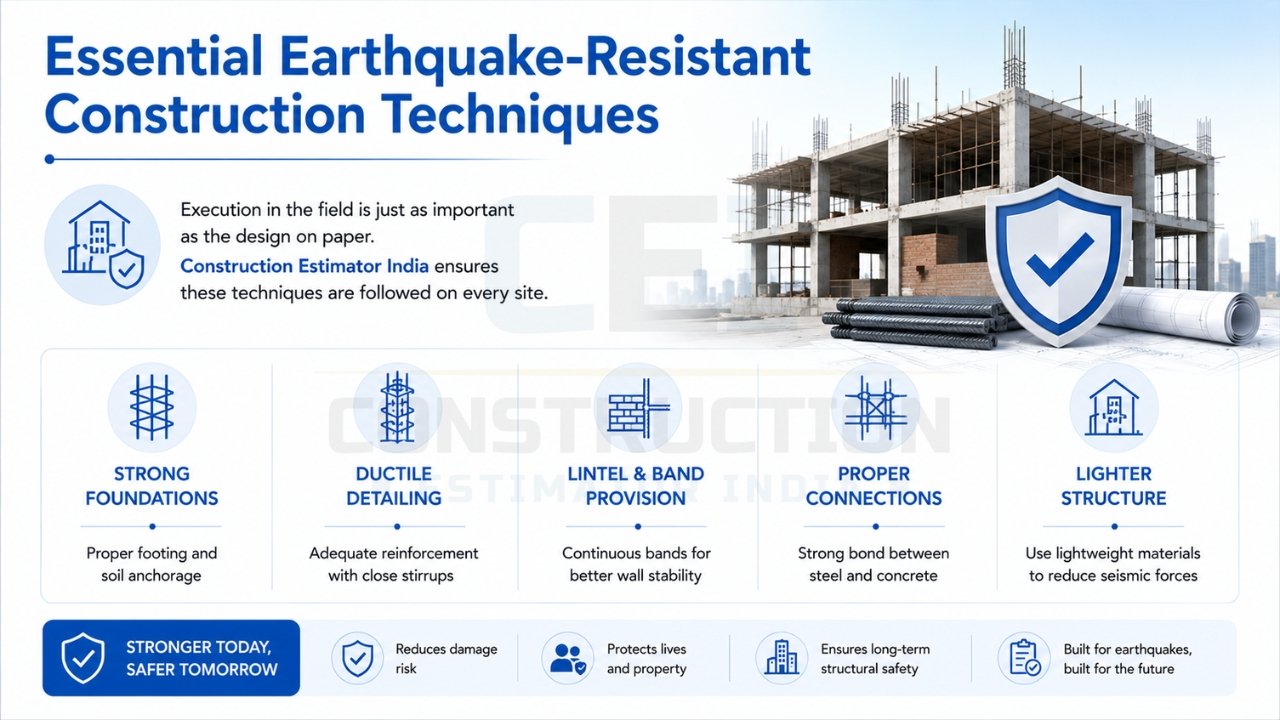
Execution in the field is just as important as the design on paper. Construction Estimator India ensures these techniques are followed on every site.
Technique 1: Proper Concrete Mix Quality
- WHAT: Use Grade M20 (1:2:4 ratio) for standard zones and M25 (higher strength) for Zones IV and V.
- WHY: Low-grade concrete crumbles under the intense pressure of seismic waves.
- MATERIALS: High-strength cement (Grade 43/53), clean river sand, and graded aggregates.
👉 Get Professional Advice on Earthquake-Resistant House Design and Construction.
Technique 2: Adequate Steel Reinforcement
- WHAT: Use Thermo-Mechanically Treated (TMT) steel of Grade Fe500.
- WHY: Fe500 steel has the high “ductility” needed to stretch and bend without snapping.
- COST: Fe500 is standard and costs the same as regular steel but offers far superior safety.
Technique 3: Stirrup Spacing in Columns & Beams
- WHAT: Maintain a spacing of 150mm generally, but reduce it to 100mm (4 inches) in the first 500mm from any joint.
- HOW: Ensure the hooks of the stirrups are bent at 135 degrees, not just 90 degrees. This “locking” prevents the stirrup from opening during a shake.
Technique 4: Beam-Column Joint Detailing
- CRITICAL: The joint is where most buildings fail.
- HOW: Provide extra stirrups (100mm spacing) inside the joint region where the beam meets the column. The column steel must continue through the joint without being cut.
Technique 5: Plinth Beam Around Entire Building
- WHAT: A 9″ x 12″ RCC beam with 4 top and 4 bottom 12mm bars.
- LOCATION: Placed 150mm above ground level. It must be continuous with no breaks for doors or passages.
Technique 6: Lintel & Roof Bands in Masonry Walls
- WHAT: Lintel bands (9″x4″) and Roof bands (9″x6″) act like belts that hold the walls together.
- STEEL: Use 4 bars of 8mm diameter. This prevents walls from falling outward during a quake.
Special Features for High-Risk Zones (IV & V)
For buildings in Zone V or multi-story structures, basic reinforcement isn’t enough. We utilize advanced engineering features often referenced by leading institutions like IIT Kanpur’s NICEE.
Feature 1: Shear Walls for Multi-Story Buildings
- WHAT: Reinforced concrete walls (minimum 200mm thick) that act as rigid anchors.
- USE: Mandatory for G+3 and above in Zone IV-V. They resist the “shear” or side-to-side forces that standard columns might struggle with.
Feature 2: Cross Bracing for Open Fronts
- WHY: Many Indian homes have open ground floors for parking (Soft Stories). This is a major collapse risk.
- METHOD: Install 16mm steel bars in an “X” pattern between columns in these open areas to provide diagonal stability.
Feature 3: Base Isolation for Critical Buildings
- WHAT: Placing the building on flexible rubber pads or steel bearings.
- EFFECT: This separates the building from the ground motion, reducing the force felt by the house by 50–70%. Recommended for luxury villas and hospitals in Zone V.
Feature 4: Dampers for Tall Buildings
- WHAT: Hydraulic shock absorbers installed in the frame.
- EFFECT: “This actually absorbs the seismic energy and allows the structure to stand despite the shocks.” It is the ultimate protection for buildings G+5 and above.
What to Avoid: Common Earthquake Construction Mistakes
Avoiding these common errors is just as important as implementing the right techniques.
- Irregular Building Shape: Avoid L, T, or U-shaped houses. During an earthquake, different parts of these buildings vibrate at different speeds, leading to tearing at the corners. Solution: Use simple rectangular or square shapes.
- Soft Story (Open Ground Floor): An open ground floor for parking without walls collapses first. Solution: Add shear walls or cross-bracing.
- Short Columns: Half-height columns used for windows or vents break easily because they are too stiff. Solution: Use full-height columns with special detailing.
- Poor Quality Materials: Never use rusted steel or low-grade cement. Rusted steel loses its bond with concrete, making reinforcement useless.
- Inadequate Foundation: Shallow foundations lead to tilting or sliding. Solution: Minimum 1.2m depth anchored to hard soil.
- Overhanging Floors: Large cantilever floors place immense stress on the joint. Solution: Limit overhangs to a maximum of 1m for safety.
Earthquake Retrofitting: Strengthening Old Houses
If your house was built before the year 2000, it likely does not follow current IS codes. Specialized house renovation roorkee (or in your region) services provided by Construction Estimator India can perform retrofitting to make these homes safe.
- Methods: We use Steel Jacketing (wrapping existing columns in steel) or adding external Shear Walls to reinforce the structure.
- Cost: Depending on the size, retrofitting typically costs between ₹50,000 to ₹5,00,000—far cheaper than rebuilding.
- Free Service: Contact us for a Free earthquake retrofitting assessment at +91 8630676890.
Cost of Earthquake-Resistant Construction
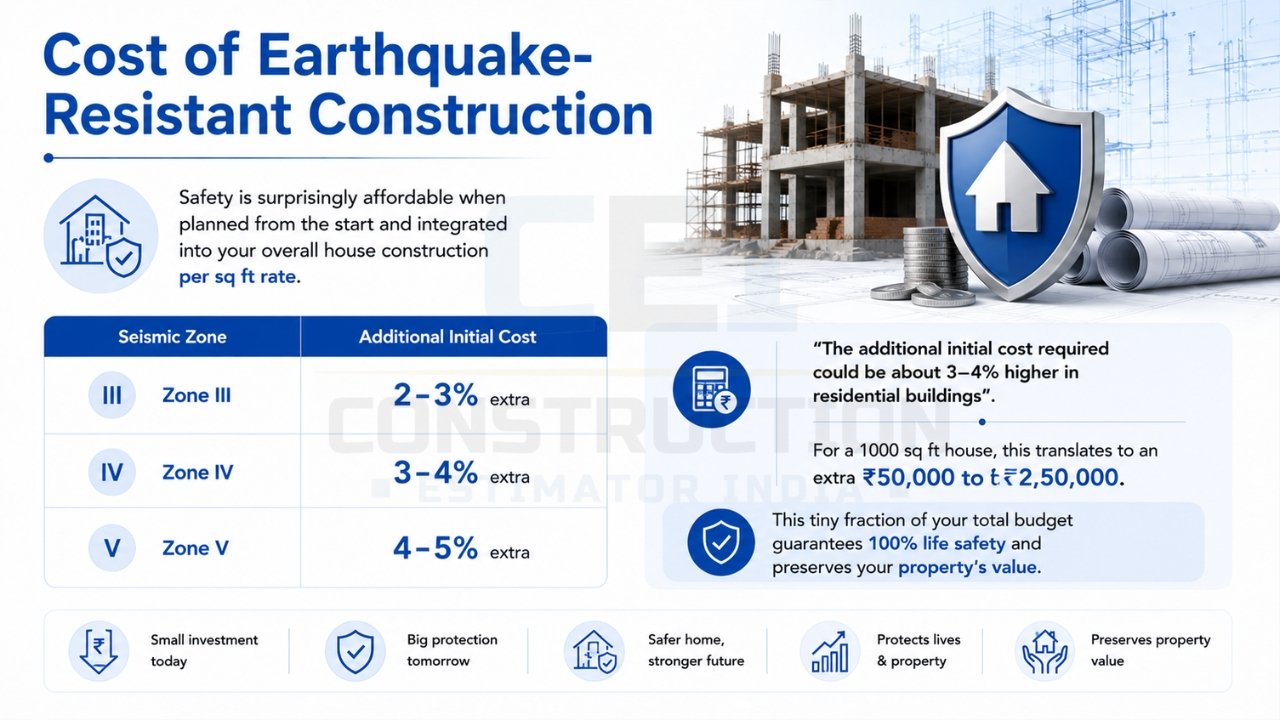
Safety is surprisingly affordable when planned from the start and integrated into your overall house construction per sq ft rate.
| Seismic Zone | Additional Initial Cost |
|---|---|
| Zone III | 2–3% extra |
| Zone IV | 3–4% extra |
| Zone V | 4–5% extra |
“The additional initial cost required could be about 3-4% higher in residential buildings”. For a 1000 sq ft house, this translates to an extra ₹50,000 to ₹2,50,000. This tiny fraction of your total budget guarantees 100% life safety and preserves your property’s value.
👉 Start Your Earthquake-Resistant Home Construction Journey with Expert Support.
When to Contact Construction Estimator India for Earthquake Help
Structural safety requires precision that local contractors often lack. Whether you need insight from general building contractors or specialized civil engineers in rishikesh, you should contact us if:
- You are planning a new home and need a seismic-ready architectural design.
- You want a structural engineer to verify your existing blueprints.
- You are worried about cracks in your current home and need a retrofitting assessment.
Construction Estimator India offers:
- Free seismic design consultation
- Free structural engineer verification
- Free earthquake retrofitting assessment
- Contact WhatsApp/Call: +91 8630676890
FAQs
- Which seismic zone is my area in? Check the IS 1893 map or call us at +91 8630676890 for free verification.
- Is earthquake-resistant construction mandatory? Yes, it is a legal requirement for building approval in Zones III, IV, and V.
- What IS codes must I follow? Primarily IS 1893 (Design), IS 4326 (Practice), and IS 13920 (Detailing).
- How much extra does it cost? Typically only 3–4% of the total construction cost.
- What is the minimum column size for Zone IV? A minimum of 9″ x 12″ is required.
- What steel grade is best? TMT Fe500 is recommended for its high ductility.
- What is ductile detailing? It’s the specific way steel is tied to allow the building to sway without collapsing.
- Can I add extra floors later? Only if the original design included the weight and seismic forces of those extra floors.
- How do I retrofit an old house? Through column jacketing or adding shear walls as per IS 13935 guidelines.
- What shape is best? Simple squares or rectangles are the safest.
- Do RCC houses survive better? Yes, because they can be engineered for ductility unlike plain brick houses.
- How do I contact you? Reach us anytime via WhatsApp/Call at +91 8630676890.
Contact Construction Estimator India for Structural Services
Your home should be your safest place on earth. At Construction Estimator India, we ensure your dream home is built with the technical integrity to withstand any tremor.
- Company Name: Construction Estimator India
- WhatsApp / Call: +91 8630676890
- Services: Full Structural Design, Free Seismic Audits, and Professional Retrofitting.
Conclusion: Build Safe, Earthquake-Resistant Homes for Life Protection
With 59% of India prone to earthquakes, safety is not a luxury—it is a responsibility. By investing just 3–4% extra in your construction budget, you gain 100% life safety and ensure your home survives magnitude 7+ shocks. Follow the national IS codes (1893, 4326, 13920) and prioritize proper column sizing, deep foundations, and ductile detailing.
Construction Estimator India is your partner in safety. We offer a Free seismic design consultation to every Indian homeowner. Build an earthquake-resistant home today to protect your family for generations to come. Call us now at +91 8630676890.