Dampness in residential structures is a persistent challenge that plagues millions of homeowners across the Indian subcontinent. For many, damp walls and mould are an all-too-common sight in Indian households particularly during monsoon seasons. This phenomenon is not merely a localized aesthetic issue; it is a complex intersection of geography, climate, and construction practices. India’s unique climatic conditions—characterized by extreme heat followed by heavy monsoon rainfall and high humidity levels—create a perfect storm for moisture to infiltrate the building envelope. When moisture is allowed to dwell within masonry, it transitions from a cosmetic nuisance to a serious structural and health liability.
At Construction Estimator India, we have spent over 15 years diagnosing and rectifying these issues across the diverse terrains of India, from the humid plains of Uttarakhand to the coastal regions. We understand that dampness is the presence of unwanted moisture in the structure of a building. This moisture often enters through capillary action from the ground, infiltration through external cracks, or condensation from internal activities. Unfortunately, ignoring these early signs is a dangerous gamble. What starts as a small dark patch can escalate into a full-scale structural crisis within a few years.
👉 Facing dampness in your walls? Get expert advice and effective waterproofing solutions today.
Perhaps most critically, the presence of moisture in walls is a direct threat to the occupants’ wellbeing. Damp walls and mould in Indian homes can exacerbate respiratory conditions, leading to chronic health issues for the most vulnerable members of the family. Mould spores are potent allergens that can irritate the respiratory system leading to asthma and allergic rhinitis. Furthermore, indoor mould releases mycotoxins, toxic compounds that can cause chronic airway inflammation. Beyond being an eyesore, dampness increases health risks, especially to the respiratory system, making it imperative to address the root cause immediately rather than applying a temporary paint job.
This problem is not merely cosmetic it is an indicator of underlying moisture ingress that can compromise building’s structure. Constant dampness leads to the degradation of plaster, the weakening of bricks, and the corrosion of the steel reinforcement inside RCC (Reinforced Cement Concrete) slabs and beams. Once the steel begins to rust, it expands, causing the concrete to spall and significantly reducing the building’s lifespan. Relying on an expert rcc contractor roorkee (or in your specific region) can help ensure structural integrity from the start. Do not ignore dampness—it leads to structural damage and high repair costs if untreated. Construction Estimator India offers professional waterproofing roorkee services including a Free consultation, Free site visit, and Free project-specific estimate to provide a permanent solution. Contact us today at +91 8630676890 to safeguard your home.
What is Dampness? Understanding Wall Moisture Problems
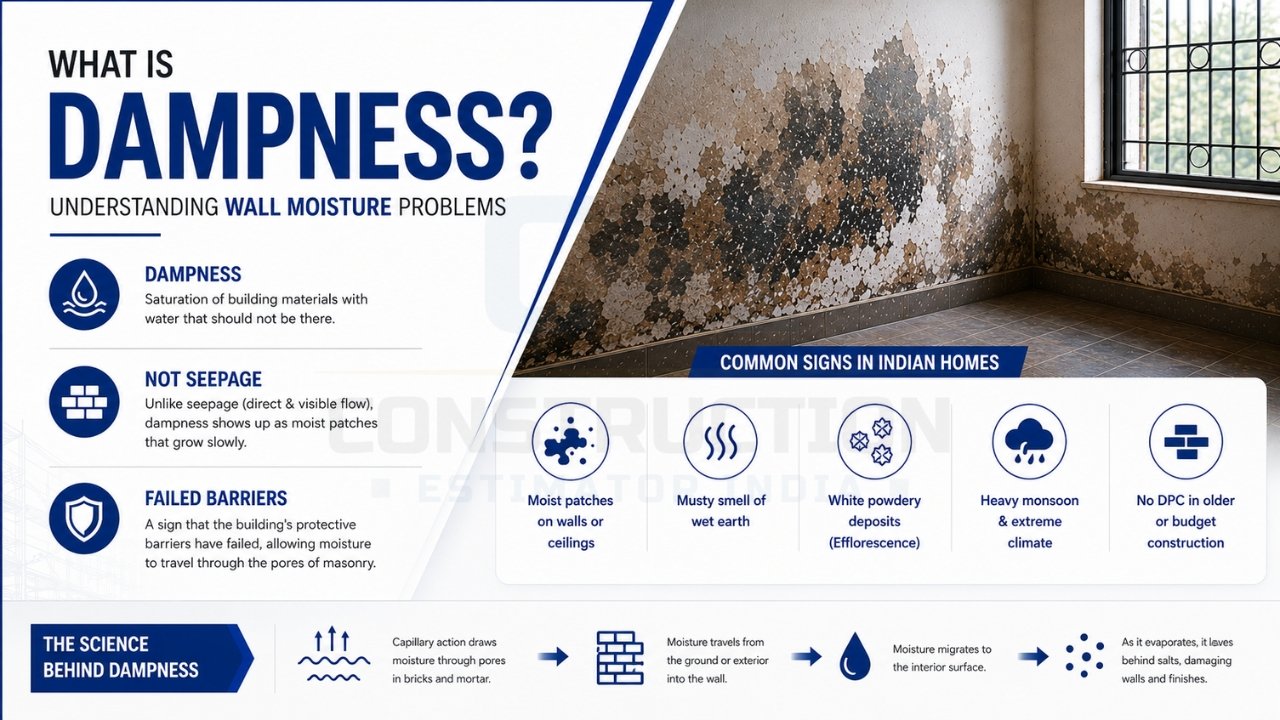
To solve a problem, one must first define it accurately. In the context of civil engineering and home maintenance, dampness refers to the saturation of building materials—such as bricks, mortar, and concrete—with water that should not be there. Unlike “seepage,” which usually implies a direct and visible flow of water (like a leaking pipe), dampness is often more insidious, manifesting as a general moistness or dark patches that grow slowly over time. It is a sign that the building’s protective barriers have failed, allowing moisture to travel through the pores of the masonry.
In Indian homes, dampness typically manifests as moist patches on walls or ceilings, often accompanied by the characteristic smell of wet earth or the appearance of white powdery deposits known as efflorescence. The Indian subcontinent’s diverse and often extreme climatic conditions, particularly the heavy annual monsoon, exacerbate this issue by exerting immense hydrostatic pressure on building surfaces. Older structures, or those built with budget-conscious methods, often lack a proper Damp Proof Course (DPC), leaving them highly vulnerable to ground moisture.
The science behind this involves capillary action—the same process that allows a sponge to soak up water. Porous bricks and sand-lime mortar act like a series of microscopic tubes, drawing moisture from the soil or the exterior atmosphere into the heart of the wall. This moisture then migrates to the interior surface, where it tries to evaporate, leaving behind salts and ruining expensive interior finishes. For a professional and scientific dampness diagnosis using moisture meters and thermal imaging, Contact Construction Estimator India at +91 8630676890.
👉 Don’t let damp walls damage your home. Connect with our experts for the right solution.
Top 3 Types of Dampness in Indian Walls
Understanding the specific type of dampness is the first step toward a permanent cure. At Construction Estimator India, we categorize wall moisture into three primary types based on the source and direction of the water ingress.
Rising Dampness (Ground Moisture)
Rising Damp is moisture from ground that rises up through walls. This is one of the most difficult types of dampness to treat because it originates from the foundation level. It typically affects the bottom 3 to 4 feet of ground-floor walls. You can identify this by a clear “tide mark” near the floor level—a horizontal line above which the wall appears dry and below which it is saturated.
This type of dampness is caused by an inadequate or damaged Damp Proof Course (DPC). In many Indian budget constructions, the DPC is either too thin or omitted entirely to save costs. Groundwater travels upwards through capillary action in masonry, carrying dissolved salts from the soil into the wall. As the water evaporates, these salts crystallize on the surface, causing the plaster to crumble and the paint to flake off. Working with a skilled plastering contractor roorkee is crucial to replacing these degraded surfaces once the moisture source is addressed. It is particularly common in older buildings and areas with high water tables.
Penetrating Dampness (External Water Ingress)
Penetrating Damp: water infiltrates through walls from outside face. This is perhaps the most widespread issue during the rainy season. It leads to damp patches on walls and ceilings that coincide with periods of heavy rainfall. The most significant contributor is the monsoon season with prolonged heavy rainfall and high humidity, which relentlessly tests the exterior shell of the house.
Moisture seeps through porous external walls, hairline cracks in plaster, or poorly sealed window and door frames. If the external plaster is not of high quality or if the building has “dead walls” (unplastered side walls), the bricks absorb rainwater like a sponge. This type of dampness can occur at any height on the wall and is often linked to faulty roofing, damaged brickwork, or leaking gutters.
Condensation Dampness (Internal Moisture)
Unlike the previous two types, condensation dampness originates from within the house. It occurs when moisture from indoor activities—such as cooking, bathing, or even breathing—accumulates in the air. When this humid air hits a cold wall surface, it turns back into liquid water. This is common in bathrooms, kitchens, and poorly ventilated bedrooms.
Good airflow helps walls dry faster and reduces moisture build-up. In many modern Indian apartments, ventilation is sacrificed for privacy or security, leading to stagnant air. This type of dampness is the primary driver of black mold growth. It can be significantly improved by using exhaust fans, opening windows regularly, and allowing natural sunlight inside rooms.
Top 10 Causes of Dampness in Walls in Indian Homes
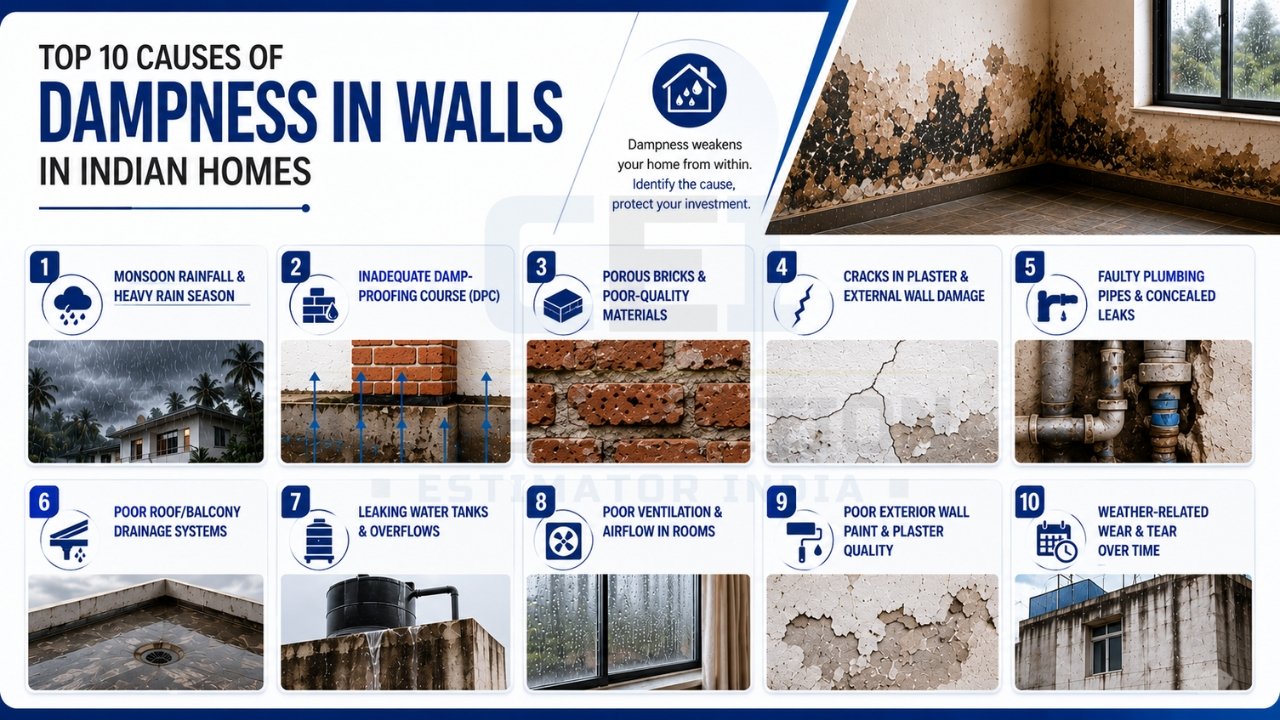
Monsoon Rainfall & Heavy Rain Season
The Indian monsoon is the ultimate stress test for any building. The sheer volume of water delivered in a short period often overwhelms drainage systems and finds its way into the smallest structural imperfections. High atmospheric humidity during these months also prevents walls from drying out, leading to deep-seated moisture saturation.
👉 Get professional guidance for damp walls, moisture problems, and waterproofing solutions.
Inadequate Damp-Proofing Course (DPC) During Construction
The DPC is a horizontal barrier, usually made of rich cement mortar mixed with waterproofing liquid, installed at the plinth level. If this barrier is missing, cracked, or bridged by external plaster, ground moisture will rise through the wall via capillary action, causing permanent dampness on ground-floor walls.
Porous Bricks and Poor-Quality Construction Materials
Bricks made from low-quality clay (often called “Pila” bricks) are highly porous. Similarly, using unwashed river sand with high silt content in mortar creates a weak, sponge-like material that easily absorbs and holds water, facilitating both rising and penetrating dampness.
Cracks in Plaster and External Wall Damage
Even hairline cracks in external plaster can act as conduits for rainwater. Due to India’s extreme temperature swings, walls expand and contract, leading to “thermal cracks”. These cracks allow water to bypass the protective paint layer and enter the masonry directly.
Faulty Plumbing Pipes and Concealed Leaks
In modern Indian homes, most plumbing is “concealed” within the walls. If GI pipes corrode or if CPVC joints are not sealed properly with high-quality solvent cement, a slow leak can saturate a large area of the wall long before it is visible on the surface.
Poor Roof/Balcony Drainage Systems
If the terrace or balcony does not have a proper slope (ideally 1:100), rainwater will pool. Blocked drainage holes (khurras) cause water to stand for hours, exerting hydrostatic pressure that forces moisture through the slab and into the ceilings below.
Leaking Water Tanks and Overflows
Overhead RCC water tanks often develop internal cracks over time. Furthermore, if the auto-cut-off sensor fails, constant overflowing saturates the roof slab. This water eventually finds its way into the walls of the topmost floor.
Poor Ventilation and Airflow in Rooms
Lack of cross-ventilation traps moisture-laden air inside the home. This is a major cause of condensation-led dampness, especially in humid coastal cities or during the monsoon when windows are kept closed.
Poor Exterior Wall Paint and Plaster Quality
Using cheap, non-waterproof exterior paint is a false economy. High-quality exterior coatings act as a “breathable membrane” that keeps liquid water out while allowing internal moisture to escape. Poor paint fails under UV exposure, leaving the wall unprotected.
Weather-Related Wear and Tear Over Time
Buildings age. Over 10-15 years, even the best waterproofing membranes can degrade. Joints in window frames lose their sealant, and parapet wall joints can open up, leading to localized dampness that requires professional maintenance from Construction Estimator India.
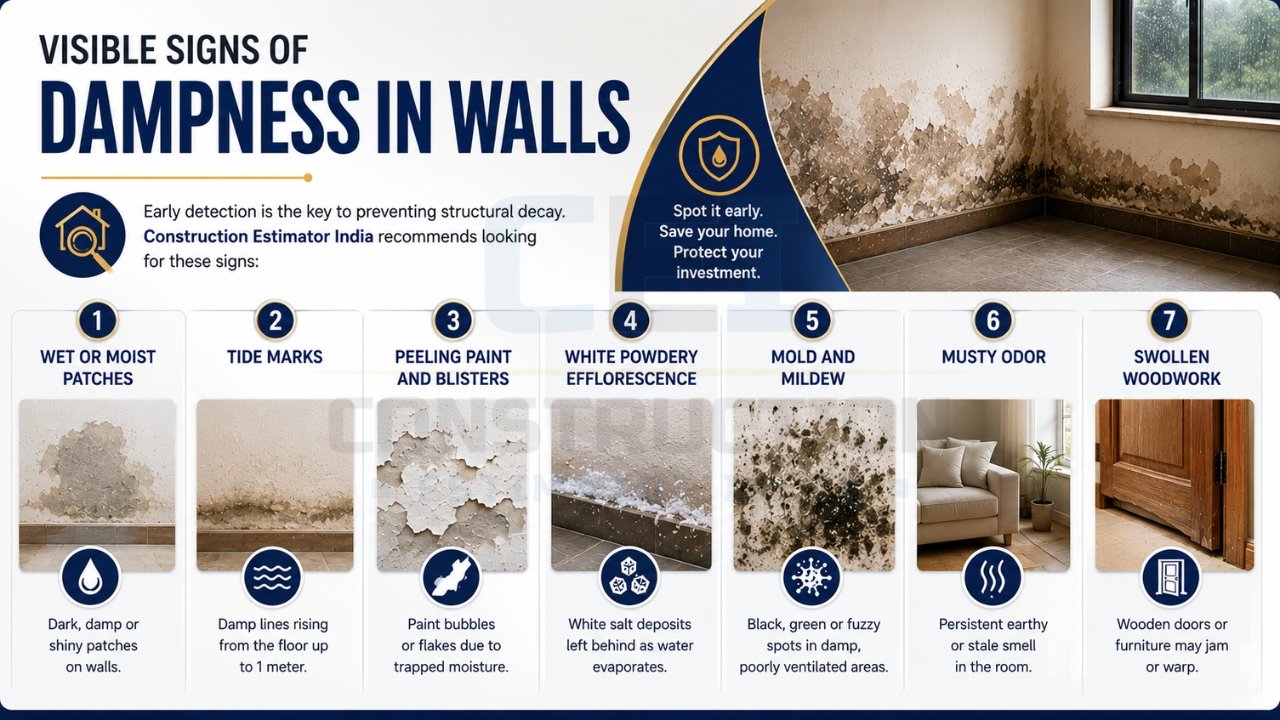
Visible Signs of Dampness in Walls
Early detection is the key to preventing structural decay. Construction Estimator India recommends looking for these signs:
- Wet or Moist Patches: The most obvious sign is a change in the color or texture of the wall. Patches may appear dark, feel cold to the touch, or look “shiny” when moist.
- Tide Marks: Horizontal lines of dampness starting from the floor and rising up to 1 meter are a classic signature of rising dampness.
- Peeling Paint and Blisters: As moisture trapped behind the paint layer tries to escape, it pushes the paint away from the plaster, resulting in unsightly bubbles or flaking.
- White Powdery Efflorescence: Often mistaken for fungus, these are salt deposits. As water evaporates, it leaves behind minerals that look like a white, crystalline powder on the wall.
- Mold and Mildew: Black, green, or fuzzy gray spots on the wall indicate a severe moisture problem. This is a biological growth that thrives in damp, unventilated areas.
- Musty Odor: A persistent “earthy” or stale smell in a room is often the first indicator of hidden dampness behind furniture or under flooring.
- Swollen Woodwork: If your wooden wardrobes or door frames are jamming or warping, it may be because they are absorbing moisture from the adjacent seeping walls.
👉 Concerned about damp patches or peeling paint? Speak with our experts today.
Health Hazards of Damp Walls in Indian Homes
The impact of dampness goes far beyond the structure; it is a serious health concern. According to guidelines set by organizations like the World Health Organization (WHO), damp walls and mould can exacerbate respiratory conditions and are particularly dangerous in the long run. It can cause lung problems in the long run due to microscopic spores released in the air. These spores are invisible to the naked eye but can be inhaled deep into the lungs.
Mould spores are potent allergens that can irritate the respiratory system, leading to asthma and allergic rhinitis. For individuals with pre-existing conditions, prolonged exposure may exacerbate asthma or COPD (Chronic Obstructive Pulmonary Disease). In severe cases, mould exposure can lead to fungal infections such as pulmonary aspergillosis, which requires intensive medical treatment.
Children and the elderly are particularly vulnerable due to less robust immunity. Even seemingly harmless mould patches can release spores causing symptoms from sneezing and coughing to life-threatening hypersensitivity pneumonitis. Furthermore, damp environments create a breeding ground for dust mites and bacteria, which can trigger wheezing, shortness of breath, and chronic sinus infections. Doctors recommend keeping indoor humidity levels below 50% using dehumidifiers or exhaust fans to mitigate these risks.
Structural Damage Caused by Wall Dampness
Ignoring dampness is not an option if you value your property. This problem is an indicator of underlying moisture ingress that can compromise the building’s structure. Moisture acts as a catalyst for several destructive processes:
- Plaster Degradation: Constant dampness causes the chemical bond in the plaster to fail, leading to “hollow” sounding walls and eventually large sections falling off.
- Masonry Weakening: Water-saturated bricks can become brittle. In extreme cases, the mortar between bricks can wash away, destabilizing the entire wall.
- Steel Corrosion: This is the most dangerous consequence. When water reaches the reinforcement steel inside RCC structures, it causes rust. Rusted steel expands up to four times its size, creating massive internal pressure that cracks concrete beams and slabs.
- Reduced Lifespan: A building with persistent dampness may see its structural lifespan reduced by 30-50%, turning a 50-year asset into a 20-year liability.
Early treatment prevents these costly structural repairs. Should the damage be extensive, specialized house renovation roorkee (or in your region) services are required. Construction Estimator India provides the expertise needed to stop this decay before it becomes irreversible.
How to Identify the Source of Dampness?
First and most crucial step is to identify and rectify source of water ingress—treating the symptom without fixing the cause is a waste of money. Consulting experienced civil contractors in rishikesh or your local area ensures accurate diagnostics. Our diagnostic process at Construction Estimator India includes:
- Location Mapping: If dampness is at the bottom of the wall, it’s likely rising damp. If it’s near the ceiling, it’s likely a roof or bathroom leak.
- External Inspection: We look for cracks in the outer plaster, unsealed window frames, or blocked rainwater pipes (khurras).
- Plumbing Audit: Checking for concealed leaks by monitoring the water meter or using pressure testing on pipes.
- Ventilation Check: Evaluating the airflow in the room to rule out or confirm condensation dampness.
- Moisture Meter Testing: We use professional-grade meters to map the exact moisture percentage within the wall, helping us find the “heart” of the leak without unnecessary demolition.
For a professional diagnosis, Contact Construction Estimator India at +91 8630676890 for a free site inspection.
Permanent Solutions for Wall Dampness in India
Rising Dampness Solution
The only permanent fix is to restore the DPC. We use “chemical injection” techniques, drilling holes at the base of the wall and injecting silane-based water repellents to create a new, waterproof barrier within the masonry.
Penetrating Dampness Solution
External walls must be treated with high-build elastomeric coatings. Products like Asian Paints SmartCare Damp-proof or Dr. Fixit Newcoat create a flexible, rubber-like membrane that bridges cracks and stops rainwater.
Condensation Dampness Solution
Improve Ventilation: good airflow helps walls dry faster. Installing high-speed exhaust fans in kitchens and bathrooms and maintaining a gap between furniture and walls are essential steps.
Crack Repair
Structural cracks should be V-grooved and filled with polymer-modified mortars or polyurethane sealants. This ensures the repair is flexible enough to withstand future building movement.
Recommended Products
For lasting results, we trust industry leaders:
- Dr. Fixit (Pidilite): Ideal for foundation and terrace waterproofing.
- Asian Paints SmartCare: Excellent for internal and external wall coatings.
-
JK Maxx / Birla White: Superior water-resistant wall putties.
Step-by-Step Wall Dampness Treatment Process
- Identify and Fix Source: Ensure the leaking pipe or cracked roof is repaired first.
- Scrape and Clean: Remove all peeling paint and loose plaster. The surface must be down to “sound” masonry.
- Crack Filling: Use polymer-modified mortar to fill all gaps.
- Waterproofing Layer: Apply two coats of a crystalline or bituminous waterproofing compound (e.g., Dr. Fixit Dampguard).
- Alkali-Resistant Primer: DO NOT SKIP this step. It prevents salts in the wall from reacting with your new paint.
- Wall Putty: Apply a water-resistant putty like Birla White to smoothen the surface.
-
Final Paint: Apply moisture-resistant or exterior-grade paint even for interior walls for added durability. Hiring a dedicated painter roorkee ensures a flawless application that maximizes longevity.
Wait for full curing between every layer—rushing undoes everything. Good airflow during this process helps the materials bond correctly.
How to Prevent Dampness During Monsoon in India?
Struggling with wall dampness during monsoon? Learn effective damp-proofing methods before the rains arrive.
- Pre-Monsoon Audit: Clear all terrace drainage outlets and inspect for roof cracks.
- Seal the Gaps: Use epoxy grout for bathroom tile joints to prevent water from entering the floor bed.
- Exterior Maintenance: Ensure outer walls are properly plastered and painted with weather-proof coatings.
- Control Humidity: Keep indoor humidity levels below 50% using dehumidifiers during peak monsoon weeks.
- Prompt Repairs: Address water leaks promptly—a small leak today is a major dampness issue tomorrow.
Wall Dampness Treatment Cost in India (2026)
| Treatment Type | Estimated Cost (₹) |
|---|---|
| Small Patch Repair | ₹500 – ₹2,000 |
| Internal Wall Treatment (per wall) | ₹3,000 – ₹12,000 |
| External Wall Waterproofing (1000 sq.ft) | ₹10,000 – ₹50,000 |
| Rising Dampness (DPC Injection) | ₹15,000 – ₹60,000 |
| Complete House Damp-proofing | ₹40,000 – ₹2,00,000+ |
Factors affecting cost include the severity of moisture, accessibility, and choice of materials. Assessing these alongside your baseline house construction per sq ft rate roorkee guarantees accurate project budgeting. Late action leads to structural damage and high repair cost. Get a FREE estimate from Construction Estimator India by calling +91 8630676890.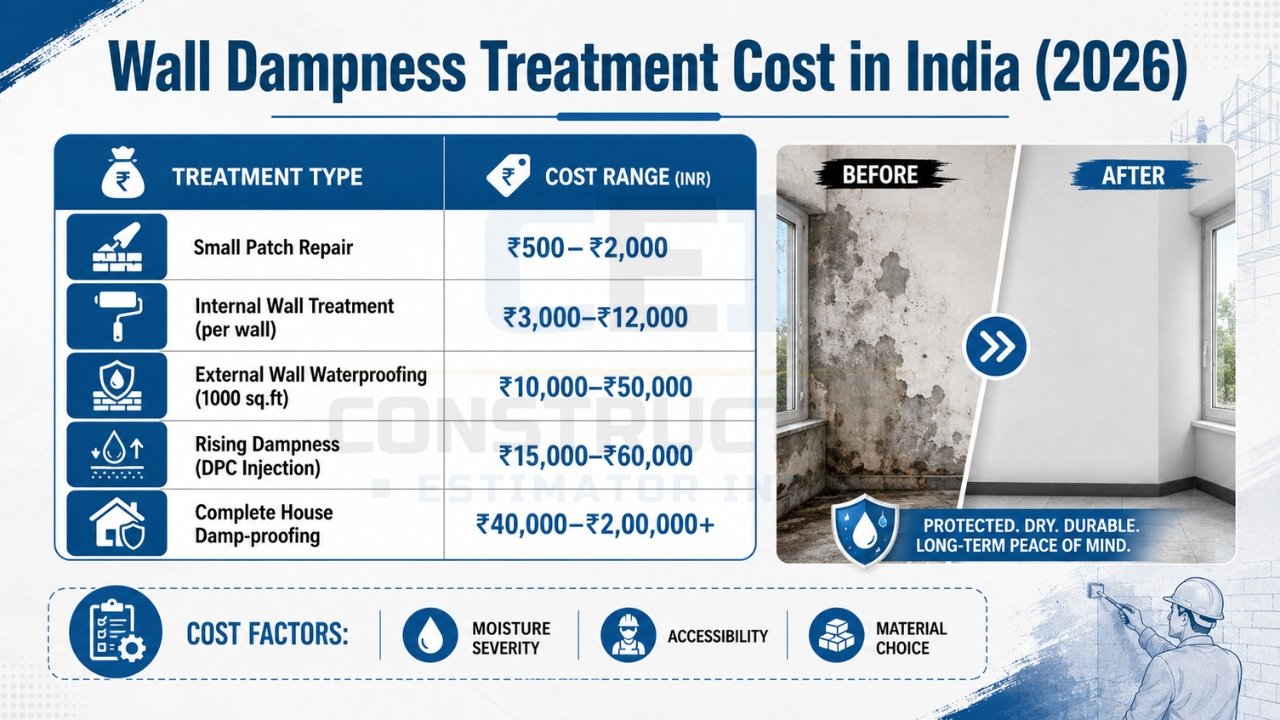
👉 Need help with damp walls? Chat with our specialists for reliable solutions.
When to Call Construction Estimator India for Professional Help
You should consult our experts if:
- Dampness returns even after you’ve used “waterproof” paint.
- Large areas across multiple walls are showing wet patches.
- You see vertical or diagonal structural cracks wider than 2mm.
- There is severe, black mold growth that persists after cleaning.
Construction Estimator India offers:
- 15+ years of experience in moisture diagnostics.
- Free site inspection and Free consultation.
- Transparent pricing with no hidden charges.
- Quality workmanship with a service warranty.
Seek medical advice if respiratory symptoms persist due to mould. If mould problems are severe, call professionals to remove it and make home safer.
Frequently Asked Questions (FAQs)
Q1: What is the most common cause of dampness in walls in India?
The most common cause is monsoon rainfall with prolonged heavy rain and high humidity, leading to penetrating damp where moisture seeps through porous external walls, cracks in plaster, or poorly sealed window frames. Climatic influence from monsoon is the most significant contributor to wall dampness issues in the majority of Indian homes.
Q2: What are the different types of dampness in walls?
There are 3 main types: Rising Damp (ground moisture rising through walls, often showing tide marks), Penetrating Damp (water infiltrating through walls from the outside face), and Condensation Damp (indoor moisture accumulating on cold surfaces due to poor ventilation).
Q3: How do I know if my wall has a dampness problem?
Look for visible signs: wet patches, tide marks near the floor, peeling paint, white powdery efflorescence, and mould: musty odours or visible spots. If you see these signs, especially after the rains, you have an active moisture issue.
Q4: Is dampness in walls a health hazard?
Yes, absolutely. Damp walls and mould in Indian homes can exacerbate respiratory conditions and cause lung problems long-term due to microscopic spores. Mould spores are potent allergens that can irritate the respiratory system, leading to asthma and allergic rhinitis. Children and the elderly are particularly at risk.
Q5: What is rising dampness and how to fix it?
Rising dampness is moisture from ground rising up through walls, often resulting in tide marks on walls. It is caused by inadequate DPC and use of porous bricks. To fix it, we install/repair the DPC via chemical injection and apply damp-proofing coats to the foundation.
Q6: What is penetrating dampness and how to treat it?
Penetrating dampness is water infiltrating through walls from outside face, leading to damp patches on walls and ceilings. It is caused by moisture seeping through porous external walls and cracks during the monsoon. Treat it by repairing external cracks with polymer-modified mortars and applying elastomeric waterproofing.
Q7: How can I prevent dampness during the monsoon season?
Before the monsoon, clear drainage outlets, repair all cracks, and apply a fresh waterproofing coat. During the monsoon, keep indoor humidity below 50% using dehumidifiers, address water leaks promptly, and ensure proper ventilation in bathrooms and kitchens.
Q8: What is efflorescence on walls and is it dampness?
Yes, efflorescence (white powdery deposit) is a major sign of dampness. It is caused by salts in plaster/mortar dissolving in water and crystallizing on the surface as moisture evaporates. It indicates underlying moisture ingress that can compromise the building’s structure if not treated.
Q9: Can poor ventilation cause wall dampness?
Yes, absolutely. Poor ventilation leads to moisture build-up, causing condensation dampness. Good airflow helps walls dry faster and reduces moisture build-up. Improve this by using exhaust fans, opening windows regularly, and allowing natural sunlight inside rooms.
Q10: What is the best waterproofing product for damp walls in India?
Top recommended brands include Dr. Fixit, Asian Paints SmartCare, and Pidilite Dampguard. For severe cases, use polymer-modified mortars for crack repair and always apply an alkali-resistant primer before repainting to ensure the finish lasts.
Q11: Should I repaint after treating wall dampness?
Yes, absolutely. After fixing the source and applying waterproofing, you must repaint to restore aesthetics. Never skip alkali-resistant primer as regular primer will fail. Use moisture-resistant or exterior-grade paint even for interior walls for maximum protection.
Q12: How do I contact Construction Estimator India for dampness treatment?
Contact Construction Estimator India by calling or WhatsApping +91 8630676890. We offer a free consultation, free site inspection, and a free project-specific estimate. If mould problems are severe, call our professionals to remove it and make your home safer.
Contact Construction Estimator India for Professional Dampness Treatment Services
Don’t let moisture destroy your most valuable asset. Construction Estimator India is a leading expert in moisture diagnostics and permanent waterproofing solutions with over 15 years of industry experience.
Company: Construction Estimator India
WhatsApp/Call: +91 8630676890
Services Offered:
- Rising dampness treatment (DPC restoration)
- Penetrating dampness waterproofing (External wall specialists)
- Internal wall dampness treatment and mold remediation
- Complete house damp-proofing for new and old constructions
- Crack repair using specialized polymer-modified mortars
Why Choose Us?
- Free Site Inspection: We come to you to diagnose the root cause.
- Free Consultation: Expert advice on the best materials for your specific needs.
- Transparent Pricing: Detailed cost breakdown with no hidden charges.
- Quality Warranty: We stand behind our work with a 6-month to 1-year quality guarantee.
Get Started Today: Call or WhatsApp +91 8630676890 to schedule your free visit and say goodbye to damp walls forever.
Conclusion: Don’t Ignore Wall Dampness—Treat It Immediately
Wall dampness is common in India, but it is entirely fixable with the right scientific approach. This problem is not merely cosmetic—it indicates underlying moisture ingress that can seriously damage your home over time. Damp walls and mould are all-too-common in Indian households during monsoon, but they represent a health risk that no family should have to endure.
Early action prevents structural damage and health hazards. Remember, the first and most crucial step is to identify and rectify source of water ingress. Once the source is fixed, use high-quality products and improve ventilation: good airflow helps walls dry faster. If mould problems are severe, call professionals to ensure your living environment is safe.
For professional help and a permanent fix, Contact Construction Estimator India at +91 8630676890. Take advantage of our FREE consultation and site visit today and protect your family and your home for the future.