Effective construction planning and scheduling can make or break a project. In India’s rapidly growing construction sector in 2026, poor planning leads to delays, cost overruns, and disputes, while excellent planning delivers projects on time and within budget. With massive infrastructure pushes and strict RERA timelines, mastering construction project planning and scheduling has become essential for contractors, site engineers, and project managers.
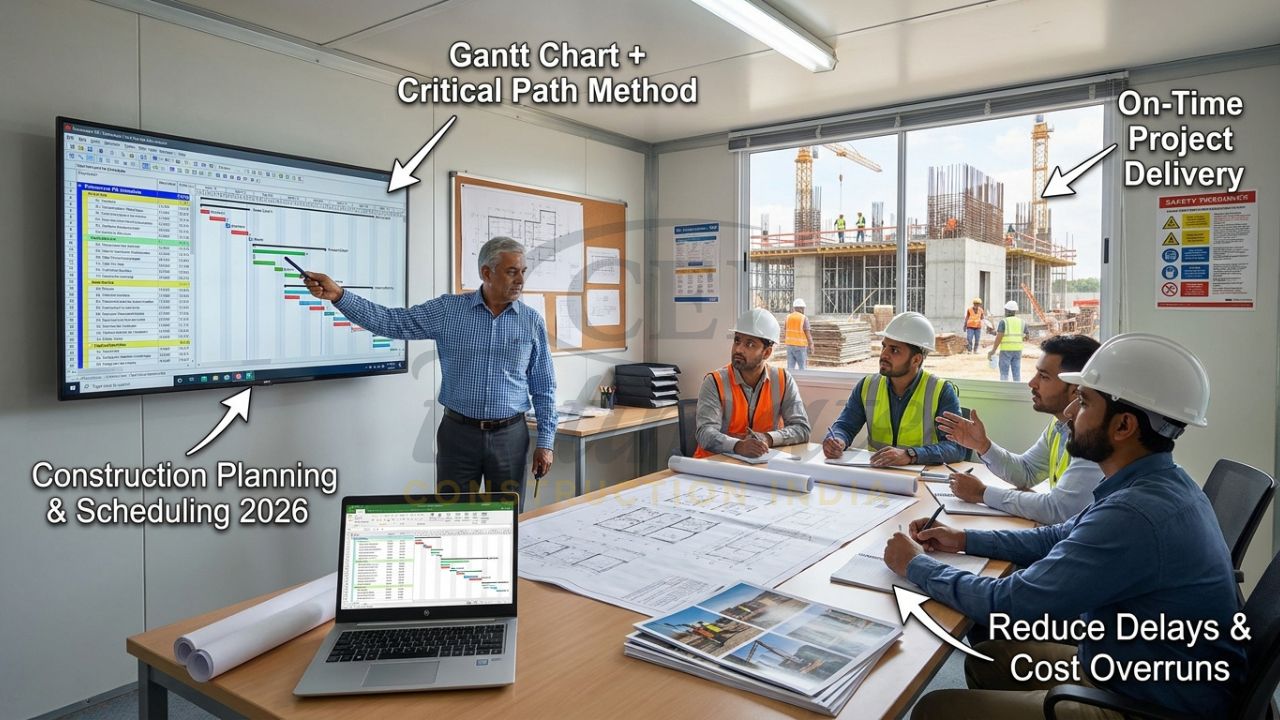
This comprehensive guide explains construction planning and scheduling in simple terms, covers popular techniques like Gantt charts and Critical Path Method, recommends the best tools for 2026, and shares practical strategies used by successful Indian construction professionals. Whether you run a small contracting firm or manage large infrastructure projects, you will find actionable insights to improve your project timeline management India.
What is Construction Planning?
Construction planning is the process of defining project objectives, identifying required resources, and deciding how the work will be executed. It answers the “what,” “how,” “who,” and “with what” questions.
Key Elements of Construction Planning:
- Project scope and objectives
- Work breakdown structure (WBS)
- Resource identification (manpower, material, machinery)
- Budget estimation
- Risk assessment
- Approval and permit planning
- Quality and safety standards
Good planning creates a realistic roadmap before ground-breaking begins.
What is Construction Scheduling?
Scheduling is the time-based part of planning. It determines “when” each activity will start and finish, and in what sequence. A good schedule shows dependencies between tasks and helps track progress against deadlines.
While planning is strategic, scheduling is tactical and dynamic. It must be updated regularly as the project progresses.
Key Differences Between Construction Planning and Scheduling
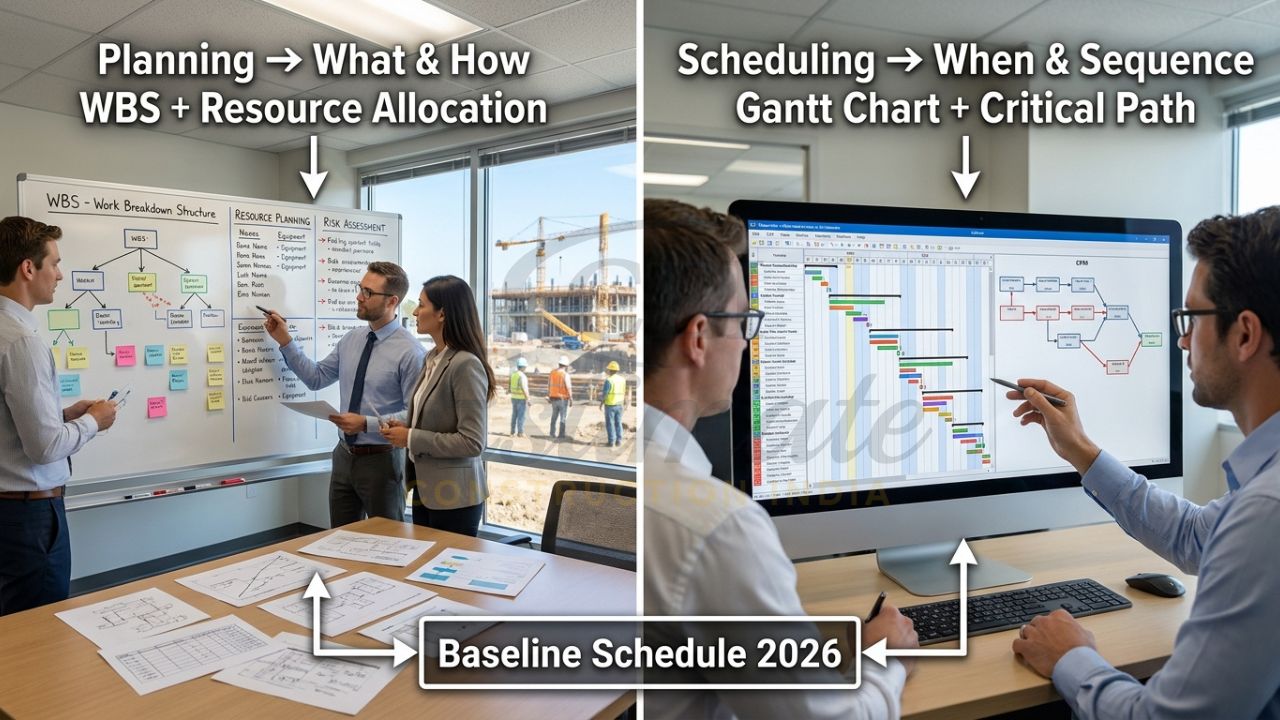
| Aspect | Construction Planning | Construction Scheduling |
| Focus | What & How | When & Sequence |
| Stage | Pre-construction & ongoing | Mainly execution phase |
| Output | Overall strategy & resource plan | Timeline, Gantt chart, CPM diagram |
| Flexibility | Broad framework | Frequently updated |
| Duration | Covers entire project lifecycle | Day-to-day & weekly tracking |
Importance of Construction Planning and Scheduling in India 2026
In 2026, timely completion is critical due to:
- RERA penalties for delays
- High interest costs on delayed projects
- Liquidated damages in government contracts
- Competitive bidding environment
Proper construction scheduling techniques help contractors win more tenders through realistic timelines and demonstrate strong project control during prequalification in construction tender in India.
Popular Construction Scheduling Techniques
1. Gantt Chart
Visual bar chart showing tasks against time. Easy to understand and widely used for client reporting.
2. Critical Path Method (CPM)
Identifies the longest sequence of dependent tasks that determines the shortest project duration. Any delay on the critical path delays the whole project.
3. Program Evaluation and Review Technique (PERT)
Uses probabilistic time estimates (optimistic, most likely, pessimistic) — useful for complex or uncertain projects.
4. Line of Balance (LOB)
Ideal for repetitive projects like housing colonies or highways.
5. Resource Levelling
Adjusts schedule to avoid over-allocation of resources.
Step-by-Step Process for Effective Construction Planning and Scheduling
- Define Project Scope — Clear objectives and deliverables.
- Create Work Breakdown Structure (WBS) — Break project into smaller tasks.
- Estimate Activity Durations — Use historical data and expert judgment.
- Determine Dependencies — Finish-to-Start, Start-to-Start, etc.
- Develop Schedule — Use software to create baseline schedule.
- Resource Allocation & Levelling — Assign and balance resources.
- Risk Analysis — Add buffers for uncertainties.
- Get Approvals — Freeze baseline schedule.
- Monitor & Control — Regular updates and variance analysis.
- Closeout — As-built schedule and lessons learned.
Essential Tools and Software Used in 2026
- Microsoft Project — User-friendly for mid-sized projects.
- Primavera P6 — Industry standard for large infrastructure projects.
- Asta Powerproject — Strong in resource planning.
- Excel + Power BI — For small contractors and custom dashboards.
- Cloud-based tools — Real-time collaboration and mobile updates.
Modern software integrates with BIM and helps generate accurate cash flow projections.
Resource Planning, Risk Management & Baseline Schedule
Effective resource planning prevents idle labour and machinery. Always prepare a baseline schedule — the approved original plan against which all progress is measured.
Incorporate risk management by adding contingency time for:
- Monsoon delays
- Material shortages
- Labour strikes
- Design changes
Use detailed estimate vs abstract estimate in construction to link cost and time planning.
Common Challenges and How to Overcome Construction Delays
Major Causes of Delays:
- Poor weather and site conditions
- Late material delivery
- Design revisions
- Payment delays to subcontractors
- Labour shortages
Solutions:
- Build realistic buffers
- Use just-in-time material management
- Maintain strong client and vendor relationships
- Implement weekly look-ahead schedules
- Use digital tracking tools for early warning
Best Practices for Successful Project Timeline Management
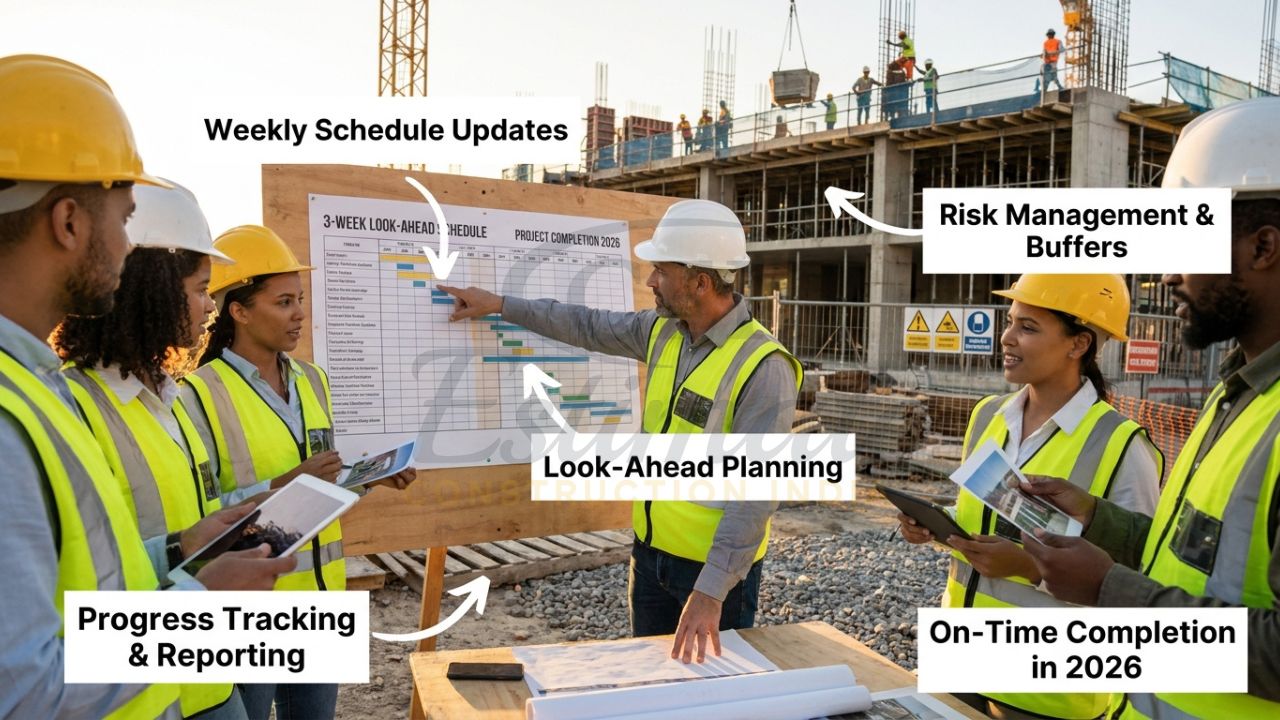
- Involve site team while creating the schedule
- Update schedule weekly
- Communicate schedule clearly to all stakeholders
- Track progress with photographs and daily reports
- Use best BOQ templates for interior works in India for accurate finishing schedules
- Conduct regular schedule review meetings
- Celebrate milestones to motivate the team
Understanding the difference between a builder and a contractor helps in defining clear responsibilities in planning.
Conclusion
Mastering construction planning and scheduling is one of the most important skills for success in the competitive Indian construction industry in 2026. Contractors and engineers who plan effectively and schedule realistically complete projects on time, within budget, and with higher profitability.
The best construction management app is the one that fits your workflow, your project scale, and your business goals. In 2026, Indian contractors and builders need tools that improve site tracking, labour attendance, material management, billing accuracy, and documentation while keeping operations simple and efficient.
If you want expert help choosing the right software and connecting it with accurate estimation and BOQ services, contact Construction Estimator India today on WhatsApp +91 8630676890. A better digital workflow can help you reduce delays, improve cost control, and build a more profitable construction business.
FAQs
- What is the difference between construction planning and scheduling?
Planning defines what and how; scheduling defines when and in what order.
- Which software is best for construction scheduling in India?
Primavera P6 for large projects and MS Project for medium and small projects.
- What is a baseline schedule?
The original approved schedule used as a reference to measure progress.
- How do I create a Gantt chart?
List activities, durations, dependencies, and use software like MS Project or Excel.
- Why do most construction projects in India get delayed?
Poor planning, scope changes, payment issues, and inadequate risk management.
- What is Critical Path Method (CPM)?
A technique to identify the longest path of dependent tasks that determines project duration.
- How often should I update my project schedule?
At least weekly, or whenever major changes occur.
- Does good scheduling help in winning tenders?
Yes. Realistic schedules and past performance records strengthen your bid.
- Can small contractors do proper planning without expensive software?
Yes. Start with Excel and gradually move to cloud tools.
- What is the ideal contingency time in construction schedules?
10–20% depending on project complexity and location.