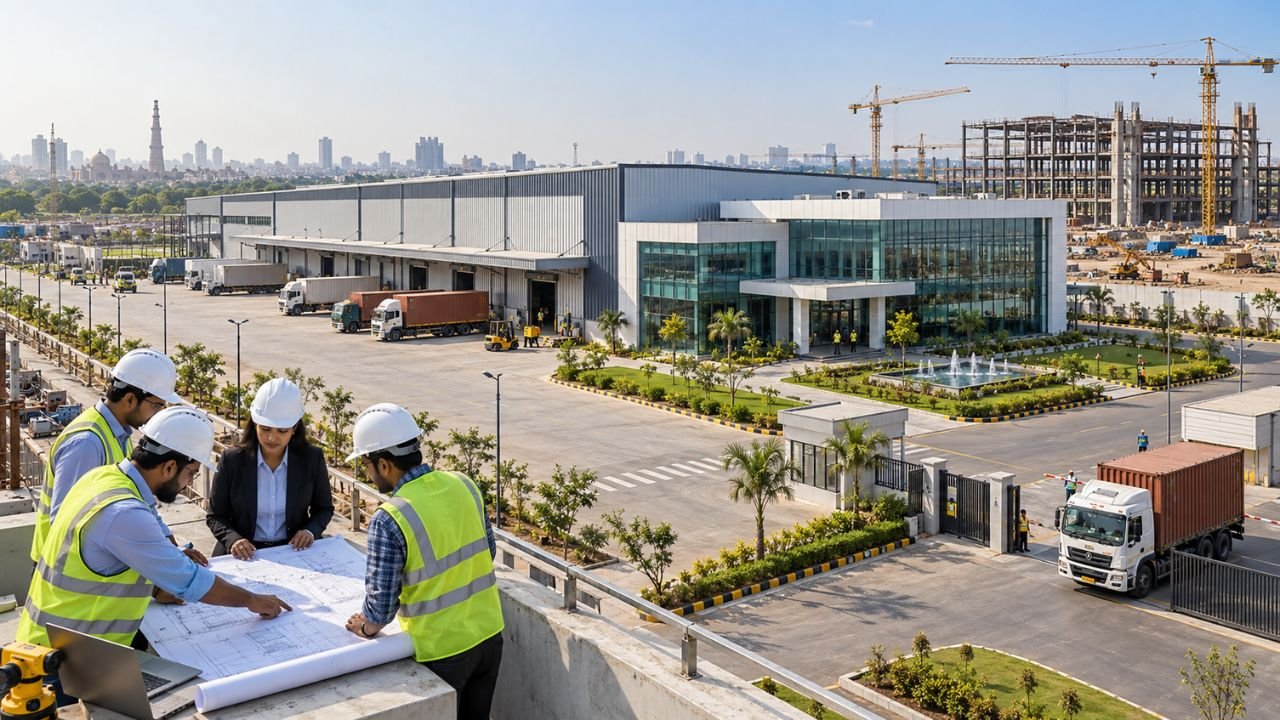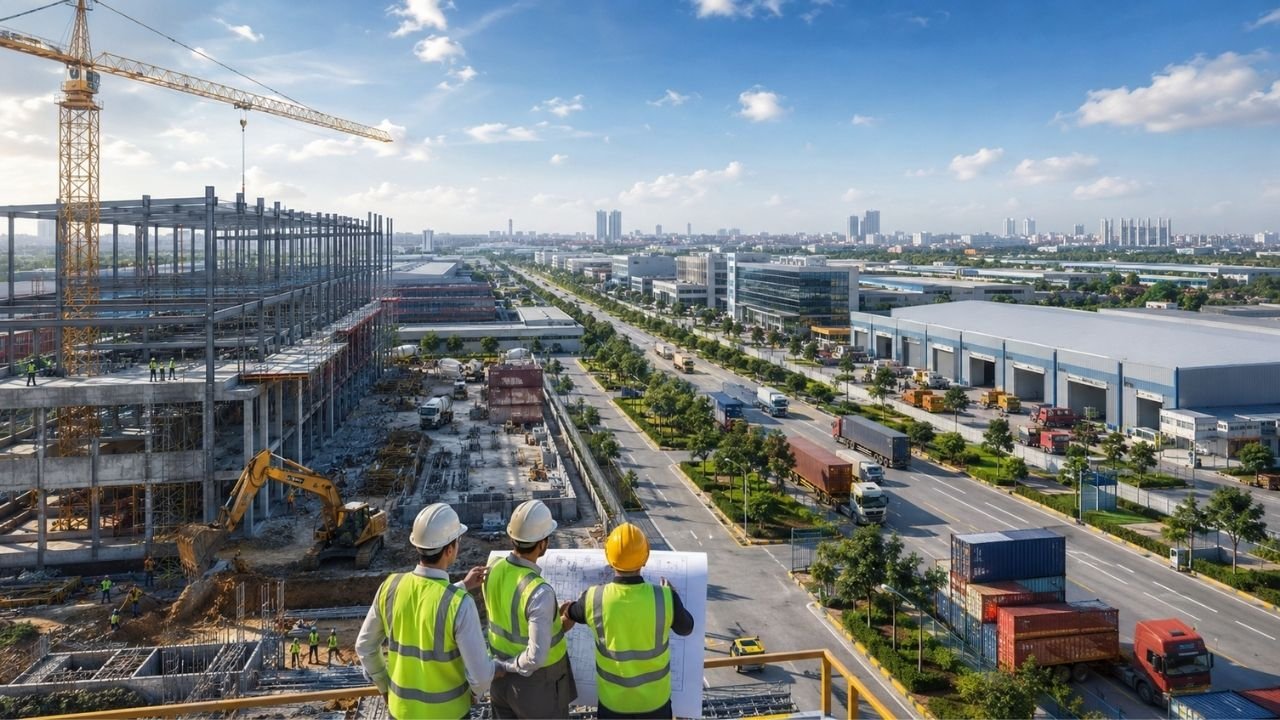
Construction material prices in 2026 are significantly influencing total house construction cost, commercial building cost, and overall civil construction budgeting across India. Whether you are planning a residential home, duplex, luxury villa, office complex, warehouse, hospital, retail space, or industrial facility, updated building material rates today directly determine your cost per square foot and total project feasibility.
Fluctuating cement rate today, changing TMT steel price today, rising sand price per cubic foot, and variations in the brick rate in India are reshaping overall turnkey construction cost. Understanding the updated building material price list 2026 is essential for accurate construction budget planning, reliable cost forecasting, and structured project cost management.
At Construction Estimate India, we provide professional construction cost estimation, structured BOQ preparation, accurate quantity takeoff services, and detailed material rate analysis to help homeowners, contractors, and developers maintain financial clarity.
Why Construction Material Prices Matter in Project Planning?
Construction projects are capital-intensive investments. Every structural element—from foundation to finishing—depends on raw materials. Cement and steel determine structural stability. Sand and aggregates form the backbone of concrete work. Bricks or AAC blocks shape the walls. Finishing materials define quality and aesthetics.
When material prices increase unexpectedly, the total construction cost rises immediately. If budgeting is done without considering realistic and updated rates, homeowners and developers may face financial strain mid-project. This is especially risky in long-duration projects where material procurement happens in phases.
Professional construction cost estimation ensures that pricing trends are evaluated before execution begins, reducing uncertainty and protecting financial stability.
Core Construction Material Prices (2026)
Below is an overview of current average material price ranges influencing construction budgets in India.
Core Construction Material Prices (2026)
| Material | Unit | Estimated Price Range (₹) |
| Cement | Per Bag (50kg) | 456 – 540 |
| TMT Steel | Per Metric Ton | 72,000 – 86,400 |
| River Sand | Per Cubic Foot | 54 – 96 |
| M-Sand | Per Cubic Foot | 42 – 78 |
| Aggregates | Per Ton | 1,080 – 1,680 |
| Red Bricks | Per Piece | 7 – 12 |
| AAC Blocks | Per Cubic Meter | 3,600 – 5,400 |
These prices may vary depending on region, supplier availability, transportation cost, and demand conditions. Metropolitan cities generally experience slightly higher rates due to logistics and storage expenses.
Cement and Its Impact on Structural Cost
Cement is a primary component in foundations, columns, beams, slabs, and plastering. Structural work consumes a large quantity of cement, particularly during slab casting and foundation stages.
Even a small increase in cement price per bag can significantly raise the total structural budget in medium and large projects. Cement pricing is influenced by energy costs, production capacity, regional demand, and transportation.
Monitoring cement rates before beginning structural work helps maintain accurate cost projections.
Steel Reinforcement and Construction Stability
Steel reinforcement bars (TMT bars) provide tensile strength to concrete structures. Steel is one of the most expensive structural materials used in construction. Its pricing is influenced by global iron ore supply, manufacturing cost, and domestic demand.
Residential projects typically require several kilograms of steel per square foot depending on structural design. Commercial projects often require higher steel consumption due to heavier load requirements.
Efficient structural design and accurate quantity takeoff can help optimize steel usage without compromising safety.
Sand, Aggregates, and Foundation Materials
Sand and aggregates are essential for producing concrete and masonry mortar. Environmental regulations have impacted river sand availability in many regions, increasing dependence on manufactured sand (M-sand).
Since these materials are consumed in large quantities, fluctuations in their pricing can affect foundation and slab costs. Proper planning and timely procurement help avoid unexpected financial increases.
Brick and AAC Block Selection
Wall construction materials affect both cost and performance. Traditional red bricks are widely used and affordable. AAC blocks are increasingly popular due to improved thermal insulation and lighter weight.
While AAC blocks may cost more initially, they can reduce plaster thickness and structural load, potentially lowering long-term expenses. Material selection should align with project requirements and budget goals.

Construction Cost Per Square Foot in 2026
Material quality and finishing standards significantly impact overall cost. Basic-grade construction focuses on functional materials, while premium construction includes higher-end finishes and advanced features.
Construction Cost Per Square Foot (2026)
| Construction Type | Basic Quality (₹/Sq Ft) | Standard Quality (₹/Sq Ft) | Premium Quality (₹/Sq Ft) |
| Residential House | 3,456 – 4,320 | 4,608 – 6,048 | 6,480 – 9,360 |
| Duplex / Villa | 4,032 – 5,040 | 5,472 – 7,200 | 7,920 – 12,240 |
| Commercial Building | 4,032 – 5,472 | 5,760 – 7,920 | 8,640 – 12,960 |
| Warehouse | 2,592 – 3,600 | 3,600 – 4,608 | 5,040 – 6,912 |
These costs include structural work, masonry, plastering, plumbing, electrical installation, and basic finishing. Land cost, approvals, and interiors are not included.
Material Cost Contribution Per Square Foot
Understanding cost distribution improves financial clarity.
Material Cost Distribution (₹ Per Sq Ft – 2026)
| Cost Component | Estimated Cost Range (₹ / Sq Ft) |
| Cement & Concrete | 620 – 1,050 |
| Steel Reinforcement | 760 – 1,320 |
| Sand & Aggregates | 420 – 790 |
| Bricks / AAC Blocks | 350 – 650 |
| Flooring & Finishing | 780 – 1,540 |
| Plumbing & Electrical Materials | 720 – 1,260 |
Structural components and finishing materials usually represent the highest cost share.
Factors Driving Material Price Changes
Several factors influence construction material prices:
- Fuel and transportation costs
- Energy prices affecting manufacturing
- Infrastructure demand
- Supply chain disruptions
- Environmental regulations
- Seasonal demand fluctuations
Understanding these drivers allows better financial planning and cost forecasting.
The Importance of Professional Cost Estimation
Professional construction cost estimation ensures that updated material rates are integrated into project budgeting. Detailed quantity takeoff services calculate exact material requirements based on project drawings.
BOQ preparation provides transparency and prevents billing discrepancies. Without structured documentation, projects often exceed budgets due to inaccurate assumptions.
Professional cost planning helps homeowners and developers make informed financial decisions before construction begins.
Managing Construction Material Costs Effectively
Effective cost control requires early procurement planning, value engineering, efficient scheduling, and contingency allocation. Bulk purchasing during stable price periods can reduce exposure to market volatility.
Project delays often increase material cost due to price escalation. Timely execution and structured procurement strategies minimize financial risk.
Why Choose Construction Estimate India?
Construction Estimate India offers comprehensive construction cost estimation services for residential, commercial, and industrial projects. Our services include:
- Detailed quantity takeoff
- BOQ preparation
- Material rate analysis
- Cost per square foot calculation
- Budget forecasting and financial planning
We ensure accuracy, transparency, and confidence before construction begins.
📞 Call Construction Estimate India at 8630676869 for reliable construction cost estimation and professional material rate analysis.
Conclusion
Construction material prices in 2026 are shaping the financial foundation of building projects across India. Cement, steel, sand, bricks, finishing materials, plumbing systems, and electrical components collectively determine total project cost.
Accurate planning, updated rate monitoring, and professional cost estimation are essential for maintaining budget stability and ensuring project success.
If you are planning to build and want a clear and transparent cost breakdown before starting your project:
📞 Contact Construction Estimate India at 8630676869 today and build with confidence through expert cost planning.
Frequently Asked Questions (FAQs)
What are the latest construction material prices in 2026?
Construction material prices in 2026 vary by location and demand. Cement typically ranges between ₹456–₹540 per bag, TMT steel between ₹72,000–₹86,400 per metric ton, and sand between ₹54–₹96 per cubic foot. Prices fluctuate based on transportation cost, fuel rates, and regional supply conditions.
How do construction material prices affect house construction cost?
Construction materials account for nearly 50–60% of total project cost. Increases in cement, steel, sand, or finishing materials directly raise the cost per square foot. Even small price changes can significantly impact total house construction cost, especially in medium and large projects.
Why are cement and steel prices increasing in 2026?
Cement and steel prices are influenced by fuel costs, energy expenses, global raw material supply, infrastructure demand, and transportation charges. Government infrastructure projects and real estate growth have also increased demand, contributing to price fluctuations.
What is the average construction cost per square foot in 2026?
In 2026, residential construction cost per square foot typically ranges between ₹3,456 and ₹9,360 depending on quality standards. Commercial construction may range from ₹4,032 to ₹12,960 per square foot based on material selection and structural requirements.
How can I reduce construction material costs without compromising quality?
Material costs can be managed through early procurement planning, bulk purchasing, accurate quantity takeoff, value engineering, and selecting cost-effective alternatives such as AAC blocks or M-sand. Professional construction cost estimation helps optimize spending while maintaining structural safety.
Do construction cost estimates include land and approval charges?
No. Standard construction cost per square foot usually includes structural work, masonry, plumbing, electrical installation, and finishing. Land purchase, government approvals, architectural fees, and interior design costs are typically excluded from base construction estimates.
How often do construction material prices change?
Construction material prices can change monthly or even weekly depending on market conditions. Steel prices are particularly volatile due to global demand, while cement rates may fluctuate seasonally based on energy cost and regional demand.
Why should I hire a professional construction cost estimator?
A professional estimator ensures accurate quantity takeoff, updated material rate analysis, detailed BOQ preparation, and realistic budgeting. This prevents financial surprises, reduces contractor disputes, and ensures better project cost control from start to finish.