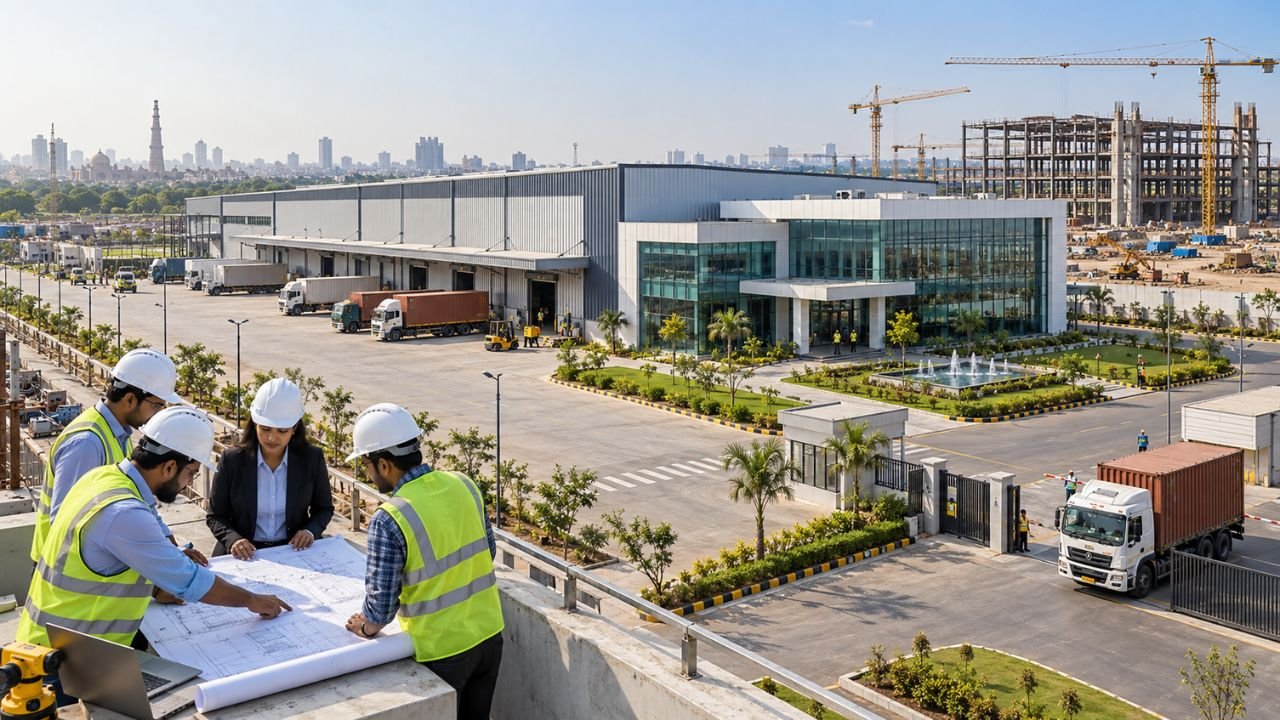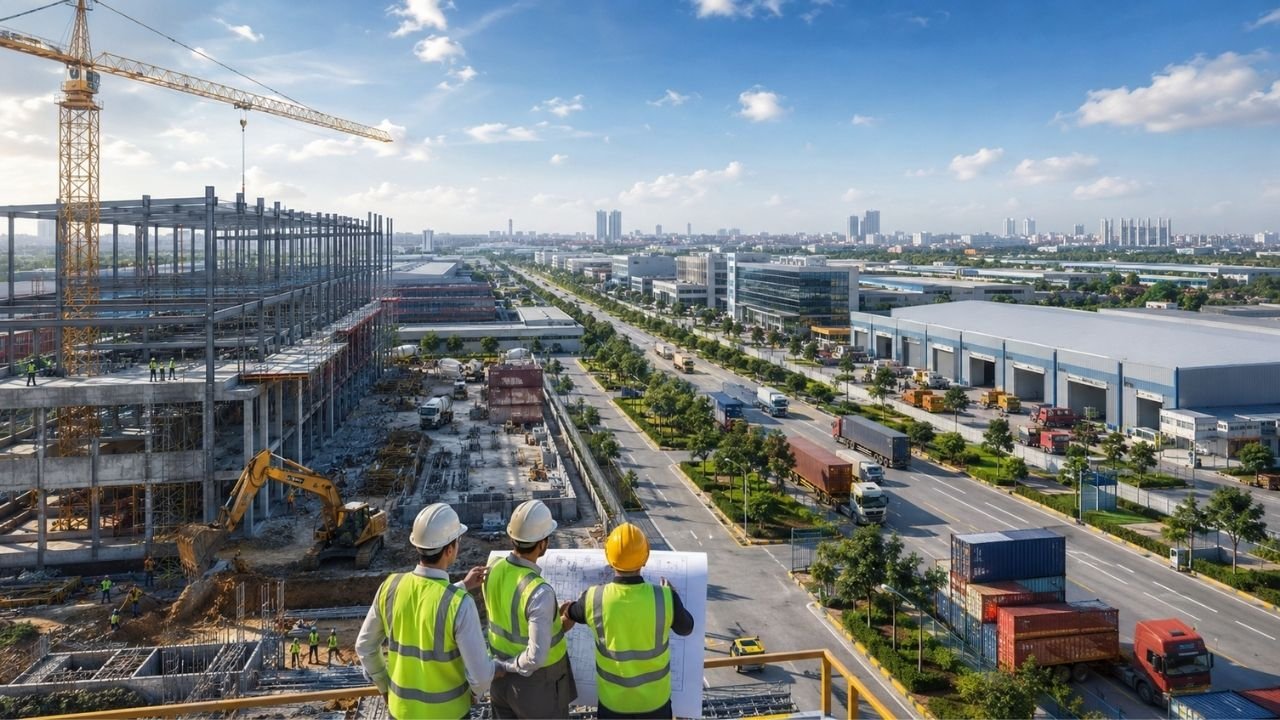
Building a home in Delhi is more than just a financial investment; it is a milestone of security and heritage. As we navigate through 2026, the Delhi NCR landscape is witnessing a massive construction boom driven by infrastructure expansion and a growing demand for multi-story residential units. However, for many homeowners and small-scale developers, this boom comes with a fair share of confusion. Whether you are looking at the 50 gaj house construction cost in Delhi for a nuclear family or planning a massive 4 floor building construction cost in Delhi, the variables involved—from material inflation to DDA sanction fees—can be overwhelming.
At Construction Estimator India, we believe in transparency. In this guide, we break down the construction cost in Delhi 2026 with the precision of a civil engineer and the practicality of a local contractor. We will explore specific plot sizes like 50 gaj and 100 gaj, analyze the costs of modern multi-floor structures, and provide a clear picture of the latest construction rates in Delhi NCR to help you plan your dream project without nasty financial surprises.
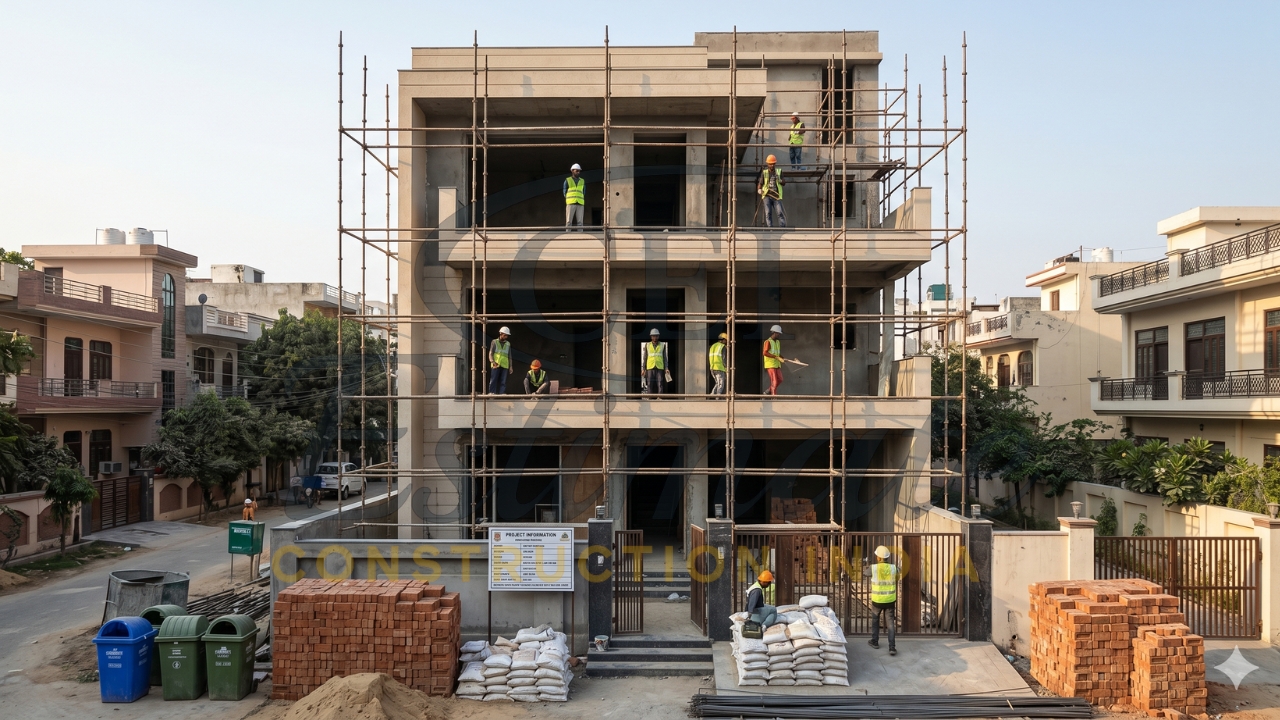
Current Construction Cost Trends in Delhi NCR 2026
The year 2026 has brought unique challenges and shifts to the construction sector in the National Capital Region. Material costs, particularly for commodities like copper and steel, have seen a steady rise of 10-15% year-over-year. Steel prices in Delhi currently hover between ₹65 and ₹85 per kg, while cement bags range from ₹380 to ₹520 depending on the brand and grade.
Labor costs have also seen a significant uptick. In Delhi, labor charges are approximately 10% higher than the national average due to the high cost of living and the demand for skilled workers. Skilled masons and bar benders now command daily rates ranging from ₹1,300 to ₹1,800+. Additionally, regulatory compliance in Delhi is stricter than ever. Buildings must now adhere to mandatory seismic Zone IV safety standards, requiring higher grades of RCC (M30-M40) and specialized structural engineering, which adds roughly 5-8% to the base civil cost.
50 Gaj House Construction Cost in Delhi 2026
A 50 gaj plot (approximately 450 square feet, though often effectively 275-300 square feet after setbacks in dense areas) remains one of the most popular choices for affordable housing in neighborhoods like Rohini, Dwarka, and Najafgarh. For 2026, the total 50 gaj house construction cost in Delhi typically ranges from ₹12 lakhs to ₹30 lakhs.
Detailed Cost Breakdown (Mid-Range Quality)
The civil shell—which includes the foundation, RCC structure, and brickwork—typically accounts for nearly 50% of your budget. For a standard G+1 structure on a 50 gaj plot, expect to use approximately 120-150 bags of cement and 2.5-3 tonnes of steel.
| Component | Estimated Cost (₹) | Key Specifications |
|---|---|---|
| Civil & Structural Work | ₹6,00,000 – ₹8,50,000 | RCC (M25), Class A Bricks, Excavation |
| Finishing (Tiles & Paint) | ₹3,00,000 – ₹4,50,000 | Vitrified tiles, Emulsion paint |
| Electrical & Plumbing | ₹1,50,000 – ₹2,50,000 | Modular switches, PVC conduits, ISI pipes |
| Doors & Windows | ₹1,00,000 – ₹2,00,000 | Flush doors, Aluminum/UPVC windows |
| Approvals & Fees | ₹50,000 – ₹1,00,000 | DDA/MCD Sanction, Architect fees |
| Total Estimated Cost | ₹12,00,000 – ₹18,50,000 | Basic to Mid-Range G+1 |
To save on costs for a 50 gaj build, many homeowners are now opting for prefab panels or sourcing materials from local mandis to avoid high transportation markups.
100 Gaj House Construction Cost in Delhi 2026
A 100 gaj plot (approx. 900 square feet) offers significantly more flexibility, allowing for a spacious 2BHK or a compact 3BHK duplex. The 100 gaj house construction cost in Delhi for 2026 spans from ₹36 lakhs for basic builds to ₹75 lakhs for premium G+1 duplexes.
Structure vs. Finishing
In a 100 gaj project, the “Civil Shell” typically costs between ₹1,000 and ₹1,800 per square foot. For a mid-range G+1 house, the electrical work alone can cost between ₹2.12 lakhs and ₹3.60 lakhs, covering roughly 80-100 points, basic earthing, and modular switches.
The material requirements for a 100 gaj house are substantial:
- Cement: ~220-250 bags per floor.
- Steel: 4.5-6 tonnes for a G+1 structure.
- Labor: Expect to spend ₹10 to ₹18 lakhs on the total labor team, including masons, plumbers, and electricians.
Comparison with 50 Gaj
While a 50 gaj house is often built as a single-unit dwelling, the 100 gaj plot often incorporates rental units or a dedicated stilt parking area, which is increasingly mandatory under DDA norms. This added complexity means the house construction cost per square foot in Delhi 2026 for a 100 gaj plot can sometimes be 10-15% higher due to more advanced foundation requirements.
4 Floor Building Construction Cost in Delhi 2026
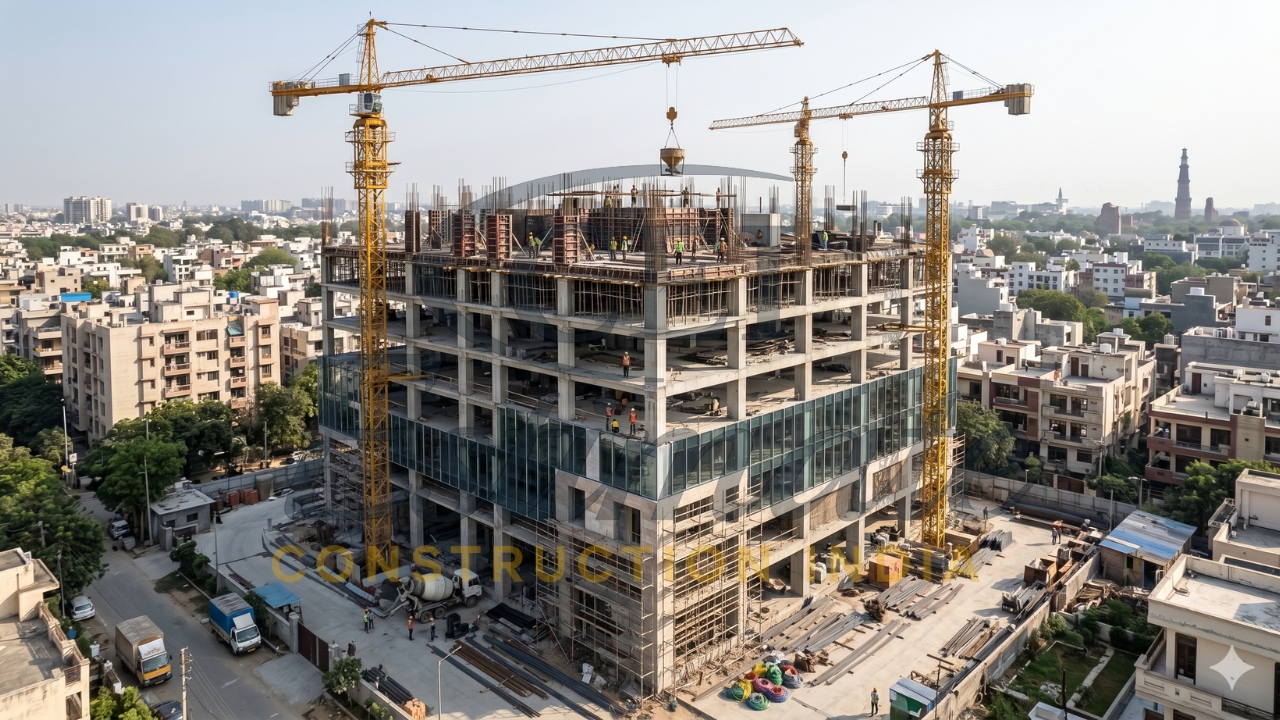
Multi-floor buildings (G+3 or G+4) are the backbone of Delhi’s residential real estate. For a standard 3,000-square-foot built-up area, the 4 floor building construction cost in Delhi typically falls between ₹90 lakhs and ₹3.6 crores depending on the specification level and the inclusion of a basement.
Unique Multi-Floor Expenses
Constructing four floors isn’t just about stacking 50 gaj units. It requires specific infrastructure:
- Lifts: Installation of a standard automatic lift costs between ₹12 and ₹20 lakhs.
- Fire Safety: Mandatory fire NOCs and sprinkler systems are required for buildings of certain heights, adding significant expenses.
- Stilt Parking: DDA norms often make stilt parking mandatory, which costs roughly ₹1,000 to ₹1,200 per square foot to construct.
- Basements: Adding a basement can increase your total budget by ₹1,000 to ₹1,500 per square foot due to heavy excavation and waterproofing requirements.
When looking at the 4 floor building construction cost in India, Delhi remains on the higher end due to Zone IV seismic engineering and expensive DDA sanction fees.
| Level of Building | Estimated Cost per Sq Ft (₹) | Typical Total (3000 sq ft) |
|---|---|---|
| Budget/Economy | ₹1,800 – ₹2,500 | ₹54 Lakhs – ₹75 Lakhs |
| Standard/Mid-Range | ₹2,800 – ₹4,500 | ₹84 Lakhs – ₹1.35 Crores |
| Premium/Luxury | ₹5,000 – ₹6,500+ | ₹1.5 Crores – ₹2.0 Crores+ |
Note: Total costs above exclude high-end lift installations and basement costs which can add ₹25-40 lakhs to the project.
Commercial Building Construction Cost in New Delhi
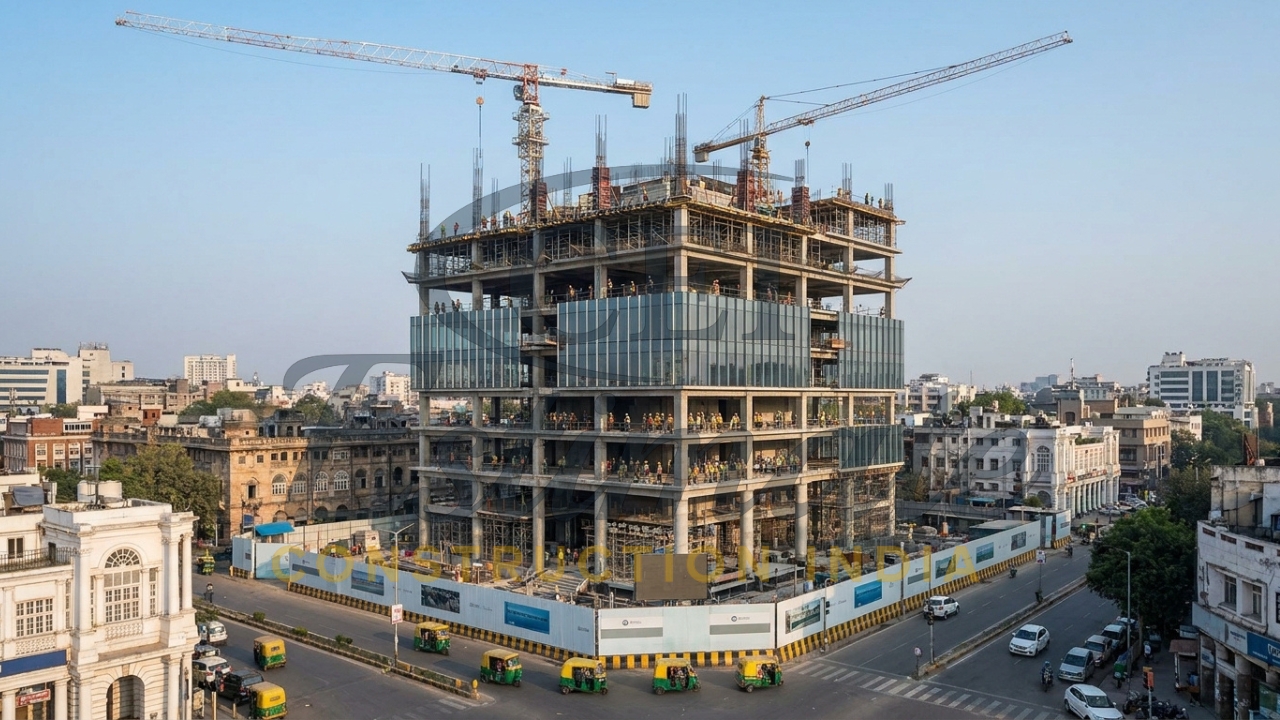
Commercial projects in the capital face a different set of financial realities. If you are wondering how much does it cost to build a commercial building in New Delhi, the answer starts at ₹2,800 per square foot for basic office spaces and can exceed ₹8,000 per square foot for corporate towers featuring glass curtain walls and central HVAC systems.
High costs are driven by:
- MEP Systems: Mechanical, Electrical, and Plumbing systems account for 30-40% of the budget in commercial builds.
- FSI Fees: DDA commercial Floor Space Index (FSI) regulations involve heavy premium payments.
- Sustainability: Adhering to IGBC Gold standards or daylight harvesting sensors is now a common requirement for Grade-A offices.
Cost Per Square Foot Breakdown for Different Construction Types
Understanding the house construction cost per square foot in Delhi 2026 requires a look at the quality tiers. In the current market, “Mid-range” is the most popular choice, offering a balance between branded materials (like Havells, Polycab, or Asian Paints) and cost efficiency.
| Type of Construction | Budget (₹/sq ft) | Mid-Range (₹/sq ft) | Premium (₹/sq ft) |
|---|---|---|---|
| Residential (Independent House) | ₹1,500 – ₹1,800 | ₹2,000 – ₹2,800 | ₹3,500 – ₹5,500 |
| Multi-Floor Residential (G+3/4) | ₹1,800 – ₹2,200 | ₹2,800 – ₹3,500 | ₹4,500 – ₹6,500 |
| Commercial Office/Retail | ₹2,800 – ₹3,500 | ₹4,000 – ₹5,500 | ₹6,500 – ₹8,000+ |
Factors Affecting Construction Cost in Delhi 2026
Several variables can swing your budget by 20% or more:
- Geographical Location: Constructing in South Delhi often carries a 30% premium compared to Outer Delhi due to logistics, labor rates, and higher quality expectations.
- Soil Condition: Areas near the Yamuna floodplains may require deep pile foundations, significantly increasing the structural cost compared to the rocky terrain of the Ridge area.
- Regulatory Fees: Hidden costs like DDA sanction fees, rainwater harvesting requirements (mandatory in Delhi), and utility connections must be factored in early.
- Material Quality: Opting for LSZH (Low Smoke Zero Halogen) wires for safety or high-amp circuits for EV charging are now 2026 standard requirements that add to the initial setup.
- GST: Always remember that a 18% GST is applicable on both construction materials and professional labor services.
Frequently Asked Questions (FAQs)
- What is the average electrical cost for a new home in Delhi 2026?
For a mid-range 1,000 sq. ft. home, expect to spend between ₹2.12 lakhs and ₹2.50 lakhs on electrical materials and labor, including GST. - Are lifts mandatory for a 4-floor building in Delhi?
Under current DDA and safety norms, a lift is highly recommended and often mandatory for residential buildings exceeding a certain height or number of floors to ensure accessibility. - How long does it take to build a 100 gaj house?
A single-story 100 gaj home takes about 3 to 6 months, while a G+1 or G+2 multi-story structure can take up to 8 to 12 months including finishing. - Can I get a subsidy for construction in Delhi?
Yes, prospective homeowners may explore PMAY (Pradhan Mantri Awas Yojana) subsidies for eligible residential projects, which can significantly offset costs for first-time builders. - What is the cost of adding a basement in Delhi?
Adding a basement typically increases the cost by ₹1,000 to ₹1,500 per square foot due to the need for advanced waterproofing and structural reinforcement. - Which is cheaper: Brickwork or Concrete Blocks?
In Delhi, standard clay bricks are common, but using concrete blocks can sometimes be faster and slightly more cost-effective in labor, though material prices vary by local availability. - Is seismic Zone IV engineering expensive?
It adds roughly 5-10% to the structural cost as it requires more steel (Fe500) and higher grade concrete (M30+) to ensure the building can withstand earthquakes. - Does the cost include interior design?
Most standard estimates include basic finishing (paint, flooring, switches). Luxury interior fit-outs like modular kitchens and false ceilings are typically extra and can add ₹500–₹1,500 per sq ft. - How do copper prices affect my budget?
Since copper is a global commodity, its price fluctuations directly impact your wiring budget. In 2026, copper inflation has added roughly 10% to total electrical costs. - Why is South Delhi construction more expensive?
Higher labor wages, stricter entry/exit timings for material trucks (logistics), and a preference for premium specifications drive the costs up by nearly 30%.
Conclusion
Navigating the construction cost in Delhi 2026 requires a blend of careful planning and realistic budgeting. Whether you are managing a 50 gaj house construction cost in Delhi or a large-scale 4 floor building construction cost in Delhi, the key to success lies in a detailed Bill of Quantities (BOQ).
At Construction Estimator India, we have seen far too many projects stall due to “hidden costs” or poor material estimation. Before you lay the first brick, ensure you have accounted for everything from the rising cost of Fe500 steel to the 18% GST on labor. We recommend consulting with a professional estimator or architect to future-proof your home with EV charging provisions and solar-ready distribution boards.
Building your dream home in the capital is a complex journey, but with the right data and a transparent approach, it is one of the most rewarding investments you will ever make. Start your estimation today and build with confidence!