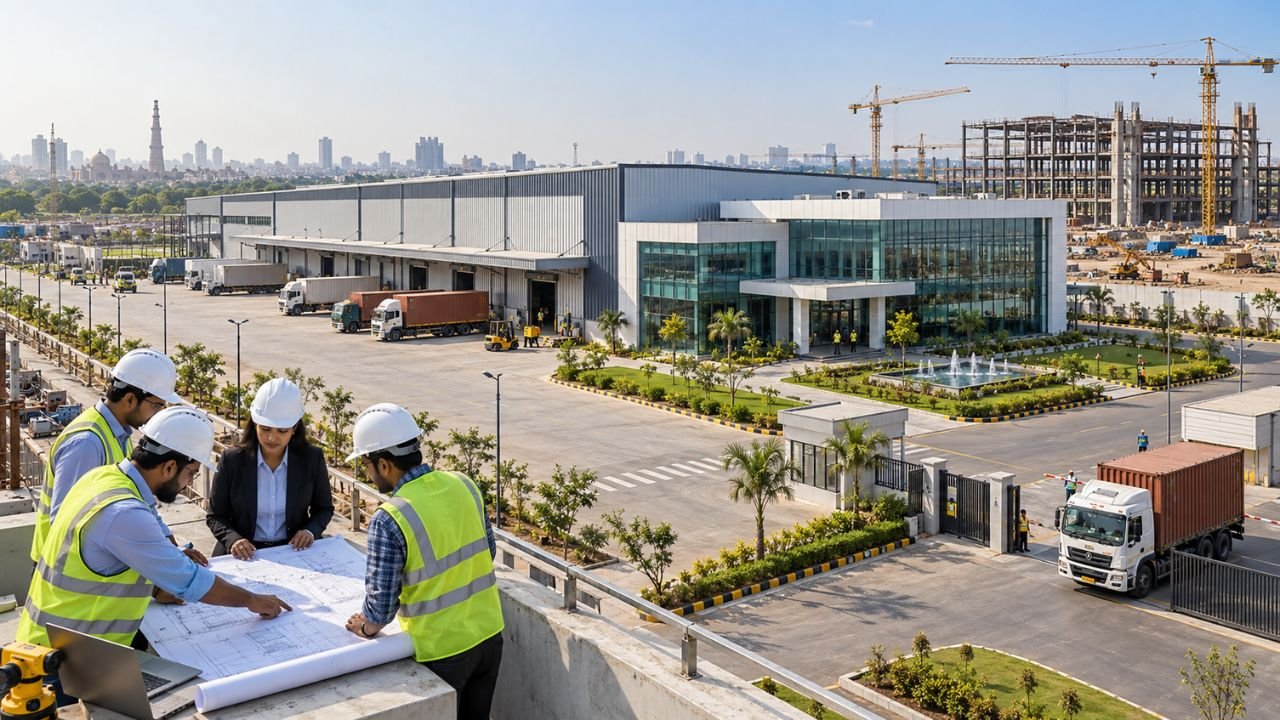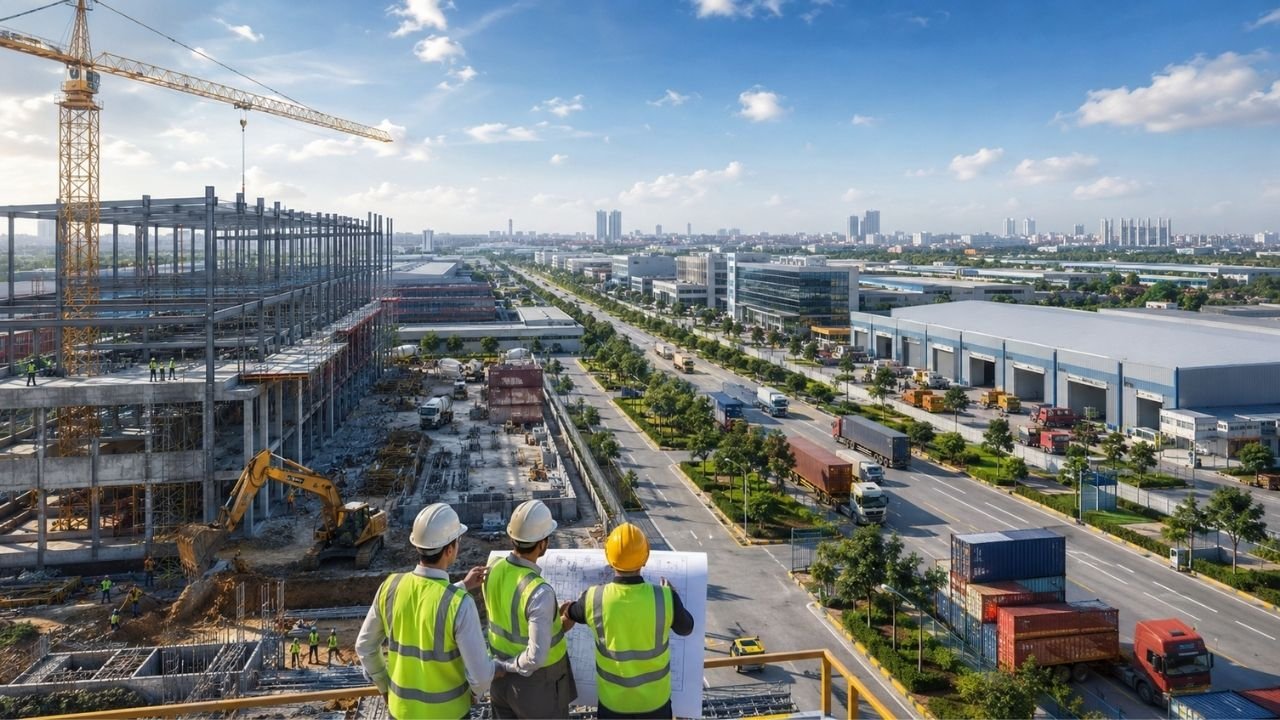
How much will the civil construction of my factory cost? This is the very first question every manufacturing owner asks when planning a new industrial venture. In the high-stakes world of industrial development, understanding the civil construction cost for manufacturing company projects is the difference between a successful launch and a financial disaster.
In 2026, India’s manufacturing sector is undergoing a massive transformation under the “Make in India” 2.0 initiative, but this growth is accompanied by a steady 5-8% annual increase in material and labor rates. Many entrepreneurs rely on “ballpark” figures that often overlook the complexities of industrial-grade structures, leading to budget overruns that can reach as high as 40%. Civil construction is the “bones” of your facility—the physical environment that must be engineered to withstand heavy machinery vibrations, high utility loads, and strict safety regulations.
This guide provides a realistic, data-backed breakdown of 2026 figures to help you plan your manufacturing unit with precision. Whether you are setting up a food processing plant, a garment factory, or a heavy engineering unit, the following sections will clarify your factory civil construction cost India expectations and introduce you to the power of a professional Bill of Quantities (BOQ).
For an immediate, itemized estimate tailored to your project, WhatsApp your factory type and size to our experts at +91 8630676890 for a professional response within 24–48 hours.
What Exactly is Included in Civil Construction Cost for a Manufacturing Company?
When discussing the civil construction cost for manufacturing company units, we are specifically referring to the fixed physical structure required before machinery installation. It is the expenditure on materials and labor for the building shell and essential site works.
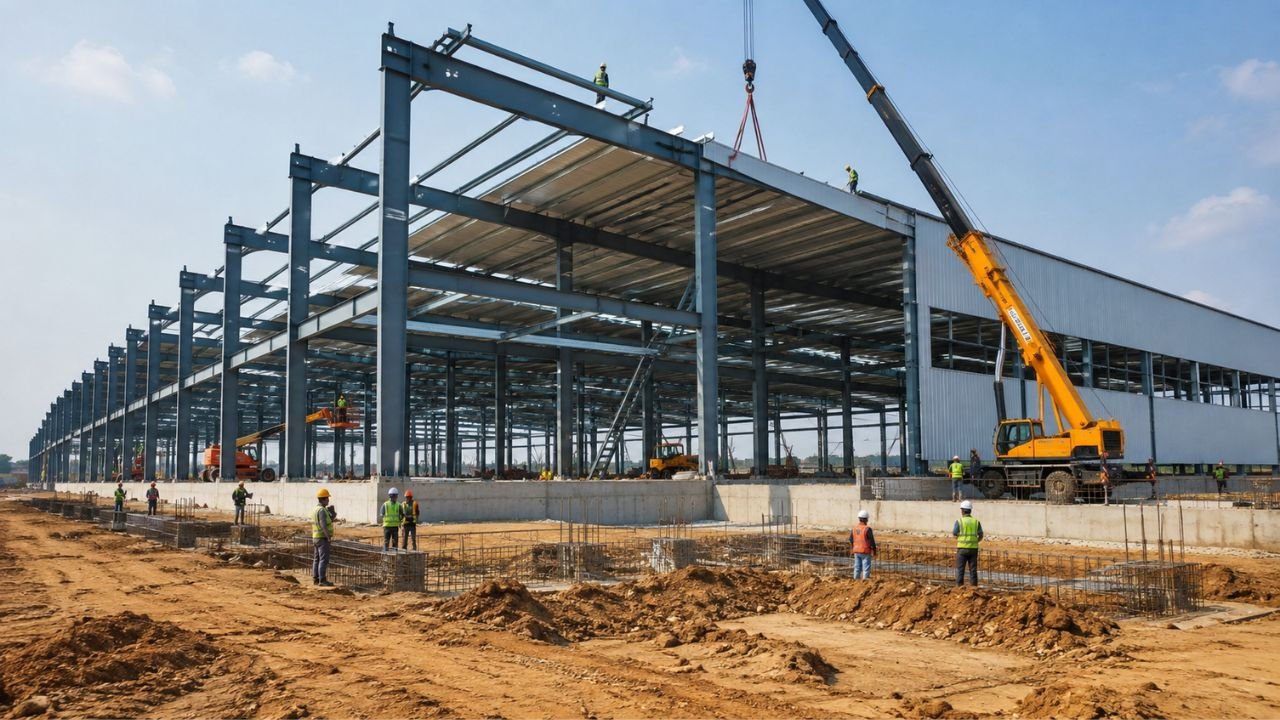
A standard industrial civil scope typically includes:
- Earthwork and Land Development: This involves site clearing, excavation, leveling, and soil stabilization to ensure the ground can support massive industrial loads.
- Substructure (Foundations): Reinforced Cement Concrete (RCC) footings designed based on soil bearing capacity (SBC) and the specific weight of your intended machinery.
- Superstructure: The main structural frame, which in 2026 is usually either a Pre-Engineered Building (PEB) steel frame or a conventional RCC frame.
- Industrial Flooring: High-performance flooring like Vacuum Dewatered Flooring (VDF) or Trimix, essential for handling forklift traffic and static machine loads.
- Utility Civil Works: Construction of essential infrastructure such as underground water tanks, drainage networks, and septic systems.
- Walling and Enclosures: Masonry work using traditional bricks or modern AAC blocks, along with external cladding using Galvalume sheets.
It is important to note that civil cost generally excludes the cost of machinery, specialized industrial licenses, and internal electrical/plumbing fixtures (MEP), though it does include the preparation for these services (conduits and pits).
Major Components of Civil Construction Cost
Understanding the factory construction cost breakdown helps you identify where your capital is being deployed. In a typical manufacturing project, the structural frame and specialized flooring account for over 50% of the total civil budget.
| Component | % of Civil Budget | Key Cost Drivers |
|---|---|---|
| Foundations & Sub-structure | 20% – 25% | Soil quality, excavation depth, machinery pits. |
| Primary Structure (Steel/RCC) | 35% – 40% | Clear height, span width, crane capacity. |
| Roofing & Cladding | 12% – 18% | Sheet gauge, insulation type, skylights. |
| Industrial Flooring (VDF) | 8% – 15% | Floor thickness, reinforcement, flatness. |
| Finishing & External Civil | 10% – 15% | Internal roads, drainage, basic painting. |
Civil Construction Cost Per Sq Ft for Manufacturing Buildings in India 2026
The manufacturing building construction cost per sq ft varies significantly based on the complexity of the design and the materials used. Below are the realistic ranges observed in the Indian market for 2026:
| Building Type | Cost Range (per Sq Ft) | What’s Typically Included |
|---|---|---|
| Basic PEB Industrial Shed | ₹1,200 – ₹1,800 | Light steel frame, basic roofing, standard VDF floor. |
| Standard Factory Building | ₹1,500 – ₹2,200 | Heavy PEB, insulated roofing, thick industrial floor. |
| RCC Industrial Building | ₹1,800 – ₹2,800 | Full RCC frame, multi-story capability, brick masonry. |
| High-Spec Manufacturing Unit | ₹2,500+ | Heavy crane provisions, clean-room finishes, specialized pits. |
These rates are generally “Ex-GST,” meaning you must factor in a standard 18% GST for construction services in India. For a specific quote based on your location, contact Construction Estimator India at +91 8630676890.
Factors That Significantly Affect Civil Construction Cost
Calculating the civil cost for manufacturing unit setup isn’t a one-size-fits-all process. Several variables can swing your budget by 20% or more:
- Clear Height requirements: For every 5 feet of additional height above 20 feet, steel consumption increases by 10-15% due to increased wind load requirements, directly raising the per sq ft cost.
- Span Width (Column-free Area): Wider spans require heavier steel sections. Optimizing span width by adding a row of internal columns can reduce steel weight—and cost—by up to 15%.
- Soil Bearing Capacity (SBC): Poor soil quality requires deeper foundations or soil stabilization (piling), which can add significant “unseen” costs to your industrial shed construction cost.
- Crane Provisions: Designing for an EOT crane (e.g., a 10-ton crane) adds ₹250–₹400 per sq ft to the structural budget because columns and gantry girders must be heavily reinforced.
- Geographic Location: Logistics and seismic requirements in hilly regions like Uttarakhand or North-East India can increase costs by 10-20% compared to plains.
PEB Shed vs RCC Factory Building – Cost Per Sq Ft Comparison
One of the most critical decisions for a factory owner is choosing between a Pre-Engineered Building (PEB) and a conventional Reinforced Cement Concrete (RCC) structure.
- PEB (Pre-Engineered Building): In 2026, PEB is the preferred choice for large-span factories. It is typically 20-30% more cost-effective than RCC and offers a much faster Return on Investment (ROI) because the shell can be erected in 4–8 months.
- RCC (Reinforced Cement Concrete): While slower to build (12–18 months), RCC is often used for multi-story manufacturing units or small-scale labs where fire resistance and multi-level floor loads are the priority.
Sample Cost Calculation for a Typical Manufacturing Factory
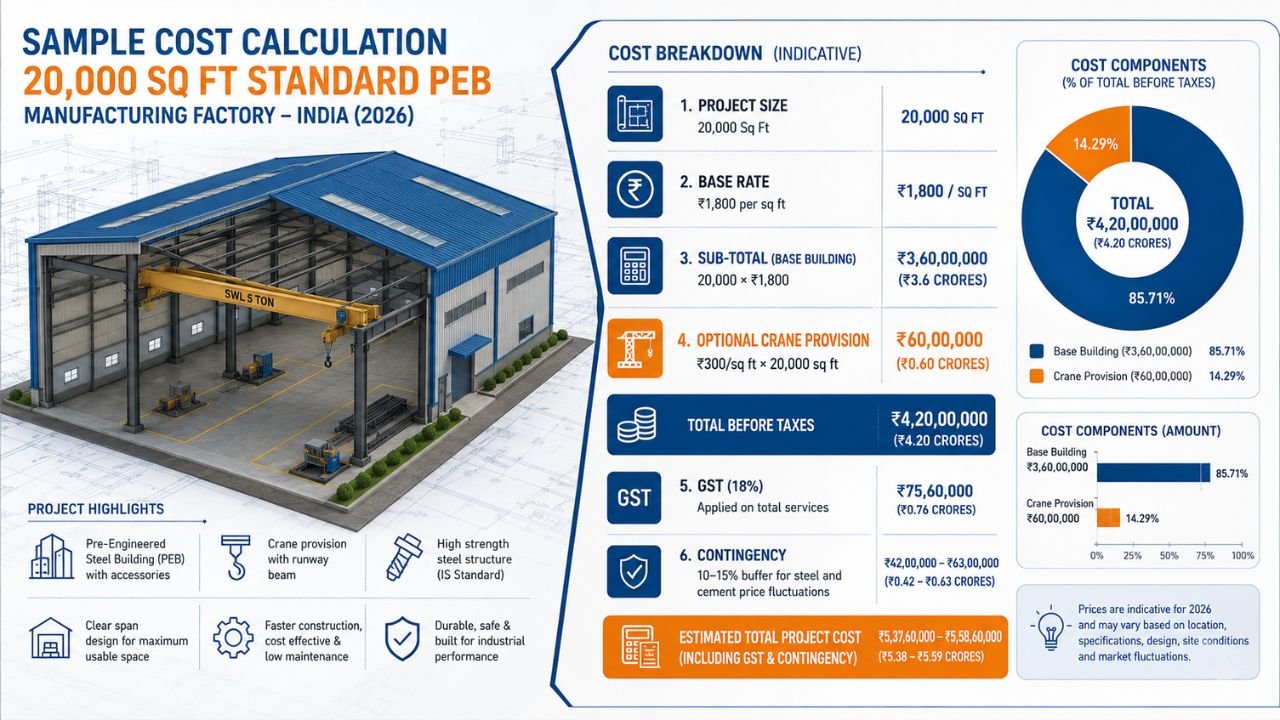
To give you a clearer picture, let’s look at a sample estimate for a 20,000 sq ft standard PEB manufacturing unit in 2026:
- Project Size: 20,000 Sq Ft
- Base Rate (Standard PEB): ₹1,800 per sq ft
- Sub-total: ₹3,60,00,000 (3.6 Crores)
- Crane Provision (Optional): ₹300/sq ft x 20,000 = ₹60,00,000
- GST (18%): Applied on the total services.
- Contingency (10-15%): It is vital to keep a buffer for material price fluctuations, especially for steel and cement.
How to Use Cost Per Sq Ft Rate Correctly for Budgeting
The “rate per sq ft” should only be used as a rough guide, not a final contract value. Relying solely on a lump sum per sq ft quote can lead to:
- Steel Grade Compromise: Some contractors might use Grade 250 steel instead of the required high-strength Grade 345 to lower their initial quote.
- Material Wastage: Without a detailed factory construction cost breakdown, you have no way to monitor if materials like TATA/JSW steel or ACC/Ambuja cement are being used efficiently.
- Disputes: Ambiguity in the scope of work often leads to “extra” charges mid-construction.
The only way to secure your investment is through a professional Bill of Quantities (BOQ).
How Construction Estimator India Helps You with Accurate Civil Cost Estimates
At Construction Estimator India, we specialize in bridging the gap between a “rough guess” and a bank-ready budget. With over 10 years of industrial expertise, we provide the following:
- Detailed Quantity Takeoff: We measure every kg of steel and cubic meter of concrete from your drawings.
- Real-time 2026 Pricing: Our database is updated weekly with regional labor and material rates across India.
- Material Optimization: We suggest design improvements, such as optimizing span width, to save you 10-15% on total costs.
- Bank-Ready Reports: Our BOQs are accepted by major Indian banks for securing industrial project financing.
Get Realistic Civil Construction Cost Estimate for Your Manufacturing Unit
Don’t leave your industrial investment to guesswork. A single error in your factory’s civil planning can lead to structural issues or massive redesign costs.
Our Simple 3-Step Process to Start:
- WhatsApp Us: Message your factory type (e.g., Plastic molding, Garment, Food processing) to +91 8630676890.
- Provide Details: Share your approximate built-up area (sq ft) and project location.
- Get Results: Receive a professional, realistic civil construction cost estimate and preliminary BOQ within 24–48 hours.
FAQ Section: What Manufacturing Owners Ask
Q1: Is PEB cheaper than RCC for factory construction?
Yes, Pre-Engineered Buildings (PEB) are typically 20-30% more cost-effective for large spans and offer a much faster return on investment due to quick erection.
Q2: What is the average manufacturing building civil cost per sq ft in 2026?
The average for a standard PEB factory ranges from ₹1,200 to ₹2,500 per sq ft, depending on height, load requirements, and location.
Q3: Does the civil cost include electrical and plumbing?
Usually, “civil cost” includes preparations like conduits and drainage pipes, but the actual electrical panels, fixtures, and plumbing hardware are calculated as MEP costs.
Q4: How much extra does an EOT crane provision add?
A provision for a 10-ton crane typically adds ₹250–₹400 per sq ft to the structural steel budget due to reinforced columns.
Q5: What is VDF flooring, and why is it necessary?
Vacuum Dewatered Flooring (VDF) increases compressive strength and prevents cracks from heavy machinery and forklift movement.
Q6: Why do I need a professional BOQ for a bank loan?
Banks require a technical cost estimation and a detailed Bill of Quantities (BOQ) to ensure the project’s financial viability before releasing funds.
Q7: Does location within India change the civil cost?
Yes. Logistics in hilly terrains or seismic zones can increase costs by 10-20%.
Q8: What is the standard GST on factory construction?
As of 2026, a standard 18% GST is applicable on construction services in India.
Q9: How long does it take to build a 20,000 sq ft factory?
Using PEB, the shell can be completed in 4–8 months; conventional RCC might take 12–18 months.
Q10: How much contingency should I keep?
We recommend keeping 10-15% of the total estimate as a buffer for unforeseen ground conditions or material price spikes.
Conclusion
Understanding the civil construction cost for manufacturing company projects is the foundation of a successful industrial venture. In 2026, a well-planned facility that balances PEB efficiency with optimized span widths and heavy-duty flooring is key to staying within budget. By focusing on a detailed BOQ rather than “lump sum” guesses, you protect your investment from the very start.
Ready to turn your manufacturing vision into a precision-built reality? Don’t start with a “rough guess.” Get professional guidance and an accurate BOQ that protects your budget.
WhatsApp Construction Estimator India now at +91 8630676890 for your realistic civil cost estimate.