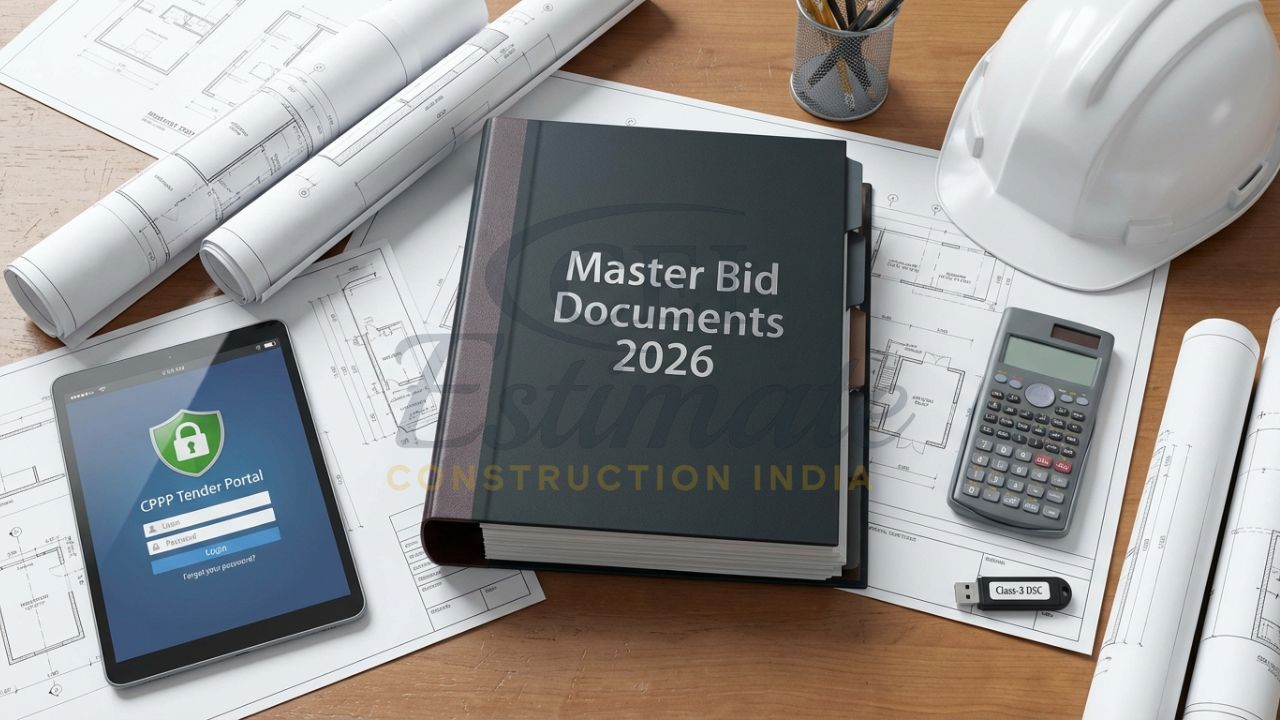
In the highly competitive Indian construction market of 2026, understanding bid documents in construction is no longer optional — it is the key to winning profitable tenders and avoiding disqualification or heavy losses. Every day, thousands of projects are floated on GeM, CPPP, state PWD portals, and private client platforms. Contractors who know how to read, analyze, and respond to bid documents consistently secure more work at better margins.
Bid documents in construction are the complete set of papers issued by the client that define the project scope, rules, technical requirements, pricing format, and contractual obligations. Ignoring even one clause can lead to rejection during technical evaluation or financial losses during execution. This guide explains every major component in simple, practical language with 2026 India-specific examples, checklists, and tips that contractors across Agra, Delhi NCR, Lucknow, and other states can use immediately. Before diving into the paperwork, it is vital to understand the broader tender in construction lifecycle and how bid documents act as the official “rule book” for the entire procurement process.
Whether you are a small contractor bidding on a G+1 residential project or a larger firm targeting NHAI or PMAY works, mastering these documents will dramatically improve your tender success rate.
What Are Bid Documents in Construction?
Bid documents (also called tender documents) are the official package issued by the client or employer that tells contractors exactly what is required to submit a valid bid. They serve two purposes: they provide all information needed to prepare a competitive offer and they form the basis of the final contract if you win.
In simple words, bid documents are the rule book of the tender. They include everything from the Notice Inviting Tender (NIT) to detailed drawings, specifications, BOQ, and payment terms. In India 2026, most bid documents are issued digitally through GeM or CPPP portals, making quick and accurate analysis even more critical.
Importance of Bid Documents in Indian Construction Industry 2026
In 2026, the Indian construction sector is seeing record government spending through NIP, PMAY 2.0, and state infrastructure schemes. Competition is intense, with L1 discounts often reaching 30–50% in road and building tenders. A clear understanding of bid documents in construction India 2026 gives you three major advantages:
- Avoid disqualification — Missing EMD, wrong format, or non-compliance with technical criteria leads to immediate rejection.
- Price realistically — The BOQ and special conditions help you avoid under-quoting and later losses.
- Manage risks — Clauses on penalties, variations, payment milestones, and force majeure protect you during execution.
Contractors who treat bid documents as a checklist instead of a formality win more bids and maintain healthy profit margins even in a high-inflation environment.
Choose Your Construction Services
Connect with verified experts for your project. We provide professional
General Contractors, Sub-contractors, Builders, and Material Suppliers.
Our network also includes specialized 3D Rendering Developers and Interior Experts.
Main Components of Bid Documents in Construction
Every bid document package contains the following standard sections. Knowing each one is essential:
- Notice Inviting Tender (NIT): Basic project details, estimated cost, bid submission deadline, and eligibility criteria. Always read this first.
- Instructions to Bidders (ITB): Rules for submission, two-envelope system, pre-bid meeting schedule, and how bids will be evaluated.
- General & Special Conditions of Contract: Standard GCC plus project-specific clauses on time extension, liquidated damages, insurance, and dispute resolution.
- Technical Specifications: Detailed quality standards, brands, IS codes, and workmanship requirements for every item.
- Drawings: Architectural, structural, MEP, and site layout drawings. These are the basis for quantity takeoff. To analyze these correctly, you must have a strong grasp of estimation and costing civil engineering basics, as the drawings are the primary source for your internal quantity takeoff.
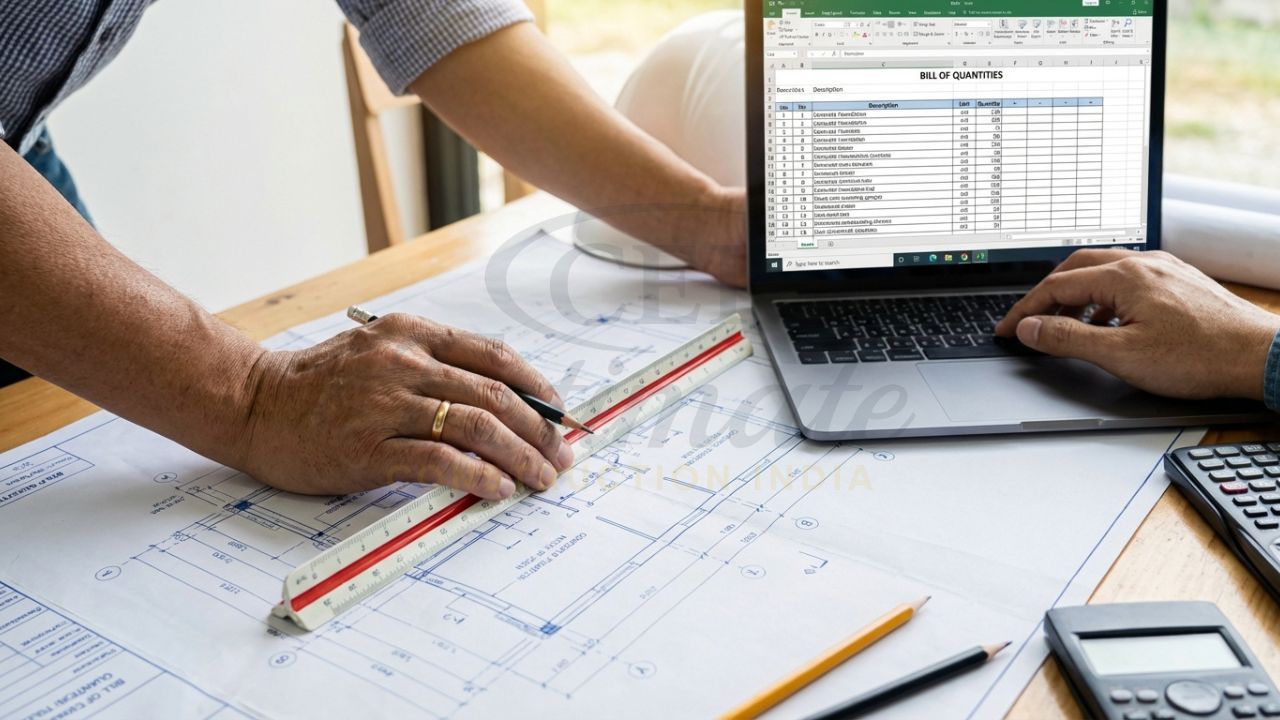
- Bill of Quantities (BOQ): The most important pricing document. It lists every item with description, unit, and quantity. You only fill the rate column. If you are unclear about how this document is structured, refer to our guide on what is BOQ in construction to ensure you fill your rates correctly.
- Forms & Formats: EMD/Bank Guarantee format, undertaking on blacklisting, integrity pact, experience certificates, etc.
- Schedule of Rates / Price Schedule: Sometimes separate from BOQ for rate contracts.
Review every page carefully. Missing even one required format can disqualify your bid.
Technical Bid vs Financial Bid – Key Differences
Most Indian tenders (especially government) use the two-envelope system:
| Aspect | Technical Bid (Envelope A) | Financial Bid (Envelope B) |
| Purpose | Prove you are capable and eligible | Show your price offer |
| Contents | Company profile, experience, machinery, manpower, EMD, undertakings | Only BOQ with quoted rates |
| Opened First | Yes – on or before due date | Only if technical bid is qualified |
| Evaluation | Pass/Fail on eligibility & technical criteria | Lowest responsive bidder (L1) |
The technical bid is evaluated first. Only bidders who qualify move to financial bid opening. This system ensures only serious and capable contractors compete on price.

From Estimates to Winning Submissions
A common mistake contractors make is “blind bidding” without a proper cost baseline.
- The Foundation: Your bid should be based on a detailed estimate vs abstract estimate comparison. While an abstract estimate helps you decide if a project is worth pursuing, only a detailed estimate provides the precision needed for a winning BOQ.
- The Big Picture: For massive infrastructure projects, the bid documents are usually derived from a DPR in construction (Detailed Project Report). Reviewing the DPR (if available) can give you insights into the project’s logic and hidden risks.
- The Strategy: Once you understand the documents, you need a competitive edge. Check our expert tactics on how to win more construction bids in India to improve your success rate on portals like CPPP.
How to Read and Analyze Bid Documents Effectively
Follow this practical checklist every time you receive bid documents:
- Read the NIT and eligibility criteria first.
- Note the exact submission deadline and portal (GeM/CPPP).
- Attend the pre-bid meeting — many doubts get clarified officially.
- Highlight all penalty clauses, payment terms, and completion timeline.
- Check for any “deemed to be read and understood” clauses.
- Cross-check drawings with BOQ quantities.
- Identify risks (soil conditions, groundwater, monsoon impact).
- Prepare a compliance matrix showing how you meet every requirement.
Create a separate “Risk Register” sheet while analyzing. This single habit has helped many contractors avoid costly claims later.
Common Mistakes Contractors Make with Bid Documents in 2026
Even experienced contractors lose bids due to these frequent errors:
- Submitting without reading special conditions of contract.
- Wrong EMD amount or invalid bank guarantee format.
- Filling rates in BOQ without checking units (Cum vs Sqm).
- Ignoring “make in India” or local content clauses.
- Missing experience certificates in prescribed format.
- Quoting unrealistic prices without considering escalation clauses.
- Not attending pre-bid meeting and later claiming ambiguity.
- Using old drawings instead of the latest corrigendum.
- Forgetting to upload all required undertakings and affidavits.
- Poor document scanning quality or missing signatures.
Always allocate dedicated time to review bid documents at least 7–10 days before submission.
Tips to Prepare a Winning Bid Submission in India 2026
- Create a master checklist for every tender.
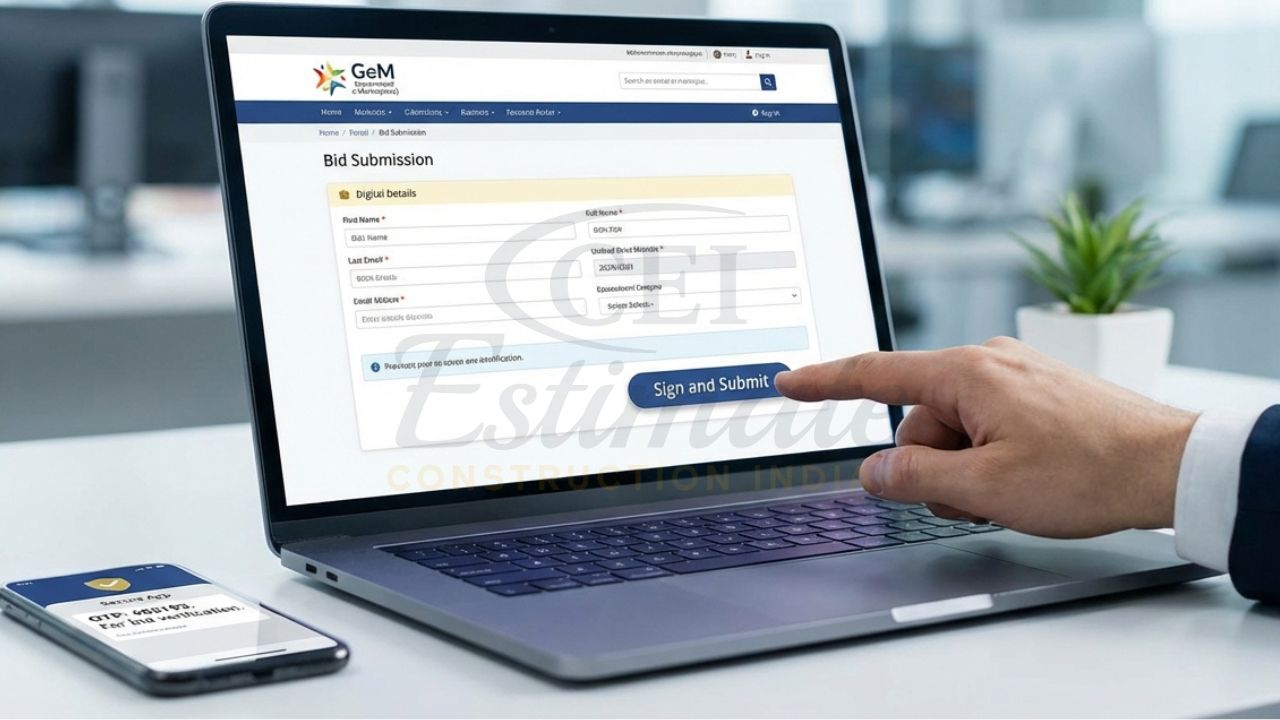
- Use the latest GeM/CPPP guidelines for digital submission.
- Prepare BOQ in the exact Excel format provided.
- Highlight your USP (past similar projects, timely completion certificates).
- Quote realistic rates with proper contingency for 2026 inflation.
- Keep all documents ready in PDF format with proper naming.
- Submit 2–3 days before deadline to avoid last-minute portal issues.
- Keep a complete set of bid documents for reference during execution.

Conclusion
Bid documents in construction are the foundation of every successful tender in India 2026. They define the rules of the game, set the technical and financial expectations, and ultimately decide who wins the project. Contractors who treat these documents with respect — reading them thoroughly, identifying risks early, preparing compliant submissions, and quoting realistically — consistently win more work and build stronger businesses.
Mastering bid documents is not difficult, but it requires discipline and attention to detail. Start by reviewing every section systematically, maintain a good checklist, and never rush the submission process. When combined with accurate BOQ preparation and strong project execution capability, thorough understanding of bid documents becomes your biggest competitive advantage in the Indian construction industry.
Ready to get an accurate, customised construction estimate for your project in 2026?
At Estimator Construction India our professional estimating team delivers detailed BOQ and cost reports in just 48 hours.
Construction cost estimation services start at just ₹10,000 INR only.
Contact us today:
📞 Phone / WhatsApp: +91 86306 76890
✉️ Email: info@constructionestimatorindia.com
Don’t overpay or underbid — get your precise 2026 construction cost per sq ft estimate now and win more projects with confidence!
Frequently Asked Questions (FAQs) – Bid Documents in Construction Explained
What are the most important documents in a construction bid package in India?
The most critical documents are the Notice Inviting Tender (NIT), Instructions to Bidders (ITB), BOQ, Technical Specifications, Drawings, General & Special Conditions of Contract, and the required Forms & Formats (EMD, undertakings). These form the complete bid documents in construction package and must be studied carefully before submission in 2026 tenders on GeM or CPPP.
What is the difference between technical bid and financial bid in construction tenders?
Technical bid proves your eligibility, experience, and capability (company profile, machinery, manpower, EMD). Financial bid contains only the priced BOQ. In the two-envelope system used across India, technical bid is opened first; only qualified bidders proceed to financial bid opening. This separates capability from price.
How do I check for hidden risks in bid documents before submitting a tender?
Read the Special Conditions of Contract, penalty clauses, payment terms, variation limits, and force majeure provisions carefully. Note soil conditions, groundwater table, monsoon impact, and any “deemed to be read” clauses. Prepare a risk register and discuss ambiguous points in the pre-bid meeting. This step is essential for safe bid documents in construction India 2026 analysis.
Is BOQ part of bid documents or a separate document?
BOQ is an integral and most important part of the bid documents. It is usually provided in Excel format by the client. Contractors only fill the rate column. The quantities mentioned in BOQ are deemed correct and form the basis of payment after execution.
How has the bidding process changed in India in 2026 with GeM and digital portals?
Bidding has become fully digital and paperless. GeM and state portals now require Aadhaar-linked DSC, online EMD, and real-time technical evaluation. Corrigenda are issued electronically, and bid submission is time-stamped. Contractors must be comfortable with digital document uploading and portal navigation to succeed in 2026.