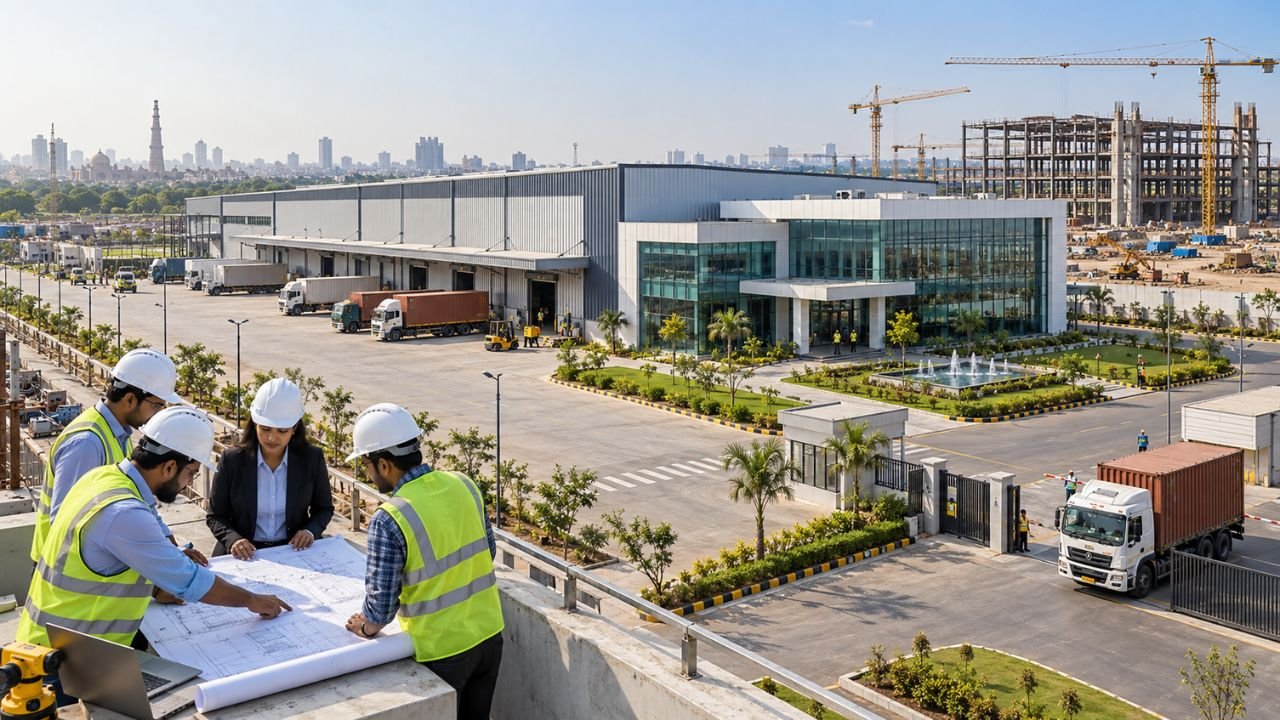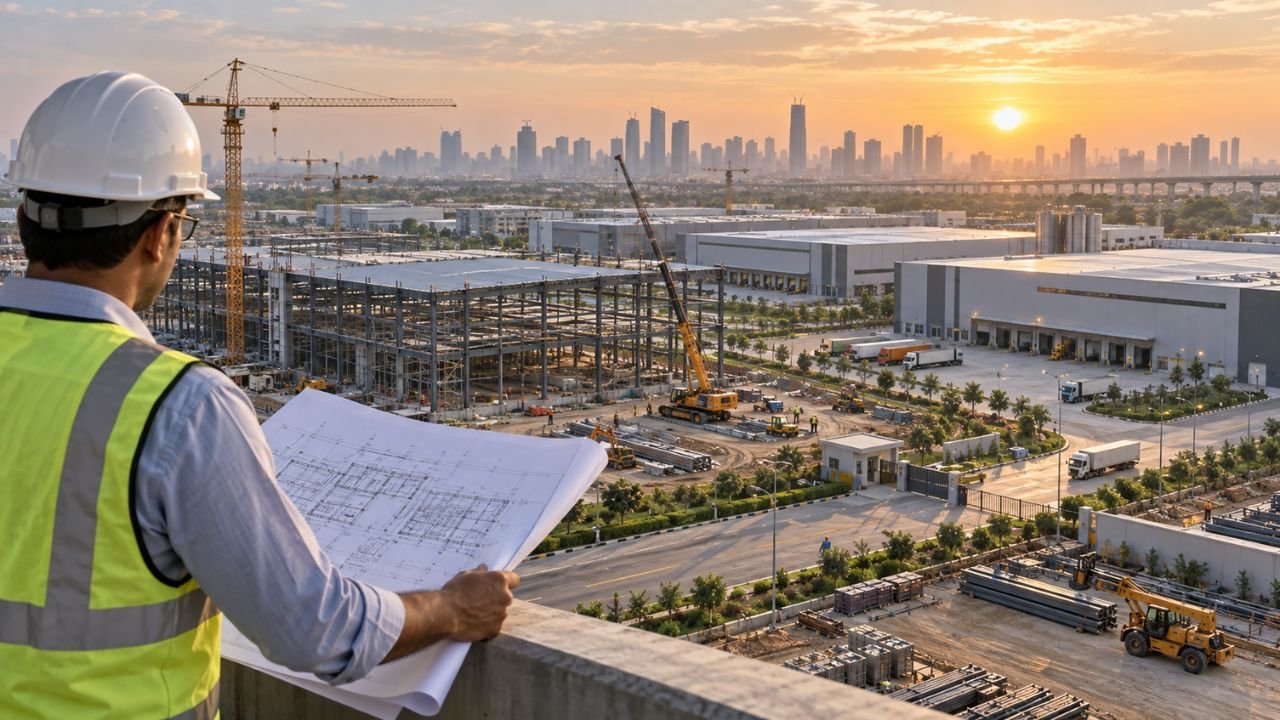
As we navigate through 2026, the Indian construction landscape has reached a pivotal junction. The days of physically maneuvering through the labyrinthine corridors of municipal corporations—carrying rolled-up blueprints and stacks of affidavits—are rapidly fading. However, the complexity of obtaining a building permit has not necessarily diminished; it has merely migrated to the digital realm. For modern civil contractors, real estate developers, and EPC firms, the challenge has shifted from “whom to meet” to “how to navigate the software.”
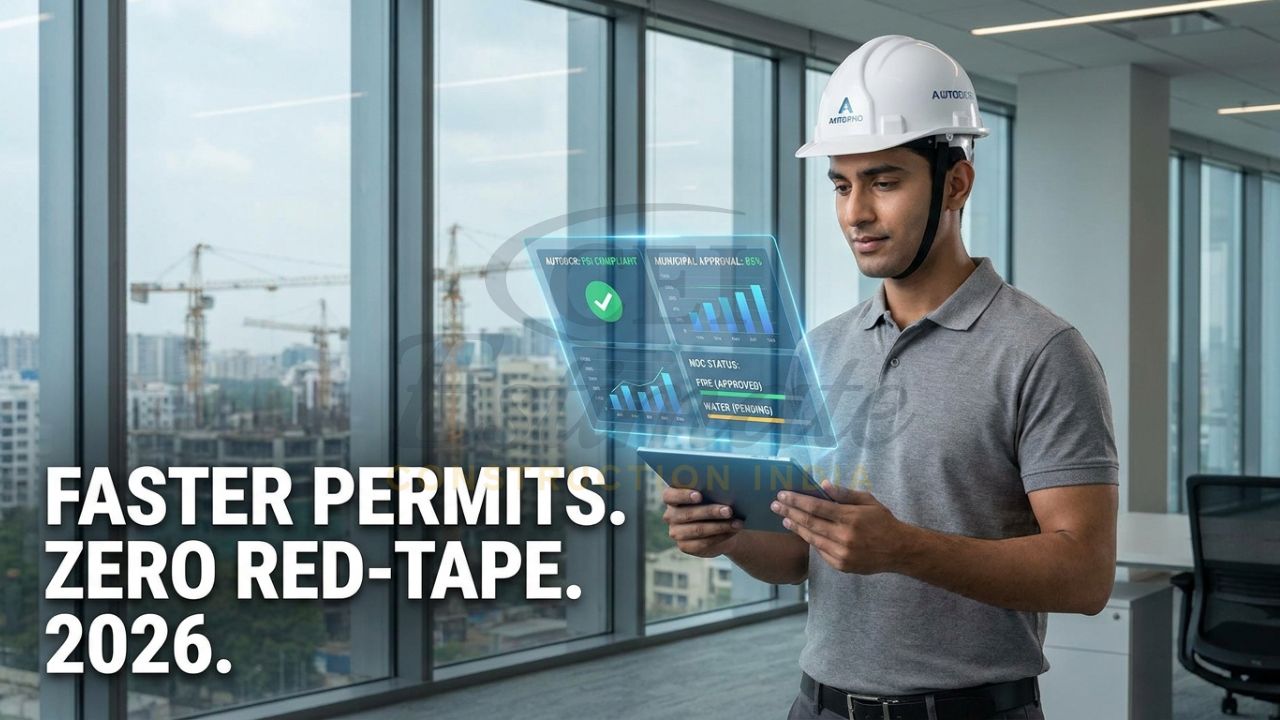
In the current high-stakes environment, where RERA compliance dictates strict project timelines and high interest rates on capital make every day of delay a financial burden, waiting for manual approvals is no longer an option. Whether you are dealing with the MCGM in Mumbai, the BBMP in Bengaluru, or the DDA in Delhi, the push for digital governance is absolute. Most states have now mandated Single Window Clearance Systems (SWCS) to improve the Ease of Doing Business (EoDB).
Yet, many builders struggle with the technicalities of these platforms. Modern permit management system India solutions are designed to bridge this gap. These tools do not just “submit” a file; they perform pre-DCR checks, track departmental NOCs (No Objection Certificates) from Fire, Environment, and Traffic departments, and ensure that your project remains compliant with the National Building Code (NBC). This guide provides a deep dive into the best permit software in India 2026, offering a roadmap for contractors to eliminate bottlenecks and accelerate project commencement through smarter digital adoption.
Why Indian Contractors & Builders Need Permit Software in 2026?
The Indian construction sector is currently dealing with a “triple threat” of regulatory pressure: RERA accountability, stringent environmental norms, and the complexity of GST invoicing on materials. In 2026, manual permit tracking is not just inefficient; it is a risk to your business continuity.
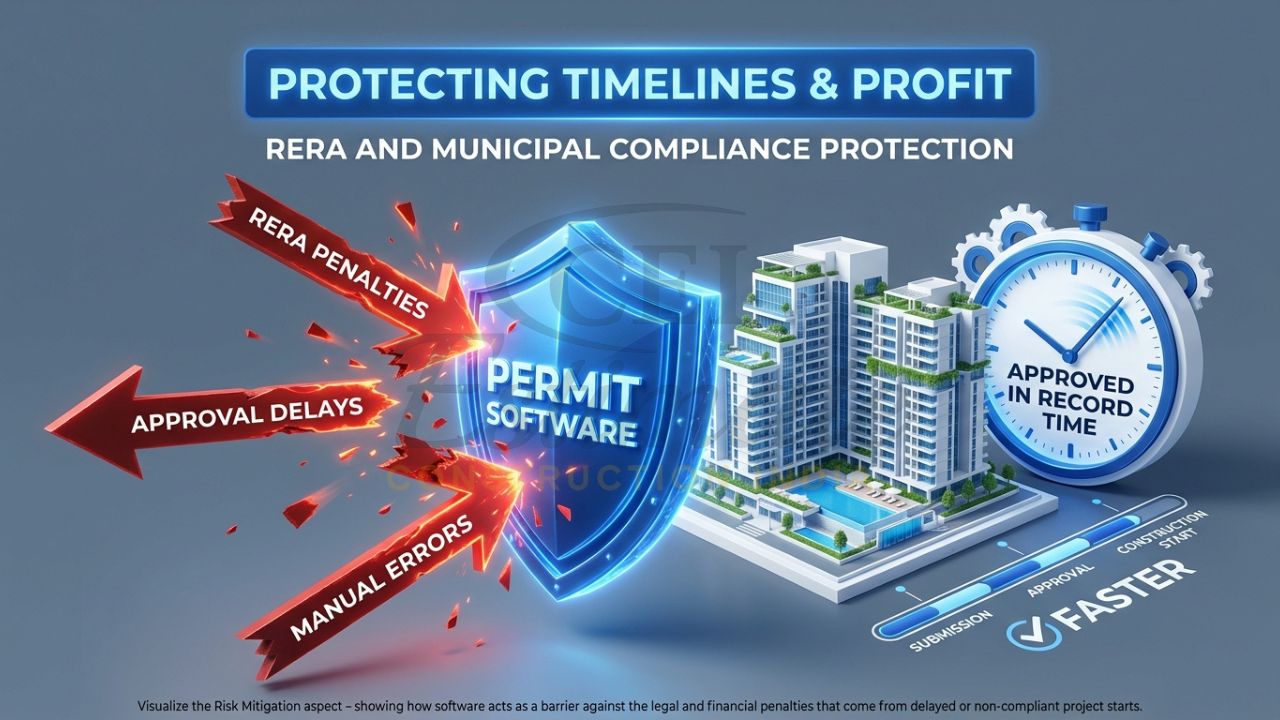
Overcoming Manual Bottlenecks
Traditional permit acquisition involves multi-stage interactions with local bodies like the GMDA (Gurugram) or LDA (Lucknow). A single missing document or a non-compliant setback in a drawing can lead to an immediate rejection, setting back the project by months. Municipal approval software for contractors automates these checks, ensuring that drawings are vetted against local bye-laws before they even reach the officer’s desk.
RERA and Financial Implications
Under RERA, any delay in the “Commencement Certificate” or “Occupancy Certificate” can lead to heavy penalties and eroded buyer trust. With building permit tracking software India, developers can provide real-time updates to stakeholders and financial institutions. By centralizing all departmental NOCs—from forest clearances to airport authority approvals—builders can ensure that the “Permit to Work” is obtained in record time.
Enhanced Audit Trails and Compliance
In the event of a legal dispute or an audit, having a centralized digital building permit system India provides an immutable record of all submissions, approvals, and queries. This transparency is crucial for mid-to-large scale developers who handle multiple projects across different Tier-1 and Tier-2 cities simultaneously. It reduces the “human element” in approvals, leading to a more predictable and transparent workflow.
Essential Features in Permit Software for the Indian Market
To be truly effective in the Indian context, permit software must go beyond basic file uploading. It needs to speak the language of Indian municipal bye-laws and state regulations. Here are the non-negotiable features you should look for:
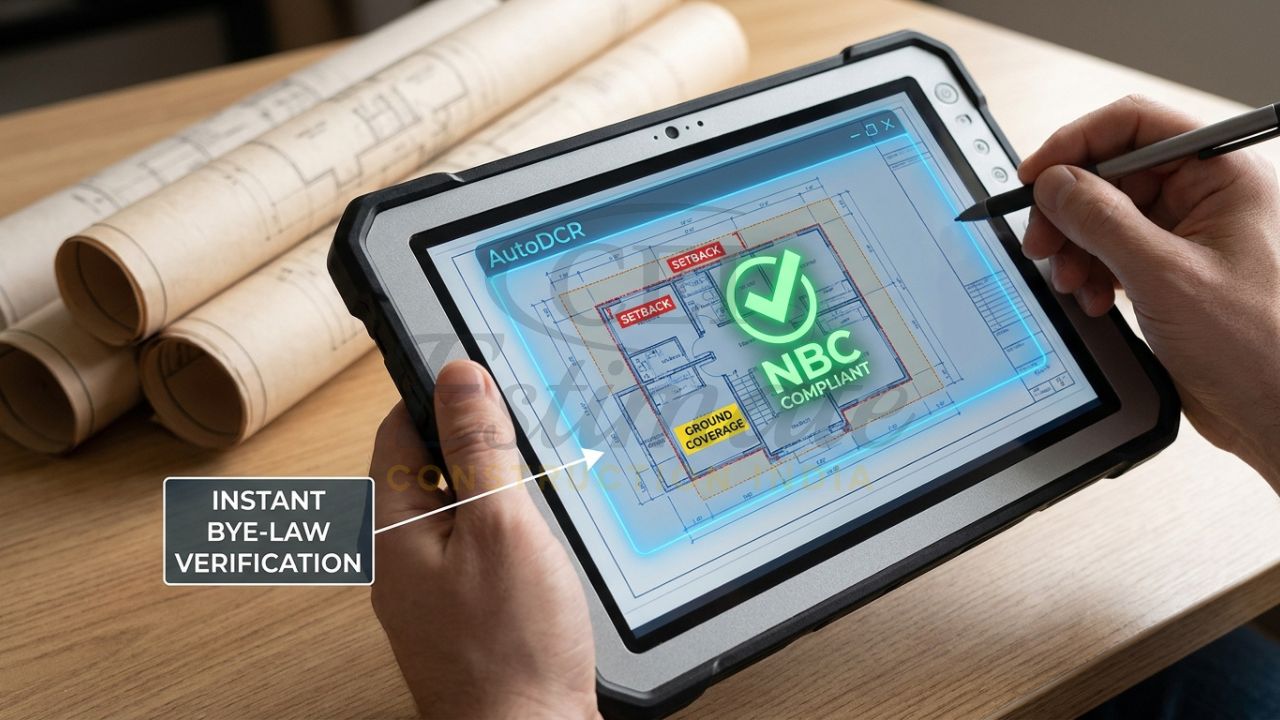
- AutoDCR Integration: The software must support AutoDCR permit software standards, allowing for the automatic reading of CAD drawings to verify FSI (Floor Space Index), setbacks, and ground coverage.
- Single Window Dashboard: A unified view to track NOCs from various departments like Fire, Water, Sewerage, and Environmental authorities.
- RERA & GST Compliance Checklists: Integrated modules to ensure that the data being submitted aligns with RERA registration requirements and GST billing standards.
- Cloud-Based Document Management: Secure storage for title deeds, sale agreements, structural stability certificates, and architect affidavits.
- Mobile Access for Site Engineers: Real-time mobile notifications when a permit stage is approved, allowing site teams to mobilize immediately.
- Workflow Automation: Automated reminders for renewal of temporary permits (like labor camp permissions or borewell licenses).
- Collaborative Portal: A shared space where architects, structural engineers, and MEP consultants can upload and revise drawings based on municipal queries.
- Real-time Analytics: Reporting tools that highlight which department is causing the most delay, allowing for targeted follow-ups.
Top 7 Best Permit Software in India 2026
The following tools represent the pinnacle of construction permit management software India has to offer in 2026. While some are homegrown giants, others are global leaders that have customized their modules for Indian municipal workflows.
1. CivitPERMIT (AutoDCR by SoftTech)
SoftTech’s CivitPERMIT is the undisputed leader in the Indian market. It is the backbone of the Online Building Plan Approval System (OBPAS) used by hundreds of Urban Local Bodies (ULBs) across India.
- Overview: A comprehensive platform that automates the entire lifecycle of a building permit, from submission to the issuance of the completion certificate.
- Key Features: Advanced CAD-based scrutiny (AutoDCR), integration with state-specific bye-laws, and a robust NOC tracking module.
- Pros:
- Directly integrated with most Indian municipal portals.
- Deep understanding of Indian FSI and FAR calculations.
- Cons:
- Can have a steep learning curve for first-time CAD users.
- Pricing can be high for small-scale developers.
- Pricing: Custom quotes; typically starts at ₹1,50,000 for enterprise modules.
- Best Suited For: Mid-to-large developers and government contractors.
- Website: SoftTech Engineers
2. PermitFlow
PermitFlow has rapidly gained traction in 2026 among Indian EPC firms working on mixed-use developments and industrial projects.
- Overview: It focuses on the “workflow” aspect, acting as a concierge service that manages the complexities of multiple permit applications across different jurisdictions.
- Key Features: Automated permit research, centralized document repository, and expert oversight.
- Pros:
- Excellent UI/UX.
- Reduces the need for dedicated “liaison officers.”
- Cons:
- Integration with smaller Tier-3 municipal bodies can be limited.
- Pricing: Subscription-based, starting approximately at ₹45,000/month.
- Best Suited For: Regional builders operating in Tier-1 cities.
- Website: PermitFlow
3. Cloudpermit
A global leader in digital building permit system India adaptations, Cloudpermit offers a highly scalable solution for modern architects and developers.
- Overview: A cloud-based platform that facilitates end-to-end permit management, focusing on transparency between the applicant and the government authority.
- Key Features: Electronic signatures, time-stamped activity logs, and integrated map-based tracking.
- Pros:
- Completely paperless.
- Highly accessible from mobile devices.
- Cons:
- Requires a stable high-speed internet connection for large CAD files.
- Pricing: Contact for quote (INR pricing varies by volume).
- Best Suited For: Architecture firms and independent builders.
- Website: Cloudpermit
4. OpenGov Permitting & Licensing
For developers handling large-scale township projects or infrastructure work, OpenGov provides an institutional-grade permit management system.
- Overview: A high-performance platform designed to handle thousands of applications with complex departmental dependencies.
- Key Features: Advanced GIS integration and multi-departmental workflow synchronization.
- Pros:
- Exceptional reporting and audit capabilities.
- Best-in-class security features.
- Cons:
- May be “overkill” for simple residential project builders.
- Pricing: Enterprise pricing only.
- Best Suited For: Large real estate conglomerates and EPC firms.
- Website: OpenGov
5. iWorQ Systems
iWorQ is becoming a favorite for Tier-2 city contractors due to its simplicity and focus on “asset management” alongside permitting.
- Overview: A modular system that allows contractors to pick only the features they need, such as “Permit Tracking” and “Code Enforcement.”
- Key Features: Simple web-based interface and easy data entry for municipal follow-ups.
- Pros:
- Very affordable for small teams.
- Fast deployment.
- Cons:
- Lacks the advanced CAD scrutiny of AutoDCR.
- Pricing: Starting from ₹25,000/year for basic modules.
- Best Suited For: Small contractors and home builders.
- Website: iWorQ
6. Tyler Permitting & Licensing
Tyler Technologies brings a robust “public portal” approach to permitting, which is highly effective for developers who need to keep clients informed.
- Overview: Part of a larger ERP suite, this tool excels at managing the financial aspects of permitting (fees, deposits, and refunds).
- Key Features: Automated fee calculations and integrated payment gateways.
- Pros:
- Superior financial tracking and GST management.
- Cons:
- Best used as part of their full ERP suite, which can be expensive.
- Pricing: Custom enterprise quotes.
- Best Suited For: Government-integrated projects and large firms.
- Website: Tyler Technologies
7. BuildNext / FalconBrick (Permit Modules)
These are Indian-born prop-tech solutions that have integrated permit tracking into their project management suites.
- Overview: Unlike pure permit software, these modules are part of a larger construction management ecosystem tailored for the Indian builder.
- Key Features: Integration with on-site progress tracking and vendor management.
- Pros:
- Hyper-local support.
- Understanding of Indian monsoon-related schedule shifts.
- Cons:
- The permit module is often not sold as a standalone product.
- Pricing: Integrated with project management fees.
- Best Suited For: Tech-forward developers looking for a single-app solution.
- Website: FalconBrick
Detailed Comparison Table
| Software Name | Pricing (Est. INR) | AutoDCR Integration | Real-time Tracking | Mobile App | Best For |
|---|---|---|---|---|---|
| CivitPERMIT | 1.5L+ (Enterprise) | Excellent | Yes | Yes | Large Developers / Govt. |
| PermitFlow | 45K / Month | Good | Yes | Yes | Regional Builders |
| Cloudpermit | Quote-based | Moderate | Yes | Yes | Architects / Builders |
| OpenGov | Enterprise | Moderate | Yes | No | Infrastructure / Townships |
| iWorQ | 25K / Year | Basic | Limited | Yes | Small Contractors |
| Tyler P&L | Enterprise | Basic | Yes | Yes | Mixed-use / Govt. projects |
| FalconBrick | Integrated | Moderate | Yes | Yes | Tech-forward Developers |
How to Choose the Right Permit Software for Your Business?
Selecting the right permit management system India depends heavily on your scale and location. If you are a developer in Maharashtra, you cannot ignore SoftTech’s compatibility with state systems. However, if you are a multi-city developer, a more flexible workflow tool like PermitFlow might serve you better.
Consider the “local support” factor. Does the software provider have a presence in India to help you map the local municipal bye-laws? Furthermore, ensure the software integrates with your current ERP or estimating tools. A permit software that doesn’t talk to your cost-estimations will create another data silo that you eventually have to manage manually.
Beyond Software – Expert Support for Accurate Estimating & Approvals
While software provides the “pipeline” for approvals, the “content” of your application determines its success. A digital system will reject a drawing in seconds if the BOQ (Bill of Quantities) is inconsistent or if the structural estimates don’t align with the submitted architectural plans. The most common cause of permit delays in 2026 remains technical errors in documentation.
This is where professional technical support becomes vital. Even the most advanced best permit software in India 2026 cannot fix an inaccurate estimate or a poorly drafted technical document. High-quality construction estimating and detailed BOQ preparation are the foundations upon which a permit application is built.
At Construction Estimator India, we complement your digital transition by providing precision-driven technical documentation. Whether you are using a permit management system or the official government portal, our team ensures your numbers are watertight, reducing the chances of queries and rejections from municipal engineers.
Conclusion
Digital transformation in India’s construction permit process is no longer a luxury—it is a survival mandate. By adopting the right construction permit management software India, you can reduce approval cycles from months to weeks, ensuring that your capital is deployed efficiently and your RERA commitments are met. However, remember that software is only as good as the data you feed into it.
Combine the power of modern permit software with the accuracy of professional estimating to truly streamline your project lifecycles.
If you need accurate construction estimates, detailed BOQ for permit applications, or expert support for your building projects, contact us today. Our experienced team delivers precise estimates starting from just ₹10,000 depending on project size and complexity. We also provide Custom ERP Solutions for Construction Companies to help you manage your business with 2026-ready technology.
Get in touch now:
Construction Estimator India
WhatsApp: 8630676890
Email: info@constructionestimatorindia.com