If you have been in the Indian construction industry for any length of time, you know the drill: cement prices spike overnight, labor disappears right before a critical slab casting, and your site engineers are often still scribbling material receipts on the back of cigarette packets. By the time that data reaches the head office, your profit margins have already evaporated. In 2026, the complexity of managing a project—whether it is a boutique villa in Goa or a massive highway project in Delhi NCR—has reached a breaking point.
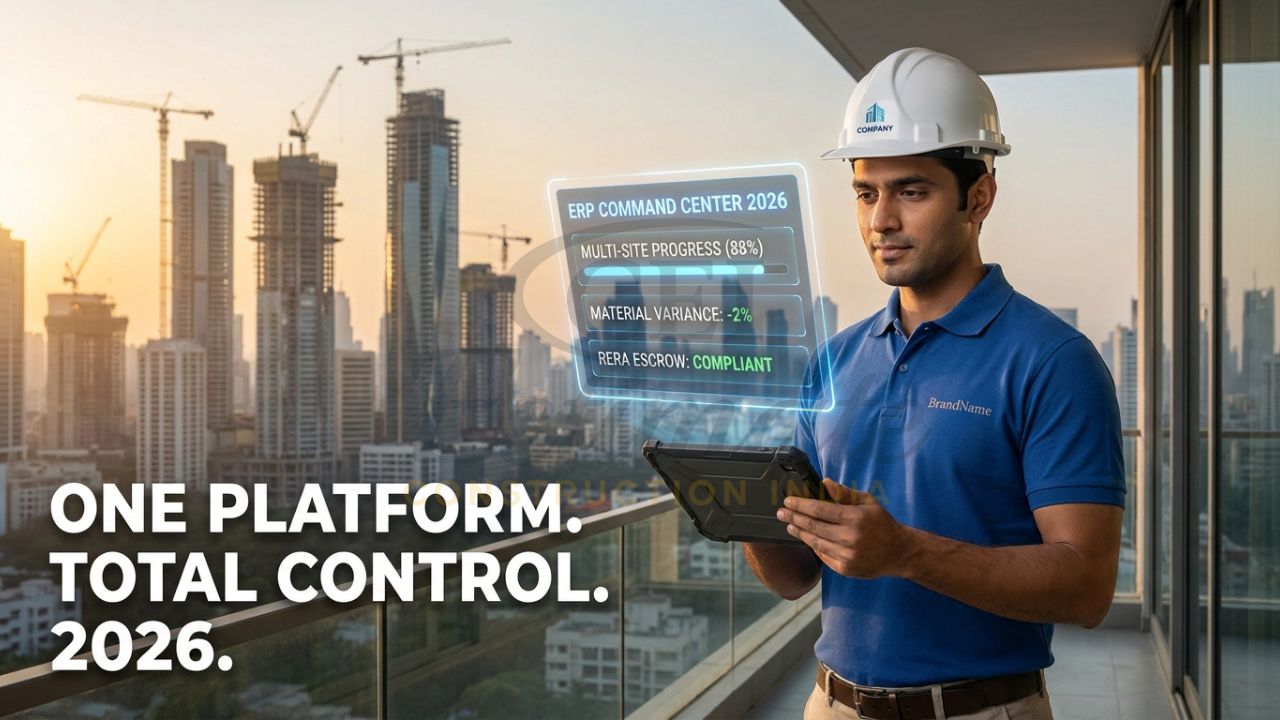
👉 Get the Best Construction ERP Software in India – Manage Projects, Costs & Teams in One System!
The Indian construction landscape today is no place for the unorganized. Contractors and developers are facing a brutal combination of 10-30% cost overruns and 20-25% productivity losses due to manual billing and material waste. The “old way” of relying on scattered Excel sheets and manual PDF takeoffs is no longer enough to survive. As a consultant who has helped dozens of firms navigate this digital shift, I can tell you that selecting the best construction ERP and project management software in India 2026 is no longer a luxury; it is a survival strategy to protect your margins and ensure RERA and GST compliance.
Why Construction Companies Need ERP and Project Management Software in 2026?
The “Chalta Hai” attitude towards project management is officially dead. In 2026, the regulatory environment with RERA and GST has become too tight for spreadsheets. A dedicated system provides a digital backbone that automates quantity takeoffs, predicts site risks, and ensures every rupee of material is accounted for.
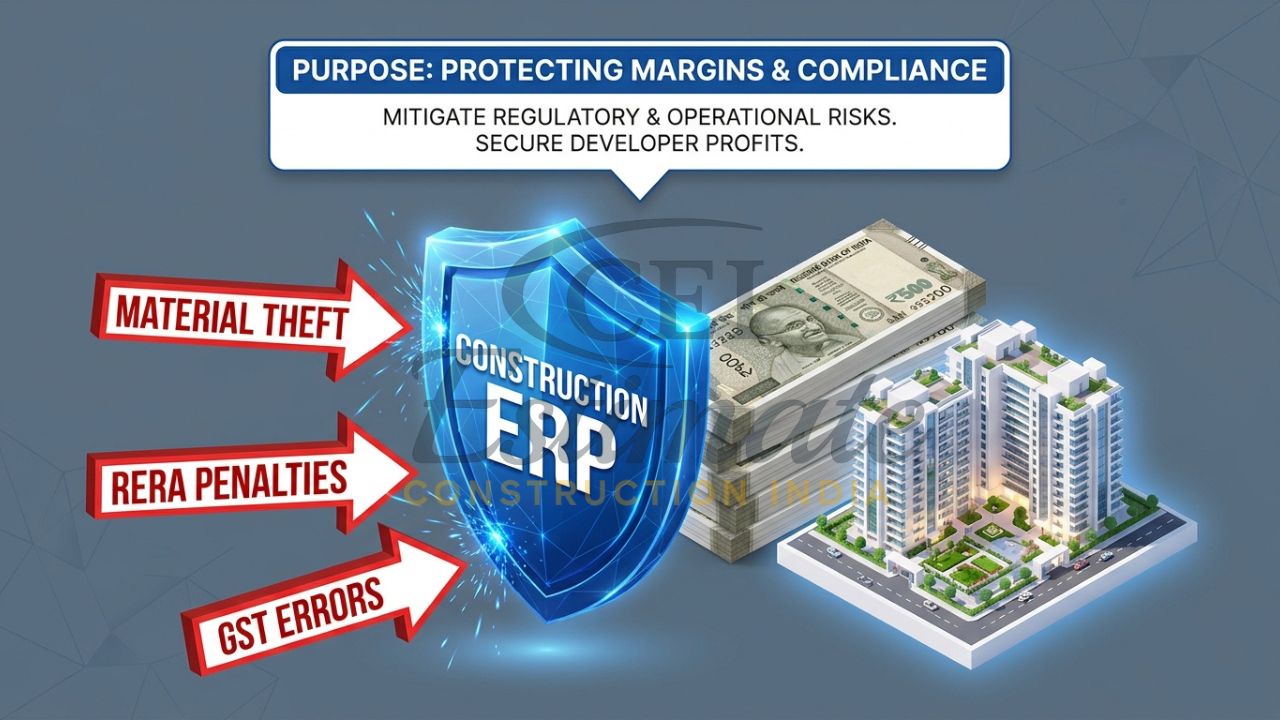
The shift from traditional methods to digital tools offers three primary pillars of value:
- Real-Time Control: Seeing daily progress vs. your Bill of Quantities (BOQ) allows you to catch material theft or over-consumption before it ruins the month’s budget.
- Compliance and Professionalism: Automated RA billing and GST-ready reporting ensure you stay on the right side of the law while looking professional to clients and investors.
- Predictive Accuracy: Modern tools now use AI to forecast risks, helping you understand how a delay in one project impacts your entire cash flow.
Implementing the right system can lead to a 15-25% cost saving and a return on investment within 6 to 18 months.
Top 10 Construction ERP Software in India 2026
Choosing the right tool depends entirely on your scale, turnover, and specific project pains. Here is a detailed review of the top 10 construction ERP software in India to help you find the best construction ERP software in India for your organization.
1. biCanvas
biCanvas has established itself as the gold standard for large-scale EPC (Engineering, Procurement, and Construction) firms in India. Its strength lies in deep Business Intelligence (BI) analytics that transform raw site data into actionable insights.
- Key Features: Advanced BI dashboards, multi-currency support, and complex BOQ integration.
- Pros: Incredible data visualization and handles massive data volumes without lag.
- Cons: High learning curve; requires a dedicated IT team to manage.
- Suitability: Large enterprise EPC firms and multi-state developers.
2. BuildNext
For residential builders, BuildNext is a top recommendation because it bridges the gap between design and execution beautifully.
- Key Features: VR planning integration, mobile-first site tracking, and built-in material libraries.
- Pros: Very user-friendly; excellent at managing the “customer experience”.
- Cons: Can feel restrictive for non-residential infrastructure projects.
- Suitability: Mid-sized residential builders and villa developers.
3. Ramco ERP
Ramco is the heavy hitter for AI-driven risk prediction and is one of the few Indian-origin ERPs that competes globally on technical sophistication.
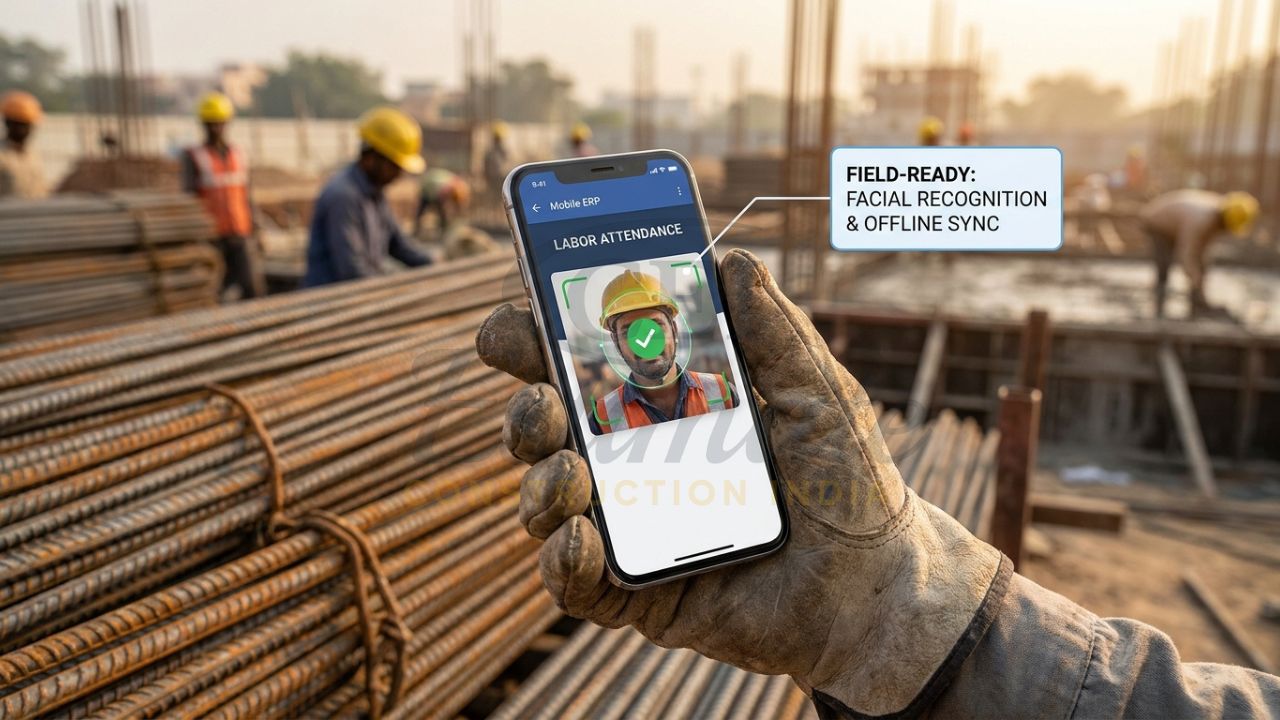
- Key Features: AI-driven risk alerts, facial recognition for labor attendance, and end-to-end supply chain automation.
- Pros: Best-in-class labor management; reduces “ghost labor” costs significantly.
- Cons: Implementation can be long and expensive.
- Suitability: Large construction conglomerates looking for “smart” automation.
4. Xpedeon
Xpedeon is highly regarded for its comprehensive coverage of the project lifecycle, specifically designed for builders rather than being a generic ERP “adapted” for construction.
- Key Features: Tender management, sub-contractor portals, and detailed job costing.
- Pros: Deeply specialized for construction; handles complex sub-contractor billing.
- Cons: UI can feel a bit dated compared to newer SaaS players.
- Suitability: Infrastructure companies and large general contractors.
5. CONWORX (Concord ERP)
Popular among civil contractors in the Delhi NCR region, CONWORX focuses on the synchronization between the site office and the head office.
- Key Features: Localized RA billing, material procurement with RFID tracking, and offline mobile access.
- Pros: Excellent local support; understands Indian site conditions like low connectivity.
- Cons: Limited international reporting features.
- Suitability: Infrastructure and civil contractors, especially in North India.
6. ERPNext
As an Indian-born open-source giant, ERPNext is ideal for firms that want total control over their data without high licensing fees.
- Key Features: Native Indian GST support, open API for integrations, and robust project accounting.
- Pros: Zero licensing fees; highly customizable for local material units.
- Cons: Requires technical knowledge to set up and maintain.
- Suitability: Tech-savvy contractors and firms with internal IT capabilities.
7. Odoo
Odoo is the world’s most modular ERP and is frequently used by small-to-mid firms who want to start small and grow.
- Key Features: Thousands of modules (Inventory, Accounting, CRM) and mobile-first design.
- Pros: Gorgeous UI; very easy for site engineers to learn.
- Cons: Costs can add up quickly as you add more “apps” or modules.
- Suitability: Growing builders and small contractors.
8. Tally Prime
While technically accounting software, Tally Prime remains the backbone of thousands of Indian firms due to its unmatched ease in financial compliance.
- Key Features: Best-in-class GST filing and simple journal entries.
- Pros: Every accountant in India knows how to use it; extremely fast data entry.
- Cons: Lacks deep project management, BOQ, or site-tracking features.
- Suitability: Small contractors focused primarily on accounting and tax compliance.
👉 Get Advanced Construction ERP – Handle Project Management, Billing & Operations in One Platform!
9. SAP Business One
For the developer who wants the ultimate “adult” ERP with global standards, SAP Business One is the go-to choice for enterprise-grade reporting.
- Key Features: Robust financial consolidation and deep audit trails.
- Pros: Impeccable data security and audit readiness for companies planning an IPO.
- Cons: Expensive; requires disciplined data entry from all staff.
- Suitability: Large developers with significant turnover.
10. In4Suite
In4Suite is specifically designed for the real estate industry, covering everything from CRM to facilities management.
- Key Features: RERA dashboards, lead management, and AI analytics.
- Pros: Native RERA compliance; modular “pay-as-you-grow” model.
- Cons: Less focus on heavy EPC or infrastructure projects.
- Suitability: Real estate developers and commercial builders.
Best Construction Management Software in India
While ERPs handle the entire business, many contractors need focused construction management software in India to manage site-level chaos. These tools are designed to end the “phone tag” between the site and office, providing a single source of truth for progress, labor, and materials.
👉 Upgrade to Smart Construction ERP – Manage Projects, Teams & Finances Easily!
For those specifically looking for construction management software for small contractors in India, the focus must be on mobile-first usability. Site supervisors in regions like Uttar Pradesh or Rajasthan often prefer tools that work on basic Android phones and offer offline access.
- RDash: This is a fantastic “field-first” tool for firms that want to start small. It excels in tracking snags, material flows, and daily progress reports (DPRs) with a “WhatsApp-like” simplicity.
- BuildNext Starter: Offers BOQ-linked planning and mobile progress tracking, making it ideal for small residential builders handling 5-10 projects per year.
- Odoo Construction: For small customizers, Odoo provides affordable modules for inventory and subcontracting that can be set up in as little as 48 hours.
By moving away from WhatsApp and Excel to these specialized tools, small firms can reduce administrative time by up to 40% and boost profit margins by 15-20% through better oversight.
Construction Project Management Software for Owners & Developers
Owners and developers face unique challenges such as monsoon-related delays, RERA compliance scrutiny, and sometimes biased reports from contractors. Therefore, they need construction project management software for owners developers in India that offers high-level oversight rather than just site-level task management.
The primary goal for a developer is transparency. Must-have features for this segment include:
- Real-Time Progress Dashboards: High-level views of multiple projects to identify delays instantly.
- Budget vs. Actual Tracking: Automated alerts when a project is veering off-budget.
- Automated RERA Reporting: Ensuring that the 70% escrow fund utilization is documented correctly to avoid legal fines.
Procore and In4Suite are leaders here. Procore provides a global standard for document management and financials, while In4Suite offers localized RERA dashboards that are highly effective for the Indian market. These tools help developers reduce variations and ensure their projects stay on schedule and within budget.
Head-to-Head Comparison: Top ERP & Project Management Tools
To help you visualize the market landscape in 2026, I have compiled a comprehensive comparison table of the leading options.
| Software | Target Segment | Mobile App | GST/RERA | Ease of Use | Est. Price (INR) |
|---|---|---|---|---|---|
| biCanvas | Large EPC | High | Native | Moderate | ₹15L – ₹40L+ |
| BuildNext | Mid Residential | High | Native | High | ₹2L – ₹5L+ |
| Ramco ERP | Conglomerates | High | Native | Moderate | Enterprise |
| CONWORX | Civil / NCR | High | Native | High | ₹3L – ₹8L |
| Odoo | Small/Mid | High | Module-based | High | ₹1L – ₹5L |
| In4Suite | Real Estate | Native | Native | Medium | ₹10L – ₹30L |
| ERPNext | Tech-Savvy | Moderate | Native | Moderate | Free – ₹3L |
| Xpedeon | Infra / GC | Moderate | Native | Moderate | ₹10L – ₹25L |
| RDash | Small / Interior | High | Basic | Very High | ₹2k/month |
| SAP B1 | Large Developer | Moderate | Native | Low | ₹20L+ |
Note: Pricing is indicative and depends on modules and user count.
How to Choose the Right Software for Your Business Size
Buying an ERP is like buying a crane—if you get one that is too small, it won’t do the job; if it is too big, you will waste a fortune on maintenance.
Small Contractors (<₹20 Cr Turnover)
Focus on affordability and speed of implementation. Tools like Odoo, ERPNext, or Vyapar are ideal. Your goal is to fix basic accounting, labor attendance, and RA billing. Look for tools that your site engineers can learn in a single day.
Medium Builders (₹20-100 Cr Turnover)
You need BOQ-strong systems to manage 10-30 sites simultaneously. BuildNext, Ramco, or CONWORX are your best bets. Prioritize multi-project dashboards and automated material requisition alerts to prevent “leakage” or theft.
Large Developers & EPC firms (>₹100 Cr Turnover)
You require enterprise-grade reporting and AI analytics. biCanvas, SAP Business One, or Xpedeon provide the robust audit trails and financial consolidation needed for multi-state operations or firms seeking institutional funding.
Conclusion
The construction industry in India is at a tipping point. As we move through 2026, the gap between “digital-first” contractors and those stuck in manual processes will only widen. Whether you are a small contractor looking for efficiency or a large developer seeking transparency, the goal is the same: control.
Don’t wait for a major project loss to trigger your digital transformation. Start by auditing your needs, taking a few demos, and perhaps starting with a modular tool. If you are overwhelmed by the choices, reach out to us for a personalized consultation. At Construction Estimator India, we help you shortlist the right tools based on your scale and team size to ensure a successful implementation.
Frequently Asked Questions (FAQs)
- How much does a construction ERP cost in India?
Prices range from ₹2,000/month for simple tools like RDash to over ₹20 Lakh for enterprise solutions like biCanvas or SAP. - Can these tools handle Indian GST?
Yes, most top-tier Indian tools like biCanvas, ERPNext, and Tally have native GST modules. - Do site engineers need internet 24/7 to use these?
No. Many modern tools like CONWORX and BuildNext offer offline modes where data can be entered at the site and synced later. - Will ERP software help with RERA compliance?
Absolutely. By maintaining accurate records of fund utilization and project milestones, they make RERA reporting significantly easier. - How long does it take to implement?
A simple tool can be ready in 1 week. A full enterprise ERP implementation usually takes 3 to 6 months to reach a high success rate. - Can I integrate my existing Excel sheets?
Most modern systems allow for bulk Excel imports for BOQs and material lists to speed up the transition. - Is cloud-based software safe?
Reputable providers use AWS or Azure with high-level encryption, which is often safer than paper records in a site office. - Does the software support Hindi?
Tools like BuildNext and Vyapar offer Hindi UI support, which is critical for site teams in North India. - Can software help with material price hikes?
Yes, by tracking costs in real-time, you can detect wastage early and adjust your bidding strategy. - What is the difference between ERP and Project Management software?
ERP covers everything including HR and finance. Project Management focuses purely on site progress, schedules, and BOQs.