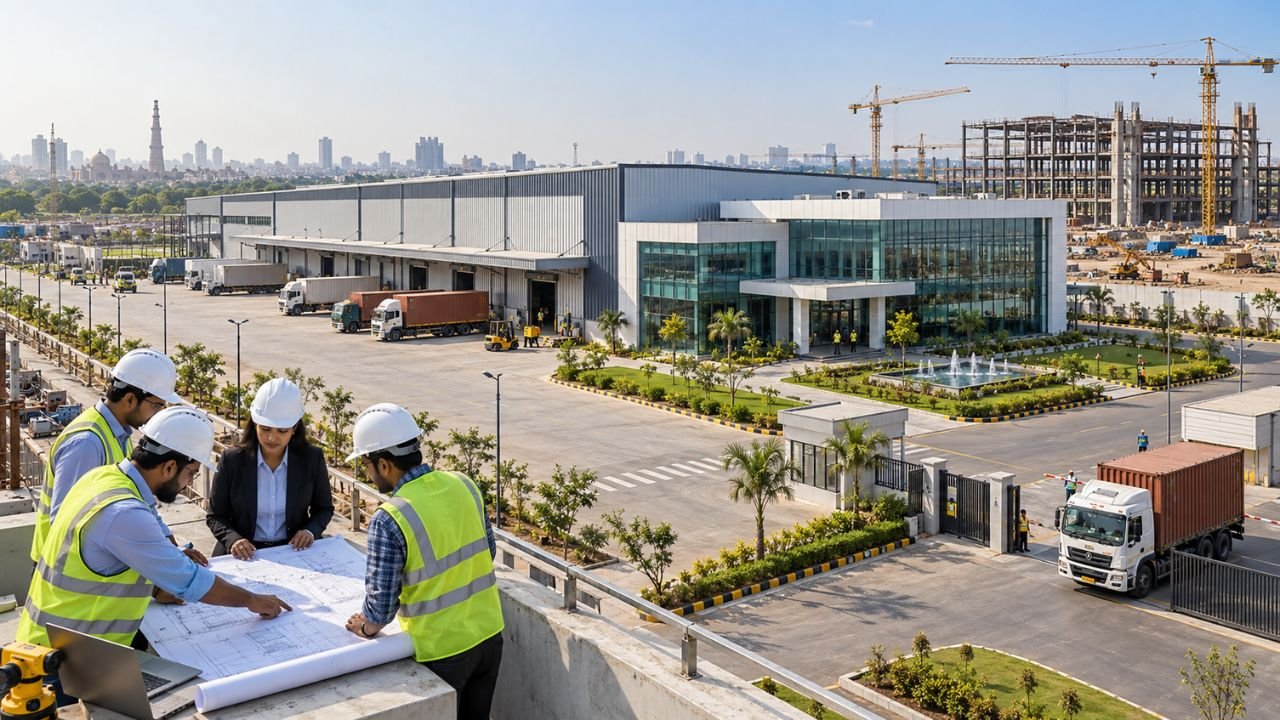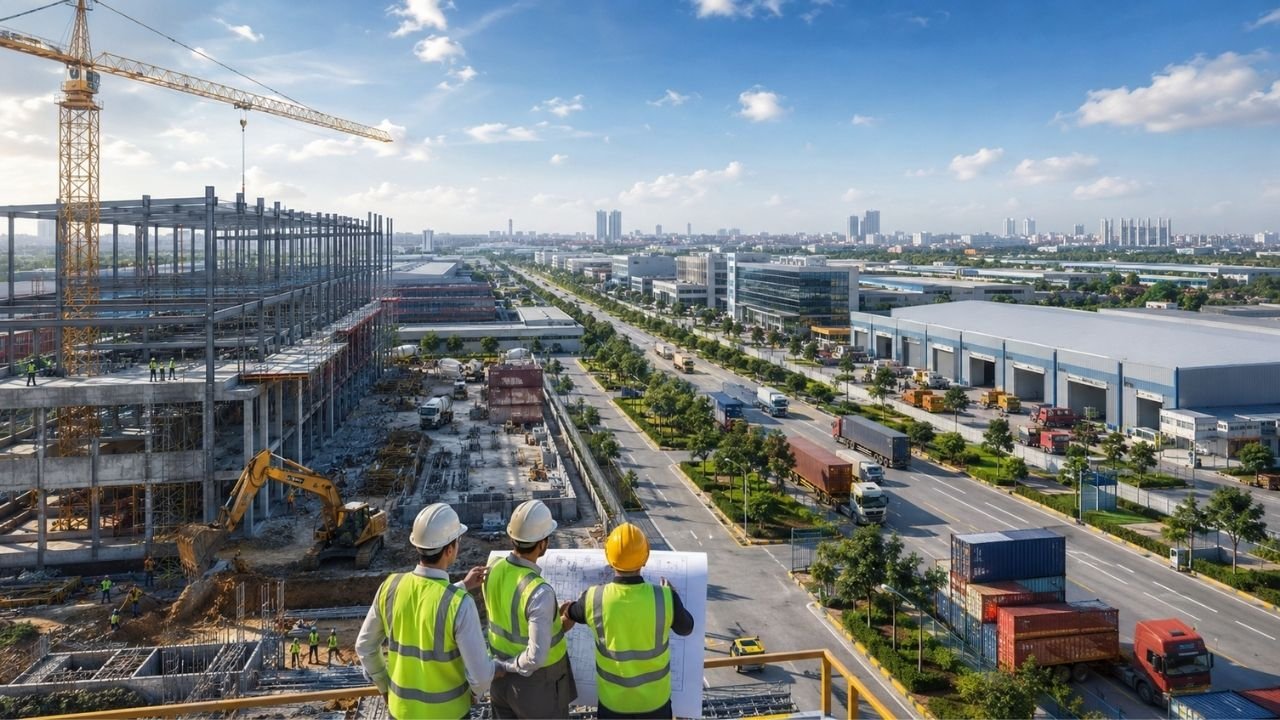
Imagine you are a real estate developer in Noida or a general contractor in Meerut, finally securing the green light for a multi-crore shopping mall or a high-tech office plaza. You have the blueprints, the labor, and the funding lined up. However, just as construction is about to begin, your lending bank halts the first disbursement because your policy fails to meet the specific commercial construction insurance requirements mandated for the Delhi-NCR region. Suddenly, your project is paralyzed, not by a lack of materials, but by a missing line item in your risk management strategy. This scenario is a frequent reality in the 2026 infrastructure boom, where the scale and public nature of commercial builds demand far stricter compliance than any residential villa.
Understanding commercial construction insurance requirements is no longer just about avoiding site accidents; it is a critical prerequisite for winning government tenders, satisfying institutional lenders like SBI or HDFC, and protecting your project’s financial liquidity. Unlike residential builds, commercial projects involve higher capital exposure, extensive third-party risks, and complex regulatory frameworks like the BOCW Act and the Employees’ Compensation Act. In this guide, we provide a definitive 2026 insurance checklist for commercial projects in Uttar Pradesh and North India. We will break down mandatory policies, typical costs, and explain exactly how estimators should include these premiums in a professional Bill of Quantities (BOQ). Protecting your commercial investment today ensures your project remains as safe as it is profitable.
Why Commercial Construction Has Stricter Insurance Requirements?
Commercial projects in India operate under a significantly higher risk profile than residential housing. When you build a mall, hotel, or warehouse, you are not just managing a structure; you are managing an asset that will eventually house hundreds of workers and thousands of members of the general public. This increased “fire load” and third-party exposure lead to a more rigorous scrutiny from insurers and regulators alike.
Lender demands are another major factor. In 2026, banks almost always mandate a comprehensive “All Risk” policy before releasing project finance to ensure their collateral is protected from groundbreaking to handover. Furthermore, commercial sites often involve deep excavations and high-rise structures in seismic zones like Delhi-NCR (Zone IV/V), necessitating specialized natural peril covers that residential projects might overlook.
Mandatory Insurance Requirements for Commercial Construction
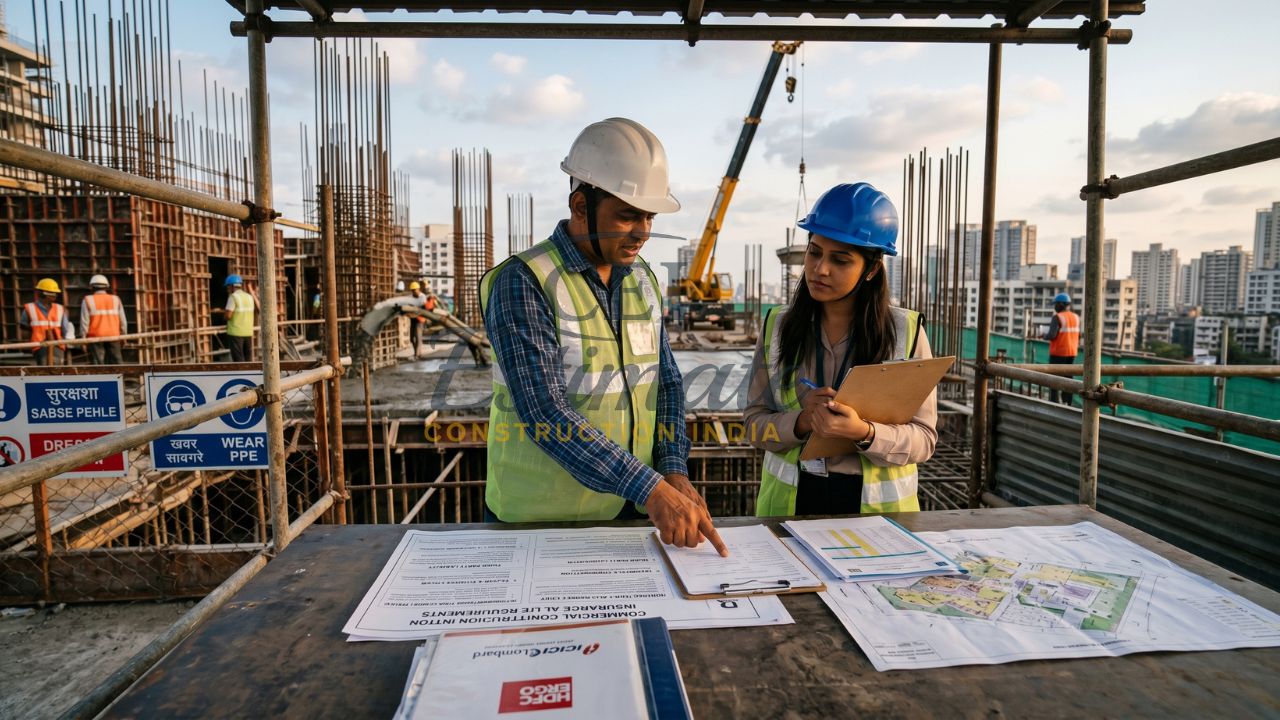
In the Indian legal landscape of 2026, several policies are absolute “must-haves” for any commercial site. Failing to meet these mandatory insurance for commercial projects can result in heavy penalties, project shutdowns, or even criminal liability for company directors.
1. Contractors’ All Risk (CAR) Insurance
The CAR insurance requirements for commercial building represent the gold standard of project protection. This policy acts as a comprehensive shield for the physical anatomy of your project, covering civil works, materials stored on-site (like high-value steel and premium glass), and temporary structures. Crucially, it must include an “Escalation Clause” to account for the fluctuating prices of cement and steel during the multi-year duration of a commercial build.
2. Workmen Compensation Insurance (WCI) / Employers Liability
Providing workmen compensation for commercial sites is a statutory requirement under the Employees’ Compensation Act 1923 and the BOCW Act 1996. Commercial sites are inherently riskier due to the use of heavy machinery and working at great heights. WCI ensures that if a laborer suffers an injury or disability on your site in Meerut or Kanpur, the insurer handles the medical costs and legally mandated compensation, protecting you from massive out-of-pocket legal settlements.
3. Public Liability / Commercial General Liability (CGL)
Given the public nature of commercial zones, public liability insurance for commercial construction is vital. It covers accidental bodily injury or property damage caused to third parties (outsiders). For example, if a falling brick from your office construction site damages a neighbor’s vehicle in a congested Noida market, the CGL policy covers the legal defense and compensation costs.
Recommended but Highly Important Insurance for Commercial Projects
Beyond the legal mandates, several specialized covers are essential for the complex mechanical and financial layers of a commercial project.
- Erection All Risk (EAR) Insurance: Essential for malls and hotels that require the installation and testing of complex HVAC systems, lifts, and industrial electrical grids. It focuses on the risks during the assembly and commissioning phases.
- Contractors Plant & Machinery (CPM): Commercial projects rely on expensive heavy equipment like tower cranes and concrete mixers. CPM insurance protects these high-value assets against accidental damage, breakdown, and theft while they are on-site or in transit.
- Professional Indemnity (PI): Essential for firms providing design-build services or site supervision. It protects against claims of professional negligence or design errors that could lead to structural failures.
- Advance Loss of Profits (ALOP): Also known as Delay in Start-up (DSU) insurance, this covers the loss of revenue a developer faces if a project is delayed due to an insured physical event like a fire or flood.
- Marine/Inland Transit: Covers premium materials, such as imported marble or specialized lighting, while they are being transported from the supplier to your site in Uttar Pradesh.
[Image 2: CAR vs EAR insurance for commercial malls | Alt: Diagram showing which insurance covers civil structures vs mechanical installations]
Insurance Checklist for Commercial Construction Projects
To ensure no “gaps” exist in your 2026 risk strategy, use this insurance checklist for commercial construction 2026 as a baseline for your next project.
| Insurance Type | Mandatory/Recommended | Primary Buyer | Typical Sum Insured | Penalty for Non-Compliance |
|---|---|---|---|---|
| CAR Insurance | Mandatory (Lender/Tender) | Contractor/Owner | Total Contract Value + 10-15% | Bid Rejection/Loan Freeze |
| WCI Insurance | Mandatory (Statutory) | All Employers | Annual Wage Bill | Criminal Liability/Fines |
| CGL Insurance | Mandatory (Commercial) | Contractor | Limit per Accident | Project Shutdown |
| EAR Insurance | Recommended (MEP) | MEP Contractor | Machinery Value | Uninsured Startup Loss |
| CPM Insurance | Recommended (Fleet) | Equipment Owner | Current Market Value | Asset Liquidation |
| BOCW Cess | Mandatory (Tax) | Developer | 1% of Civil Cost | Imprisonment/Stop Work |
How Insurance Requirements Differ for Different Commercial Projects?
While the core commercial construction insurance requirements remain similar, the emphasis shifts based on the specific asset class.
- Offices & Retail Shops: These projects prioritize Public Liability (CGL) due to the high density of surrounding properties and footfall in Delhi-NCR urban centers.
- Malls & Hotels: The requirement for Erection All Risk (EAR) is much higher here due to extensive mechanical, electrical, and plumbing (MEP) systems and centralized HVAC installations.
- Warehouses & Industrial Buildings: These sites often focus on Contractors Plant & Machinery (CPM) and fire-specific perils, as they house high-value machinery and stock even during the finishing phases.
- Multi-Story Plazas: Given the heights involved, the risk class for Workmen Compensation is higher, leading to slightly higher premiums for labor coverage compared to single-story shops.
Cost of Commercial Construction Insurance Requirements in 2026
Budgeting accurately for commercial construction insurance requirements is vital for maintaining your profit margins. In the 2026 market, premiums are influenced by location (higher in seismic Zone IV), project duration, and your firm’s safety track record.
- CAR Insurance: Typically ranges from 0.5% to 1.5% of the total project value.
- Workmen Compensation: Generally costs 0.5% to 2% of your total labor wage bill.
- CPM Insurance: Usually 1.0% to 2.5% of the asset’s current market value.
To avoid eating into your profit, you must know how to include insurance in commercial BOQ. At Construction Estimator India, we recommend listing insurance as a distinct line item under “Preliminaries” or “General Requirements”. For example, if your mall project in Meerut is worth ₹20 crores, your total insurance budget should be approximately ₹20 lakhs to ₹30 lakhs, clearly itemized to ensure transparency with your client or lender.
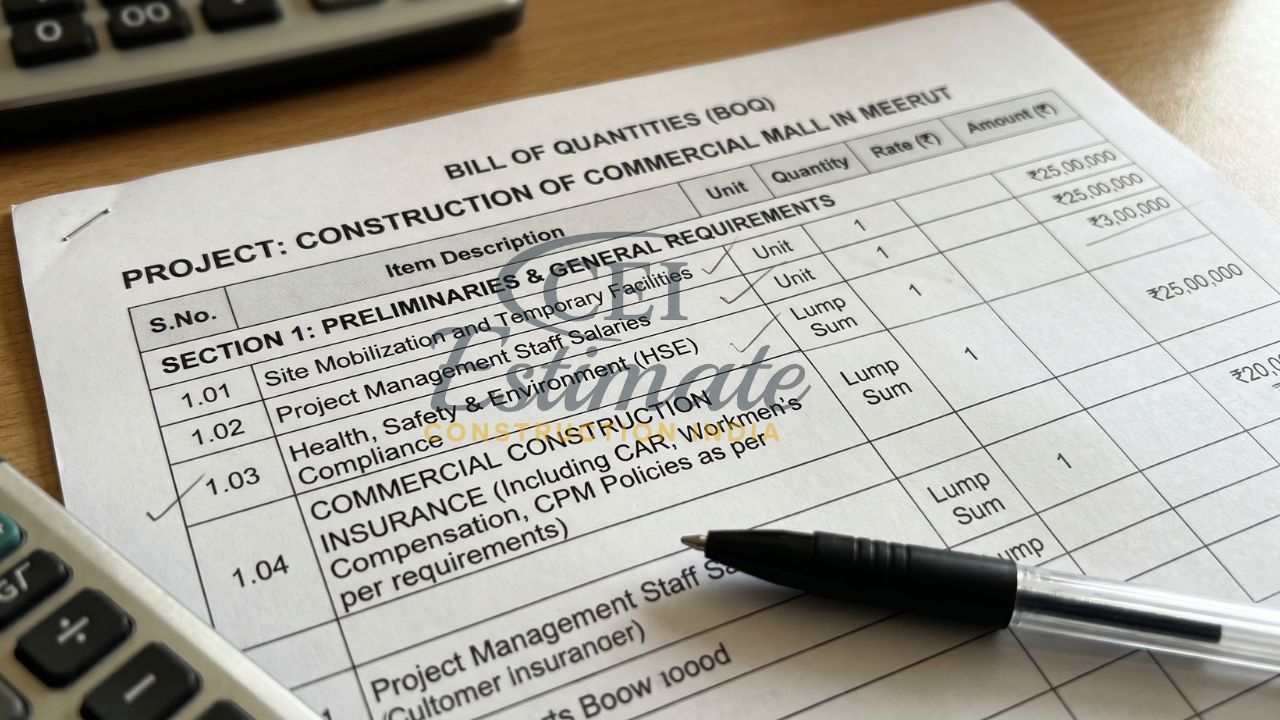
Step-by-Step Guide to Meeting Commercial Construction Insurance Requirements
- Identify Requirements: Carefully review your tender documents or bank sanction letter to identify specific “Limits of Indemnity” and mandatory riders.
- Choose Reputable Insurers: Compare quotes from top-tier Indian providers like ICICI Lombard, New India Assurance, or HDFC Ergo to ensure faster claim settlement ratios.
- Ensure Joint Names: Most commercial contracts require the policy to be in the “Joint Names” of the owner and the contractor to protect all stakeholders.
- Review Subcontractors: Verify that your sub-labor is covered under your main WCI policy or ensure they provide their own independent certificates.
- Maintain Records: Keep digital copies of your site safety logs and muster rolls; these are critical for valid claim settlements.
Common Mistakes Developers and Contractors Make
Many Indian firms face claim rejections due to avoidable errors in their commercial construction insurance requirements strategy.
- Under-insuring: Basing the sum insured on historical costs rather than 2026 reinstatement values (rebuilding costs).
- Skipping Add-ons: Ignoring critical riders like “Debris Removal” or “Maintenance Period Cover,” which protect you after the building is handed over.
- Delayed Purchase: Waiting until work starts to buy insurance. Materials should be covered the moment they are unloaded at the site.
- Neglecting Subcontractors: Assuming sub-labor is automatically covered without verifying the “Principal Employer” clauses.
Conclusion
Successfully navigating the commercial construction insurance requirements is the hallmark of a professional builder in 2026. From mandatory CAR and Workmen Compensation to specialized ALOP and CPM covers, these policies form the invisible foundation of your company’s growth. In the competitive landscape of Uttar Pradesh and the Delhi-NCR, comprehensive risk management is not just about safety—it is your greatest competitive advantage.
Don’t let a single unforeseen accident derail your corporate vision. Ensure your next shop, office, or mall project is fully compliant and financially protected. For professional BOQ services and construction cost estimation that accurately factors in all commercial construction insurance requirements, contact Person at Construction Estimator India today. We help you build with confidence and precision.
FAQ Section
What are the mandatory insurance requirements for commercial construction in India?
At a minimum, you must have Contractors’ All Risk (CAR), Workmen Compensation Insurance (WCI), and Public Liability/CGL. Larger projects also require BOCW Cess registration.
Is CAR insurance compulsory for commercial projects?
While not always a legal mandate for private self-funded builds, it is almost always compulsory for bank-financed projects, RERA-registered developments, and government tenders.
What is the difference between residential and commercial construction insurance requirements?
Commercial requirements are stricter due to higher public exposure, larger capital values, and the need for higher “Limits of Indemnity” for third-party liabilities.
How much does insurance cost for commercial construction?
Total insurance costs typically range from 1% to 2.5% of the total project value in 2026, depending on location and risk class.
Does a commercial project need public liability insurance?
Yes. Due to the proximity of commercial sites to other businesses and the general public, high-limit public liability is essential to protect against third-party claims.
Who is responsible for insurance — contractor or project owner?
Usually, the contract (like FIDIC or CPWD) specifies this. Often, the contractor buys the policy, but the cost is reimbursed by the owner as a BOQ line item.
What insurance is required by banks for commercial construction loans?
Banks typically mandate a CAR policy for the full reinstatement value of the project with the bank’s interest noted in the policy.
How do I include insurance costs in my commercial BOQ?
List it as a specific line item under “Preliminaries” or “Project Overheads,” using actual quotes to ensure your profit margin is not eroded.
Can subcontractors be covered under the main CAR policy?
Yes, most CAR and WCI policies for commercial sites can be extended to include subcontractors, provided they are listed as “Insured” or under the supervision of the main contractor.
What happens if insurance requirements are not met in a tender?
Your bid may be disqualified immediately, or you may face severe penalties and project delays if the lapse is discovered after the contract award.