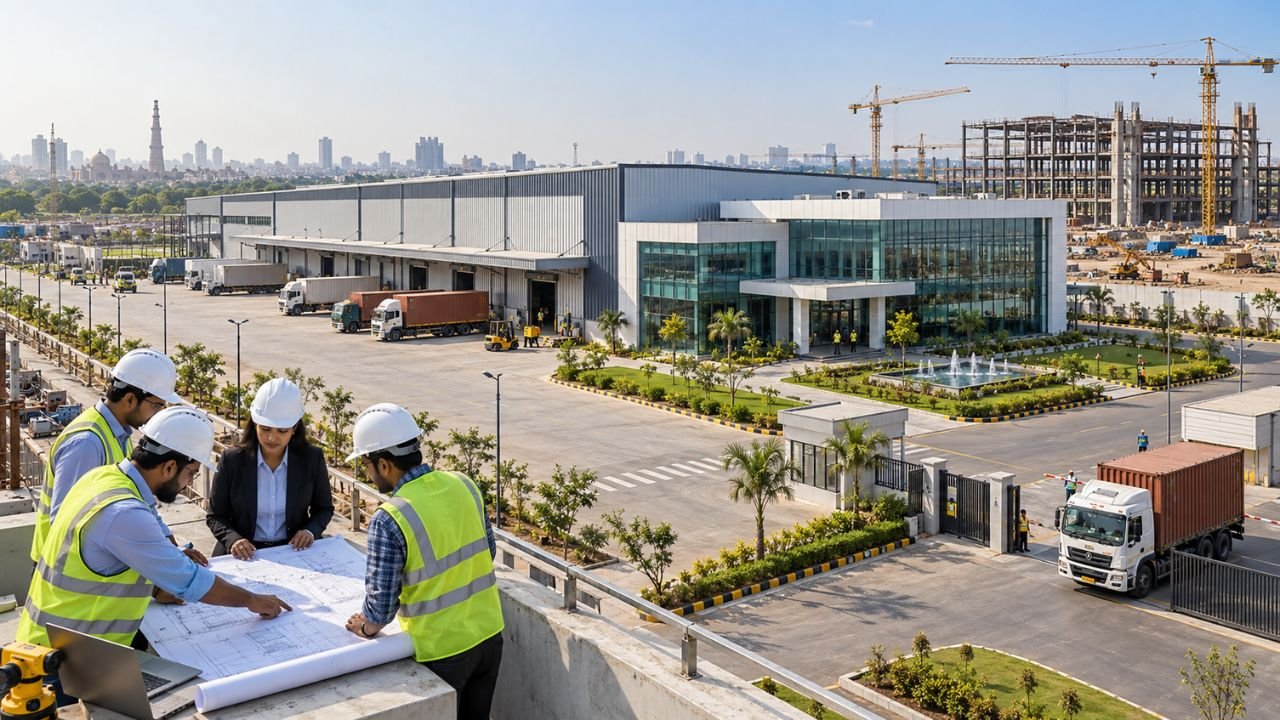
The global construction landscape in 2026 is witnessing a massive pivot toward India as the primary source for premium surfacing materials. For international buyers, the allure of Indian porcelain is undeniable: world-class aesthetics, massive manufacturing scale, and significantly lower price points than European alternatives. However, the journey to successfully import these materials can be fraught with challenges for the uninitiated. From navigating the thousands of factories in the Morbi cluster to avoiding “off-shade” batches, hidden logistics costs, and sophisticated middleman scams, the risks are real.
Many developers and wholesalers start with excitement, only to face the harsh reality of receiving broken slabs or realizing they have sent deposits to unverified “trading companies”. This is why a rigorous, step-by-step roadmap is essential. As we move through 2026, technological advancements and new trade agreements have made the process more efficient, but only for those who understand the technicalities of the Indian export market. This guide is designed to take you behind the curtain, providing the practical, insider steps needed to master how to import porcelain tiles from India with confidence and maximum profit.
Why Import Porcelain Tiles from India?
India has cemented its position as the world’s second-largest producer of tiles, with the Morbi cluster in Gujarat alone housing over 1,200 factories that produce upwards of 4 million square meters daily. In 2026, several factors make porcelain tiles import from India the smartest choice for global projects:
- Cost Efficiency: Buyers can typically save 35–60% compared to Italian or Spanish alternatives. Standard glazed vitrified tiles often start at USD 4–7 per square meter, while large-format slabs range from USD 10–24 per square meter FOB.
- Technological Superiority: Indian factories utilize advanced Italian and Spanish digital printing machinery, enabling the production of realistic marble, wood, and concrete textures that rival natural stone at a fraction of the cost.
- Production Speed: Lead times for production are highly competitive, ranging from 15 to 45 days, supported by efficient logistics through the Mundra and Kandla ports.
- Scale and Variety: Whether you require full-body rectified tiles for high-traffic airports or ultra-large 1600×3200 mm slabs for luxury facades, the Indian market offers unmatched variety in size, finish (matte, glossy, satin), and thickness (8mm to 20mm).
Step-by-Step Guide: How to Import Porcelain Tiles from India
Navigating the Indian export market requires a methodical approach to ensure quality consistency and financial security. Follow these actionable steps to manage your porcelain tiles import from India successfully.
1. Finding and Verifying Genuine Suppliers
The first step is filtering through thousands of manufacturers to find reliable porcelain tiles exporters India.
- Government Verification: Verify the supplier’s Importer-Exporter Code (IEC) on the official DGFT portal.
- Export History: Use trade data platforms like Volza or ImportGenius to check their actual shipment history to your specific region (USA, EU, or GCC).
- Live Inspections: Always mandate a live video tour of the factory production line and warehouse. Genuine exporters will show you the “dry-lay” area where slabs are arranged for shade matching.
2. Requesting Quotations and Samples
When you how to import porcelain tiles from India, your RFQ (Request for Quotation) should be highly specific to avoid “price creep” later.
- Quote Parameters: Request FOB Mundra or CIF destination port quotes. Ensure the quote includes the cost of seaworthy packaging and fumigated wooden pallets.
- Physical Samples: Never place a bulk order without physical samples. While courier costs for large-format tiles are high, they are a fraction of the cost of a failed container.
3. Understanding Specifications and Quality Standards
Ensure the tiles meet international technical benchmarks. Standard porcelain should have water absorption of less than 0.5%.
- PEI Rating: For floor tiles, specify the PEI rating (PEI IV or V for commercial use).
- Slip Resistance: Request R-ratings (R10, R11, or R12) for outdoor or wet area applications to ensure safety compliance.
- Rectified Edges: For seamless installation with minimal grout lines, ensure tiles are “rectified”.
4. Negotiating Price and MOQ
The Minimum Order Quantity (MOQ) for Indian porcelain is generally one 20ft or 40ft container.
- Volume Discounts: Prices are highly volume-sensitive; ordering 3+ containers can often unlock significant discounts on the FOB price.
- Mixed Containers: Many Morbi factories allow mixing different designs or sizes in a single container, provided you meet the minimum quantity per pallet.
5. Secure Payment Methods
Standard export terms in 2026 typically involve a 30% advance deposit and the remaining 70% against the Bill of Lading (BL) copy.
- Warning: Be wary of exporters demanding 100% advance or requesting payment to personal bank accounts. Use only corporate accounts or a Letter of Credit (LC) for large-scale orders.
6. Shipping Options and Incoterms
- FOB (Free on Board): Recommended for experienced buyers who want to control freight costs and scheduling.
- CIF (Cost, Insurance, and Freight): Preferred by first-time buyers where the seller handles logistics to your destination port.
- Transit Times: Shipping to Jebel Ali (UAE) takes 3–10 days, while the USA or Europe can take 25–45 days.
7. Customs Clearance and Documentation
Accurate paperwork is non-negotiable for smooth shipping porcelain tiles from India.
| Document | Purpose | Required For |
|---|---|---|
| Commercial Invoice | Declares value for duty calculation | All Markets |
| Packing List | Details quantity, weight, and pallet count | All Markets |
| Bill of Lading (BL) | Title of goods and proof of shipment | All Markets |
| Certificate of Origin (CoO) | Proves Indian origin for trade benefits | All Markets (Essential for UAE CEPA) |
| Fumigation Certificate | Confirms wooden pallets are pest-free | USA, EU, Australia |
| CE Declaration | Confirm compliance with EU safety standards | Europe / Poland |
8. Quality Inspection and Third-Party Testing
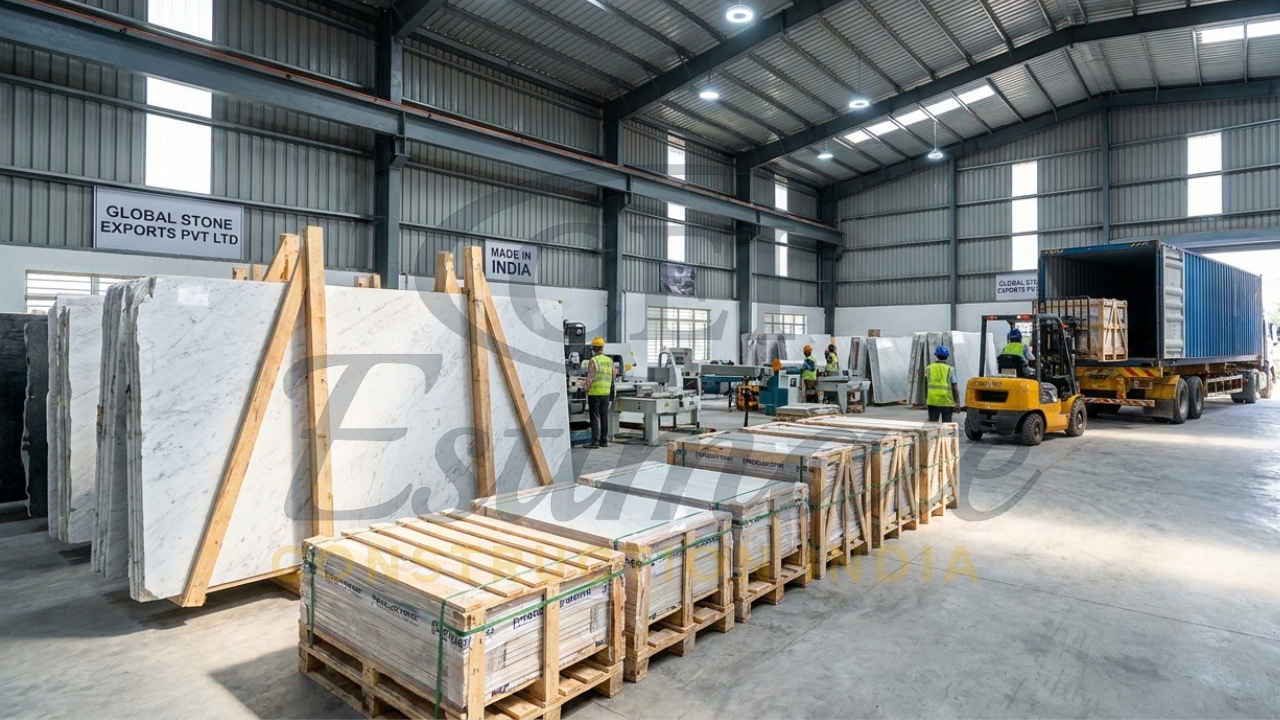
Mandate a pre-shipment inspection by a third-party agency like SGS or Intertek. They will randomly check 10% of the tiles for dimension tolerance (±0.5%), surface flatness, and shade consistency before the container is sealed.
Country-Specific Import Guide
Importing requirements vary significantly based on your destination’s trade agreements and local regulations.
Importing to the USA
When how to import porcelain tiles from India to USA, buyers must navigate a complex duty landscape. In 2026, many Indian ceramics face baseline duties plus additional tariffs, often totaling around 50%.
- ISF Filing: You must file the Importer Security Filing (ISF) 24 hours before the vessel leaves India to avoid USD 5,000+ fines.
- Compliance: Ensure tiles meet ASTM C627 standards for commercial use.
Importing to Poland
For those looking at how to import porcelain tiles from India to Poland, the focus is on EU compliance.
- EORI Number: Importers must have an EORI number for customs clearance at ports like Gdańsk or Gdynia.
- Duties: EU imports currently attract a 5% MFN duty plus anti-dumping duties ranging from 6.7% to 8.7%. Poland’s 23% VAT is calculated on the CIF value plus duties.
Commercial Porcelain Tile Suppliers in India
For large-scale infrastructure projects like malls, hospitals, or airports, sourcing from a dedicated commercial porcelain tile supplier India is critical. These projects require high-volume capacity and specific technical grades like Full-Body Rectified Porcelain or Double Charge tiles that can withstand heavy pedestrian traffic.
Working with a commercial aggregator allows you to manage “shade variation” across multiple containers. A professional supplier will provide batch-coded tiles to ensure that a 10,000 square meter floor looks uniform once installed. Always demand PEI IV or V ratings and R11 anti-skid finishes for public commercial spaces to ensure long-term durability and safety compliance.
Cost Breakdown & Total Landed Cost Calculation
The “FOB Price” is only a portion of the cost of importing tiles from India. Buyers must calculate the Total Landed Cost to determine project feasibility.
Estimated 2026 Costs (Per 20ft Container – ~1,000 sqm Standard Glazed):
- Product Cost (FOB): USD 5,000 – USD 10,000 (depending on design/finish).
- Ocean Freight: USD 1,500 – USD 4,000 (Market-dependent: UAE is cheaper; USA is higher).
- Insurance: ~USD 100 – USD 300.
- Local Port Charges: USD 300 – USD 600.
- Import Duties: Varies by country (0–5% in UAE; ~50% in USA; ~13% in EU).
- Customs Brokerage: USD 200 – USD 500.
Total Estimated Landed Cost: Typically adds 25% to 70% to the initial FOB price depending on the destination country’s duty structure.
Red Flags and Common Mistakes to Avoid
- Prices “Too Good to Be True”: If a supplier offers 1200×2400 mm slabs at USD 5/sq m when the market average is USD 12–18, they are likely cutting corners on thickness or material quality.
- Lack of Real-Time Media: If an exporter only sends generic catalog images and refuses live video calls, they are likely a middleman with no actual stock.
- Incorrect HTS Codes: Using the wrong Harmonized System code (e.g., 6907 for porcelain) can lead to customs delays or heavy fines.
- Poor Packaging Specs: Porcelain is fragile. Failing to specify A-grade fumigated wooden pallets and thermocol-lined cartons leads to high breakage rates during sea transit.
Frequently Asked Questions (FAQs)
- What is the typical lead time for Indian tile exports?
Production usually takes 15–30 days, plus 10–40 days for sea freight depending on the destination. - Is there a minimum order quantity (MOQ)?
The standard MOQ is one 20ft or 40ft container, holding roughly 800 to 1,500 square meters depending on tile thickness. - How can I ensure the color shade is consistent?
Mandate a “dry-lay” inspection where tiles from the current production lot are arranged and photographed together before packing. - Can I mix different sizes in one container?
Yes, most Morbi exporters allow mixing designs or sizes, provided you meet the pallet-level minimums. - Are Indian porcelain tiles CE certified?
Yes, top-tier factories in Morbi hold CE, ISO 9001, and ASTM certifications for global compliance. - What are the payment terms?
The most common 2026 terms are 30% advance deposit and 70% against the Bill of Lading copy. - Does the India-UAE CEPA affect prices?
Yes, under CEPA, many Indian tile exports to the UAE enjoy zero or significantly reduced import duties. - How do I handle breakage claims?
Ensure you have maritime insurance and a clear “breakage clause” (typically 1–2% is considered standard) in your purchase agreement.
Conclusion
Importing porcelain tiles from India in 2026 offers a world-class opportunity to reduce project costs while elevating aesthetic quality. By leveraging the massive scale of the Morbi cluster and following a disciplined verification process, international buyers can secure premium materials that rival any European source.
Final Checklist for Success:
- Verify the exporter’s IEC and past shipment history.
- Request physical samples and technical data sheets.
- Hire a third-party inspector for pre-loading audits.
- Ensure all documentation (CoO, Fumigation, CE) is perfect.
- Secure maritime insurance for every shipment.
Mastering the complexities of the Indian market takes diligence, but the rewards—a 40-60% saving on high-end surfacing—are well worth the effort. For a personalized roadmap, verified factory shortlists, or live FOB quotes, connect with our expert consultants today.