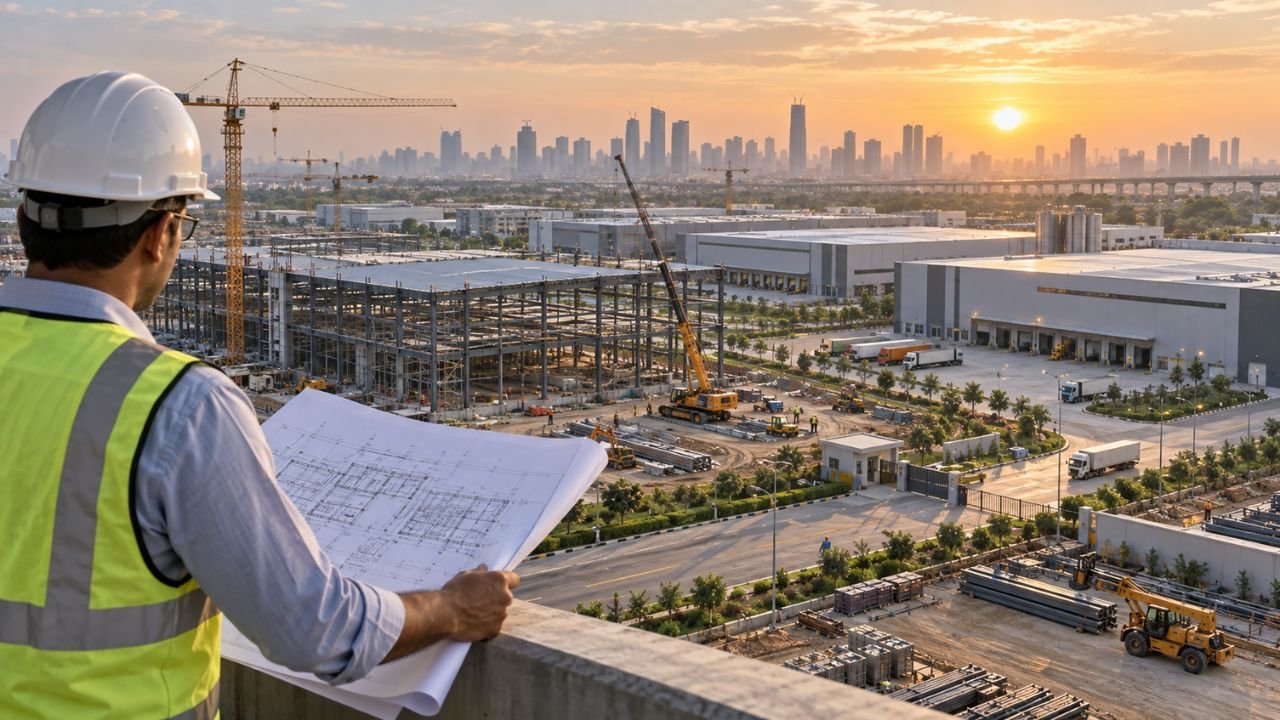
When people plan to build a house on their own plot in Agra, Lucknow, Delhi NCR, or any Tier-2 city, one of the first questions they ask is: What is the difference between a builder and a contractor? The two terms are often used interchangeably, but they represent very different roles, business models, and levels of responsibility. Choosing the wrong one can lead to delays, cost overruns, poor quality, or even legal disputes.
In 2026, with RERA regulations stricter, GST compliance mandatory, and material prices fluctuating, understanding this difference has become even more important for plot owners and small developers. To see how hiring either professional impacts your total project budget, start by reviewing the current construction cost per sq ft in India. A builder typically takes end-to-end responsibility for a project (sometimes including land development and marketing), while a contractor focuses on executing specific construction work as per your drawings and instructions. This guide explains the roles, responsibilities, advantages, disadvantages, and practical advice on whom to hire for different types of projects in India 2026.
Who is a Builder in Construction?
A builder is a person or company that undertakes the complete development of a construction project, often from concept to handover. In India, builders are usually involved in larger or multi-unit projects such as apartments, villas, or plotted developments.
Typical responsibilities of a builder include:
- Acquiring land or working on your plot
- Obtaining all approvals (RERA registration, building plan sanction, environmental clearances)
- Designing or appointing architects
- Procuring materials and labour
- Executing the entire construction (civil, finishing, MEP)
- Marketing and selling units (in case of multi-unit projects)
- Handing over possession and providing warranty
- Builders often issue a tender in construction to find specialized subcontractors for specific works like plumbing or electrical.
Builders often work on a “turnkey” basis or sell ready-to-move units. In 2026, most builders must be RERA-registered if they are developing multiple units, which adds a layer of consumer protection.

Who is a Contractor in Construction?
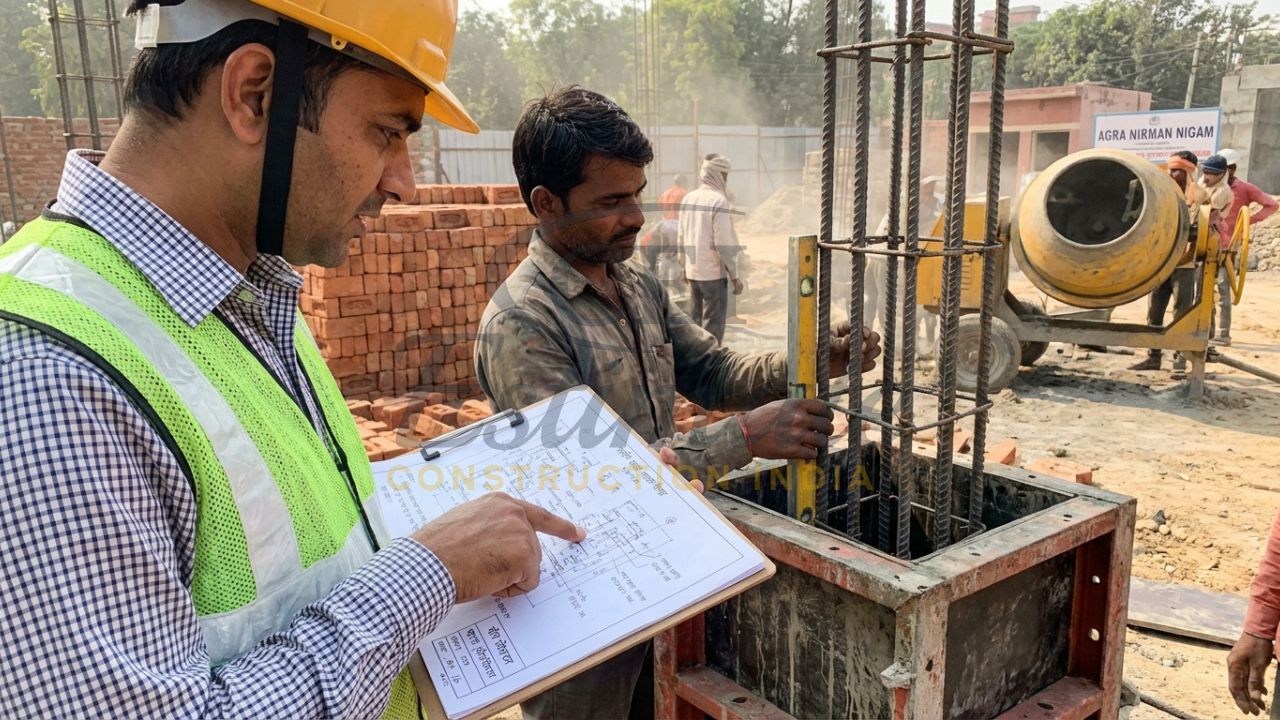
A contractor is a specialist who executes specific construction work as per the client’s drawings, specifications, and agreement. Contractors do not usually own the project or handle land and approvals.
There are different types of contractors in India:
- Civil Contractor – Handles complete civil construction (foundation to finishing)
- Labour Contractor – Supplies only manpower; owner buys all materials
- Turnkey Contractor – Takes full responsibility for execution (similar to builder but without marketing)
- Specialized Contractors – Electrical, plumbing, waterproofing, HVAC, etc.
- Selection Process: Most contractors are hired through a formal tender notice in construction where they submit their rates based on your requirements.
Contractors are paid either on item-rate basis (payment as per actual measured work), lump-sum, or labour-only contract. They focus purely on execution and quality as per the agreed scope.
Key Differences Between Builder and Contractor
The difference between a builder and a contractor is best understood through this comparison:
| Aspect | Builder | Contractor |
| Scope of Work | End-to-end (land to handover, sometimes sales) | Specific construction work only |
| Risk & Responsibility | High (approvals, delays, quality, marketing) | Limited to execution as per agreement |
| Investment | High (land, approvals, working capital) | Lower (mainly labour, tools, site setup) |
| Payment Model | Usually sells units or fixed package | Item-rate or Lump-sum |
| Project Ownership | Builder often owns or develops the project | Client owns the project |
| Typical Clients | Plot owners wanting full service, investors | Plot owners who want control and own materials |
| Legal Requirements | RERA registration mandatory for multi-unit | GST registration, labour licence |
In simple terms, a builder acts like a one-stop solution provider, while a contractor acts as a skilled executor working under your direct supervision.
Choose Your Construction Services
Connect with verified experts for your project. We provide professional
General Contractors, Sub-contractors, Builders, and Material Suppliers.
Our network also includes specialized 3D Rendering Developers and Interior Experts.
Legal and Technical Documentation
In the 2026 Indian market, both roles require a high level of transparency and documentation:
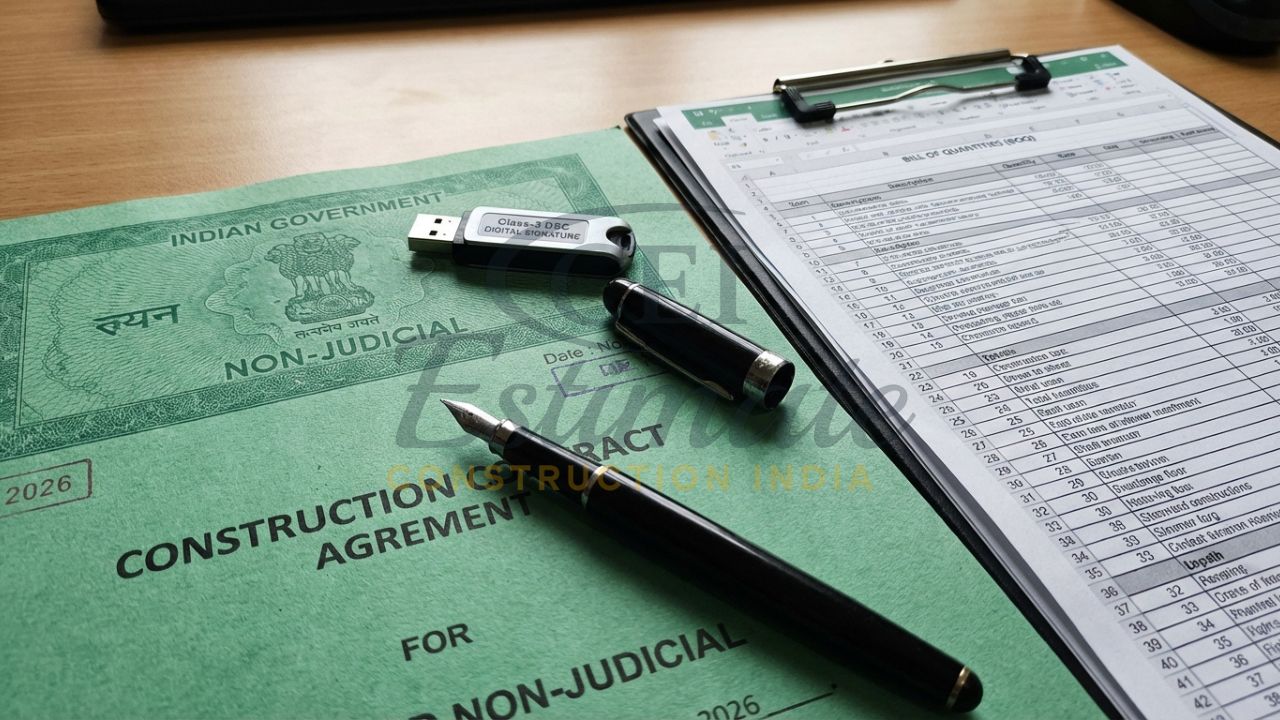
- The Contract: Regardless of whom you hire, you must sign a formal construction contract agreement in India to define timelines and penalties.
- The Pricing: A contractor will usually ask for a what is BOQ in construction (Bill of Quantities) to provide an accurate quote.
- Digital Bidding: In 2026, many contractors use e-tendering in construction portals to find work. They must often pass a prequalification in construction tender stage to prove they have the financial muscle for your project.
- Information Pack: Before hiring, ensure you have provided the complete bid documents in construction package so there is no ambiguity in the final price.
Advantages and Disadvantages of Hiring a Builder
Advantages
- Single point of responsibility — less coordination hassle
- Faster project completion if the builder is professional
- Handles all approvals and paperwork
- Good for people who have no time or construction knowledge
Disadvantages
- Higher overall cost (builder margin 15–25%)
- Less transparency on material quality and actual expenses
- Limited flexibility to change designs mid-way
- Risk of delay if the builder has multiple projects
Advantages and Disadvantages of Hiring a Contractor
Advantages
- Lower cost (you control material purchases)
- Greater control over quality and schedule
- Easier to change scope or specifications
- Transparent billing as per actual work done
Disadvantages
- You have to manage approvals, material supply, and coordination
- Requires your active involvement or a good site supervisor
- Risk of delays if labour or materials are not arranged on time
- More paperwork for payments and measurements
Builder vs Contractor – Which One Should You Choose in 2026?
The choice depends on your situation:
- Choose a Builder if:
- You have limited time and knowledge
- You want a fixed-price turnkey solution
- You are developing multiple units for sale
- Choose a Contractor if:
- You own the plot and want full control
- You want to save 15–25% by buying materials yourself
- You have a trusted site supervisor or engineer
For most individual house construction on own plot in Agra/UP and Tier-2 cities in 2026, hiring a good civil contractor with a clear agreement is more economical and transparent than engaging a builder.
How to Win More Construction Bids in India 2026 provides useful tips if you are a contractor reading this.
Important Tips When Hiring Builder or Contractor in India 2026
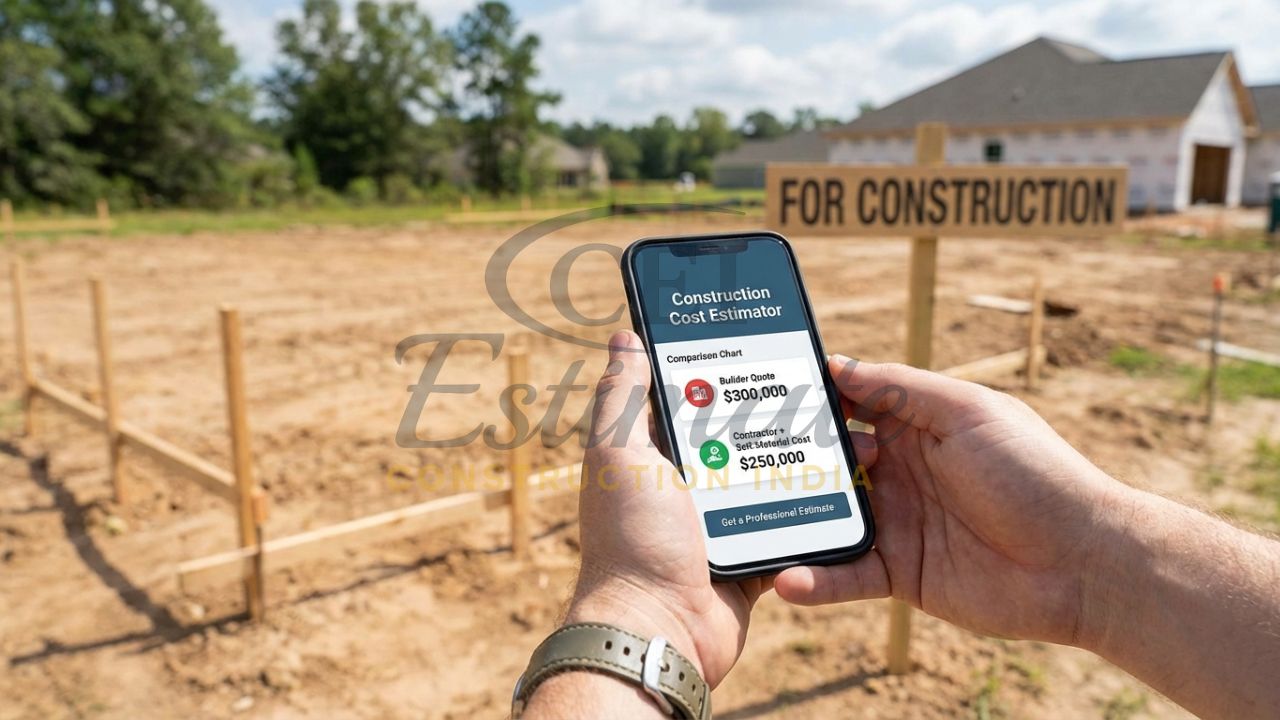
- Always sign a detailed written agreement with clear scope, payment milestones, penalties, and warranty.
- Mention GST, material specifications, and approved makes in the contract.
- Insist on a detailed BOQ and stage-wise measurements.
- Verify GST registration, PAN, and past work references.
- For builders, check RERA registration if it is a multi-unit project.
- Release payments only after joint inspection and measurements.
- Keep 5–10% retention money until the defects liability period ends.
- Include a clear dispute resolution clause (arbitration preferred).
Conclusion
The difference between a builder and a contractor is mainly in scope, risk, control, and business model. A builder offers end-to-end service with higher convenience but higher cost, while a contractor provides execution expertise with greater transparency and flexibility for the client. In 2026, with increasing RERA enforcement and client awareness, clearly defining your needs before hiring is the smartest move.
For most plot owners building a single house, a reliable civil contractor with a well-drafted agreement usually works best. For larger or multi-unit developments, a registered builder may be more suitable. Always verify credentials, insist on proper documentation, and maintain regular site supervision.
Choose wisely, document everything, and your construction journey in 2026 will be smoother and more rewarding.
Ready to get an accurate, customised construction estimate for your project in 2026?
At Estimator Construction India our professional estimating team delivers detailed BOQ and cost reports in just 48 hours.
Construction cost estimation services start at just ₹10,000 INR only.
Contact us today:
📞 Phone / WhatsApp: +91 86306 76890
✉️ Email: info@constructionestimatorindia.com
Don’t overpay or underbid — get your precise 2026 construction cost per sq ft estimate now and win more projects with confidence.
Frequently Asked Questions (FAQs) – Difference Between Builder and Contractor
What is the main difference between a builder and a contractor in India?
The main difference between a builder and a contractor lies in scope and responsibility. A builder takes complete ownership of the project — from approvals and design to construction, finishing, and sometimes marketing. A contractor executes specific construction work as per the client’s drawings and instructions. Builders carry higher risk and usually charge a higher margin, while contractors work under the client’s direct supervision.
Is a builder better than a contractor for constructing my own house?
It depends on your involvement and budget. A builder is better if you want zero hassle and a fixed-price solution. A contractor is usually better for individual house construction on your own plot because it gives you control over quality, materials, and cost. In 2026, most homeowners in Agra and Tier-2 cities prefer experienced contractors for better transparency and savings of 15–25%.
Can a contractor work as a builder or vice versa?
Yes, many professionals operate in both roles depending on the project. A contractor can act as a turnkey builder if the client wants full-service execution. Similarly, a builder can work as a contractor for a specific part of a project. The role depends on the agreement signed. Always clarify the exact scope in the contract.
What should be included in the agreement with a builder or contractor?
The agreement must clearly mention scope of work, detailed BOQ, payment milestones linked to stages, timeline with penalties for delay, material specifications, GST treatment, defect liability period, and dispute resolution mechanism. Attach drawings, specifications, and approved makes as annexures. This protects both parties in 2026’s regulated environment.
Who bears more risk – builder or contractor in a construction project?
The builder usually bears more risk because they take full responsibility for approvals, execution, quality, and timely delivery. A contractor’s risk is limited to the agreed scope of work. In item-rate or labour contracts, the client bears the risk of material price variation and quantity changes. Always define risks clearly in the agreement.