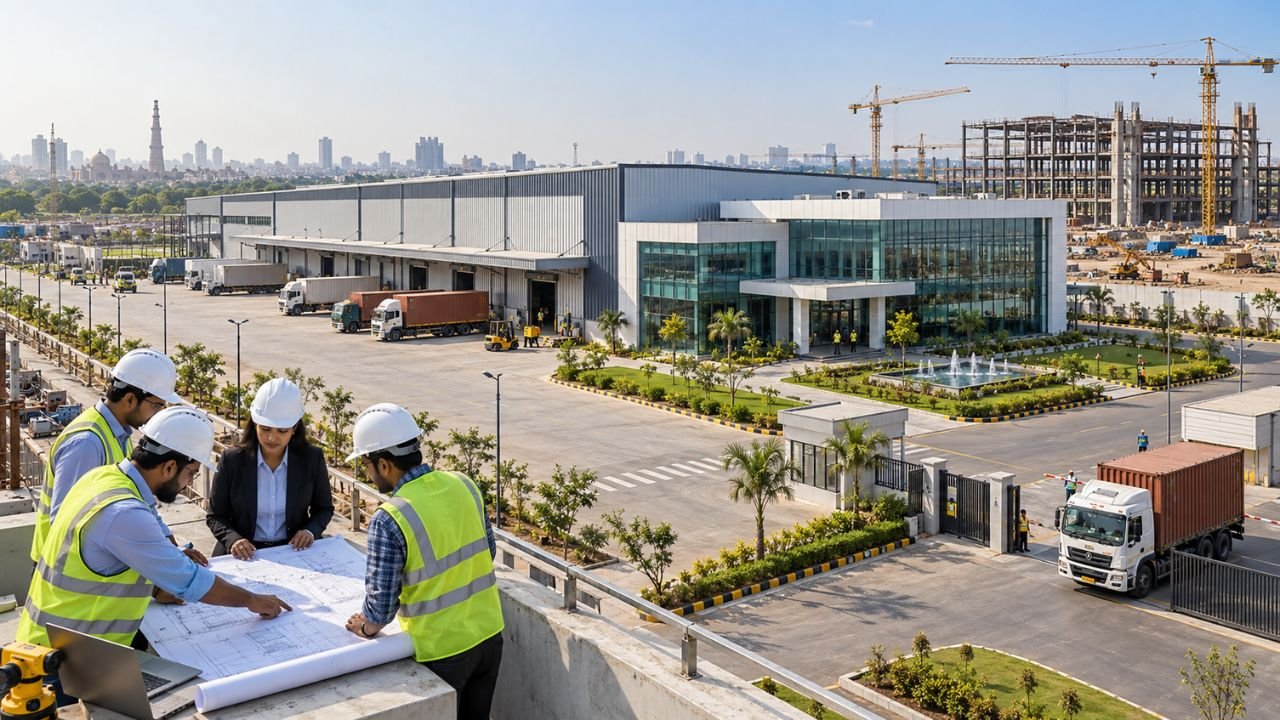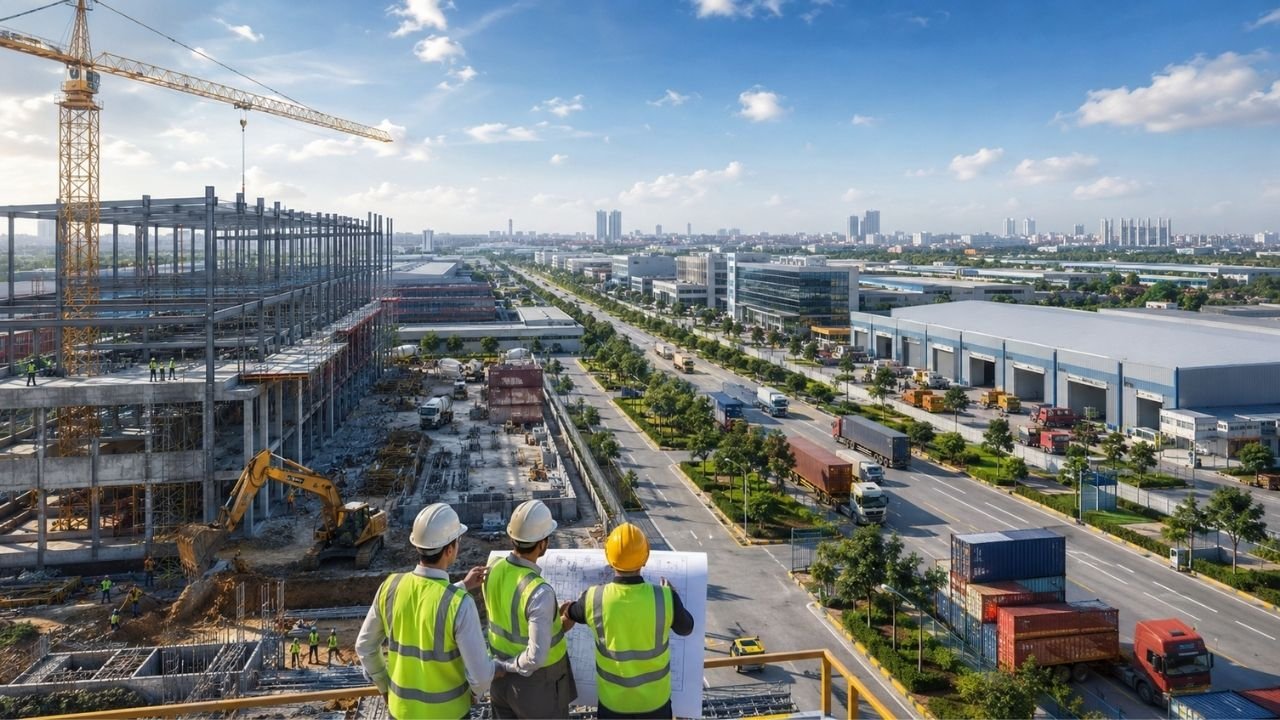
Setting up a manufacturing unit or a large-scale warehouse in India is a monumental task that begins long before the first pillar is cast. In 2026, the industrial landscape in India has become highly competitive, driven by the “Make in India” initiative, PLI schemes, and a massive push for infrastructure. However, for many entrepreneurs, the dream of a successful factory often hits a roadblock right at the start: selecting the wrong land. Learning how to choose land for industrial projects is not just about finding a plot of earth; it is about securing the operational future of your business.
A poor choice in land selection can lead to irreversible issues—ranging from high logistics costs and lack of adequate power to legal disputes regarding land conversion or environmental clearances. Imagine investing crores into a project only to find that the local groundwater is insufficient for your chemical processing unit, or the soil quality requires an extra ₹50 lakhs in foundation strengthening. This practical guide is designed to help manufacturing entrepreneurs, factory planners, and industrial investors navigate the complexities of industrial plot selection. By following this step-by-step framework, you can minimize risks and ensure that your land becomes an asset rather than a liability. At Construction Estimator India, we bridge the gap between land acquisition and construction by providing precision cost estimates that help you finalize your budget with 100% confidence.
Why Choosing the Right Land is the Most Important Decision for Industrial Projects
When you are figuring out how to select industrial land, you must realize that land is the only component of your project that you cannot change later. You can upgrade your machinery, hire new staff, or even redesign your factory layout, but you cannot move your factory once it’s built.
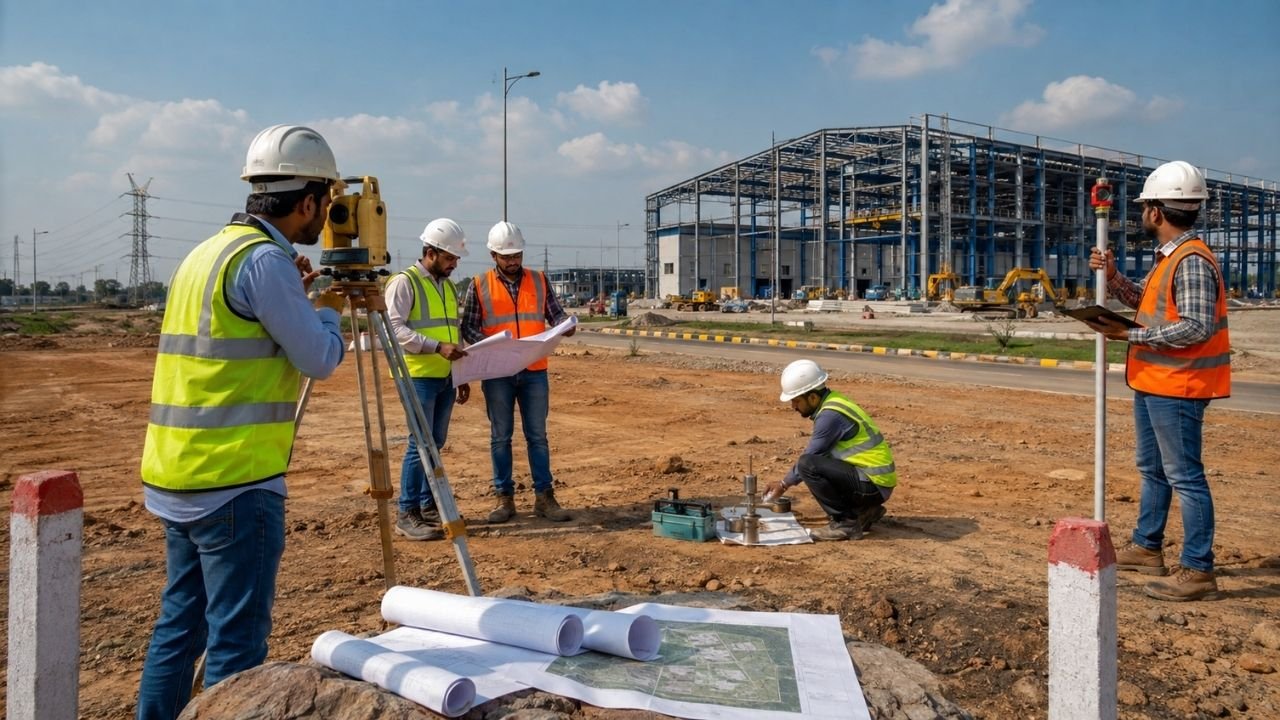
- Logistical Efficiency: Your location determines your daily overheads. A plot 20km further from the main highway might be cheaper to buy, but the cumulative cost of diesel and time over 10 years will far exceed the initial savings.
- Operational Sustainability: Industrial units have heavy requirements for power, water, and waste disposal. If the land lacks these “industrial organs,” your operations will never reach full capacity.
- Financial Viability: The cost of the land is just the tip of the iceberg. The “land development cost”—which includes leveling, boundary walls, and soil stabilization—can vary by 30-40% depending on the plot.
- Resale and Expansion: Best land for factory setup is land that allows for growth. If you don’t have a buffer for future expansion, you may have to abandon a perfectly functional unit just because you ran out of space.
Key Factors to Consider When Choosing Land for Industrial Projects
To make an informed decision, you need to balance technical, legal, and commercial parameters. Below is a quick comparison of the critical factors you must evaluate when learning how to choose land for manufacturing unit setup.
| Factor | Why It Matters | What to Check |
|---|---|---|
| Topography | Affects drainage and leveling costs | Slope, existing structures, and low-lying areas |
| Soil Quality | Determines foundation design and cost | Soil bearing capacity (SBC) through a professional test |
| Zoning | Legal right to operate | Master plan designation (Industrial vs. Agricultural) |
| Environmental | Impacts clearances (EC) | Proximity to rivers, forests, or residential zones |
Location & Connectivity Checklist
The success of your industrial unit is tethered to its connectivity. In 2026, with India’s focus on the Gati Shakti Master Plan, being near a dedicated freight corridor or a major expressway is a massive advantage.
- Proximity to Raw Materials: If your industry is resource-heavy (like cement or steel fabrication), being close to the source reduces procurement costs.
- Market Access: How far is the nearest consumption hub? For MSMEs, being near Tier-1 or Tier-2 cities ensures faster distribution.
- The “Golden Radius”: Ideally, your plot should be within 5-10 km of a National Highway (NH) or a major State Highway (SH).
- Last-Mile Access: Ensure the approach road is at least 12-18 meters wide to allow for 40-foot containers to turn safely.
- Railway and Port Access: For export-oriented units, check the distance to the nearest ICD (Inland Container Depot) or seaport.
Size, Shape & Future Expansion Potential
One of the most common industrial land buying tips India experts give is: “Buy for tomorrow, not just for today.”
- Functional Shape: A rectangular plot is always better than an irregular one. Irregular shapes lead to “dead spaces” where you cannot place machinery or warehouses effectively, leading to high wastage.
- FSI/FAR Rules: Understand the Floor Space Index (FSI) allowed in that specific zone. This tells you how much built-up area you can have on your plot size.
- Expansion Buffer: We recommend keeping at least 20-30% of the land area vacant for future phases. In 2026, land prices are rising so fast that buying the adjacent plot later might be impossible.
- Setbacks and Green Belts: Remember that local building bye-laws require you to leave significant margins (setbacks) on all four sides for fire safety and ventilation.
Legal Status & Land Conversion Requirements
The legal aspect of how to select industrial land in India is where most projects get delayed by years.
- Title Search: Hire a lawyer to verify the “Chain of Title” for at least the last 30 years. Ensure there are no pending litigations.
- Change of Land Use (CLU): If you are buying private agricultural land, you must apply for a CLU to convert it to “Industrial” status. This process varies significantly between states like Uttar Pradesh, Haryana, and Maharashtra.
- Encumbrance Certificate (EC): Ensure the land is not mortgaged to any bank.
- RERA and Local Approvals: Even for industrial projects, ensure the land is part of an approved layout if it’s in a private industrial park.
Infrastructure Availability (Power, Water, Road, Drainage)
Never assume that infrastructure will “eventually come.” In 2026, your factory needs to be “plug-and-play.”
- Power Load: Industrial units require heavy KVA loads. Check if there is a nearby 11KV or 33KV substation. Getting a new line pulled from 5km away can cost lakhs.
- Water Source: Does the area have a MIDC/UPSIDC water connection, or do you need a borewell? If it’s a borewell, you must check the “Central Ground Water Authority” (CGWA) guidelines for that zone.
- Effluent & Sewage: For chemical or textile units, check for a Common Effluent Treatment Plant (CETP). If not available, you will need to invest heavily in an in-house ETP.
- Internet Connectivity: In the era of Industry 4.0, high-speed fiber-optic connectivity is no longer a luxury—it’s a necessity for your ERP and management software.
Industrial Area vs Private Land – Which is Better?
This is a classic dilemma in our industrial plot selection guide.
- Government Industrial Areas (GIDC, RIICO, UPSIDC):
- Pros: Easier CLU, better basic infrastructure (roads, power), and easier bank loan approvals.
- Cons: Leasehold basis (usually 99 years), strict timelines to start construction, and higher initial costs.
- Private/Freehold Land:
- Pros: Complete ownership, lower purchase price, and no time-bound pressure to build.
- Cons: Difficult legal conversion (CLU), you have to build all infrastructure (roads/drainage) yourself, and higher risk of local disputes.
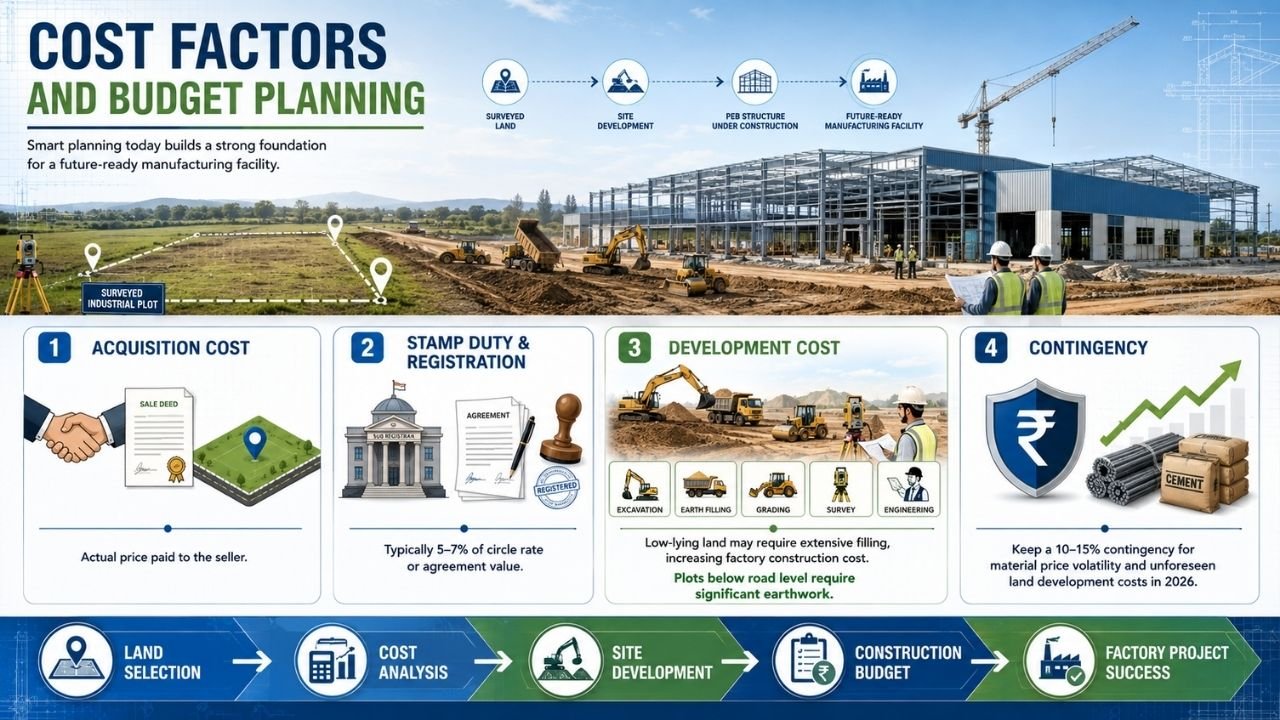
Cost Factors and Budget Planning
When considering the how to choose land for manufacturing unit budget, look beyond the “per acre” price.
- Acquisition Cost: The actual price paid to the seller.
- Stamp Duty & Registration: Usually 5-7% of the circle rate or agreement value.
- Development Cost: This is where Construction Estimator India comes in. A plot that is 3 feet below road level will require thousands of cubic meters of earth filling, which can drastically increase your factory construction cost.
- Contingency: In 2026, we suggest keeping a 10-15% contingency for material price volatility and unforeseen land development hurdles.
Common Mistakes to Avoid While Selecting Industrial Land
- Ignoring the Soil: Buying land without a soil test. Low bearing capacity means you will need expensive “pile foundations” instead of simple footings.
- Underestimating Local Labor: Is the area safe for workers? Is there public transport for your staff? If not, you’ll spend a fortune on staff buses.
- Environmental Blind Spots: Buying land near an eco-sensitive zone or a bird sanctuary can lead to a permanent ban on industrial activity.
- Ignoring “Lal Dora” or Village Boundaries: Buying too close to a growing village can lead to future complaints about noise and pollution.
How Construction Estimator India Helps You After Land Selection
Once you have shortlisted 2 or 3 potential plots, the big question is: “Which one will be more cost-effective to build on?” This is where we provide the most value.
We specialize in accurate construction cost estimating and BOQ (Bill of Quantities) for industrial and manufacturing projects. We take your preliminary factory drawings and the specifics of your shortlisted land to provide:
- Precision Quantity Takeoffs: Exact amounts of steel, cement, and concrete required.
- Land Development Estimates: Cost of filling, leveling, and boundary walls.
- MEP Estimates: Detailed costs for industrial electrical, plumbing, and HVAC systems.
- Budgeting for Loans: Our detailed estimates are often used by entrepreneurs to secure bank construction loans with ease.
Get Land Selection Guidance + Accurate Factory Construction Cost Estimate
Don’t guess your project budget. Get a realistic, data-backed forecast from the experts at Construction Estimator India. Our process is simple and designed for busy entrepreneurs.
Share your industry type, required land size, preferred location, and requirements via WhatsApp at +91 8630676890.
What you get within 24–48 hours:
- Practical Guidance: Expert feedback on your land selection choice.
- Realistic Cost Estimate: A preliminary construction cost estimate based on 2026 market rates.
- BOQ Draft: A breakdown of major material and labor requirements.
Contact Us Today:
- WhatsApp/Call: +91 8630676890
- Expertise: 10+ years in industrial cost estimation and project planning.
- Coverage: Pan-India services (UP, Delhi-NCR, Haryana, Maharashtra, Gujarat, and more).
FAQ Section
- How do I know if a piece of land is truly ‘Industrial’?
You must check the local Master Plan issued by the Town and Country Planning Department. It will explicitly mark the zone. Even if the owner says it’s industrial, verify the official land records (7/12 extract or Jamabandi). - What is the minimum road width required for a factory?
For heavy machinery and large containers, a minimum of 12 meters (approx. 40 feet) is recommended. Anything less will lead to logistical bottlenecks and might be rejected during the building plan approval stage. - Is it better to buy land in a private industrial park?
Private industrial parks often offer better amenities and faster “plug-and-play” setups, but they are significantly more expensive than government plots and come with monthly maintenance charges. - How much does it cost to convert agricultural land to industrial?
The conversion charges (CLU) depend on the state and the distance from the nearest city. It can range from a few lakhs to a significant percentage of the land’s circle rate. - Why is a soil test mandatory before buying?
The soil bearing capacity determines the type of foundation. If the soil is soft (black cotton soil or loose sand), your foundation costs could double, making the “cheap” land very expensive in the long run. - Can I get a bank loan for buying industrial land?
Yes, most banks provide “Industrial Plot Purchase” loans, but they usually require the land to be in an approved industrial area. For private land, they often only lend for the construction part once the land is owned. - How does Construction Estimator India help with my project?
We provide the technical data (BOQ and Cost Estimates) you need to negotiate with contractors and apply for loans. We help you avoid “hidden costs” that usually derail industrial projects midway. - What environmental clearances do I need in 2026?
This depends on your industry category (Red, Orange, Green, or White). Most manufacturing units need “Consent to Establish” (CTE) from the State Pollution Control Board before starting construction.
Conclusion
Choosing land for an industrial project is a high-stakes decision that requires a blend of legal due diligence, logistical planning, and technical foresight. In 2026, the margin for error is slim, and the cost of correction is high. By focusing on connectivity, legal clarity, and infrastructure, you set a strong foundation for your manufacturing success.
Remember, the land price is only one part of the equation. To truly understand the financial feasibility of your project, you need an accurate construction cost estimate. At Construction Estimator India, we are committed to helping you transition from land owner to factory owner with precision and confidence.
Don’t leave your project budget to chance. Reach out to us via WhatsApp at +91 8630676890 for expert land selection guidance and a realistic factory construction cost estimate today.