A 50-floor building is no longer just a skyline-defining landmark; it is a highly complex engineering and financial undertaking. With rapid urbanization across metros, developers, investors, and civil engineering students frequently ask our team: “How much does it cost to build a 50 floor building in India or globally?”
Unlike a standard 10-storey apartment block, a 50-storey skyscraper requires advanced structural engineering, high-performance facade systems, deep foundation technologies, and sophisticated vertical transportation. In my experience estimating high-rise projects in Mumbai and Delhi over the past two decades, treating a 50-floor tower as just a “taller building” is the fastest route to budget overruns.
At Construction Estimator India, we specialize in high-rise cost estimation, detailed Bill of Quantities (BOQ), and project feasibility studies. By the end of this guide, you will know the expected total cost, per sq. ft. rates, major cost components, and the critical engineering factors that make a 50-storey tower so uniquely expensive.
Quick Answer – Estimated Cost to Build a 50 Floor Building
Directly answering this requires looking at 2026 market data. Construction budgets are split into hard costs (materials, labor, equipment) and soft costs (design, approvals, financing).
For major Indian metros like Mumbai, Delhi, and Bangalore:
-
High-rise commercial / premium residential (40–60 floors): Hard construction costs generally range from ₹3,600 to ₹5,200+ per sq. ft. (inclusive of structure, MEP, and core finishes).
The Total Project Math (India):
For a typical 50-floor tower, assume a floor plate of 10,000 to 15,000 sq. ft.
-
Total built-up area: 5,00,000 to 7,50,000 sq. ft. (0.5 to 0.75 million sq. ft.).
-
Total hard construction cost:
-
At ₹4,000/sq ft → ₹200 to ₹300 crore
-
At ₹5,000/sq ft → ₹250 to ₹375 crore
-
-
Total project cost: When you include soft costs (approvals, financing, design, marketing), the total project budget can easily reach ₹300 to ₹500+ crore in a tier-1 city.
Global Context (US & International):
If you are looking at global markets, the numbers scale drastically:
-
Baseline hard costs for a Class-A commercial skyscraper in the US: $650 to $1,200 per sq. ft.
-
Ultra-luxury residential supertalls (like those in New York): $2,500+ per sq. ft.
-
A standard 50-storey, 1.2 million sq. ft. commercial tower in a Tier-1 US city costs between $950 million and $1.4 billion overall.
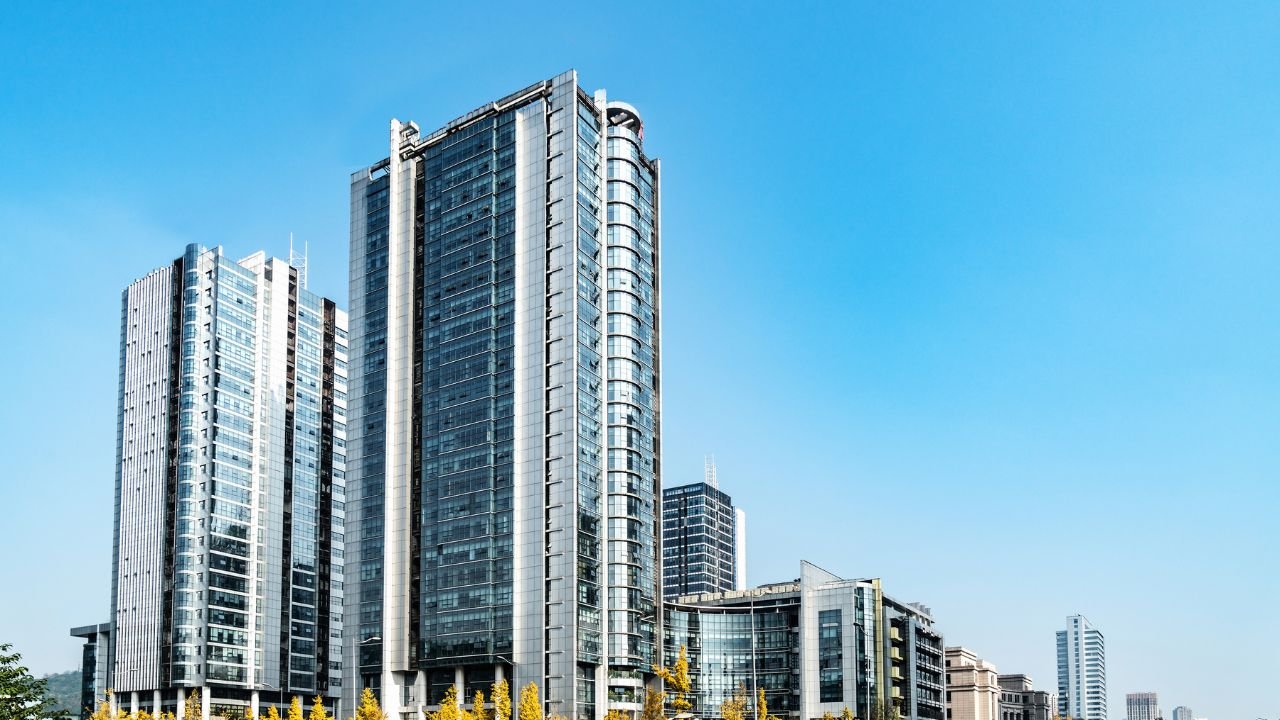
Note: These are indicative ranges. Actual costs depend heavily on location, design geometry, sub-soil conditions, and market inflation.
Understanding the Scale of a 50 Floor Building
To understand the 50 storey building construction cost, you must first understand its physical scale.
Height and Volume:
-
With an average floor-to-floor height of 3.5 to 4.5 meters (commercial spaces require higher ceilings for HVAC ducts), a 50-floor building sits at approximately 175 to 225 meters tall (excluding any architectural spire or antenna).
-
A typical floor plate spans 10,000 to 15,000 sq. ft. Depending on the plot size, FSI (Floor Space Index), and setbacks, the total built-up area is massive—often 5 to 7.5 lakh sq. ft.
Key Engineering Systems:
Building at this height requires specialized systems not found in low-rise structures:
-
Deep Foundations: Extensive piling, thick raft foundations, and sometimes barrettes to anchor the building.
-
Superstructure: High-strength RCC (M60-M80 grade) or composite steel-concrete core and frame systems to withstand heavy wind and seismic loads.
-
Enclosure: High-performance unitized curtain walls with double or triple glazing.
-
MEP & Elevators: Complex HVAC networks, high-speed destination-control elevators, and multi-zone plumbing.
-
Life Safety: Pressurized fire escape staircases, advanced smoke management, and building management systems (BMS).
Construction Cost Per Sq Ft for a 50 Storey Building (India, 2026)
Based on current estimating indices and recent project tenders, here is the high rise building cost per square foot in India as of 2026. These figures represent hard construction costs (civil work, facade, MEP, and common area fit-outs).
-
High-rise commercial (40–60 floors): ₹3,600 to ₹4,900 per sq. ft. in prime metros.
-
Premium high-rise residential (30–50 floors): ₹4,200 to ₹5,200+ per sq. ft.
-
Luxury / super-luxury residential towers: These can easily exceed ₹5,500 to ₹7,000+ per sq. ft., driven heavily by imported finishes, branded amenities, and bespoke architectural features.
Cost Per Sq. Ft. by City and Type
| Building Type | City | Approx. Hard Cost per Sq Ft (₹) |
| High-rise Commercial | Mumbai | 3,900 – 4,900 |
| High-rise Commercial | Delhi NCR | 3,800 – 4,700 |
| High-rise Commercial | Bangalore | 3,600 – 4,500 |
| Luxury High-rise Residential | Mumbai | 4,600 – 5,200+ |
| Luxury High-rise Residential | Bangalore / Chennai / Hyderabad | 4,200 – 4,800 |
(Note: Soft costs such as architectural design, statutory approvals, financing, and marketing can add an additional 15–30% on top of these hard costs.)
Total Cost Estimate for a 50 Floor Building in India
Let’s look at a realistic feasibility calculation. For a recent 45–50 storey commercial tower I evaluated in Delhi NCR, here is how the math breaks down:
Project Assumptions:
-
Floors: 50
-
Average floor plate: 12,000 sq. ft.
-
Total built-up area: 6,00,000 sq. ft. (0.6 million sq. ft.)
-
Hard construction rate: ₹4,500 per sq. ft. (mid-range for a premium tower)
The Calculation:
-
Total Hard Construction Cost: 6,00,000 sq. ft. × ₹4,500 = ₹270 crore
-
Soft Costs: Assuming 20% for design, approvals, financing (IDC), and marketing: ₹270 crore × 20% = ₹54 crore
-
Total Estimated Project Cost: ₹270 crore + ₹54 crore = ₹324 crore (excluding land cost).
For a 50-floor tower in a major metro, expect hard costs to fall between ₹200 to ₹350 crore, with the final total project cost landing between ₹250 to ₹450+ crore. In Mumbai, where coastal regulations, high water tables, and premium expectations dictate the market, projects consistently hit the upper end of this spectrum.
Cost Breakup – Where Does the Money Go in a 50 Floor Tower?
A skyscraper cost breakdown (foundation, structure, MEP, facade) looks very different from a standard building. Here is a typical percentage breakdown of the total project budget:
| Cost Component | % of Total Budget | Notes |
| Substructure & Foundations | 8 – 12% | Deep piles, raft, and barrettes. Highly variable based on soil conditions (e.g., costly in Mumbai’s reclaimed lands). |
| Superstructure (Core & Frame) | 22 – 28% | High-grade RCC, structural steel, core walls, shear walls, and floor slabs. |
| Facade / Exterior Enclosure | 12 – 16% | Unitized curtain walls, double/triple glazing, aluminum framing, and wind-load testing. |
| MEP & Vertical Transportation | 20 – 25% | HVAC, fire fighting, electrical, BMS, and high-speed multi-zone elevators. |
| Interior Fit-Out (Common Areas) | 10 – 15% | Premium lobbies, corridors, sky lounges, and basic shell preparation for tenants. |
| Soft Costs & Financing | 15 – 25% | Architecture, engineering, RERA approvals, fire NOCs, financing interest, and developer overhead. |
Brief Component Breakdown:
-
Foundations: Anchoring a 200-meter building requires massive substructures.
-
Superstructure: Wind loads dictate the structural design more than dead weight at this height, requiring specialized outriggers or heavy central cores.
-
Facade: The facade alone can cost ₹900 to ₹1,600+ per sq. ft. of skin area. It must withstand extreme wind pressures and provide thermal insulation.
-
MEP & Elevators: A 50-storey building requires 15 to 25+ elevators (including high-speed passenger lifts and heavy-duty service lifts) and complex, zoned HVAC systems to manage pressure differences.
-
Soft Costs: For large towers, the interest during construction (IDC) alone can run into tens of crores over a 4 to 5-year build cycle.
At Construction Estimator India, we help developers mitigate risk by preparing granular, itemized BOQs for each of these complex systems.
City-Wise Variation in 50 Floor Building Construction Cost (India)
Geography heavily dictates the cost to build a 50 floor commercial tower or residential skyscraper:
-
Mumbai: Yields the highest construction costs in India. Restricted site access, strict traffic regulations (limiting material delivery to night hours), high labour costs, and premium finish demands push high-rise commercial costs to ₹3,900–4,900 per sq. ft. and 50 floor residential tower cost in Mumbai to ₹4,600–5,200+ per sq. ft.
-
Delhi NCR: Features a highly competitive contractor market but requires stringent seismic compliance (Zone IV) and air pollution control measures during construction. Commercial high-rises average ₹3,800–4,700 per sq. ft.
-
Bangalore: Hard rock sub-soil can make deep excavations challenging, though the tech-driven commercial market demands excellent MEP and BMS integrations. Commercial costs average ₹3,600–4,500 per sq. ft.
-
Chennai / Hyderabad / Pune: Generally present slightly lower logistics and labour costs, with premium residential towers costing around ₹4,000–4,800 per sq. ft.
Key Factors That Make a 50 Floor Building So Expensive
Why is the per sq. ft. cost of a 50-storey building noticeably higher than a 15-storey building?
-
Structural Complexity: As a building gets taller, it acts like a giant cantilever against the wind. The volume of high-strength concrete and steel required per square foot increases exponentially to manage dynamic wind and seismic loads.
-
Deep Foundations: You cannot build 200 meters into the sky without going deep into the earth. Specialized piling rigs and massive raft foundations are slow and expensive to construct.
-
High-Performance Facades: Standard brick-and-mortar walls fail at 50 storeys. High-rises require engineered unitized curtain walls that are lifted into place via cranes, offering thermal insulation and acoustic dampening.
-
MEP & Vertical Transportation: Moving thousands of people up and down quickly requires high-speed, destination-control elevators. Furthermore, pumping water and conditioned air to the 50th floor requires intermediate mechanical floors and heavy-duty pumps.
-
Fire Safety & Life Safety Systems: Strict National Building Code (NBC) compliance mandates pressurized stairwells (to keep smoke out), dedicated fire evacuation lifts, refuge areas, and automated fire suppression systems.
-
Construction Logistics: Operating tower cranes at 200 meters, hoisting materials, pumping concrete vertically, and managing site safety at extreme heights severely reduces daily labor productivity compared to ground-level work.
-
Financing and Approvals: Securing environmental clearances, Airport Authority height NOCs, and CRZ approvals (in coastal cities) takes time. Time is money, and the interest accrued on a ₹300 crore loan over a 5-year build is immense.
India vs Global – How Does 50 Floor Building Cost Compare?
To put Indian construction costs into a global perspective:
-
United States: In major hubs like New York, Chicago, or San Francisco, the hard construction costs for a Class-A commercial skyscraper range from $650 to $1,200 per sq. ft. Ultra-luxury residential supertalls regularly exceed $2,500+ per sq. ft. A typical 50-storey, 1.2 million sq. ft. commercial tower will cost between $950 million and $1.4 billion total.
-
Middle East (Dubai, Doha): Costs can be surprisingly competitive due to tax structures, massive economies of scale, and highly experienced high-rise contractors, though bespoke architectural facades on luxury towers drive costs up rapidly.
-
India: While absolute costs are lower than in the US and Europe, Indian high-rise costs are rising rapidly due to escalating raw material prices, stricter safety/labor codes, and the increasing demand for global-standard smart building technologies.
Common Mistakes in Estimating 50 Floor Building Costs
When developers ask us to review stalled or over-budget high-rise projects, we frequently spot these estimating errors:
-
Underestimating Substructure Costs: Failing to account for difficult soil conditions, rock excavation, or dewatering near the coast.
-
Using Low-Rise Benchmarks: Applying a 10-storey per sq. ft. rate to a 50-storey tower. The economies of scale do not apply linearly to height; costs curve upward due to structural and logistical premiums.
-
Ignoring Soft Costs: Budgeting only for hard construction and running out of funds for marketing, legal, financing, and approval costs.
-
Under-budgeting the Facade and MEP: Modern tenants demand green-certified, energy-efficient buildings. High-performance glass and VRV/VAV HVAC systems are expensive.
-
Overlooking Escalation: A 50-storey tower takes 4 to 5 years to build. Failing to factor in material and labor cost escalation over half a decade is a critical oversight.
-
Inadequate Contingencies: Not keeping a 10–15% contingency reserve for unforeseen geotechnical issues or design changes.
FAQs
How much does it cost to build a 50 floor building in India?
In Indian metros, the total project cost for a 50-floor building typically ranges from ₹250 crore to ₹450+ crore, depending on the total built-up area, location, and whether it is a commercial or luxury residential tower.
What is the per sq. ft. construction cost for a 50-storey high-rise in Mumbai or Delhi?
Hard construction costs for a 50-storey tower range from ₹3,600 to ₹4,900 per sq. ft. for commercial spaces, and ₹4,200 to ₹5,200+ per sq. ft. for premium residential towers.
How much does foundation cost for a 50 floor building?
The substructure and foundation generally consume 8% to 12% of the total project budget, which can equate to ₹20 crore to ₹40+ crore depending on soil conditions and basement levels.
What percentage of total cost goes to MEP and elevators in a 50-floor tower?
MEP (Mechanical, Electrical, Plumbing) and vertical transportation (elevators/escalators) typically account for 20% to 25% of the total high-rise budget.
Is it cheaper to build a 50 floor commercial tower or residential tower?
Commercial towers are generally slightly cheaper per sq. ft. (₹3,600–4,900) to build to a “core and shell” state because the interior fit-outs are left to the tenant. Luxury residential towers (₹4,200–5,200+) require finished bathrooms, kitchens, and detailed internal walls, driving up developer costs.
How long does it take to construct a 50-storey building?
From ground-breaking to handover, a 50-floor building in India typically takes between 4 to 5 years, assuming no major regulatory or funding delays.
What are the main soft costs in a 50 floor building project?
Soft costs include architectural and structural design fees, MEP consultants, statutory approvals, environmental NOCs, marketing and sales expenses, and financing costs (interest during construction).
Conclusion
A 50-floor skyscraper is a monumental achievement in civil engineering and real estate development. With total project costs typically ranging from ₹250 to ₹450+ crore in Indian metros, there is absolutely no margin for error in budgeting.
Hard construction costs alone average ₹3,600 to ₹5,200+ per sq. ft. for high-rise commercial and premium residential towers. From deep foundations and high-strength superstructures to unitized facades and high-speed elevators, every component carries a premium compared to low-rise construction.
To ensure your high-rise project remains financially viable, detailed feasibility studies, accurate cost estimation, and professional quantity surveying are mandatory.
Planning a high-rise project?
Do not rely on guesswork. Contact Construction Estimator India for expert high-rise cost estimation, detailed Bill of Quantities (BOQ), and comprehensive feasibility studies tailored to your 50-floor building. Visit Construction Estimator India to consult with our senior quantity surveyors today.